Skip to content
CRANE MANUFACTURER SINCE 2002
info@hnksglobal.com+86 188 3620 7779Project enquiry ↗
Henan Mine Crane Request a quote
Complete Carrier-Beam Crane Range

Carrier-Beam Overhead Cranes

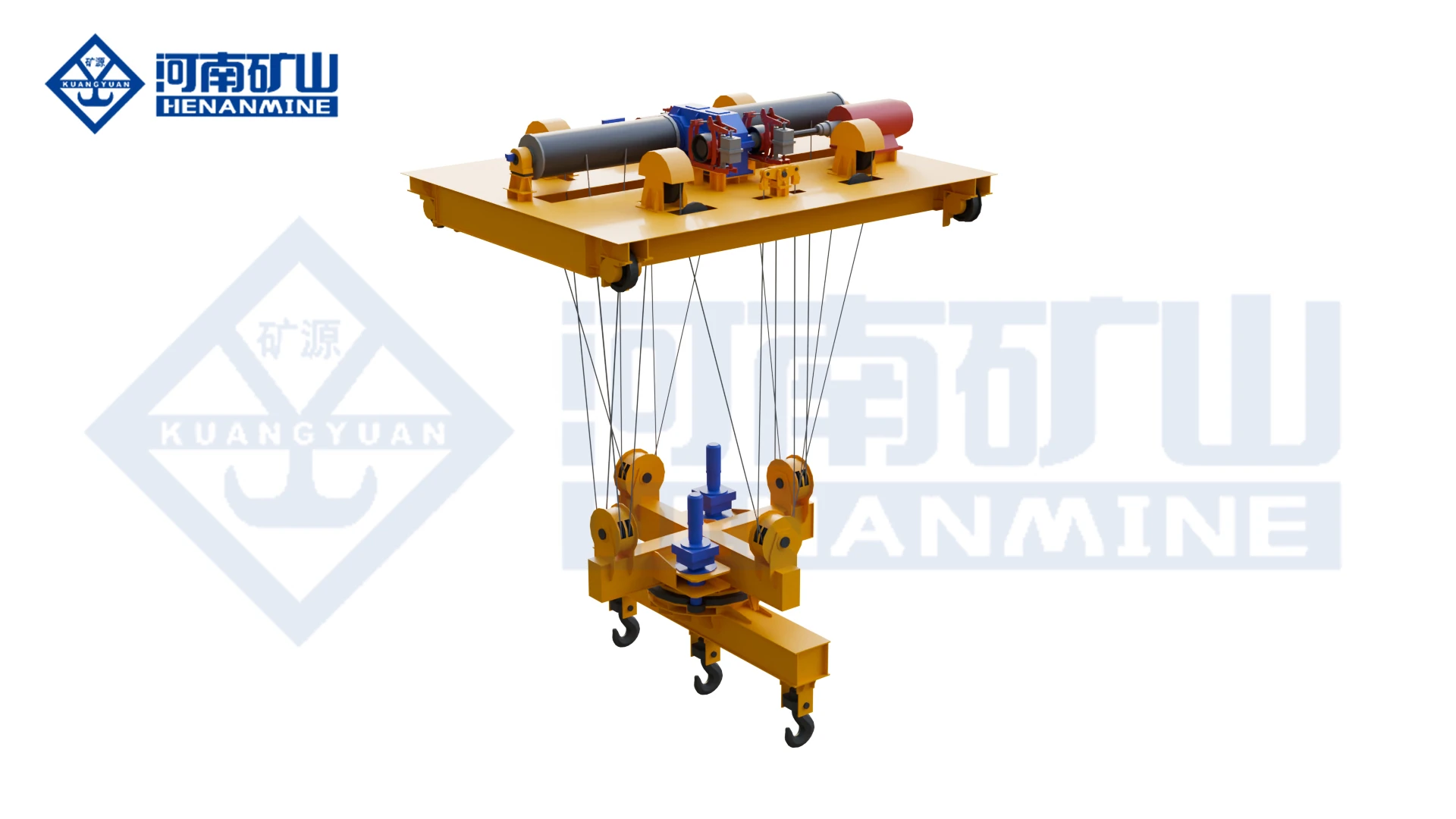
Carrier-beam overhead crane systems for long, wide and difficult-to-balance loads. The range includes fixed carrier beams arranged perpendicular or parallel to the bridge, plus lower-rotating QJ carrier-beam cranes for loads that must be aligned or turned during transport.

Carrier-beam overhead crane
5+5–20+20 tCarrier-beam capacity family
10.5–31.5 m fixed-beam span range
A5–A6 fixed-beam working classes
Fixed / RotatingPerpendicular, parallel and lower-rotating layouts
Product Family Structure

Complete Carrier-Beam Overhead Crane Range

Carrier-beam crane selection starts with load orientation. The beam direction determines how the load is picked relative to the bridge, while rotating systems are used when the material must be turned or aligned before placement.

Perpendicular Carrier-Beam Overhead Crane
Carrier Beam — Perpendicular

Perpendicular Carrier-Beam Overhead Crane

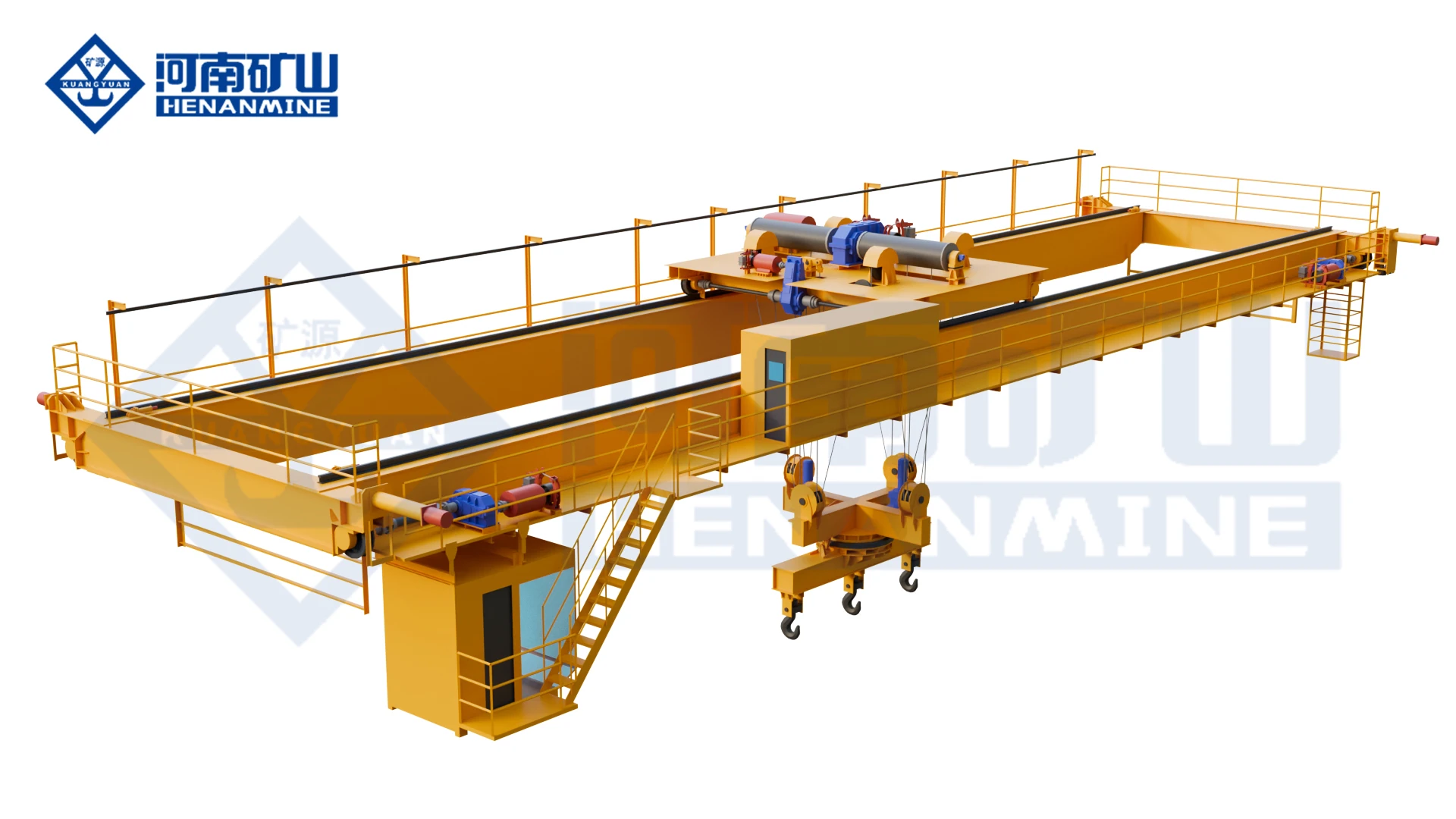
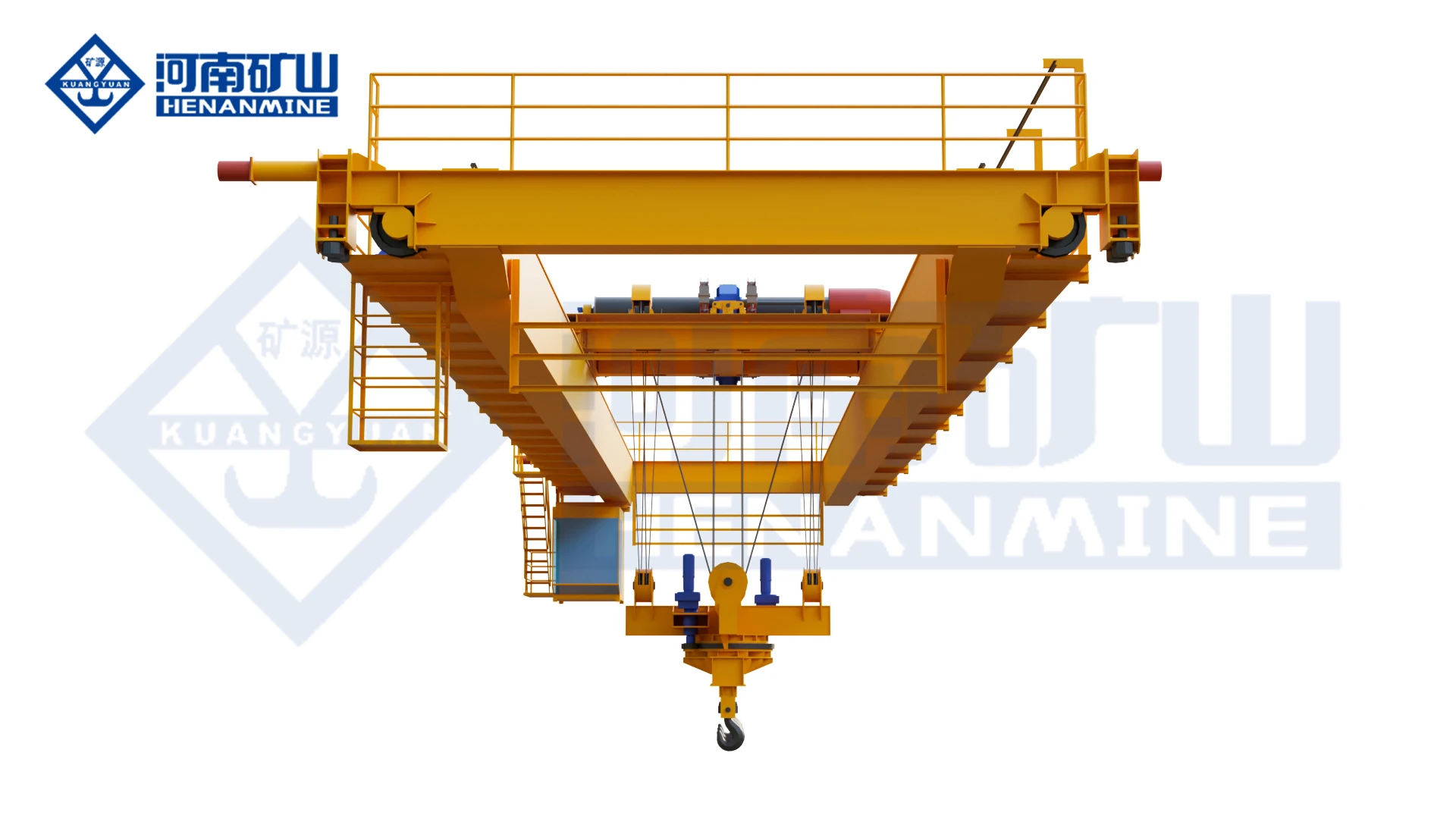
A double-girder carrier-beam overhead crane with the lifting beam arranged perpendicular to the bridge girders. This layout is suited to long materials that must be picked across the bay width and transferred longitudinally, including steel plate, profiles, structural members and bundled long products.

5+5–20+20 t FamilyA5–A6Beam Perpendicular to Bridge10.5–31.5 m
Technical Specifications
Capacity Family5+5 t to 20+20 t
Detailed Configurations5+5 / 7.5+7.5 / 10+10 / 16+16 t
Span10.5–31.5 m
Maximum Lifting Height16 m
Working ClassA5–A6
5+5 t Hoisting Speed12.9 m/min (A5); 15.66 m/min (A6)
7.5+7.5 t Hoisting Speed10.4 m/min (A5); 15.3 m/min (A6)
10+10 t Hoisting Speed10.4 m/min (A5); 15.2 m/min (A6)
16+16 t Hoisting Speed9.8 m/min (A5); 12.4 m/min (A6)
Trolley Travel Speed42.4–44.6 m/min by capacity
Bridge Travel SpeedApprox. 74.2–116.8 m/min by duty, capacity and span
Power Supply3-phase AC 380 V / 50 Hz
Parallel Carrier-Beam Overhead Crane
Carrier Beam — Parallel

Parallel Carrier-Beam Overhead Crane

A double-girder carrier-beam crane with the lifting beam arranged parallel to the bridge girders. It is selected when long products must be picked and carried along the bridge direction, allowing multiple lifting points to stabilize plates, sections, fabricated structures and bundled materials.

5+5–20+20 t FamilyA5–A6Beam Parallel to Bridge10.5–31.5 m
Technical Specifications
Capacity Family5+5 t to 20+20 t
Detailed Configurations5+5 / 7.5+7.5 / 10+10 / 16+16 t
Span10.5–31.5 m
Maximum Lifting Height16 m
Working ClassA5–A6
5+5 t Hoisting Speed12.5 m/min (A5); 15.66 m/min (A6)
7.5+7.5 t Hoisting Speed10.4 m/min (A5); 15.3 m/min (A6)
10+10 t Hoisting Speed10.4 m/min (A5); 15.2 m/min (A6)
16+16 t Hoisting Speed9.8 m/min (A5); 13.6 m/min (A6)
Trolley Travel Speed42.4–44.6 m/min by capacity
Bridge Travel SpeedApprox. 74.2–116.8 m/min by duty, capacity and span
Power Supply3-phase AC 380 V / 50 Hz
QJ Lower-Rotating Carrier-Beam Overhead Crane
QJ

QJ Lower-Rotating Carrier-Beam Overhead Crane

A lower-rotating carrier-beam crane for steel plate, section steel, coil and other long or wide loads that require angle adjustment during transport. The suspended beam can rotate beneath the trolley and can be equipped with clamps or other process-specific lifting devices for steel mills, ports, warehouses and manufacturing bays.

Lower RotationClamp / Process LifterPLC + HMIAnti-Sway
Technical Specifications
Type-Test SpecificationQJ
Crane TypeDouble-girder lower-rotating carrier-beam overhead crane
Handled MaterialsSteel plate, section steel, coil and other long/wide materials
Working EnvironmentIndoor or outdoor fixed-span industrial bays
Rotation MonitoringPhotoelectric sensing for rotation-angle identification and correction
Rotation ProtectionBrake stops the rotating mechanism beyond the permitted angle range
Mechanical Anti-SwayBi-directional V-type wire-rope reeving
Electrical Anti-SwayPredictive control with reverse motor-speed compensation
Swing-Control TargetSwing amplitude controlled within 5° on the configuration
Control PlatformPLC module + HMI touch screen + WLK master controller
Automation OptionsServo rotation/telescoping, obstacle avoidance and remote monitoring on engineered systems
Typical ApplicationsSteel mills, ports, warehouses, aerospace and heavy manufacturing
Configuration Comparison

Perpendicular vs Parallel vs Rotating Carrier Beam

Selection FactorPerpendicular Carrier BeamParallel Carrier BeamQJ Lower-Rotating Carrier Beam
Beam OrientationPerpendicular to bridge girdersParallel to bridge girdersSuspended rotating beam below trolley
Typical Load DirectionLong load picked across bay widthLong load picked along bridge directionLoad direction changes during transfer
Capacity Family5+5–20+20 t5+5–20+20 tEngineered to project
DutyA5–A6A5–A6Selected by process duty
Lifting AttachmentHooks / clamps / dedicated beam devicesHooks / clamps / dedicated beam devicesClamp, process lifter or engineered attachment
Key AdvantageStable multi-point lifting across bayStable multi-point lifting along bridge directionRotation, alignment and flexible placement
Span-by-Span Runway Data

Perpendicular Carrier-Beam Maximum Wheel Pressure

Maximum wheel pressure varies with capacity, span and A5/A6 duty. These values support preliminary runway-beam and rail selection.

Capacity / Duty10.5 m13.5 m16.5 m19.5 m22.5 m25.5 m28.5 m31.5 m
5+5 t A5108115124129136149158167
5+5 t A6111118126131138151160169
7.5+7.5 t A5144151158172179191201210
7.5+7.5 t A6149156164177185196207217
10+10 t A5172178187201210223234244
10+10 t A6176183192207216230241252
16+16 t A5251264277292305324337348
16+16 t A6256270283301316331342357
Span-by-Span Runway Data

Parallel Carrier-Beam Maximum Wheel Pressure

Parallel-beam geometry changes the trolley and bridge load distribution, so its wheel-pressure values should be checked separately from the perpendicular configuration.

Capacity / Duty10.5 m13.5 m16.5 m19.5 m22.5 m25.5 m28.5 m31.5 m
5+5 t A5106113122127134146155164
5+5 t A6109116124129136148157166
7.5+7.5 t A5143150157170177189198207
7.5+7.5 t A6148155163175183194204214
10+10 t A5167173182195203215226235
10+10 t A6171178187201209222233243
16+16 t A5246256271285298314326336
16+16 t A6251264277294308321331344
Selection by Load

Choose the Carrier-Beam Crane by Material and Orientation

Steel Plate

Use multiple lifting points to distribute the load across long or wide plates. Beam orientation should match the plate flow through the production or storage area.

Profiles & Long Sections

Carrier beams reduce twisting and improve stability for long steel sections, rails, pipes and structural members that are difficult to control from one hook.

Fabricated Structures

Long welded assemblies can be handled from several points to control deflection and maintain the designed load orientation during transfer.

Coils & Process Loads

QJ rotating systems can use engineered clamps or process lifting devices where the load must be aligned with storage racks or production equipment.

Loads Requiring Turning

Choose a lower-rotating beam where the load must change angle between pickup and placement rather than remaining in one fixed orientation.

Automated Material Flow

Servo-controlled rotation, PLC positioning, anti-sway and obstacle detection can support automatic or semi-automatic long-load handling.

Carrier-Beam Safety & Control

Critical Engineering Functions

Multi-Point Load Distribution

Beam length, suspension spacing and lifting-point capacity should be matched to the load's center of gravity and allowable deflection.

Rotation-Angle Protection

On QJ systems, photoelectric sensing can identify the beam angle and stop rotation when the permitted range is exceeded.

Mechanical + Electrical Anti-Sway

V-type rope reeving and electrical anti-sway control improve load stability and final positioning during long-load transfer.

Clamp / Lifter Interlock

Dedicated clamps and lifting devices should be interlocked with hoisting control so the crane cannot lift before the load is securely engaged.

PLC + HMI Control

Programmable control supports rotation limits, work-position logic, fault monitoring and repeatable transfer sequences.

Obstacle Avoidance

Engineered automated systems can add high-precision detection and autonomous avoidance for complex production or aerospace work areas.

Related Carrier-Beam Systems

Magnetic Carrier-Beam Options

Engineering RFQ

Request a Carrier-Beam Overhead Crane Proposal

Provide the load type, maximum load, length, width, center of gravity, required lifting-point spacing, beam orientation, span, lifting height and whether the load must rotate during handling.