Two-Point & Synchronized Lifting Systems · Henan Mine CraneLong Loads · Large Assemblies · Hazardous Areas · High Voltage · Casting
Complete Double-Trolley Crane Range

Double Trolley Overhead Cranes

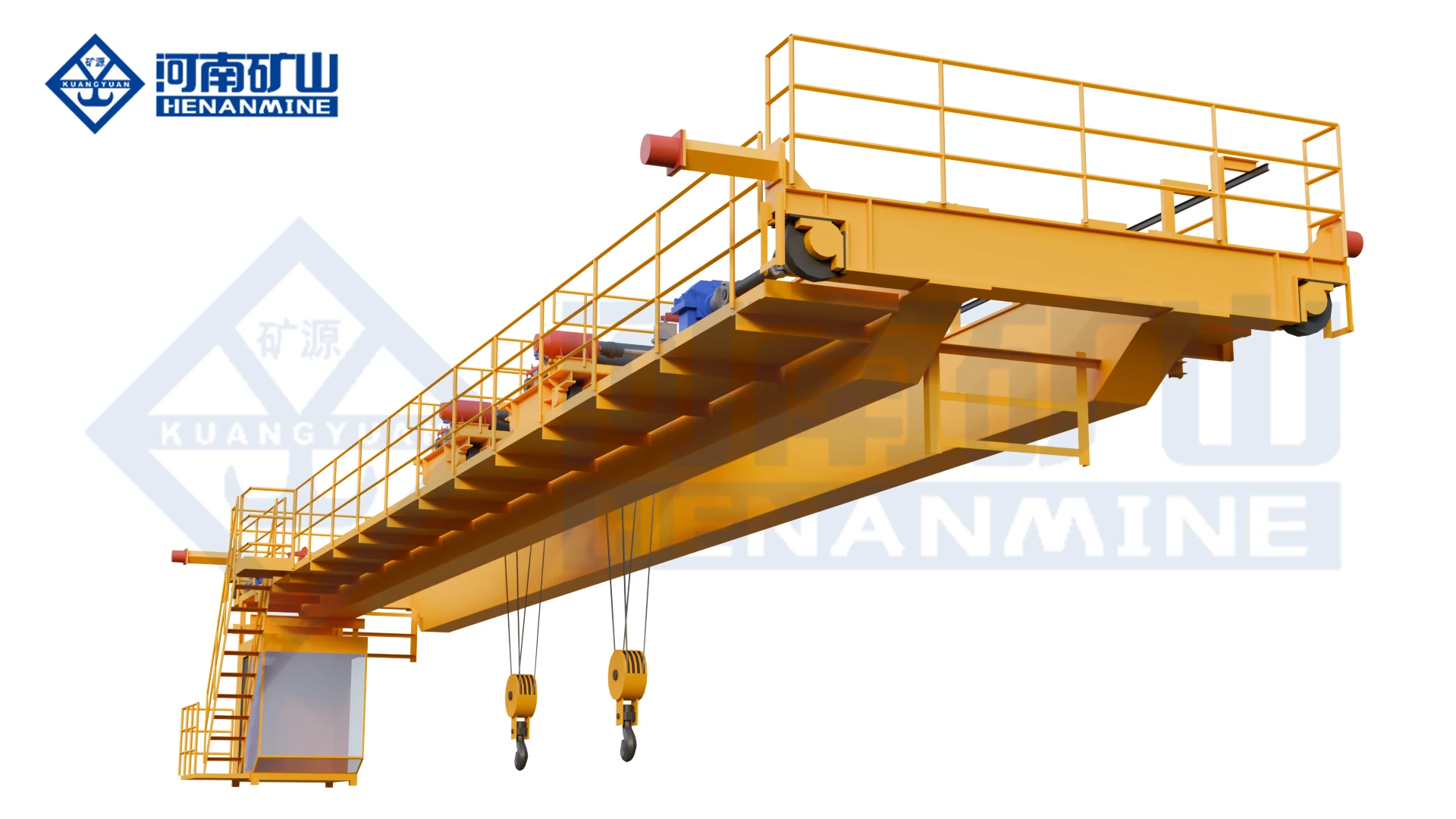
Double-trolley overhead crane systems for long loads, large assemblies, balanced turning, two-point lifting and multi-station work. The range covers conventional QE hook cranes, electric-hoist double-trolley systems, modern synchronized KSSLE cranes, explosion-proof QBE, insulated QYE and metallurgical double-trolley casting cranes.

Double trolley overhead crane
1+1–320/80 tFrom lightweight synchronized hoists to heavy casting duty
Independent / SynchronizedSeparate work or coordinated two-point lifting
A4–A8General, special-environment and metallurgical duty
Hook / Hoist / Special ProcessMultiple lifting-mechanism configurations
Product Family Structure

Complete Double Trolley Overhead Crane Range

Double-trolley crane selection starts with the load geometry and lifting method: two independent workstations, synchronized lifting of one long load, balanced turning, or a process crane using separate main and auxiliary trolleys. Capacity alone does not determine the correct two-trolley system.

General Double-Trolley Cranes

General Double-Trolley Cranes

Conventional two-trolley hook and electric-hoist cranes for long loads, large assemblies and workshops requiring two independent lifting positions.

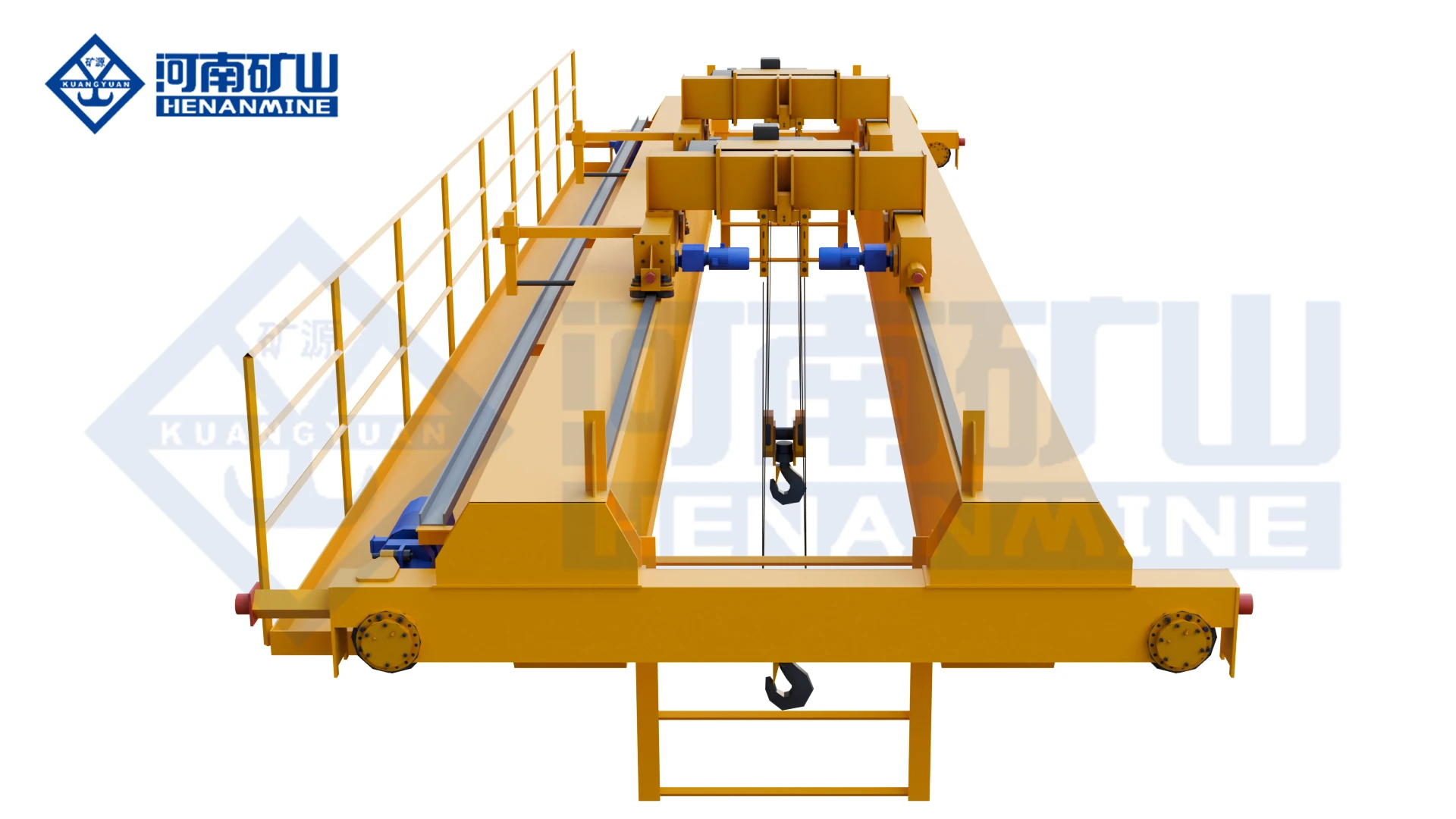
QE Double-Trolley Hook Overhead Crane
QE

QE Double-Trolley Hook Overhead Crane

A conventional double-girder bridge crane with two hook trolleys running on the same bridge. Each trolley can perform independent lifting tasks, while coordinated operation allows long, wide or irregular loads to be handled at two lifting points with improved balance and load control.

5+5–16+16 tA5–A6Two Hook Trolleys10.5–31.5 m
Technical Specifications
Capacities5+5 t / 10+10 t / 16+16 t
Span10.5–31.5 m
Maximum Lifting Height16 m
Working ClassA5–A6
5+5 t Hoisting Speed11.3 m/min (A5); 15.6 m/min (A6)
10+10 t Hoisting Speed8.5 m/min (A5); 13.2 m/min (A6)
16+16 t Hoisting Speed7.9 m/min (A5); 10.7 m/min (A6)
Trolley Travel Speed37.2 / 43.8 / 44.6 m/min by capacity
Max. Wheel PressureApprox. 101–335 kN across A5/A6 configurations
Recommended RailP43 for 5+5 / 10+10 t; QU70 for 16+16 t
Power Supply3-phase AC 380 V / 50 Hz
Trolley OperationIndependent or coordinated two-point lifting
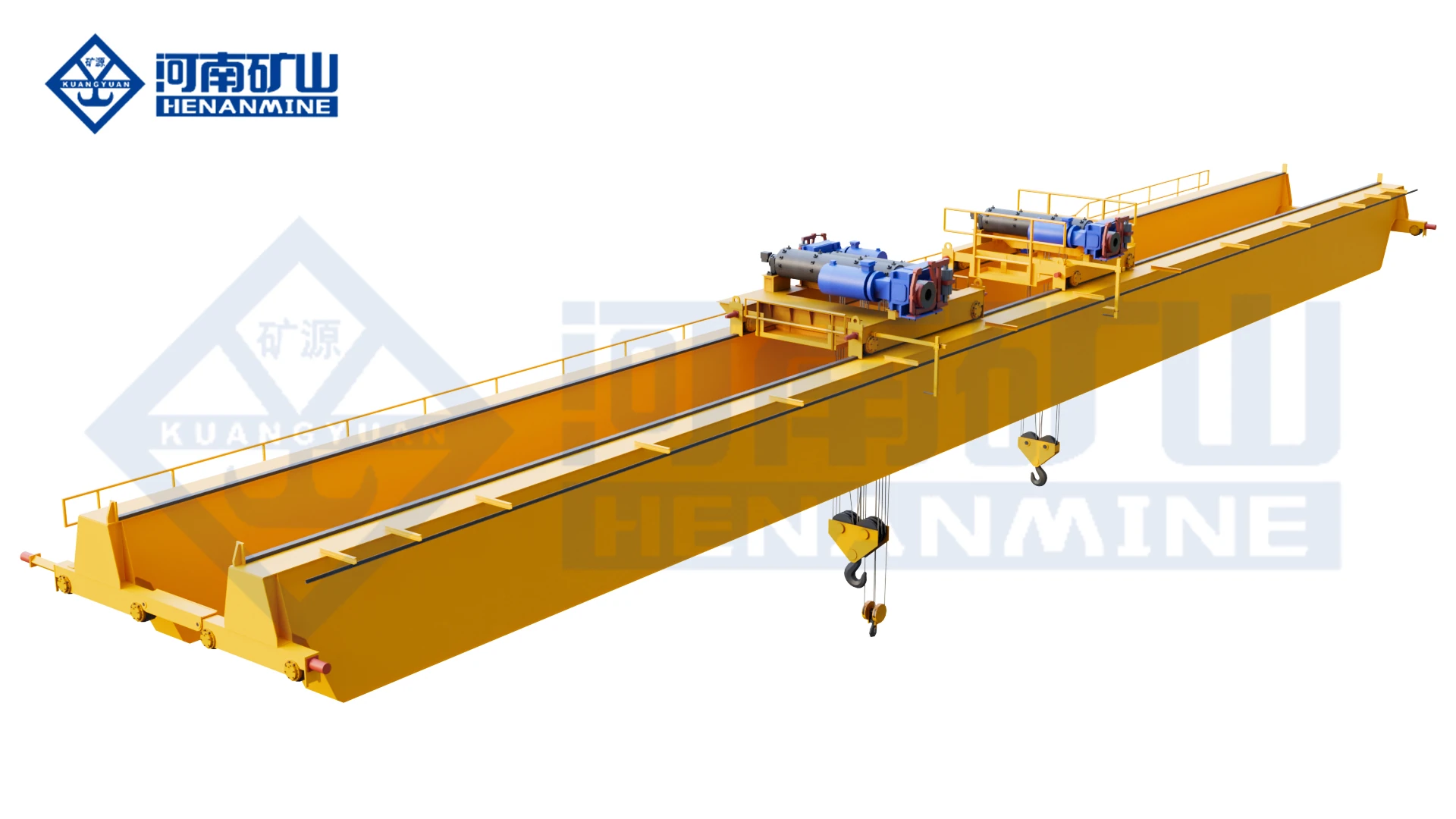
Double-Girder Double-Trolley Electric Hoist Crane
LHE / LHEA

Double-Girder Double-Trolley Electric Hoist Crane

A double-girder crane using two wire-rope electric-hoist trolleys for general industrial lifting. The system provides a compact alternative to conventional winch trolleys and is suited to workshops where two lifting points, independent workstations or long-load handling are required without a heavy-duty QE trolley arrangement.

Electric HoistIndependent / CoordinatedLow Wheel LoadGeneral Industry
Technical Specifications
Lifting MechanismTwo wire-rope electric hoists on separate trolleys
Bridge StructureDouble girder, top running
Trolley ModeIndependent or coordinated operation
Load HandlingHook or dedicated lifting attachment
Motion ControlSoft-start or VFD travel available
SynchronizationEncoder + inverter coordinated control available
HeadroomLow-headroom trolley-frame hoist arrangement available
Building InterfaceLightweight structure and reduced wheel load
Typical ApplicationMachining, assembly, production, repair and warehouse lifting
Capacity / Span / HeightConfigured to project and electric-hoist selection
Modern Double-Trolley Cranes

Modern Double-Trolley Cranes

Lightweight modular double-trolley systems with low-headroom hoists, VFD motion and synchronized control for modern production lines.

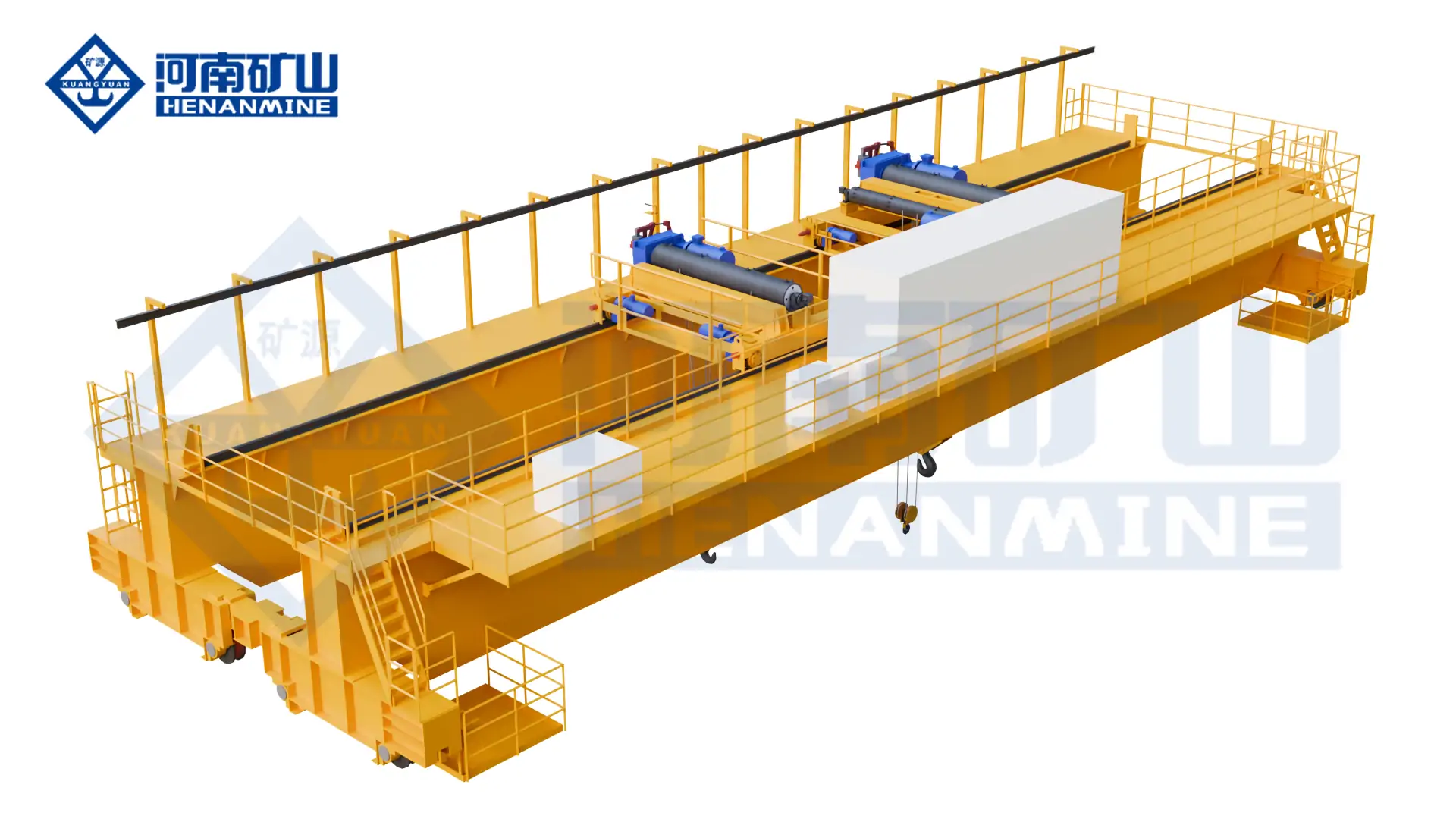
KSSLE New Dual-Trolley Electric Hoist Bridge Crane
KSSLE

KSSLE New Dual-Trolley Electric Hoist Bridge Crane

A modern modular double-trolley electric-hoist crane developed for long material, large assemblies and synchronized two-point lifting. Two independent trolleys share the same runway and can switch between separate handling and synchronized lifting with VFD motion control.

1+1–32+32 tA5–A6C-Type Low HeadroomVFD + Sync Control
Technical Specifications
Rated Capacity1+1–32+32 t or customized
Span7.5–31.5 m
Lifting Height6–30 m
Working ClassA5–A6
Hoisting Speed0.8/5–8/16 m/min
Trolley Travel Speed5–25 m/min
Crane Travel Speed10–30 m/min
Trolley ModeIndependent / synchronized
Hoist ArrangementC-type low-headroom layout
Protection LevelIP54
Power Supply220–690 V / 50–60 Hz
Structure MaterialHigh-strength Q355B steel
Special-Environment Double-Trolley Cranes

Special-Environment Double-Trolley Cranes

Dual-trolley systems for explosion-risk and high-voltage environments where coordinated lifting must be combined with dedicated protection.

QBE Dual-Trolley Explosion-Proof Overhead Crane
QBE

QBE Dual-Trolley Explosion-Proof Overhead Crane

A heavy-duty double-trolley explosion-proof crane for chemical, petroleum and other flammable or explosive environments. The two trolleys can handle separate loads or operate together for long and heavy components while the electrical and mechanical systems are configured for the project's hazardous-area requirements.

20+20 t StandardUp to 50+50 t CustomA4–A6Explosion-Proof
Technical Specifications
Rated Capacity20+20 t standard; up to 50+50 t customized
Span10–35 m
Lifting Height6–30 m
Working ClassA4–A6
Explosion-Proof GradeEx d IIB T4 direction; project-specific higher-risk configuration available
Lifting Speed1–8 m/min
Trolley Travel Speed8–25 m/min
Crane Travel Speed10–30 m/min
ControlCabin / ground / wireless remote / PLC coordinated control
Protection LevelIP55; IP65 option
Trolley ModeIndependent / synchronized
Typical ApplicationChemical, petroleum, hazardous-process plants
QYE Double-Trolley Insulated Overhead Crane
QYE

QYE Double-Trolley Insulated Overhead Crane

A double-trolley insulated bridge crane for strong-current, high-temperature and corrosive industrial environments. Two trolley lifting systems provide independent or coordinated lifting while multiple electrical-isolation points reduce conductive paths between the load, trolley, bridge and runway.

32/5+32/5 t ExampleA4–A610–35 kV DirectionIP54–IP65
Technical Specifications
Representative Capacity32/5+32/5 t; other combinations configurable
Capacity Family10–50 t or customized
Span10–35 m configured range
Lifting Height6–30 m
Working ClassA4–A6
Lifting Speed0.8–10 m/min
Protection LevelIP54–IP65
Power Supply380 V / 50 Hz; 220–660 V / 50–60 Hz
Trolley ModeIndependent / synchronized
SynchronizationEncoder + inverter coordinated control
InsulationMultiple insulated interfaces between lifting system and crane structure
Typical ApplicationSubstations, electrolysis, strong-current process areas
Metallurgical Double-Trolley Cranes

Metallurgical Double-Trolley Cranes

Heavy metallurgical cranes using separate main and auxiliary trolleys for molten-metal transfer and casting processes.

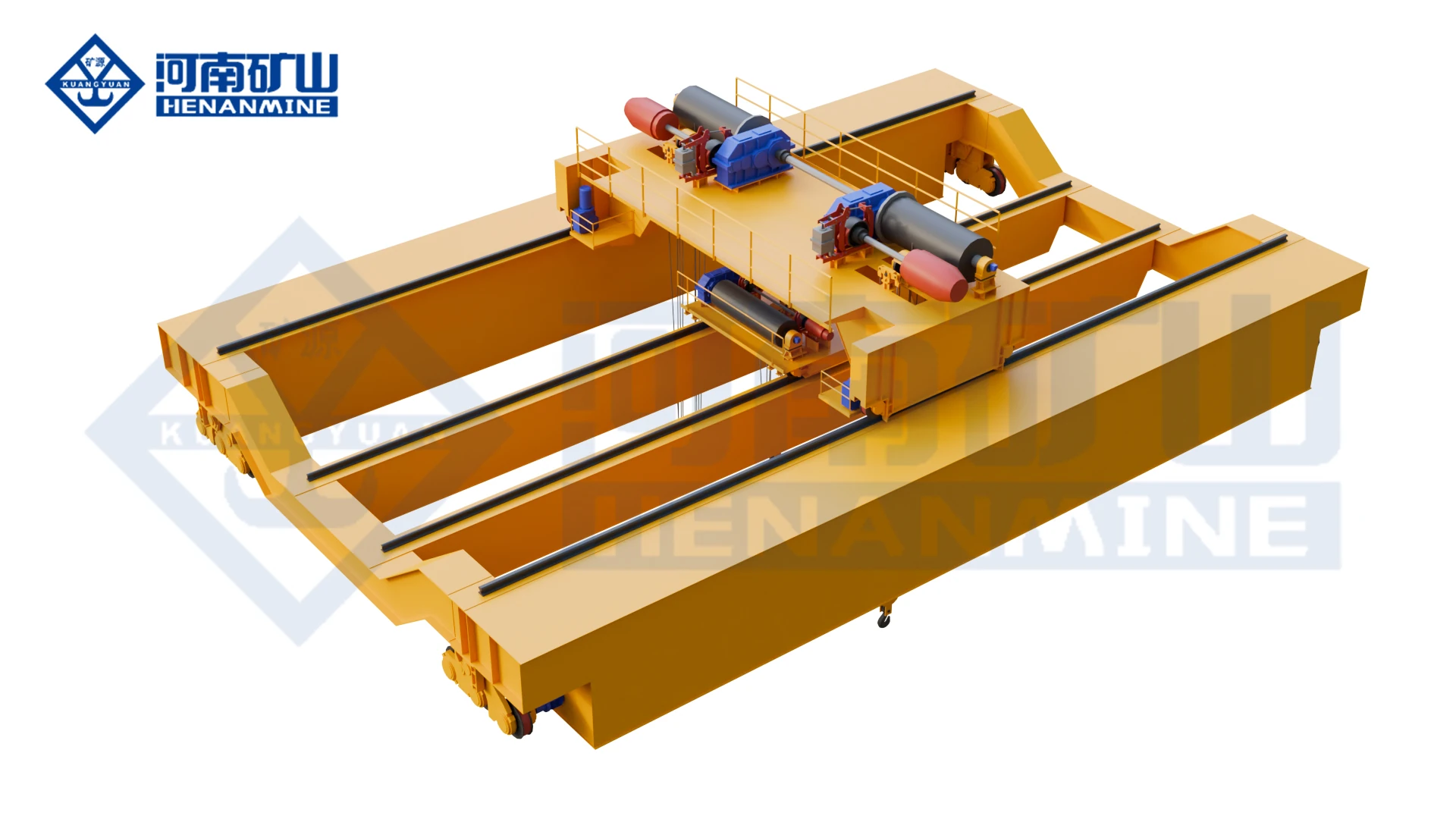
YZS Four-Girder Double-Trolley Casting Crane
YZS

YZS Four-Girder Double-Trolley Casting Crane

A four-girder, four- or six-rail double-trolley casting crane for ultra-heavy ladle and molten-metal handling. The main trolley carries the primary gantry-type lifting attachment while the auxiliary trolley provides a separate hook system for pouring, tipping and general metallurgical lifting.

125/32–320/80 tA7–A8Four GirderMolten Metal
Technical Specifications
Capacity Series125/32–320/80 t
Working ClassA7–A8
Bridge StructureFour girder, four-rail / six-rail
Trolley ArrangementMain trolley + auxiliary trolley on dedicated tracks
Main Lifting DeviceFixed gantry-type plate hook / dual lifting points
Auxiliary Lifting DeviceForged hook
Motor InsulationClass H metallurgical configuration
Protection LevelIP54 typical metallurgical configuration
ControlIndependent mechanisms with coordinated process control available
Typical ApplicationLarge ladle transfer, pouring, tipping and heavy casting service
Side-by-Side Selection

Double Trolley Crane Model Comparison

Compare crane type, capacity, working duty and trolley-control mode before finalizing synchronization, trolley spacing, wheel loads, runway structure, anti-collision protection and control architecture.

Model / ConfigurationCapacitySpanWorking ClassTrolley ModePrimary Use
QE
QE Double-Trolley Hook Overhead Crane
5+5 t / 10+10 t / 16+16 t10.5–31.5 mA5–A6Independent / coordinated10.5–31.5 m
LHE / LHEA
Double-Girder Double-Trolley Electric Hoist Crane
Project-specificProject-specificProject-specificIndependent or coordinated operationGeneral Industry
KSSLE
KSSLE New Dual-Trolley Electric Hoist Bridge Crane
1+1–32+32 t or customized7.5–31.5 mA5–A6Independent / synchronizedVFD + Sync Control
QBE
QBE Dual-Trolley Explosion-Proof Overhead Crane
20+20 t standard; up to 50+50 t customized10–35 mA4–A6Independent / synchronizedExplosion-Proof
QYE
QYE Double-Trolley Insulated Overhead Crane
32/5+32/5 t; other combinations configurable10–35 m configured rangeA4–A6Independent / synchronizedIP54–IP65
YZS
YZS Four-Girder Double-Trolley Casting Crane
125/32–320/80 tProject-specificA7–A8Main trolley + auxiliary trolley on dedicated tracksMolten Metal
Selection by Lifting Task

Choose the Double-Trolley Crane by Load Geometry

Long Steel, Pipe & Profiles

Use QE or KSSLE when one long load requires two lifting points. Synchronized trolley control helps keep the load level and reduces bending or twisting.

Large Machinery & Assemblies

Two trolleys can share the load during installation, turning or positioning of large components that cannot be safely controlled from one lifting point.

Two Independent Workstations

LHE/LHEA or KSSLE can run the two trolleys independently so one bridge serves separate production or maintenance tasks.

Hazardous Chemical Area

QBE combines dual-trolley lifting with explosion-proof electrical and mechanical protection for flammable gas, vapor or dust environments.

High-Voltage / Strong-Current Area

QYE adds multiple electrical-isolation points for substations, electrolysis and other strong-current process areas requiring two lifting positions.

Molten Metal & Casting

YZS uses separate main and auxiliary trolleys on a four-girder metallurgical bridge for heavy ladle transfer, pouring and casting operations.

QE Standard Series

QE Double-Trolley Hook Crane Technical Range

The Henan Mine Crane selection series covers 5+5 t, 10+10 t and 16+16 t QE cranes over 10.5–31.5 m spans, with A5 and A6 duty options.

ConfigurationSpanLifting HeightHoisting Speed A5Hoisting Speed A6Trolley SpeedMax Wheel PressureRail
QE 5+5 t10.5–31.5 m16 m11.3 m/min15.6 m/min37.2 m/minApprox. 101–162 kNP43
QE 10+10 t10.5–31.5 m16 m8.5 m/min13.2 m/min43.8 m/minApprox. 161–239 kNP43
QE 16+16 t10.5–31.5 m16 m7.9 m/min10.7 m/min44.6 m/minApprox. 235–335 kNQU70
Two-Point Lifting Engineering

Critical Double-Trolley Design Factors

Design InputWhat Must Be DefinedWhy It Matters
Load GeometryLength, width, center of gravity and lifting-point spacingDetermines trolley spacing, hook approach and whether independent or synchronous control is required.
Load SharingMaximum load carried by each trolley and total combined loadEach trolley, bridge girder and runway must be checked for both balanced and unbalanced loading cases.
Trolley SpacingMinimum and maximum distance between the two hooksControls the usable range for long materials and large assemblies.
SynchronizationAllowed height difference or positional error between lifting pointsDetermines encoder, inverter, PLC feedback and correction strategy.
Load TurningWhether the component must be tilted or rotatedMay require independent hoisting, coordinated speed control and a dedicated lifting beam or fixture.
Building & RunwaySpan, runway length, headroom and allowable wheel loadsDouble-trolley loading can create higher and more variable wheel loads than a single-trolley crane.
Synchronization & Safety

Double-Trolley Control and Protection

Independent / Synchronous Mode

The two trolleys can work separately for different tasks or enter synchronized mode to lift one load from two points.

Encoder Feedback

Position and speed feedback allows the control system to compare both trolleys and correct synchronization during lifting and travel.

VFD Speed Matching

Variable-frequency drives provide smooth starting, low-speed positioning and controlled correction when the two lifting points move together.

Trolley Anti-Collision

Mechanical and electrical limits maintain safe trolley spacing and prevent unintended contact between the two moving trolleys.

Overload & Load Sharing

Independent load monitoring can detect overload or excessive imbalance between the two lifting points before the load becomes unstable.

Emergency Recovery

Emergency stop, braking and controlled recovery logic should bring both trolleys to a safe state after a drive, encoder or power fault.

Engineering RFQ

Request a Double-Trolley Overhead Crane Proposal

Provide total load, load carried by each trolley, load dimensions, lifting-point spacing, span, lifting height and working duty. For synchronized lifting, include the required synchronization tolerance and whether the load must be turned or tilted.