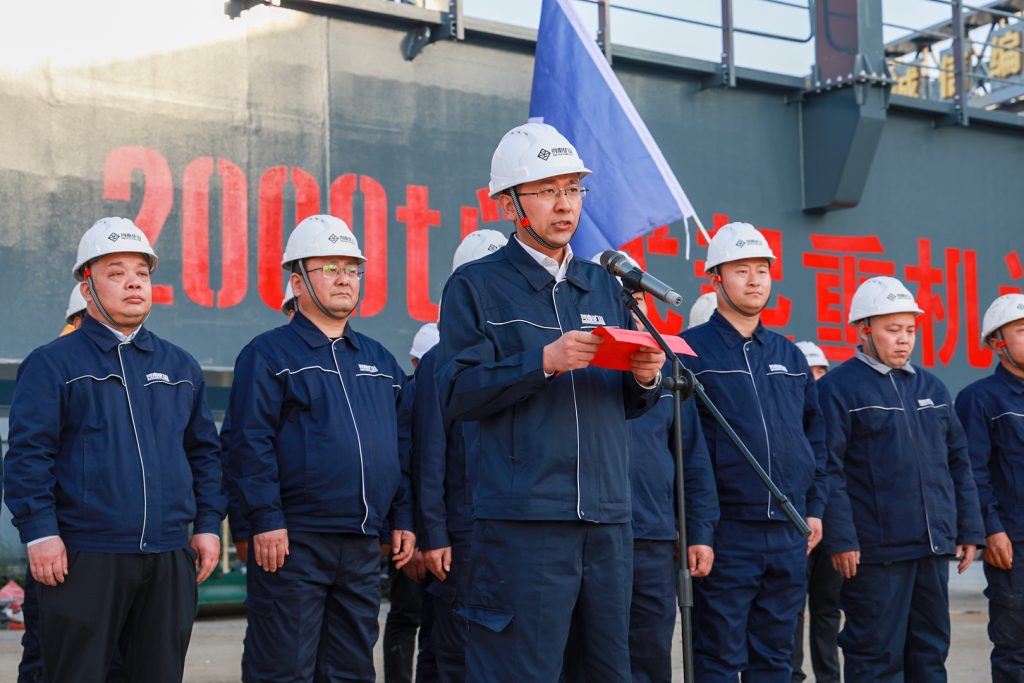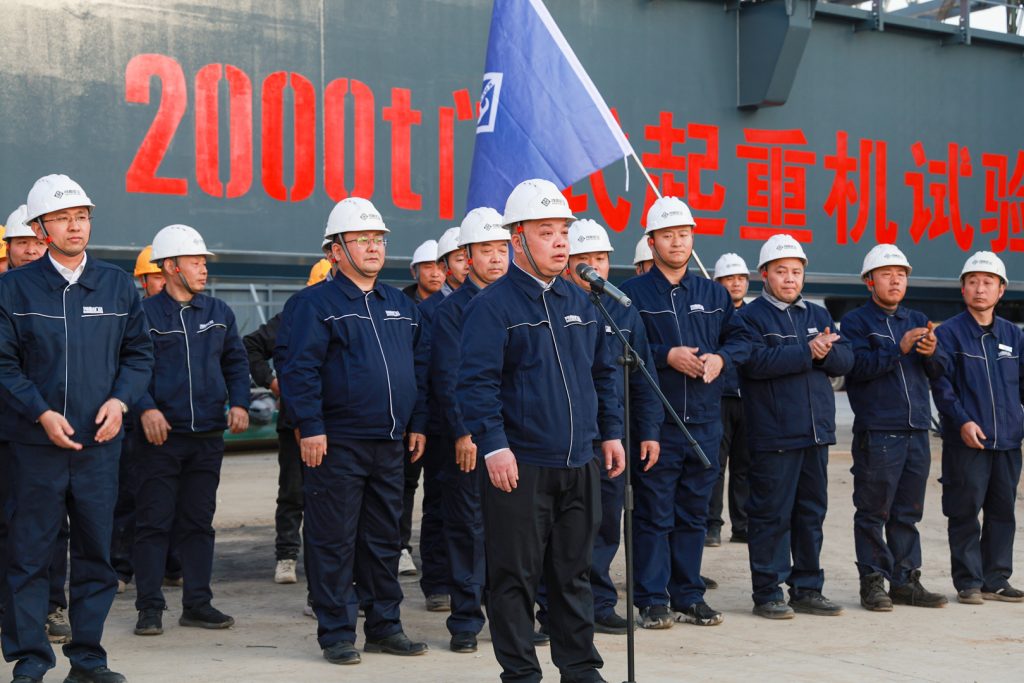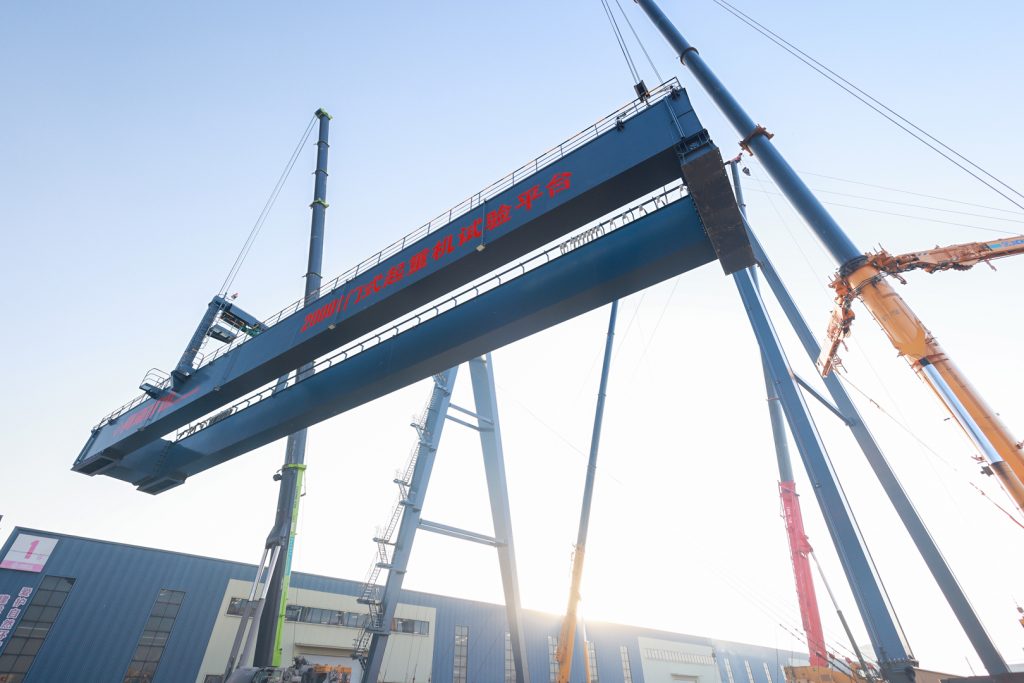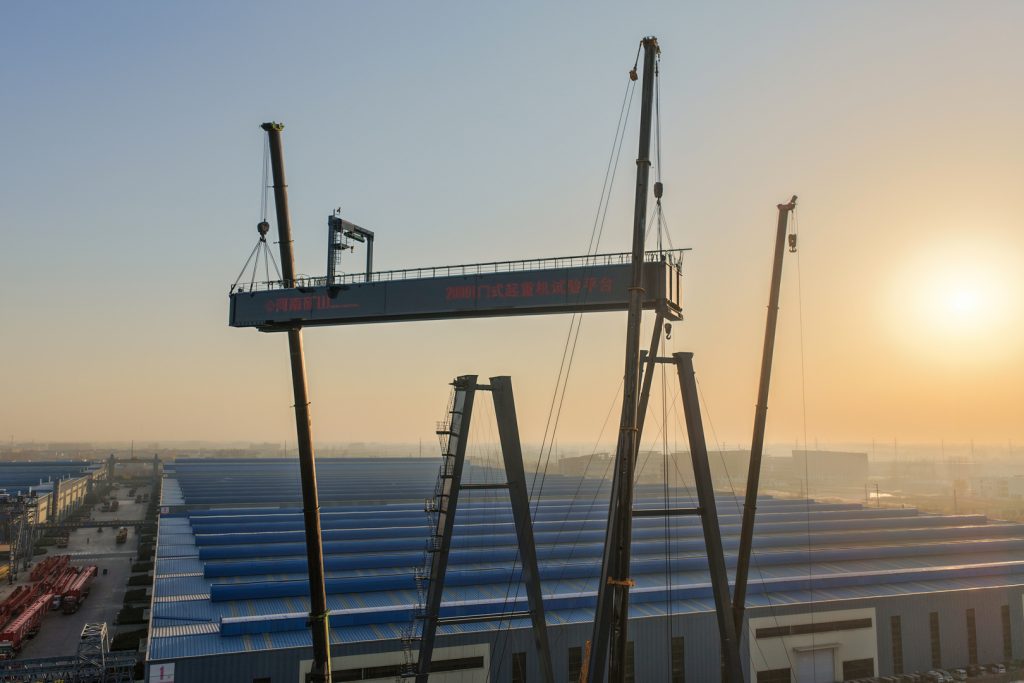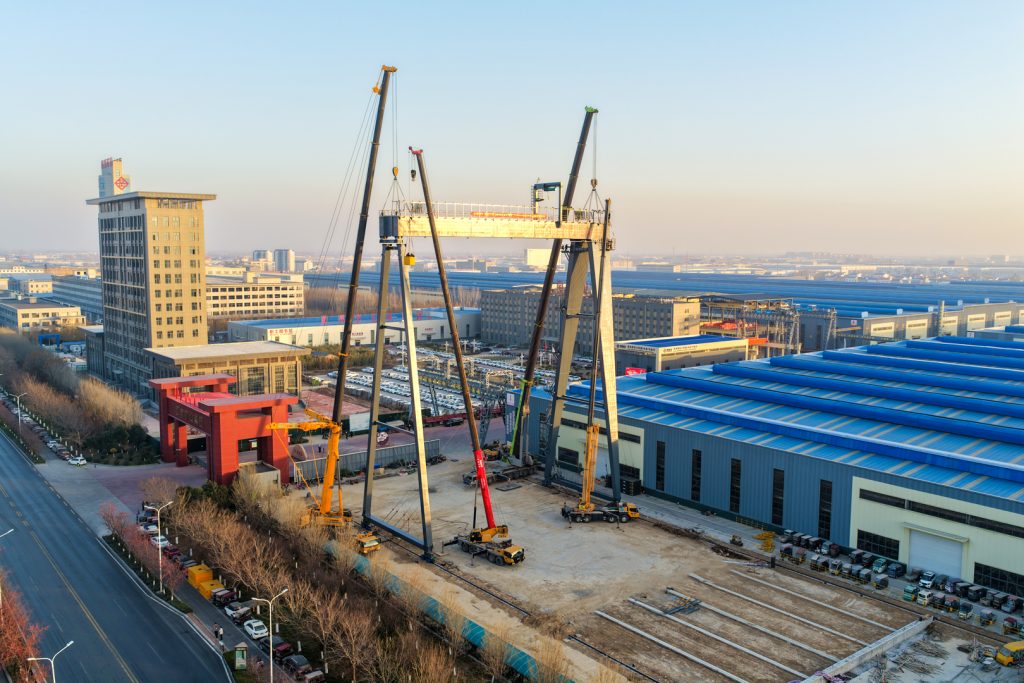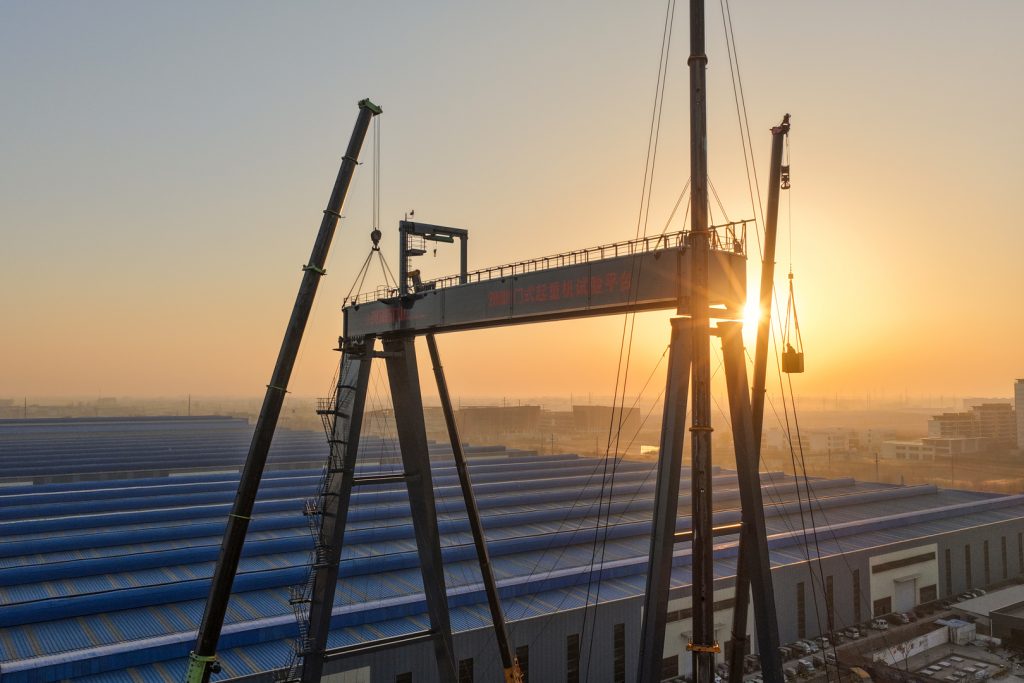
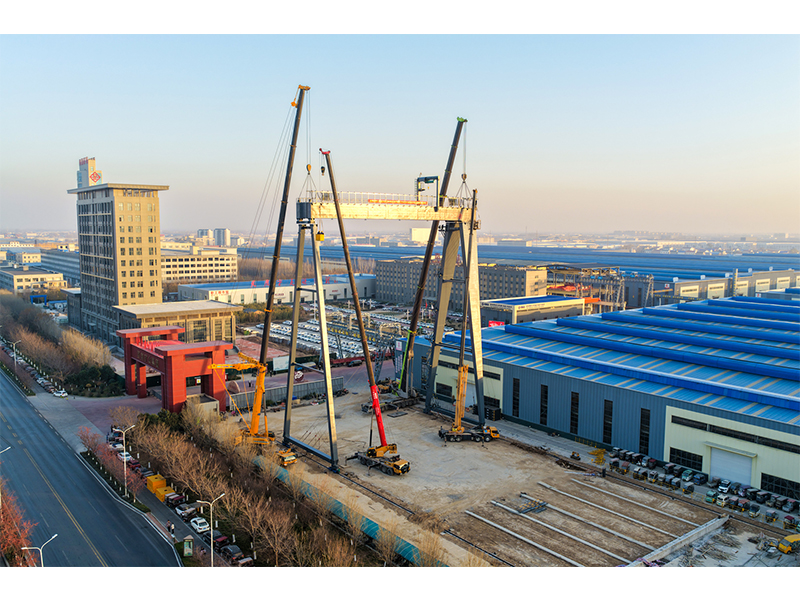
A new platform within the factory testing network
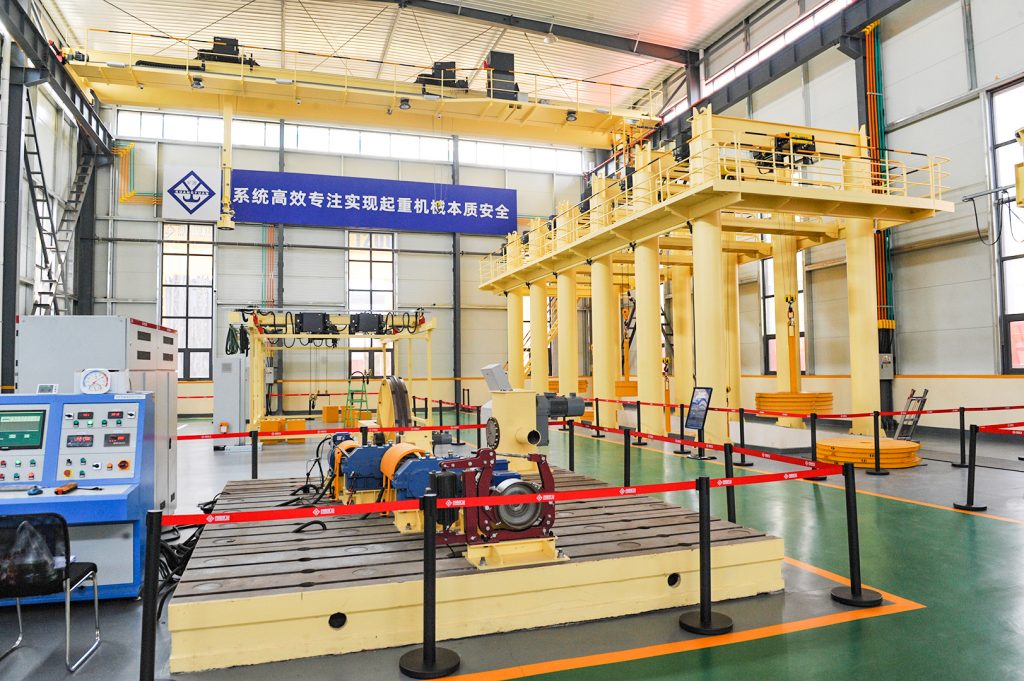
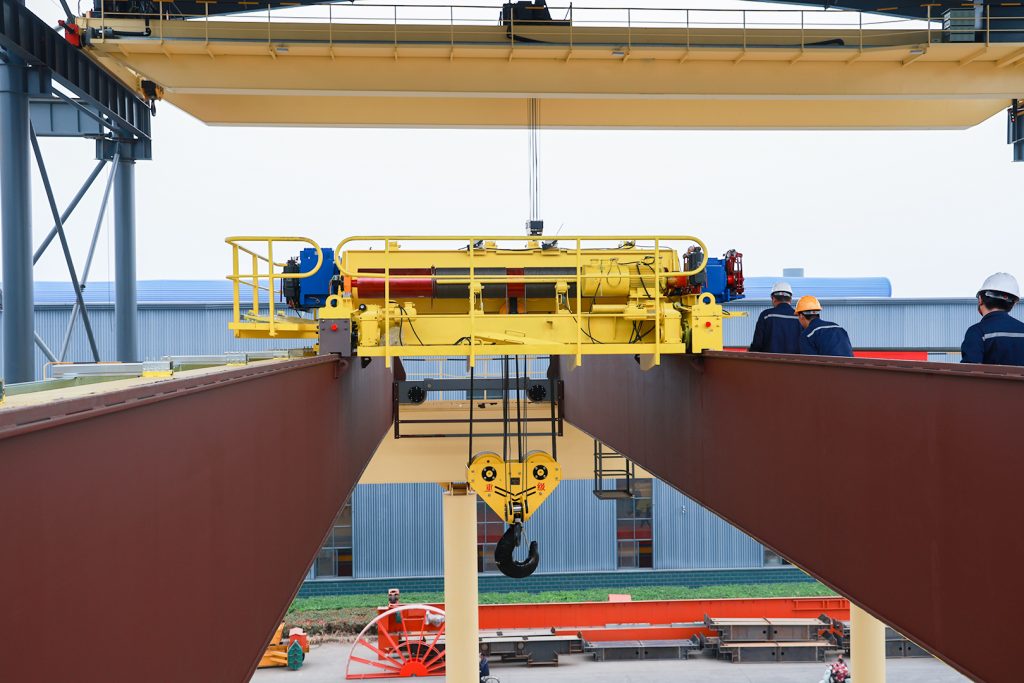
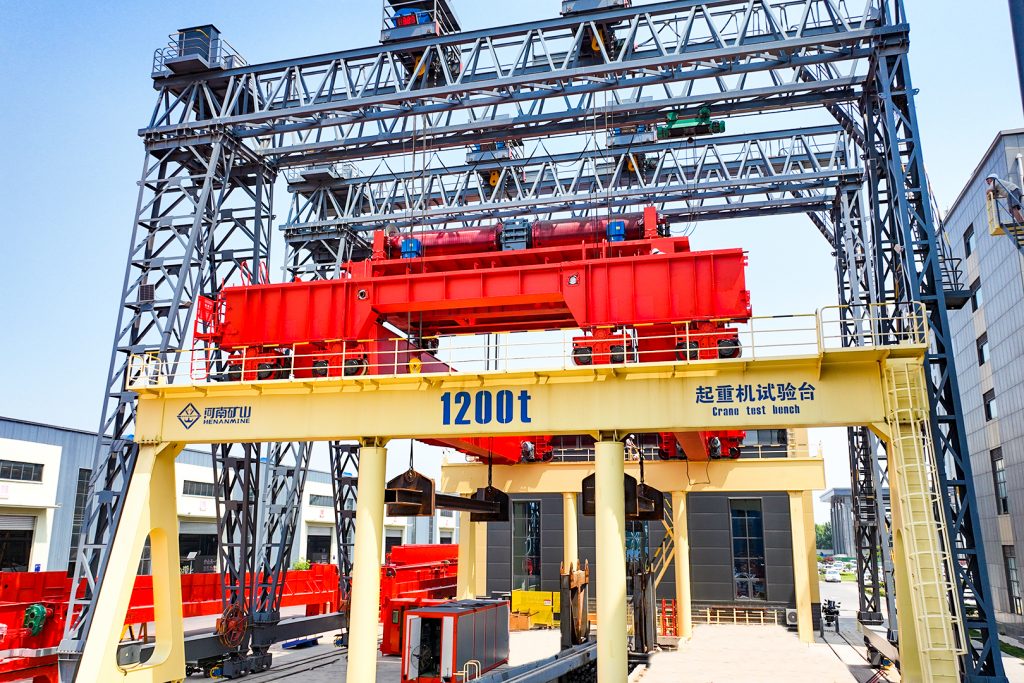
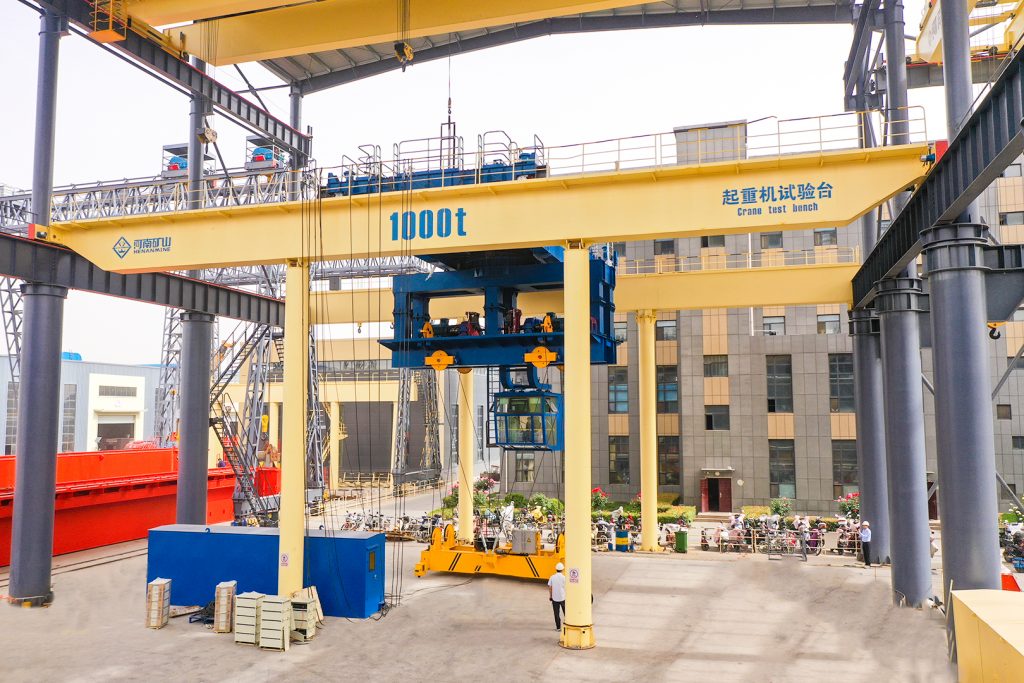
The platform forms part of a testing network that includes 1,200 t and 1,000 t test facilities and a comprehensive crane performance and life-testing laboratory. The network covers crane components, electric hoists, and single- and double-girder overhead and gantry cranes.
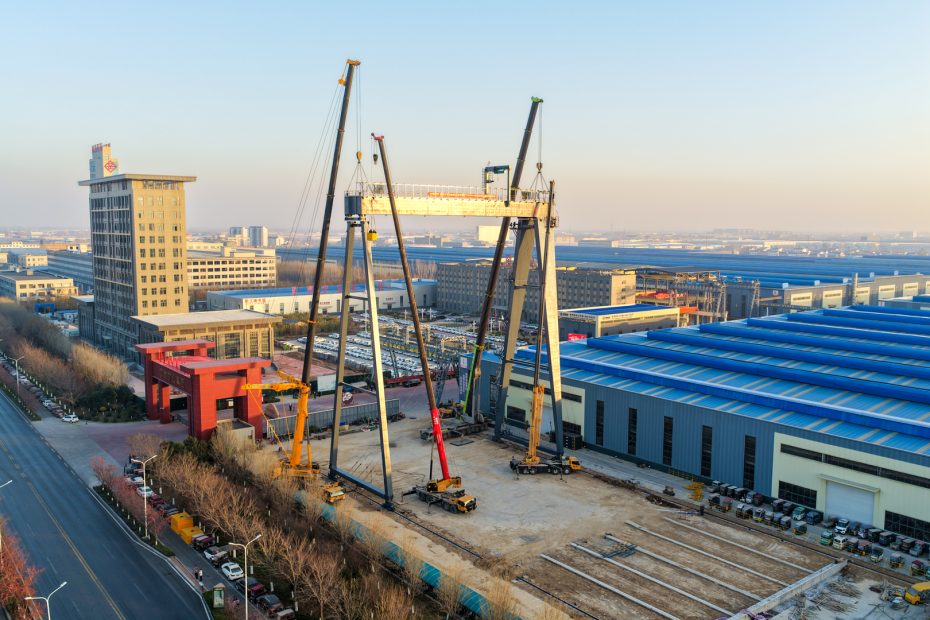
Testing supports design development, quality control through manufacturing, and assessment of equipment performance over its service life. The main-girder lift is a step in assembling the new platform; the completed lift is the milestone announced for this project.
Why testing facilities matter for heavy-crane procurement
Custom heavy-lifting equipment brings together large structures, hoisting machinery, drives and protection functions. Each part raises a different verification question: fabrication records address how the structure was produced, while operating and load tests assess the assembled equipment under the agreed test conditions.
A factory with component and complete-crane test facilities can plan verification at several stages of manufacture. For the purchaser, the useful outcome is a documented test programme tied to the ordered crane’s configuration and intended operating duty.
Connecting the ordered crane with its acceptance programme
A heavy-crane tender should set out the equipment configuration, assembly scope, witnessed inspections and required test records. Hoisting and travel checks, load testing, protection-function checks and review of the manufacturing dossier need to be assigned to the appropriate factory or site stage.
This allows the purchasing team to assess the supplier’s proposed verification work alongside transport, site assembly and commissioning responsibilities. It also gives maintenance personnel a clearer starting record for the equipment entering service.
Photographs from this update