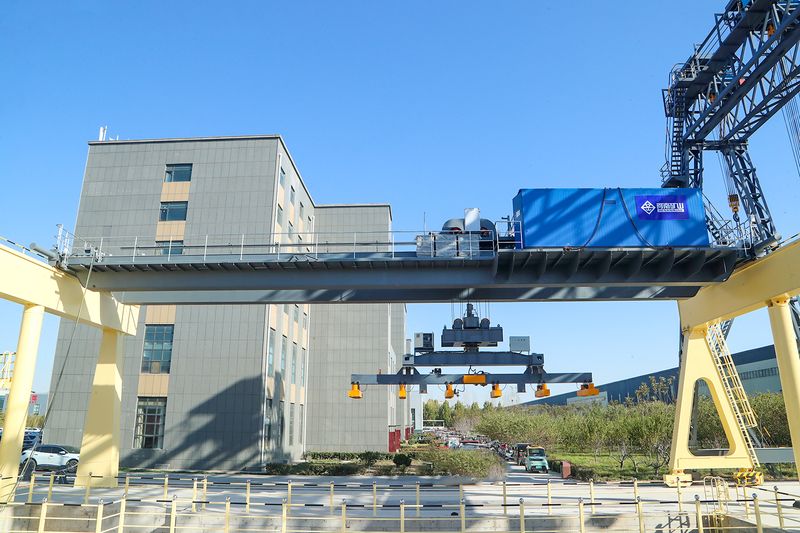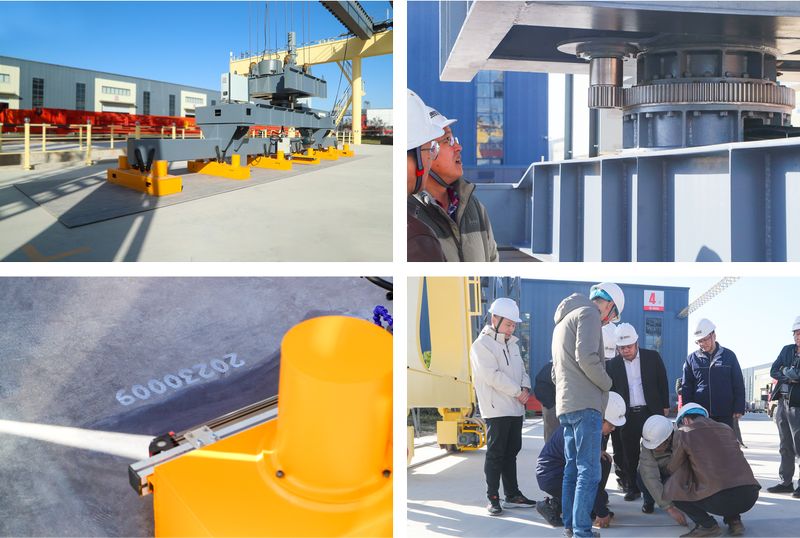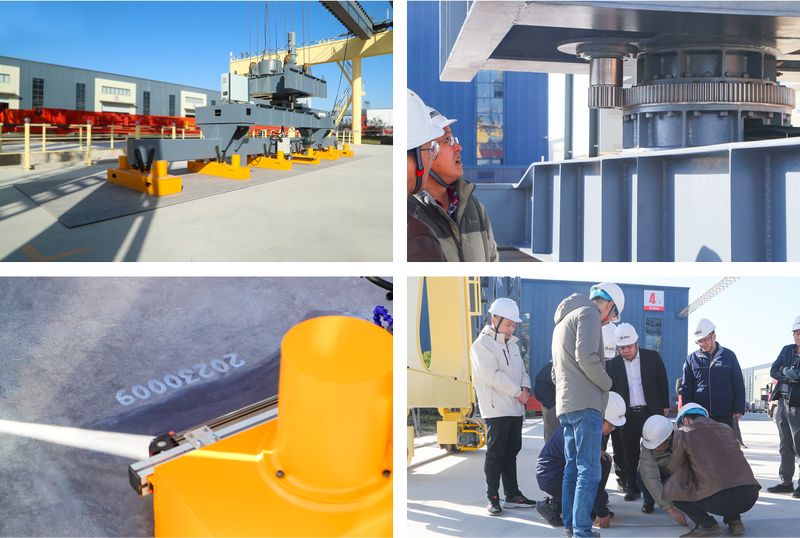
| Customer application | Steel-plate warehouse for steel-structure production |
| Functions tested | Identification, coding, communication and controlled travel |
| Handling sequence | Unload, rotate, sort, stack and rearrange |
| Milestone | Factory function tests, December 2023 |
Identification connects incoming plates with storage tasks
The test programme covered vehicle identification, steel-plate identification and automatic inkjet coding. These functions connect incoming material with the information needed to organise warehouse movements.
The handling sequence includes unloading, rotation, sorting, stacking and stack rearrangement. The equipment is intended for steel-plate flows serving applications such as structures, bridges and towers.
Movement and communication functions are reviewed together
Tests included 5G millimetre-wave communication, bridge anti-collision functions and travel-position accuracy. These checks address coordination between the machine, its working area and the warehouse control process.
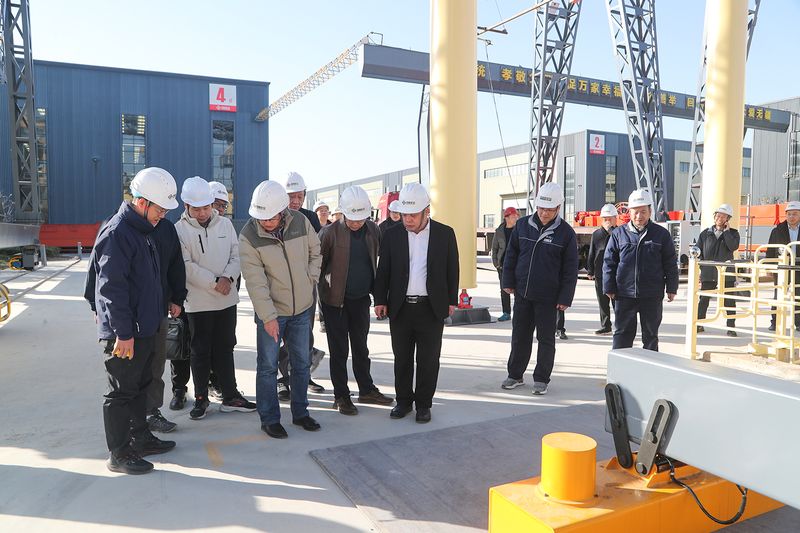
The function programme took place on the factory’s 1,200 t test platform. For a new warehouse system, agree the crane load schedule and the handling functions to be demonstrated during factory testing.
Specify the material flow for an automated warehouse
Provide plate dimensions, weights, thicknesses, grade identification and the desired storage pattern. Define unloading positions, stacking rules and the required throughput.
A proposal should identify warehouse-management interfaces, task allocation and recovery from an interrupted cycle. Factory demonstrations and site commissioning can then follow the same agreed handling sequence.
Photographs from this update