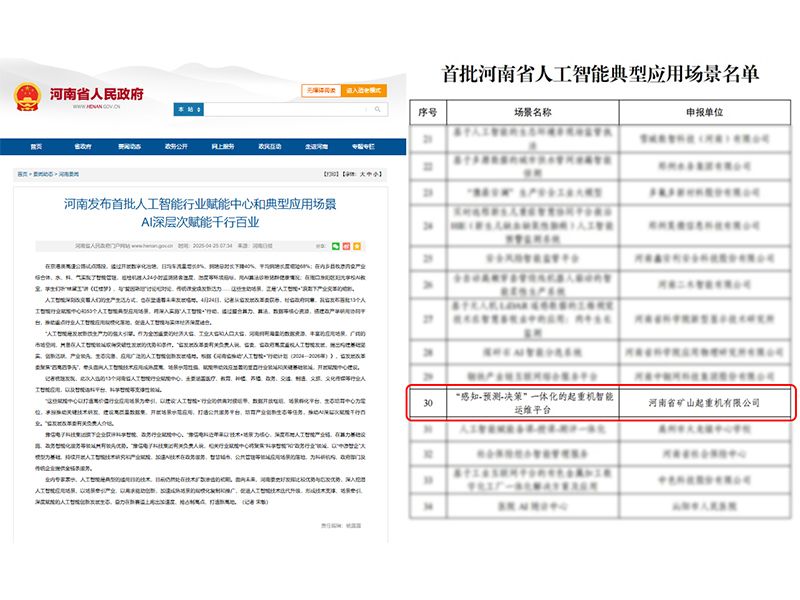
| Recognition | First Henan AI application-scenario programme |
| Platform functions | Sensing, prediction and decision support |
| Remote collaboration | AR-assisted field and specialist communication |
| Data examples | Load, speed, temperature and vibration |
Sensors provide information about the running crane
The platform collects operating information such as lifted weight, travel speed and component temperature or vibration. Sensor data connects the machine’s condition with the maintenance team’s view of the equipment.
A cloud-based maintenance arrangement supports remote commissioning, fault diagnosis and predictive-maintenance functions. The required sensors and monitored components form part of the installation scope.
AR collaboration connects field personnel and specialists
Field personnel can use an AR-capable device to work with remote specialists when investigating an equipment issue. The collaboration function helps the teams examine the machine and coordinate technical guidance.
Remote support requires agreed access, communications and operating responsibilities. The maintenance team should know which functions are available and what information is needed when requesting assistance.
Use operating data within the maintenance plan
Data from multiple cranes can support production and equipment-use decisions. For a new order, identify the measurements, alarm functions, retention requirements and interfaces needed by the customer.
Specify how maintenance findings are reviewed and acted on, together with operator training and the management of software revisions. Monitoring provides information; the site and supplier need an agreed process for using it.
Define the platform scope with the equipment
Send the intended crane configuration, operating cycle and required maintenance interfaces. The technical offer should identify the supplied platform functions, remote-service scope and acceptance demonstrations.