| Application | Automated warehouse storage and retrieval |
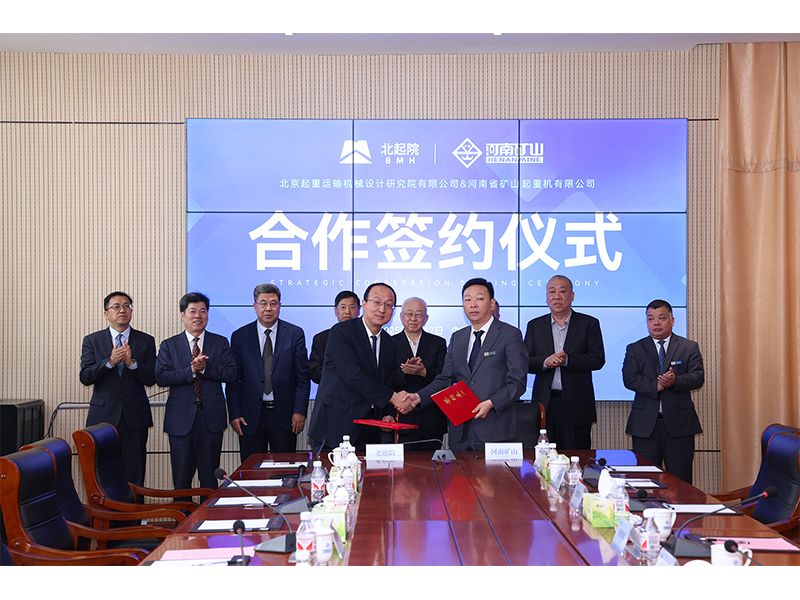
| Development partners | Henan Mine Crane and Beijing Materials Handling Research Institute |
| Handling controls | Positioning, anti-sway and fork protection |
| Energy function | Regenerative energy module |
| Access protection | Gate interlocks, aisle personnel detection and cameras |
Start with the warehouse geometry
The equipment offering includes single-column and double-column structures, rail-transfer and turnout arrangements, and lightweight box-handling equipment. These alternatives address different storage and transfer layouts, so the structure should be selected around the rack arrangement, load envelope and required movement through the warehouse.
A stacker crane works within an automated storage aisle. A production-workshop overhead crane serves a different handling arrangement; the two should not be substituted in a product comparison simply because both lift materials.
Positioning, sway control and fork protection work together
Finite-element structural analysis is combined with high-speed anti-sway and precise positioning control. The handling system also includes fork protection intended to prevent an unintended pushing or dropping condition. These functions relate to how the machine approaches a storage position and transfers its load.
The development includes a combined rigid-and-flexible column structure and an energy-recovery module. When comparing proposals, review the clearance occupied by the structure and the conditions under which energy is recovered. A component list is useful only when it is tied to the planned travel, lifting and transfer cycle.
Automated aisles still need controlled access
The safety arrangement includes access-gate interlocks, aisle personnel detection and cameras. Maintenance access uses a ladder with a safety-rope locking arrangement. These are different parts of the access strategy: keeping personnel out during automatic operation and providing a defined route for maintenance work.
For a warehouse project, the access layout and recovery procedure after an interruption should be discussed with the operating team. Inspection points, isolation requirements and access to the forks or carriage can affect the practical maintenance plan.
Describe the storage task when requesting a proposal
Prepare the pallet or box dimensions, total load, rack locations, aisle clearances and transfer points. Add the required handling sequence and the expected throughput, together with any conveyor or warehouse-control interfaces.
The resulting proposal can then be assessed against the actual storage task: whether the load fits, whether the movement and transfer arrangement serves the layout, and how personnel access is managed. Henan Mine Crane can review a customised stacker configuration against that brief.