- he best choice for lifting steel mills: Core values and scientific selection of double-girder gantry cranes
-
Release Time:2025-12-02 11:01:33Share:
The best choice for lifting steel mills: Core values and scientific selection of double-girder gantry cranes
Lifting is a key part of the process in steel mills – whether it's for steelmaking, continuous casting or rolling. From moving raw ore to dealing with molten steel ladles, and loading and unloading billets and finished steel products, we need to make sure we have lifting equipment that's stable and reliable at every step. These cranes can take a real beating and can handle high temperatures and impacts, making them the go-to choice for steel mill lifting operations. But, since the conditions they operate in are so complex, it's really important to figure out what kind of double-girder gantry crane is actually suitable for these mills and which one they should go for. These decisions have a direct impact on how efficiently we produce things and how safe our operations are. This article looks at steel mill scenarios and gives a full analysis of the core knowledge and selection techniques for double-girder gantry cranes.
I. From the Steel Mill Perspective: So, what even is a double-girder gantry crane?
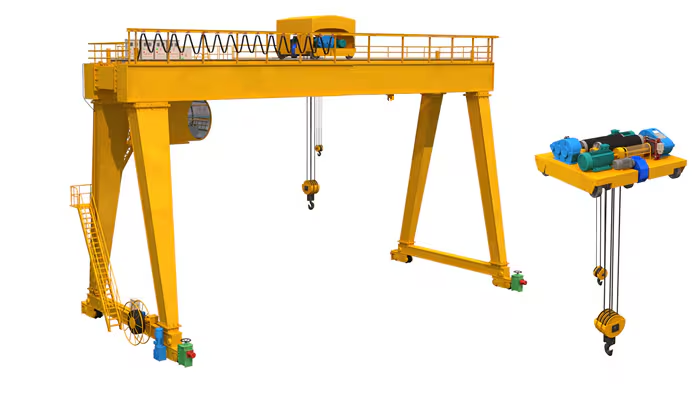
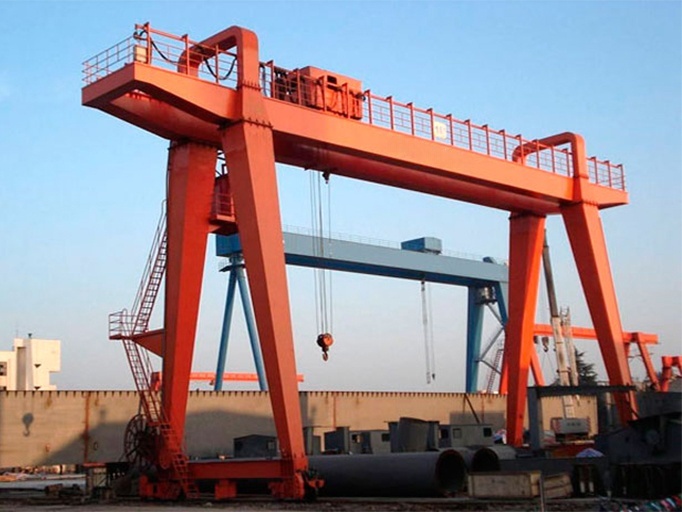
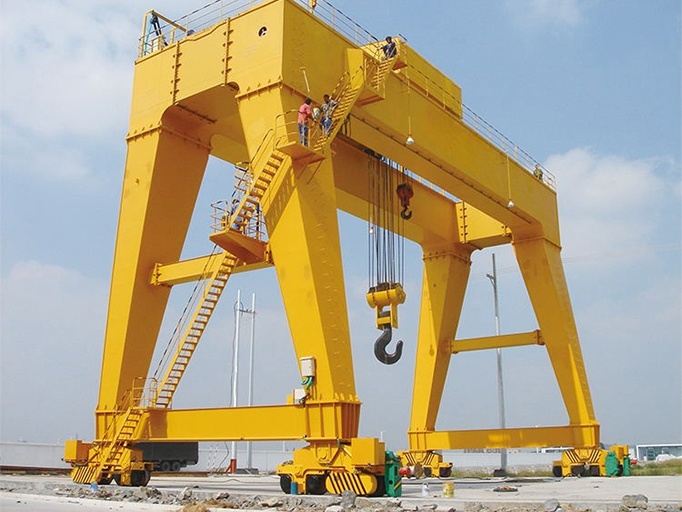
A double-girder gantry crane is a heavy-duty lifting apparatus made up of two parallel main girders, side gantry legs and special travel mechanisms. Its dual-girder design makes it over 50% stronger than single-girder equipment, making it able to handle common steel mill loads ranging from 50 to 300 tons with ease. It's a working class that usually goes from A6 to A8 (heavy to extra-heavy duty), and it can handle the high-frequency operational demands of steel mills 24/7.
They're designed to withstand the tough conditions in steel mills, like high temperatures, dust, and splashes of molten material. These cranes are fitted with protective covers that can handle high temperatures, dust-proof seals, and strong hoisting mechanisms that can resist impacts. This means they can get involved in high-risk jobs like ladle handling and transporting hot-rolled steel. This lifting equipment is different from other models because it doesn't need to be attached to factory structures. This means you can use it in different places, like on the edges of steelmaking workshops and billet yards. This avoids messing up production lines while making it easy to handle materials from start to finish. This is why terms like "steel mill double-girder gantry crane" and "metallurgical-specific double-girder gantry crane" are used so much in the industry.
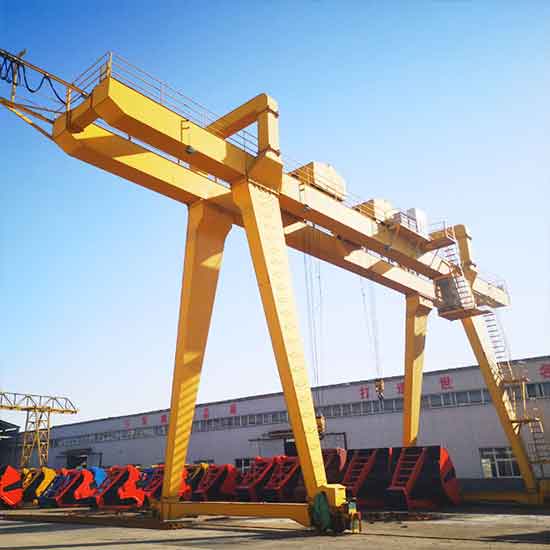
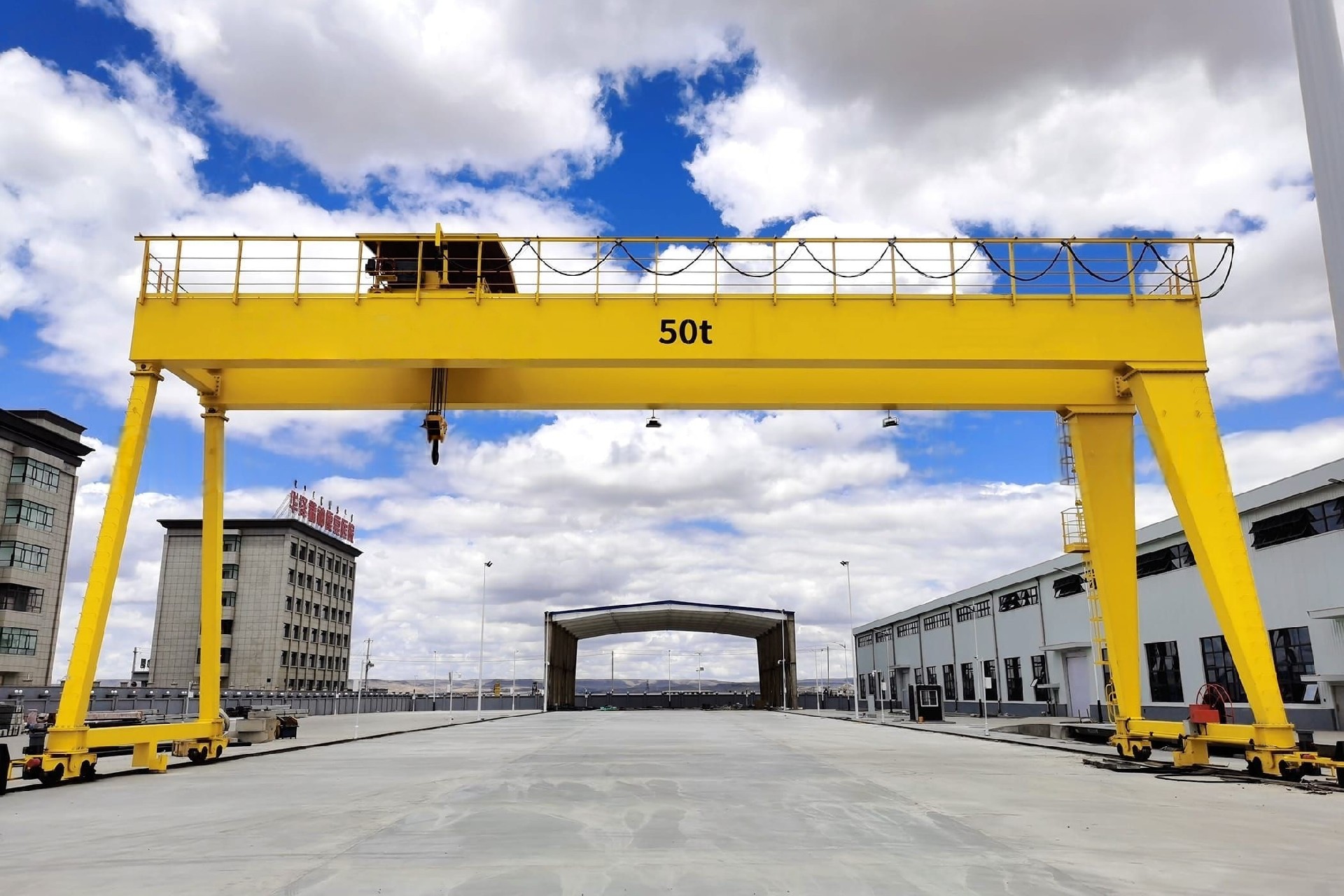
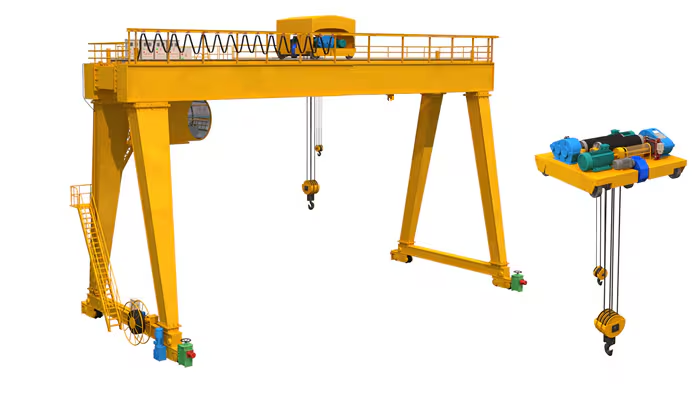
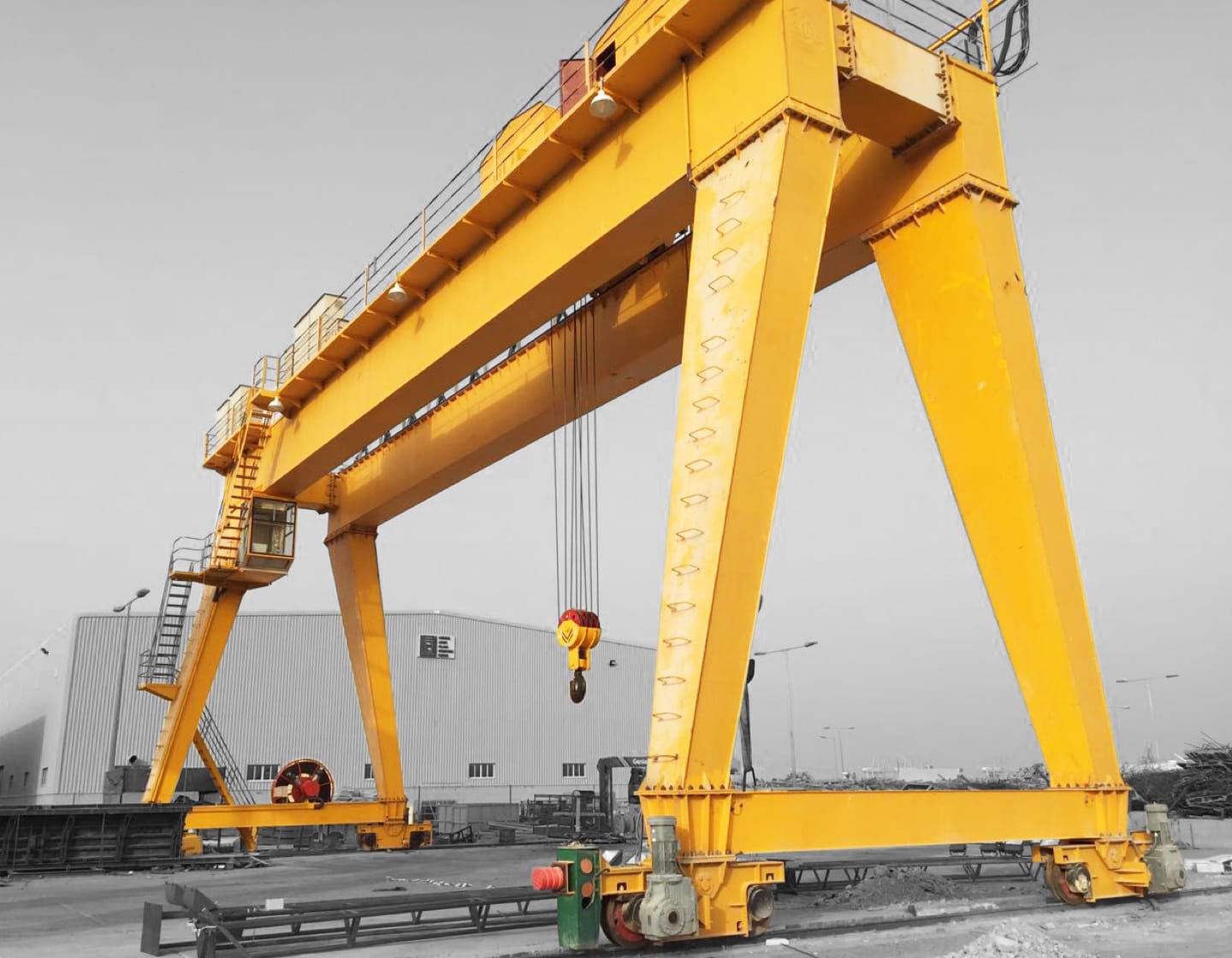
II. We've got a special offer for you: Here's a rundown of the main types of double-girder gantry cranes and how they're used.
Steel mill processes have very different lifting needs. Double-girder gantry cranes are used in steel mills, and they're usually put into different categories depending on how they're used. To be more exact, they're divided into the following types, and it's important to choose the right one for the job:
1. So, here's how we'd go about classifying the main girder structure: Adapting to Different Load-Bearing and Space Requirements
Box-Type Double-Girder Gantry Cranes: They've got a closed box-section main girder, so they're light, stiff and can take a lot of heat. They're the most common type in steel mills. They can lift anything from 50 to 200 tons, so they're great for moving billets, keeping the rolling mills in tip-top condition, and pretty much anything else you can think of. They're especially handy for linking up areas between continuous casting shops and steel warehouses, and the "Billet Transfer Box-Type Double-Girder Gantry Crane" is a pretty common way to do it.
Truss-Type Double-Girder Gantry Crane: The main girder is made up of structural steel that's been put together to make a truss structure, which makes it pretty wind resistant and great at dissipating heat. It's perfect for big open spaces, like steel mills, where they've got raw materials and finished products being stored. It can lift bulk materials like ore and coke, with a lifting capacity of up to 300 tons. The "Steel Mill Raw Material Yard Truss-Type Double-Girder Gantry Crane" is really popular.
2. By Application: Let's talk about the main steel mill processes.
Metallurgical Casting Double-Girder Gantry Crane: We designed this specifically for steelmaking workshops, so it's perfect for "molten steel ladle handling double-girder gantry cranes". It's got high-temperature resistant motors, thermal insulation shields and molten material drip protection devices. The hoisting mechanism is impact-resistant, so you can handle 100-300 ton ladles directly. The working class is no lower than A7. Some models have ladle tilt fine-adjustment, so you can pour with precision.
We've got a billet-specific double-girder gantry crane. It's great for dealing with high-temperature billets, and it's got heat-resistant alloy clamps for gripping, flipping and stacking. It can lift anything from 50 to 150 tons, which makes it perfect for moving billets between the exit points of continuous casting furnaces and reheating furnaces, without worrying about deformation or slippage.
Maintaining Equipment: Double-girder Gantry Crane: It's designed for installing and maintaining large steel mill equipment (like converters and rolling mills). It's got a high lifting height and precise positioning, plus a fine-tuning control system for handling heavy components with ease. It can lift anything from 80 to 200 tons. A real whizz at keeping steel mill equipment in good working order.
Finished Steel Double-girder Gantry Crane: It's designed for finished steel warehouses and has adjustable lifting attachments to handle various products like steel plates, structural steel, and steel pipes. It can lift 30-100 tons and is really fast, which makes storing finished products much more efficient. The "finished steel warehouse double-girder gantry crane" is the main thing it's used for.
3. Classification by Control Method: Adapted to meet the needs of smart production in steel mills
Aerial Control Double-Girder Gantry Crane It's got a high-temperature-resistant operator cabin on one side of the main girder. Operators can keep an eye on the lifting status of ladles and ingots from a higher up position, with a clear view. It's perfect for high-precision processes like steelmaking and continuous casting, and it's currently the go-to in steel mills.
Intelligent Remote-Controlled Double-Girder Gantry Cranes: It's great for wireless remote operation or PLC automation, so operators can work in control rooms away from high temperatures and dust. They can even lift without a person on board, which makes them perfect for situations where there's a lot of risk and these machines are used a lot, like when we're moving ladles and stacking raw materials. This shows how "intelligent double-girder gantry cranes in steel mills" are being developed.
II. Steel Mill Specialized: 5 Key Dimensions for Scientific Selection of Double-Girder Gantry Cranes
Steel mill lifting operations can handle a bit of error. When picking a crane, it's really important to think about safety, efficiency, and how well it'll fit with the rest of the equipment. You've got to be precise when you're making these decisions, and think about the following five things:
1. Anchor Core Parameters: How to deal with the high demands of steel mills
Steel mills need to focus on three key things:
1) Lifting Capacity: You need to work out the maximum weight that can be lifted in one go, and then add on an extra 20% to that (so, for example, if you're dealing with a 100-ton ladle, you'd pick equipment that can handle 120 tons). This is to stop the steel from wobbling or being overloaded.
And then there's the span and lifting height to think about. Span should match the width of the operational area (e.g., workshop bay width, yard width). The lifting height needs to be enough to reach "ground level to ladle pouring height/equipment maintenance height + 1.5-metre safety margin" to avoid any problems with equipment like converters or reheating furnaces; 3) Working Class: Go for the A8 class if you're doing 24-hour operations like steelmaking and continuous casting; the A7 class is better for 12-hour ops like raw material transfer and finished product storage. This way, you can be sure your equipment will perform well in the long term.
2. Tailored to Operational Conditions: Getting past the environmental challenges of steel mills
The idea behind selecting steel mills is all about "targeted protection": Firstly, when it comes to high-temperature processes (like steelmaking and continuous casting), you'll want to go for metallurgical cast-type cranes with motors that can handle at least 200°C, and make sure they've got cooling fans and heat shields. Next, in areas where there's a lot of dust (like raw material yards and rolling mills), it's best to opt for fully enclosed structures to keep dust out of the operating mechanisms and prevent any failures. And for handling molten steel ladles, it's crucial to double-check that anti-tipping devices and emergency braking systems are up to scratch with the "Safety Regulations for Metallurgical Cranes" (JB/T 7688.15). Finally, when it comes to outdoor operations (like raw material yards and finished product stacks), make sure you use wind-resistant rail clamps and anchoring devices to keep strong winds at bay.
3. Site Adaptation: Making sure it fits in with how the steel plant is set up
Checking things out on-site before buying, with a focus on: First up is the ground load-bearing capacity. The ground under the gantry legs has to be able to support the weight of the equipment and the load when it's being lifted (e.g. for 120-ton equipment, this is ≥300 kN/m²). Steelmaking workshop floors need a high-temperature resistant hardening treatment; 2) Track Layout: Tracks should run parallel to production lines, avoiding conflicts with molten steel ladle transport rollers or raw material conveyors. Make sure there's at least 0.8 meters of maintenance clearance; 3) Space Constraints: Make sure you check the overhead pipelines or crane girders in the work area. Make sure there's a safety clearance of at least 0.5 metres between the main beam and anything in the way.
Power requirements: Usually, steel mills use high-voltage power supplies. Make sure that equipment motors are compatible with 10kV high-voltage power to avoid having to retrofit the circuit.
4. Make sure you've got the right safety configuration in place: Steel Mill Lifting Defences: The Safety Factor
When it comes to steel mill lifting operations, safety is absolutely key. The equipment has to have dual "basic + specialised" safety devices. The basic devices include load limiters (so you can't go over the limit), height limiters (so you can't hoist too high), travel limiters (so you can't go too far) and buffers. Specialised devices have to be optimised for steel mills. For instance, ladle handling equipment needs ladle weight monitoring and tilt angle sensors. Any equipment in a high-temperature zone needs to have motor temperature monitoring and automatic shutdown functions. It'd be great if the equipment could have video surveillance and emergency manual control modules too, so we can get things sorted straight away if something goes wrong.
5. Choosing Professional Manufacturers: Making sure steel mills are up and running
As we all know, steel mills can have a lot of downtime, so it's a good idea to look for manufacturers who have "metallurgical field experience" and "rapid service capabilities": First things first: what are the qualifications? I'd rather it was held by manufacturers with a "Special Equipment Manufacturing License (Metallurgical Crane Specialization)" and "Metallurgical Equipment Installation Qualification" to make sure the equipment meets the steel mill standards; and 2) Case Studies: We need to see paperwork about working with at least three big steel mills (like Baosteel or Ansteel) to show that the equipment can handle high temperatures and heavy loads.
And for service: Make sure the manufacturers can offer emergency repairs 24/7, have spare parts warehouses near the steel mills, and make sure supply cycles for wear-prone components (like high-temperature bearings and seals) are no more than 24 hours. Also, make sure you check out on-site commissioning and operator training services to cut long-term operational costs.
As a top global supplier of cranes, Henan Mine Crane has a wide range of products from 5 to 500 tons. We'll provide custom designs based on site drawings, load characteristics and environmental parameters. Our full lifecycle services offer all-in-one solutions, from site surveys and design planning to installation and commissioning, plus regular maintenance.
Email:infocranehenanmine.com