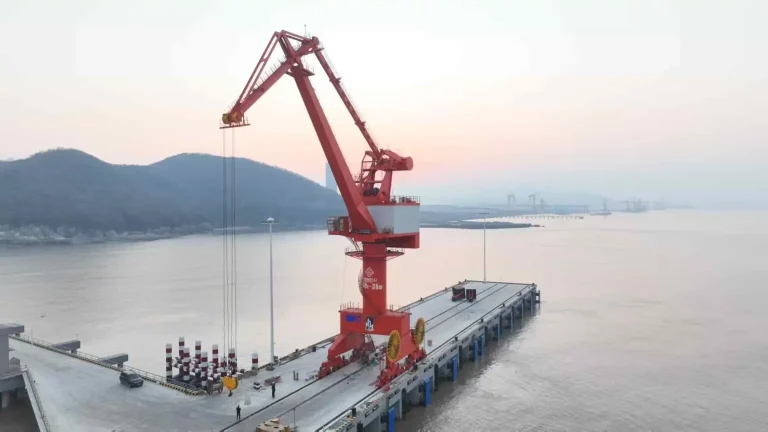
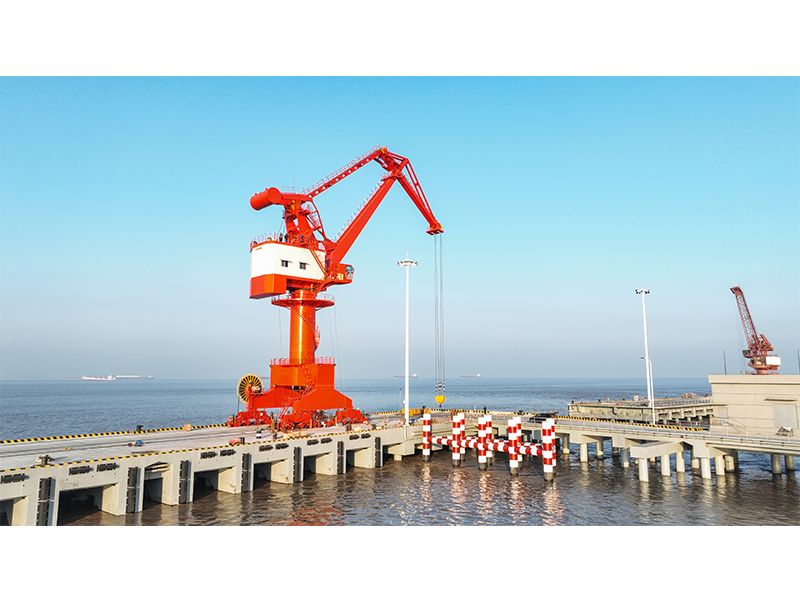
| Rated capacity | 40 t |
| Equipment | Portal crane |
| Milestone | Entered service in February 2025 |
| Movements | Hoisting, slewing, luffing and travel |
| Cargo examples | Offshore-wind heavy items and containers |
A working envelope for different port cargoes
The portal arrangement supports changes in outreach and lifting position across the cargo-handling area. The installed crane was configured for the port’s required loading, unloading and transfer work.
A 40 t rating must be considered with the required operating radius and attachment arrangement. A new enquiry should identify the load at each handling position rather than capacity alone.
Drives, interlocks and manufacturing fit
Travel mechanisms use AC variable-frequency speed control. Limits and interlocks form part of the protective arrangement for the equipment’s movements.
Manufacturing used prefabricated sections, preassembly and machining to control the fit of the installed components. These stages connect structural manufacture with final site assembly.
Specify the berth and lifting interfaces
Provide cargo weights and dimensions, the required hook or spreader arrangement, minimum and maximum working radii, and the berth layout. Include travel clearances, rail geometry, power supply and operating conditions.
Define the required handling cycle and acceptance demonstrations so the proposed crane can be reviewed against the port’s actual cargo work.