
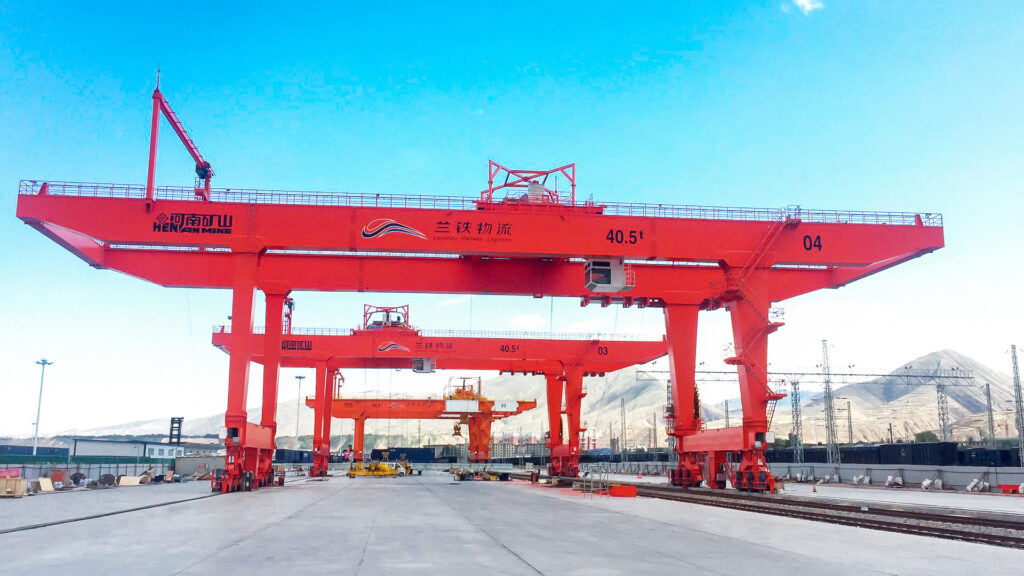
Send one drawing first: mark the rail lines, stacks, truck lanes, transfer points and available clearances. Add the container sizes and target handling cycle.
1. Define the load and spreader.
State the heaviest loaded container and include the spreader or other lifting attachment in the handling assessment. Identify every container format and whether one crane will change between container and general-cargo work. The selected rated load and attachment arrangement must suit the complete lifting system.
2. Dimension the working envelope.
Provide rail gauge, runway length, maximum stack height, required lift above the transport vehicle, and any cantilever or outreach beyond the rails. Mark fixed obstructions and maintenance access. These measurements determine the usable span and lift height more accurately than a generic model name.
3. Describe the operating cycle.
Estimate moves per hour, daily shifts and peak traffic. Identify where the crane picks up and sets down containers, and whether truck and stack operations overlap. The duty profile informs hoist, trolley and gantry travel selection, as well as control and maintenance planning.
4. Specify positioning and interface controls.
Decide whether the terminal needs anti-sway, spreader guidance, container seeking, remote monitoring or remote operation. Describe the truck interface and required interlocks, including protection against lifting a truck with a container. State which functions are mandatory and which can be phased into a later automation program.
5. Record site conditions.
Provide power supply, wind conditions, corrosion exposure, ambient temperature and site operating rules. The rail support, storm protection, electrical systems and maintenance approach should be checked against the actual location.
6. Ask for a configuration schedule.
Compare proposals using the same schedule of rated load, attachment, rail gauge, lifting height, outreach, travel speeds, duty, controls, safety functions and scope of supply. Request drawings and commissioning responsibilities with the quotation. Avoid comparing a bare crane price with a complete terminal system.
| Information to provide | What it helps define |
|---|---|
| Container mix and gross handled load | Rated load, spreader and hoist selection |
| Rail gauge, stack and truck-lane plan | Span, outreach and working envelope |
| Moves per hour and shift pattern | Operating duty and travel systems |
| Control and safety requirements | Positioning, monitoring and interlocks |
Get an RMG crane configuration.
Share your yard drawing, handling load and operating schedule. We can review the working envelope and equipment options with you.