
Size for the complete lift.
Include hooks, slings, spreaders and any load-handling tool—not just the workpiece weight.
Lift at one station or move a load along a beam. Compare fixed suspension and powered-trolley arrangements, then specify the load, usable hook travel, beam, control and operating cycle together.
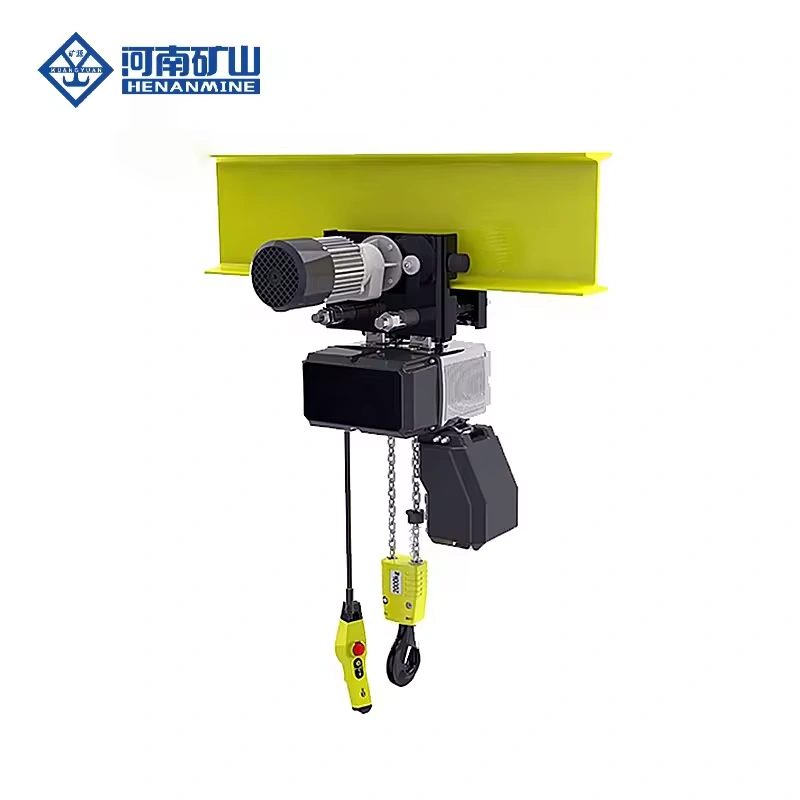
A fixed electric chain hoist serves one lifting point. A trolley-mounted unit also carries the load along a suitable beam. The difference changes the support, usable hook coverage, power feed and quotation scope.
Start with the heaviest complete suspended load, including the workpiece and lifting attachments. Provide the lowest pickup and highest set-down positions, the number of lifts per shift, beam drawings and the available electrical supply. These inputs determine the selected hoist and trolley combination.
Include hooks, slings, spreaders and any load-handling tool—not just the workpiece weight.
State support elevation, required upper hook position and lowest pickup point. Allow room for the hoist body and chain bag.
For a travelling hoist, send the beam section, flange width, rail length, end approach and travel stops.
Do not select by tonnage alone. The mount, travel distance and control position decide which complete package the site can use.
Lift and lower at a fixed position on a rated support.
See fixed suspension ↓ 02 / ALONG A BEAMMove the hook between stations on a matched beam and trolley.
See travelling hoists ↓ 03 / POSITION THE LOADSpecify handling frequency, speed choice and operator visibility.
Compare selection criteria ↓ 04 / YOUR INSTALLATIONSend a section drawing and lift cycle for a coordinated proposal.
Start an RFQ ↓Capacity and lifting-height options are shortlisted below. The selected load, height, speed, mounting and electrical package must be matched on one final datasheet and arrangement drawing.
Use a hook-suspended unit only with a rated support and enough room for the hoist body, chain bag and full hook travel. Add a trolley if the load must move horizontally.
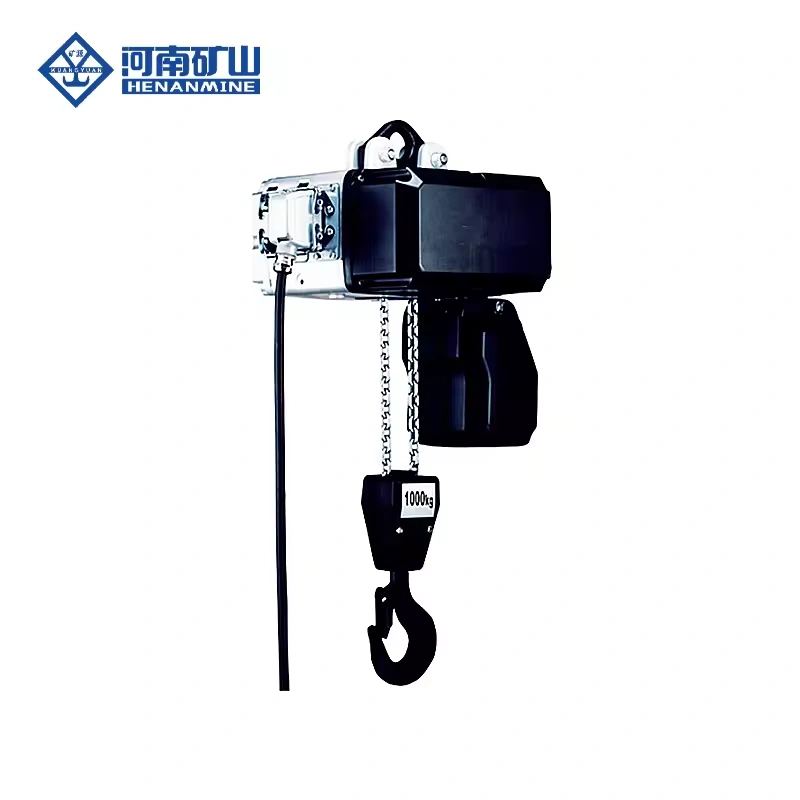 HOOK-SUSPENDED / FIXED LIFT POINT
Use a fixed suspension point when the load is lifted and lowered at one workstation. Confirm the supporting beam or bracket, available headroom and the required upper and lower hook positions before selecting chain length.
| Rated load | Select for the full suspended load | Mounting | Top hook at a rated suspension point |
|---|---|---|---|
| Lift height | Select from actual hook travel | Horizontal travel | Not included in a fixed suspension |
| Control | Specify pendant location and required controls | Power | State site voltage, phases and frequency |
Compare HH and HHBB configurations against the same lifting brief. Select the final unit by its paired load, height, speed, trolley and beam dimensions rather than a model label alone.
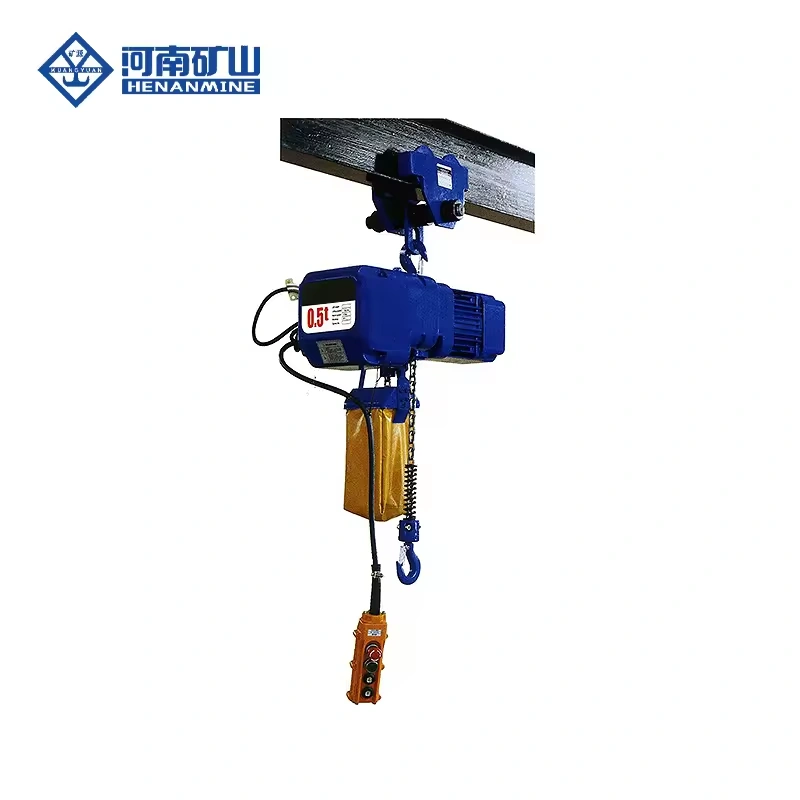 ELECTRIC TROLLEY / HH & HHBB LABELS
Add a matched powered trolley when the load must move between pickup and set-down positions. HH and HHBB appear as catalogue labels, but the selected hoist, load, speed and trolley must be defined together.
| HH-listed range | 1–20 t and 3–30 m; verify selected unit | Mounting | Electric trolley on a compatible beam |
|---|---|---|---|
| HHBB-listed choices | 0.5–20 t and 6–30 m; verify pairing | Trolley travel | Set by beam length and hook approach |
| Control choices | Pendant or remote; confirm selected package | Power | Match the electrical offer to site supply |
Choose one load-height-speed combination for the selected mounting. Request the exact unit's technical schedule.
| Arrangement | Load options to check | Horizontal coverage | Technical check | Buyer action |
|---|---|---|---|---|
| Hook-suspended | Selected for the complete suspended load | One lift point | Support rating and hook height | Send support drawing ↓ |
| Electric travelling / HH label | 1–20 t listed range; verify the selected unit | Along a suitable beam | 3–30 m listed lift-height range; pair with load and speed | Send beam section ↓ |
| Electric travelling / HHBB label | 0.5–20 t listed choices; verify the selected unit | Along a suitable beam | 6–30 m listed height choices; pair with load and speed | Send lift cycle ↓ |
For any quoted unit, verify the selected capacity, lifting height, lifting and travel speeds, chain falls, duty, power supply and overall dimensions together on the approved specification.
Position components at a workstation; define the heaviest complete load and how accurately it must be placed.
Lift motors, tooling or service parts at a known point; check hook access and available headroom above the equipment.
Move loads between defined positions when a suitable beam or jib arm and matched trolley are available.
If the lifting task requires long hook travel, high cycle frequency or a different rope arrangement, compare the wire-rope electric hoist range.
A capacity label alone does not establish usable hook travel, beam fit or duty. Send a simple site sketch so the offer can address the complete installation.
Discuss your lifting task ↗Use fixed suspension when every lift starts and ends at one supported point. Choose a matched trolley when the hook must move between positions along a beam. Supply the pickup and set-down locations, beam geometry and support capacity for either choice.
Include the item being lifted plus slings, spreaders, hooks and other lifting attachments. Also state how many lifts take place per hour or shift and how often the hoist handles the maximum load.
Measure the support elevation, required upper and lower hook positions, available headroom, beam flange width, trolley end approach and chain-bag clearance. A dimensioned drawing of the selected unit confirms actual hook coverage.
Describe the handling cycle and whether slow final positioning is needed. Speed options depend on the selected capacity, motor, chain arrangement and controls; request the paired values on the final technical schedule.
Tell us the destination and required standards. Ask the quotation to name the documents, inspection and load-test records applicable to the exact hoist and trolley being supplied.
Send a one-unit enquiry if that is your requirement. The written quotation should confirm order quantity, production and shipping dates, warranty scope, installation responsibilities and spare-parts support for the selected configuration.
Compare the required load, hook travel, operating cycle, positioning and available headroom. A wire-rope hoist may be a better fit for some heavier or longer-travel tasks; review the wire-rope electric hoist range against the same RFQ.
Share the complete suspended load, usable hook travel, fixed or travelling route, beam section, lifts per shift, control needs, site power and destination. Request a technical and commercial offer for one selected configuration.
Request a technical quotation