
Keep useful load separate from bucket volume.
Convert volume to cargo mass using the actual bulk density. Add grab self-weight before checking the crane rating.
Move the material your crane actually handles. Compare clamshell and multi-petal grabs, magnetic lifting equipment and hook blocks by cargo, net payload, attachment weight, crane interface and operating cycle.
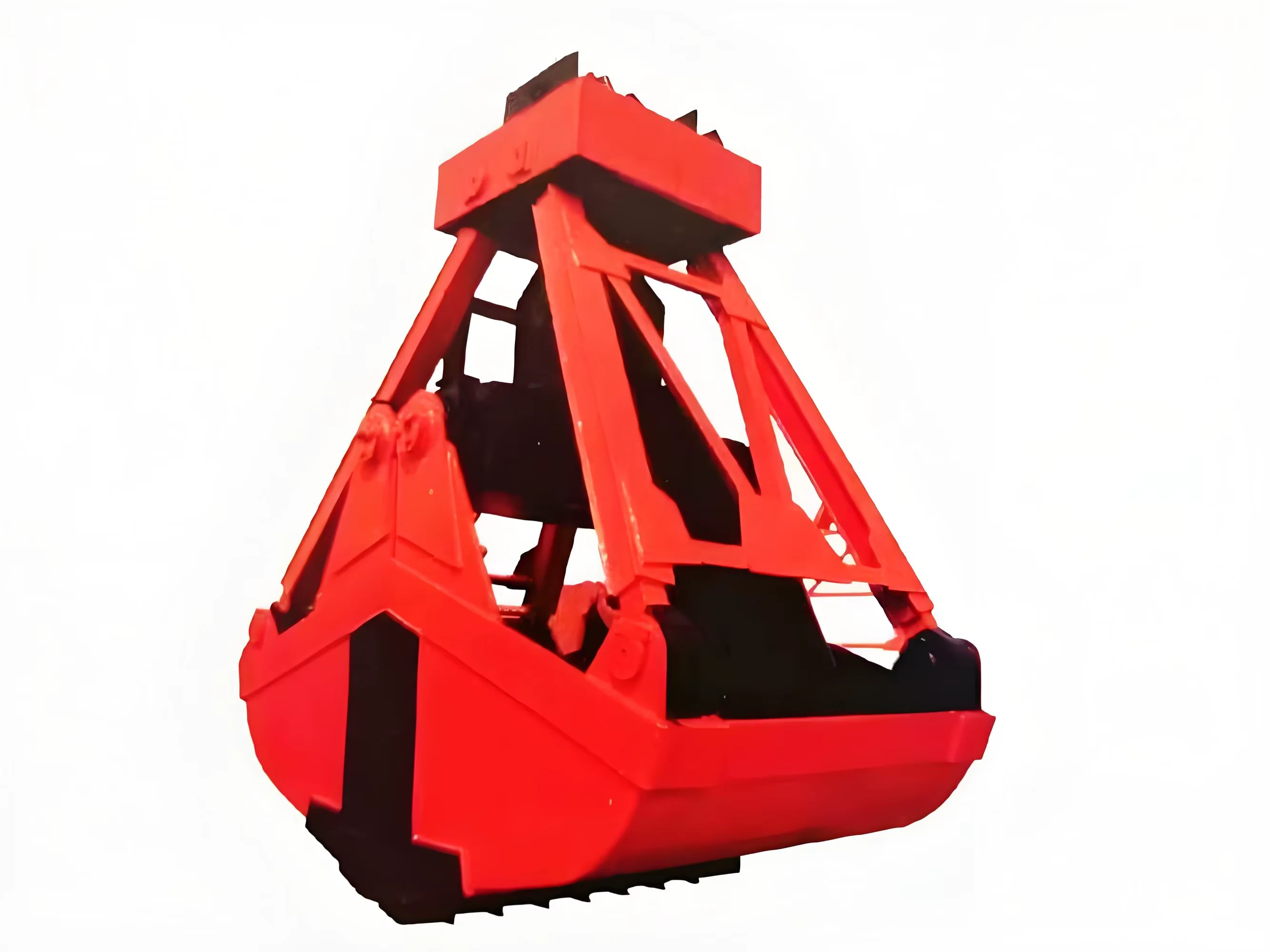
A grab, magnet or hook block changes how the crane picks up, carries and releases a load. For loose cargo, the material's bulk density and target volume set the potential payload. For steel, the surface and geometry determine whether magnetic or mechanical lifting is appropriate. The attachment's own mass always uses part of the crane's lifting capacity.
Specify the crane and attachment as one working system: load mass, pick-up point, travel path, duty, operator view, power or rope supply, discharge area and acceptance documents. An existing crane retrofit also needs the hook and reeving drawing.
Convert volume to cargo mass using the actual bulk density. Add grab self-weight before checking the crane rating.
Mechanical ropes, powered closing, magnet supply and hook-block reeving require different crane connections.
Include lifts per hour, abrasive cargo, heat, moisture, maintenance access and loss-of-power response.
Start from the load. Then check the complete attachment, crane and control arrangement below.
Coal, ore, sand and grain: compare density, bucket volume and closing ropes.
Compare bulk grabs ↓ 02 / IRREGULAR SCRAPCapture large, uneven pieces with the right tine shape and closing force.
Compare scrap grabs ↓ 03 / FERROUS STEELMatch holding conditions, steel geometry, temperature and power protection.
Compare magnetic lifting ↓ 04 / HOIST CONNECTIONReplace or specify the complete hook, sheaves and rope interface.
Check hook assemblies ↓Find the gripping method for your load, then compare the crane interface, duty and model-specific selection values. Request the selected unit's drawing before ordering.
Bulk density, particle size, moisture, grabbing depth and the hopper opening determine the shell and drive arrangement.
MECHANICAL / TWO-JAW BULK GRABSChoose a four-rope, two-rope or single-rope arrangement to suit the crane's hoist and opening mechanism. Bucket volume is selected from the cargo's bulk density and the permitted total suspended load—not from cubic metres alone.
| Grab form | Two jaws for free-flowing bulk material | Drive | Four-, two- or single-rope layout |
|---|---|---|---|
| Cargo data | Bulk density, particle size and moisture | Crane interface | Support and closing ropes, reeving and hook height |
| Capacity check | Grab self-weight plus maximum cargo | Geometry | Open width, closed height and discharge opening |
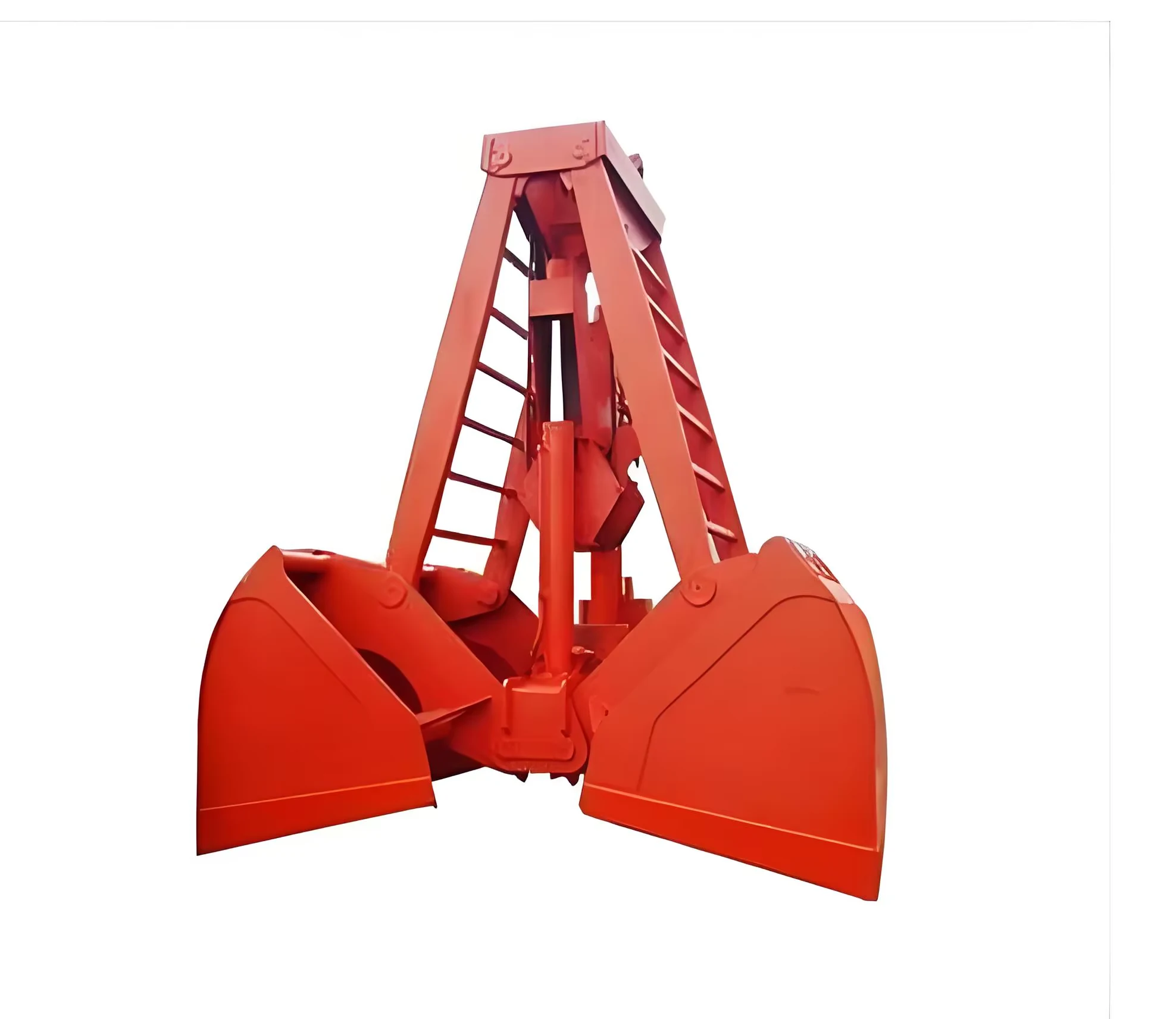 POWERED / TWO-JAW GRAB
A powered closing mechanism can serve a defined bulk-handling cycle when the crane, electrical feed and grab controls are engineered together. Match the shell shape to the material and check the motor, cable route and lifting headroom before ordering.
| U5D model example | 0.5 m³ bucket | Listed material | 1.2 t per cycle at 2.4 t/m³ |
|---|---|---|---|
| Paired crane | 3 t crane with this U5D configuration | Operating location | Dry-duty design; no underwater use |
| Electrical interface | Specify site voltage and cable path | Maintenance | Access to motor, brake and wear edges |
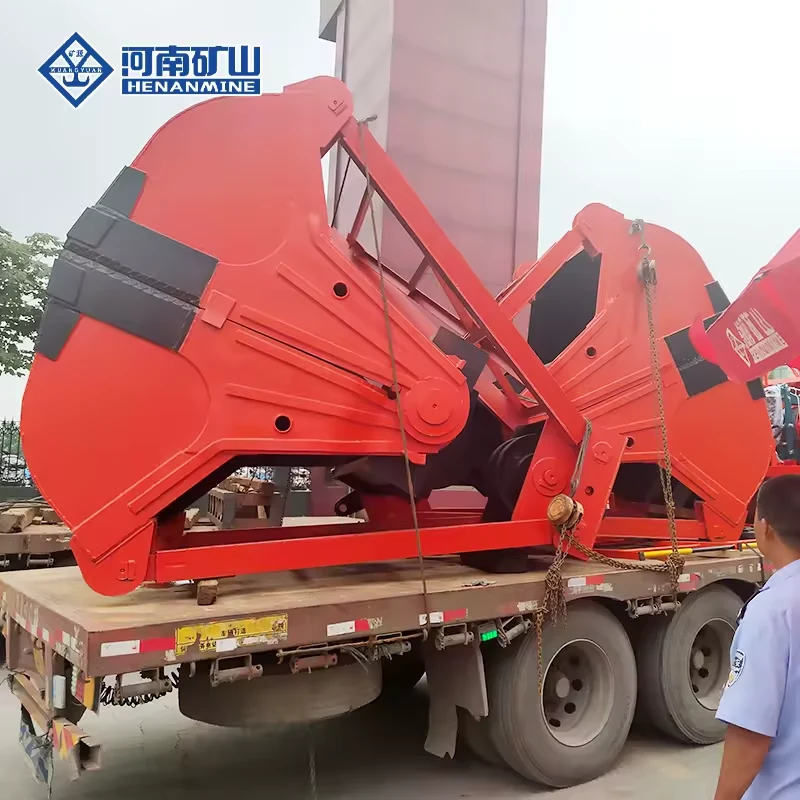 REMOTE / HYDRAULIC OPTIONS
Remote-controlled opening may suit an existing crane where a new closing-rope system is impractical. The hydraulic drive and charging or power arrangement depend on the selected configuration; confirm them against the crane and operating cycle.
| Attachment method | Confirm hook, reeving and headroom | Opening control | Radio remote or crane-integrated control |
|---|---|---|---|
| Power package | Confirm battery, charging or cable feed | Cargo data | Density, moisture, lump size and target throughput |
| Safety review | Closing logic and loss-of-power response | Site | Ship hold, hopper and operator line of sight |
Mixed pieces need a capture geometry and operating cycle that reflect the actual scrap stream.
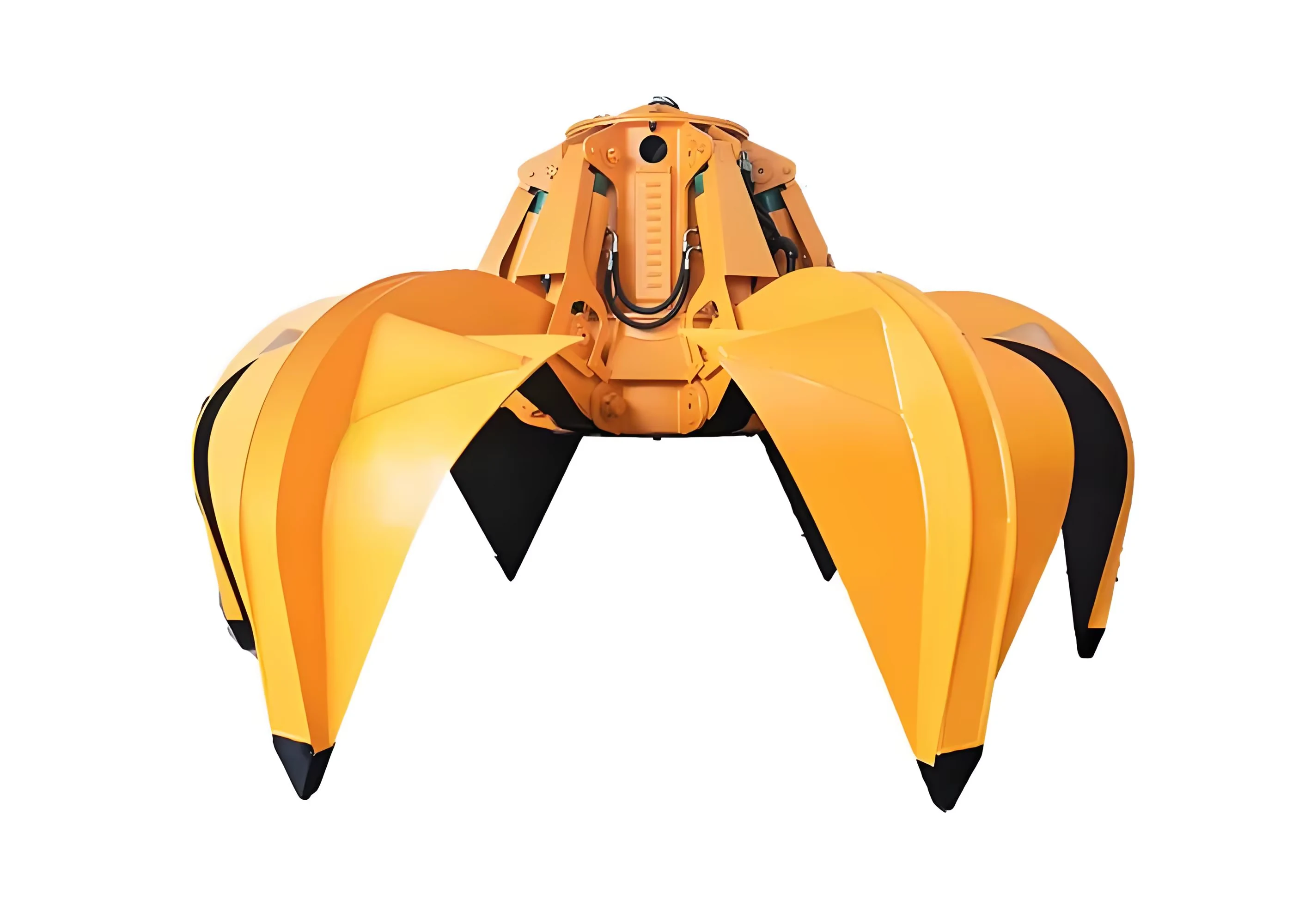 MULTI-PETAL / IRREGULAR CARGO
Several curved tines close around irregular scrap, mixed metal and bulky waste that cannot fill a two-shell bucket predictably. Select the tine count, opening diameter, closing force, wear protection and power arrangement for the actual material.
| Grab form | Multi-petal tines for irregular pieces | Drive choices | Mechanical rope or electro-hydraulic design |
|---|---|---|---|
| L4.2 model example | 1 m³ four-rope six-petal grab | Paired crane | 5 t crane with this L4.2 configuration |
| Material per cycle | 2.4 t with this L4.2 configuration | Quote check | Actual grab self-weight and maximum cargo mass |
Magnetic performance varies with the steel and contact conditions. Hook-block dimensions must match the hoist and rope system.
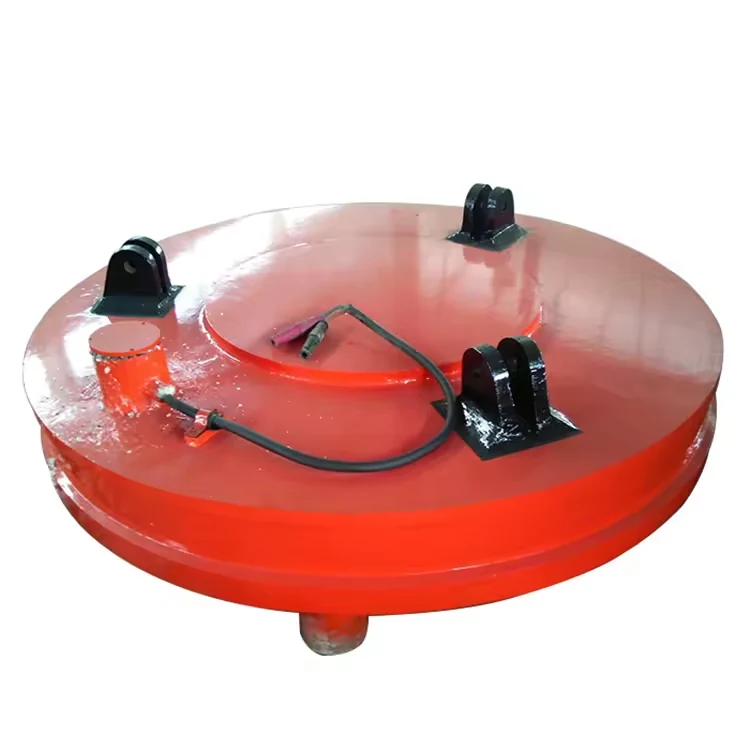 MAGNETIC / FERROUS SCRAP
A round magnet handles ferrous scrap and compatible steel shapes. Its useful holding force depends on the actual steel, contact area, air gaps, load shape and temperature. Specify the electrical supply, controls and power-loss response with the crane.
| Material | Ferrous steel or cast iron | Load surface | Thickness, profile, rust and air gap |
|---|---|---|---|
| Temperature | State cold or hot material and peak value | Electrical scope | Magnet, cable reel, controller and backup plan |
| Crane check | Magnet self-weight plus retained material | Acceptance | Test with the agreed representative load |
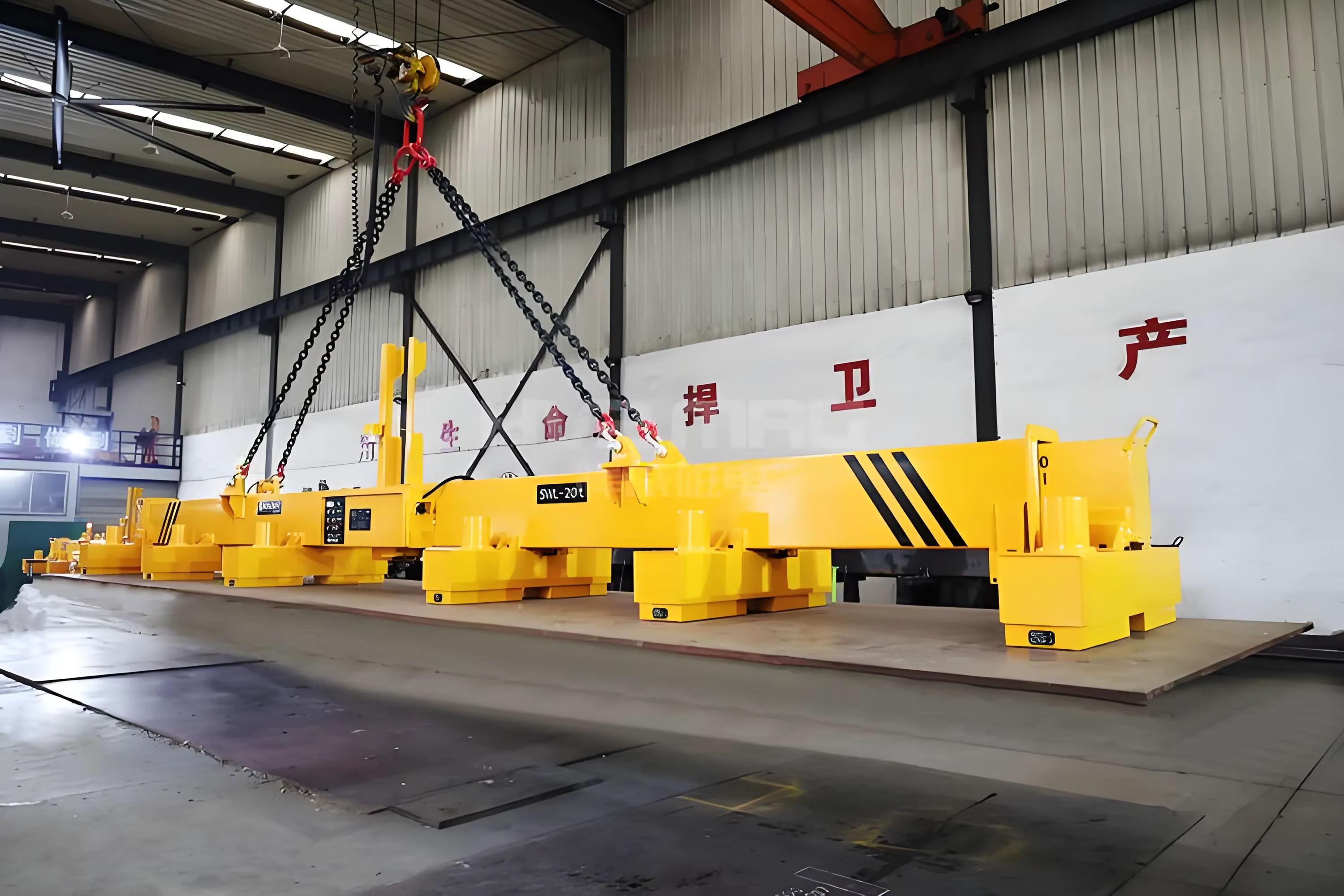 MULTI-POINT / LONG STEEL
A beam distributes multiple lifting points across a long or flexible steel load. The beam length, magnet spacing, support points and control zones must follow the plate or section geometry and the crane's hook coverage.
| Load geometry | Length, width, thickness and deflection | Lifting layout | Beam span and magnet centre spacing |
|---|---|---|---|
| Controls | Independent or grouped magnet zones | Crane interface | Hook position, lift height and total self-weight |
| Documentation | Approved drawing and selected-load test plan | Site | Pickup and set-down clearances |
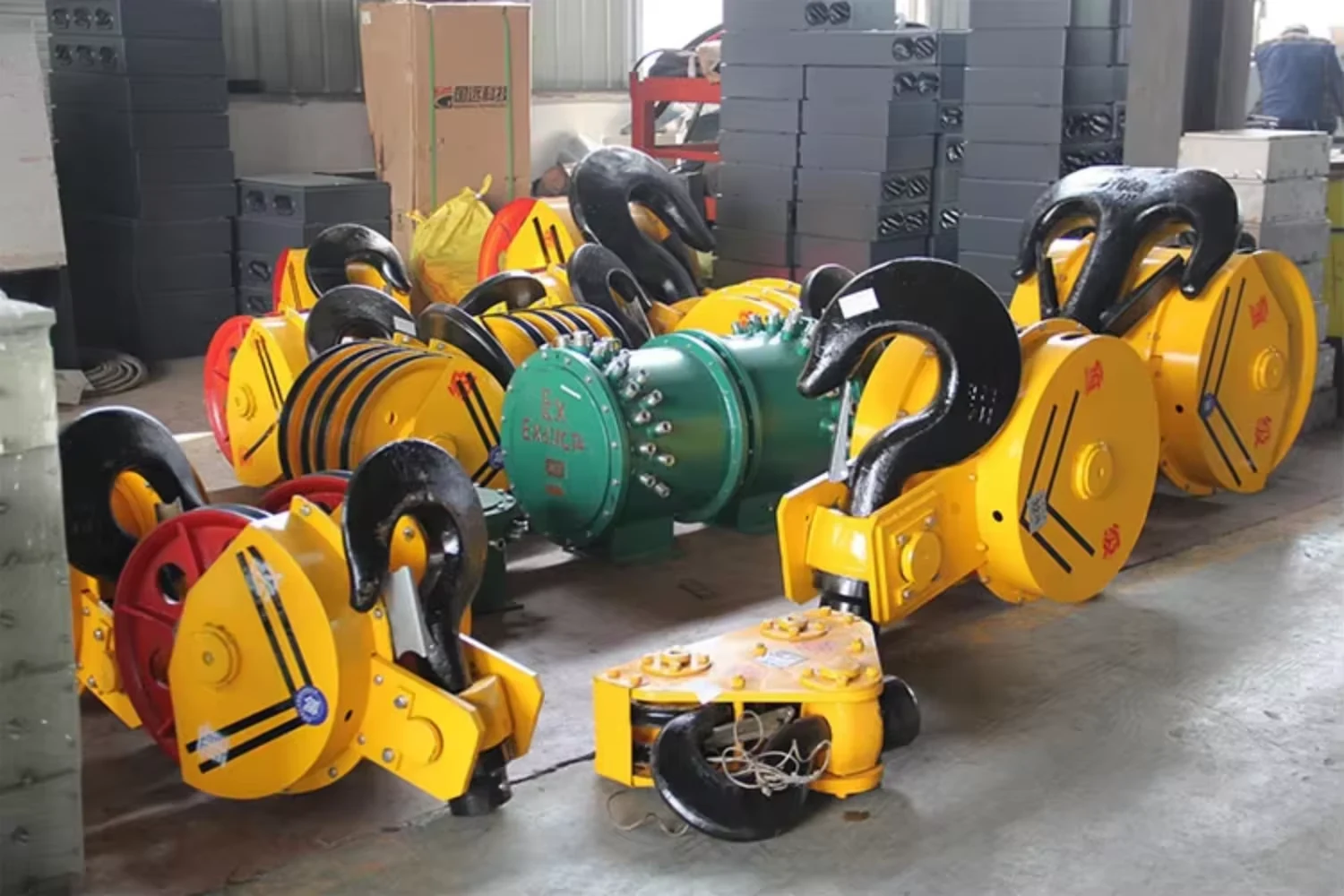 HOOK / CRANE CONNECTION
Match the hook and block to the hoist, reeving, wire rope and load connection. A replacement order needs more than the crane's tonnage: the hook throat, shank, bearing, sheave grooves and safety-latch arrangement must fit the actual equipment.
| Rated load | Select for the complete suspended load | Hook form | Single or double hook and throat opening |
|---|---|---|---|
| Block interface | Sheave count, rope diameter and reeving | Inspection | Marking, test and inspection records for the unit |
| Replacement data | Existing block drawing and dimensions | Support | Confirm spare parts and written warranty |
These model examples keep the bucket volume, material mass and matching crane rating on the same row. State grab self-weight on the final equipment schedule.
| Grab model | Arrangement | Bucket volume | Material density | Material per grab | Paired crane |
|---|---|---|---|---|---|
| U3 | Four-rope, light-duty clamshell | 2.5 m³ | >0.5–1 t/m³ | 1.25–2.5 t | 5 t |
| U115 | Four-rope, extra-heavy clamshell | 1.5 m³ | 2.5–3.3 t/m³ | 3.75–4.95 t | 10 t |
| S0525 | Two-rope clamshell | 2.5 m³ | ≤1 t/m³ | 2.5 t | 5 t |
| XZ5 | Single-rope, toothed clamshell | 0.5 m³ | ≤1.2 t/m³ | 0.6 t | 3 t |
| U5D | Motor-driven clamshell | 0.5 m³ | 2.4 t/m³ | 1.2 t | 3 t |
| UP1095 | Four-rope bulk grab | 9.5 m³ | 0.63 t/m³ | 5.9 t | 10 t |
Material per grab is the listed cargo mass, not grab self-weight. The selected crane must accommodate the actual grab mass plus the maximum cargo. Confirm the chosen bucket's open width, height, rope diameter, reeving and discharge clearance on the approved drawing.
Choose a clamshell from the material density, grain size and loading cycle. Check the shell's open span against ship holds, hoppers and stockpiles.
Use a multi-petal grab for mixed, irregular pieces. Where a magnet suits ferrous material, check steel contact and loss-of-power protection.
Use multi-point lifting for long steel where geometry requires it. Match replacement hook blocks to the existing hoist before fabrication.
Need the complete crane? Compare grab overhead cranes and electromagnetic overhead cranes.
Send a material sample or load drawing with your crane data. The right attachment depends on how the load actually enters and leaves it.
Discuss your project ↗Do not assume it is. The suspended load includes the grab's own mass and the material inside it. Provide both values and check the crane's allowed load at the actual operating condition.
Start with the material's measured bulk density, required tonnes per cycle and expected filling. Then compare bucket volume, grab self-weight, the crane rating, open width and hopper geometry on one configuration sheet.
It depends on the crane's hook rating, headroom, reeving, control and power arrangement. Provide the existing crane drawing and duty so the attachment interface and total suspended load can be reviewed.
Do not assume it can. Single-rope release depends on the selected mechanism and operating sequence; some arrangements require the grab to land on the material or floor before opening. State where the bucket must discharge.
A standard motor-driven or electric grab is not an underwater solution. If the task is submerged, specify the water depth, salinity, cargo and duty for a dedicated design review.
Steel grade, thickness, surface contact, air gaps, load shape, temperature and electrical supply all affect holding performance. Request the selected-load test and power-loss procedure with the quotation.
Request a quotation for one complete attachment if that is your requirement. The confirmed production schedule, included controls, packing, inspection documents, warranty period and after-sales support belong in the written offer for the approved configuration.
Share the material type, density or dimensions, maximum mass, target tonnes per cycle, existing crane capacity, hook or rope drawing, daily duty, site environment and destination. Ask for the attachment, controls, drawings and acceptance scope in one offer.
Request a technical quotation