
Count the bucket as suspended load
Use the measured material density and realistic fill to calculate cargo mass, then add the selected bucket's own mass.
- Density range
- Bucket self-weight
- Crane and rope capacity
Use a two-rope clamshell where one rope supports the bucket and the other closes it, subject to the selected crane arrangement. The purchase decision starts with the actual material load and operating geometry, then checks reeving, available headroom and the crane's ability to control both rope functions.
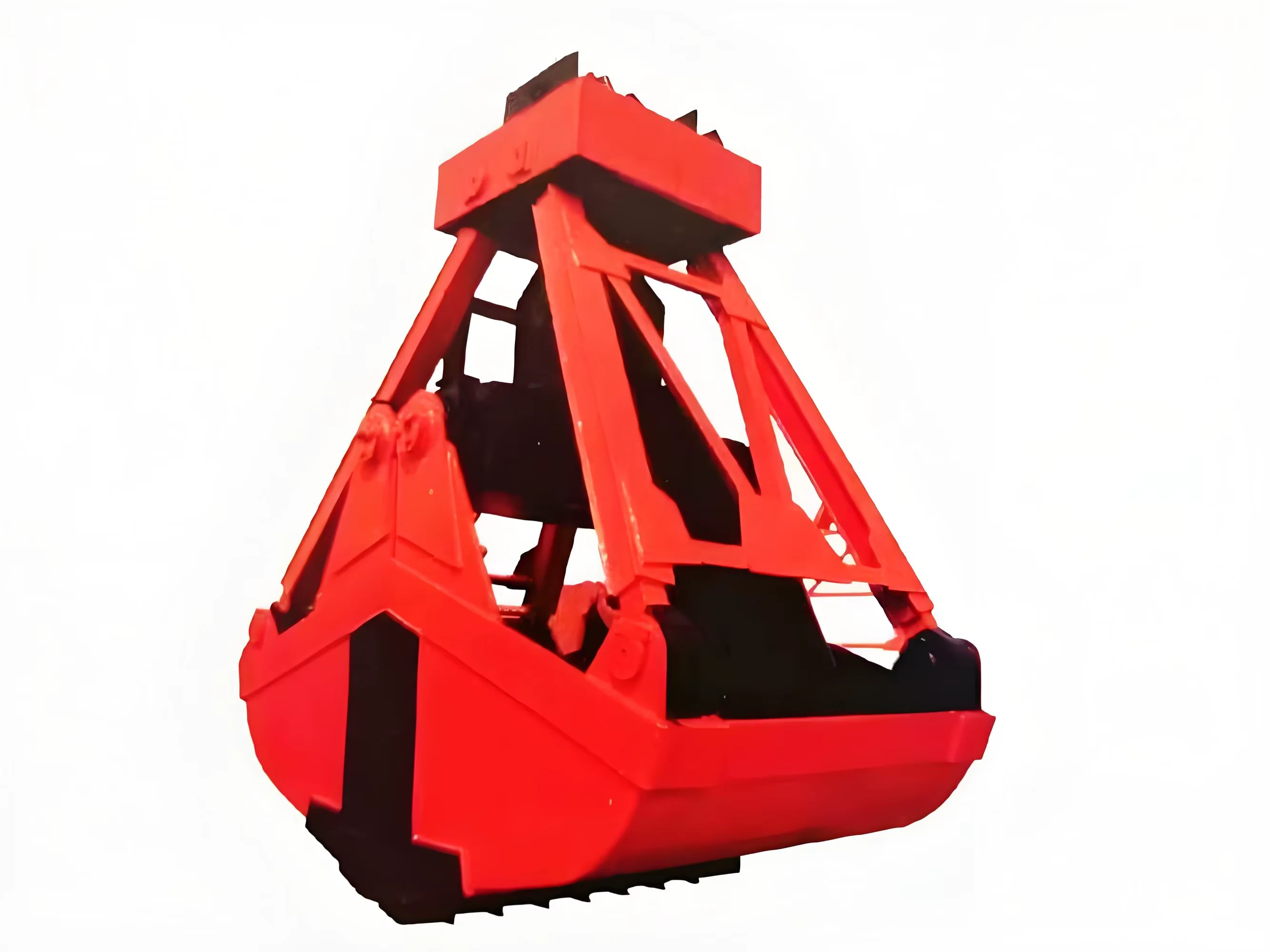
Send the existing crane's hoist drawings, support and closing rope sizes, load rating, available lift height and the bulk cargo's density and target cycle.
The selected attachment's minimum order and supply scope are confirmed in the written offer.
Review the loaded attachment, connection, operating cycle and site clearances before approval.
Agree inspection, documents, packing, schedule, site support and warranty before order placement.
The S0525 values below belong to one configuration. The selected bucket still needs its own self-weight, open dimensions and approved crane interface.
Swipe to compare the complete selected-unit parameters →
| Model | Crane rating | Bucket volume | Material density | Listed material per grab | Rope arrangement |
|---|---|---|---|---|---|
| S0525 | 5 t | 2.5 m³ | ≤1 t/m³ | 2.5 t | 1 support + 1 closing, Ø16 mm |
S0525 is listed with reeving ratio 5 and Ø360 mm sheave. The 2.5 t value is material mass, not the bucket's self-weight. Confirm the complete suspended load before using a 5 t crane.
| Model | Rope / sheave arrangement | Outline dimensions |
|---|---|---|
| S0525 | Ratio 5; Ø360 mm sheave | H 3,280 / D 3,040 mm |
H and D are outline labels. Use the approved unit drawing for installation clearances, opening width and building work.
No. Drum function, rope diameter, reeving, available travel, closing stroke and controls must fit the selected bucket. Compare both equipment drawings before committing to the attachment.
Review the configuration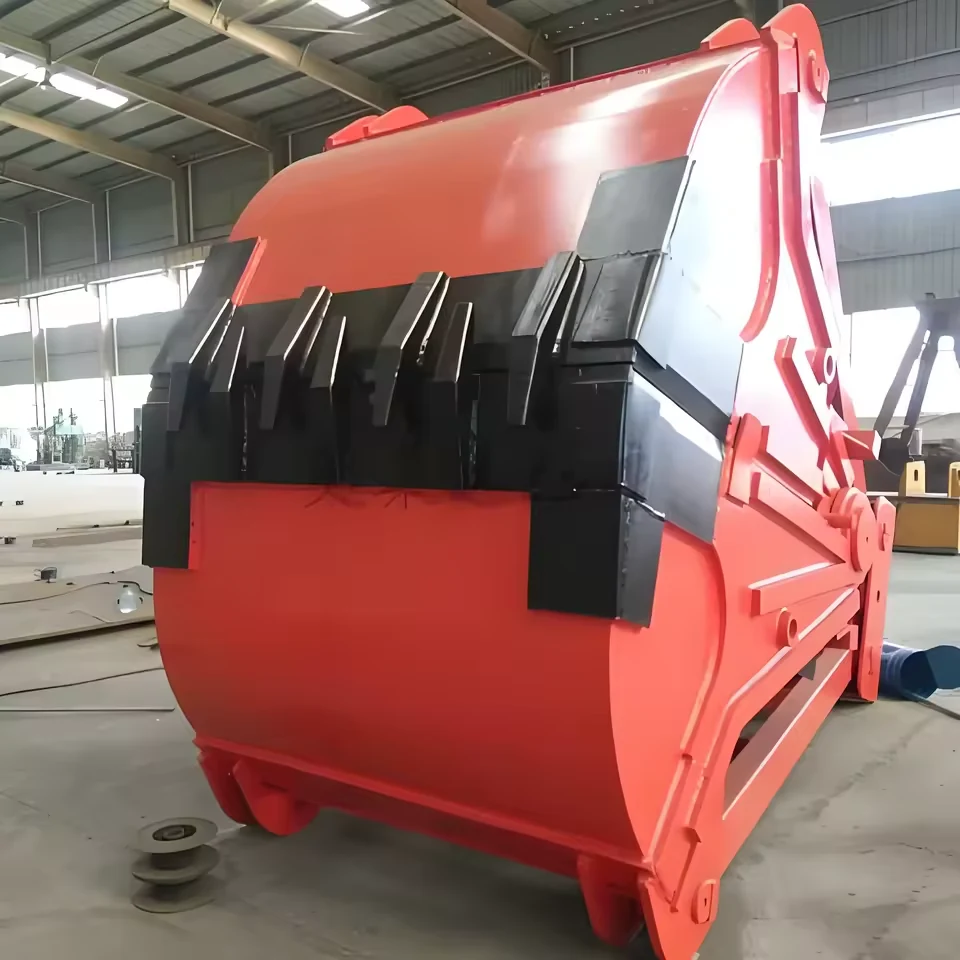
Check cargo density, flow and leakage at the shell edges. Keep the bucket size within the actual crane load after its own mass is added.
Moisture and particle distribution affect filling, wear and release. Verify the shell, cutting edge and hopper opening for the material actually handled.
Confirm that the open bucket clears the receiving mouth and that rope travel provides the required pickup depth and discharge height.
The listed S0525 material load is a reference for its stated density. A heavier cargo or higher fill may call for a smaller bucket or a higher-rated crane. Compare the matching crane system.
Pair the bucket's volume and shell geometry with the crane's supporting and closing ropes. Check the loaded grab mass, rope diameter, reeving, drum travel and pickup-to-hopper clearances together on the selected equipment drawings.
Equipment price, crane modifications and site services should be separated so your team knows what is supplied and what remains to be done locally.
Confirm shells, closing mechanism, rope fittings, sheaves, wear parts and stated self-weight.
Identify which drum supports and which drum closes, plus rope sizes, controls, travel and approved connection dimensions.
Agree drawings, inspection records, spare parts, export packing, delivery and any site commissioning service.
The offer should connect your load data to one drawing, one equipment schedule and a clear inspection and handover plan. Production and freight dates are confirmed for that selected configuration.
List the destination standards and customer witness points before finalising the acceptance plan.
Confirm load, crane interface, environment, operating sequence and buyer requirements.
Approve dimensions, self-weight, selected components, controls and site responsibilities.
Complete the agreed functional and load-case checks, records and packing.
Coordinate transport, unloading, installation checks, operator instruction and handover.
Single-unit enquiries are welcome. The written offer confirms the selected design's minimum order and exactly what is supplied.
State applicable market and customer requirements. The offer lists the documents, inspections and tests available for the selected unit.
Drawing approval, production, inspection and shipping are separate milestones. A dated delivery programme follows the selected configuration.
Agree the warranty period and start date, covered components, replacement parts, installation guidance and any on-site service in the signed offer.
Ask for support termsAssign who supplies power, rope, hook connection, controls, rigging and commissioning equipment.
Agree inspection and functional checks around the material and lift the attachment was selected for.
Record the final model, serial number and wear parts so replacement components fit the supplied configuration.
Load loose bulk material with separate supporting and closing ropes.
View product ↗A single lifting rope simplifies the crane connection, but the bucket's opening sequence becomes the key selection question.
View product ↗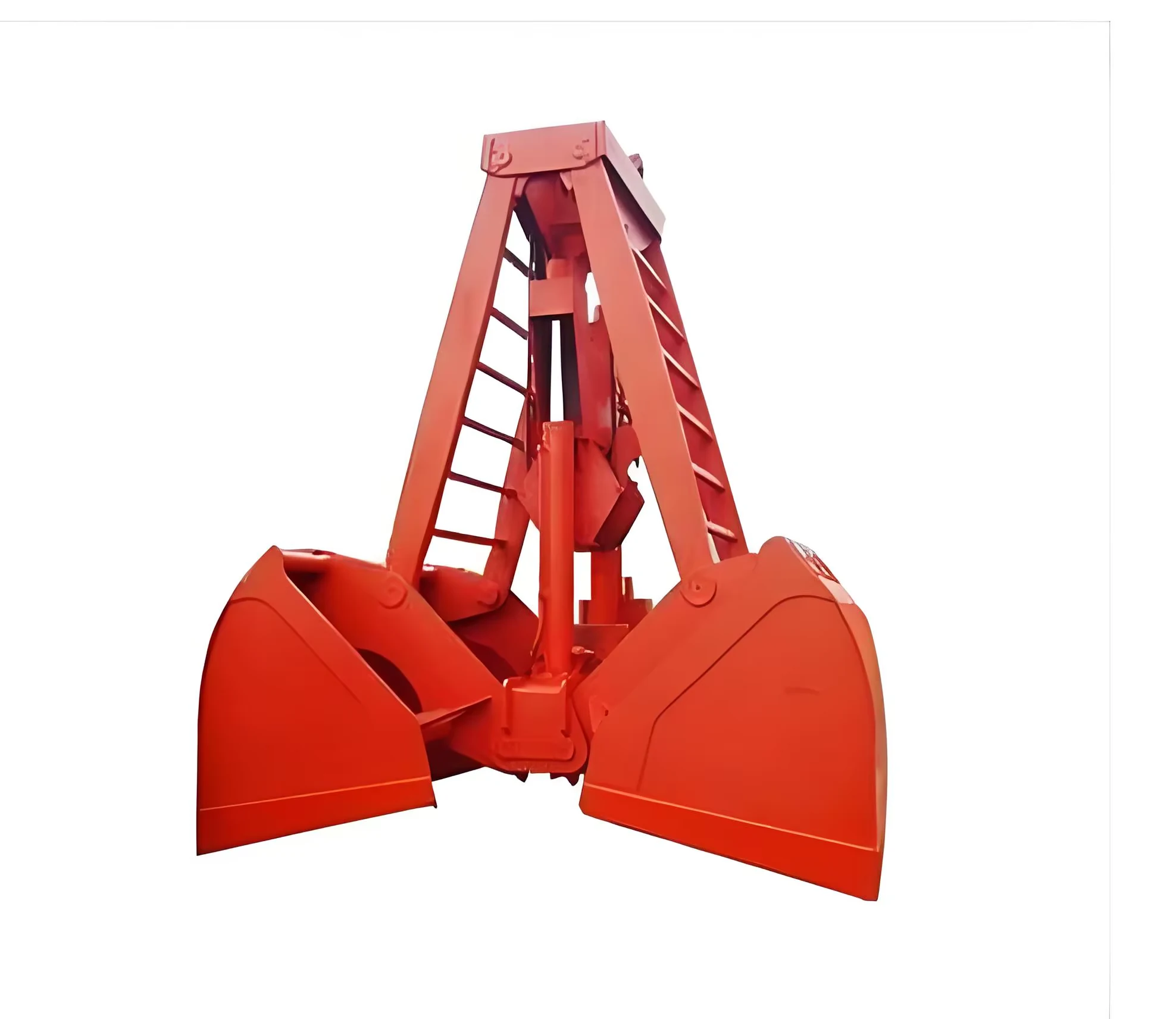
An electric or motor-driven clamshell closes under powered control instead of relying only on a separate closing-rope drum.
View product ↗Use these answers to prepare one technical and commercial brief for the selected unit.
Discuss this attachmentThe 2.5 t material mass is tied to the listed density and bucket volume. Add the grab's selected-unit self-weight and check rope and crane ratings before approving the lift.
The example uses one support and one closing rope; a four-rope arrangement has separate pairs. The crane and controls must suit the exact rope system.
Only if rope diameter, construction, length, reeving and condition match the approved grab and crane design. Send drawings and photos for review.
The open shell width, closed bucket height, lifting head and required rope travel decide whether the bucket reaches the material and clears the hopper.
The written offer identifies the chosen configuration, production milestones, packing, inspection, warranty period and after-sales scope.
Send the existing crane's hoist drawings, support and closing rope sizes, load rating, available lift height and the bulk cargo's density and target cycle. The selected drawing and commercial offer can then identify the attachment, crane interface, documents, delivery and support.
Send my attachment enquiry ↗