
Match the scrap stream
Choose the number, profile, opening diameter and tip protection around the largest pieces and expected wear.
- Largest piece dimensions
- Sharp edges and wear
- Required closing force
Curved tines close around long, irregular pieces that a two-shell bucket may not capture consistently. Choose a multi-petal grab from the actual scrap stream: piece size, density, temperature, sharp edges and target cycle all change the useful fill. Rope-operated and electric arrangements have different crane interfaces and must be quoted separately.
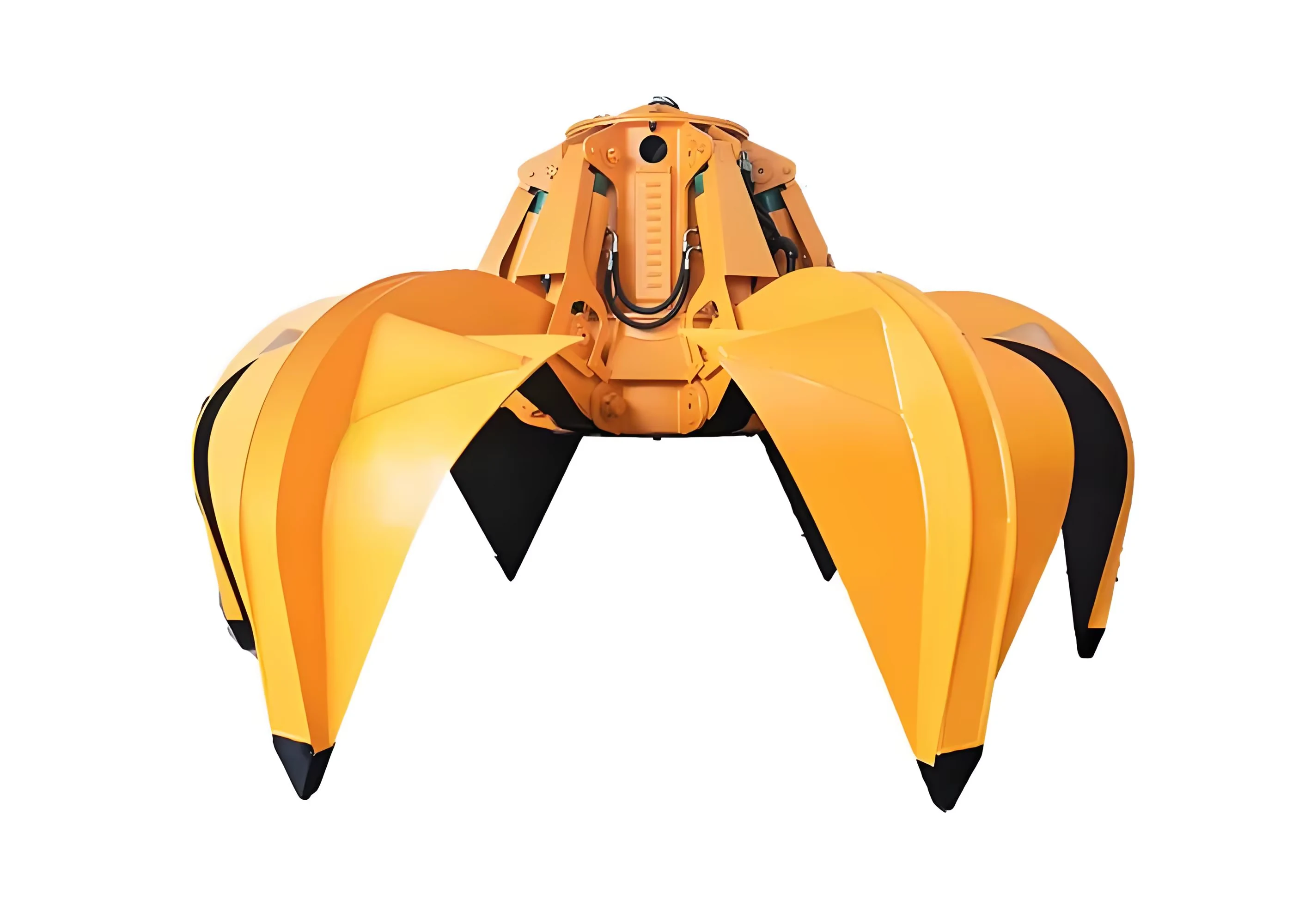
Send clear scrap photos, largest piece dimensions, expected bulk density, temperature, maximum mass per cycle and your crane's rope or electrical drawings.
The selected attachment's minimum order and supply scope are confirmed in the written offer.
Review the loaded attachment, connection, operating cycle and site clearances before approval.
Agree inspection, documents, packing, schedule, site support and warranty before order placement.
The listed L4.2 and LD2 rows have the same nominal bucket volume but different handling arrangements and material loads. Keep each model's values together; verify the actual filled mass for your scrap.
Swipe to compare the complete selected-unit parameters →
| Model | Arrangement | Crane rating | Bucket volume | Listed material per grab | Rope |
|---|---|---|---|---|---|
| L4.2 | Four-rope, six-petal | 5 t | 1 m³ | 2.4 t | Ø16 mm |
| LD2 | Electric, six-petal | 5 t | 1 m³ | 1.3–1.73 t | Ø19 mm |
Material per grab is not the grab's self-weight. State your actual scrap density and fill behaviour, then confirm selected attachment mass and total suspended load.
| Model | Rope / sheave arrangement | Outline dimensions |
|---|---|---|
| L4.2 | Ratio 4; Ø400 mm sheave | H 2,517 / D 2,400 mm |
| LD2 | Ratio 4; Ø260 mm sheave | H 1,941 / D 2,650 mm |
H and D are outline labels. Use the approved unit drawing for installation clearances, opening width and building work.
No. Long and irregular pieces leave voids between the tines and may project outside the bucket. Use representative material photos and a realistic fill estimate, then check the heaviest loaded grab against the crane.
Review the configuration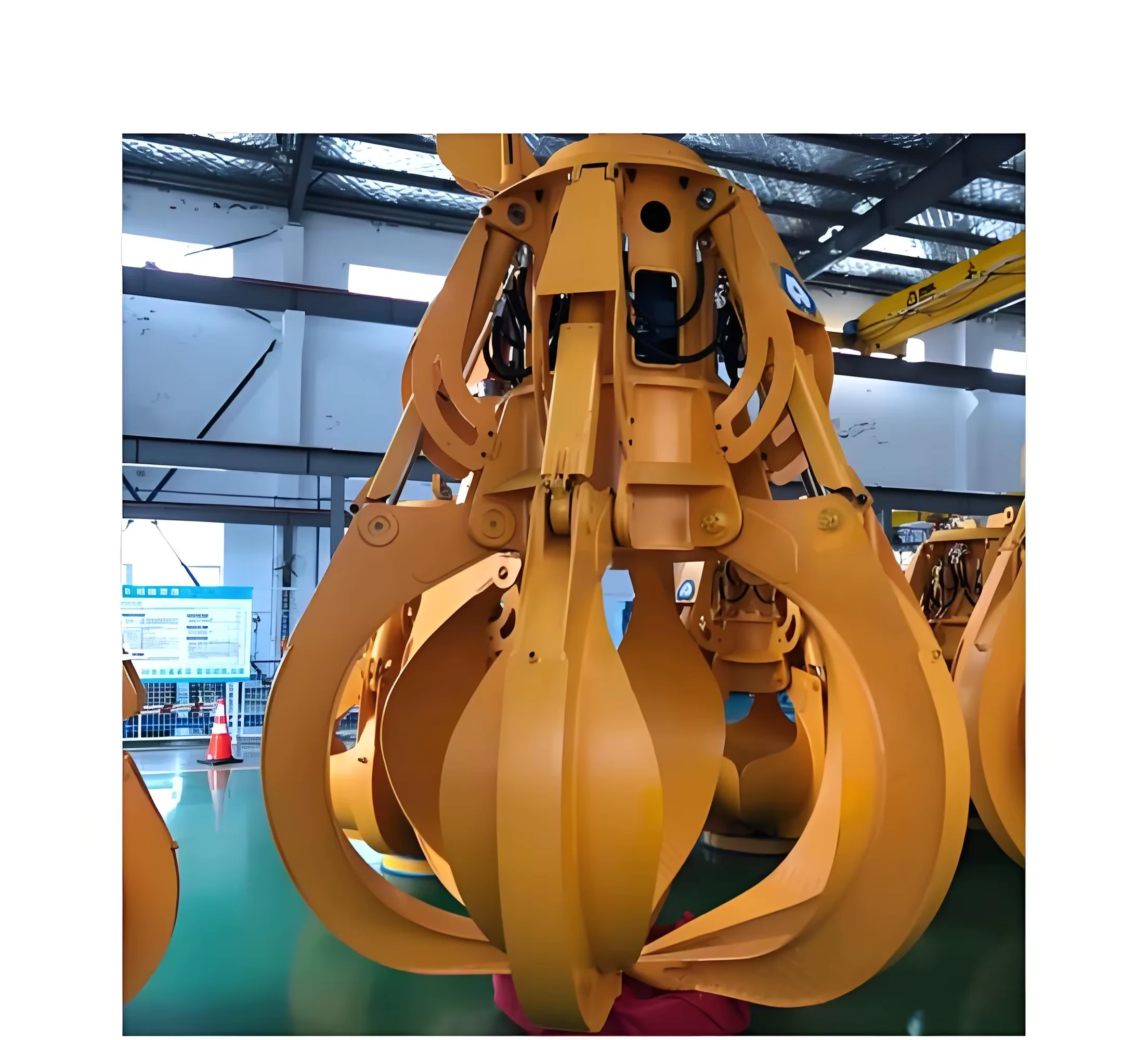
Choose tine profile and wear protection for plate offcuts, rebar and irregular fabricated pieces. Include temperature and sharp edges in the brief.
Handle mixed ferrous pieces where a clamshell may trap air and give unpredictable fills. Specify any non-ferrous fraction before considering a magnet alternative.
Load sorted scrap into bins or transport equipment while checking opening width, heat exposure, discharge position and operating cycle.
A magnet is a different solution for compatible ferrous loads; multi-petal grabbing can handle mixed shapes, but the material and crane duty decide which system is appropriate. Compare the matching crane system.
Match tine geometry and drive method to the scrap actually handled, including the largest pieces, sharp edges and working temperature. Use a realistic fill estimate and the selected grab's self-weight when checking the crane's total suspended load.
Equipment price, crane modifications and site services should be separated so your team knows what is supplied and what remains to be done locally.
Identify tine count and profile, pivots, replaceable tips, closing mechanism and actual self-weight.
State support and closing ropes or electric/hydraulic feed, controls, hook interface and clearances.
Agree wear-part supply, functional test, documentation, packing, delivery and site support.
The offer should connect your load data to one drawing, one equipment schedule and a clear inspection and handover plan. Production and freight dates are confirmed for that selected configuration.
List the destination standards and customer witness points before finalising the acceptance plan.
Confirm load, crane interface, environment, operating sequence and buyer requirements.
Approve dimensions, self-weight, selected components, controls and site responsibilities.
Complete the agreed functional and load-case checks, records and packing.
Coordinate transport, unloading, installation checks, operator instruction and handover.
Single-unit enquiries are welcome. The written offer confirms the selected design's minimum order and exactly what is supplied.
State applicable market and customer requirements. The offer lists the documents, inspections and tests available for the selected unit.
Drawing approval, production, inspection and shipping are separate milestones. A dated delivery programme follows the selected configuration.
Agree the warranty period and start date, covered components, replacement parts, installation guidance and any on-site service in the signed offer.
Ask for support termsAssign who supplies power, rope, hook connection, controls, rigging and commissioning equipment.
Agree inspection and functional checks around the material and lift the attachment was selected for.
Record the final model, serial number and wear parts so replacement components fit the supplied configuration.
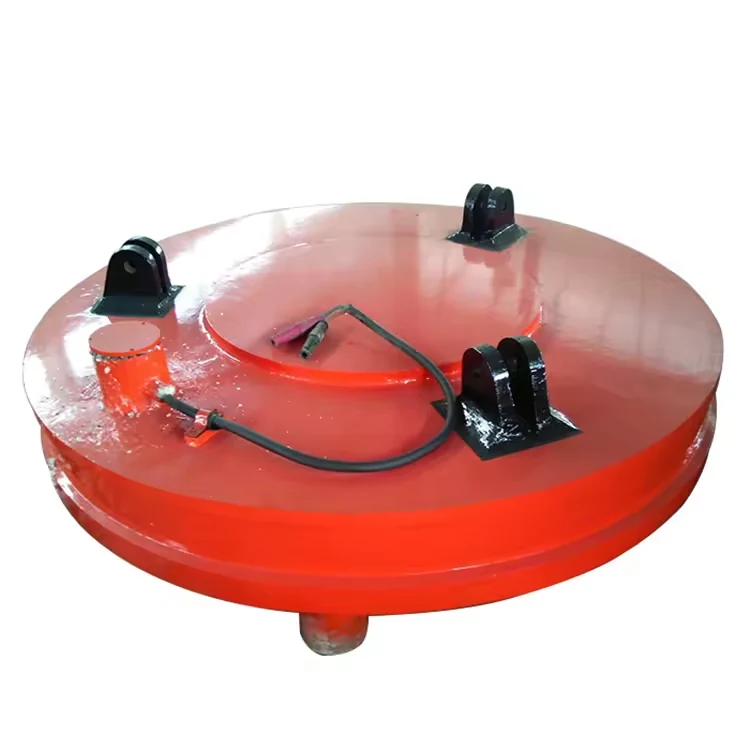
Pick up compatible ferrous scrap and cast-steel pieces without mechanical bucket jaws.
View product ↗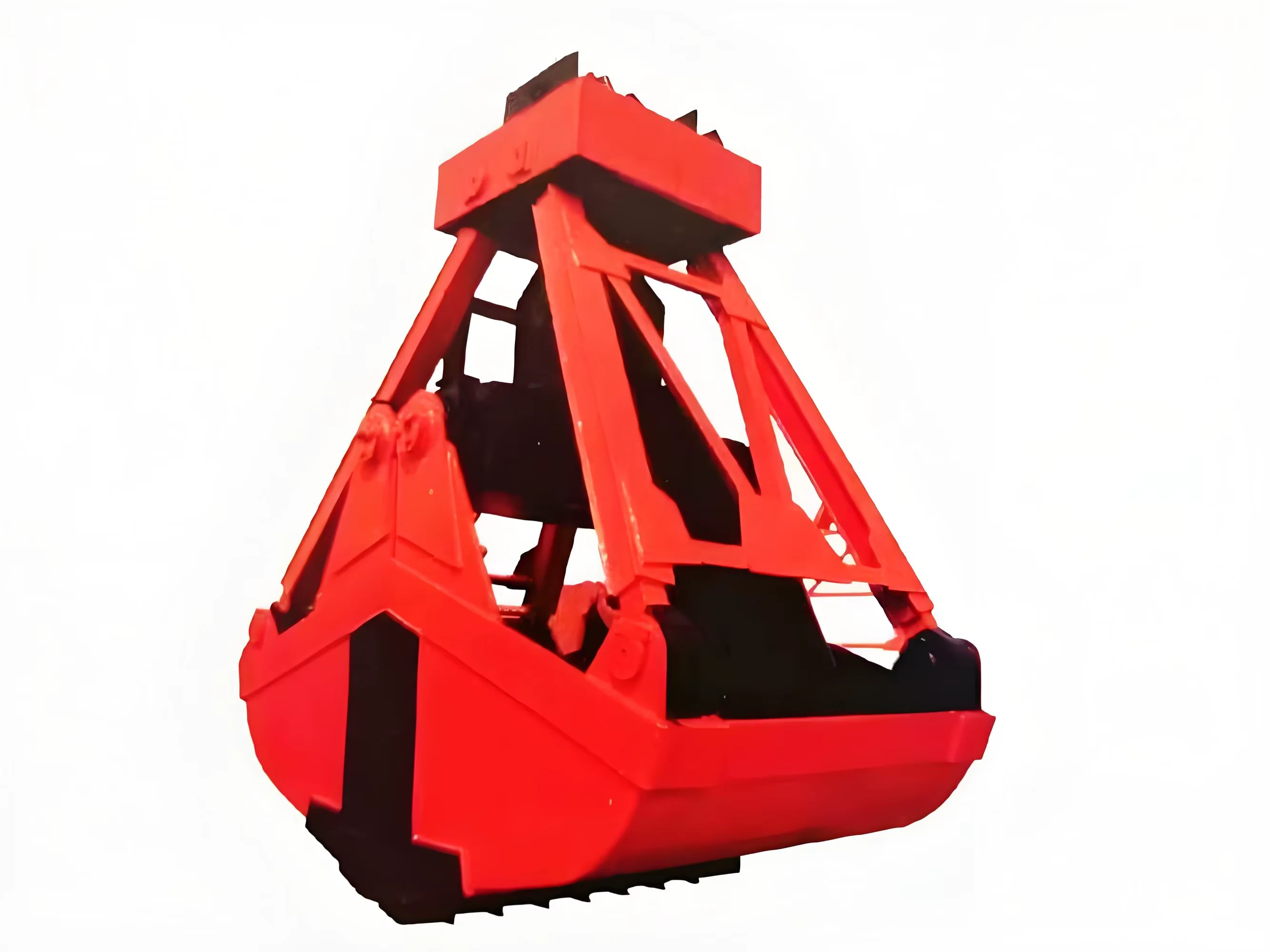
Load loose bulk material with separate supporting and closing ropes.
View product ↗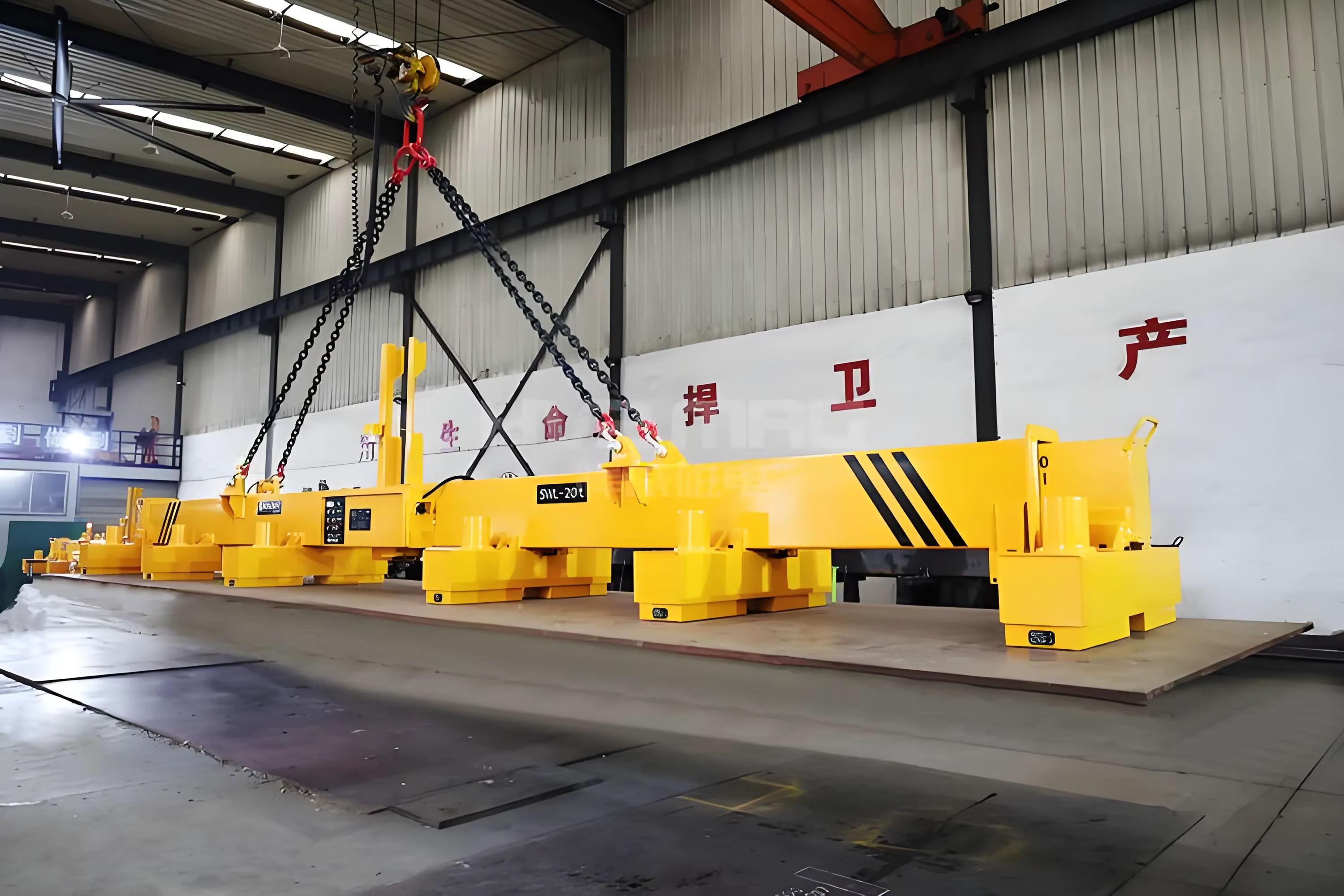
Lift long ferrous loads with multiple magnets supported by a beam rather than concentrating the load at one point.
View product ↗Use these answers to prepare one technical and commercial brief for the selected unit.
Discuss this attachmentNo. They have different drive arrangements and listed material loads. Match the complete selected-unit configuration to your crane and scrap.
Send representative scrap density and piece dimensions, then estimate actual filling. The selected grab's own mass must also be included in the crane load.
Only after the maximum pickup temperature and duty are specified and a suitable design is confirmed. Do not treat an ordinary hydraulic or electric grab as heat-rated by default.
A magnet may suit compatible ferrous scrap with adequate contact and power protection. A multi-petal grab can collect irregular pieces, including mixed material, subject to the selected tine design.
Ask each supplier to state the same tine design, loaded mass, drive package, wear parts, controls, testing, packing and delivery boundary.
Send clear scrap photos, largest piece dimensions, expected bulk density, temperature, maximum mass per cycle and your crane's rope or electrical drawings. The selected drawing and commercial offer can then identify the attachment, crane interface, documents, delivery and support.
Send my attachment enquiry ↗