Skip to content
CRANE MANUFACTURER SINCE 2002
info@cranehenanmine.com+86 188 3620 7779Project enquiry ↗
Get a project quote
Ship-to-shore cranes operating alongside a container vessel
Port & container terminal equipment

Move cargo from
ship to stack.

Choose the lifting system around your berth, container block and transfer route. Compare five core port equipment families across three work zones before requesting a matched proposal.

03work zones
05equipment families
01terminal-wide handling plan
The right equipment at each handover

Start with the cargo flow, not a model name.

A port crane must fit the vessel or cargo, the working area, the ground structure and the required cycle. These three zones map the equipment to the moves your terminal actually performs.

01 / Quayside handling

Work the vessel and berth.

Match the crane to ship size, cargo type and berth infrastructure. Container-only operations and multipurpose cargo call for different lifting systems.

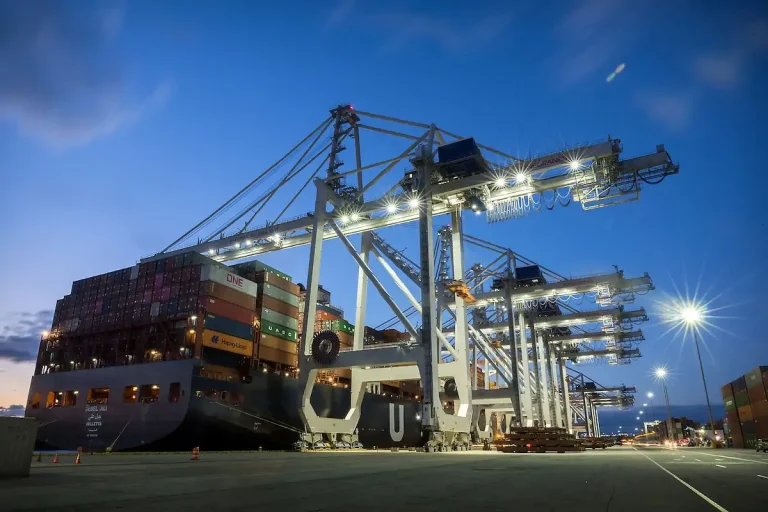
Ship-to-shore container cranes alongside a vessel at a port quaySTS / container quay crane
VESSEL ↔ TERMINAL

Ship-to-Shore Container Crane

Move containers between ship cells, deck stacks and landside transfer vehicles.

Start with the design vessel and berth geometry. Rows across, waterside outreach, backreach, lift above and below rail, rail gauge and quay wheel-load limits define the crane before motion speeds are selected.

Primary moveVessel ↔ truck, trailer or AGV
TravelFixed quay rails
Lifting interfaceContainer spreader
Define firstVessel rows, outreach and berth rail layout
BEST FITDedicated container berths seeking repeatable vessel handling.
ASK WITH YOUR RFQDesign vessel, rows across, spreader formats, target berth moves per hour and quay drawing.
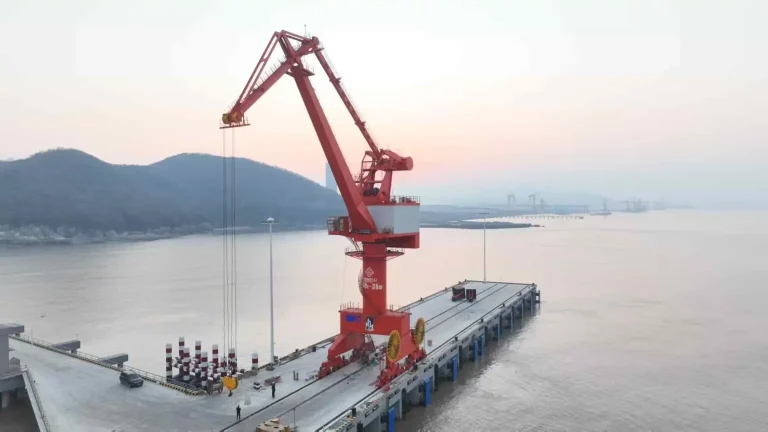
Portal harbor crane working above a waterfront cargo berthslewing portal crane
MIXED / BULK CARGO

Portal Harbor Crane

Handle general cargo, bulk material and project loads at a multipurpose berth.

A slewing portal crane reaches ship and shore positions from a rail-mounted quay portal. The cargo mix determines whether the lift uses a hook, grab or other attachment; working radius, berth traffic and duty determine the machine arrangement.

Primary moveShip ↔ quay or transport
TravelQuay rail with slewing jib
Lifting interfaceHook, grab or project attachment
Define firstCargo mix, radius and berth throughput
BEST FITBulk or multipurpose terminals with several cargo types.
ASK WITH YOUR RFQCargo mass and dimensions, ship size, maximum working radius, grab volume and berth plan.
02 / Container-yard stacking

Design the storage block.

Choose fixed rail for a permanent high-density block or rubber tires where block transfer and future yard changes matter.

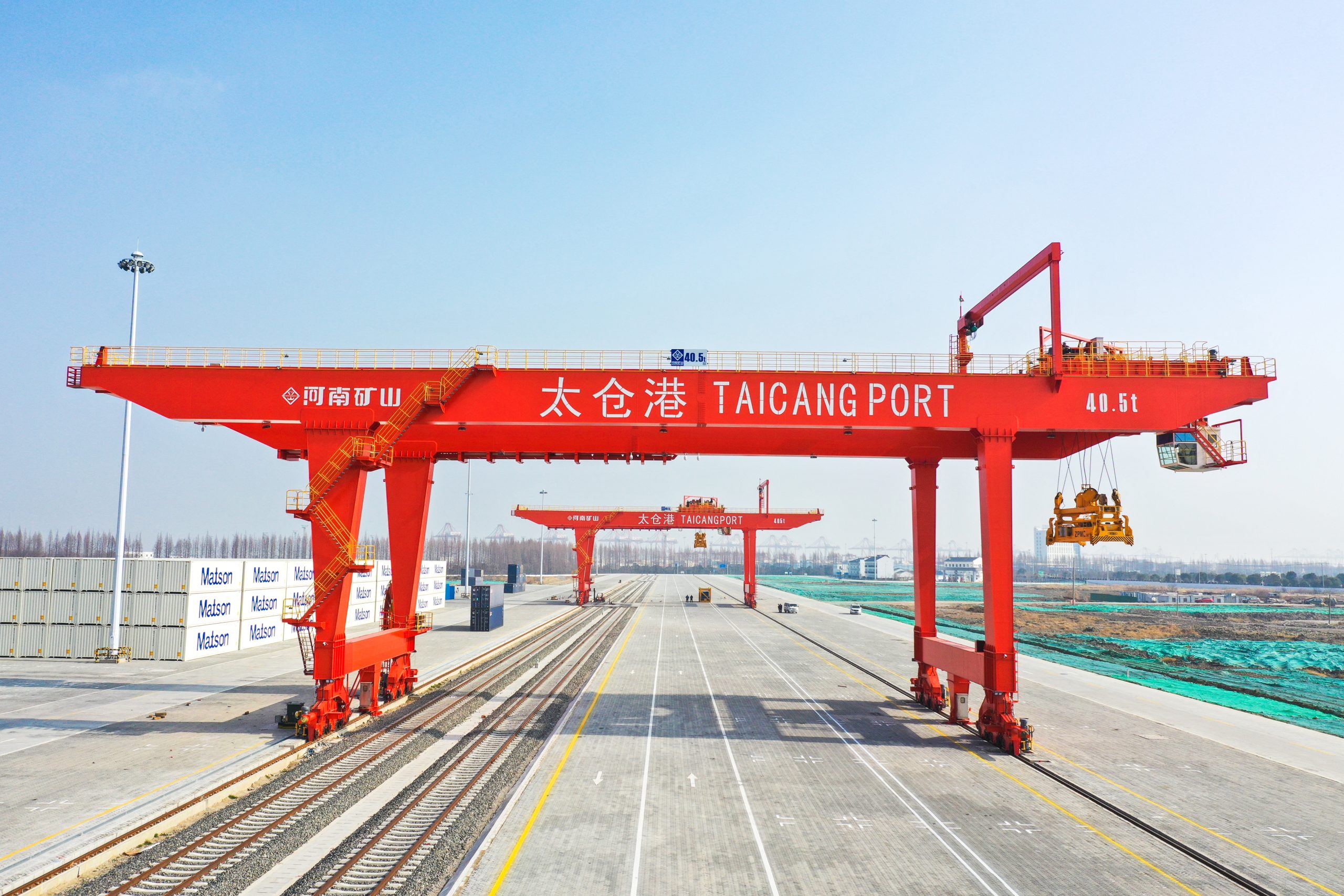
Henan Mine Crane rail-mounted container gantry crane at Taicang PortRMG / CMJ
FIXED-RAIL YARD

Rail-Mounted Container Gantry Crane

Stack and transfer containers along a fixed block with repeatable rail travel.

A CMJ RMG is designed around container rows, transfer lanes, stacking tiers and rail gauge. PLC, variable-frequency control and anti-sway functions can support precise, repeatable handling; the final automation scope follows the terminal workflow. The image shows a project installation at Taicang Port.

Primary moveContainer stack ↔ truck or rail
TravelFixed yard rails
Lifting interfaceContainer spreader
Define firstRows, tiers, rail gauge and moves per hour
BEST FITHigh-density blocks with a stable, permanent yard layout.
ASK WITH YOUR RFQ20/40/45 ft mix, gross mass, rows, tiers, truck lane, rail gauge and target moves per hour.
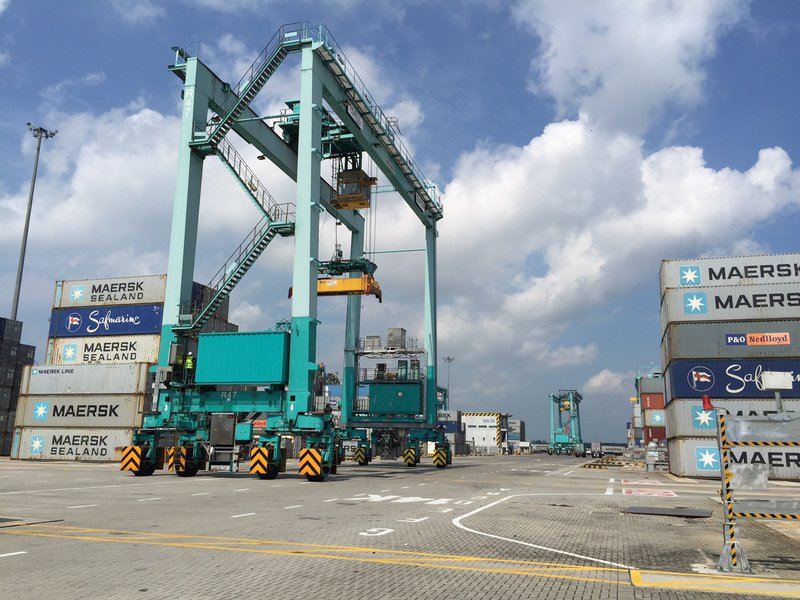
Rubber-tired gantry crane with container spreader operating between stacked containersRTG / mobile container gantry
MOBILE YARD BLOCKS

Rubber-Tyred Gantry Crane

Reassign a crane between compatible yard blocks without a continuous rail runway.

A container RTG is selected from the full block layout: container rows, truck lane, stacking tiers, transfer route, pavement reactions and power concept. Specify the spreader, container duty, travel path and block-transfer method together.

Primary moveContainer stack ↔ truck lane
TravelRubber tires; block transfer
Lifting interfaceContainer spreader by project
Define firstRows, tiers, tire path and power system
BEST FITContainer yards that value block-to-block flexibility.
ASK WITH YOUR RFQYard modules, tire paths, pavement capacity, stacking plan, power concept and moves per hour.
03 / Mobile yard transfer

Carry the container through the site.

Where the lifting machine must also transport the container, check every lane, corner, crossing and pavement section.

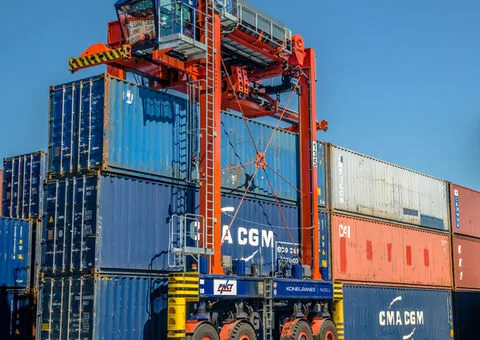
Container straddle carrier travelling between stacked containers in a port yardmobile container carrier
PICK ↔ CARRY ↔ PLACE

Container Straddle Carrier

Lift and move a container through the yard with one mobile machine.

The carrier travels with the load after pickup. Route width, turns, pavement, container clearance and stacking tier are as important as rated load. Compare the entire travel and placement cycle, not only lifting speed.

Primary movePickup ↔ transport ↔ stack
TravelRubber-tired yard routes
Lifting interfaceContainer lifting arrangement
Define firstLoad, route width, turns and stacking tiers
BEST FITYards needing flexible container movement across several positions.
ASK WITH YOUR RFQContainer formats, gross mass, stacking tiers, narrowest lane, turning space and loaded route.
Shortlist the equipment

Compare by terminal task.

The table narrows the equipment choice. Final capacity and dimensions follow your project load and layout.

EquipmentMain moveTravel / mobilityDefine before quotation
Ship-to-Shore Container CraneVessel ↔ truck, trailer or AGVFixed quay railsVessel rows, outreach and berth rail layout
Portal Harbor CraneShip ↔ quay or transportQuay rail with slewing jibCargo mix, radius and berth throughput
Rail-Mounted Container Gantry CraneContainer stack ↔ truck or railFixed yard railsRows, tiers, rail gauge and moves per hour
Rubber-Tyred Gantry CraneContainer stack ↔ truck laneRubber tires; block transferRows, tiers, tire path and power system
Container Straddle CarrierPickup ↔ transport ↔ stackRubber-tired yard routesLoad, route width, turns and stacking tiers
Procurement essentials

Build a proposal your team can compare.

Ask each bidder to price the same operating duty, interfaces and delivery scope.

01 / OPERATING BASIS

Define the cargo and cycle.

Give container formats and gross mass or bulk/general cargo details, handling positions, moves per hour, shifts and peak demand. For STS, include the present and future design vessel.

02 / SITE INTERFACE

Share the drawings.

Provide quay and yard plans, rail or tire paths, foundations or pavement loads, power supply, wind and coastal-corrosion conditions. Record vehicle and terminal-system interfaces.

03 / COMMERCIAL SCOPE

Compare complete delivery.

Request the GA drawing, model-specific certificates and tests, spreader or grab scope, shipping, assembly, commissioning, training, warranty, spare parts, production schedule and minimum order in the written offer.

Questions buyers ask

Set the system boundary early.

Terminal equipment is selected from the complete move and the infrastructure that supports it.

RMG or RTG for a container block?

An RMG runs on a fixed rail layout and repeatedly serves its assigned block. An RTG uses tire-mounted travel and can move between compatible blocks when pavement, clearances, power and traffic rules allow. Compare the full yard layout, not only rated capacity.

STS or portal harbor crane at the berth?

STS is dedicated to ISO-container handling across a design vessel. A portal harbor crane uses a slewing lifting system for bulk, general or mixed cargo. State the cargo mix, ship size, radius and required berth cycle before choosing.

What does a container straddle carrier replace?

It combines pickup, loaded travel and placement in one mobile machine. Evaluate its complete yard route, stacking plan and traffic interactions against a fixed-block crane plus separate transfer vehicles.

Are capacity, lead time and MOQ fixed?

These machines are configured from terminal geometry and duty. Request a model-specific rated-load basis, dated engineering and production schedule, and minimum-order terms in the written technical and commercial offer.

Engineering enquiry

Send the terminal plan.
Receive a matched crane scope.

Include the operating task, site drawing and target handling rate. The offer can then cover equipment, civil and electrical interfaces, documentation and delivery milestones.

Request a port crane proposal
01Cargo / container format
02Vessel or yard layout
03Rows, tiers, outreach or radius
04Target moves per hour
05Rail, pavement and power
06Destination and delivery scope