Separate pulling from lifting.
A horizontal pulling rating must not be treated as a suspended-load capacity. Identify the duty before choosing a winch.
Move a load along a planned rope path. Compare JK faster-line, JM controlled-line and double-drum arrangements, then specify the pull at the working drum layer, usable rope travel, duty and safety system as one package.
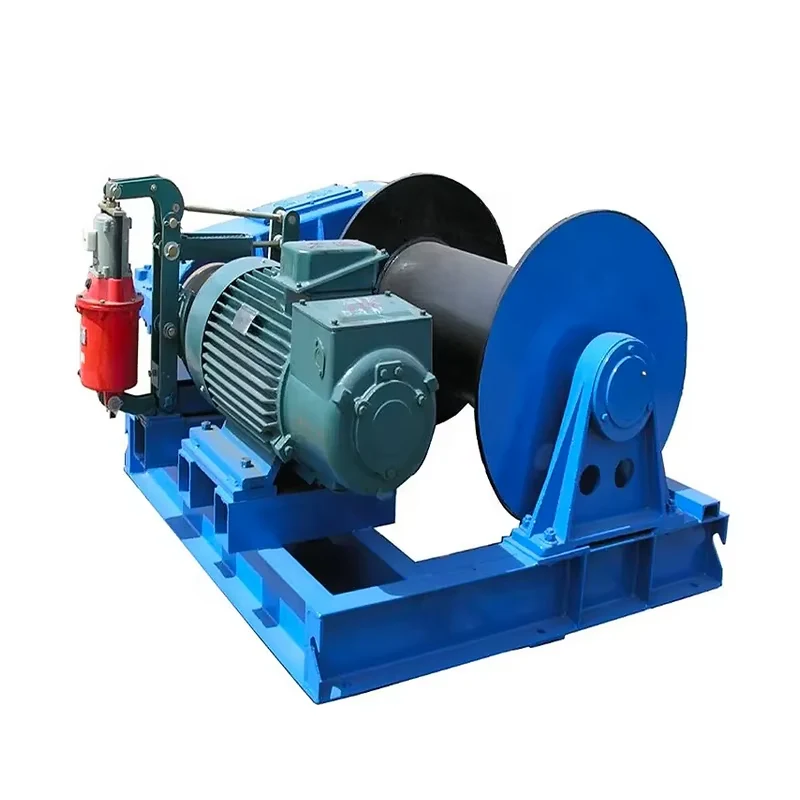
An electric winch winds steel wire rope onto a powered drum. The winch, rope, anchorage, direction changes and load form one working system. A nameplate pull alone does not tell you the force available at every drum layer or whether the equipment is approved for lifting a suspended load.
Tell us whether you will pull horizontally, position equipment or lift vertically. Add the load path, operating frequency, required line speed, usable travel, electrical supply and site conditions. This allows the selected arrangement, brake and controls to match the actual task.
A horizontal pulling rating must not be treated as a suspended-load capacity. Identify the duty before choosing a winch.
As rope builds up on a drum, the effective pull and line speed can change. State the minimum pull needed across the working travel.
Supply travel, rope diameter, sheaves, fleet angle, exit direction and anchoring points for the installation drawing.
Identify the required line movement first. Then match pull, rope capacity, speed and controls on a single quotation.
Discuss a faster rope cycle with load and rope distance defined together.
View JK arrangement ↓ 02 / CONTROLLED MOVEMENTPrioritise controlled pull, positioning and the correct holding brake.
View JM arrangement ↓ 03 / TWO ROPE LINESPlan two rope paths, their operating sequence and per-line load.
View double-drum layout ↓ 04 / PROJECT-SPECIFICFor suspended loads, specify the lift and required safety documents explicitly.
Start an RFQ ↓Values below help start a quotation. Select one complete pull, speed, rope, drum, brake and electrical package on the approved technical schedule before ordering.
JK and JM describe different selection starting points. The final winch is defined by the actual rope pull and travel, not by the family code alone.
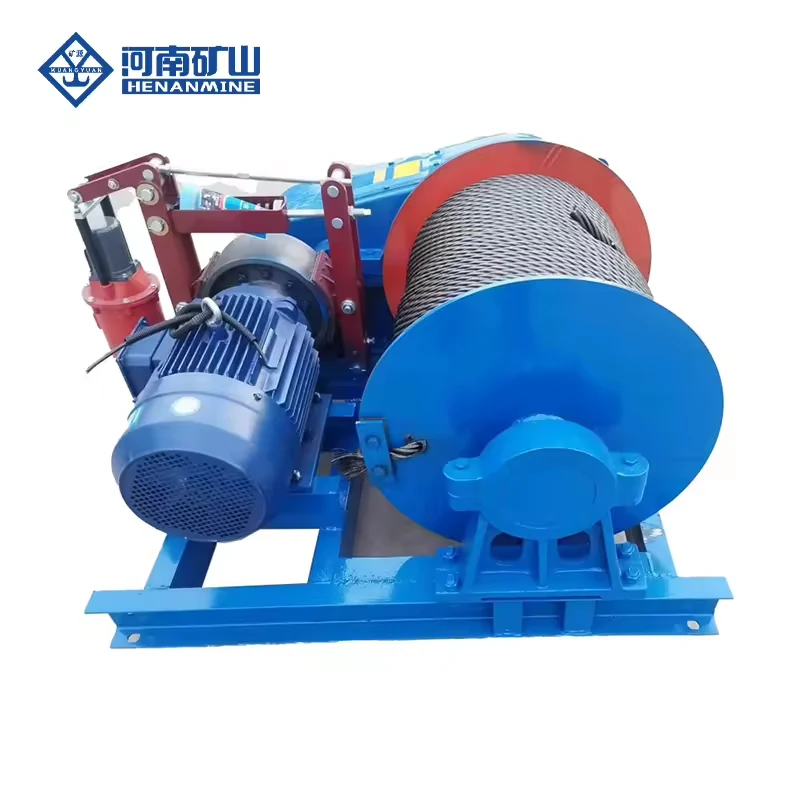 JK / FAST-LINE ARRANGEMENT
Use a JK arrangement for a defined rope route that needs faster line movement. State whether the task is horizontal pulling or engineered lifting; the required first-layer and working-layer line pull determine the selected unit.
| JK2 reference | 20 kN rated load · 24 m/min | Rope | 150 m capacity · Ø13 mm |
|---|---|---|---|
| JK5 reference | 50 kN rated load · 30 m/min | Rope | 300 m capacity · Ø21.5 mm |
| Operating duty | State pulling or lifting and cycles | Layer rating | Confirm first and least favourable working layer |
JM / CONTROLLED-LINE ARRANGEMENTChoose a slower JM arrangement when the load must move under control over a known rope distance. Compare the model-specific rated load, speed, capacity and rope diameter together, then define the working drum layer and holding brake for your task.
| JM5 reference | 50 kN rated load · 10 m/min | Rope | 270 m capacity · Ø21.5 mm |
|---|---|---|---|
| JM10 reference | 100 kN rated load · 8 m/min | Rope | 170 m capacity · Ø30 mm |
| Site interface | Anchored base and defined rope exit | Documents | Request drawing, inspection and test records |
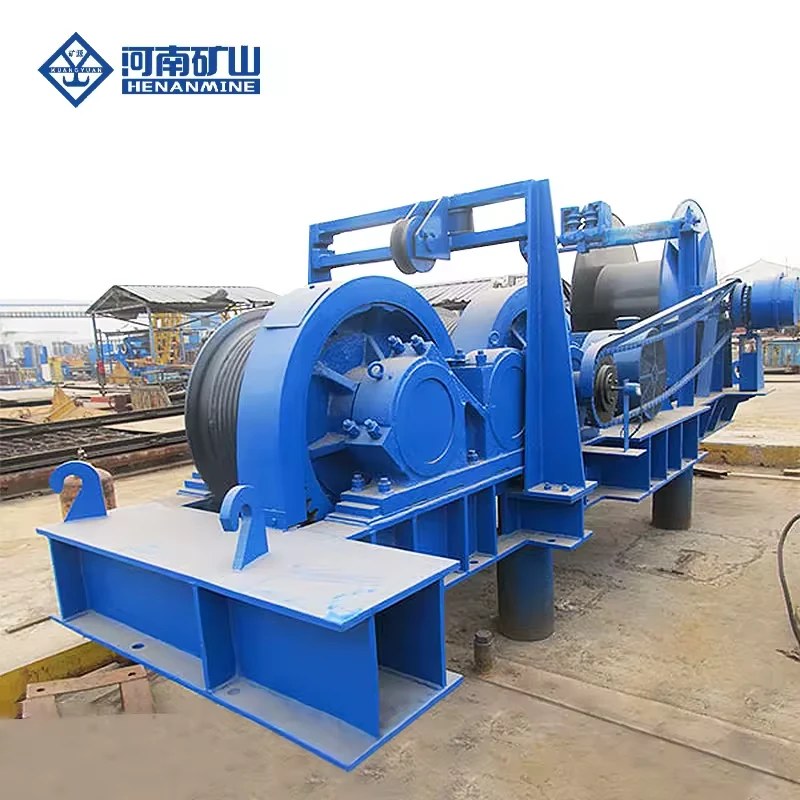
A double-drum package needs a separate load and rope route for each drum, plus a clear operating sequence and brake specification.
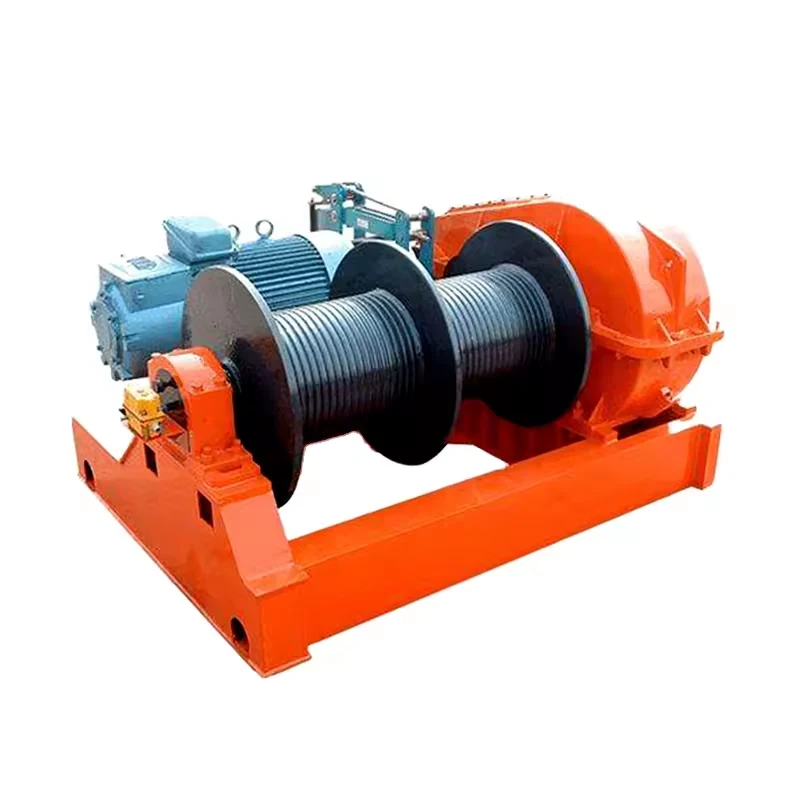 JM / DOUBLE-DRUM CONFIGURATION
A double-drum arrangement is considered when the work calls for two coordinated rope paths. Define what each drum does, its required line pull and travel, and whether the drums run independently or together before an engineering layout is prepared.
| Capacity choices to review | 2 / 5 / 10 t listed options; select by rope line | Drum arrangement | Two drums; specify independent or linked operation |
|---|---|---|---|
| Catalogued line options | 10 m/min, 200 m and 16 mm appear as options | Pairing | Confirm values for each drum on one drawing |
| Controls | Define sequence, emergency stop and operator view | Site | Provide rope routing, anchoring and working envelope |
These paired model rows help you shortlist a winch. State your use and obtain the selected unit's approved drawing before ordering.
| Model | Listed rated load | Rated line speed | Rope capacity | Rope diameter |
|---|---|---|---|---|
| JK1 | 10 kN | 22 m/min | 100 m | Ø9.3 mm |
| JK2 | 20 kN | 24 m/min | 150 m | Ø13 mm |
| JK3.2 | 32 kN | 25 m/min | 290 m | Ø15.5 mm |
| JK5 | 50 kN | 30 m/min | 300 m | Ø21.5 mm |
| JK10 | 100 kN | 30 m/min | 300 m | Ø30 mm |
| JM2 | 20 kN | 16 m/min | 150 m | Ø13 mm |
| JM5 | 50 kN | 10 m/min | 270 m | Ø21.5 mm |
| JM10 | 100 kN | 8 m/min | 170 m | Ø30 mm |
| JM20 | 200 kN | 10 m/min | 600 m | Ø43 mm |
The listed rated load does not state a drum layer or approve a suspended-load duty. Confirm the first and least favourable working-layer pull, usable rope travel, brake, power supply and duty on the final specification. A double-drum layout is engineered to the two rope paths and is not the default for every JM model.
Use these model rows to shortlist. Confirm actual line pull at the required drum layer, rope storage versus usable travel and the chosen duty on an approved technical schedule.
| Model | Listed rated load | Rated line speed | Rope capacity | Rope diameter |
|---|---|---|---|---|
| JK0.5 | 5 kN | 22 m/min | 190 m | Ø7.7 mm |
| JK1 | 10 kN | 22 m/min | 100 m | Ø9.3 mm |
| JK1.6 | 16 kN | 24 m/min | 150 m | Ø12.5 mm |
| JK2 | 20 kN | 24 m/min | 150 m | Ø13 mm |
| JK3.2 | 32 kN | 25 m/min | 290 m | Ø15.5 mm |
| JK3.2B | 32 kN | 30 m/min | 250 m | Ø15.5 mm |
| JK5 | 50 kN | 30 m/min | 300 m | Ø21.5 mm |
| JK5B | 50 kN | 25 m/min | 210 m | Ø21.5 mm |
| JK8 | 80 kN | 25 m/min | 160 m | Ø26 mm |
| JK10 | 100 kN | 30 m/min | 300 m | Ø30 mm |
| JM1 | 10 kN | 15 m/min | 100 m | Ø9.3 mm |
| JM1.6 | 16 kN | 16 m/min | 150 m | Ø12.5 mm |
| JM2 | 20 kN | 16 m/min | 150 m | Ø13 mm |
| JM3.2 | 32 kN | 9.5 m/min | 150 m | Ø15.5 mm |
| JM3.2B | 32 kN | 12 m/min | 195 m | Ø15.5 mm |
| JM5 | 50 kN | 10 m/min | 270 m | Ø21.5 mm |
| JM5B | 50 kN | 9.5 m/min | 200 m | Ø21.5 mm |
| JM5C | 50 kN | 9.5 m/min | 250 m | Ø21.5 mm |
| JM5D | 50 kN | 15 m/min | 250 m | Ø21.5 mm |
| JM5E | 50 kN | 20 m/min | 250 m | Ø21.5 mm |
| JM6 | 60 kN | 9.5 m/min | 270 m | Ø24 mm |
| JM8 | 80 kN | 8 m/min | 250 m | Ø26 mm |
| JM8B | 80 kN | 9.5 m/min | 350 m | Ø26 mm |
| JM10 | 100 kN | 8 m/min | 170 m | Ø30 mm |
| JM10B | 100 kN | 9.5 m/min | 250 m | Ø30 mm |
| JM12.5 | 125 kN | 8 m/min | 300 m | Ø34 mm |
| JM13.5 | 135 kN | 0-5 m/min | 290 m | Ø28 mm |
| JM16 | 160 kN | 10 m/min | 500 m | Ø37 mm |
| JM20 | 200 kN | 10 m/min | 600 m | Ø43 mm |
| JM25 | 250 kN | 9 m/min | 700 m | Ø48 mm |
| JM32 | 320 kN | 9 m/min | 700 m | Ø56 mm |
| JM50 | 500 kN | 9 m/min | 800 m | Ø65 mm |
Move equipment along a known route. State friction, slope, line angle, travel and any sheaves so the minimum working-layer pull can be checked.
Bring a component into place at a specified speed. Define how it must stop, hold and restart under the expected load.
For a suspended load, request a lifting-specific design review covering brakes, structure, controls, load testing and the required local documents.
If you need a travelling hook on an overhead crane, compare the electric wire-rope hoist range rather than specifying a winch by tonnage alone.
Share a simple rope-route sketch. It lets the offer address useful pull, drum capacity, controls and site interfaces.
Discuss your project ↗Not on the basis of a pulling rating alone. State the lifting duty in the RFQ. The winch, brake, rope path, structure, controls and acceptance documents must be reviewed for suspended-load service.
Rope builds up at a larger effective drum radius as more layers are wound. The pull and speed available at the rope can therefore change. Request the performance at the least favourable layer within your working travel.
Provide the required load travel, sheave arrangement and drum-to-load path, plus the reserve turns and safety allowances specified by the design. The quoted drum drawing should show usable capacity for the chosen rope diameter and layering.
Begin with required line pull, travel and speed. JK is the faster-line starting point; JM is the slower controlled-line starting point. Neither label replaces the selected unit's load, rope, brake and duty schedule.
Consider it when the project needs two defined rope paths or a coordinated two-line operation. Explain each line's load, direction and travel, then agree whether the drums operate separately or together.
State the destination and required standard. Ask the offer to name the selected-unit drawing, electrical diagram, instructions, inspection and test records, and any certificates applicable to the agreed design. Do not assume a document applies to every configuration.
One-set enquiries can be quoted. Production and shipment dates, the warranty period, spare-parts support and site-assistance scope must be written into the offer for the chosen specification and destination.
Share the pulling or lifting duty, minimum working-layer line pull, rope travel and diameter, speed, drum arrangement, lifts or cycles per shift, power supply, installation sketch and destination. Ask for one coordinated technical and commercial offer.
Request a technical quotation