Skip to content
Henan Mine Crane Get a project quote
Henan Mine Crane · Two lifting positions

Double Trolley Overhead Cranes

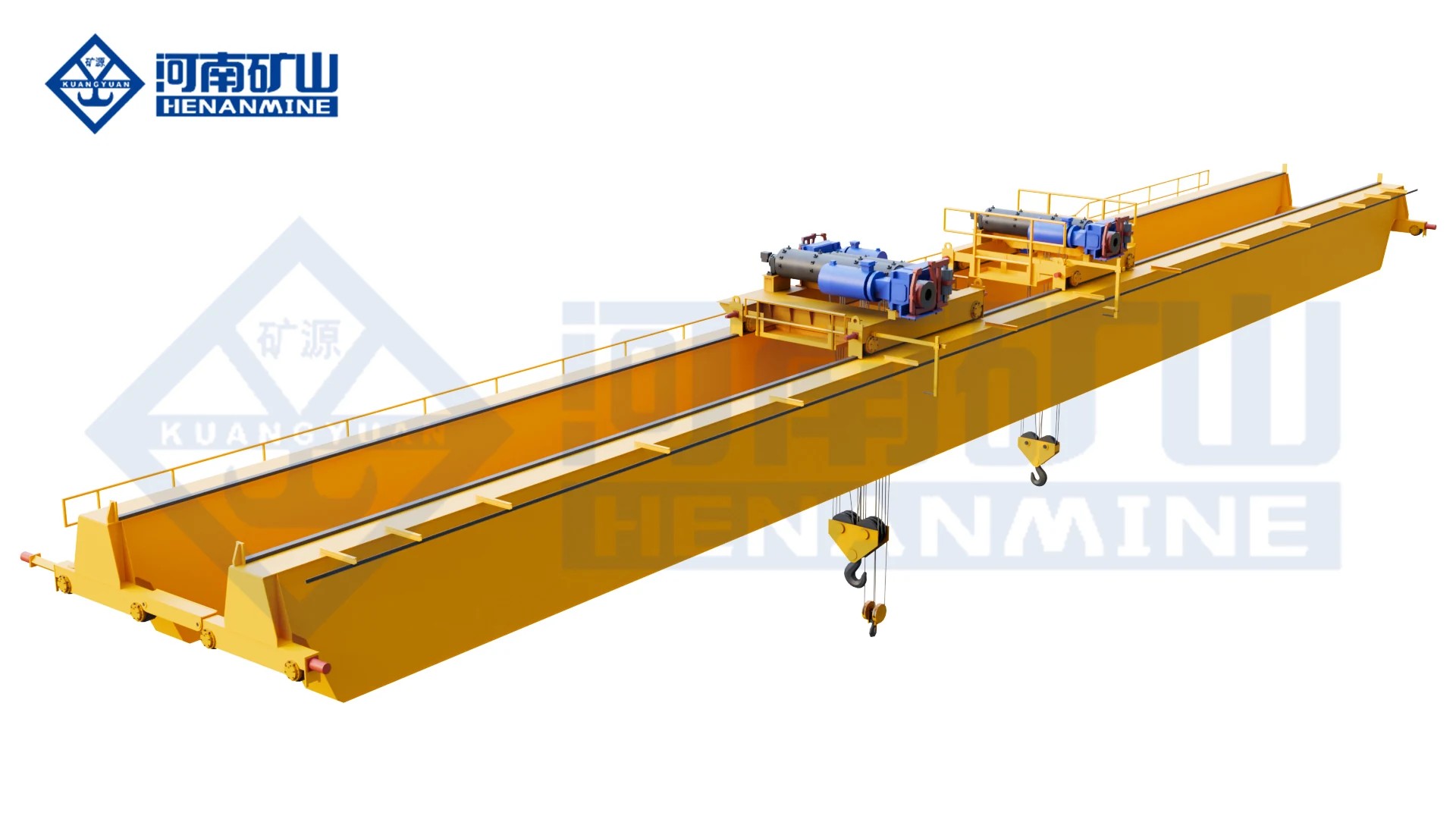
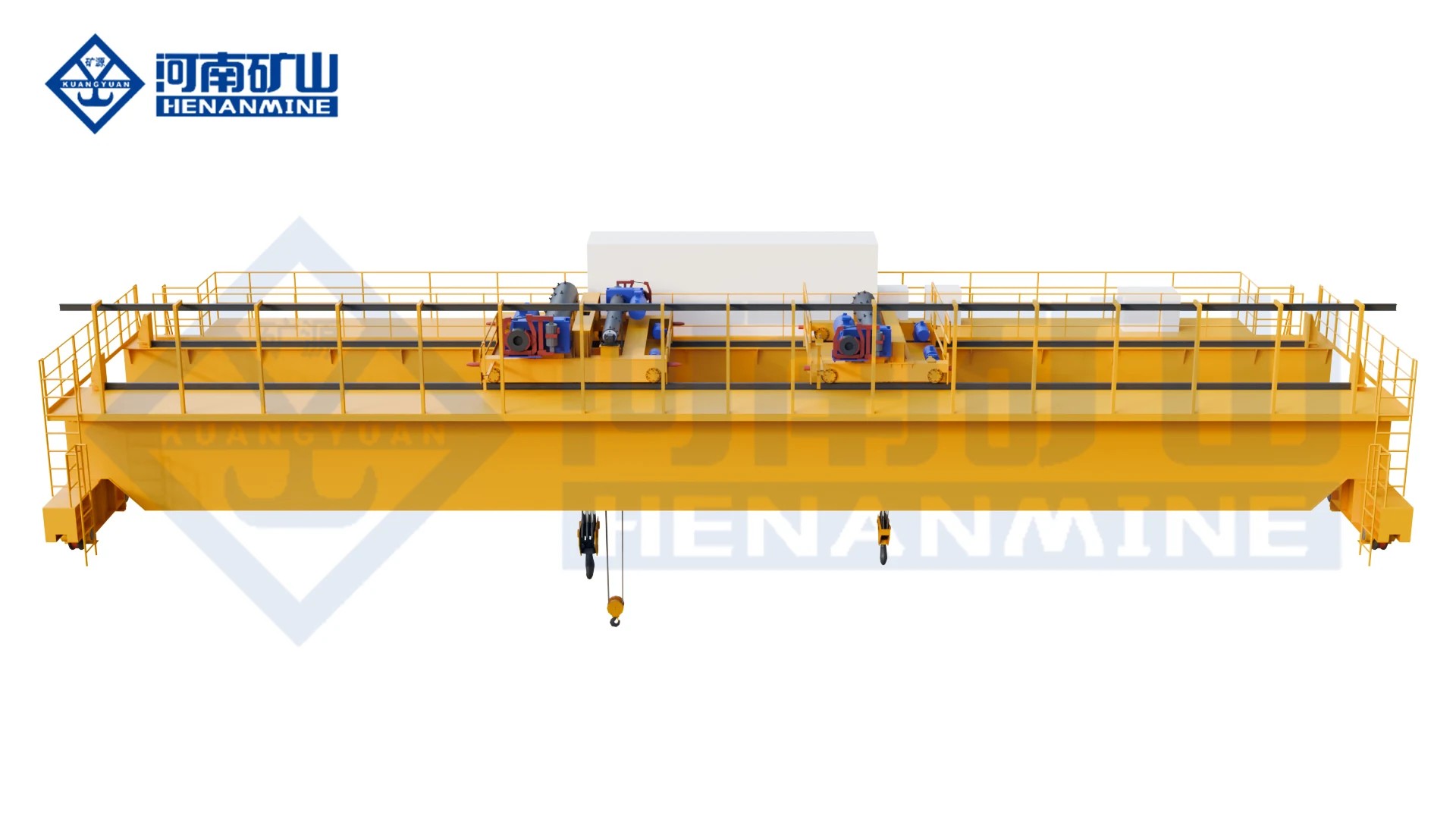
Double trolley overhead cranes place two travelling lifting units on one bridge. Use them for separate lifting positions or an approved two-point lift of one long component. Compare winch-trolley, electric-hoist, explosion-protected, insulated and casting arrangements.

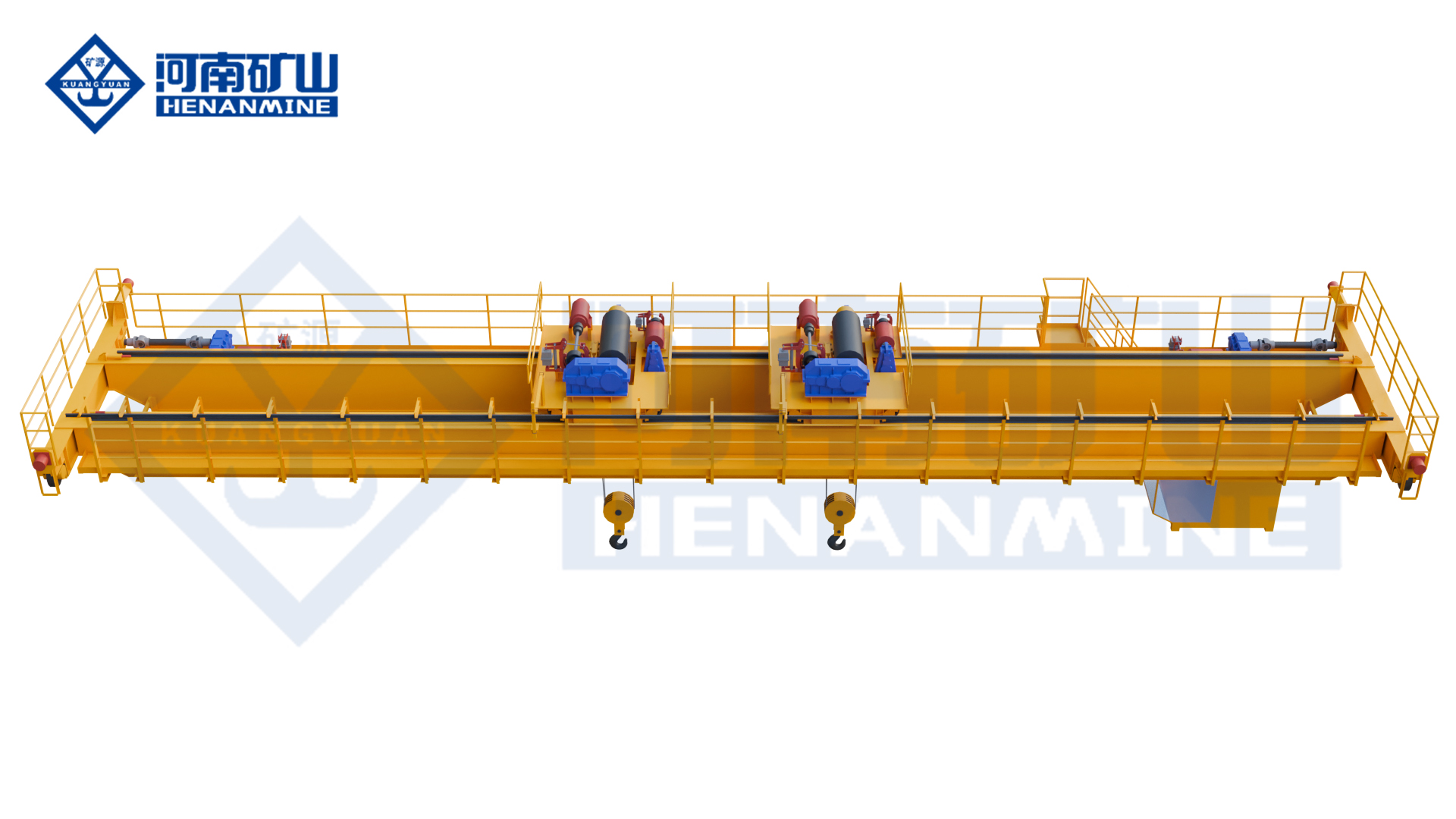
QE double-trolley hook crane

General-purpose double trolley cranes

Choose between conventional winch trolleys and electric-hoist trolleys for long components, assembly work or two lifting positions on one bridge. Select independent and coordinated operation with the crane.

QE double-trolley hook crane
QE

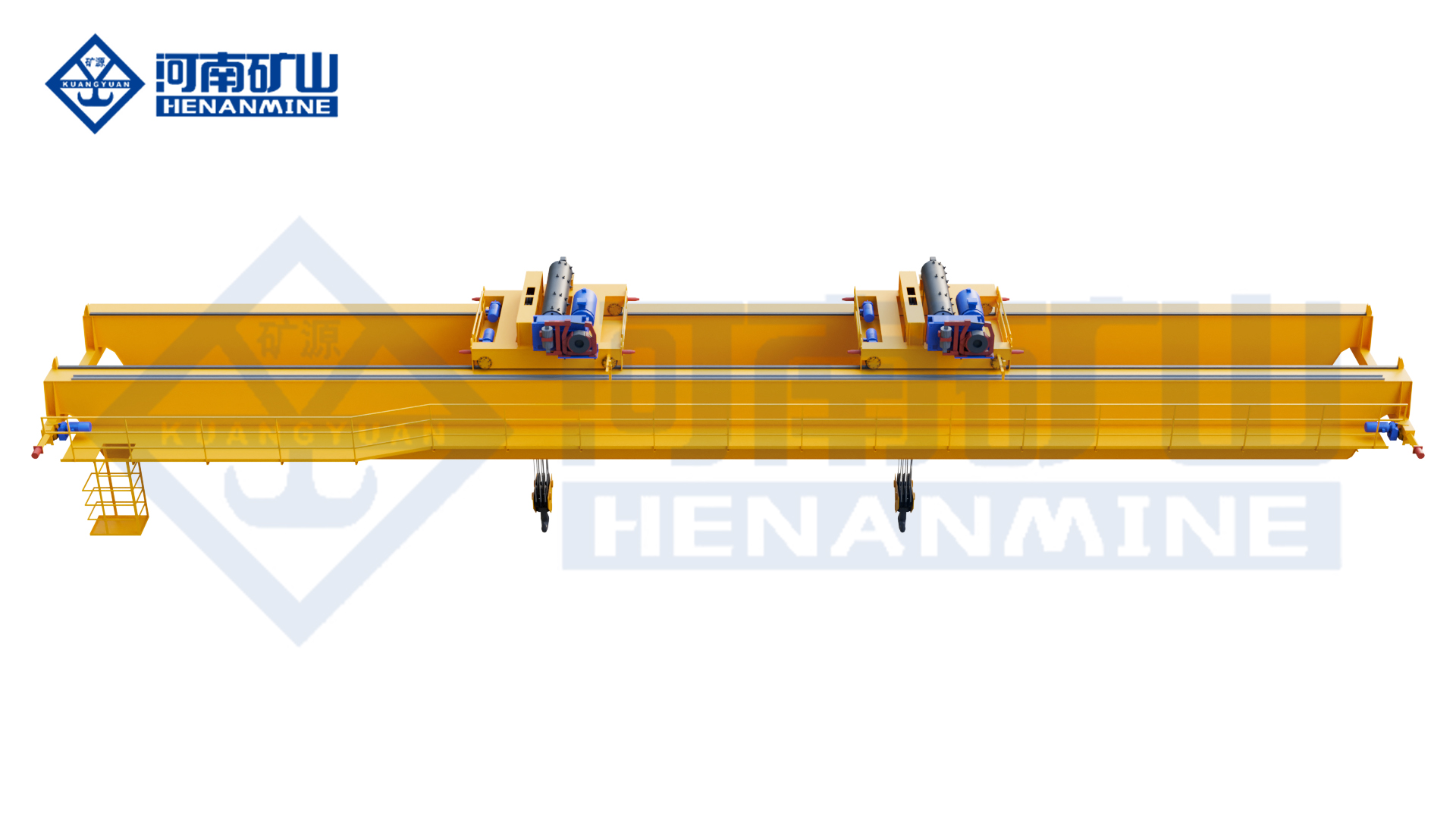
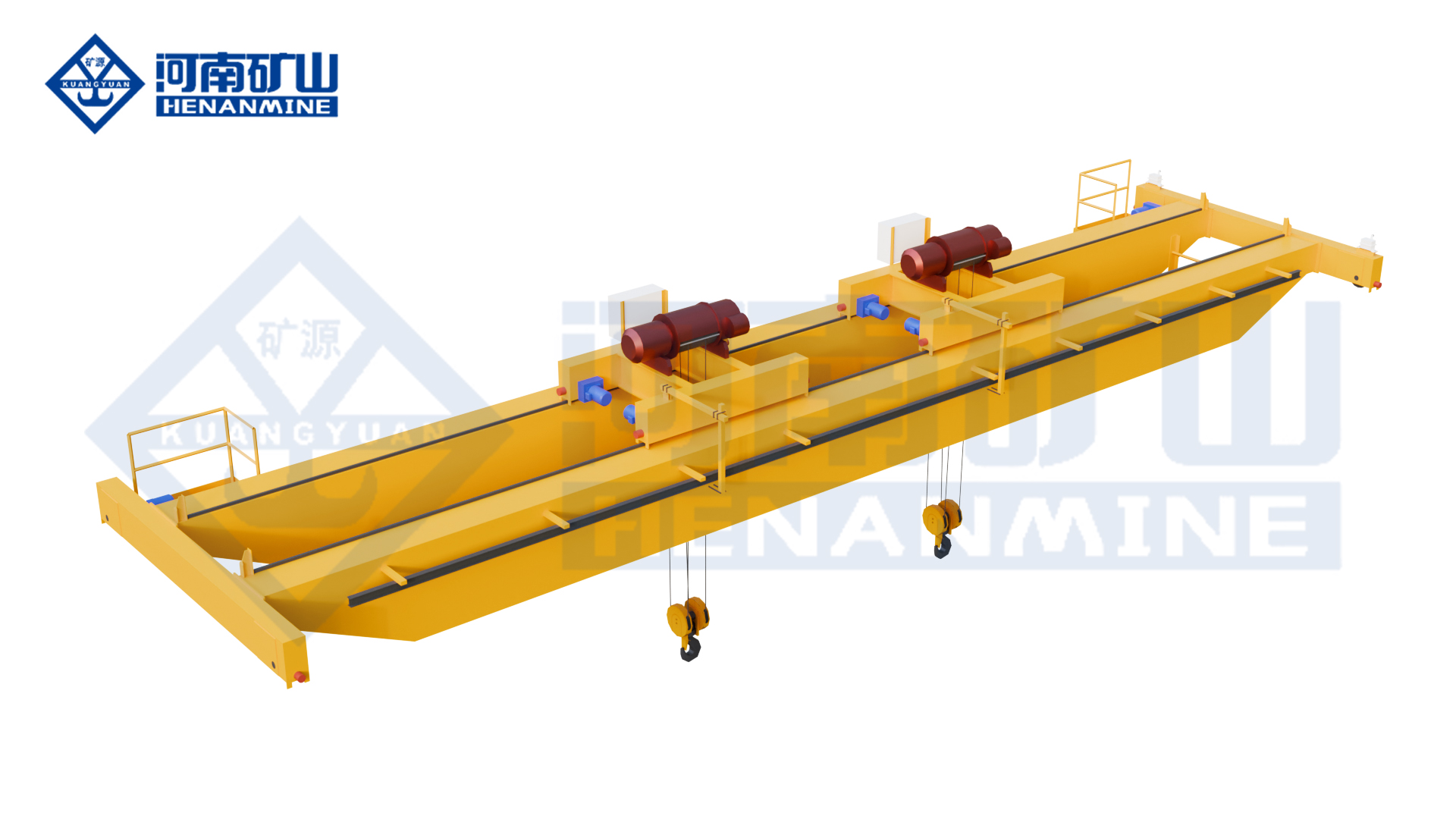
QE Double Trolley Hook Overhead Crane

Two hook trolleys lift separately or together to handle long materials such as pipes, bars and timber.

Trolley ratings5+5 / 10+10 / 16+16 t
Catalogue span10.5–31.5 m
Catalogue dutyA5 / A6
All specifications
Model QE
Trolley arrangement Two separate hook trolleys
Catalogue trolley ratings 5+5 / 10+10 / 16+16 t
Catalogue span 10.5 / 13.5 / 16.5 / 19.5 / 22.5 / 25.5 / 28.5 / 31.5 m
Catalogue lifting height 16 m for all listed configurations
Working duty A5 or A6 in the catalogue configurations
5+5 t hoisting A5: 11.3 m/min; A6: 15.6 m/min
10+10 t hoisting A5: 8.5 m/min; A6: 13.2 m/min
16+16 t hoisting A5: 7.9 m/min; A6: 10.7 m/min
Trolley travel, listed rows 5+5 t A5: 37.2; 10+10 t A5: 43.8; 16+16 t: 44.6 m/min
Bridge travel and wheel loads Paired with capacity, duty and span in the catalogue matrix
Operation Separate or combined trolley use; encoder and inverter control
Operator control Cabin, ground or remote operation options
Catalogue power supply Three-phase AC 380 V / 50 Hz for the listed catalogue selections
Catalogue rail 5+5 / 10+10 t: P43; 16+16 t: QU70
Combined lifting rating Confirmed for the actual load shares, hook spacing and selected configuration

QE 5+5 t matched configurations

Scroll across to see every column.

Duty / span (m) Lift (m) Hoisting (m/min) Trolley travel (m/min) Bridge travel (m/min) Max wheel load (kN) Crane rail
A5 · 10.5 m 16 11.3 37.2 90.7 101 P43
A5 · 13.5 m 16 11.3 37.2 90.7 107 P43
A5 · 16.5 m 16 11.3 37.2 90.7 116 P43
A5 · 19.5 m 16 11.3 37.2 91.9 121 P43
A5 · 22.5 m 16 11.3 37.2 91.9 128 P43
A5 · 25.5 m 16 11.3 37.2 84.7 140 P43
A5 · 28.5 m 16 11.3 37.2 84.7 149 P43
A5 · 31.5 m 16 11.3 37.2 84.7 158 P43
A6 · 10.5 m 16 15.6 To drawing 92.7 104 P43
A6 · 13.5 m 16 15.6 To drawing 92.7 111 P43
A6 · 16.5 m 16 15.6 To drawing 92.7 120 P43
A6 · 19.5 m 16 15.6 To drawing 93.7 125 P43
A6 · 22.5 m 16 15.6 To drawing 93.7 132 P43
A6 · 25.5 m 16 15.6 To drawing 86.5 144 P43
A6 · 28.5 m 16 15.6 To drawing 86.5 152 P43
A6 · 31.5 m 16 15.6 To drawing 86.5 162 P43

Each row pairs duty and span with the listed speeds and wheel load. Values marked “To drawing” are confirmed in the configured offer. The ordered crane’s wheel reactions follow its approved drawing.
QE 10+10 t matched configurations

Scroll across to see every column.

Duty / span (m) Lift (m) Hoisting (m/min) Trolley travel (m/min) Bridge travel (m/min) Max wheel load (kN) Crane rail
A5 · 10.5 m 16 8.5 43.8 84.7 161 P43
A5 · 13.5 m 16 8.5 43.8 84.7 167 P43
A5 · 16.5 m 16 8.5 43.8 84.7 176 P43
A5 · 19.5 m 16 8.5 43.8 84.7 189 P43
A5 · 22.5 m 16 8.5 43.8 84.7 197 P43
A5 · 25.5 m 16 8.5 43.8 87.6 209 P43
A5 · 28.5 m 16 8.5 43.8 87.6 220 P43
A5 · 31.5 m 16 8.5 43.8 87.6 229 P43
A6 · 10.5 m 16 13.2 To drawing 76 167 P43
A6 · 13.5 m 16 13.2 To drawing 76 174 P43
A6 · 16.5 m 16 13.2 To drawing 76 183 P43
A6 · 19.5 m 16 13.2 To drawing 76 197 P43
A6 · 22.5 m 16 13.2 To drawing 76 205 P43
A6 · 25.5 m 16 13.2 To drawing 89 218 P43
A6 · 28.5 m 16 13.2 To drawing 89 To drawing P43
A6 · 31.5 m 16 13.2 To drawing 89 239 P43

Each row pairs duty and span with the listed speeds and wheel load. Values marked “To drawing” are confirmed in the configured offer. The ordered crane’s wheel reactions follow its approved drawing.
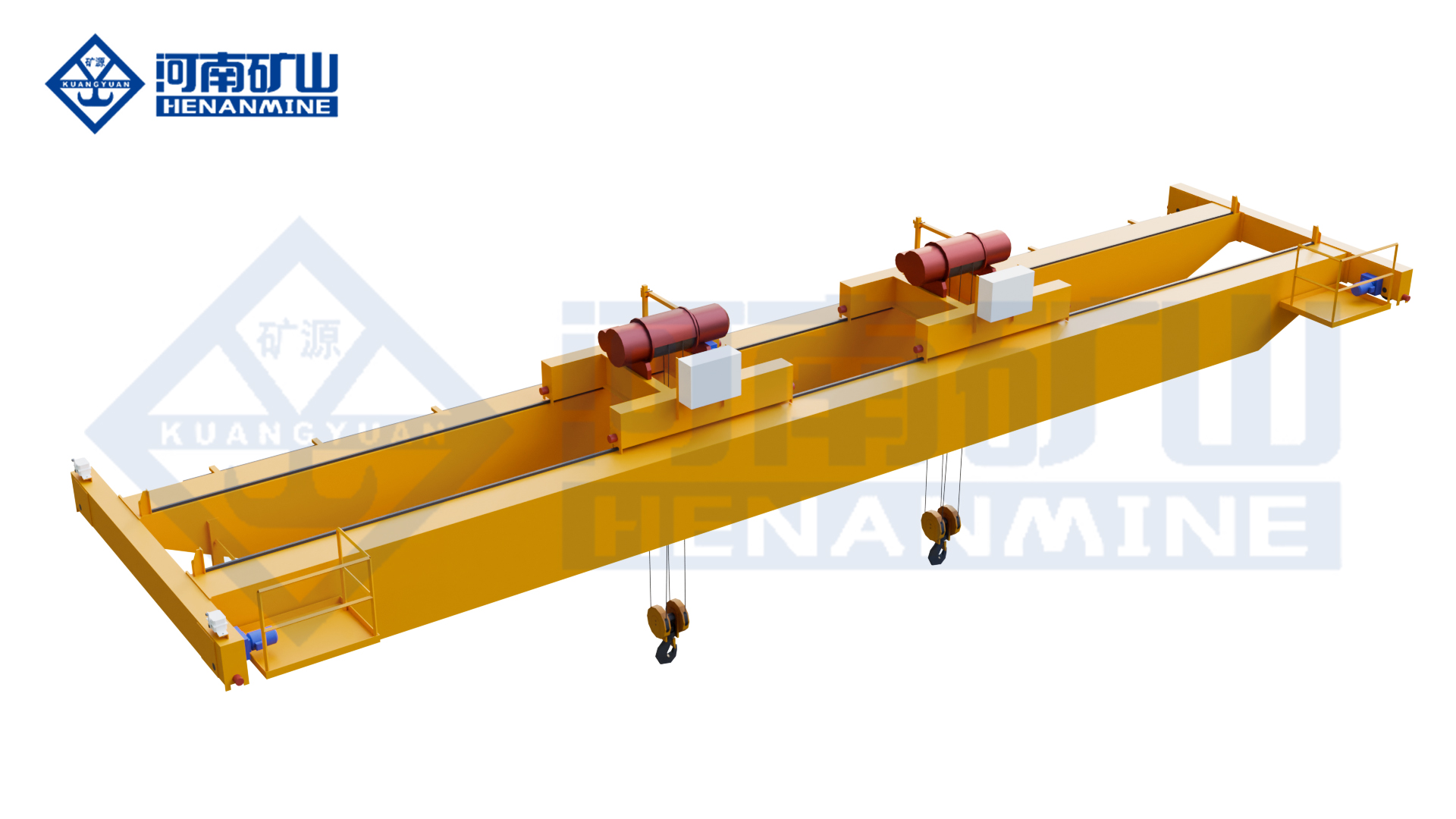
QE 16+16 t matched configurations

Scroll across to see every column.

Duty / span (m) Lift (m) Hoisting (m/min) Trolley travel (m/min) Bridge travel (m/min) Max wheel load (kN) Crane rail
A5 · 10.5 m 16 7.9 44.6 87.6 235 QU70
A5 · 13.5 m 16 7.9 44.6 87.6 248 QU70
A5 · 16.5 m 16 7.9 44.6 87.6 260 QU70
A5 · 19.5 m 16 7.9 44.6 74.2 273 QU70
A5 · 22.5 m 16 7.9 44.6 74.2 287 QU70
A5 · 25.5 m 16 7.9 44.6 74.6 303 QU70
A5 · 28.5 m 16 7.9 44.6 74.6 315 QU70
A5 · 31.5 m 16 7.9 44.6 74.6 325 QU70
A6 · 10.5 m 16 10.7 44.6 89 242 QU70
A6 · 13.5 m 16 10.7 44.6 89 255 QU70
A6 · 16.5 m 16 10.7 44.6 89 268 QU70
A6 · 19.5 m 16 10.7 44.6 75.3 285 QU70
A6 · 22.5 m 16 10.7 44.6 75.3 299 QU70
A6 · 25.5 m 16 10.7 44.6 75.3 312 QU70
A6 · 28.5 m 16 10.7 44.6 75.3 322 QU70
A6 · 31.5 m 16 10.7 44.6 75.3 335 QU70

Each row pairs duty and span with the listed speeds and wheel load. Values marked “To drawing” are confirmed in the configured offer. The ordered crane’s wheel reactions follow its approved drawing.
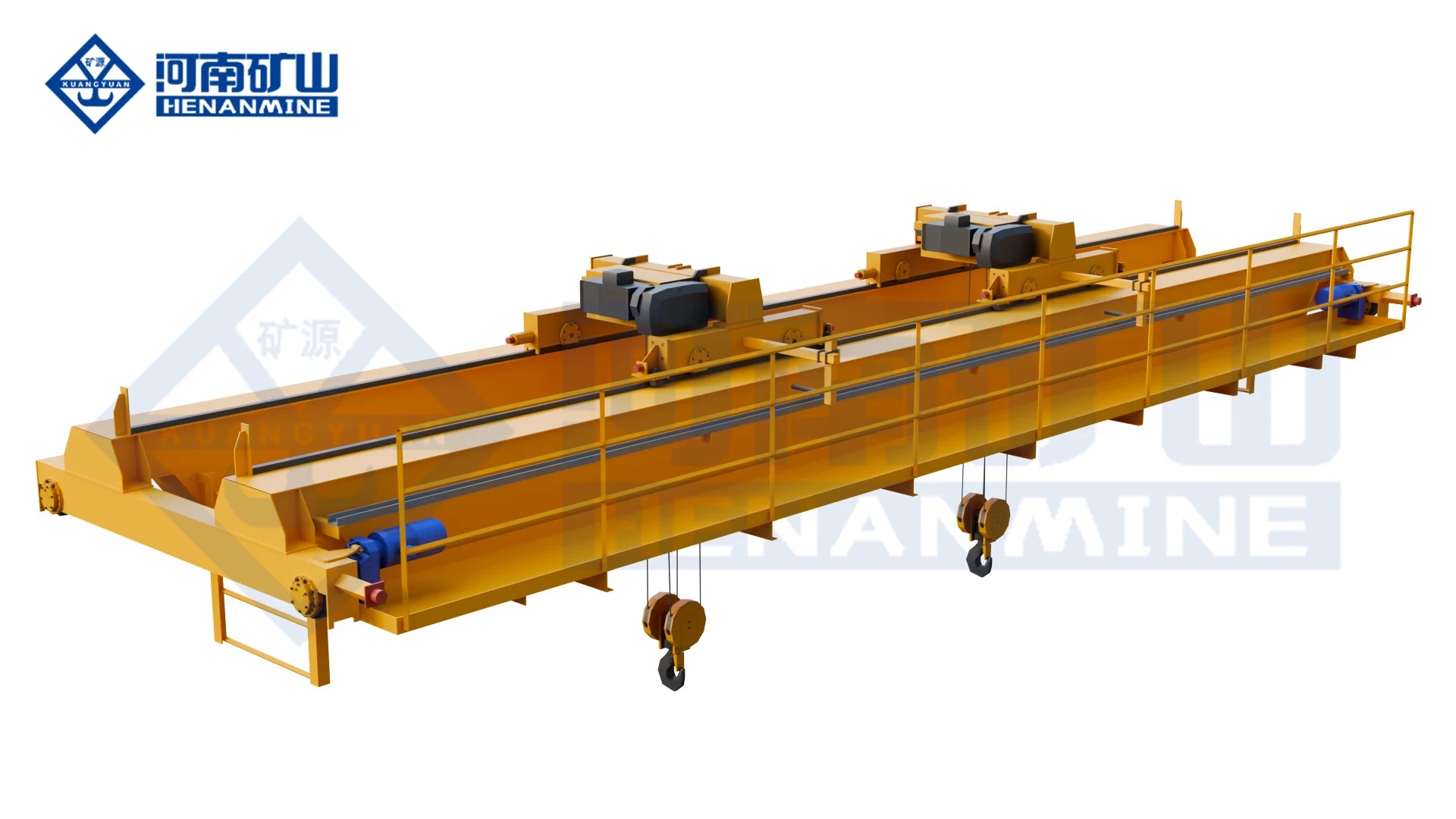
KSQE new-design double-trolley hook crane
KSQE

KSQE Modular Double Trolley Overhead Crane

A bolted modular bridge carries two independent trolleys on a common track for separate handling, coordinated long-load lifts and specified turning tasks.

Trolleys2 on a common track
BridgeBolted modular structure
OperationSeparate or coordinated
All specifications
Model KSQE
Bridge structure Segmented bridge with bolted main-girder and end-carriage connections
Trolley arrangement Two independent hook trolleys on the same track
Trolley ratings Selected for the maximum load at each lifting point
Combined lifting rating Specified for the complete load and trolley positions
Span and lifting height Specified for the runway and required hook travel
Duty and speeds Selected for the load spectrum and handling cycle
Operating modes Separate or coordinated operation
Turning function Balanced turning where included in the operating specification
Speed control Stepless speed control and creep positioning
Control options VFD, PLC and automatic positioning package as specified
Protection and monitoring Overload, travel and emergency-stop functions; operating-status monitoring package as specified
Power supply Voltage and frequency stated in the project technical offer
LHE double-trolley electric-hoist crane
LHE

LHE Double Trolley Electric Hoist Overhead Crane

Two compact wire-rope electric-hoist trolleys provide separate lifting points for workshop loads and coordinated handling of long components.

Trolleys2 electric-hoist trolleys
HoistsSteel wire rope
TravelSoft start or VFD
All specifications
Model LHE
Bridge arrangement Double girder bridge
Trolley quantity 2
Lifting mechanism Compact steel wire-rope electric hoists
Trolley ratings Selected for the maximum load at each hook
Combined bridge rating Specified for the separate and shared-load lifting cases
Span Specified for the runway rail-centre distance
Lifting height Specified for pickup and placement levels
Hook spacing Working separation and approach limits confirmed in the arrangement drawing
Duty and hoisting speeds Selected for the lifting capacities and handling cycle
Trolley and bridge travel Soft-start or variable-frequency drive options
Operating modes Independent or combined trolley operation
Coordinated control Encoder and inverter control package
Lifting attachment Hooks or specified lifting attachment
Power supply Voltage and frequency stated in the project technical offer
LHEA low-headroom double-trolley electric-hoist crane
LHEA

LHEA Low Headroom Double Trolley Hoist Crane

Two seated electric hoists on trolley frames provide a compact double girder arrangement where available headroom is limited.

Trolleys2
Hoist layoutSeated electric hoists
HeadroomLow headroom design
All specifications
Model LHEA
Bridge arrangement Double girder bridge
Trolley quantity 2
Lifting mechanism Seated electric hoists mounted on trolley frames
Headroom arrangement Low headroom seated-hoist layout
Trolley ratings Selected for the maximum load at each lifting point
Combined bridge rating Specified for the component and the permitted simultaneous load cases
Span Specified for the runway rail-centre distance
Lifting height Selected with the available headroom and required placement level
Hook spacing Minimum and maximum separation shown in the arrangement drawing
Duty and speeds Specified for the ordered hoists and handling cycle
Operating functions Independent or paired functions as specified
Wheels and drive package Forged wheels; selected travel-drive package confirmed in the offer
Crane weight and wheel reactions Configuration values provided with the crane drawing
Power supply Voltage and frequency stated in the project technical offer
KSSLE double-girder overhead crane with two compact electric-hoist trolleys and two hooks
KSSLE

KSSLE New Design Double Trolley Hoist Crane

Two compact new-type hoist trolleys combine dual-speed lifting with variable-frequency travel for separate handling and coordinated long-load lifts.

HoistingDual speed
TravelVariable frequency
Trolleys2 on a common track
All specifications
Model KSSLE
Bridge arrangement Double girder bridge
Trolley arrangement Two independent trolleys on the same track
Lifting mechanism New-type electric hoists
Hoist layout Compact C-shaped arrangement with large-diameter drums
Trolley ratings Selected for the maximum load at each lifting point
Combined bridge rating Specified for the actual two-point lifting cases
Span and lifting height Specified for the runway and required hook travel
Duty Selected for the load spectrum and handling cycle
Hoisting Dual-speed lifting; numerical speed pair confirmed for the ordered hoists
Trolley and bridge travel Variable-frequency speed control
Operating modes Separate or coordinated trolley operation
Turning function Balanced turning when specified for the load and lifting points
Monitoring option Remote condition monitoring and maintenance functions
Power supply Voltage and frequency stated in the project technical offer

Special-environment and casting cranes

Choose the protection and lifting arrangement for the process. QBE and QYE address different environmental requirements; YZS uses main and auxiliary trolleys for metallurgical handling.

QBE bridge with two open winch trolleys
QBE

QBE Double Trolley Explosion-Proof Overhead Crane

Two explosion-protected trolley lifting systems support separate or coordinated handling in a specified gas or dust hazardous area.

Trolleys2 protected lifting systems
OperationSeparate or combined
ProtectionArea-specific package
All specifications
Model QBE
Trolley arrangement Two protected trolley lifting systems on one bridge
Trolley ratings Selected for the actual load at each lifting point
Permitted combined load Specified for load shares, trolley positions and coordinated operation
Span and lifting height Specified for the runway and required hook travel
Duty and speeds Selected for the lifting cycle and protected drive package
Operating modes Independent or combined trolley use
Coordination technology Encoder and inverter-based double-trolley control
Operator controls Cabin, pendant, radio or PLC-linked arrangement selected for the area
Protection package Mechanical and electrical explosion-protection measures matched to the stated gas or dust conditions
Area information Medium, area classification and temperature requirements included in the technical specification
Power supply Voltage and frequency confirmed for the selected protected equipment
Documentation Protection documents and acceptance scope confirmed for the ordered crane
QYE insulated double-trolley bridge arrangement
QYE

QYE Double Trolley Insulated Overhead Crane

Two insulated lifting trolleys provide separate or coordinated handling where electrical isolation is part of the process design.

Trolleys2 insulated lifting systems
IsolationPads, sleeves and plates
OperationSeparate or combined
All specifications
Model QYE
Trolley arrangement Two insulated lifting trolleys
Trolley ratings Selected for the actual load at each lifting point
Combined bridge rating Specified for the full load and permitted trolley positions
Span and lifting height Specified for the runway, pickup and placement levels
Hook spacing Working separation and travel envelopes shown in the arrangement drawing
Duty and speeds Selected for the load spectrum and handling cycle
Operating modes Independent or combined trolley use
Coordinated control Encoder feedback and inverter control
Electrical isolation Insulating pads, sleeves and plates at the specified lifting and connection interfaces
Isolation acceptance Test requirements and inspection points specified for both lifting paths
Site conditions Electrical, thermal and corrosion exposure stated for the installation
Power supply Voltage and frequency stated in the project technical offer
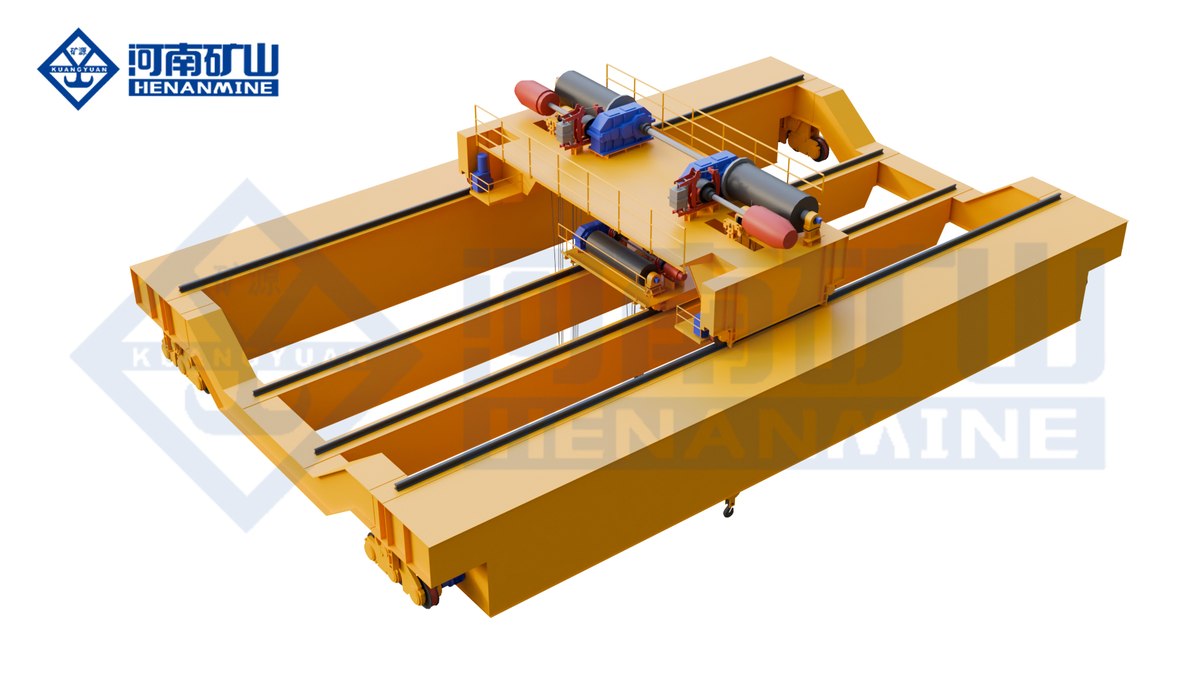
YZS four-girder casting crane with separate main and auxiliary trolleys, manufacturer rendering
YZS

YZS Four Girder Double Trolley Casting Crane

A four girder casting bridge uses separate main and auxiliary trolleys for ladle transfer, pouring and other steelmaking duties.

Main / auxiliary ratings125/32–320/80 t catalogue
TrolleysMain + auxiliary
Catalogue dutyA7
All specifications
Model YZS
Bridge structure Four girders with four or six trolley rails
Trolley arrangement Separate main and auxiliary trolleys on separate tracks
Main lifting device Fixed double-point gantry-type plate-hook lifting device
Auxiliary lifting device Forged hook
Catalogue main / auxiliary ratings 125/32; 140/32; 160/32; 180/50; 200/50; 225/65; 240/80; 280/80; 320/80 t
Span, paired with capacity 125/32: 19; 140/32: 19; 160/32: 27; 180/50: 28.5; 200/50: 28; 225/65: 27; 240/80: 22; 280/80: 22; 320/80: 24.5 m
Lifting heights Main and auxiliary heights remain paired in the configuration table
Catalogue duty A7 for all nine listed configurations
Working-class options A6–A8 by project; A7 for the listed configurations
Motion speeds Selected separately for the main and auxiliary hoists, both trolleys and bridge travel
Maximum wheel loads 505 / 535 / 485 / 525 / 530 / 550 / 545 / 735 / 750 kN in the same capacity order
Catalogue crane rail QU120 for all listed configurations
Catalogue power supply Three-phase AC 380 V / 50 Hz for the listed selections
Thermal protection Heat insulation for key bridge structures and components
Controls PLC and inverter communication control with safety monitoring

YZS main and auxiliary configurations

Scroll across to see every column.

Main / auxiliary load (t) Span (m) Main / auxiliary lift (m) Max wheel load (kN) Crane rail Duty
125/32 19 24 / 26 505 QU120 A7
140/32 19 22 / 24 535 QU120 A7
160/32 27 25 / 26 485 QU120 A7
180/50 28.5 27 / 29 525 QU120 A7
200/50 28 26 / 26 530 QU120 A7
225/65 27 32 / 34 550 QU120 A7
240/80 22 25 / 27 545 QU120 A7
280/80 22 29 / 29 735 QU120 A7
320/80 24.5 28 / 32 750 QU120 A7

Main and auxiliary capacities are separate ratings. Do not add them to infer a permitted combined lift. Speeds are selected separately for the main hoist, auxiliary hoist, two trolleys and bridge.

Select the individual trolley ratings and the permitted combined load together. The load is not always shared equally between the hooks. Include the lifting beam, slings and other attachments in the suspended load.

Price & supply scope

How much does a double trolley overhead crane cost?

Price depends on both trolley ratings, crane span, lifting height, working class and the operating modes. A crane for independent lifting, a coordinated long-load lift and a molten-metal process need different equipment packages.

Indicative market equipment example · USD
Crane arrangement Span / lift Duty / controls Equipment reference
QE · 2 × 10 t open-winch trolleys 13.5 m span · 12 m lift A5 · ground and remote control US$70,000

An advertised market equipment example for initial budgeting, not a fixed Henan Mine Crane quotation. It is separate from the catalogue configurations above. Priced supply scope and trade terms were not stated; confirm rails, power feed, attachments, freight, duties, installation and commissioning in your offer.

Price factor What to compare in the offer
Load and dimensions Compare each trolley’s rating, approved combined capacity, span, lift height and usable hook spacing.
Lifting and control package Identify winch or electric-hoist trolleys, operating modes, speed control and any specified synchronization functions.
Process requirements List hazardous-area protection, electrical isolation, heat protection or metallurgical lifting equipment where applicable.
Delivery and installation Confirm the bridge, both trolleys, controls and power feed supplied, plus rails, transport, installation and commissioning boundaries.

Ask for an itemized complete-crane offer. Two hoist prices alone do not include the bridge, coordinated controls, runway equipment or site work.

Get a configured crane quote
Custom project example

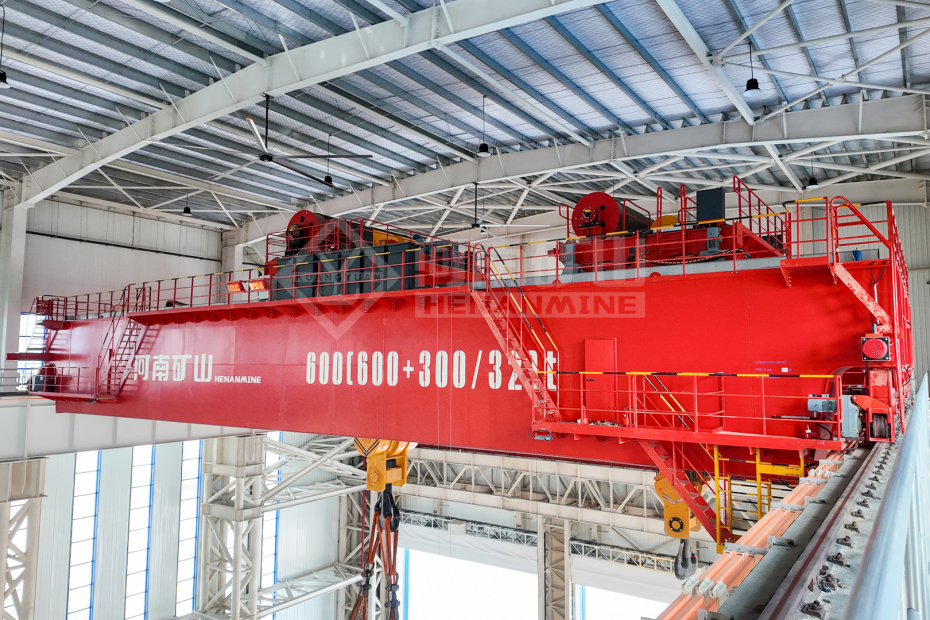
600 t Double-Trolley Crane for Offshore Wind Equipment

Henan Mine Crane completed installation and initial operation of a custom 600 t double-girder overhead crane at an offshore-equipment manufacturing base. Its two trolleys can operate independently or in synchronized mode for large and long components.

The project uses variable-frequency drives and PLC control. This custom installation illustrates a two-trolley handling task; its capacity and controls are separate from the catalogue configurations above.

Discuss your project
Henan Mine Crane 600 t double-trolley overhead crane installed in an offshore-equipment workshop
Custom 600 t double-trolley crane installed for offshore-equipment manufacturing.

Double trolley crane buying questions

Is a double trolley crane the same as a double hoist crane?

Not necessarily. A double trolley crane has two travelling trolley units. A double hoist description may also refer to two lifting mechanisms on one trolley. Specify the number of travelling units, hook spacing and operating modes so the quotation describes the arrangement you need.

Can both trolleys lift one load together?

They can when the crane and controls are specified for that combined lifting case. Confirm the load at each hook, total suspended load and permitted hook spacing. Two equally rated trolleys do not make every combined lift acceptable, and selecting the same speed does not by itself provide synchronized movement.

What is the difference between 10+10 t and 125/32 t?

In the QE configurations, 10+10 t identifies the paired trolley ratings. In the YZS casting-crane schedule, 125/32 t identifies main and auxiliary lifting capacities. These are different arrangements. Do not add the main and auxiliary figures or treat them as interchangeable paired ratings; use the selected crane’s approved load cases.

Which arrangement suits long loads and assembly work?

Compare QE and KSQE winch-trolley cranes with LHE, LHEA and KSSLE electric-hoist arrangements. The component weight, lifting-point spacing, available headroom and handling frequency guide the choice. If the component must tilt or turn, describe that movement before the lifting and control arrangement is selected.

How should I specify coordinated or synchronized lifting?

Describe the lifting sequence and the allowable height difference between lifting points. The offer should identify the feedback, speed control and operating interlocks provided. For separate workstations, also state whether both trolleys need to operate at the same time. These requirements should be agreed for the selected crane.

What information is needed for a quotation?

Start with the maximum load, component dimensions, lifting-point spacing, crane span and lifting height. State whether the trolleys work separately, lift one load together or support a casting process. Include the project location and any workshop drawing you have; detailed controls can be agreed during configuration.

Compare the range

Double trolley crane specification comparison

Compare trolley layouts and the available configuration data. Select the full product name to view its details.

Swipe across the table to compare specifications.

Model / product Trolley arrangement Rated capacity Span Working class Main use
QE Double Trolley Hook Overhead Crane Two separate hook trolleys 5+5 / 10+10 / 16+16 t 10.5–31.5 m options A5 / A6 Long materials and general two-point lifting
KSQE Modular Double Trolley Overhead Crane Two winch trolleys; modular bridge Individual and combined ratings to project To workshop layout To handling cycle Long loads and coordinated component handling
LHE Double Trolley Electric Hoist Overhead Crane Two wire-rope electric-hoist trolleys Individual and combined ratings to project To workshop layout To handling cycle Workshop lifting and long components
LHEA Low Headroom Double Trolley Hoist Crane Two seated electric-hoist trolleys Individual and combined ratings to project To workshop layout To handling cycle Two lifting points with limited headroom
KSSLE New Design Double Trolley Hoist Crane Two new-type electric-hoist trolleys Individual and combined ratings to project To workshop layout To handling cycle Dual-speed lifting and controlled placement
QBE Double Trolley Explosion-Proof Overhead Crane Two explosion-protected trolley systems Individual and combined ratings to project To workshop layout To handling cycle Handling in a specified hazardous area
QYE Double Trolley Insulated Overhead Crane Two insulated trolley systems Individual and combined ratings to project To workshop layout To handling cycle Process lifting requiring electrical isolation
YZS Four Girder Double Trolley Casting Crane Separate main and auxiliary trolleys 125/32–320/80 t catalogue examples 19–28.5 m; paired by configuration A7 in the listed table Ladle transfer, pouring and casting

QE paired ratings and YZS main/auxiliary ratings describe different lifting arrangements. Values belong to the named model and configuration. Trolley capacities, combined-load cases, hook spacing and operating modes are confirmed together.

Get a double trolley overhead crane quote

Send the maximum load, component dimensions, lifting-point spacing, span and lifting height. Tell us whether you need separate lifting, a coordinated two-point lift or a main-and-auxiliary casting arrangement.

A workshop sketch or an existing crane nameplate is helpful if available. Include the project location and site power supply.

Request a quotation