
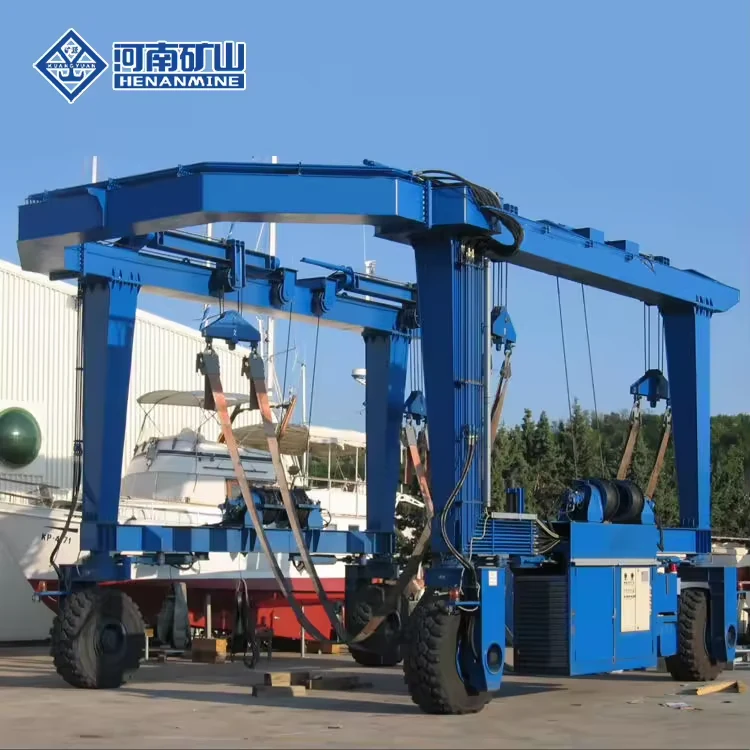
Sling geometry
Set support positions from each yacht's approved lifting plan; account for keels, through-hulls and underwater fittings.
A marina needs one lifting plan that works across real boats, not a capacity figure picked from a catalogue. Size the travel lift around the heaviest loaded yacht, the widest beam, the approved hull support zones and the narrowest route from basin to storage. We configure the sling, steering and control arrangement around that full operating cycle.
Review the equipment layout with your vessel drawings. Final dimensions and lifting arrangement follow the approved project design.
For a useful proposal, send a fleet schedule, vessel lifting plans, basin opening, lowest overhead obstruction, paved route and intended haul-outs per day.
Capacity, clearances and lifting points are approved for the supplied vessel schedule.
Minimum order and the supplied package are confirmed in the written quotation.
Agree the test plan, schedule, installation scope and warranty before order placement.
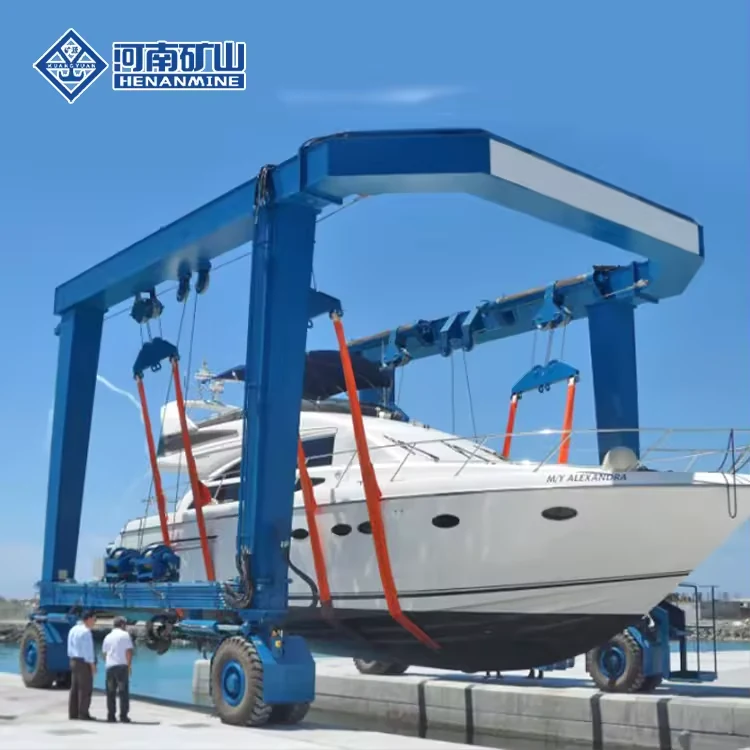
Match basin access and sling settings to the mix of yacht hulls scheduled for launch and retrieval. Record how quickly the operator must change between boats.
Keep hull, keel, propeller and rudder accessible while the boat is moved to an approved blocking or service position.
Check the full transfer path, steering space and final vessel spacing before deciding frame width or tyre layout.
The travel lift is selected against the vessels and site you actually operate. For larger commercial hulls or a continuous repair-yard duty, compare the other marine handling configurations below.
The purchase specification should pair the vessel schedule with the site route. Final capacity and dimensions belong to one approved general arrangement, not separate catalogue choices.
Swipe to compare the complete design basis →
| Design item | Buyer provides | Approved offer defines |
|---|---|---|
| Design vessels | Loaded displacement, length, beam, draft and appendages for the heaviest and widest craft | Rated lift and clear opening for the agreed fleet |
| Hull support | Builder-approved sling zones; keel, shaft, rudder and stabiliser positions | Sling spacing, spreaders and support method on the drawing |
| Basin interface | Water depth by tide, pier edge, basin width and approach direction | Wheel track, reach and lift travel through the waterline |
| Yard movement | Narrowest lane, turning points, grade, parking and storage positions | Steering arrangement, turning envelope and route plan |
| Ground support | Pier and paving drawings, ground bearing and drainage details | Wheel-load schedule for the selected machine |
| Operating duty | Haul-outs per day, travel distance, operator location and washdown practice | Drive, control, corrosion protection and maintenance scope |
| Utilities & rules | Available power/fuel, destination and required acceptance documents | Specified power package, documents and test plan |
The selected lift's rated load, usable clear width, lifting travel and wheel arrangement are issued together on the project drawing and technical offer. Confirm these values together against your complete vessel and yard data.
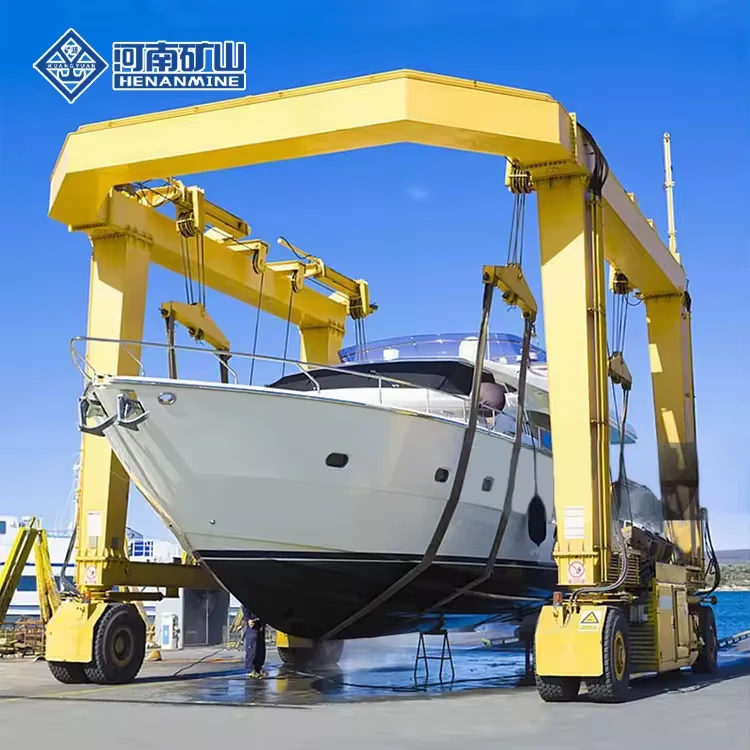
Agree these decisions against the approved hull and site drawings before final equipment selection.
Set support positions from each yacht's approved lifting plan; account for keels, through-hulls and underwater fittings.
Choose steering and operator visibility for the tightest turn and storage lane, not only the open pier.
Specify coating, electrical protection, access for cleaning and service against salt spray and washdown.
Agree communication, emergency stops and a practical operator position for basin and yard movements.
Request one general arrangement showing the selected vessel, sling positions, machine envelope, wheel arrangement and route clearances together.
The written offer should identify exactly which design vessels and site drawing revision it covers. Compare supplier quotations against the same schedule before comparing price.
Rated lift, clear width and height, sling system, travel drives, steering, tyres, power, controls and corrosion finish.
Wheel reactions, pier approach, utilities, transport splits and the drawings required from the civil contractor.
Factory inspection, agreed functional/load tests, documents, site checks and operator training scope.
Minimum order, manufacturing milestones, delivery point, installation assistance, spare parts and warranty stated in the offer.
Ask for the selected unit's applicable certificates, inspection records and manuals; an agreed delivery programme; minimum order; installation and commissioning responsibilities; warranty period and spare-parts terms. These belong in the written offer for your destination and project.
A marine travel lift is ready to work only when the pier, route, lifting method and operators are ready as well. Agree responsibilities and dates for each stage in the order.
Approve the design yachts, support locations and site survey used for the offer.
Review clearances, wheel loads, basin approach, utilities and shipment splits.
Agree factory test witnesses, document pack, transport route and arrival condition.
Confirm assembly, functional checks, operator training and the first controlled haul-out plan.
The offer should name the warranty period and start date, covered parts, on-site or remote service scope, spare-parts supply and the people responsible for installation, checks and training.
Request project support terms ↗Approved general arrangement, wheel loads, sling plan, operating and maintenance instructions, and agreed test records.
Identify who prepares civil works, unloads and assembles the machine, provides test weights and commissions the equipment.
Agree training, vessel-specific lift plans, inspections and maintenance intervals for the selected yard duty.
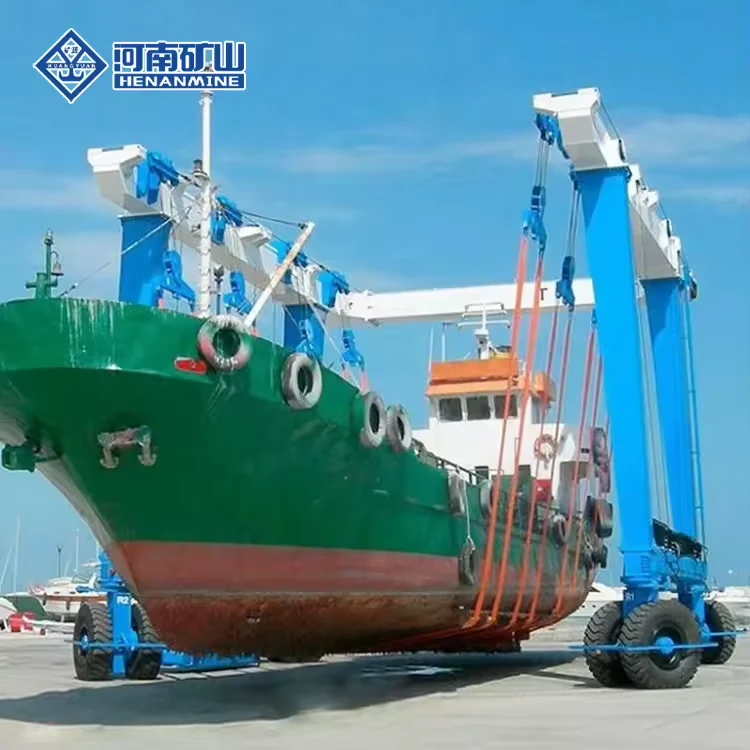
Fishing & workboat repair
View application ↗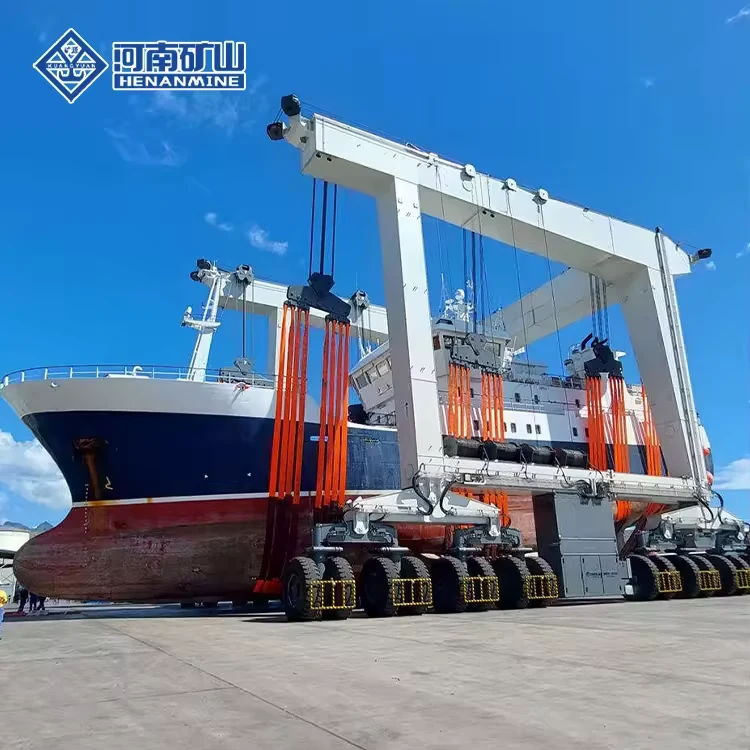
Commercial shipyard haul-out
View application ↗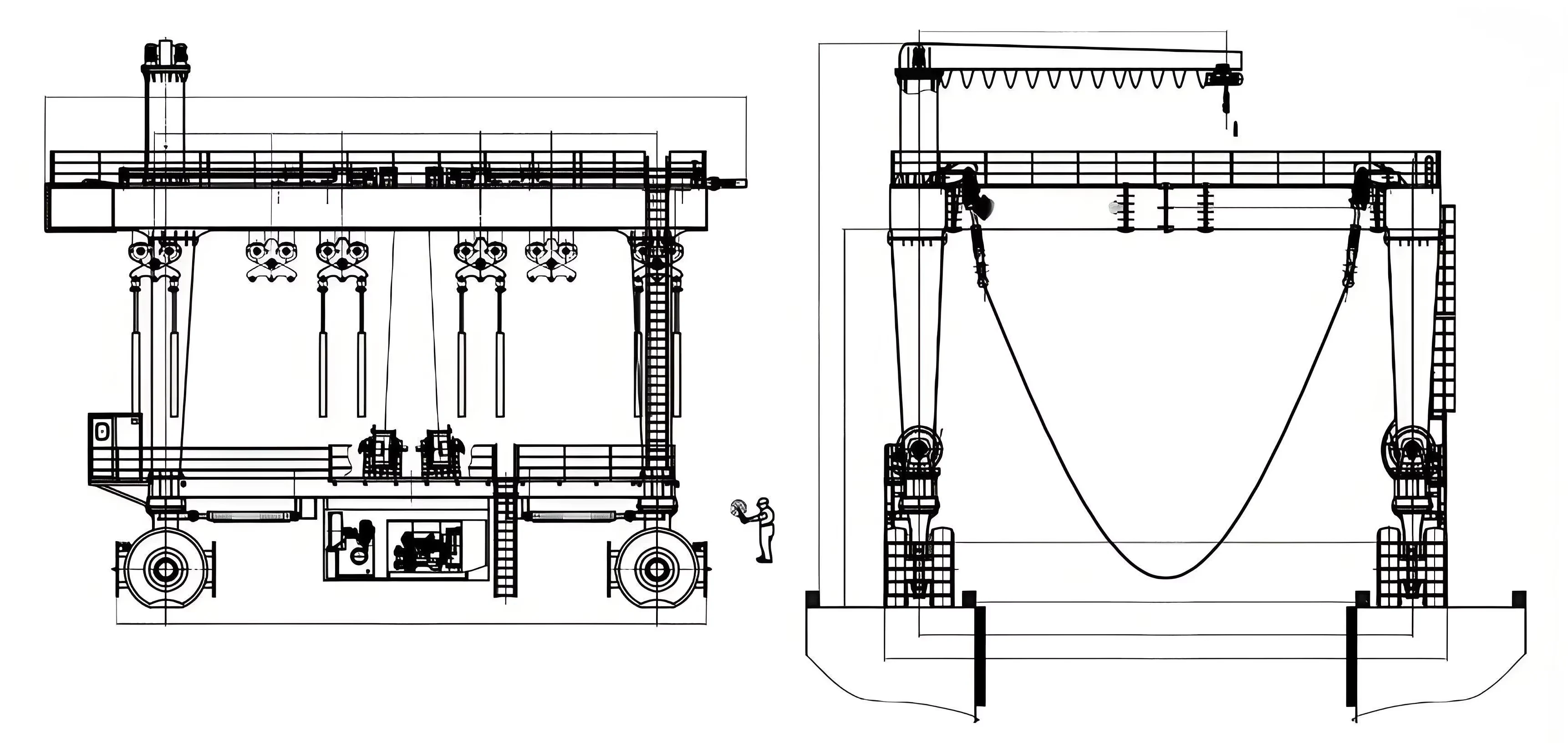
Compare the three vessel-handling duties and prepare a complete project brief.
View collection ↗Use these answers to prepare a complete vessel-and-site brief.
Discuss your project ↗Submit the actual loaded weight of every vessel you intend to handle, including equipment, fuel and fluids. The heaviest vessel governs rated lift; the widest or tallest vessel may govern clearances. Final limits are confirmed against the approved arrangement.
The proposed sling system can be configured for the agreed fleet. Every hull still needs approved support zones and clearance from appendages; the offer should state adjustment range and operating procedure.
Send pier and basin drawings, tide range, approach direction, paving and route data. The selected machine's wheel loads and turning envelope must be checked with the civil design before construction is committed.
State the destination, local acceptance rules and documents your insurer or port requires. The quotation should list applicable certificates, drawings, manuals and agreed inspection or test records for the chosen unit.
These depend on the approved configuration and delivery scope. Request the exact minimum order, drawing-approval dates, production and shipping milestones, warranty terms and service responsibilities in the written offer.
Possibly, if vessel mass, hull support, daily duty and yard route all fall within the approved specification. Compare the service-yard configuration rather than assuming a marina machine covers a different fleet.
We can then define the lifting method, machine envelope, ground interface, documents and commercial scope as one proposal your team can review.
Start this enquiry ↗