
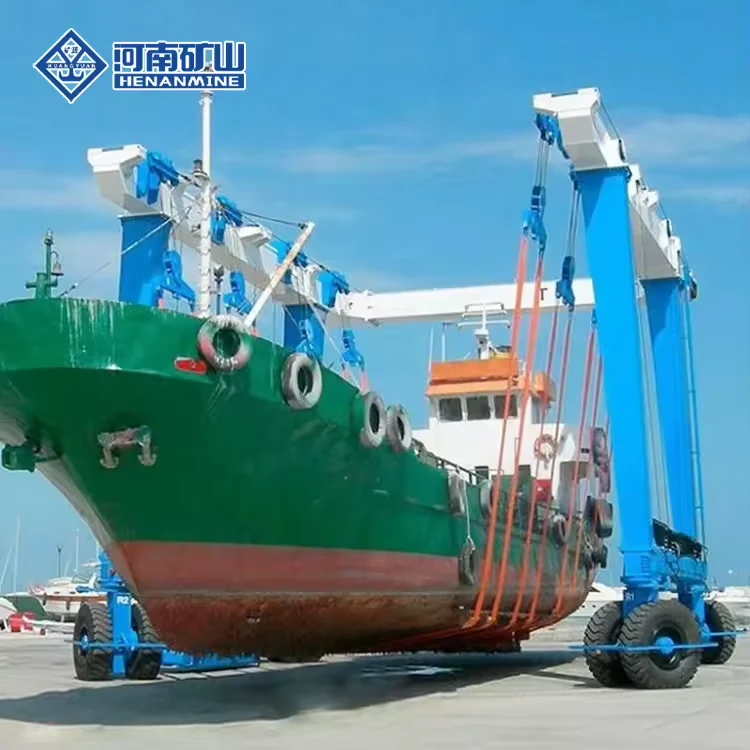
Vessel support
Determine sling quantity, adjustable positions and protection around thrusters, propellers, rudders and sensitive hull areas.
A working boatyard must move vessels safely from the slip or basin through washdown to a repair berth—often several times a day. Select the hoist for the actual vessel with gear, fuel and fluids aboard, its approved lifting points, underwater appendages and the narrowest yard route. Duty, maintainability and access matter as much as nominal load.
Review the equipment layout with your vessel drawings. Final dimensions and lifting arrangement follow the approved project design.
Send the heaviest vessel's operating mass, hull and lifting-point plans, daily lift count, basin/washdown/repair-yard route and destination acceptance requirements.
Capacity, clearances and lifting points are approved for the supplied vessel schedule.
Minimum order and the supplied package are confirmed in the written quotation.
Agree the test plan, schedule, installation scope and warranty before order placement.
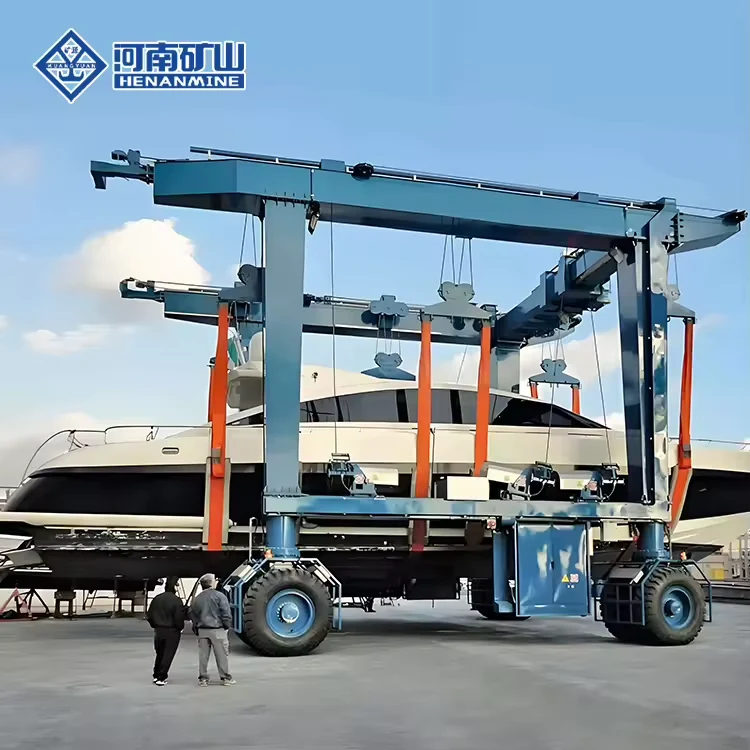
Plan lifting points and appendage clearance for hulls arriving with working gear; set the loaded condition used for selection.
Handle repeated inspection and service cycles with a route that does not block launch operations or other repair bays.
Move a supported vessel to washdown and blocking positions while preserving technician access and a safe relaunch path.
For a yacht-focused marina with varied leisure hulls, compare the yacht configuration. For significantly larger commercial hulls, review the large-vessel civil and load-sharing requirements.
A service-yard specification must join vessel support, repeat handling and the full work route. The approved offer defines the exact rated load and clearances for the agreed vessel schedule.
Swipe to compare the complete design basis →
| Design item | Buyer provides | Approved offer defines |
|---|---|---|
| Loaded vessel | Maximum actual mass including gear, fuel, catch or retained equipment; centre of gravity | Design lift condition and approved vessel schedule |
| Hull interfaces | Structure-approved sling zones; shafts, rudders, propellers and keel obstructions | Sling positions, clearances and lifting instructions |
| Lift frequency | Peak lifts per day, travel distance, stop/start cycle and seasonal peaks | Drive, brake, control and maintenance duty |
| Process route | Basin to washdown, blocking, repair bay and relaunch path | Turning envelope and travel arrangement |
| Ground & drainage | Pier/paving drawings, grades, wet areas and ground-bearing information | Wheel reactions and route restrictions |
| Marine exposure | Salt spray, washdown method, outdoor storage and service access | Coating, electrical protection and inspection access |
| Site utilities | Power/fuel availability, operator location, destination and applicable rules | Power package, controls and document/test scope |
The selected lift's rated load, usable clear width, lifting travel and wheel arrangement are issued together on the project drawing and technical offer. Confirm these values together against your complete vessel and yard data.
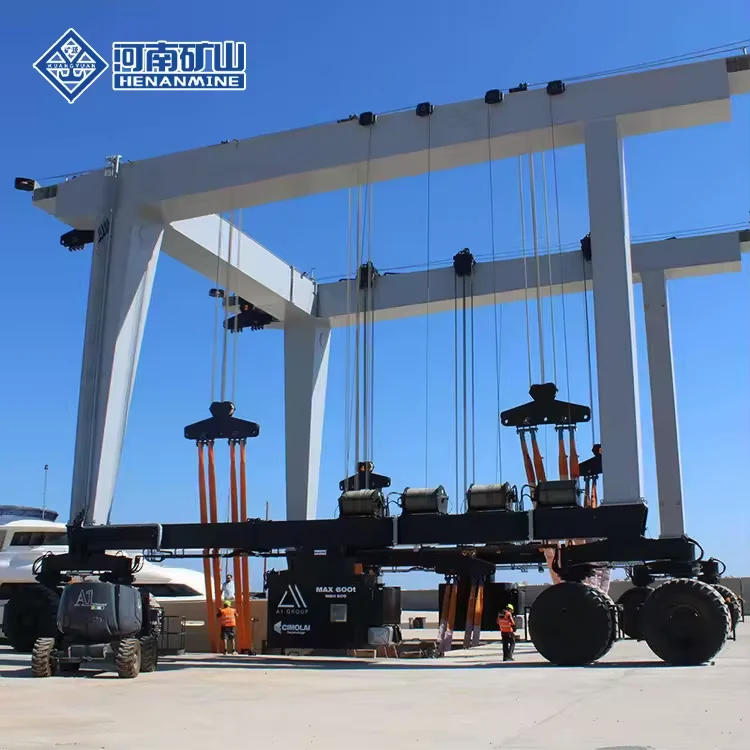
Agree these decisions against the approved hull and site drawings before final equipment selection.
Determine sling quantity, adjustable positions and protection around thrusters, propellers, rudders and sensitive hull areas.
Review steering, wheel arrangement and travel control against wet pavement, sharp turns and the repair-bay aisle.
Specify operator visibility, communication, braking and maintenance access for the expected number of cycles.
Agree coating, protected controls, cleaning access and parts that will be exposed to washdown and salt.
Request one general arrangement showing the selected vessel, sling positions, machine envelope, wheel arrangement and route clearances together.
Ask each supplier to quote against the same vessel schedule, lift frequency, route and acceptance plan. This prevents a low equipment price from hiding a missing site interface.
Rated lift, sling system, frame clearances, tyres, drives, steering, braking, controls and protective finish.
Wheel-load schedule, pier/route requirements, utility points, assembly area and access restrictions.
Factory checks, agreed load/functional tests, manuals, operator instruction and spare-parts list.
Confirmed minimum order, drawing approval, production and delivery milestones, warranty and service scope.
Ask for the selected unit's applicable certificates, inspection records and manuals; an agreed delivery programme; minimum order; installation and commissioning responsibilities; warranty period and spare-parts terms. These belong in the written offer for your destination and project.
The schedule should show when drawings, civil checks, inspection, shipment and first lifting can occur. Plan the handover so the yard does not lose its working route unexpectedly.
Agree loaded condition, support zones and the highest-use service cycle.
Approve basin geometry, washdown, repair positions and ground interfaces.
Confirm drawings, test plan, manuals and shipment/assembly sequence.
Carry out agreed commissioning checks, operator instruction and maintenance briefing.
The offer should name the warranty period and start date, covered parts, on-site or remote service scope, spare-parts supply and the people responsible for installation, checks and training.
Request project support terms ↗Approved general arrangement, wheel loads, sling plan, operating and maintenance instructions, and agreed test records.
Identify who prepares civil works, unloads and assembles the machine, provides test weights and commissions the equipment.
Agree training, vessel-specific lift plans, inspections and maintenance intervals for the selected yard duty.
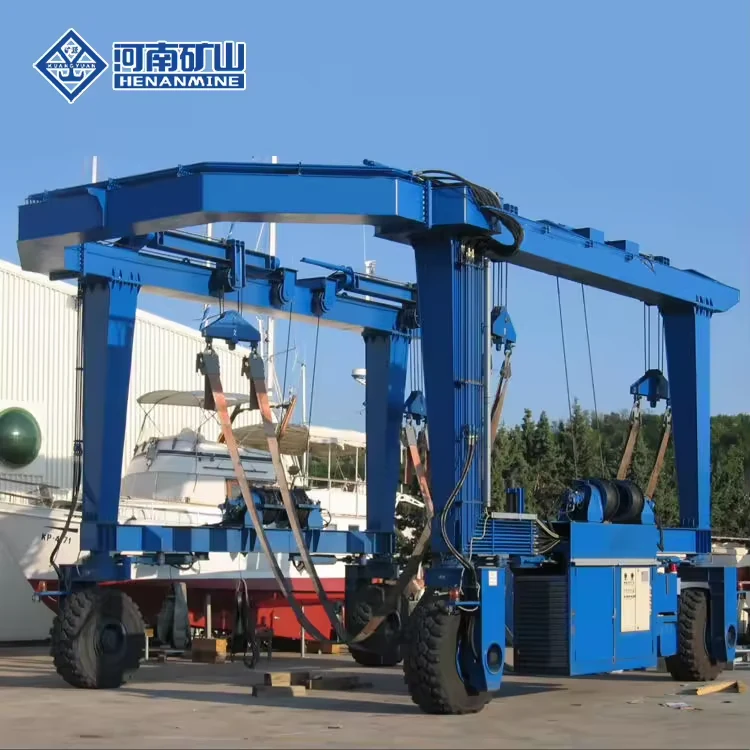
Marina haul-out & dry storage
View application ↗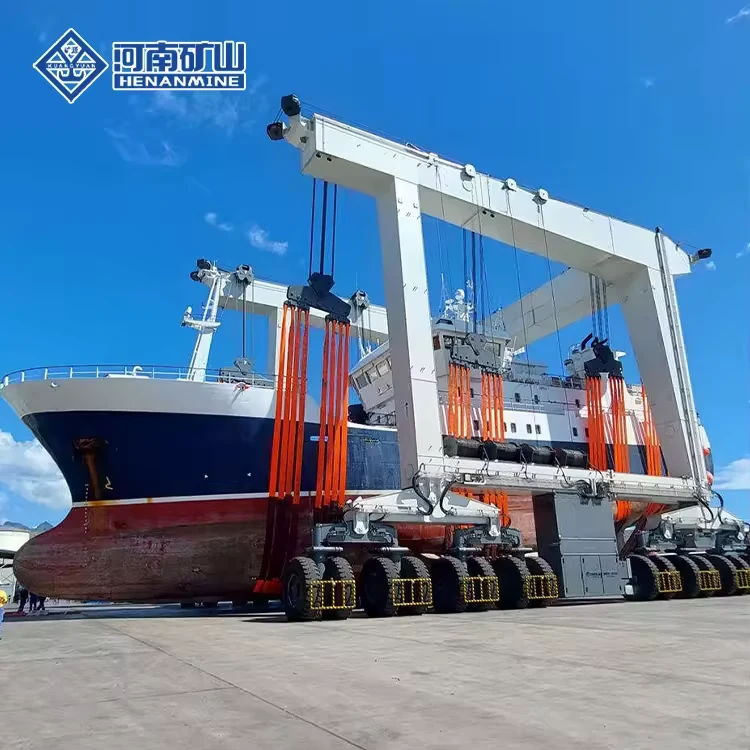
Commercial shipyard haul-out
View application ↗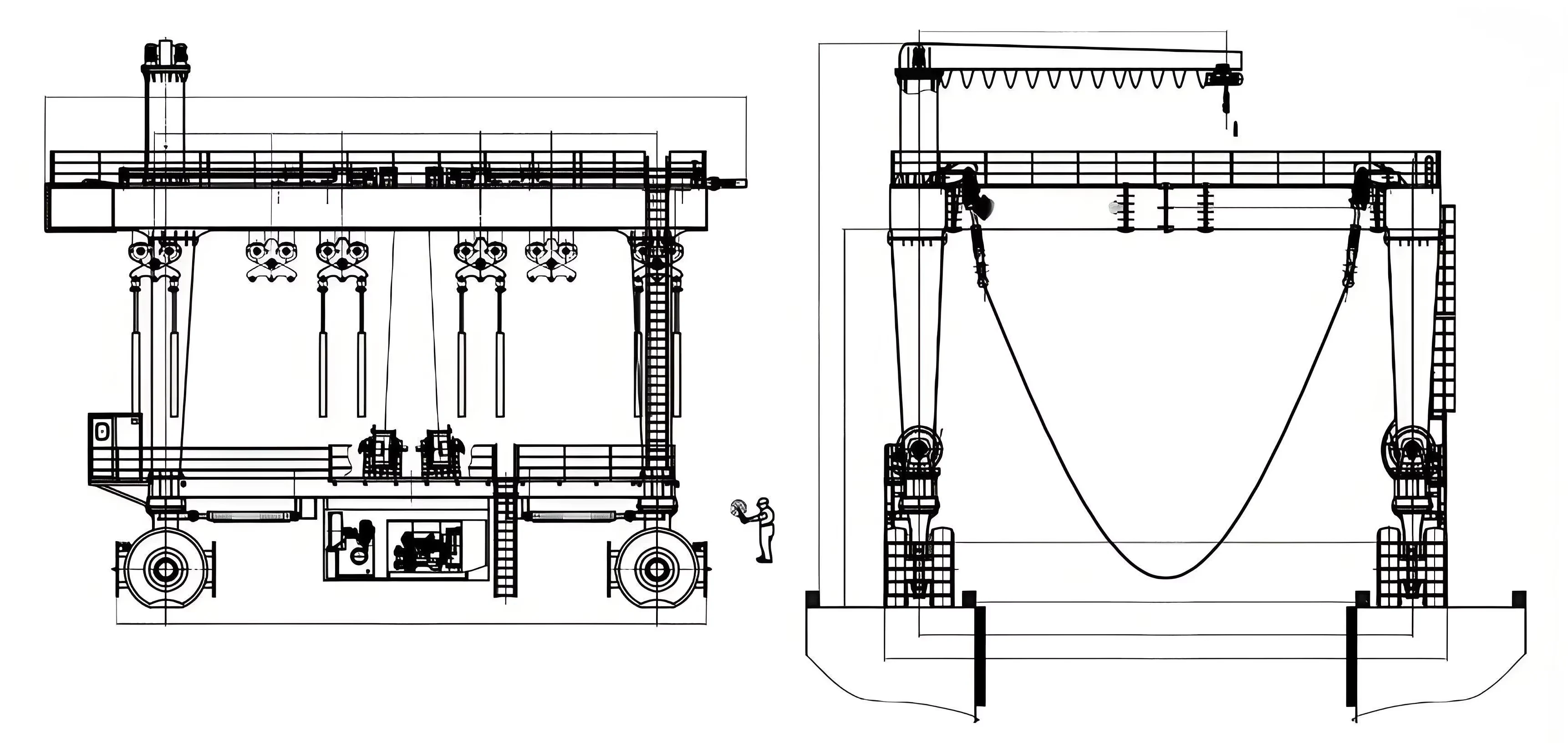
Compare the three vessel-handling duties and prepare a complete project brief.
View collection ↗Use these answers to prepare a complete vessel-and-site brief.
Discuss your project ↗Use the heaviest actual lifting condition, including gear, retained loads, fuel and fluids. State any removable equipment and the centre of gravity. Empty displacement alone may understate the handling requirement.
Provide hull and underwater-appendage drawings plus approved support zones. Sling positions and lifting travel are then reviewed around those obstructions, with a written lifting procedure for each vessel type.
Yes. The expected number of lifts, travel distance and duty pattern influence drive, brakes, controls, inspection access and service planning. Include peak-season conditions in the RFQ.
The proposal should examine pavement condition, drainage, gradients, turns and blocking areas across the entire route. Wheel reactions and operating restrictions follow the chosen machine.
State destination regulations and your yard's acceptance requirements. The selected quotation should list drawings, manuals, inspection records, agreed load/functional tests and training deliverables.
The written offer should provide dated drawing, production, inspection and dispatch milestones, plus warranty period, spare-parts scope and responsibilities for installation and service.
We can then define the lifting method, machine envelope, ground interface, documents and commercial scope as one proposal your team can review.
Start this enquiry ↗