
160 t double-girder overhead crane
The project includes a 160 t double-girder overhead crane for the production bay. For a similar installation, define main and auxiliary lifting loads, runway geometry, hook height and operating cycle.
PROJECT CASE STUDY / STEEL & METALS
A plantwide lifting fleet serving production bays, slab transfer, magnetic steel handling and a port-side scrap yard.
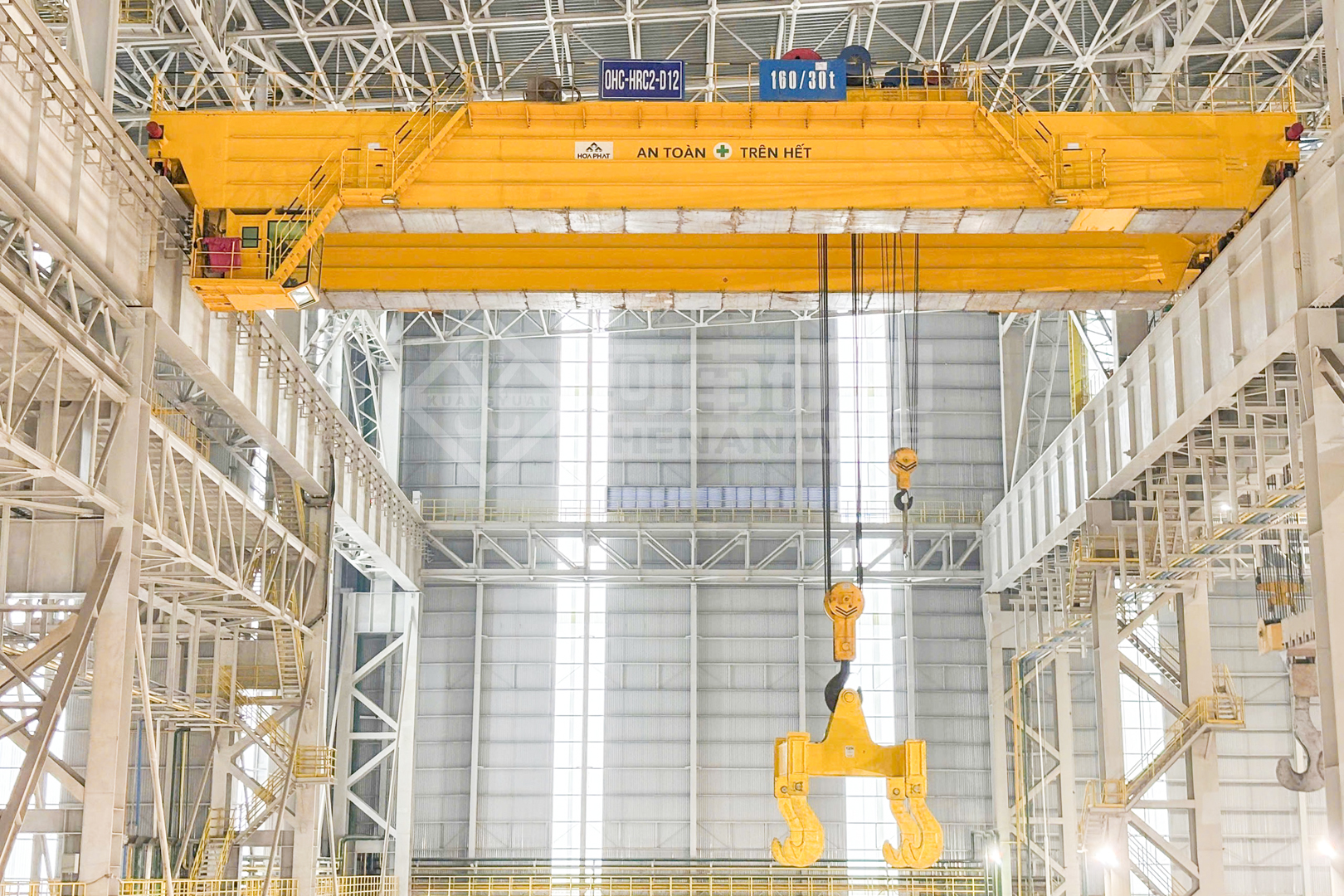
Across the steel plant, overhead, slab-clamp, magnetic-beam and gantry cranes handle distinct production and yard routes. Match each crane to its load, attachment and operating cycle to plan a coordinated lifting fleet.
The project includes a 160 t double-girder overhead crane for the production bay. For a similar installation, define main and auxiliary lifting loads, runway geometry, hook height and operating cycle.
Slab-clamp cranes serve slab transfer. Size the clamp around slab dimensions, weight, temperature, stacking geometry and required lift orientation.
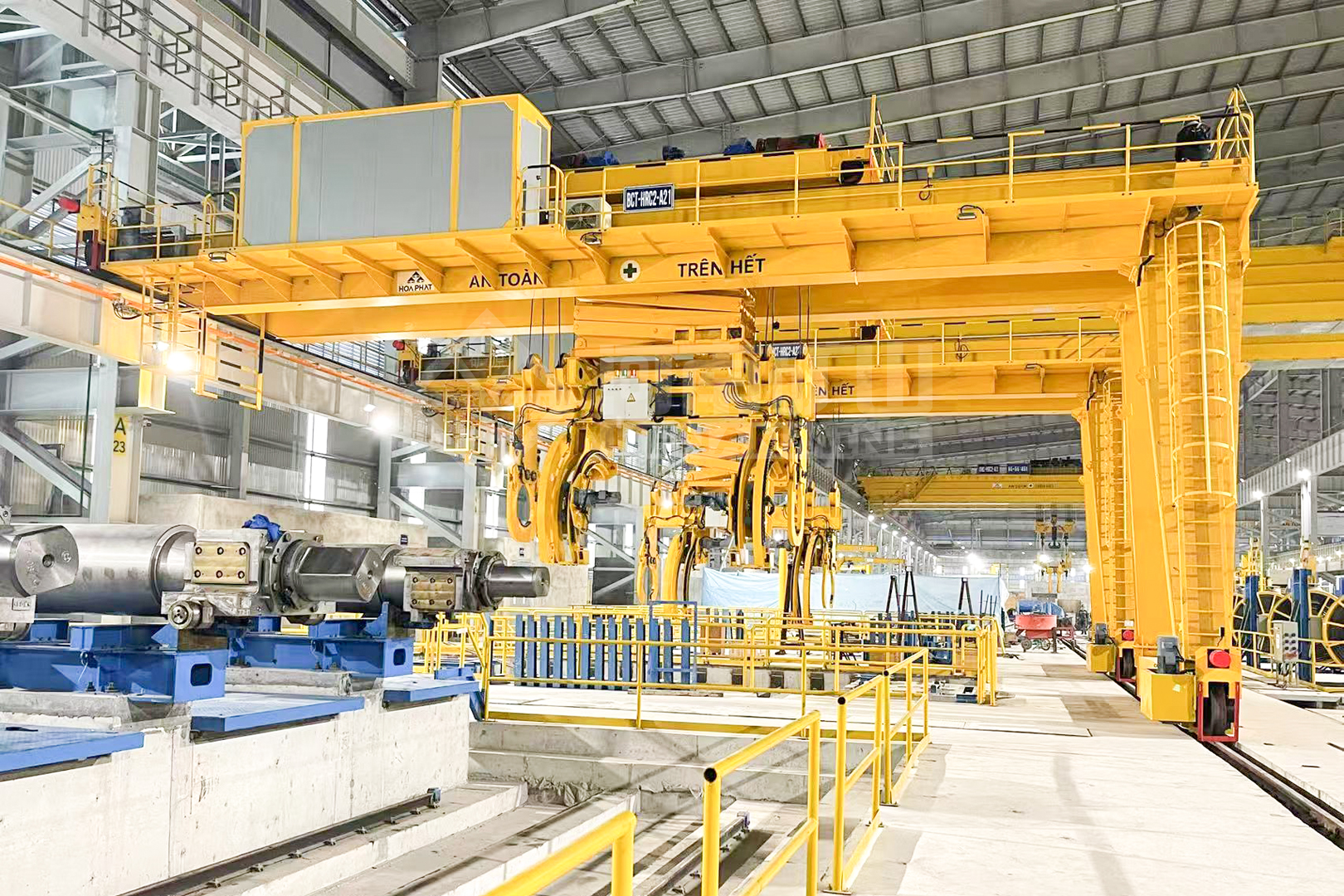
Lower-rotating electromagnetic carrier-beam cranes support steel-product transfer. Specify product shape, pick orientation, magnet power supply and load-retention requirements.
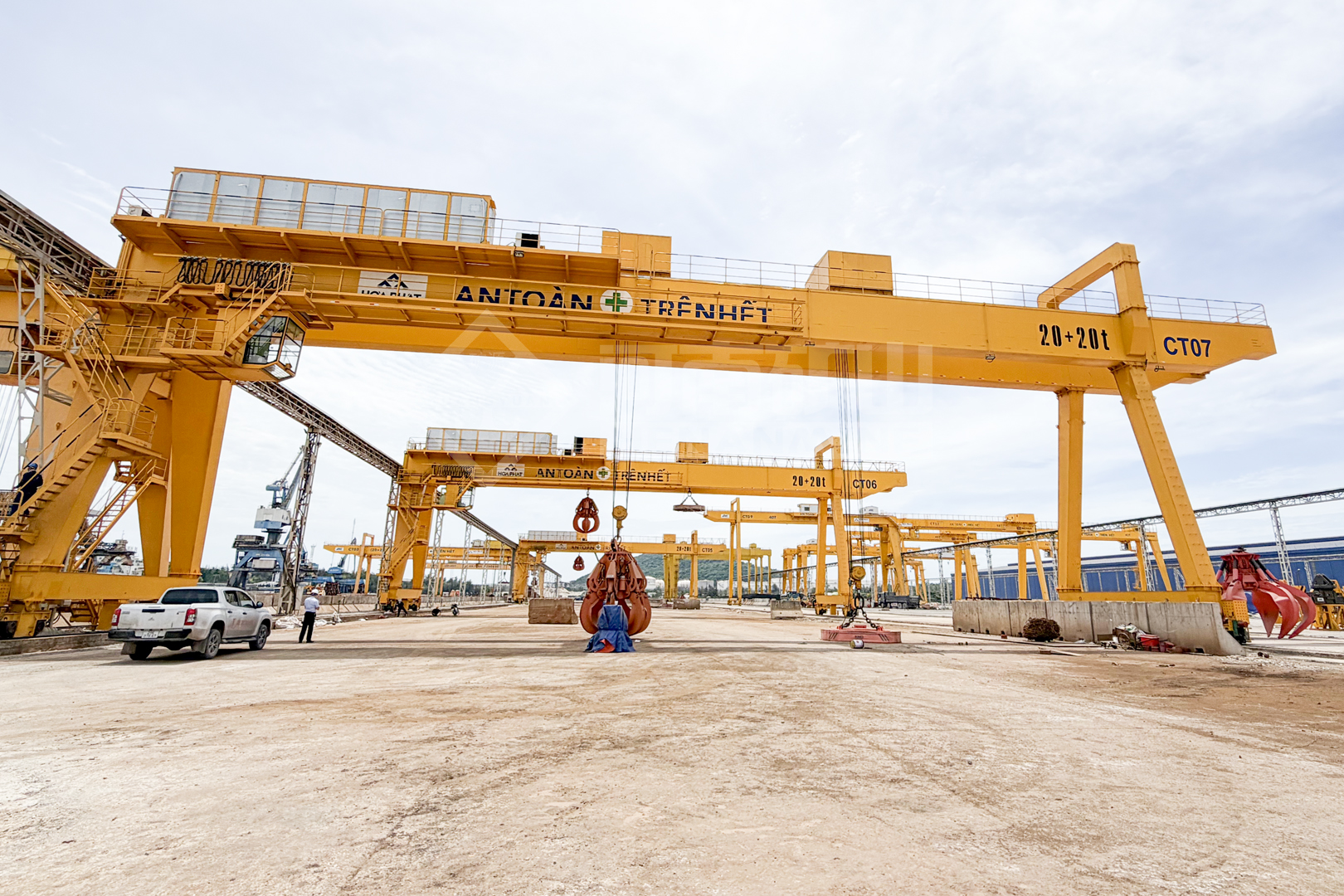
Double-girder, double-trolley gantry cranes serve the port-side scrap yard. Match yard rails, travel distance, reach and lifting attachment to the unloading cycle.
03 / SITE PHOTOGRAPHS
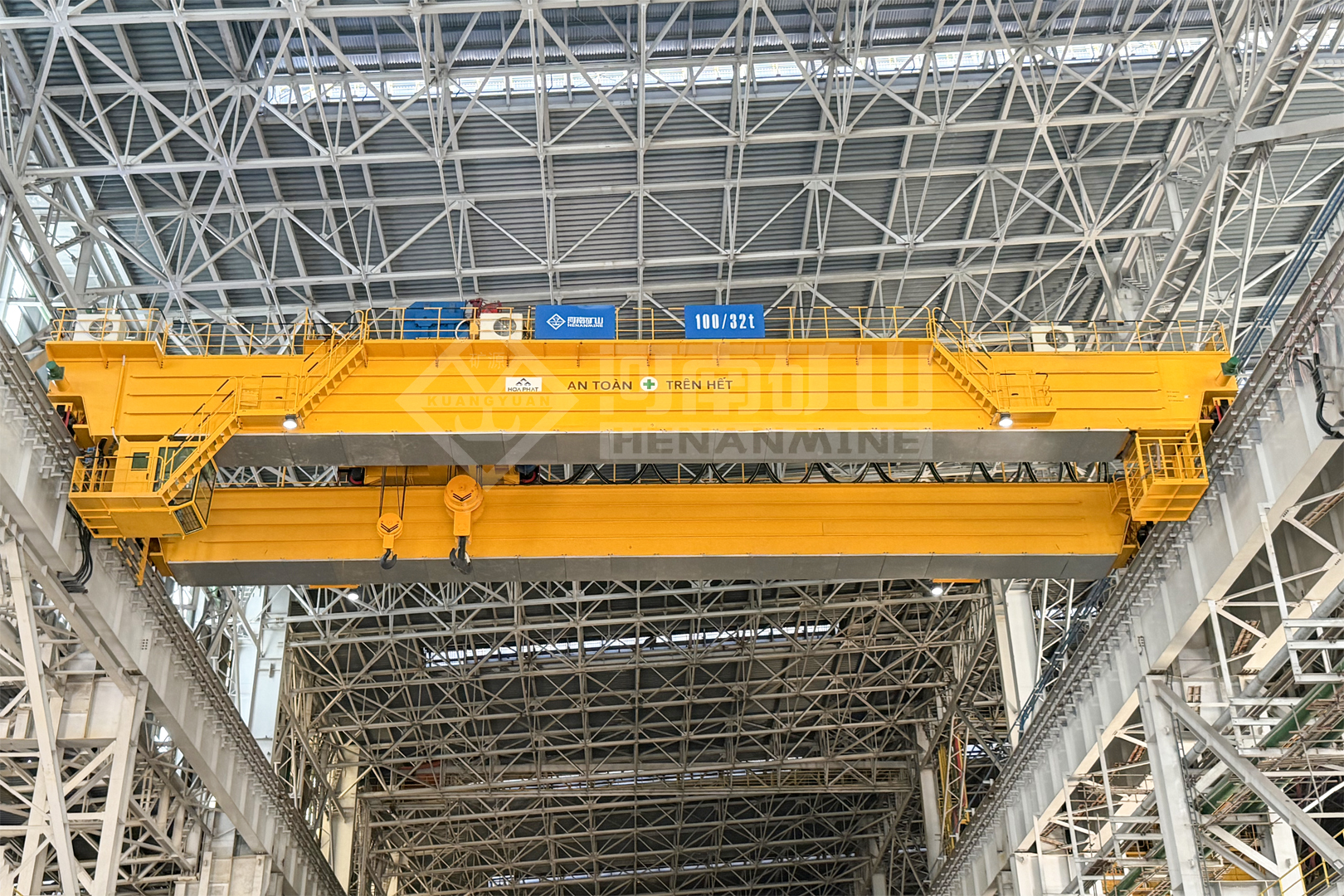
Production bays, steel-coil storage and outdoor material handling.

04 / PROCUREMENT BRIEF
Send the operating conditions for each work area so the crane, attachment and controls can be sized for the real handling task.
NEXT STEP
Share your load schedule and plant layout to match crane types, attachments and controls to each work area.