






















State the filled ladle, lifting beam and rigging mass, lifting points and balance condition.
STEEL MILL CRANES
450 t Electric Furnace Ladle Handling
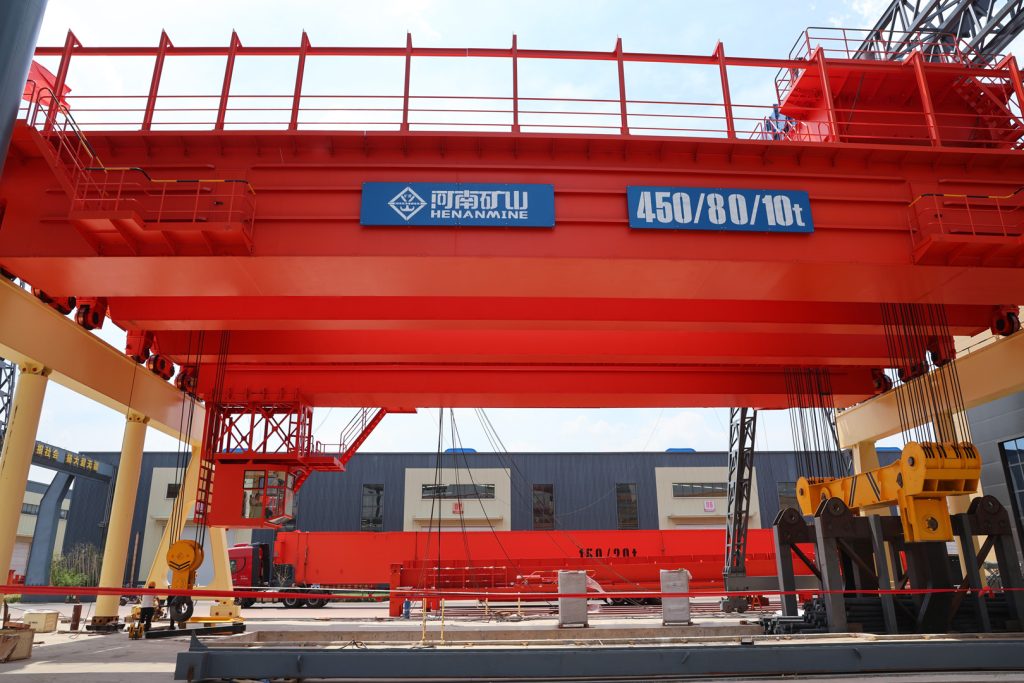
Move a full ladle through the melt shop with a crane engineered around the actual load, route and production cycle. See the four-girder casting crane built for a 450 t project and the decisions that shape a reliable proposal for your plant.
450 tdocumented project capacity
4 girders / 4 railsdocumented arrangement
PLC + monitoringdocumented controls
THE MELT SHOP CHALLENGE
A safe ladle route starts before the crane is selected.
Electric furnace ladle handling combines a concentrated suspended load with heat, restricted clearances and production timing. A capacity figure alone does not establish the right crane. The engineering review must include the filled ladle, lifting gear, runway, hook approaches, operating cycle and failure response.
See what to include in your RFQ ↗Show pickup and discharge points, travel path, lifting height and obstructions in the bay.
Share lifts per hour, operating shifts, heat exposure and access for maintenance.
Define operator position, alarms, braking, interlocks and the site emergency procedure.
ENGINEERED FOR THE ROUTE
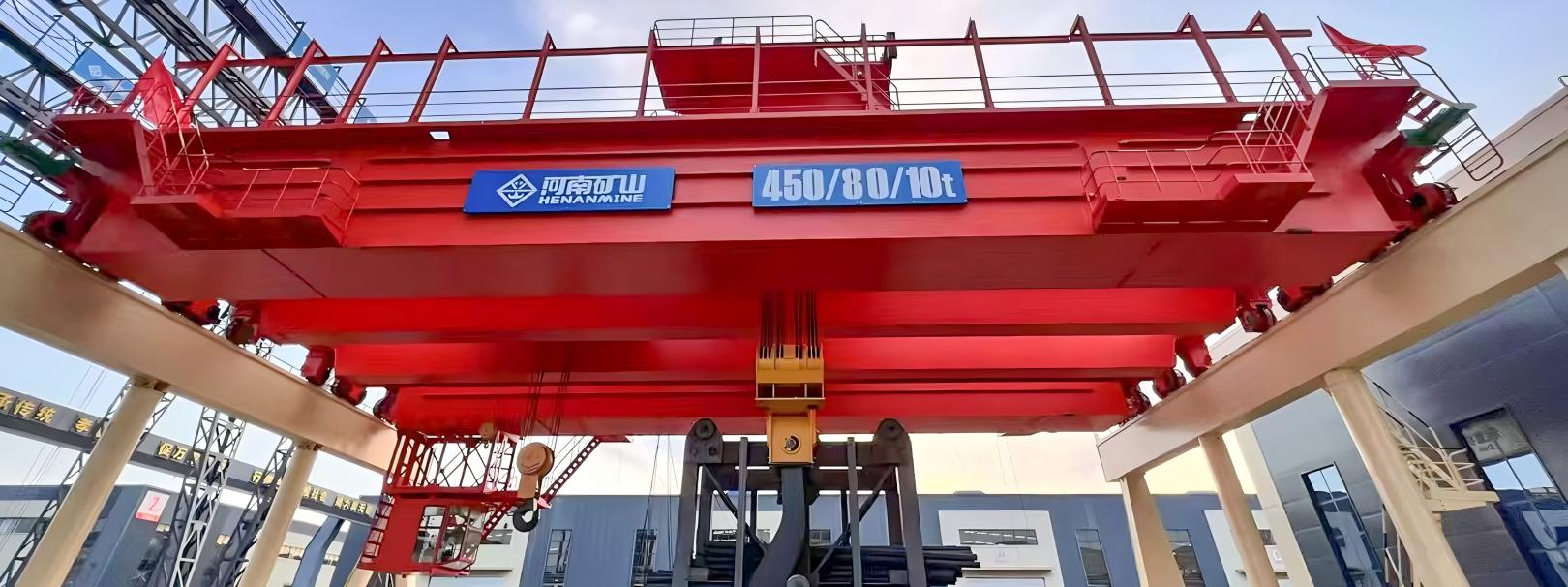
One lifting system from furnace pickup to ladle transfer.
The manufactured project crane provides a configuration example. The final arrangement for your steelworks follows your drawings and duty schedule.
Integrate the lifting arrangement
Set main and auxiliary hook duties, beam geometry and hook approach around the actual ladle and transfer points.
Fit the crane to the steelworks
Coordinate span, runway, end clearances, wheel loads, heat protection and maintenance access with the building design.
Specify the control package
Define travel and hoist control, alarms, monitoring and required interfaces with the plant’s operating procedures.
Agree acceptance before manufacture
Set inspection, testing, commissioning and handover requirements against the applicable project specification.
Structure and wheel loads
The four-rail layout must fit the building and its verified support capacity.
Safety monitoring
Specify alarm, recording and control interfaces suited to molten-metal service.
ACTUAL MANUFACTURED CRANE
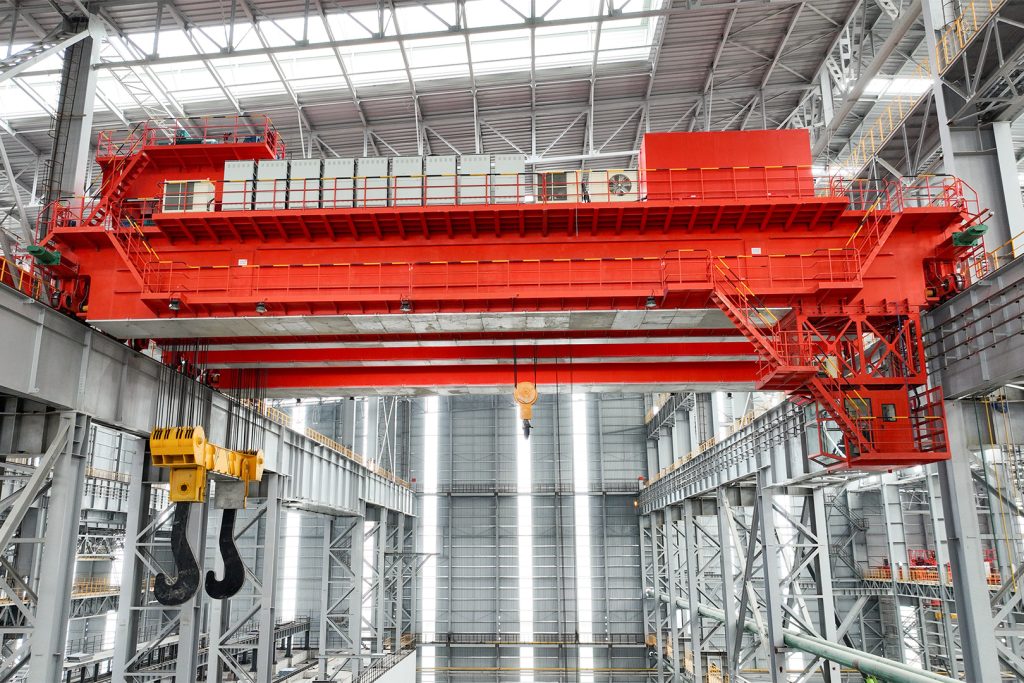
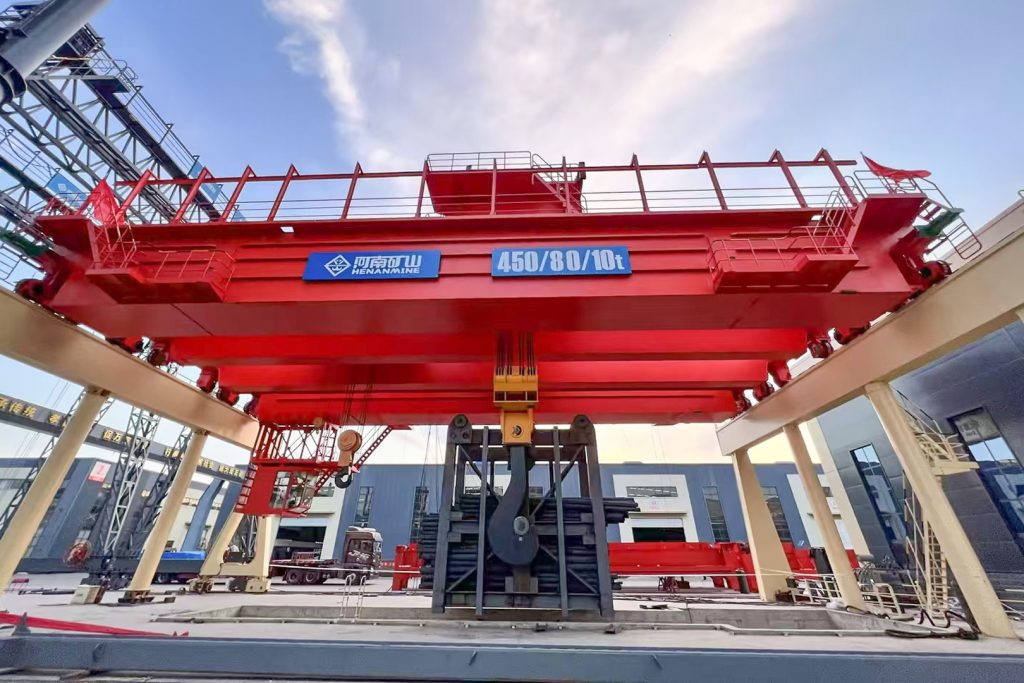
Look closely at the 450 t project crane.
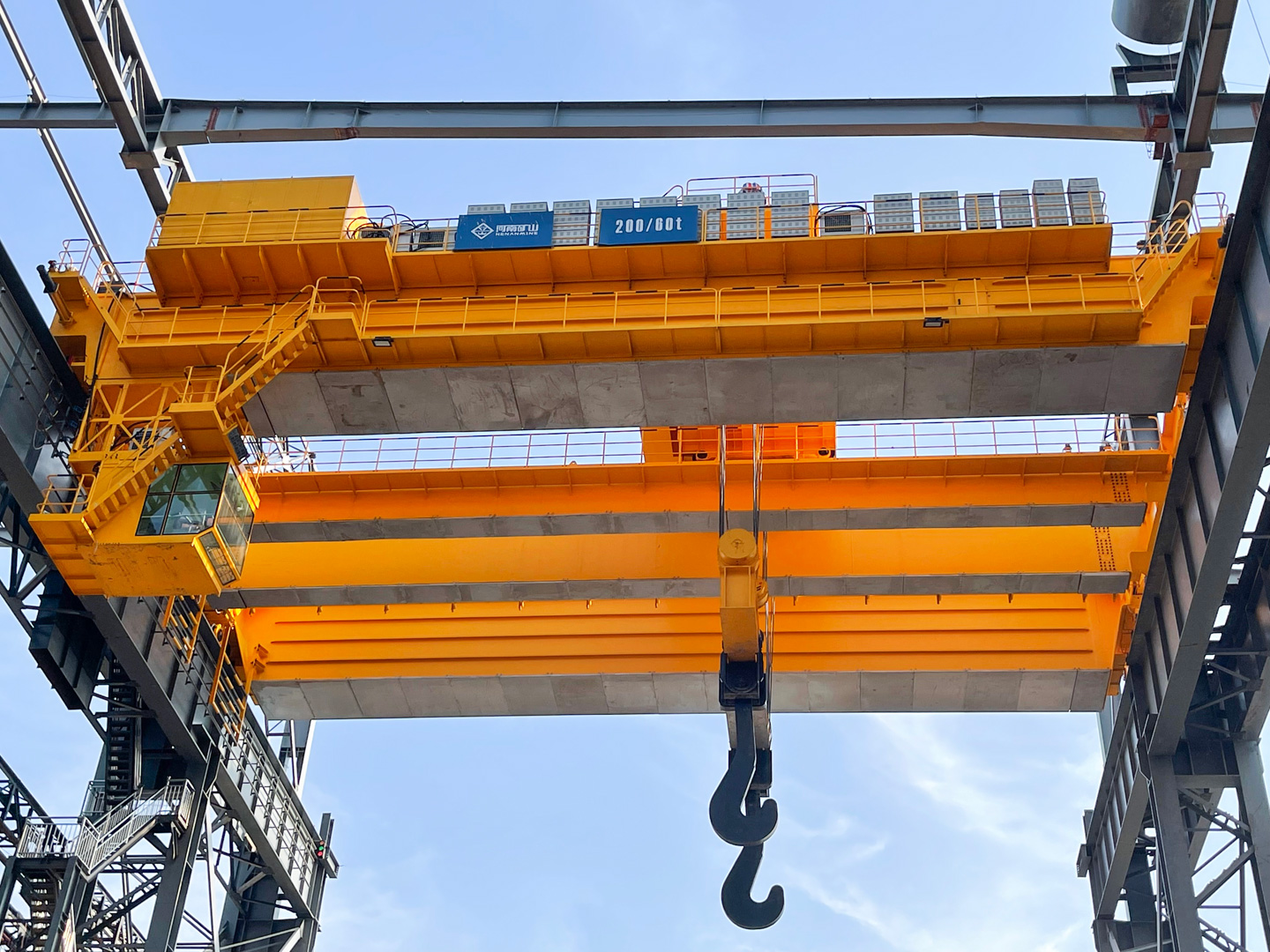
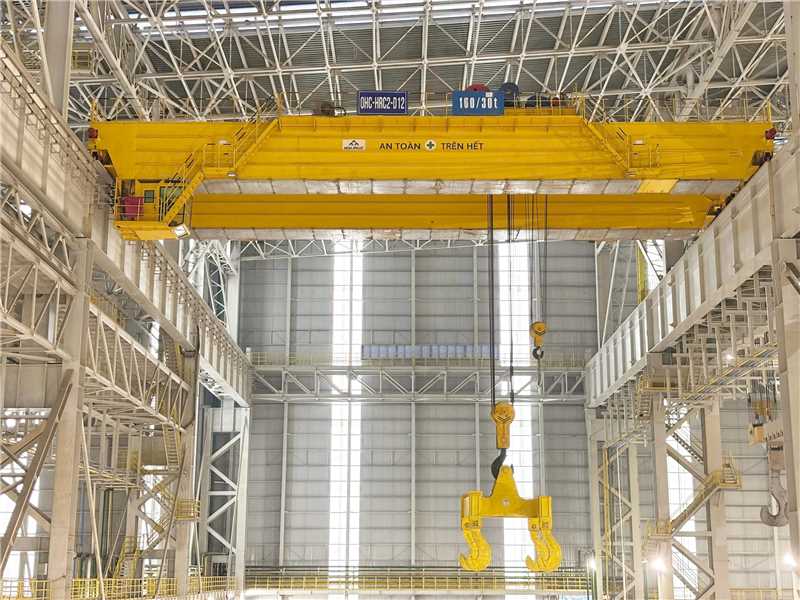
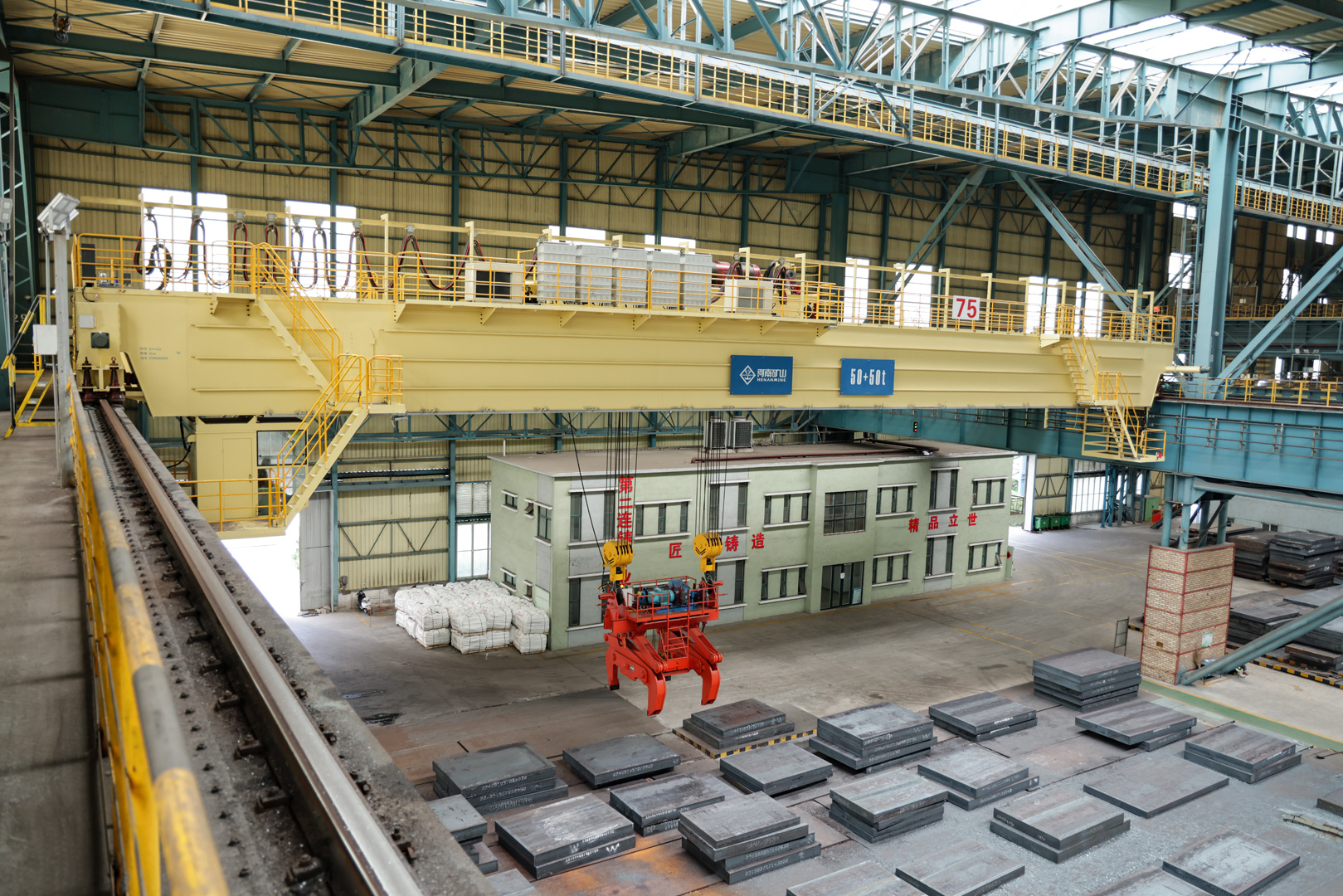
These three views document the same heavy casting crane. Open any image to inspect the entire original photograph.
450 tpublished crane project
Four-girder / four-railpublished mechanical arrangement
PLC controlindustrial Ethernet interface reserved
Safety monitoringalarms and operating records
SPECIFICATION FOR YOUR PLANT
What your technical proposal should make clear.
The 450 t rating describes the pictured project. Span, lifting height, duty and delivery requirements must be confirmed for your own steelworks.
| Decision | What to send | What the proposal should state |
|---|---|---|
| Lift basis | Filled ladle, lifting gear, load cases and center of gravity. | Rated load including the attachment, lifting-point arrangement and load cases. |
| Plant geometry | Bay span, runway, hook height, clearance and transfer positions. | Crane span, lifting height, headroom, wheel loads and runway or foundation interfaces. |
| Operating duty | Lifts per hour, shifts, speeds, heat and dust conditions. | Duty classification, speeds and control behaviour matched to the agreed operating cycle. |
| Building interface | Runway drawings, rails and structural load limits. | Rail layout, wheel reactions, horizontal loads, clearances and structural support interfaces checked against the proposed crane configuration. |
| Safety and control | Operator location, interlocks, alarms and plant procedures. | Operator controls, braking and protection functions, interlocks, alarms, monitoring and the agreed emergency and recovery responses. |
| Destination and scope | Country, standards, quantity and site services required. | Documents, inspection and testing, packing, installation support and agreed delivery milestones. |
Have only a preliminary layout?
Send the drawings and load schedule you have. The missing inputs can be defined during technical review.
Discuss your project ↗FROM OFFER TO HANDOVER
A proposal you can compare and a crane you can accept.
Ask for a clear equipment boundary and a project schedule tied to approved drawings, inspection and the agreed site scope.
Engineering package
Arrangement drawings, lifting and wheel-load basis, electrical interfaces and project-specific safety functions.
Manufacturing and inspection
Inspection plan and factory tests aligned with the crane configuration and destination requirements.
Shipping and installation
Agreed packing, freight, erection support, commissioning and operator training responsibilities.
Operational handover
Test records, manuals, maintenance information and recommended spare parts in the agreed document pack.
Order quantity, compliance and delivery schedule
Single-crane and multi-crane packages are available. Your quotation defines the destination standards, required certificates and inspection records, packing, site services and production schedule after drawing approval.
RELATED CRANES AND SOLUTIONS
Compare the equipment behind the application.
Use the product pages to review crane families. The project design still follows your ladle, runway and operating duty.
BUYER QUESTIONS
Before you request a quotation.
Is 450 t the standard crane capacity for an electric furnace?
No. It is the capacity of the documented project. Your rated load is selected from the complete lifted mass and operating cases.
Can a crane be specified before the runway is finalized?
Preliminary selection is possible, but the crane and runway must be checked together. Span, wheel loads, rail layout and building support affect the final arrangement.
Can you quote one crane rather than a full plant fleet?
Yes. State the quantity and define whether lifting gear, installation, commissioning, training and spares should be included.
What are the order quantity, certification and lead time?
We can quote a single crane or a coordinated fleet. The project offer states the agreed destination standards, inspection and test documents, manufacturing schedule after drawing approval, and shipping or site-service scope.
LET'S REVIEW YOUR STEELWORKS
Send the ladle load and the bay drawing. Get a crane proposal built around your route.
We can review a single critical lift or a coordinated melt-shop crane package. Start with the information available now.
Send your project requirements ↗