
Skip to content
HENAN MINE CRANEIndustrial lifting systems Request a quote
HENAN MINE CRANE / SUSPENDED LIFTING

Underhung Single-Girder Cranes for Clearer Workshop Floors

Compare six roof-suspended crane configurations for everyday production, long bays, precise positioning and classified gas or dust areas. Start with your building structure, load path and required hook coverage.

6 crane configurations1 clear-floor design principle
Henan Mine Crane multi-support underhung crane installed beneath an industrial roof
ROOF-SUSPENDED LIFTINGDesigned around the building and handling path
SIX PRODUCT CONFIGURATIONS

Match the crane to the handling path.

Each crane below has a distinct structural or environmental role. Review the technical schedule with your building drawings so the final quotation includes the runway and suspended-load reactions, not just the bridge.

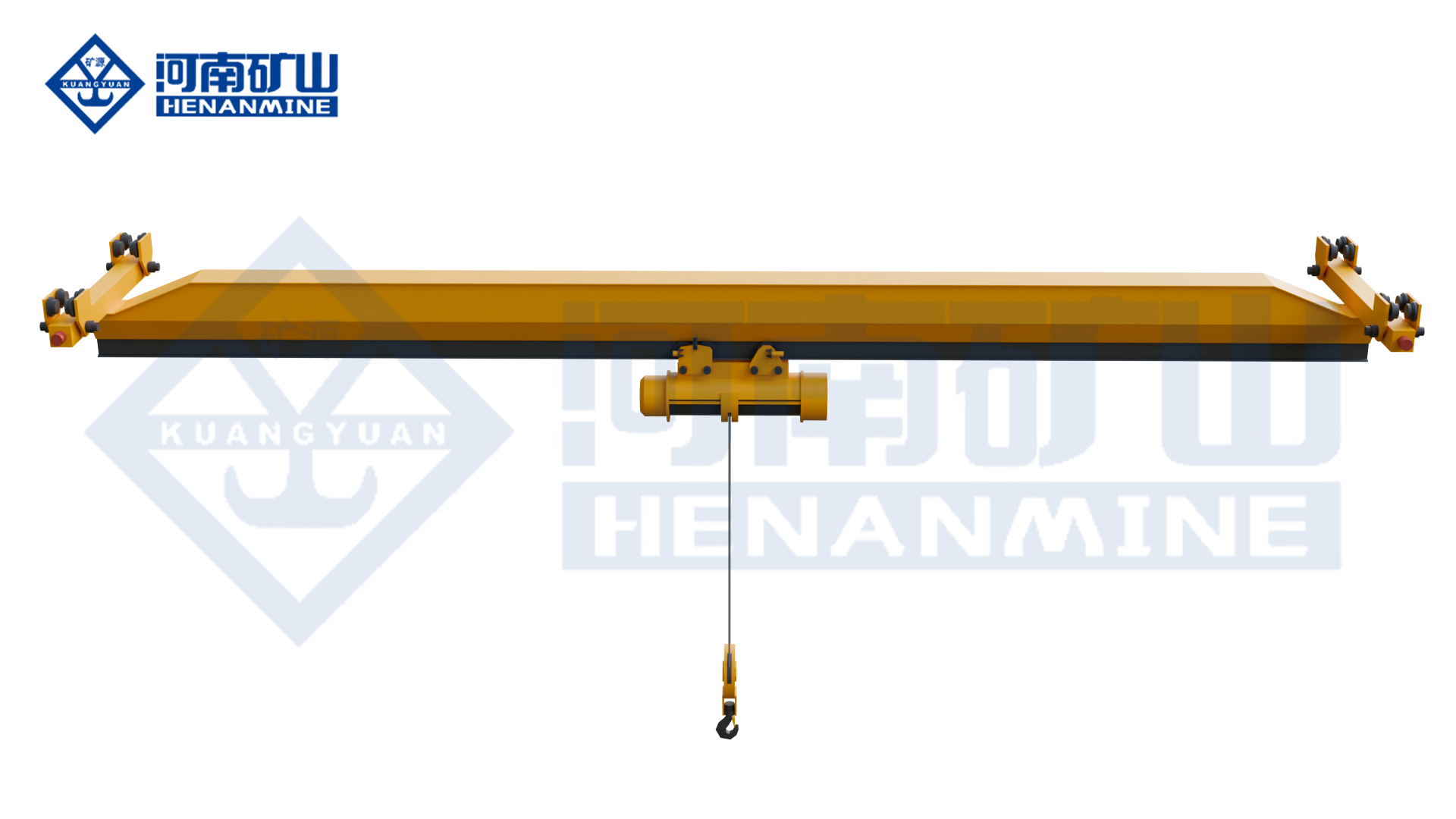
LX electric single-girder underhung suspension crane by Henan Mine Crane LX
UNDERHUNG CRANE / LX

Keep the floor open for production.

LX Electric Single-Girder Suspension Crane

LX pairs a suspended single girder with an electric hoist for repeated material transfer in ordinary workshop and warehouse conditions. The runway attaches to an engineered building support rather than a separate floor-level crane column line.

BEST FIT
Machining bays, stores, assembly stations and maintenance areas with a suitable suspended runway.
BUYER CHECK
Confirm the roof or column support, runway centers, end approach and upper hook position before fixing the span.
Technical configurationSpecify these items for your installation
Rated capacity0.5–20 t selection range; size for total suspended loadCrane span3–16 m selection range; match to runway geometry
Lifting height6 m, 9 m or 30 m selection heights; other hook travel by configurationWork classA3–A5 selection range
Lifting mechanismElectric hoist; single- or dual-speed optionCrane travelRunway and drive specified for the operating cycle
ControlPendant or radio remote controlSupportRoof or building-supported suspended runway with verified point reactions
Request a LX proposal Share your load, runway drawing, roof structure and operating cycle.View model details ↗
KSLX modular electric single-girder suspended crane KSLX
UNDERHUNG CRANE / KSLX

Place the load with more control.

KSLX Modular Underhung Crane

KSLX uses a lightweight modular structure and an electric hoist. Variable-frequency crane travel supports smooth positioning, while an available dual-speed hoist provides a fast approach and a fine setting speed.

BEST FIT
Machinery assembly, power equipment work and production lines that need careful final positioning.
BUYER CHECK
Provide pickup and set-down tolerances, typical load, shifts, roof geometry and required control position.
Technical configurationSpecify these items for your installation
Rated capacitySelected from the lifted load and chosen hoistCrane spanDimensioned to the suspended runway centers
Lifting heightSet from lowest pickup point to highest required hook positionHoisting speedDual-speed option: 5 m/min normal and 0.83 m/min creep
Crane travelStepless variable-frequency speed controlLifting mechanismElectric hoist on a modular single girder
ControlGround control or wireless remote optionSupportSuspension loads and runway connection engineered to the building
Request a KSLX proposal Share your load, runway drawing, roof structure and operating cycle.View model details ↗
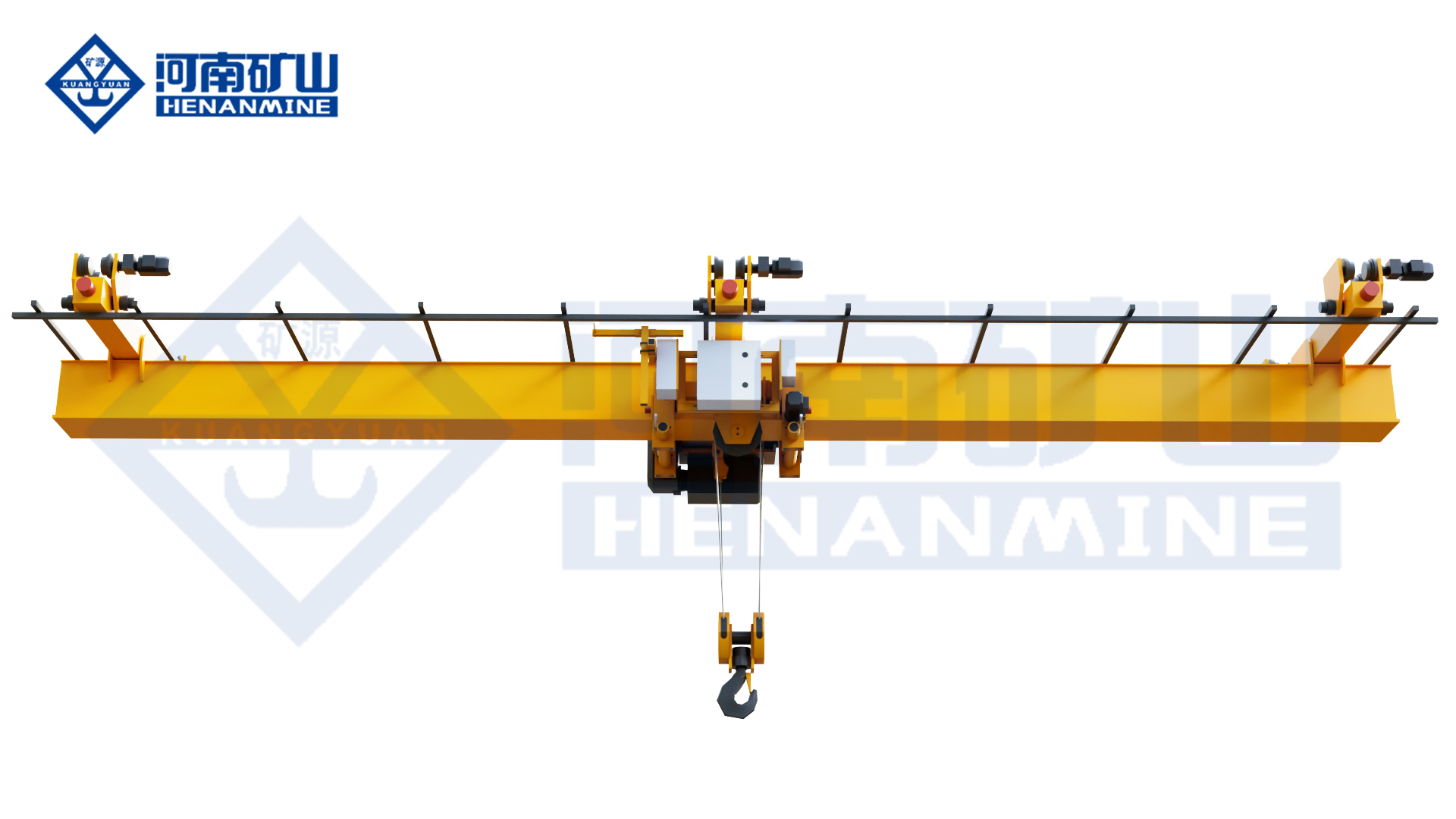
LXD multi-point electric single-girder underhung crane with multiple suspended supports LXD
UNDERHUNG CRANE / LXD

Cover a long bay without filling it with columns.

LXD Multi-Point Single-Girder Underhung Crane

LXD uses multiple roof-suspended support points and runway paths for facilities where a conventional two-end support arrangement is unsuitable. Its coordinated travel drive is intended to keep the suspended bridge moving together across the support points.

BEST FIT
Large production halls, aircraft assembly or maintenance bays and long material-handling routes.
BUYER CHECK
Supply a roof framing plan, allowable reactions, support spacing, runway length and any future layout changes.
Technical configurationSpecify these items for your installation
Rated capacityEngineered from the maximum load and suspension-point reactionsCrane spanSet by the multi-support runway geometry
Support pointsMultiple suspended points; quantity and spacing set by structural designLifting heightSet from the required hook envelope and roof clearance
Travel driveCoordinated three-in-one drive arrangementRunway lengthMatched to the production and maintenance route
Work dutyDefined by load spectrum, moves per hour and shiftsBuilding interfaceRoof members, brackets and runway reactions checked together
Request a LXD proposal Share your load, runway drawing, roof structure and operating cycle.View model details ↗
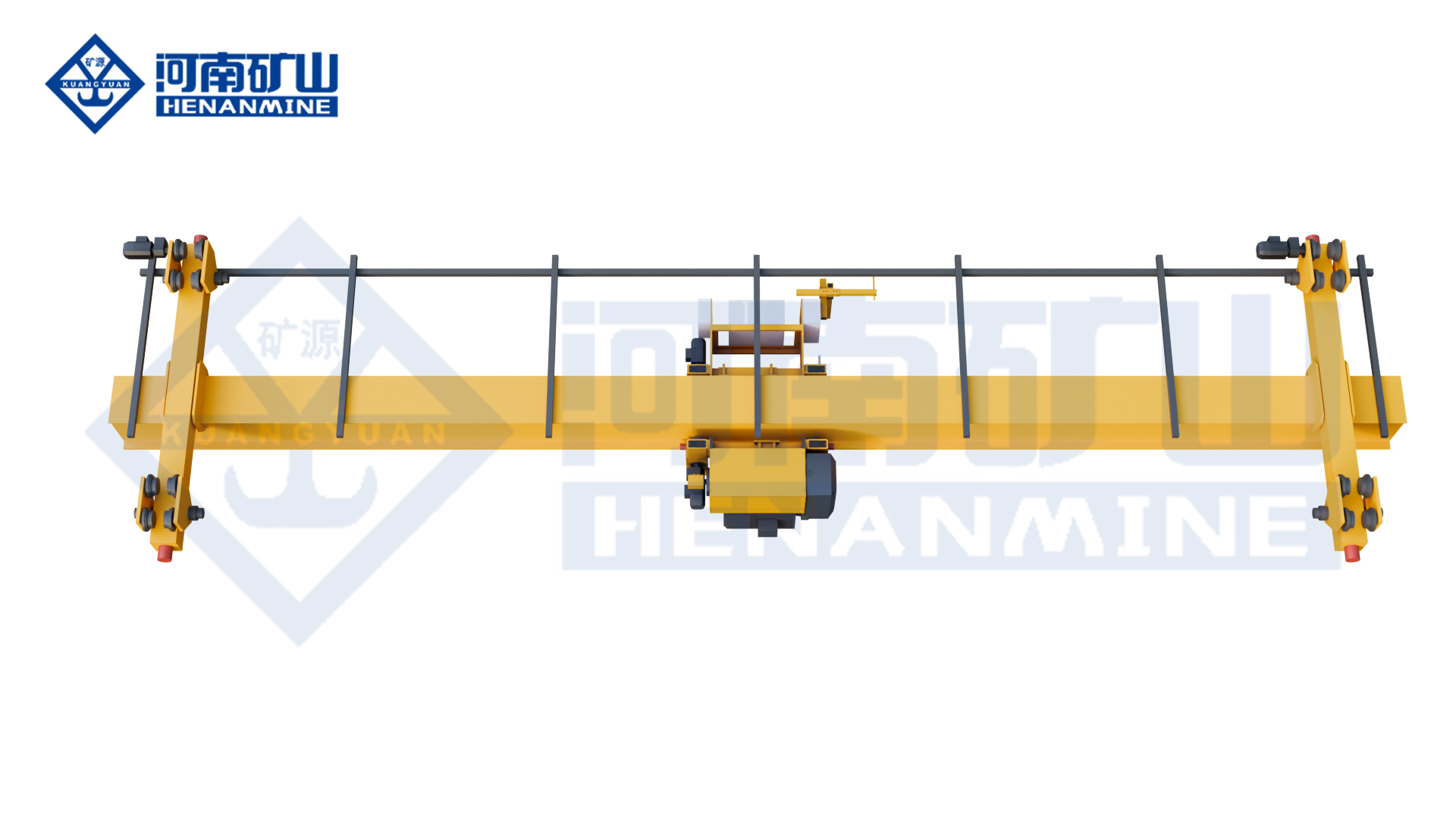
LXB gas explosion-proof single-girder underhung crane with protected electric hoist LXB
UNDERHUNG CRANE / LXB

Suspended lifting for a classified gas area.

LXB Explosion-Proof Underhung Crane

LXB combines an underhung single girder with an explosion-protected electric hoist for areas where flammable gas or vapor may be present. The protection marking, temperature class and electrical package must be selected to the actual area classification.

BEST FIT
Chemical processing, oil and gas facilities, pharmaceutical processes and other designated gas-hazard areas.
BUYER CHECK
Send the gas group, zone, temperature class, ambient conditions and destination approval requirements with the building drawings.
Technical configurationSpecify these items for your installation
Rated capacity1–10 t selection range; size for total suspended loadCrane span7.5–28.5 m selection range; match to runway centers
Lifting height6–20 m selection range; confirm hook travelWork classA3–A5 selection range
Hoisting speed2–10 m/min, selected for the hoist and dutyPower referenceThree-phase 380 V / 50 Hz option; match destination supply
Area classificationGas group, zone and temperature class specified by the siteProtection packageHoist, motors, controls and electrical components matched to the classification
Request a LXB proposal Share your load, runway drawing, roof structure and operating cycle.View model details ↗
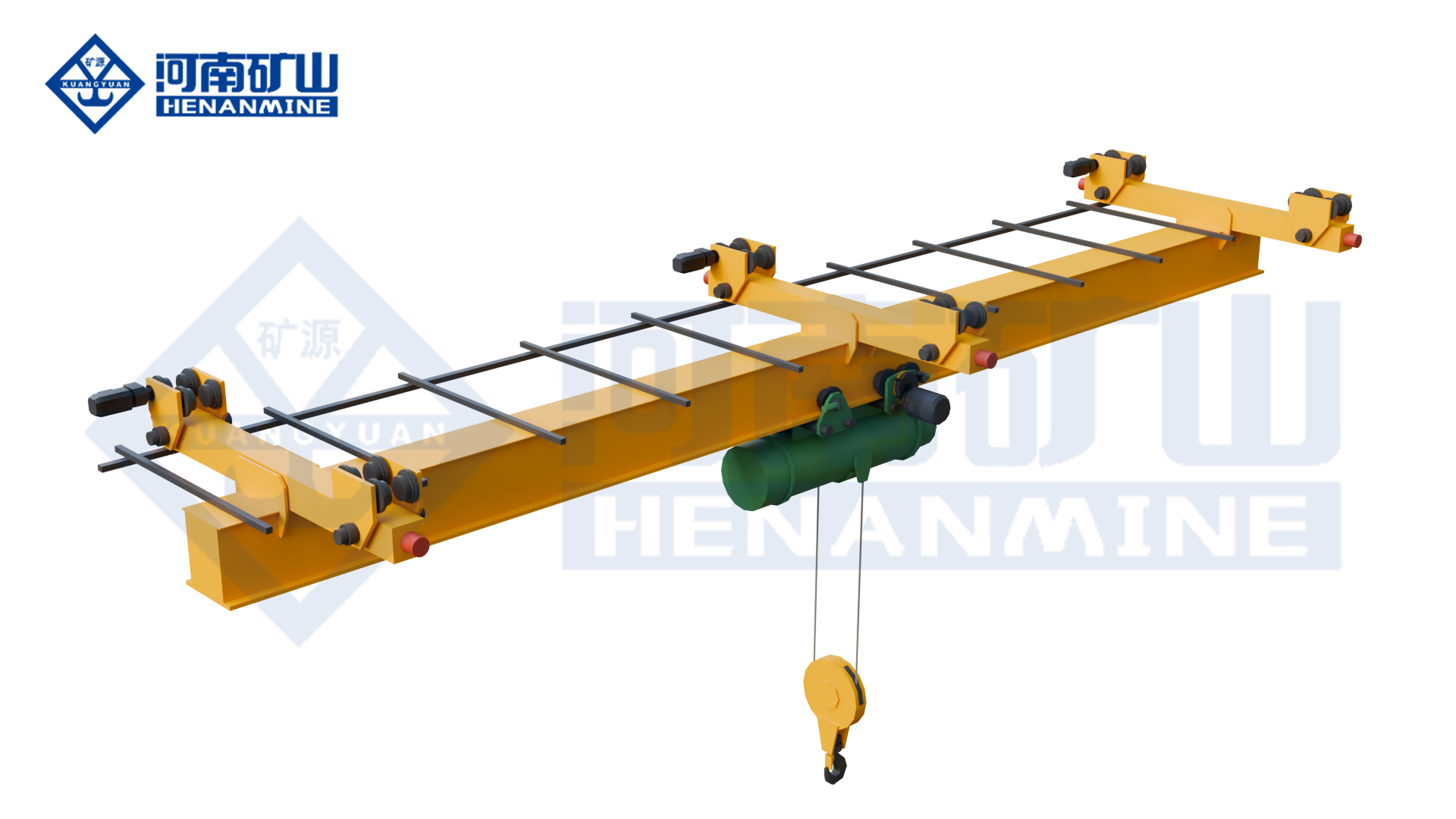
BLXD explosion-proof multi-point single-girder underhung crane BLXD
UNDERHUNG CRANE / BLXD

Protect the process across a long suspended runway.

BLXD Explosion-Proof Multi-Point Underhung Crane

BLXD brings the multi-point suspended layout into a classified hazardous area. It is intended for large bays that need distributed support and an explosion-protected hoisting and travel system selected to the operating environment.

BEST FIT
Large process buildings and long-span maintenance or production routes with a designated explosion hazard.
BUYER CHECK
Define gas or dust classification and supply roof framing, suspension-point positions, allowable reactions and lifting-cycle details.
Technical configurationSpecify these items for your installation
Rated capacityEngineered for the lifted load and support reactionsCrane spanDetermined by multi-point runway and building geometry
Support pointsQuantity and spacing coordinated with structural designLifting heightMatched to the protected hoist and hook envelope
Hazard classificationSite-defined gas or dust area classificationHoisting packageExplosion-protected hoist and compatible electrical system
TravelCoordinated drive and protected components as specifiedApprovalRequired marking and destination documentation confirmed before manufacture
Request a BLXD proposal Share your load, runway drawing, roof structure and operating cycle.View model details ↗
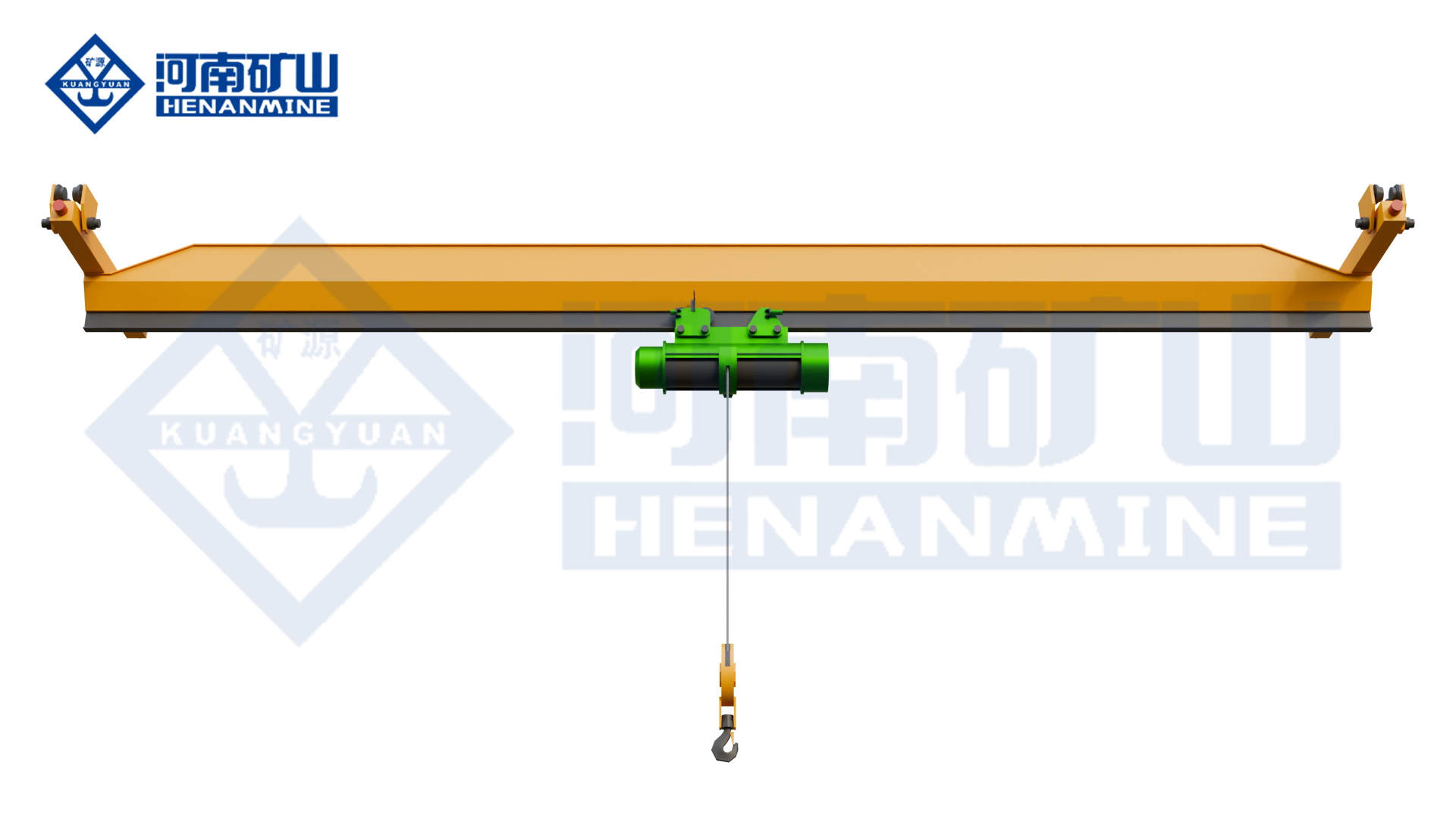
LXB dust-explosion-proof electric single-girder suspension crane LXB-D
UNDERHUNG CRANE / LXB-D

Specify the crane around the dust hazard.

LXB Dust-Explosion-Proof Underhung Crane

This LXB variant uses a dust-explosion-protected electric hoist on a suspended single girder for processes where combustible dust may accumulate. Dust group, zone, surface temperature and enclosure selection drive the final technical package.

BEST FIT
Flour milling, combustible powder processing, metal grinding and plastics production where the site has a defined dust hazard.
BUYER CHECK
Provide the dust classification, ignition and temperature data, cleaning regime, required protection marking and roof support information.
Technical configurationSpecify these items for your installation
Rated capacitySelected from the total suspended loadCrane spanMatched to suspended runway centers and building members
Lifting heightSet to the required hook travel and available headroomDust classificationDust group and zone supplied by the site
TemperatureSurface-temperature limit set from the dust assessmentLifting mechanismDust-explosion-protected electric hoist
Electrical packageMotors, controls and enclosures specified for the classified areaBuilding interfaceRunway fixings and roof reactions verified for the crane load
Request a LXB-D proposal Share your load, runway drawing, roof structure and operating cycle.View model details ↗
BUYER'S PROJECT BRIEF

Give engineering the building facts early.

A useful underhung-crane quotation includes the load and the building interface. These four items determine whether the crane can achieve the coverage and hook height your process needs.

01

Load and operating cycle

Maximum lifted load including lifting attachments, typical load, lifts per hour, travel distance and number of shifts.

02

Roof and runway drawings

Building plan, roof beam sections, proposed suspension points, runway centers and allowable reactions if known.

03

Hook coverage

Required lift, highest hook position, end approaches, obstacles and the load path through the workshop.

04

Area and electrical data

Country, power supply, control choice and any formal gas or combustible-dust classification.

PLAN THE CRANE WITH US

Get a suspended-crane configuration for your building.

Send your building drawing and handling brief. We can match the model, hoist, runway layout and support requirements to the work area.

Request a technical proposal
INCLUDE WITH YOUR ENQUIRY
  • Load, lifting attachment and required hook height
  • Runway centers, travel length and roof framing
  • Daily lifting cycle and preferred controls
  • Gas or dust classification where applicable