
Machinery assembly
Bring parts toward assembly fixtures with selected lifting and approach speeds. Match the crane’s hook coverage and anti-sway functions to the required placement.
Bridge cranes for workshops and production lines.
Explore Overhead Cranes
Ground-supported lifting for yards and construction.
Explore Gantry Cranes
Wire rope and chain hoists for lifting points and cranes.
Explore Electric Hoists

Wire rope lifting and pulling with a powered drum.
Explore Electric Winches
Grab buckets, magnets and hooks for your load.
Explore Lifting Attachments & Grabs
Mobile handling for containers, precast and yard loads.
Explore Rubber-Tired Gantry Cranes & Straddle Carriers

Lift and move vessels through boatyards and marinas.
Explore Marine Travel Lifts
Ladle, slab, scrap and coil handling across steel production.

Container stacking and cargo transfers across terminals and rail.

Turbine installation, powerhouse maintenance and wind equipment assembly.

Controlled component transfer and positioning for precision assembly.

Heavy fabrication, production lifting and factory crane automation.

Process lifting for smelters, carbon blocks and anode materials.

Clean lifting and classified protection for sensitive process areas.

Bridge fabrication, metro construction and ship block assembly.

Automated storage and retrieval for plates, cables and bins.

Follow project dispatches, crane engineering and factory acceptance.

Dispatch, installation and equipment in service

Crane configurations and handling technology

Factory inspections, acceptance and test programmes

Company developments, people and community programmes
Move components between production and assembly positions with a double-girder crane carried beneath overhead runway tracks. KSQX combines variable-frequency motion and electronic anti-sway for controlled handling. Select the hook coverage, lifting system and optional side reach around your machinery layout.
Tell us the load, the pickup and placement positions, and how often the crane will work. We can help choose the lifting and control package.
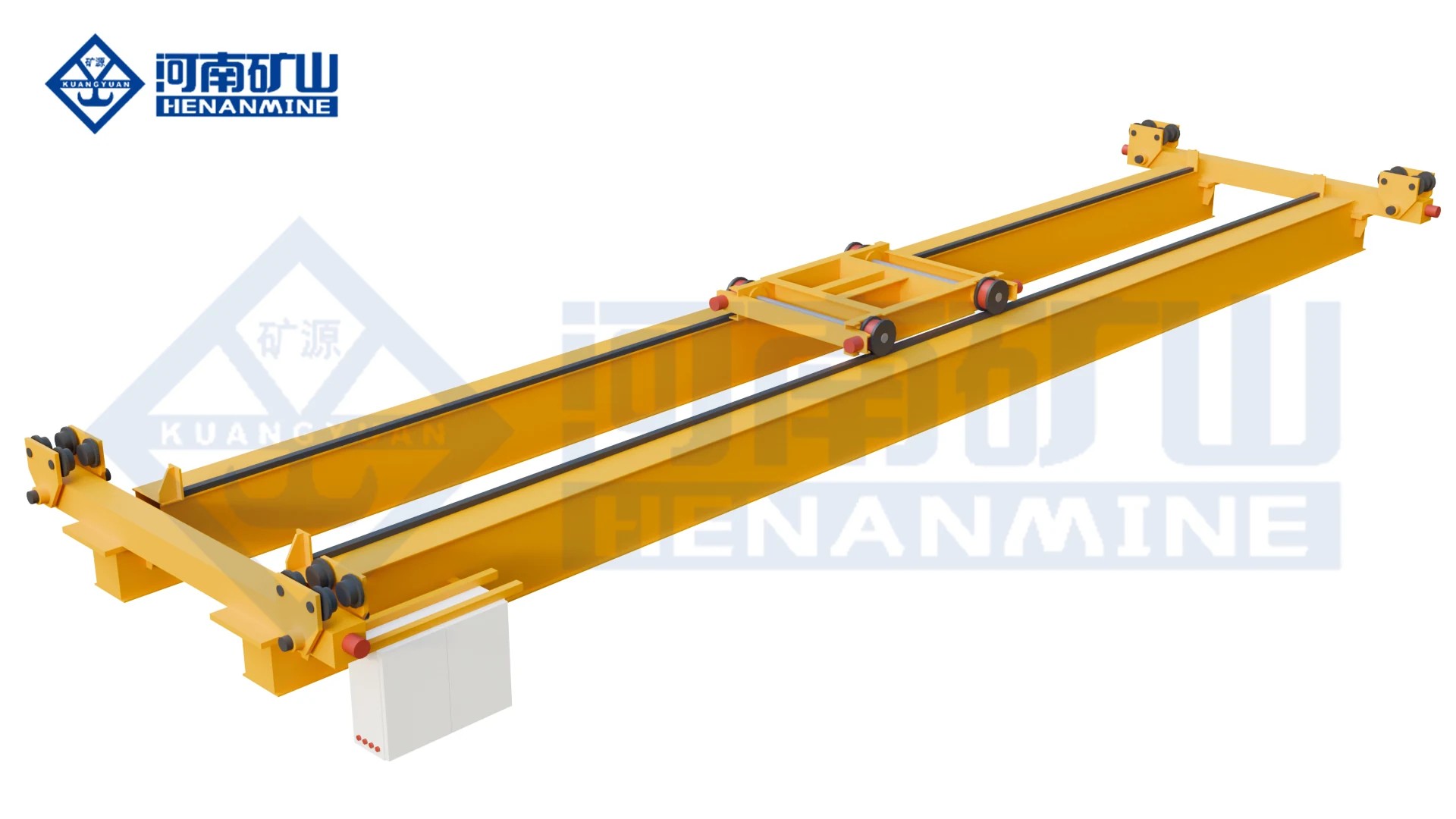
A machinery layout or workshop photo is enough to start the discussion. Include side reach where a hook needs to work beyond the support span.
The bridge runs beneath overhead-supported tracks, keeping dedicated crane runway columns out of the working bay where the building provides suitable support.
VFD motion and electronic anti-sway support controlled lifting and travel. Select approach speeds and positioning requirements around the parts and equipment you handle.
Compact lifting geometry and an optional side cantilever can improve access near the bay edges. The cantilever reach and permitted load are specified with the suspended arrangement.
Bring parts toward assembly fixtures with selected lifting and approach speeds. Match the crane’s hook coverage and anti-sway functions to the required placement.
Reach service positions and removal routes around installed machinery. An agreed side cantilever can serve a position beyond the normal support span when included in the design.
Move components between process and storage positions within a suspended bay. Select travel duty, control functions and coverage for the production layout.
Choose KSQX for the double-girder underhung platform. Compare LHDX for several support tracks across a wide hall, or KSX for a trolley route connecting compatible bridge sections.
Compare the available options for your lifting task. Capacity, span, lift height and speed are matched in the selected configuration.
| Model | KSQX |
|---|---|
| Crane arrangement | Double-girder underhung bridge suspended from overhead building-supported tracks |
| Bridge construction | Two parallel main girders connected to end structures by high-strength bolts |
| Rated capacity | Selected for the complete suspended load and operating duty |
| Working span / width | Matched to the suspended runway and required hook coverage |
| Usable lifting height | Matched to pickup/placement levels and lifting-system geometry |
| Working duty | Selected from load spectrum, lifts per hour and shifts |
| Hoisting / travel speeds | Selected for the handling cycle and controlled approach |
| Motion control | Variable-frequency speed control |
| Anti-sway | Electronic anti-sway; required operating performance defined with the load and movement |
| Hook approaches | Specified on the arrangement drawing for the selected bridge and lifting system |
| Side cantilever | Optional; reach and permissible load selected with the suspended layout |
| Protection functions | Overload protection, travel/hoist limits and emergency stop within the supplied package |
| Monitoring options | Remote monitoring and fault diagnosis can be included |
| Support reactions | Calculated for the selected load positions, span and any cantilever |
| Power supply | Destination three-phase voltage and frequency specified with the drives and controls |
| Working requirement | Bridge / lifting selection | Motion selection | Option to identify |
|---|---|---|---|
| Assembly within the supported bay | Rated load, span and hook positions for the fixtures | VFD approach with electronic anti-sway | Required placement performance |
| Service position near a bay edge | Selected hook approach and lifting height | Controlled final lifting and travel | Side cantilever where required by the layout |
| Repeated production transfer | Hoist and bridge duty matched to load spectrum and moves/hour | Selected normal and approach speeds | Operator controls and process interfaces |
| Condition monitoring | Access and maintenance requirements for the selected equipment | Operating and fault data from named systems | Remote monitoring/diagnosis functions and communication scope |
Capacity, span, lift, speeds and optional cantilever are defined for the actual KSQX arrangement. Anti-sway or positioning performance is specified under agreed load and travel conditions.
| Layout requirement | Model to compare | Selection focus |
|---|---|---|
| Double-girder lifting within a suspended bay | KSQX | Usable lift, hook approach, VFD and anti-sway |
| Wide coverage supported on multiple tracks | LHDX | Overall working width and multiple suspension positions |
| Transfer of the hoist trolley between connected sections | KSX | Compatible rails, transfer device and operating sequence |
These arrangements are selected for different site functions. A side cantilever does not by itself provide rail transfer or a multi-track suspension system.
Compare the two main girders, suspended travel arrangement and available hook positions. The order identifies whether a side cantilever and additional monitoring are included.

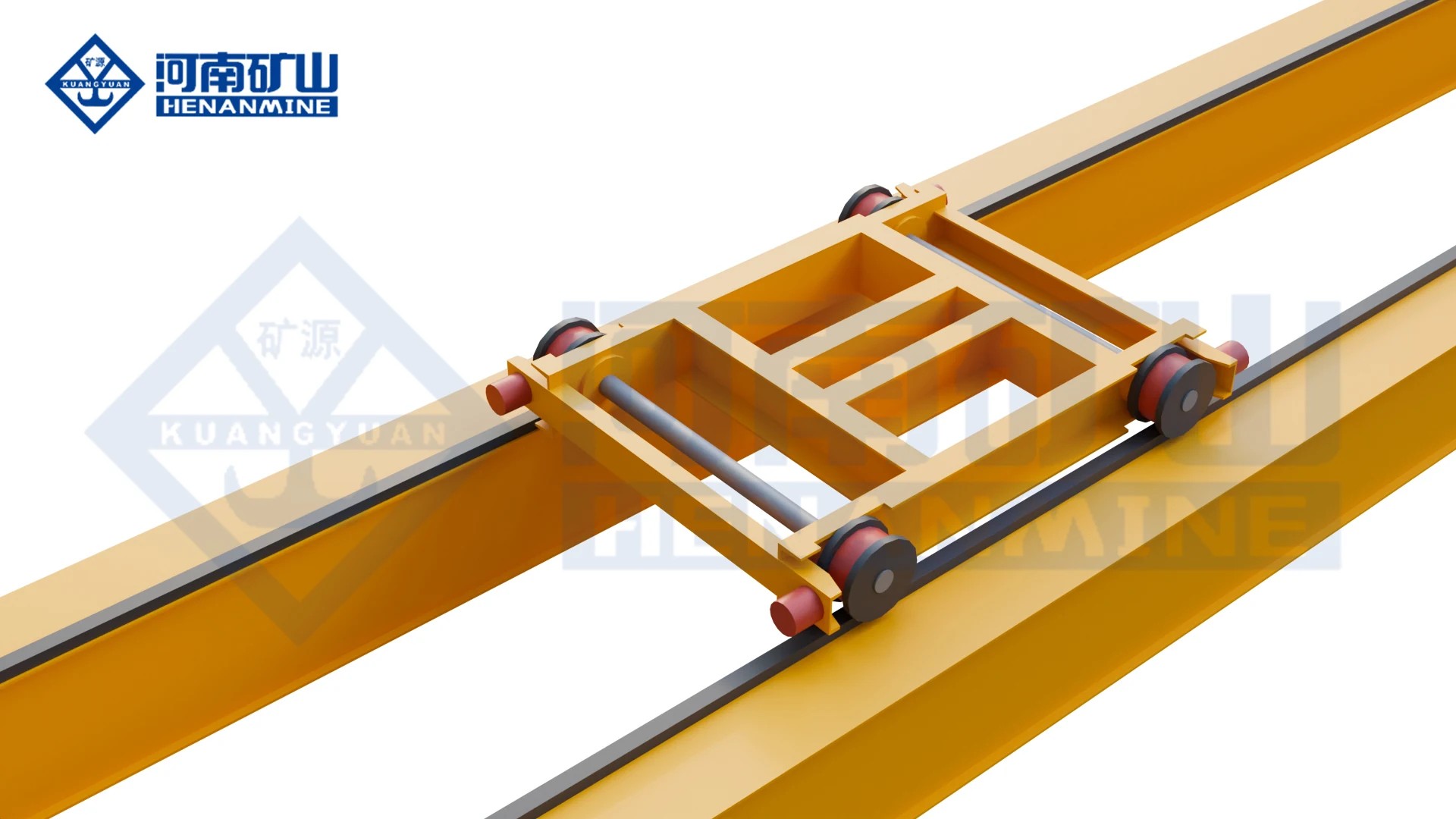
Provide the machinery layout and load range. The suspended bridge, lifting mechanism and controls are selected as one handling arrangement.
State component and fixture weight, normal load range and lifts per hour. Select the lifting mechanism and crane duty for the required cycle.
Mark pickup and placement points, required lift and any position beyond the support span. Agree cantilever reach and permissible load where that option is needed.
Define lifting/travel speeds, final approach and load-stability requirements. Select VFD and electronic anti-sway settings, with any positioning performance stated for the actual conditions.
Provide available support/track positions and overhead clearances. Select operator controls and any remote monitoring, fault diagnosis or plant-interface functions.
Compare the bridge, lifting system, controls and site services as one defined supply scope.
Single-crane enquiries are welcome. State the load and operating task for each bay, with any side-reach requirement, so the quotation confirms the quantity and configuration you need.
Price the bridge, lifting mechanism, travel equipment and control package together. List suspended tracks and connections, electrification, any cantilever or monitoring option, freight and site services as separate scope lines.
The agreed handover package identifies the arrangement drawing, support reactions, hook coverage and any cantilever load limits, electrical information and manuals. Specify destination documents and the load or functional tests required.
Your quotation confirms the production and dispatch dates for the selected lifting system and controls. Plan drawing approval, runway availability, packing, freight and commissioning with the workshop programme.
Agree who installs and aligns the suspended tracks, connects the electrical supply and commissions the crane. Include lifting and travel checks, limits and emergency functions, plus the ordered anti-sway performance checks.
The offer states warranty duration, start date and coverage. Ask for the service process and a recommended list of drive, brake and sensor spares for the control and lifting package you order.
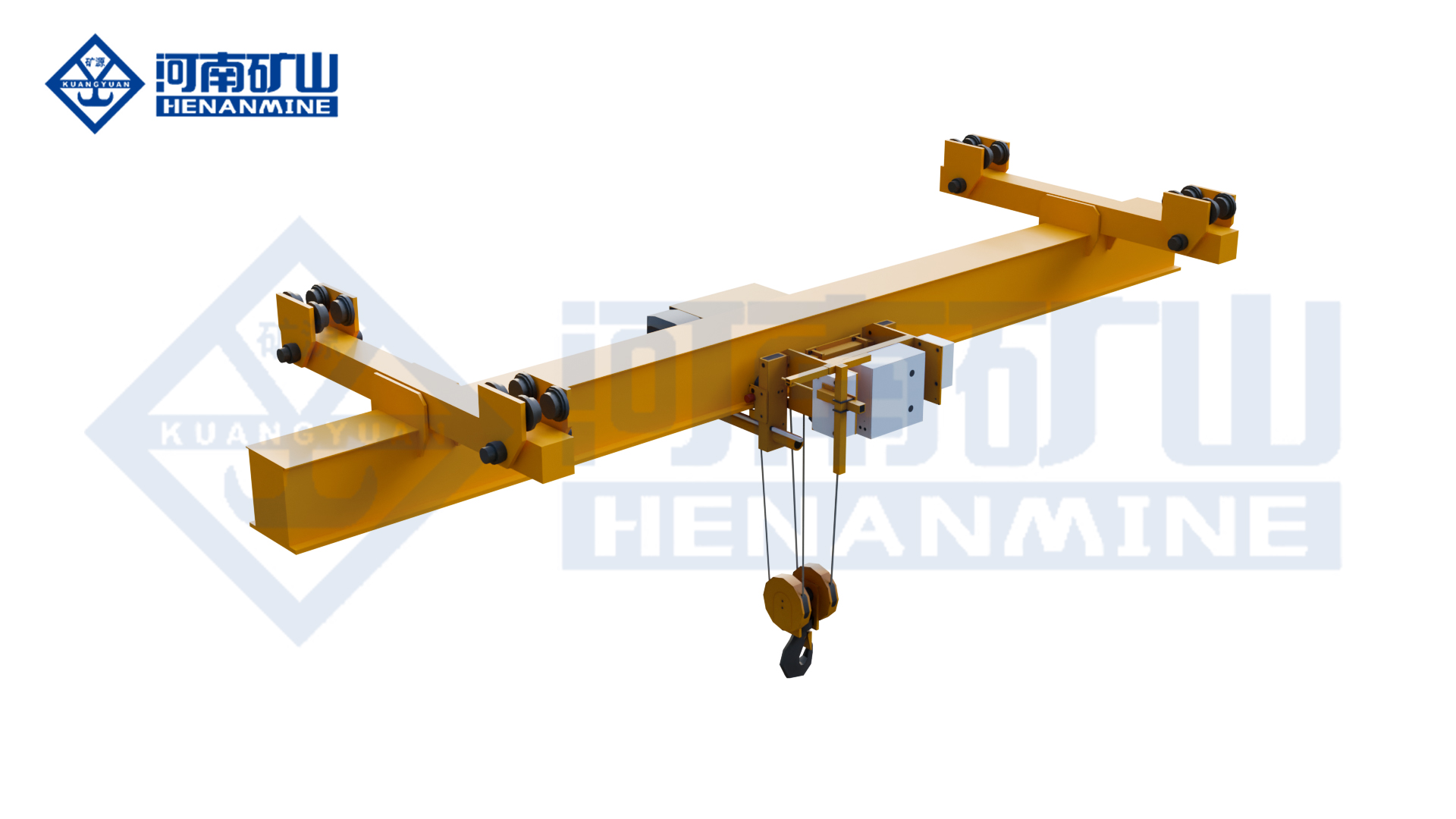
A compact modular suspension crane with a matched electric-hoist package. Compare it when smooth powered movement and careful component placement are priorities.
Compare this arrangement ↗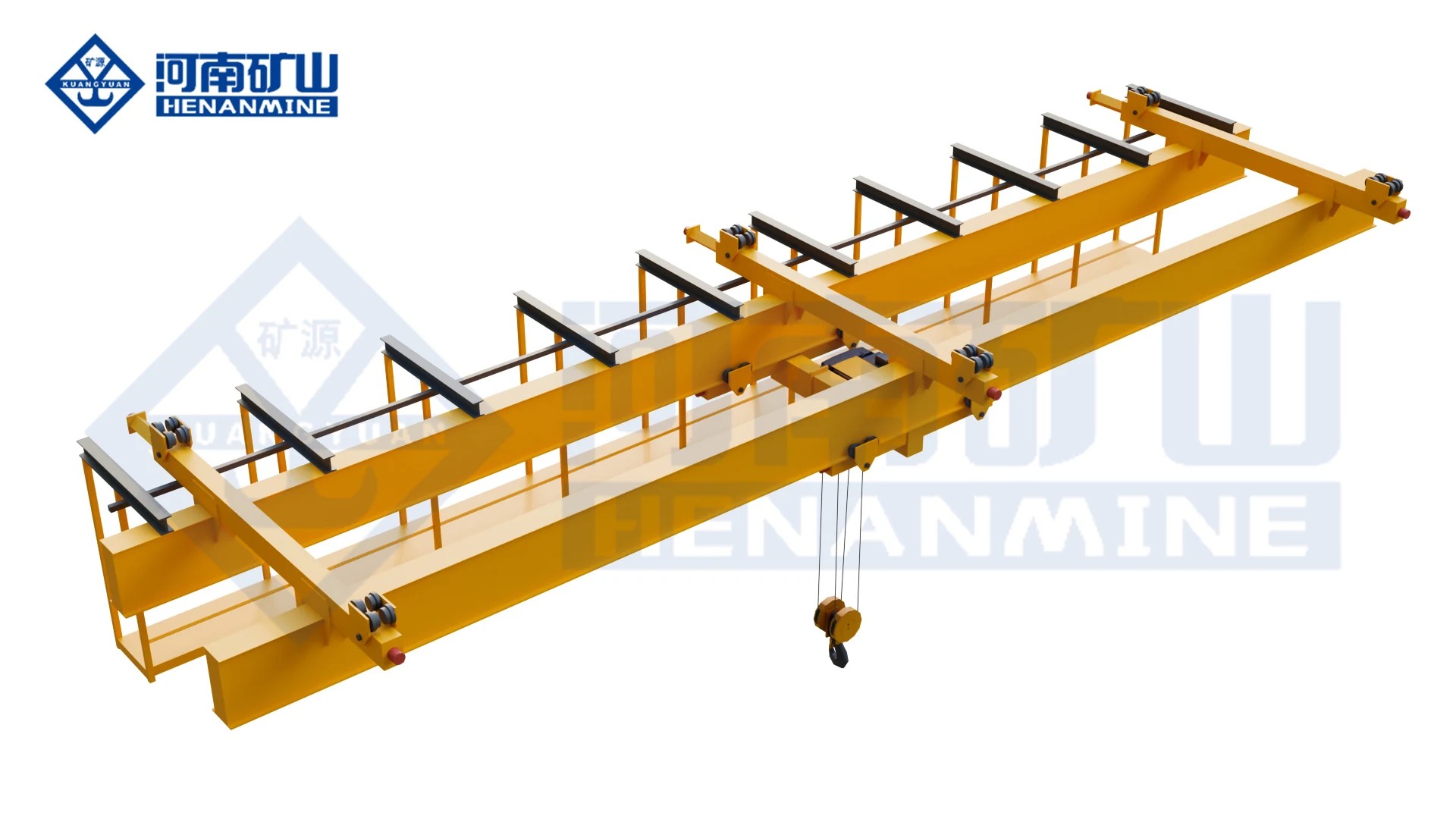
A double-girder electric-hoist bridge carried at multiple suspension points. Choose the complete bridge, hoist and support layout together for broad workshop coverage.
Compare this arrangement ↗
Rail-transfer lifting links working areas through a coordinated hoist trolley and bridge arrangement. Compare the listed 12.5 t configuration.
Compare this arrangement ↗Find the arrangement, equipment options and order information that suit your application.
KSQX travels beneath overhead-supported runway tracks rather than on rails atop a conventional elevated runway beam. Its suspension arrangement and building interfaces are selected for that layout.
No. KSQX has two parallel main girders and a selected double-girder lifting arrangement. Compare actual capacity, hook coverage and operating functions rather than choosing by the suspension name alone.
KSQX identifies the double-girder underhung platform. If the working area needs multiple support tracks across a wide hall, specify that layout and compare LHDX.
A side cantilever can be specified. Its effective reach and permitted load must be stated with the final bridge and suspension arrangement; full rated capacity at every overhang is not assumed.
It supports control of suspended-load oscillation during selected motions. Define the load, rope length, travel conditions and required result so the control settings and acceptance checks match the task.
Positioning requirements are specified for the actual handling process and control package. The order states the conditions and any accepted tolerance instead of assuming one value for every crane.
Remote monitoring and fault-diagnosis functions can be selected. Agree the signals, communication connection, access and maintenance use so the supplied scope is clear.
That is a rail-transfer function requiring compatible rails, a connection device and controls. It is specified separately; compare a KSX system if the route needs it.
Send the load/fixture weights, machinery layout, required hook positions and lift, working frequency and available overhead support positions. Include side reach, controls and installation scope.
Yes. Single-system enquiries are welcome. Tell us the lifting task and site location; the quotation confirms the ordered quantity and the complete crane, runway-interface and service scope.
The written quotation confirms production and dispatch dates for the selected configuration, together with warranty duration, start date, coverage and the after-sales contact. Packing, freight and site commissioning are identified separately so you can plan the complete delivery.
Start with the maximum load, working width, hook height and destination. Add the machinery layout or a workshop photo and any side-reach or positioning requirement. We will help match the bridge, lifting system and controls to the work.
info@cranehenanmine.com