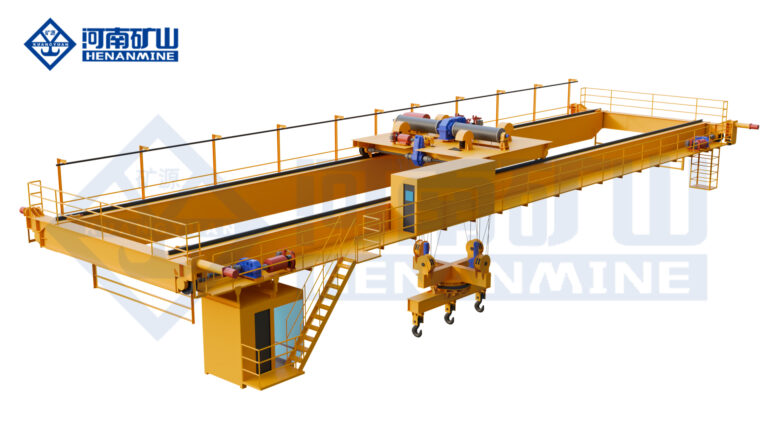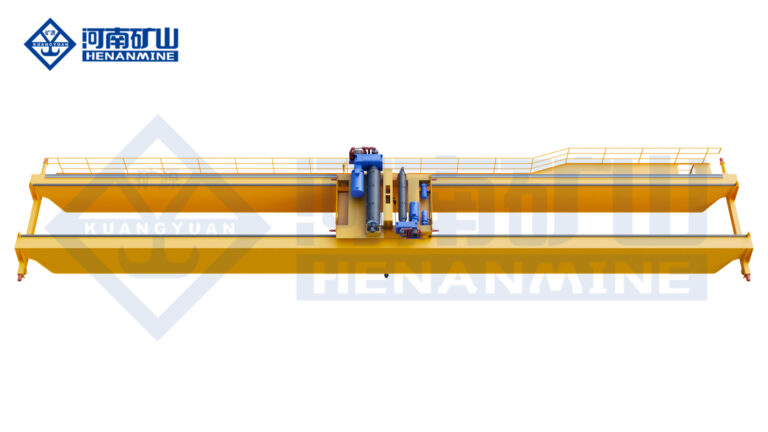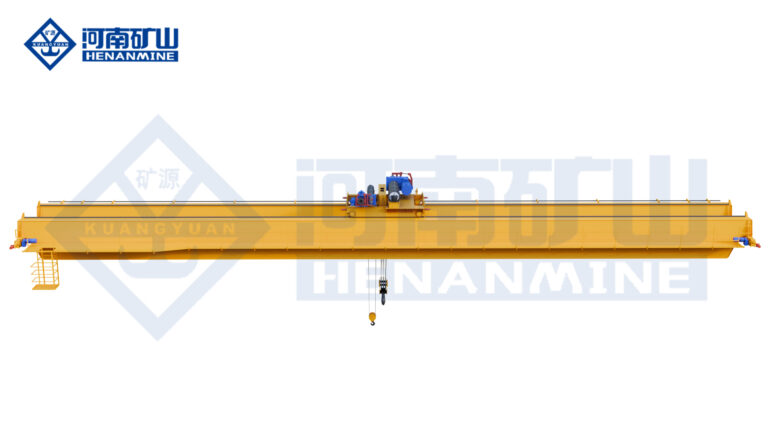
Pick from the fixture
Identify component dimensions, approved lifting points, center of gravity and the interface to the production fixture.
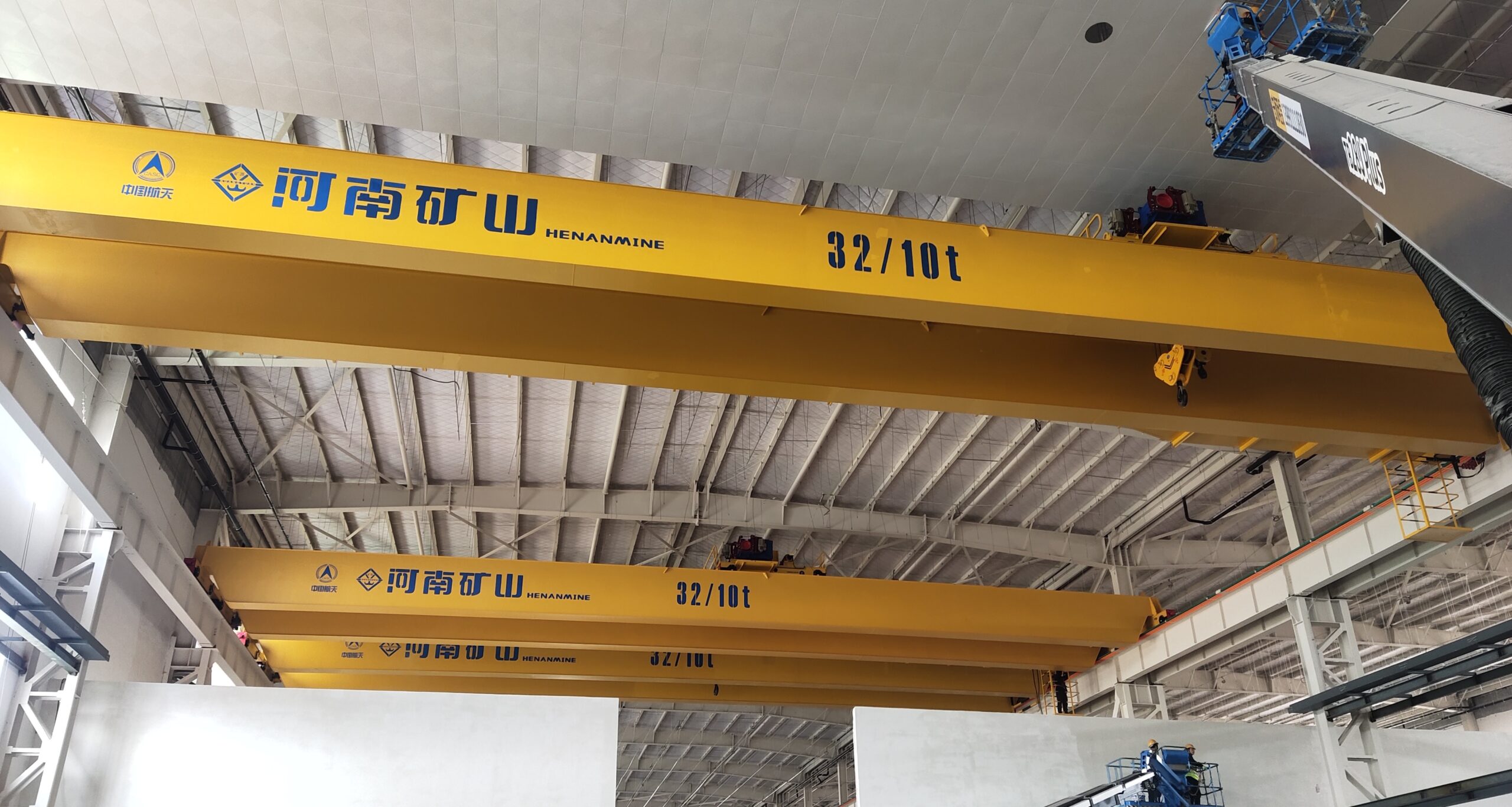
Control the lift, the path and the positioning of high-value assemblies.
Purpose-built cranes for aerospace production spaces
Aerospace production involves large components, sensitive surfaces and tightly managed operating zones. Crane selection should start with the actual assembly process: load orientation, attachment, clearance, travel path, positioning control and any hazardous-area classification.
The lifting scheme is built around the component and fixture, not a catalog capacity. A purpose-designed beam or lifting frame holds long parts at defined points; controlled bridge travel carries them between production stations; low-speed positioning and, where required, beam rotation align the load with the assembly fixture. Clearance, surface protection, operator visibility and recovery from a stopped move are checked for each hand-off. Explosion protection is added only where the process room is classified.
Follow the load through the operation to see where lifting equipment, tooling and controls must work together.
Identify component dimensions, approved lifting points, center of gravity and the interface to the production fixture.
Keep the load envelope clear of structures and equipment while controlling speed, sway and access to the route.
Where the task requires rotation or fine alignment, define the motion, target point and measurement method.
Confirm the set-down support, permissible contact, attachment release and recovery procedure before the lift is commissioned.
Define the material, handling cycle and working zone before fixing the crane arrangement.
Map long-load orientation, rotation, low-speed movement and the attachment interface between manufacturing stations.
Specify servo positioning, anti-sway and travel clearances to the assembly fixture rather than relying on nominal crane capacity alone.
Where explosive atmospheres are classified, define the zone, gas or dust group and temperature class before selecting electrical protection.
These choices affect safety, process fit and the operating life of the installation.
The carrier beam, lifting points and allowable deflection must suit the specific assembly and its approved handling method.
State accuracy at the load and operating speed, then agree how it will be tested. Performance reported for another installation is not a model-wide rating.
Cleanliness controls, access rules and any hazardous-area classification are separate inputs to the final electrical and mechanical design.
See how cranes and lifting systems were configured for demanding operating environments.
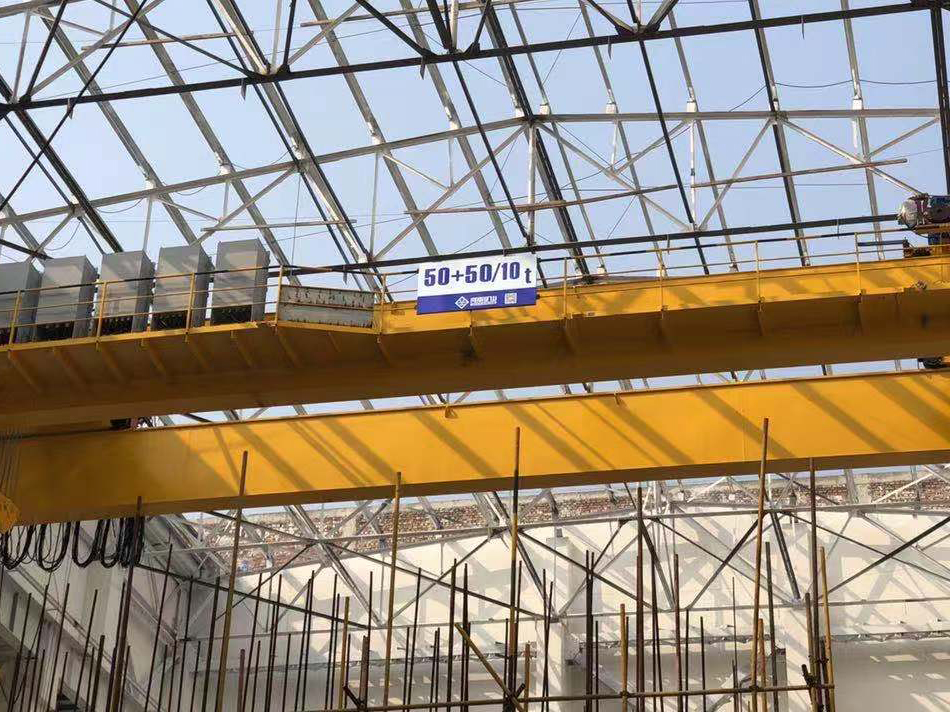
More than 20 long-span precision cranes were ordered, with 12 units delivered for composite-material production at the project milestone.
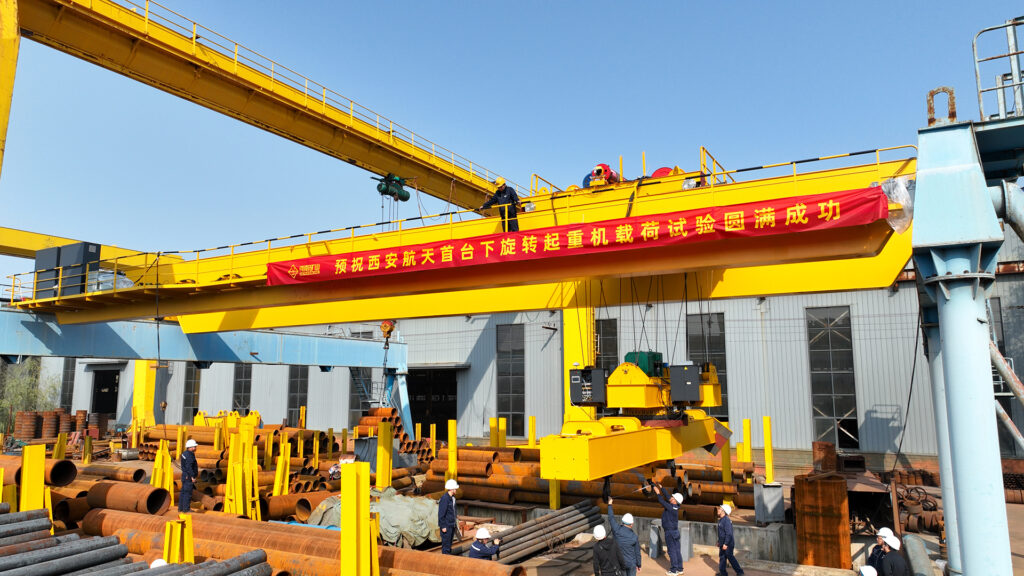
A lower-rotating crane for an aerospace composite-material institute passed load testing. Positioning control below 1 mm was specified for this installation.
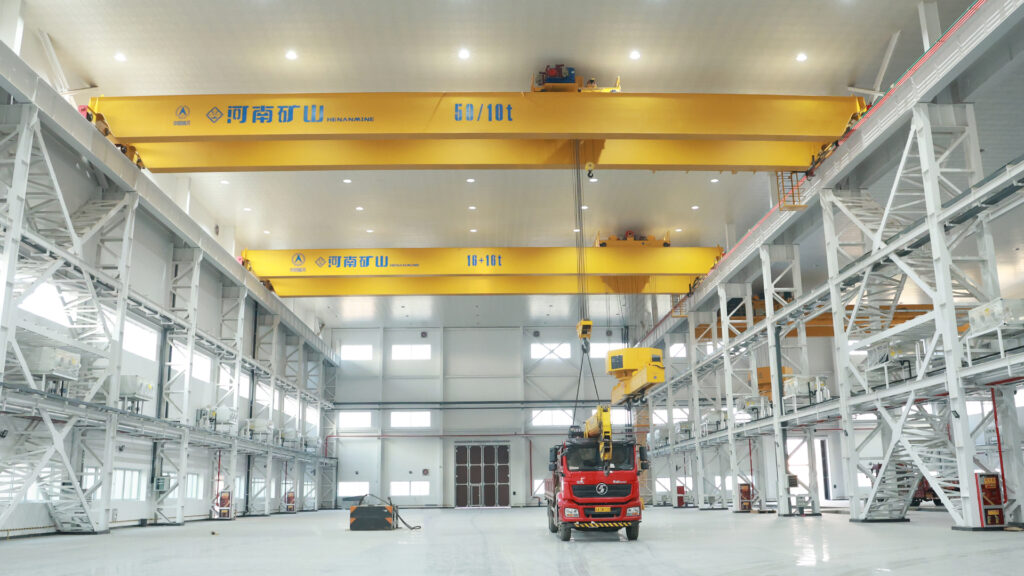
Twenty-four lifting devices passed on-site acceptance, including six lower-rotating bridge carrier-beam cranes with PLC and inverter closed-loop control.
These product families support the handling tasks above. The final crane and attachment are selected from the site brief.
Send the operating brief and the relevant layout drawings. The resulting proposal can address capacity, geometry, duty, controls, installation interface and safety requirements as one system.
Prepare your enquiry ↗No. Protection follows the actual room classification and material process. Share the hazardous-area assessment with the lifting brief when one applies.
Define the load, approach speed, measurement point and acceptance method for the exact station. A result from one project is not a universal model rating.
Start with a load schedule and site plan. Our team can help develop the matched crane arrangement and technical scope.
Start a project enquiry ↗