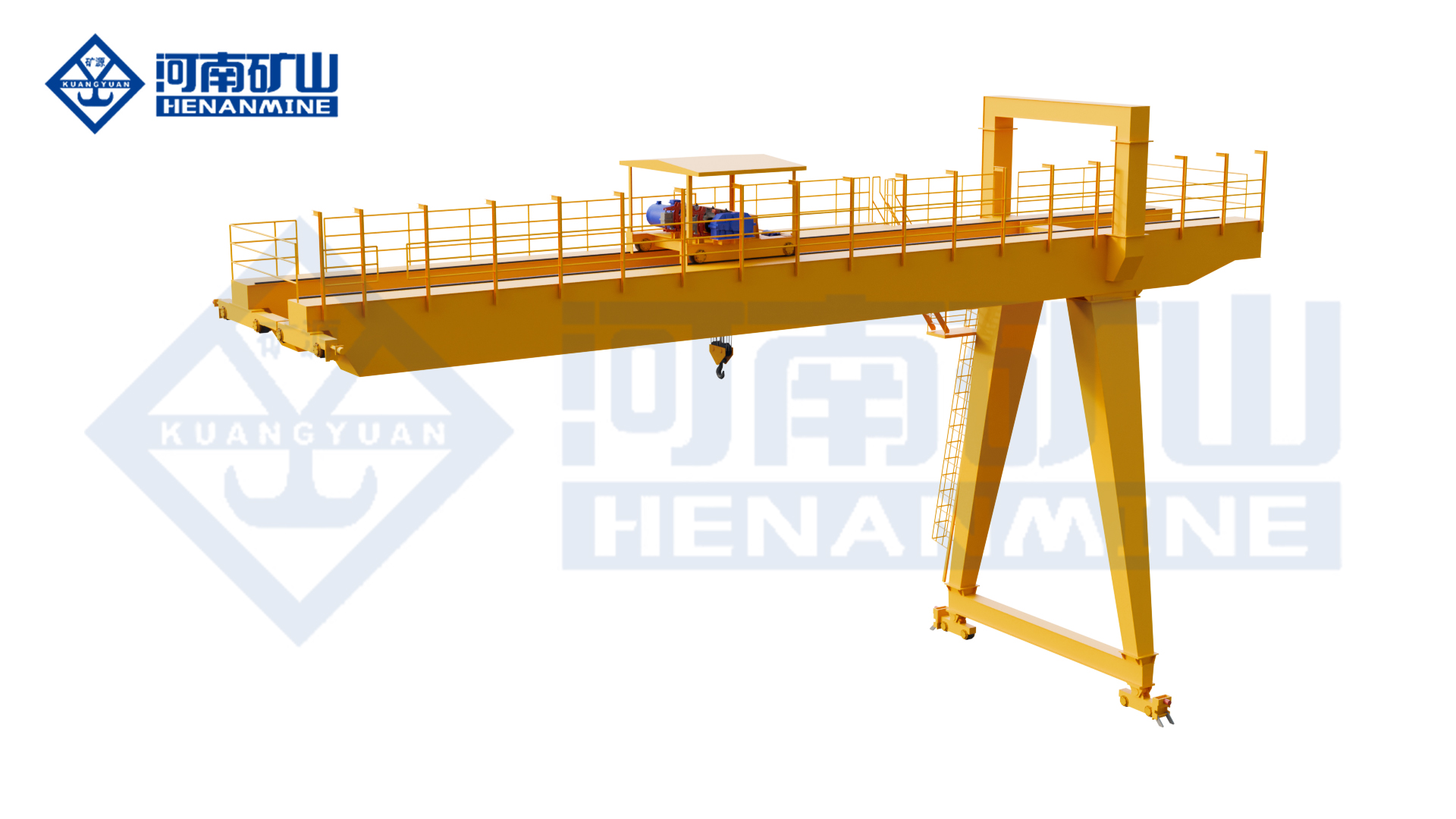
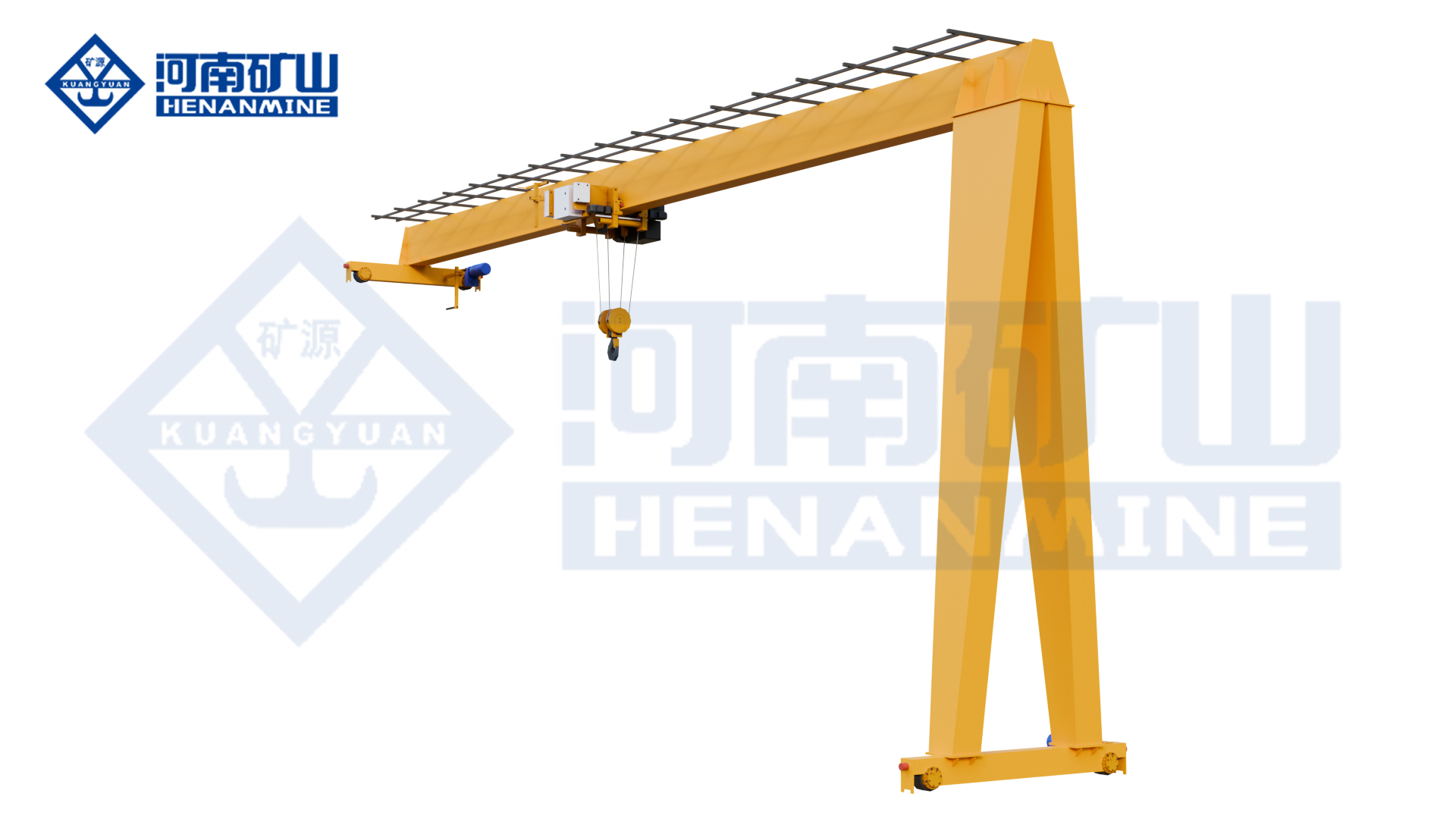
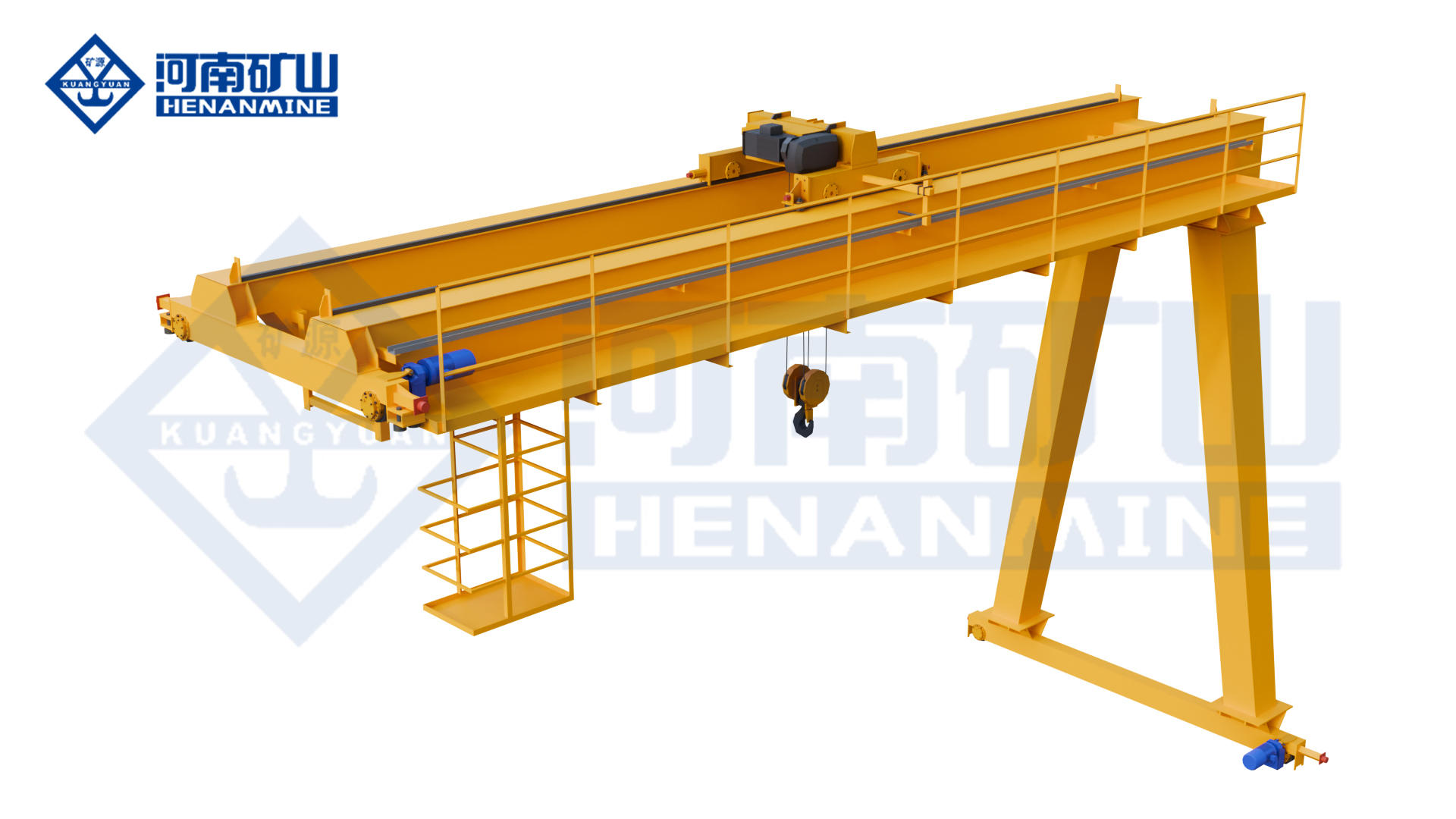
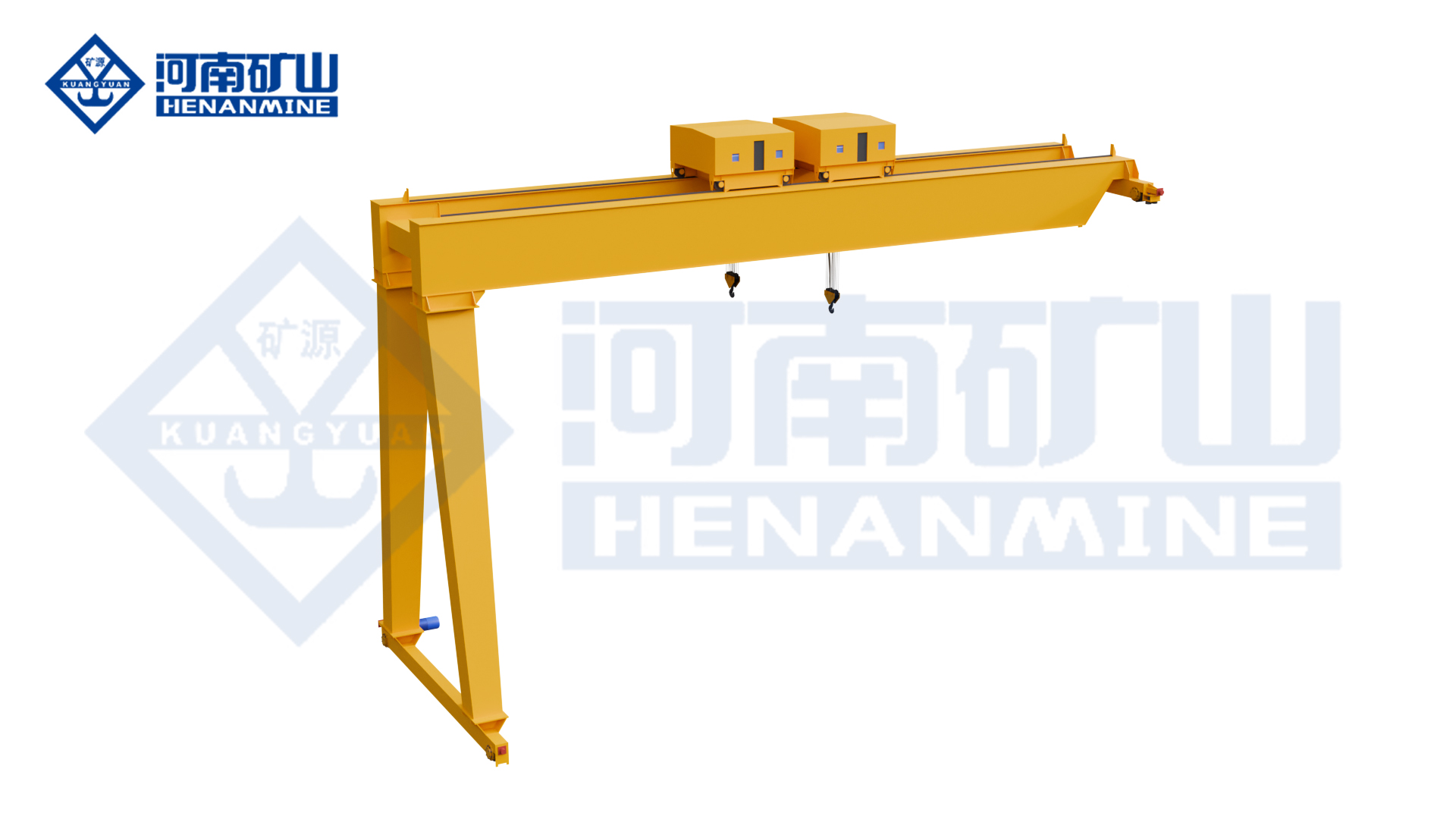
Semi-gantry (half gantry) cranes run on one ground rail and one elevated runway. Compare electric-hoist, hook and double-trolley models for workshop bays, storage edges and production handling.
5G or industrial Ethernet communication for crane information synchronisation
Coordinated system
Multi-crane linked operation within a specified shared working area
Available attachments
Hook, grab or electromagnetic arrangements selected for the process
Rated lifting capacity
Specify trolley ratings and the permitted shared lifting load
Span
Rail-centre span selected for the floor-side and elevated-side runways
Lifting height
Working hook levels selected with both runway elevations
Lifting-point spacing
Trolley separation selected for the load geometry
Permitted operating modes
Trolley and multi-crane independent / joint functions specified in the control scope
Communication integration
Network coverage, interfaces and system responsibilities agreed for the site
Elevated-runway support
Building-side or independent support reactions supplied for the selected layout
Floor-side runway
Rail interface, wheel loads and clear travel route coordinated
Motion speeds
Lifting and travel speeds selected for the coordinated process
Operator controls
Operator positions, visibility and control authority agreed for linked operation
Electrical supply
Crane and attachment supply and power-feed routes specified
Cantilever coverage
Any required outside-span coverage confirmed in the selected arrangement
Elevated support interface
Vertical and horizontal reactions and rail elevations supplied for structural assessment of the building or independent support
Attachment-mode load basis
Specify hook and attachment ratings separately; grab or magnet self-weight, carried material and connecting gear all form the suspended load
Shared-load operating condition
Individual trolley ratings are not added; permitted shared load, lifting-point spacing and control modes must be stated together
Select load, span, hook height, duty and speeds as one arrangement. Check both runway elevations, hook approaches and vertical/horizontal support reactions. An existing building or runway must be verified for the selected crane.
Budget planning
Semi-gantry crane price guide
Budget for the crane and both runway interfaces. Capacity, span, lifting height, duty and the selected hoist or winch package determine the final price.
External supplier USD reference ranges · published 2025–2026 · checked 23 October 2026
Reference configuration
Budget range (USD)
5 t semi-gantry family · 12 m span · A3 · 2025 reference
USD 8,570–14,280
10 t semi-gantry family · 15 m span · A4 · 2025 reference
USD 17,140–25,700
30–40 t double-girder semi-gantry family · 6–24 m span · 2026 regional reference
USD 23,000–80,000
These external family ranges are not Henan Mine Crane quotations or fixed prices for the listed models. Lifting-height and supply details vary or are not fully stated. Confirm trade terms and all included equipment before comparing offers.
Price the hoist or winches, ground rail, elevated runway and supports, power feed, civil work, freight, taxes, installation and commissioning explicitly. Double-trolley, grab, magnetic and other special-duty arrangements need a separate quotation.
A semi-gantry can handle components between a building-side elevated runway and a ground rail beside the work area. Plan pickup and set-down positions around the useful hook coverage and moving-leg route.
The elevated structure, connections and foundations must suit the selected crane reactions. Show both rail levels, available headroom and vehicle crossings when requesting a proposal. This is an application example, not a named customer installation.
Manufacturer workshop photograph illustrating the semi-gantry support arrangement.
Semi-gantry crane buying questions
How does a semi-gantry crane differ from a full gantry crane?
A semi-gantry, also called a half gantry, has a ground-rail leg on one side and an elevated runway on the other. A full gantry uses ground-supported legs on both sides. Compare the load route, support structure and floor traffic before choosing the layout.
Can a semi-gantry crane use an existing workshop runway?
Only after its structure, connections, rail geometry and reactions have been checked for the selected crane. Ask for vertical and horizontal loads, wheel geometry and runway elevations. Ground-side rail foundations and movement clearances need their own checks.
Which electric-hoist semi-gantry model should I compare?
KSMB is the single-girder electric-hoist model. MB1 and MBES use double girders, with MBES specifying a top-running electric-hoist trolley. Compare the selected hoist package, useful hook height, trolley approaches and operating duty rather than assuming a universal capacity or headroom advantage.
Will a semi-gantry crane keep the floor clear?
The elevated side changes the support layout, but a ground rail and moving leg remain on the opposite side. Check vehicle crossings, walking routes, stored material, leg clearance and stopped positions against the complete handling route.
Can the two MGBE trolleys lift one load together?
Agree each trolley rating, load distribution, lifting-point spacing and permitted joint operating mode for the selected configuration. Do not add two trolley ratings to create a shared-load rating. Specify control authority and any multi-crane communication interfaces in the offer.
What should a semi-gantry crane quotation include?
Send total suspended load, rail-centre span, useful hook height, both runway levels and destination. Ask the offer to identify the hoist or trolley, attachments, crane controls, rails, elevated supports, foundations, power feed, freight, taxes, installation, commissioning and required documents.
Compare the range
Semi-gantry crane specification comparison
Compare the girder and lifting arrangement, capacity, span, hook height and duty. Select a full product name for the corresponding model details.
KSMB numerical ranges belong to that model; other selections require project-specific ratings and dimensions. MGBE trolley loads and joint modes are confirmed separately. Match every proposal to both supporting runways.
Get a semi-gantry crane quote
Send the total suspended load, span, useful hook height, both runway levels and destination. A bay sketch helps define the lifting strip.
Add lifting frequency, floor traffic, required attachments and any existing runway information. For MGBE, include lifting-point spacing and the load at each point.