Skip to content
Henan mine crane co., ltd. Get a project quote
Henan Mine Crane · Hazardous-area lifting

Explosion-Proof Overhead Cranes

Explosion-proof overhead cranes are bridge or underhung cranes selected for lifting in classified gas, vapour or combustible-dust areas. Compare eight configurations for workshop lifting, long equipment, clean processes and suspended runways. Match the lifting task and building first, then specify the protection required at the site.

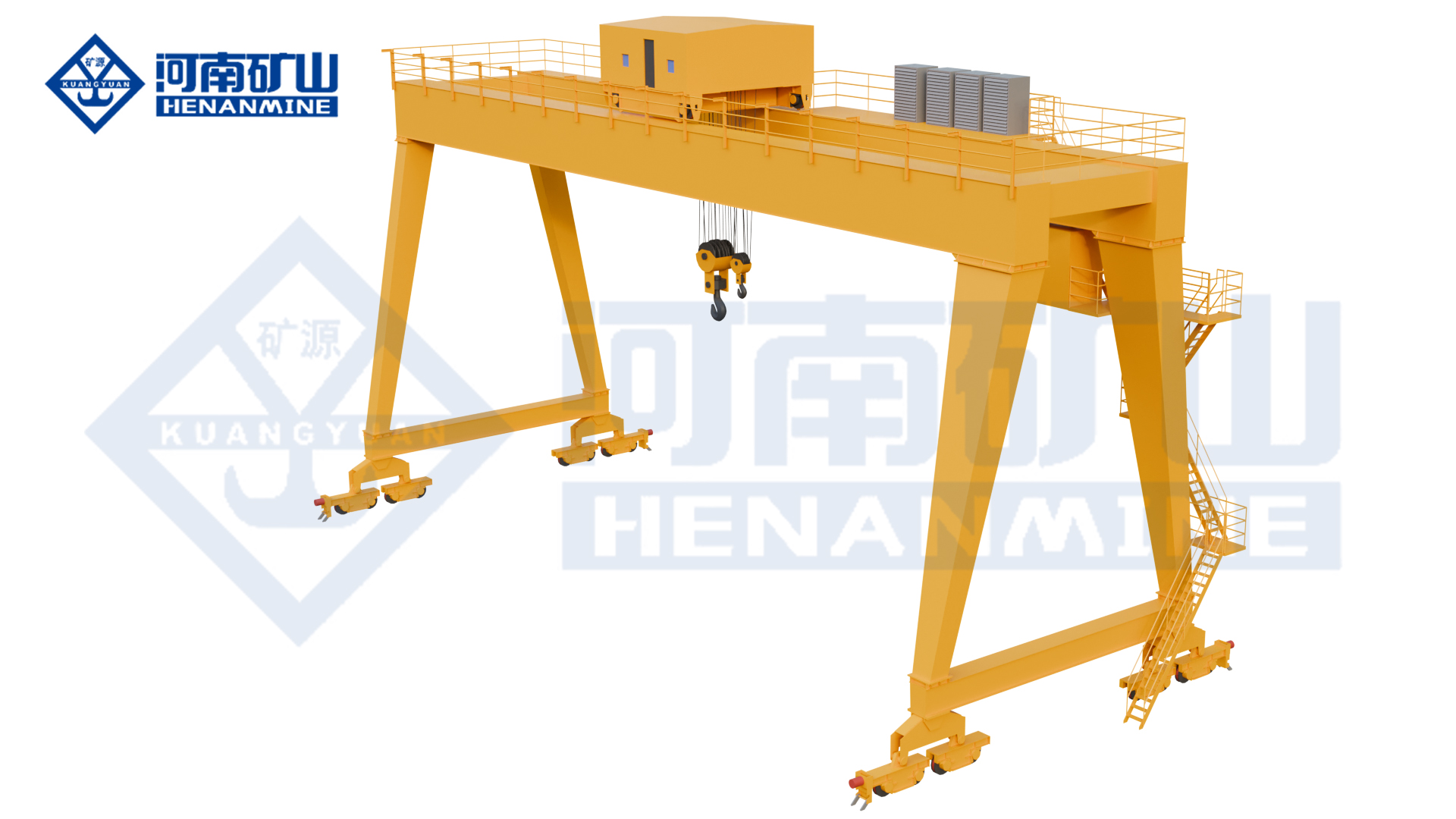
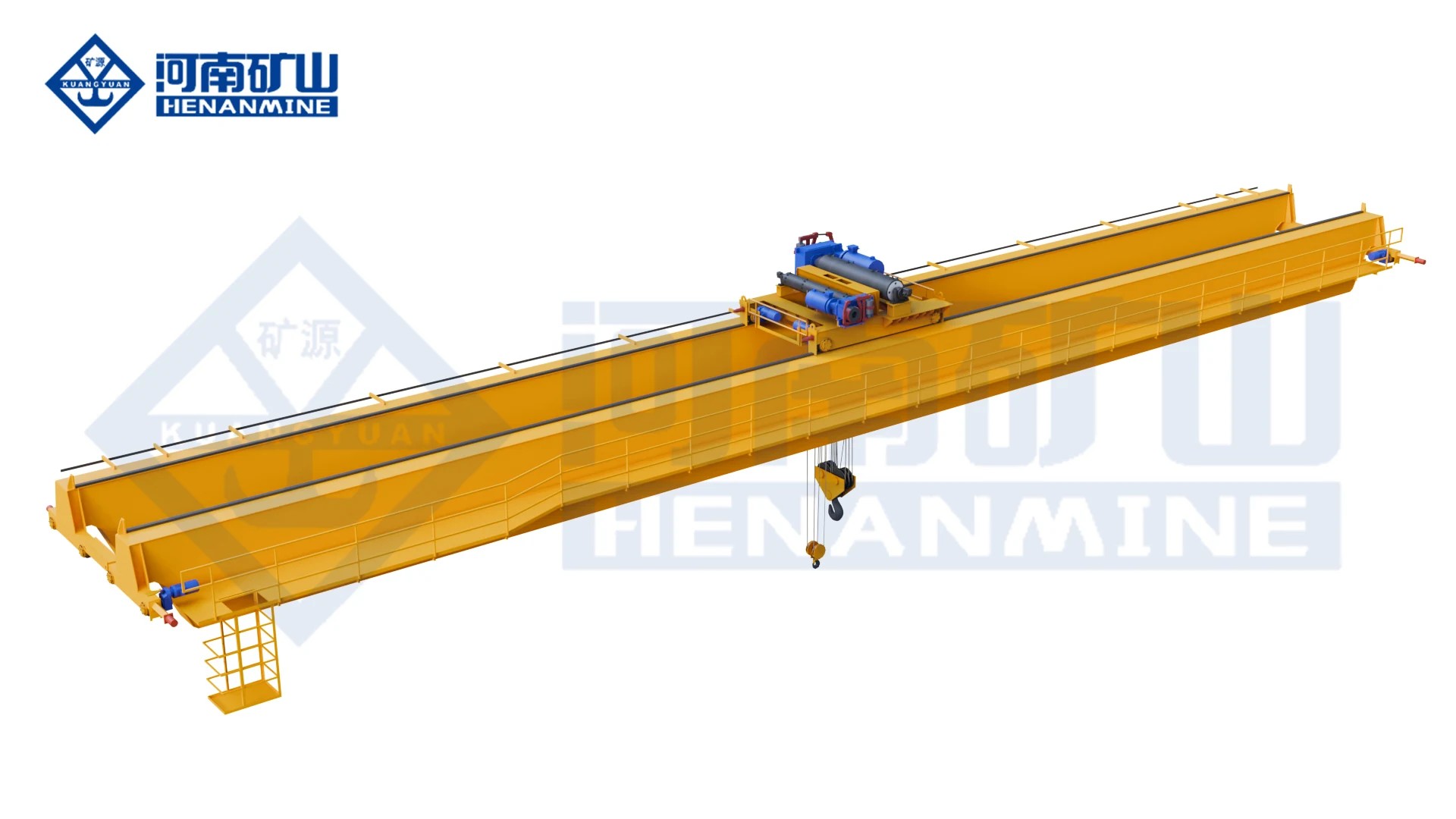
QB double-girder crane with open winch trolley and access platforms, manufacturer rendering

Electric-hoist bridge cranes

Compare a single-girder bridge with a double-girder electric-hoist arrangement. Check the usable hook height, working duty and runway loads for the equipment you handle.

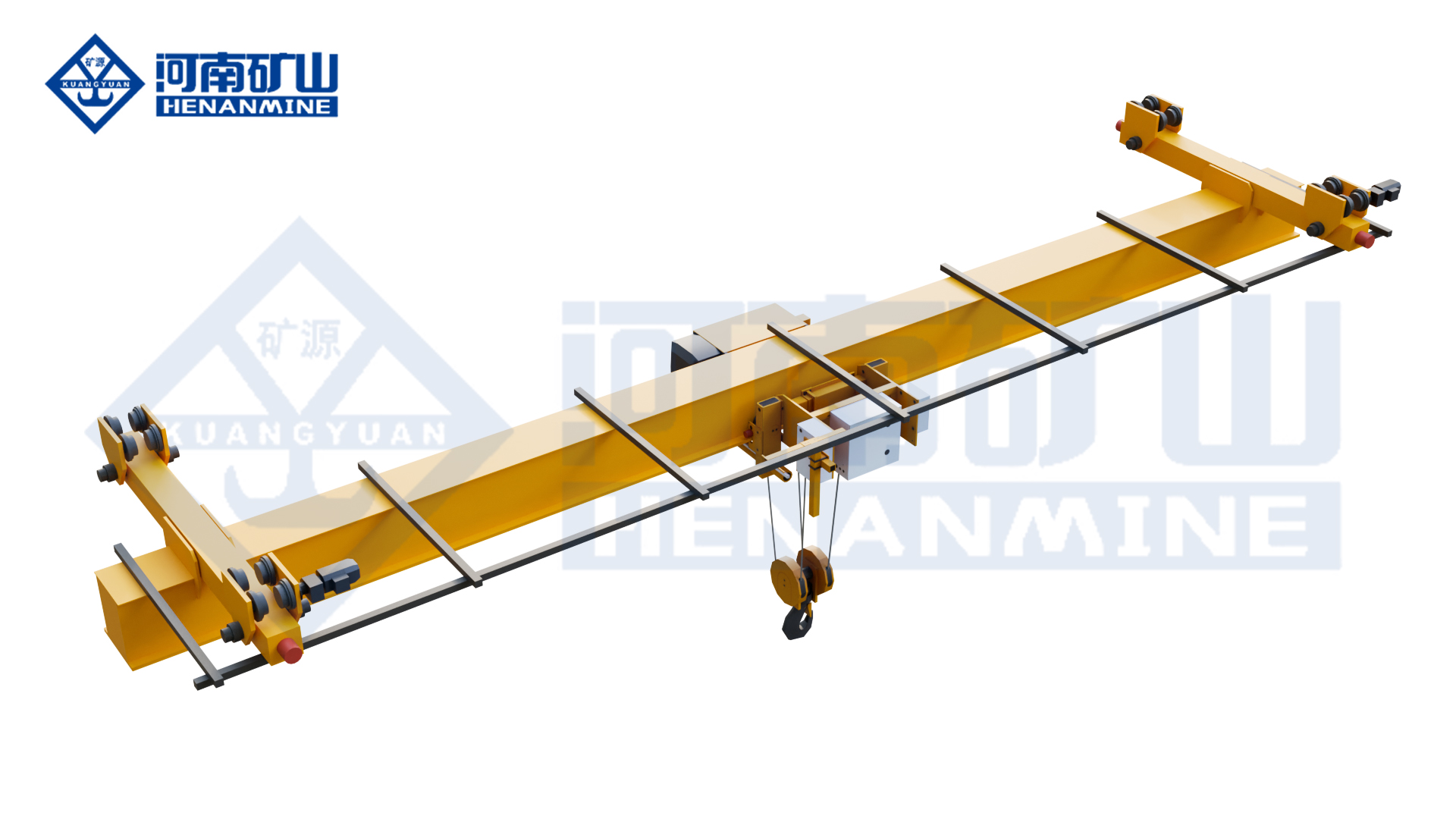
LB top-running single-girder crane and electric hoist, manufacturer perspective rendering
LB

Explosion-Proof Single Girder Overhead Crane (LB)

Handle components and maintenance loads in hazardous workshops with a single-girder electric-hoist crane.

Lifting systemExplosion-protected electric hoist
ArrangementTop-running single girder
Working classA3 reference; matched to the operating cycle
All specifications
Capacity Rated load selected for the complete suspended load
Span Rail-centre span selected for the production bay
Lifting height options 6, 9, 12, 18 or 24 m
Crane duty A3 reference; final crane and hoist duty selected for the operating cycle
Hoist type Explosion-proof electric wire rope hoist
Hoist model options HB / BCD / BMD
Single-speed lifting 8, 7 or 3.5 m/min
Dual-speed lifting Selected with the protected hoist; high and low lifting speeds confirmed in the offer
Hoist cross travel 20 m/min
Bridge long travel 20 m/min
Power supply 380 V, 50 Hz, 3-phase; export supply options
Gas explosion protection options IIB T4 or IIC T4 reference selection; exact equipment marking and document scope confirmed for the order
Ambient temperature Confirmed for site conditions and the limits of the selected protected equipment
Crane wheel diameter 270 or 370 mm
Rail head width 37–70 mm
Control options Wired pendant / remote control
Load handling Hook or application-specific lifting attachment
Application Intermittent lifting in a classified hazardous area
LHB double-girder bridge with electric-hoist trolley, manufacturer rendering
LHB

Explosion-Proof Double Girder Hoist Crane (LHB)

Lift workshop equipment in classified areas with a double-girder bridge and seated electric hoist.

Lifting systemSeated protected electric hoist
ArrangementTop-running double girder
Load and dutyConfigured for the lifting task
All specifications
Model LHB
Bridge / lifting platform Double-girder bridge with seated explosion-protected electric hoist on a trolley frame
Capacity Rated load selected with the protected hoist and lifting attachment
Span Rail-centre span selected for the production bay
Lifting height Usable hook travel confirmed on the arrangement drawing
Working duty Crane and hoist duties selected for the actual operating cycle
Hoisting speed Hoisting speed selected with capacity and the protected hoist
Bridge travel speed Travel speed selected with the protected drives and handling cycle
Trolley travel Selected with the protected hoist-trolley arrangement
Headroom arrangement Low-headroom seated hoist; final hook positions on arrangement drawing
Explosion protection Gas or dust package matched to the approved area classification
Gas selection data Hazardous medium, zone/group, temperature class and ambient conditions
Dust selection data Dust type/group, area classification and permitted surface temperature
Controls Protected pendant or radio configuration selected for the area
Power supply Destination voltage and frequency confirmed for the protected equipment
Runway loading Crane mass and wheel reactions supplied for the selected span and load
Compare model configurations
Selection item Arrangement / selection basis What is fixed in the quotation
Capacity Protected electric-hoist package selected for the load Rated load, attachment allowance and selected hoist
Span and lift Runway geometry and usable hook travel One agreed rail-centre span and usable hook travel
Duty and hoisting Crane/hoist duty and lifting speed selected together Crane/hoist duty and actual lifting speed together
Travel Protected trolley and bridge drives selected for the handling route Trolley and bridge speeds, drive protection and controls
Hazardous area Gas or combustible-dust configuration Medium, area classification, group, temperature marking and document scope
Choose the protection package for the operating area
Area requirement Information to supply Package to identify
Explosive gas or vapor Medium, zone, gas group, temperature class and ambient temperature Protected hoist, travel motors, controls, cable entries and mechanical measures
Combustible dust Dust type, area classification, ignition/temperature data and accumulation conditions Dust-rated electrical/mechanical equipment and the agreed surface-temperature limits
Destination documentation Applicable project standard and required conformity route Equipment list, markings, certificate schedules and inspection scope

Trolley and double-trolley cranes

Choose a double-girder trolley bridge for one lifting position, or two trolleys where a long component needs two defined lifting points. Agree individual ratings and permitted combined operation together.

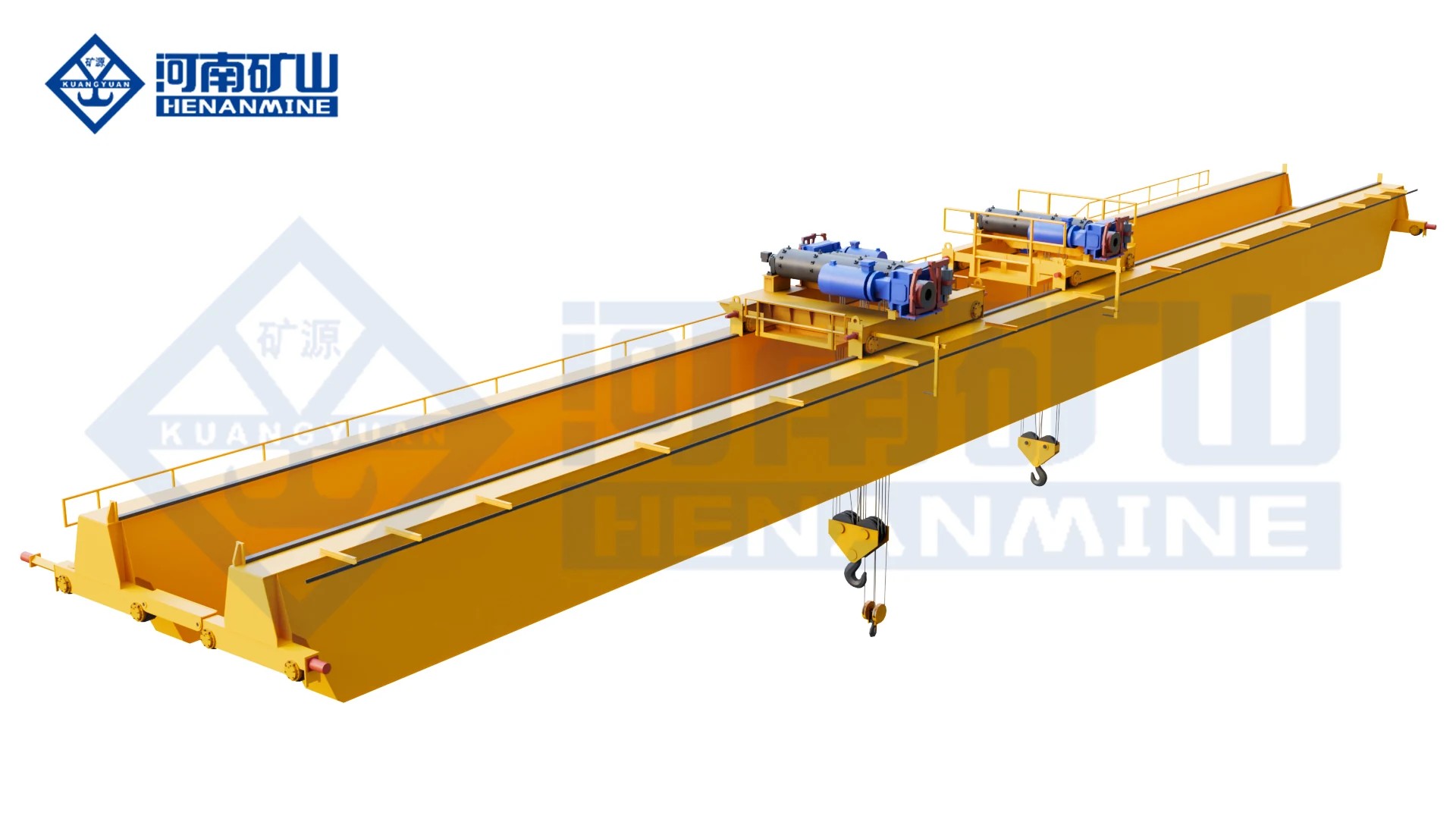
QB double-girder crane with open winch trolley and access platforms, manufacturer rendering
QB

Explosion-Proof Double Girder Overhead Crane (QB)

Move process equipment and workshop loads in hazardous areas with a double-girder trolley crane.

Capacity5 / 10 / 16/3.2 / 20/5 / 32/5 / 50/10 t
Span10.5–31.5 m, in 3 m steps
Working classA3–A4 for the listed configurations
All specifications
Model QB
Single-hook ratings 5 / 10 t
Main / auxiliary-hook ratings 16/3.2 / 20/5 / 32/5 / 50/10 t
Span selections 10.5 / 13.5 / 16.5 / 19.5 / 22.5 / 25.5 / 28.5 / 31.5 m
Listed working duty A3–A4
5 / 10 t lifting height 16 m; no auxiliary hook
16/3.2 and 32/5 t main / auxiliary lift 16/18 m
20/5 and 50/10 t main / auxiliary lift 12/14 m
Hoisting speeds 5 t: 3.7; 10 t: 3.3; main/auxiliary selections shown in the configuration table, m/min
Trolley travel 5 / 10 / 16/3.2 / 20/5 / 32/5 / 50/10 t: 9.3 / 10.3 / 10.3 / 10.3 / 9.8 / 8.9 m/min
Bridge travel 12–12.6 m/min for listed conventional selections, dependent on rating and span
Gas protection selections IIB T4 or IIC T4 configuration; exact equipment marking and document scope confirmed with the order
Gas hazardous zones Zone 1 or 2 selection subject to the specified gas and equipment protection
Dust protection Separate dust classification, temperature limits and protected equipment package
Controls Protected ground control; cabin or selected VFD-control arrangement by specification
Reference power supply 380 V / 50 Hz, three-phase; destination supply selected with the electrical package
Rail recommendation 5/10 t: P43; 16/3.2 and 20/5 t: P43/QU70; 32/5 t: QU70; 50/10 t: QU80 or QU100
Runway design data Span-specific mass and maximum wheel pressure are listed in the configuration tables; final reactions confirmed for the ordered crane.
Compare model configurations
Rated arrangement Duty Span Main / auxiliary lift Main / auxiliary hoisting Trolley / bridge travel
5 t A3–A4 10.5 m 16 m 3.7 m/min 9.3 m/min / 12 m/min
10 t A3–A4 10.5 m 16 m 3.3 m/min 10.3 m/min / 12 m/min
16/3.2 t A3–A4 10.5 m 16/18 m 3.6/3.8 m/min 10.3 m/min / 12.5 m/min
20/5 t A3–A4 10.5 m 12/14 m 2.7/3.7 m/min 10.3 m/min / 12.5 m/min
32/5 t A3–A4 10.5 m 16/18 m 2.6/3.7 m/min 9.8 m/min / 12.6 m/min
50/10 t A3–A4 10.5 m 12/14 m 1.9/3.37 m/min 8.9 m/min / 12.3 m/min

These conventional reference selections are matched configurations. Main/auxiliary figures are read in that order. Confirm the final arrangement, equipment marking and runway reactions for the ordered crane.

Span-specific crane mass and runway load selections
Rated arrangement Span Crane mass Maximum wheel pressure Recommended rail
5 t 10.5 m 12.58 t 65 kN P43
5 t 13.5 m 13.48 t 68 kN P43
5 t 16.5 m 15.3 t 72 kN P43
5 t 19.5 m 16.4 t 75 kN P43
5 t 22.5 m 18.7 t 81 kN P43
5 t 25.5 m 21.4 t 87 kN P43
5 t 28.5 m 24.2 t 94 kN P43
5 t 31.5 m 27.23 t 102 kN P43
10 t 10.5 m 14 t 102 kN P43
10 t 13.5 m 15.8 t 109 kN P43
10 t 16.5 m 18.5 t 118 kN P43
10 t 19.5 m 19.54 t 123 kN P43
10 t 22.5 m 21.66 t 130 kN P43
10 t 25.5 m 24.62 t 142 kN P43
10 t 28.5 m 27.3 t 151 kN P43
10 t 31.5 m 30.65 t 160 kN P43
16/3.2 t 10.5 m 17.4 t 123 kN P43 / QU70
16/3.2 t 13.5 m 18.5 t 129 kN P43 / QU70
16/3.2 t 16.5 m 20.6 t 136 kN P43 / QU70
16/3.2 t 19.5 m 24 t 147 kN P43 / QU70
16/3.2 t 22.5 m 26.82 t 155 kN P43 / QU70
16/3.2 t 25.5 m 30.5 t 165 kN P43 / QU70
16/3.2 t 28.5 m 33 t 172 kN P43 / QU70
16/3.2 t 31.5 m 37 t 183 kN P43 / QU70
20/5 t 10.5 m 18.5 t 146 kN P43 / QU70
20/5 t 13.5 m 19.6 t 153 kN P43 / QU70
20/5 t 16.5 m 21.7 t 162 kN P43 / QU70
20/5 t 19.5 m 25.2 t 170 kN P43 / QU70
20/5 t 22.5 m 28.2 t 178 kN P43 / QU70
20/5 t 25.5 m 32.3 t 191 kN P43 / QU70
20/5 t 28.5 m 35.5 t 198 kN P43 / QU70
20/5 t 31.5 m 39 t 208 kN P43 / QU70
32/5 t 10.5 m 24.5 t 211 kN QU70
32/5 t 13.5 m 26.7 t 224 kN QU70
32/5 t 16.5 m 29.5 t 236 kN QU70
32/5 t 19.5 m 33.2 t 249 kN QU70
32/5 t 22.5 m 37.2 t 261 kN QU70
32/5 t 25.5 m 41 t 272 kN QU70
32/5 t 28.5 m 45.5 t 285 kN QU70
32/5 t 31.5 m 49 t 295 kN QU70
50/10 t 10.5 m 28.4 t 302 kN QU80 or QU100
50/10 t 13.5 m 30.6 t 318 kN QU80 or QU100
50/10 t 16.5 m 34.8 t 340 kN QU80 or QU100
50/10 t 19.5 m 38.7 t 351 kN QU80 or QU100
50/10 t 22.5 m 42.3 t 365 kN QU80 or QU100
50/10 t 25.5 m 48.1 t 380 kN QU80 or QU100
50/10 t 28.5 m 51.5 t 391 kN QU80 or QU100
50/10 t 31.5 m 56.7 t 405 kN QU80 or QU100

Crane masses are reference design values. Final crane mass, wheel reactions and rail selection are confirmed for the ordered crane; do not use these values alone to design a runway.

Bridge speed by capacity and span
Rated arrangement Span selection Bridge travel
5 t 10.5–31.5 m 12 m/min
10 t 10.5–16.5 m 12 m/min
10 t 19.5–31.5 m 12.5 m/min
16/3.2 or 20/5 t 10.5–16.5 m 12.5 m/min
16/3.2 or 20/5 t 19.5–31.5 m 12.6 m/min
32/5 t 10.5–16.5 m 12.6 m/min
32/5 t 19.5–31.5 m 12.3 m/min
50/10 t 10.5–31.5 m 12.3 m/min

These conventional reference selections are matched configurations. Main/auxiliary figures are read in that order. Confirm the final arrangement, equipment marking and runway reactions for the ordered crane.

QBE overhead bridge with two open winch trolleys and two hook positions, manufacturer rendering
QBE

Double Trolley Explosion-Proof Overhead Crane (QBE)

Handle long equipment with two protected trolleys for separate lifts or an approved combined lift.

Trolleys2 protected lifting systems
OperationSeparate or coordinated lifting
CapacityIndividual and combined ratings by approved load case
All specifications
Model QBE
Lifting arrangement Two explosion-protected trolley lifting systems on one double-girder bridge
Trolley ratings Individual trolley ratings selected from the actual lifting-point loads
Other trolley ratings Selected for the actual load distribution and working duty
Permitted tandem load Engineered for the stated trolley positions, load shares, rigging and control mode
Span Rail-centre span and permitted hook spacing selected for the production bay
Lifting height Usable lift confirmed for both hooks and transfer levels
Working duty Crane and mechanism duties selected for independent and coordinated cycles
Independent operation Individual trolley use within its permitted load and operating conditions
Coordinated operation Selected tandem mode with agreed control behavior and operating limits
Coordination technology Encoder and inverter-based double-trolley control
Hoisting / trolley speeds Selected for the independent and coordinated modes; each specified with its load case
Trolley separation Minimum/maximum operating spacing agreed from load geometry and trolley envelopes
Operator controls Cabin, pendant, radio or PLC-linked arrangement selected for the area and process
Explosion protection Mechanical and electrical package matched to the approved gas or dust area specification
Power supply Destination voltage and frequency specified with the protected equipment
Monitoring / interlocks Mode, motion and fault-response functions specified for the approved tandem lift
Compare model configurations
Operating configuration Rated-load basis Trolley / hook requirement Controls to agree
Trolley 1 independently Its individual rating and permitted operating load Permitted hook travel and position for the task Selected trolley, travel separation and permitted concurrent motions
Trolley 2 independently Its individual rating and permitted operating load Permitted hook travel and position for the task Selected trolley, travel separation and permitted concurrent motions
Two trolleys in tandem Approved combined load and maximum load at each lifting point Specified spacing, load centre of gravity and allowable level difference Coordinated mode, load/motion limits and defined fault response
QBE project configuration requirements
Item Selection basis Order-specific condition
Rated arrangement Individual ratings from the actual lifting-point loads Individual trolley ratings and permitted tandem case
Span Production-bay runway geometry Rail-centre span and available trolley/hook spacing
Lifting height Required hook travel and transfer levels Usable lift for both hooks and equipment transfer levels
Working duty Load spectrum and independent/coordinated operating cycle Load spectrum and hours for each independent/tandem mode
Motion speeds Selected for the lifting job Hoisting and travel speeds with synchronization requirements
Area protection Gas or dust package Medium, classification, temperature requirements and documents

Cleanroom explosion-proof cranes

Specify particle control, cleaning and material requirements alongside explosion protection. The clean-process package and hazardous-area equipment need separate acceptance criteria.

ZJJB double-girder crane and compact enclosed lifting trolley, manufacturer rendering
ZJJB

Cleanroom Explosion-Proof Overhead Crane (ZJJB)

Lift process equipment where cleanroom particle control and explosion protection are both required.

ArrangementCleanroom double-girder bridge
Process measuresSealed areas and wear-debris collection
ProtectionClean-process and hazardous-area requirements specified together
All specifications
Model ZJJB
Capacity Rated load selected for the equipment, lifting fixture and complete suspended load
Span Rail-centre span selected for the process room
Lifting height Usable hook travel selected for the required transfer levels
Working duty Crane and mechanism duties matched to the operating cycle
Hoisting / travel speeds VFD-controlled motion; selected speeds and positioning requirements stated with the load and process
Cleanliness requirement Room/process class and particle limits specified for the installation and acceptance conditions
Explosion protection Gas or dust configuration matched to the approved area specification
Mechanical measures Anti-static treatment and spark-suppression measures for the relevant components
Surface coating High-pressure anti-static coating; surface finish selected for cleaning and process exposure
Sealed areas Crane body, drive areas and connection gaps configured to reduce dust accumulation
Wear-debris measures Selected corrosion-resistant materials with collection devices in relevant wear areas
Stainless components Passivated stainless hook, wheel or relevant contact-component configuration as specified
Lubricants and cleaning Selected for process restrictions, seal compatibility and maintenance procedure
Controls Protected operator/control equipment selected for the area and process
Power supply Destination supply confirmed for the protected electrical package
Compare model configurations
Configuration item Arrangement / selection basis Process value to confirm
Lifting capacity Selected complete suspended load Equipment, lifting fixture and complete suspended load
Span / usable lift Room geometry and required hook travel Actual room geometry and required transfer levels
Crane duty Selected for the actual operating cycle Load spectrum, lifts per hour and shift pattern
Clean construction Enclosed drives, sealed gaps and debris collection Particle limits, permitted materials and cleaning method
Protected operation Matched gas or dust package Area classification, medium, temperature requirement and document scope
Motion control VFD-controlled lifting and travel Selected speeds and process positioning conditions
Clean-process package and acceptance scope
Process requirement Crane provision to select Acceptance information
Particle control Sealed drive/connection areas and wear-debris collection Operating state, measuring positions and agreed particle limits
Cleaning and chemical exposure Compatible coating, seals, materials and lubricants Approved cleaning method and exposure conditions
Static and ignition control Mechanical measures and protected electrical equipment Area specification, marking schedule and matching documents
Maintenance access Service access to seals, brakes, drives and collection devices Cleaning, opening, reassembly and return-to-service procedure

Underhung and multi-point cranes

Compare gas-protected, dust-protected and multi-point suspended layouts. The selected crane must suit both the classified atmosphere and the supporting runway structure.

LXB suspended single-girder crane and electric hoist, manufacturer rendering
LXB

Gas Explosion-Proof Underhung Crane (LXB)

Handle equipment beneath suspended runways in gas-classified production and maintenance areas.

ArrangementUnderhung single girder
Lifting systemExplosion-protected electric hoist
Site inputsGas classification and temperature requirements
All specifications
Rated capacity Selected for the complete suspended load
Span Selected for the runway geometry and required hook coverage
Lifting height Selected for the required hook travel
Working class Selected for lifting frequency and load spectrum
Hoisting speed Selected with load, protected hoist and positioning requirements
Crane travel speed Selected for the handling route and protected drive package
Hoist trolley travel Configured to span, positioning and handling cycle
Hoist type Explosion-protected electric hoist
Drive motors Explosion-protected travel motors
Control Explosion-protected pendant / suitable remote control
Power supply Site voltage and frequency confirmed for the selected protected equipment
Explosion-protection marking Selected to gas group, zone and temperature class
Enclosure protection Specified for the equipment and exposure conditions; enclosure rating alone does not establish explosion protection
Operating temperature Confirmed for site conditions and the limits of the selected protected equipment
Bridge structure Underhung single girder
Typical application Chemical, paint, oil and gas handling areas
Classification inputs Gas group, zone and temperature class
LXB dust-protected suspended single-girder equipment layout, manufacturer rendering
LXB · dust configuration

Dust Explosion-Proof Underhung Crane (LXB)

Handle equipment in combustible-dust areas with a dust-protected hoist on suspended runways.

ArrangementUnderhung single girder
Lifting systemDust explosion-protected electric hoist
Site inputsDust classification and temperature limits
All specifications
Rated capacity Selected for the complete suspended load
Span Selected for the runway geometry and required hook coverage
Lifting height Selected for the required hook travel
Working class Selected for lifting frequency and load spectrum
Hoisting speed Selected with load, protected hoist and positioning requirements
Crane travel speed Selected for the handling route and protected drive package
Hoist trolley travel Configured to span, positioning and handling cycle
Hoist type Dust explosion-protected electric hoist
Drive motors Dust explosion-protected travel motors
Control Dust explosion-protected pendant / suitable remote control
Power supply Site voltage and frequency confirmed for the selected protected equipment
Explosion-protection marking Selected to dust group, zone and surface-temperature limit
Enclosure protection Specified for the equipment and exposure conditions; enclosure rating alone does not establish explosion protection
Operating temperature Confirmed for site conditions and the limits of the selected protected equipment
Bridge structure Underhung single girder
Typical application Grain, feed and combustible-dust processing areas
Classification inputs Dust group, zone and ignition temperature
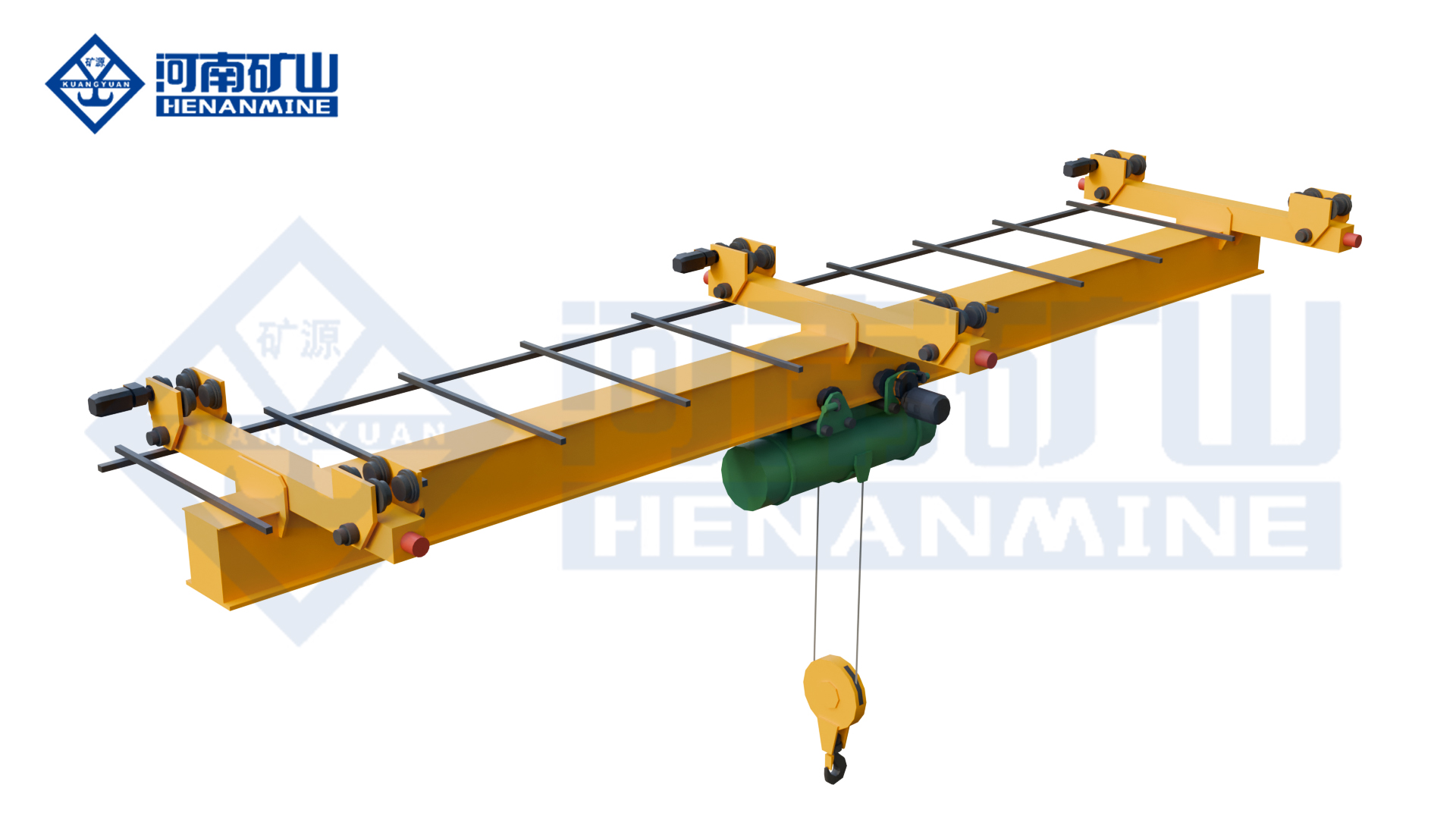
BLXD multi-point suspended single-girder crane and electric hoist, manufacturer perspective rendering
BLXD

Multi-Point Explosion-Proof Underhung Crane (BLXD)

Cover wide hazardous-area workshops with multi-point suspension and a building-specific runway layout.

ArrangementMulti-point underhung single girder
Working widthBuilding-specific multi-track layout
Load and dutySelected for the lifting cycle and supports
All specifications
Rated capacity Configured to complete suspended load
Total working width Custom wide-hall layout
Lifting height Configured to required hook travel
Suspension layout Multiple roof-suspended runway tracks
Support quantity Selected to crane width and available supports
Support spacing Matched to the building grid
Hoist type Explosion-protected electric lifting mechanism
Hoisting speed Configured to load and positioning requirements
Trolley travel Configured to working coverage
Crane travel Coordinated movement across multiple runways
Working class Selected to lifting frequency and load spectrum
Hazard protection Selected to gas or dust area classification
Power supply Configured to site voltage and frequency
Control Control equipment matched to classified area
Bridge structure Modular multi-support single girder
Typical application Aircraft manufacturing and wide hazardous-area workshops

Capacity, span, hook travel, working duty and motion speeds are selected together. A family range does not mean all maximum values are available in one crane. The technical offer must identify the agreed lifting arrangement, protection marking and equipment documents.

Hazardous-area selection

Specify the atmosphere as well as the crane

Gas protection and dust protection are separate selections. Send the site information available so the offered equipment, marking and document scope can be reviewed together.

Gas or vapour

Identify the substance, area classification, gas group, temperature class and ambient range. Compare the marking and documents for the exact equipment offered.

Combustible dust

Identify the dust, area classification, dust group and permitted surface temperature. Include deposits, cleaning conditions and any relevant process exposure.

Equipment and documents

Review the hoist, travel drives, brakes, controls, power feed and other relevant components as one crane package. State the destination approval requirements before ordering.

A model name, IP enclosure rating or hoist certificate alone does not establish the suitability of the complete crane for your site. Where gas and dust hazards coexist, include both in the specification.

Budget planning

How much does an explosion-proof overhead crane cost?

The equipment examples below cover two single-girder bridge configurations and two underhung configurations. Compare the layout, lift and protection package as well as the rated load. Each example specifies a 380 V, 50 Hz supply.

Compare each gas-protected crane as a complete equipment package.

Preliminary gas-protected crane equipment budgets · USD
Crane arrangement / duty Capacity Span / lifting height Protection / controls Equipment example
LB top-running single girder · A3 10 t 16.5 m / 16 m Budget basis: Ex d IIB T4 equipment · pendant USD 11,000–17,000
LB top-running single girder · A3 20 t 13.5 m / 12.5 m Budget basis: Ex d IIB T4 equipment · pendant USD 16,000–24,000
LXB underhung single girder 2 t 7 m / 6 m Ex d IIC T4 · pendant + remote USD 4,000–7,000
LXB underhung single girder 5 t 7.5 m / 9 m Ex d IIB T4 · pendant USD 5,000–9,000

Preliminary gas-protected equipment estimates include the bridge, selected hoist, travel drives, specified control components, on-crane wiring, factory inspection and packing. LB markings and controls, and LXB A3 duty, are budget assumptions to be checked against the application. Final selection requires the area classification, gas group, temperature class and ambient conditions. Dust protection and whole-assembly ATEX or IECEx assessment are excluded unless separately specified. Runway steel, rails, runway power feed, freight, taxes, installation and commissioning are excluded.

Request a separate quotation for QB, QBE, cleanroom, dust-protected and multi-point packages. Confirm the exact equipment marking, required documents and whether runway steel, rails, power feed, freight, import charges, installation and commissioning are included, optional or excluded.

Request a configured quotation
Project experience

Explosion-proof lifting in polysilicon projects

54-Crane Package for Hongyuan Energy’s Polysilicon Project

Henan Mine Crane manufactured a 54-unit crane package for Hongyuan Energy’s 100,000-tonne high-purity silicon project. The package included cleanroom explosion-proof electric-hoist double-girder cranes, dust-explosion-proof single-girder cranes and other crane types.

View the project
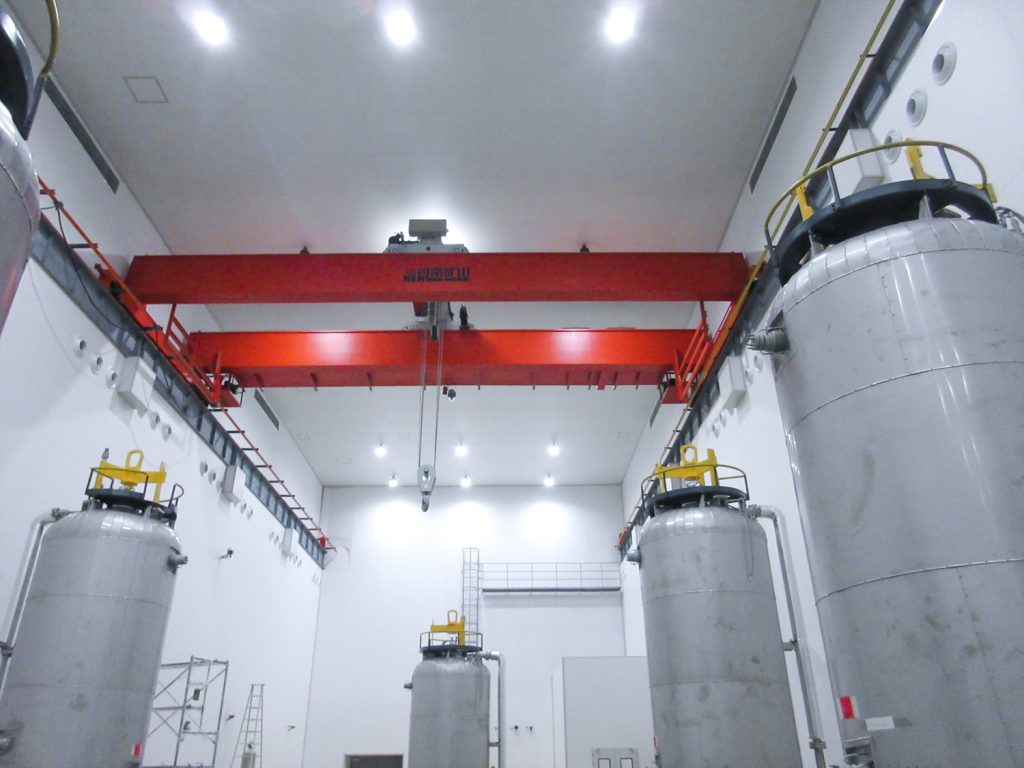
Overhead crane installed in a photovoltaic polysilicon processing facility
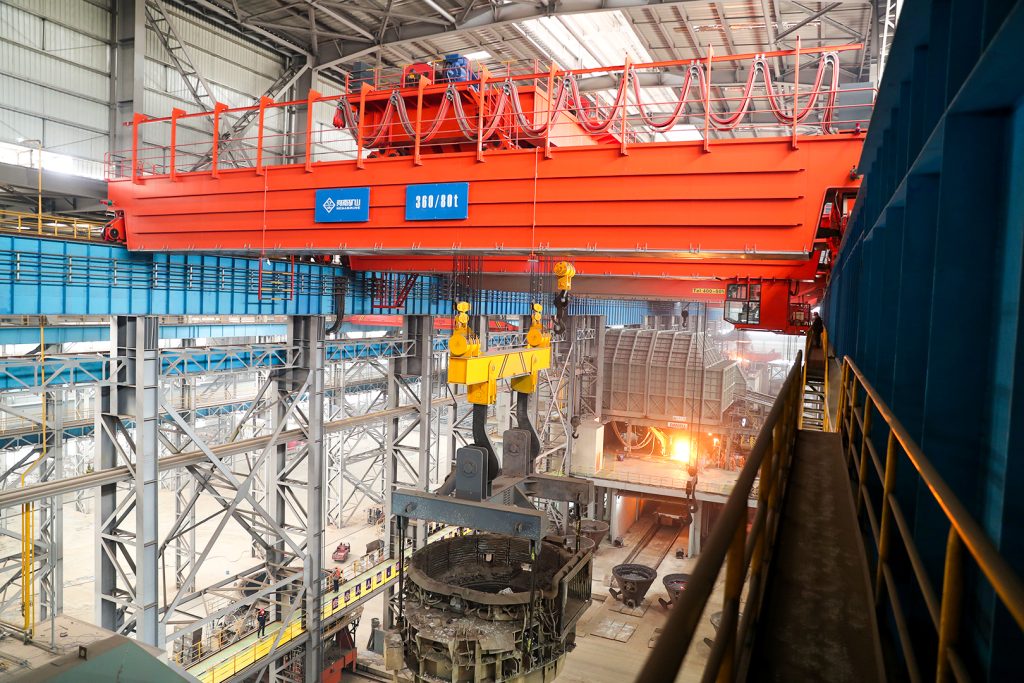
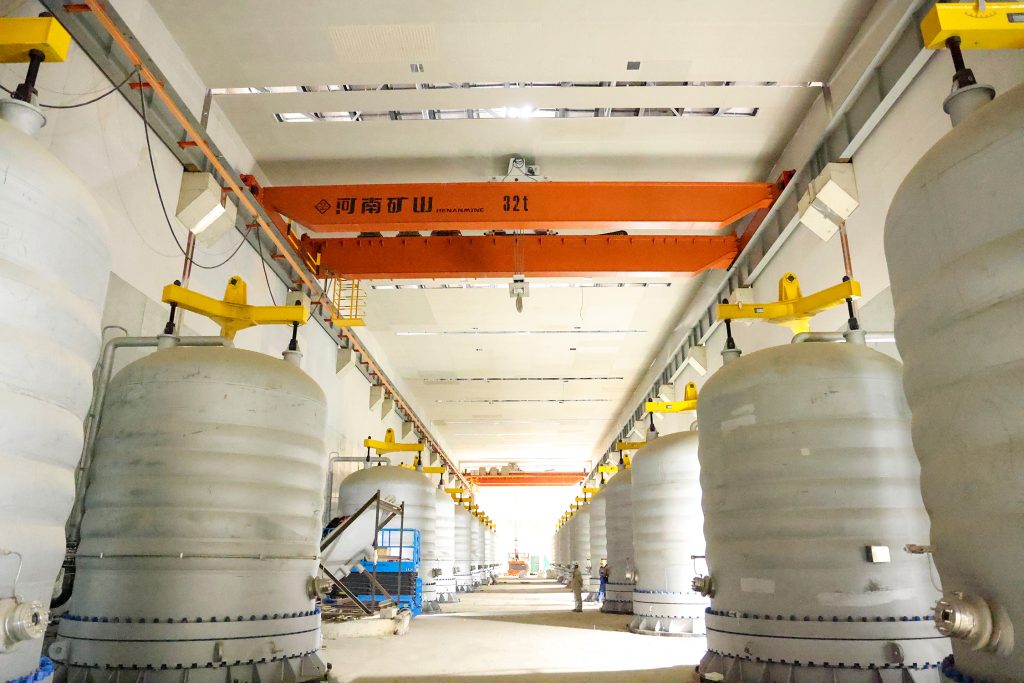
Overhead crane above processing vessels at the Hongyuan polysilicon project.

Automated Cleanroom Lifting for Semiconductor Polysilicon

Henan Mine Crane supplied an automated cleanroom explosion-proof crane for a semiconductor-grade polysilicon producer in Jiangsu, China. The crane handles reduction-furnace equipment and silicon-rod tooling between process stations along preset routes.

View the project
Clean lifting overhead crane installed in a polysilicon process building
Cleanroom bridge crane above polysilicon process equipment in Jiangsu.

Explosion-proof crane buying questions

Which explosion-proof overhead crane should I choose?

Compare LB for a single-girder electric-hoist bridge, LHB for a double-girder hoist arrangement and QB for a double-girder trolley bridge. Use QBE where the workpiece needs two lifting points. For suspended runways, compare gas-protected LXB, the dust-protected LXB configuration and multi-point BLXD. ZJJB addresses a process that also needs cleanroom measures. The right choice depends on the load, usable hook coverage, duty, supports and classified environment.

Does explosion-proof mean the crane is suitable for every hazardous area?

No. The product name describes an equipment family. Suitability depends on the identified gas or dust, area classification, temperature requirements, ambient conditions and the exact crane configuration. Review the proposed equipment schedule, markings and document scope against the installation requirements.

Can a gas-rated crane be used where combustible dust is present?

Gas protection does not establish dust protection. Specify the dust, its area classification and the applicable surface-temperature limits, including deposit and cleaning conditions. If the site has both gas and dust hazards, both must be addressed in the selected equipment and documents.

Is an explosion-proof hoist enough for a complete overhead crane?

The hoist is one part of the crane. Include bridge and trolley drives, brakes, controls, power feed, sensors and attachments where relevant to the classified area. Ask for a complete equipment and protection schedule so the quotation identifies the scope of each item.

Can you supply ATEX or IECEx documentation?

State the required approval route and destination when requesting an offer. Availability and scope must be checked for the exact equipment and configuration before order. Ask to review the applicable documents and any limitations; do not infer whole-crane certification from a model name or a component certificate.

Can two trolleys lift one long component?

QBE provides two lifting positions. Supply the component dimensions, centre of gravity, lifting points and handling sequence. The technical proposal should define the individual trolley ratings, permitted combined load, hook spacing and coordinated functions. Adding two trolley ratings does not automatically establish an approved tandem lifting capacity.

Can an underhung crane run on our existing roof supports?

The supports and connections need structural verification for the selected crane. Send the runway layout, support spacing and available building information. Obtain the crane's vertical and horizontal reactions, critical load positions and alignment requirements before approving the supporting structure.

How do I specify a cleanroom explosion-proof crane?

State the process or room cleanliness requirements, particle limits, permitted materials, cleaning method and maintenance conditions, together with the hazardous-area information. Review the selected ZJJB measures against both sets of requirements. A cleanliness claim does not establish explosion protection, and an explosion-protection claim does not establish room cleanliness.

What should an explosion-proof crane quotation include?

Ask for the bridge, lifting unit, end carriages, controls and power feed to be itemized. Confirm the status of runway rails, support steelwork, attachments, packing, freight, installation and commissioning. Include arrangement and electrical drawings, wheel loads or support reactions, equipment markings, applicable documents, inspection and acceptance scope, warranty terms and recommended spares.

What determines the price and delivery schedule?

Load, span, lifting height, duty, protected equipment, control functions and required documentation affect the offer. Cleanroom measures and two-trolley operation add project-specific scope. Agree design-approval and factory-dispatch milestones, then identify freight, installation and commissioning separately rather than treating them as one delivery date.

Can the maximum capacity, span and lift be combined?

Reference ranges help create a shortlist; they are not one guaranteed configuration. Request a matched load, rail-centre span, usable hook travel, duty, motion speeds and protection schedule. Read main and auxiliary hook ratings separately, and confirm approved load cases for multiple lifting points.

What can I send if I have not selected a model?

Start with the maximum load including rigging, approximate span, required hook travel and project destination. Describe what you lift and how often. Add a sketch, power supply and any hazardous-area information available. Final protection and acceptance requirements can be developed with the technical proposal before the order is agreed.

Compare the range

Explosion-proof crane specification comparison

Compare the eight layouts, then open the full product details for the lifting arrangement that suits your task. Each card above also contains its complete specification and configuration information.

Swipe across the table to compare specifications.

Model Arrangement Rated load / reference Span / working area Best suited to
Explosion-Proof Single Girder Overhead Crane (LB) Top-running single girder Configured to the complete load and lifting arrangement Configured to the building and required hook coverage Classified workshop lifting on a single-girder bridge
Explosion-Proof Double Girder Hoist Crane (LHB) Top-running double girder Configured to the complete load and lifting arrangement Configured to the building and required hook coverage Double-girder lifting with an electric-hoist package
Explosion-Proof Double Girder Overhead Crane (QB) Top-running double girder 5 / 10 / 16/3.2 / 20/5 / 32/5 / 50/10 t selections 10.5–31.5 m selections Process and maintenance lifting with one trolley
Double Trolley Explosion-Proof Overhead Crane (QBE) Top-running double girder / two trolleys Individual and approved combined ratings by load case Configured to the building and required hook coverage Long equipment requiring two defined lifting points
Cleanroom Explosion-Proof Overhead Crane (ZJJB) Cleanroom double-girder bridge Configured to the complete load and lifting arrangement Configured to the building and required hook coverage Controlled-environment process equipment handling
Gas Explosion-Proof Underhung Crane (LXB) Underhung single girder Configured to the complete load and lifting arrangement Configured to the building and required hook coverage Suspended lifting in a classified gas atmosphere
Dust Explosion-Proof Underhung Crane (LXB) Underhung single girder / dust variant Configured to the complete load and lifting arrangement Configured to the building and required hook coverage Suspended lifting in a combustible-dust area
Multi-Point Explosion-Proof Underhung Crane (BLXD) Multi-point underhung single girder Configured to complete load Building-specific multi-support layout Protected handling across multiple support tracks

Reference figures are read as matched configurations. Confirm usable hook travel, duty, speeds and runway or support loads with the selected equipment. The model name does not establish gas or dust approval for a particular site.
Related overhead crane ranges

Get an explosion-proof overhead crane quotation

Send the maximum load, approximate span, required hook travel and destination. Describe the workpiece and operating cycle, and include any gas or dust classification information available. A workshop sketch or photograph is helpful; you can start an enquiry before every dimension is finalized.

The technical offer should define one matched crane configuration, the required protection and documents, and the agreed delivery and site-service scope.

Request a quotation