
Process vessels and equipment
Lift vessel components, covers and machinery with the hook or fixture selected for the task. Match usable lift and approach dimensions to the installation and maintenance route.
Bridge cranes for workshops and production lines.
Explore Overhead Cranes
Ground-supported lifting for yards and construction.
Explore Gantry Cranes
Wire rope and chain hoists for lifting points and cranes.
Explore Electric Hoists

Wire rope lifting and pulling with a powered drum.
Explore Electric Winches
Grab buckets, magnets and hooks for your load.
Explore Lifting Attachments & Grabs
Mobile handling for containers, precast and yard loads.
Explore Rubber-Tired Gantry Cranes & Straddle Carriers

Lift and move vessels through boatyards and marinas.
Explore Marine Travel Lifts
Ladle, slab, scrap and coil handling across steel production.

Container stacking and cargo transfers across terminals and rail.

Turbine installation, powerhouse maintenance and wind equipment assembly.

Controlled component transfer and positioning for precision assembly.

Heavy fabrication, production lifting and factory crane automation.

Process lifting for smelters, carbon blocks and anode materials.

Clean lifting and classified protection for sensitive process areas.

Bridge fabrication, metro construction and ship block assembly.

Automated storage and retrieval for plates, cables and bins.

Follow project dispatches, crane engineering and factory acceptance.

Dispatch, installation and equipment in service

Crane configurations and handling technology

Factory inspections, acceptance and test programmes

Company developments, people and community programmes
Move process equipment through a classified industrial bay with a protected double-girder lifting platform. Compare QB single-hook 5 and 10 t selections with 16/3.2, 20/5, 32/5 and 50/10 t main/auxiliary-hook arrangements, each with its own matched lifting height and speed.
Tell us what you need to lift and your approximate span. We’ll help you choose the lifting arrangement.
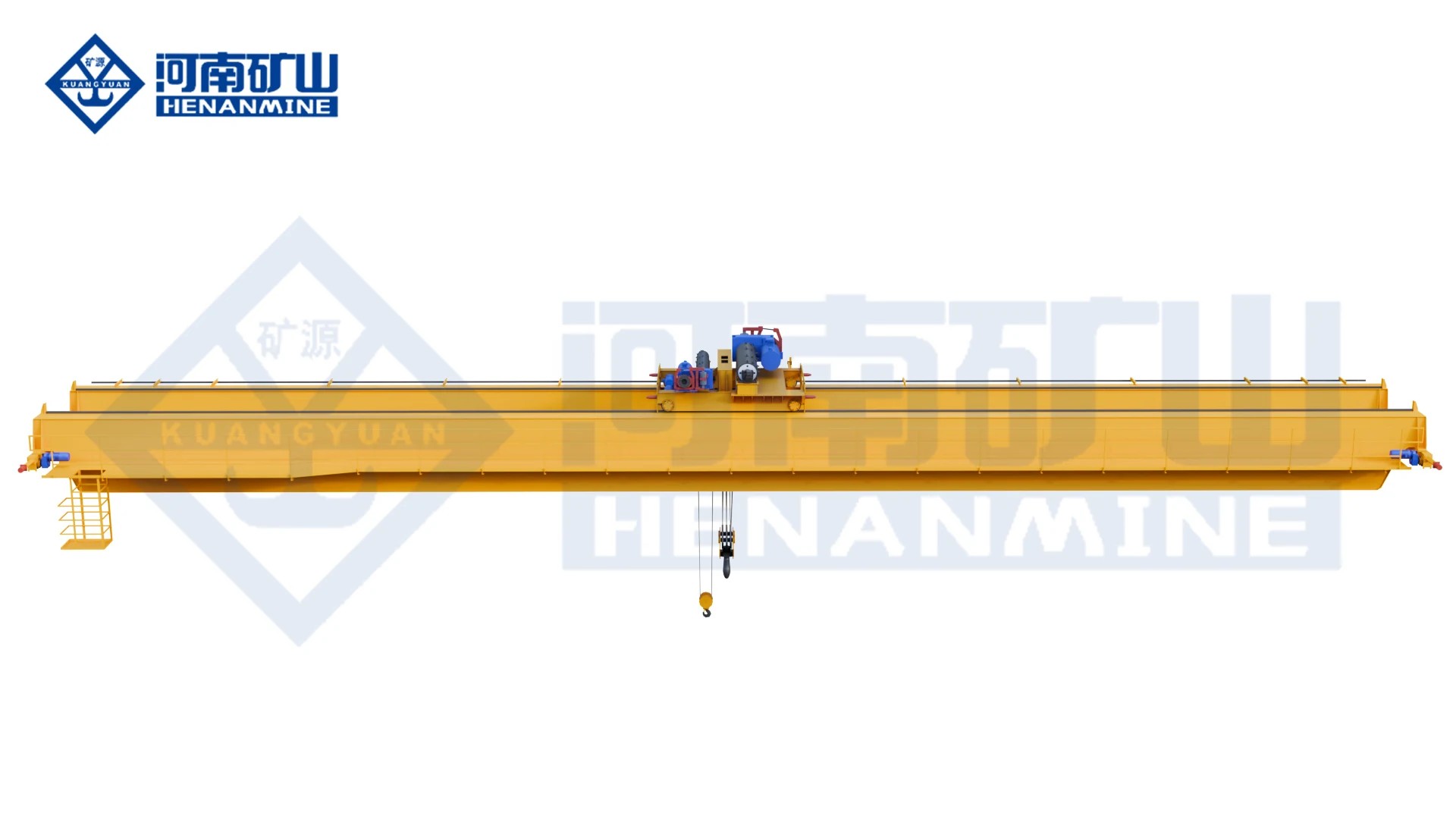
Start with the dimensions you already know. A workshop photo or sketch can help us recommend a configuration.
Choose a single hook for the listed 5 or 10 t duties, or a main/auxiliary arrangement when equipment handling also involves separate smaller lifts.
Read the rated load, main/auxiliary lift and hoisting speeds together. The separate bridge-speed table shows where the conventional travel selection changes with span.
Compare the mass and maximum wheel pressure for your actual rating and span, then request final reactions for the ordered crane and its selected controls.
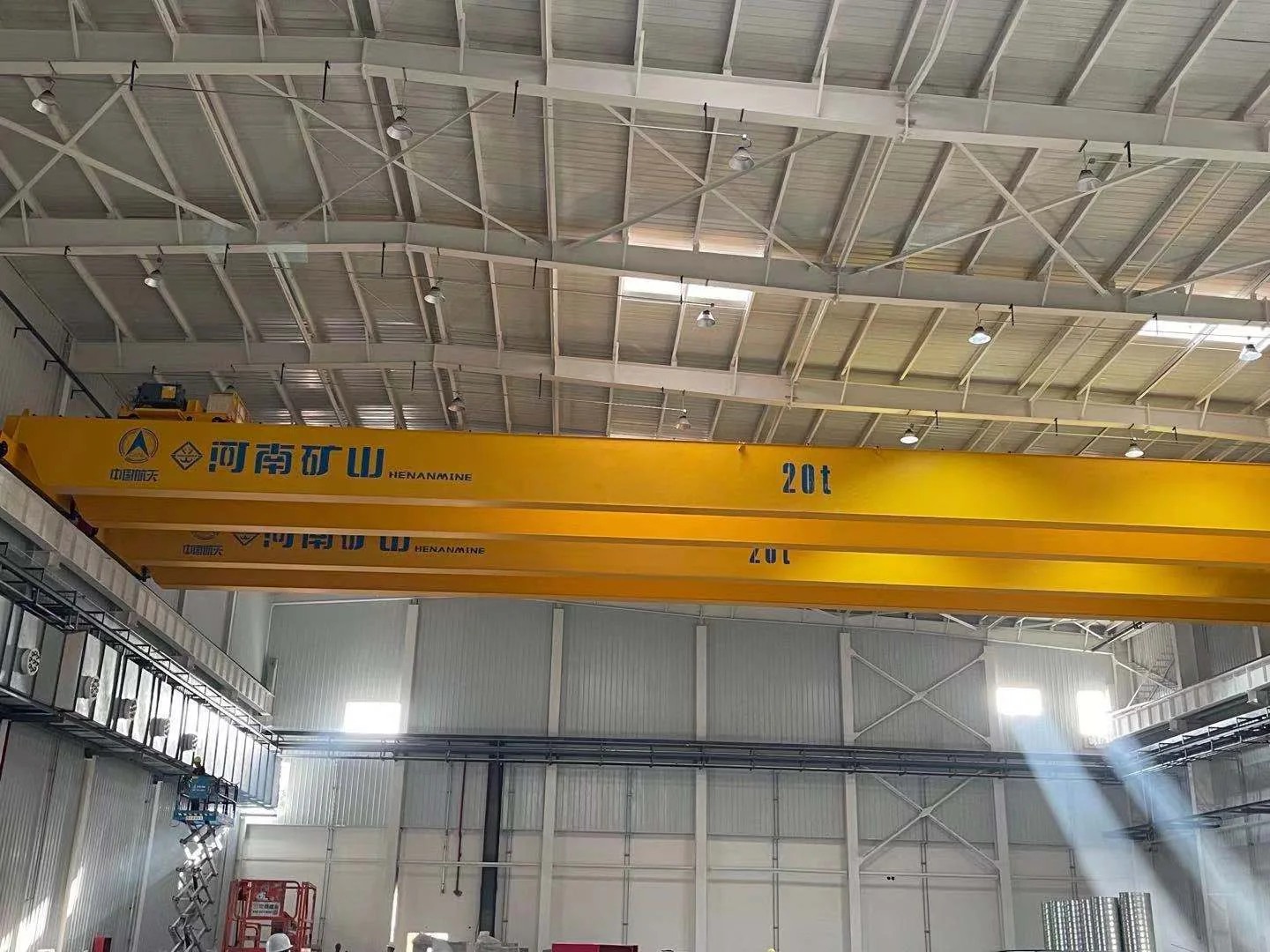
Lift vessel components, covers and machinery with the hook or fixture selected for the task. Match usable lift and approach dimensions to the installation and maintenance route.
Transfer pumps, piping assemblies and service equipment between working positions. A specified auxiliary hook can serve separate smaller components.
Handle equipment and material carriers with the protected drives and controls selected for the area. Where the process also limits particle release, compare a ZJJB cleanroom arrangement.
The numerical QB selections below are gas-protected A3–A4 configurations. Combustible-dust service requires its own protection selection and documentation.
Compare the available options for your lifting task. Capacity, span, lift height and speed are matched in the selected configuration.
| Model | QB |
|---|---|
| Single-hook ratings | 5 / 10 t |
| Main / auxiliary-hook ratings | 16/3.2 / 20/5 / 32/5 / 50/10 t |
| Span selections | 10.5 / 13.5 / 16.5 / 19.5 / 22.5 / 25.5 / 28.5 / 31.5 m |
| Listed working duty | A3–A4 |
| 5 / 10 t lifting height | 16 m; no auxiliary hook |
| 16/3.2 and 32/5 t main / auxiliary lift | 16/18 m |
| 20/5 and 50/10 t main / auxiliary lift | 12/14 m |
| Hoisting speeds | 5 t: 3.7; 10 t: 3.3; main/auxiliary selections shown in the configuration table, m/min |
| Trolley travel | 5 / 10 / 16/3.2 / 20/5 / 32/5 / 50/10 t: 9.3 / 10.3 / 10.3 / 10.3 / 9.8 / 8.9 m/min |
| Bridge travel | 12–12.6 m/min for listed conventional selections, dependent on rating and span |
| Gas protection selections | IIB T4 or IIC T4 configuration; exact equipment marking and document scope confirmed with the order |
| Gas hazardous zones | Zone 1 or 2 selection subject to the specified gas and equipment protection |
| Dust protection | Separate dust classification, temperature limits and protected equipment package |
| Controls | Protected ground control; cabin or selected VFD-control arrangement by specification |
| Reference power supply | 380 V / 50 Hz, three-phase; destination supply selected with the electrical package |
| Rail recommendation | 5/10 t: P43; 16/3.2 and 20/5 t: P43/QU70; 32/5 t: QU70; 50/10 t: QU80 or QU100 |
| Runway design data | Span-specific mass and maximum wheel pressure are listed in the configuration tables; final reactions confirmed for the ordered crane. |
| Rated arrangement | Duty | Span | Main / auxiliary lift | Main / auxiliary hoisting | Trolley / bridge travel |
|---|---|---|---|---|---|
| 5 t | A3–A4 | 10.5 m | 16 m | 3.7 m/min | 9.3 m/min / 12 m/min |
| 10 t | A3–A4 | 10.5 m | 16 m | 3.3 m/min | 10.3 m/min / 12 m/min |
| 16/3.2 t | A3–A4 | 10.5 m | 16/18 m | 3.6/3.8 m/min | 10.3 m/min / 12.5 m/min |
| 20/5 t | A3–A4 | 10.5 m | 12/14 m | 2.7/3.7 m/min | 10.3 m/min / 12.5 m/min |
| 32/5 t | A3–A4 | 10.5 m | 16/18 m | 2.6/3.7 m/min | 9.8 m/min / 12.6 m/min |
| 50/10 t | A3–A4 | 10.5 m | 12/14 m | 1.9/3.37 m/min | 8.9 m/min / 12.3 m/min |
The six rows show conventional gas-protected selections at 10.5 m span. Each rated family is listed over 10.5–31.5 m spans. Lift and hoisting values stay with their rated arrangement; bridge speed can change with span. VFD and dust-protected configurations are quoted separately.
| Rated arrangement | Span | Crane mass | Maximum wheel pressure | Recommended rail |
|---|---|---|---|---|
| 5 t | 10.5 m | 12.58 t | 65 kN | P43 |
| 5 t | 13.5 m | 13.48 t | 68 kN | P43 |
| 5 t | 16.5 m | 15.3 t | 72 kN | P43 |
| 5 t | 19.5 m | 16.4 t | 75 kN | P43 |
| 5 t | 22.5 m | 18.7 t | 81 kN | P43 |
| 5 t | 25.5 m | 21.4 t | 87 kN | P43 |
| 5 t | 28.5 m | 24.2 t | 94 kN | P43 |
| 5 t | 31.5 m | 27.23 t | 102 kN | P43 |
| 10 t | 10.5 m | 14 t | 102 kN | P43 |
| 10 t | 13.5 m | 15.8 t | 109 kN | P43 |
| 10 t | 16.5 m | 18.5 t | 118 kN | P43 |
| 10 t | 19.5 m | 19.54 t | 123 kN | P43 |
| 10 t | 22.5 m | 21.66 t | 130 kN | P43 |
| 10 t | 25.5 m | 24.62 t | 142 kN | P43 |
| 10 t | 28.5 m | 27.3 t | 151 kN | P43 |
| 10 t | 31.5 m | 30.65 t | 160 kN | P43 |
| 16/3.2 t | 10.5 m | 17.4 t | 123 kN | P43 / QU70 |
| 16/3.2 t | 13.5 m | 18.5 t | 129 kN | P43 / QU70 |
| 16/3.2 t | 16.5 m | 20.6 t | 136 kN | P43 / QU70 |
| 16/3.2 t | 19.5 m | 24 t | 147 kN | P43 / QU70 |
| 16/3.2 t | 22.5 m | 26.82 t | 155 kN | P43 / QU70 |
| 16/3.2 t | 25.5 m | 30.5 t | 165 kN | P43 / QU70 |
| 16/3.2 t | 28.5 m | 33 t | 172 kN | P43 / QU70 |
| 16/3.2 t | 31.5 m | 37 t | 183 kN | P43 / QU70 |
| 20/5 t | 10.5 m | 18.5 t | 146 kN | P43 / QU70 |
| 20/5 t | 13.5 m | 19.6 t | 153 kN | P43 / QU70 |
| 20/5 t | 16.5 m | 21.7 t | 162 kN | P43 / QU70 |
| 20/5 t | 19.5 m | 25.2 t | 170 kN | P43 / QU70 |
| 20/5 t | 22.5 m | 28.2 t | 178 kN | P43 / QU70 |
| 20/5 t | 25.5 m | 32.3 t | 191 kN | P43 / QU70 |
| 20/5 t | 28.5 m | 35.5 t | 198 kN | P43 / QU70 |
| 20/5 t | 31.5 m | 39 t | 208 kN | P43 / QU70 |
| 32/5 t | 10.5 m | 24.5 t | 211 kN | QU70 |
| 32/5 t | 13.5 m | 26.7 t | 224 kN | QU70 |
| 32/5 t | 16.5 m | 29.5 t | 236 kN | QU70 |
| 32/5 t | 19.5 m | 33.2 t | 249 kN | QU70 |
| 32/5 t | 22.5 m | 37.2 t | 261 kN | QU70 |
| 32/5 t | 25.5 m | 41 t | 272 kN | QU70 |
| 32/5 t | 28.5 m | 45.5 t | 285 kN | QU70 |
| 32/5 t | 31.5 m | 49 t | 295 kN | QU70 |
| 50/10 t | 10.5 m | 28.4 t | 302 kN | QU80 or QU100 |
| 50/10 t | 13.5 m | 30.6 t | 318 kN | QU80 or QU100 |
| 50/10 t | 16.5 m | 34.8 t | 340 kN | QU80 or QU100 |
| 50/10 t | 19.5 m | 37.4 t | 351 kN | QU80 or QU100 |
| 50/10 t | 22.5 m | 42.3 t | 365 kN | QU80 or QU100 |
| 50/10 t | 25.5 m | 48.1 t | 380 kN | QU80 or QU100 |
| 50/10 t | 28.5 m | 51.5 t | 391 kN | QU80 or QU100 |
| 50/10 t | 31.5 m | 56.7 t | 405 kN | QU80 or QU100 |
These values apply to the listed conventional A3–A4 configurations. Use the ordered crane’s final reaction drawing for the runway; mass and wheel pressure are not interchangeable across capacities, spans or control packages.
| Rated arrangement | Span selection | Bridge travel |
|---|---|---|
| 5 t | 10.5–31.5 m | 12 m/min |
| 10 t | 10.5–16.5 m | 12 m/min |
| 10 t | 19.5–31.5 m | 12.5 m/min |
| 16/3.2 or 20/5 t | 10.5–16.5 m | 12.5 m/min |
| 16/3.2 or 20/5 t | 19.5–31.5 m | 12.6 m/min |
| 32/5 t | 10.5–16.5 m | 12.6 m/min |
| 32/5 t | 19.5–31.5 m | 12.3 m/min |
| 50/10 t | 10.5–31.5 m | 12.3 m/min |
Conventional listed drive selections. The travel range of a specified VFD package is confirmed separately.
Review the bridge and lifting system, including whether the selected crane has one hook or separate main and auxiliary hooks. Photograph markings apply to the pictured installation only.
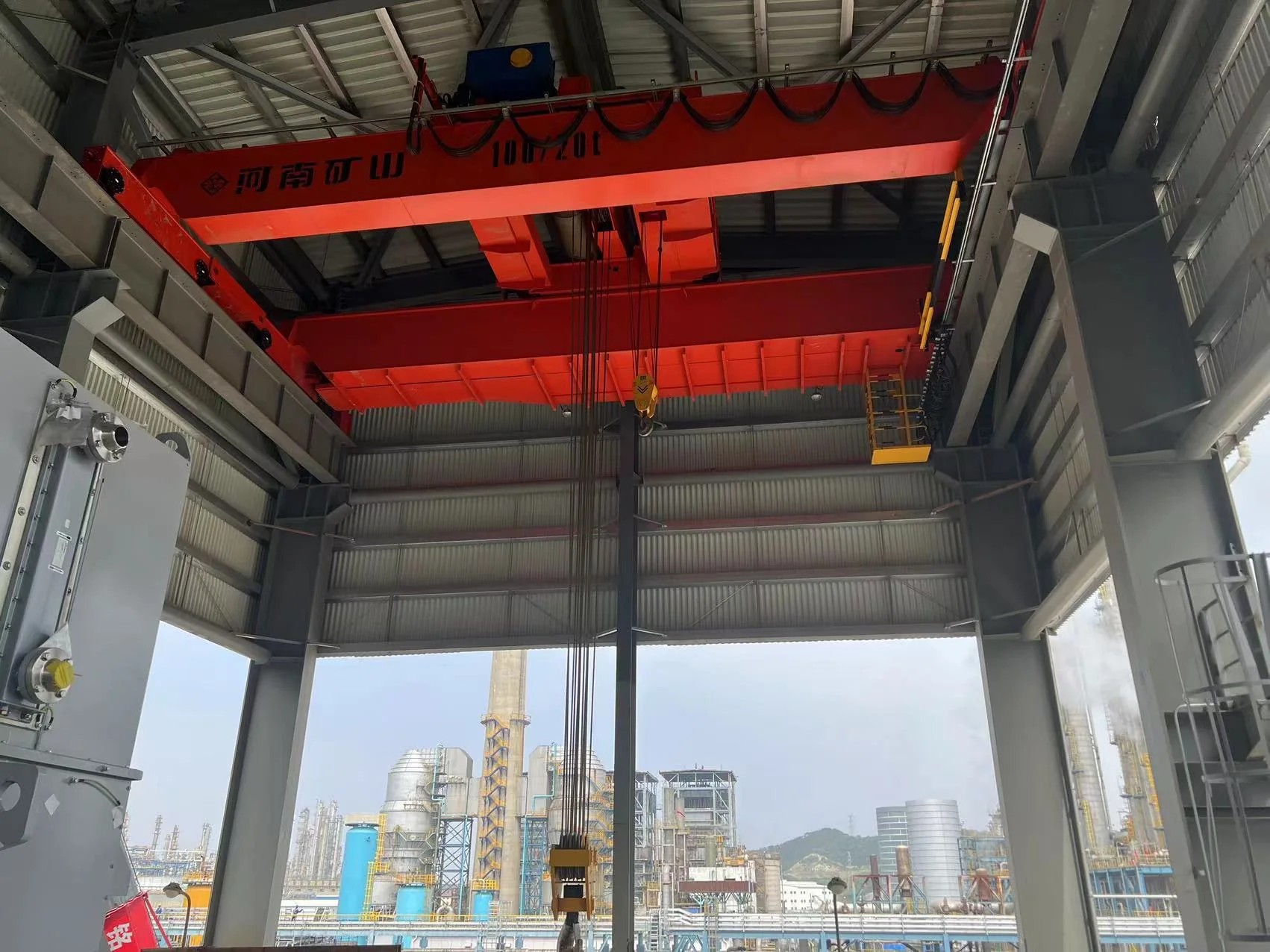
Choose the lifting arrangement first, then specify the hazardous area and the motion behavior required by the process.
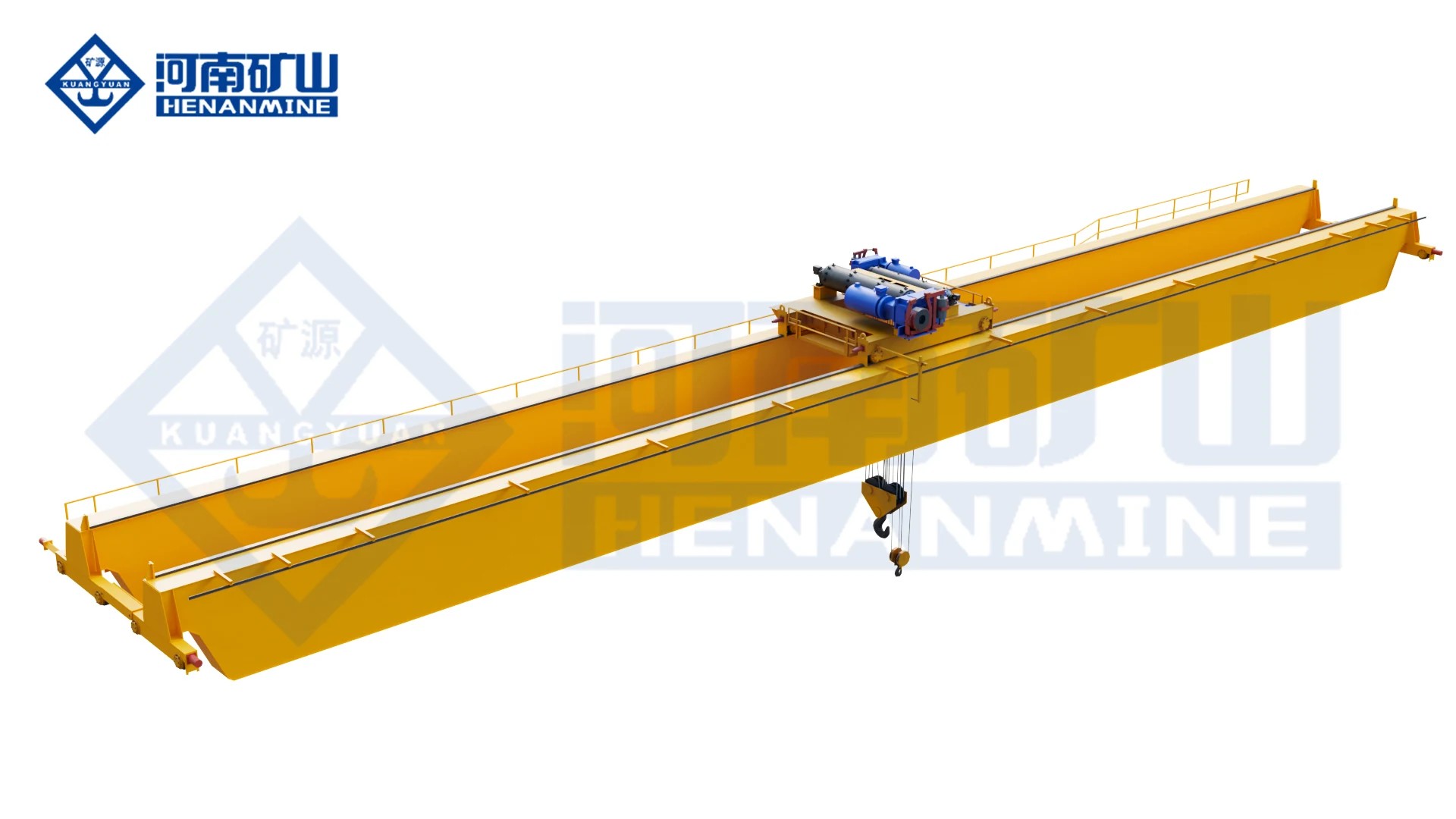
Use 5 or 10 t for a listed single-hook selection. Compare 16/3.2 through 50/10 t when the work needs separate main and auxiliary lifting duties; the ratings are not added together.
Keep the rated arrangement, main/auxiliary lift and hoisting speeds in the same table row. A VFD option is quoted with its own selected operating range.
For a gas selection, identify medium, zone, gas group and temperature class. For combustible dust, provide the dust data and required marking separately.
Match the span, lift and travel route to the equipment. State lifts per hour, hours per shift and the load spectrum so the crane and mechanisms suit the required duty.
Compare the bridge and winch-trolley package with its selected hook arrangement, protected drives and controls. Identify documents, runway materials and site services in the same offer.
A one-crane order can be quoted. State the exact single-hook or main/auxiliary arrangement and the required protection package; project quantities are priced separately.
List the bridge, winch trolley, hooks, protected drives and controls. Identify rails, electrification, cabin or pendant, VFD options, documents, freight, erection and commissioning as included or separately priced.
Specify the arrangement and wheel-reaction drawings, load/speed schedule, electrical equipment and protection-marking list, matching conformity documents, manuals and agreed factory/load-test records.
Production and dispatch depend on approved drawings, protected drives and controls, and the required document package. Confirm the schedule for the actual rating and area classification in the order.
Define erection, protected electrical installation, earthing and inspection responsibilities. Agree load testing, control checks, destination inspection and operator handover before the crane enters service.
Agree the warranty period, start point and coverage for the quoted crane. Obtain the approved replacement specifications for protected motors, controls, cable entries and mechanical wear parts.
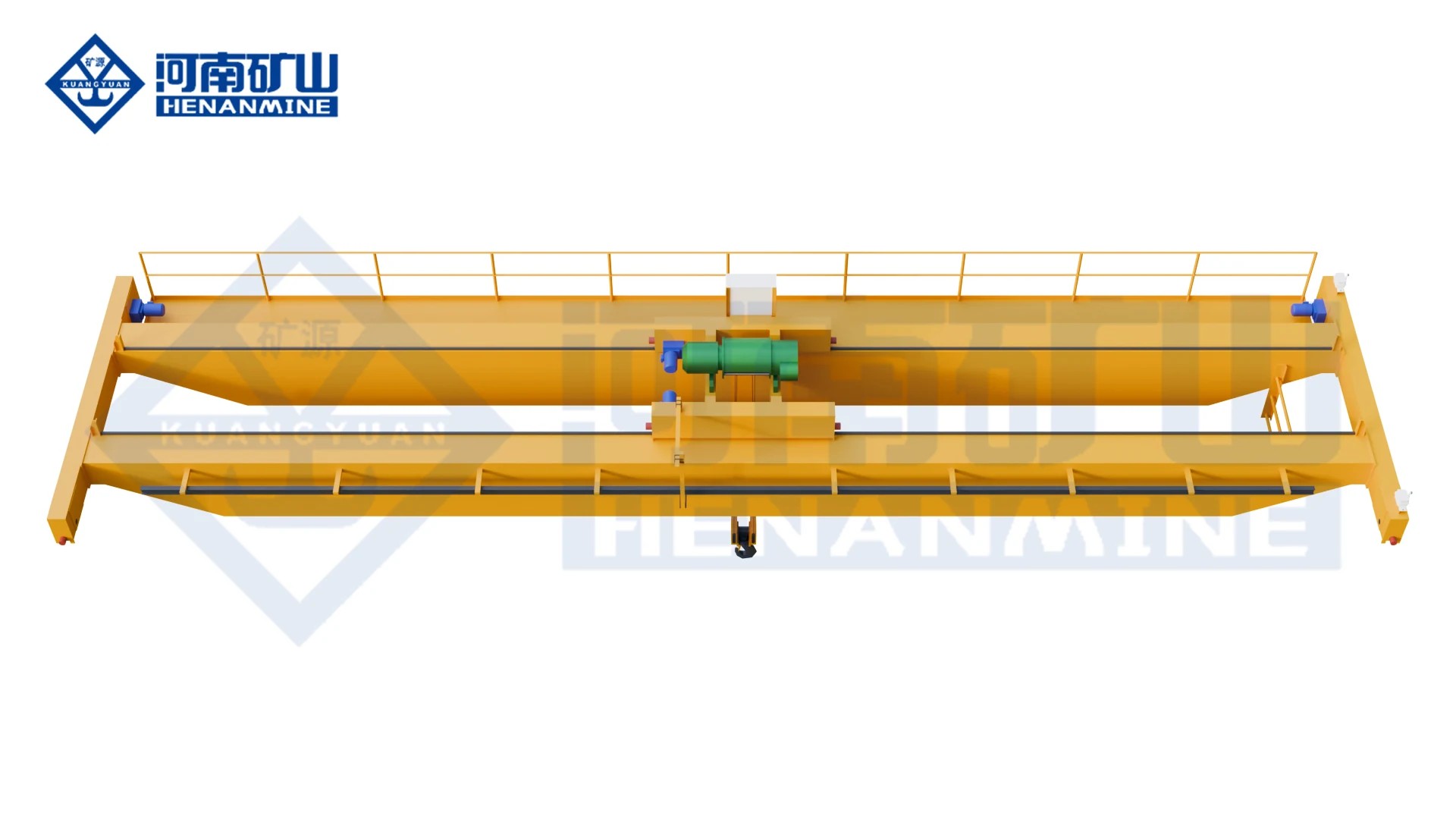
Protected electric-hoist lifting for classified workshop bays. Compare hook height, duty and the complete gas or dust protection package.
Compare this arrangement ↗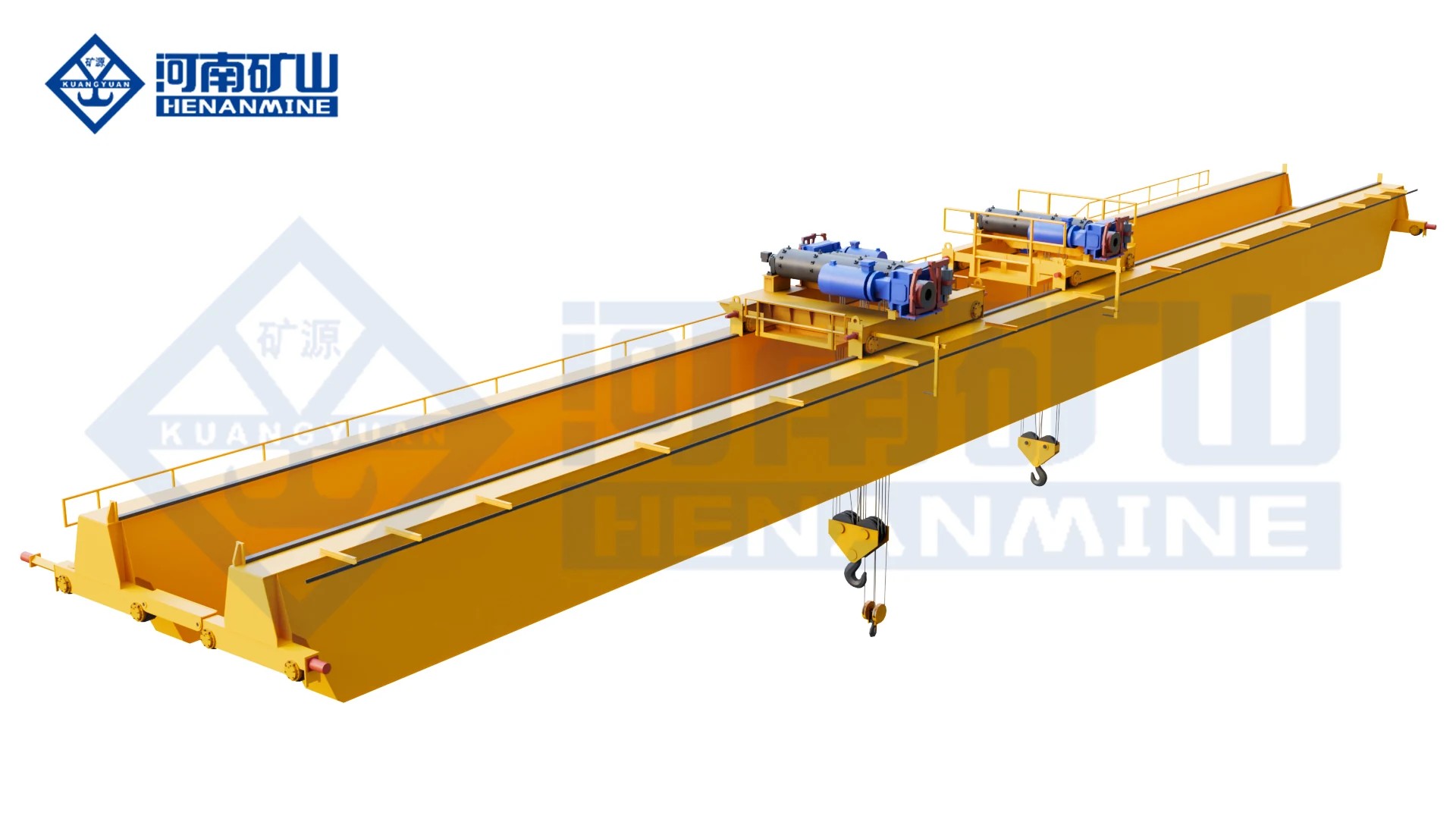
Two trolley lifting positions support handling of long or complex loads. Specify the rated load at each lifting point, allowable combined operation and control sequence as one coordinated crane arrangement.
Compare this arrangement ↗
Cleanroom lifting with explosion-protected equipment for contamination-sensitive classified processes.
Compare this arrangement ↗Find the arrangement, equipment options and order information that suit your application.
It identifies a 20 t main hook and a separate 5 t auxiliary hook on the trolley lifting platform. These are individual ratings. Any combined operation would need its own stated load case; the designation is not a 25 t lifting rating.
The 5 and 10 t selections have one hook. The main/auxiliary selections are 16/3.2, 20/5, 32/5 and 50/10 t. Choose the auxiliary duty from the separate smaller loads you need to handle.
Each rated arrangement has its own schedule. The 5 and 10 t versions list 16 m lift; 16/3.2 and 32/5 t list 16/18 m main/auxiliary lift; 20/5 and 50/10 t list 12/14 m. Keep the corresponding hoisting speeds with the same table row.
Bridge mass and wheel reactions change with span. The listed 5 t selection, for example, has a maximum wheel pressure of 65 kN at 10.5 m and 102 kN at 31.5 m. Use your selected rating and span, then request final reactions for the ordered crane.
A selected VFD lifting and travel package can be quoted. Its speeds, protected drives and controls are specified together. The conventional fixed-speed table remains a reference for the conventional arrangements.
Dust service needs its own equipment selection and temperature requirements. Send the material and area data so the quotation can identify the dust package and matching documents separately from the gas selections.
The numerical selections shown are A3–A4. Share lifts per hour, operating hours and typical loads, especially for more intensive work, so the proposed crane and mechanism duties can be matched to your actual cycle.
QB uses one trolley lifting platform, with one or separate main and auxiliary hooks. QBE has two trolley positions that can be separated for a long load and selected for independent or coordinated handling.
State the destination and required approval route. Ask the offer to identify the selected equipment markings, document scope and agreed inspection records, alongside arrangement, wheel-reaction and electrical drawings. A gas selection such as IIC T4 is not a blanket ATEX or IECEx certificate for every QB package.
The hook arrangement, capacity, span, lift, motion controls and gas or dust package shape the crane price. Destination documents, electrification, rails, freight and site services also affect the scope. Naming these items makes competing offers easier to compare.
Send the main load, any separate smaller lifting duty and the approximate span. We can help compare the appropriate hook arrangement and develop a quotation around your bay and area requirements.
info@cranehenanmine.com