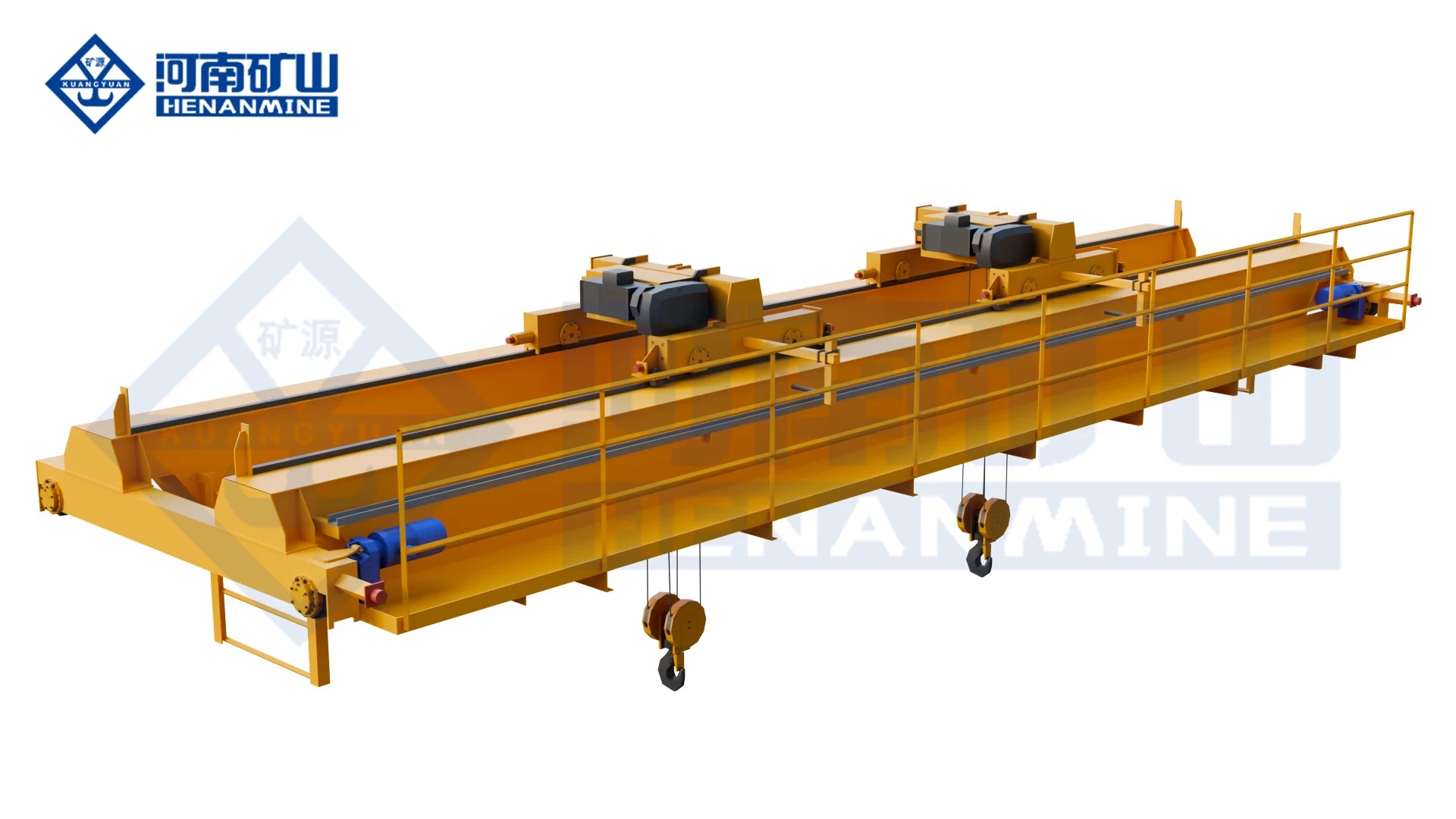
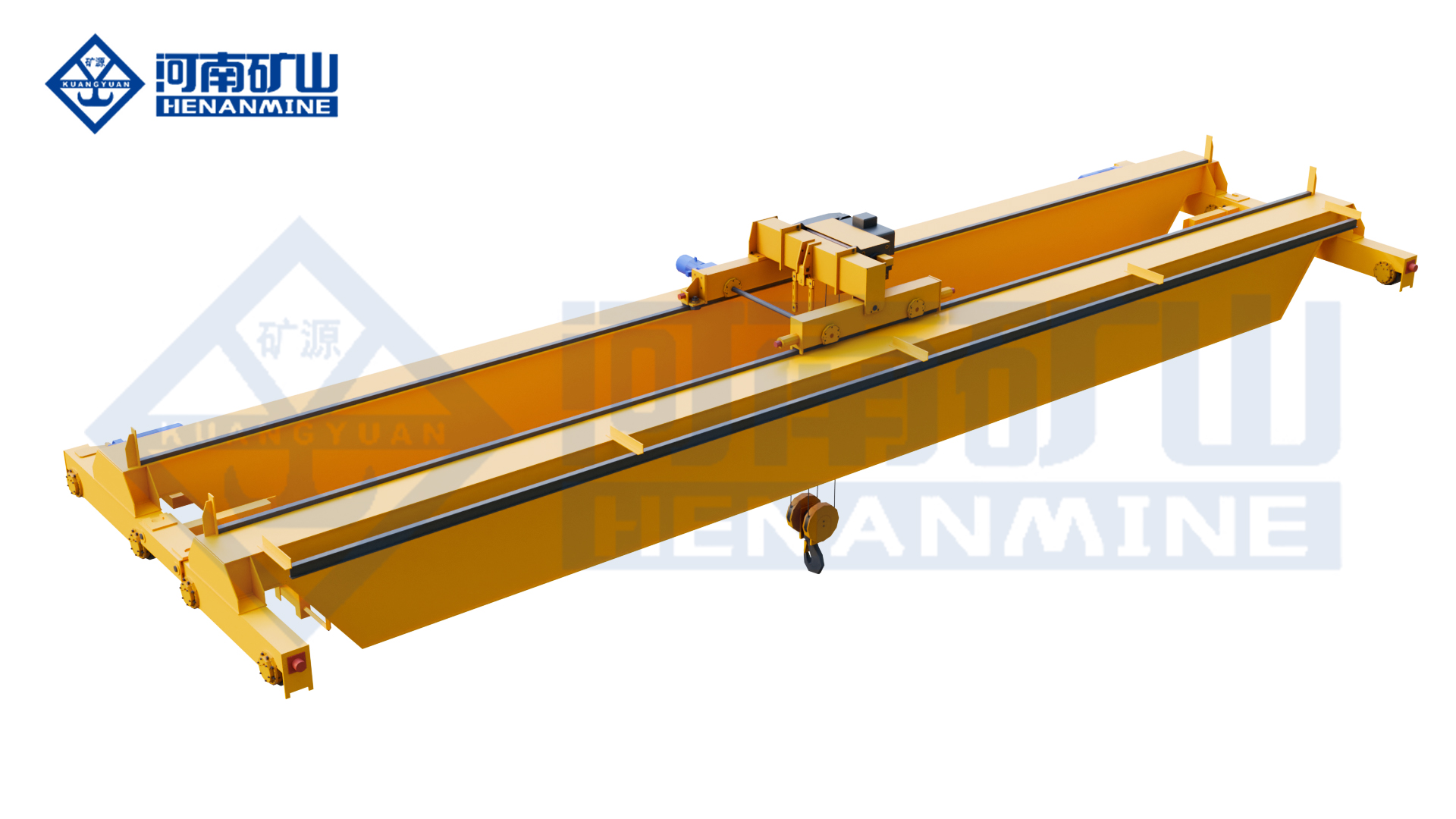
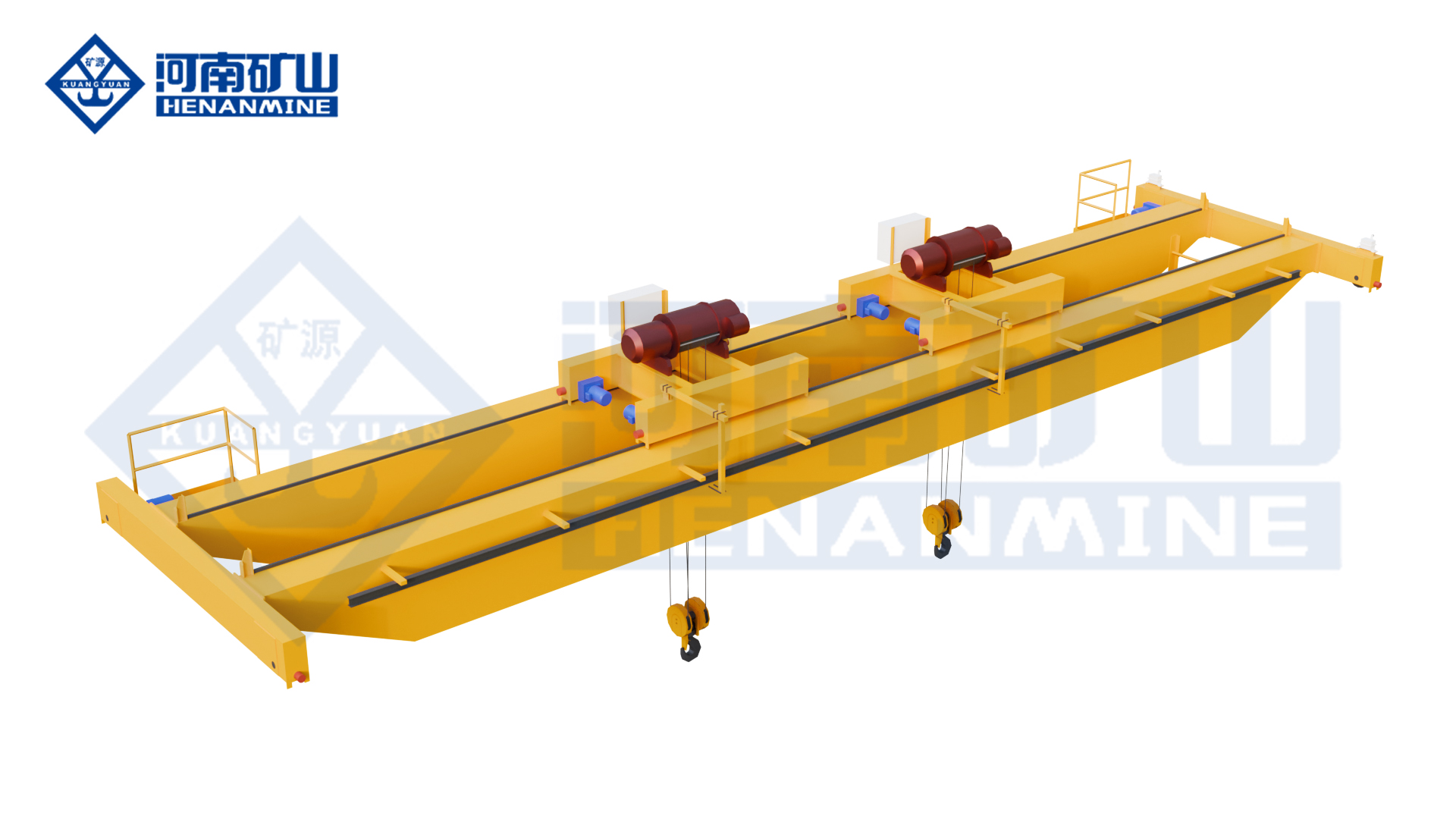
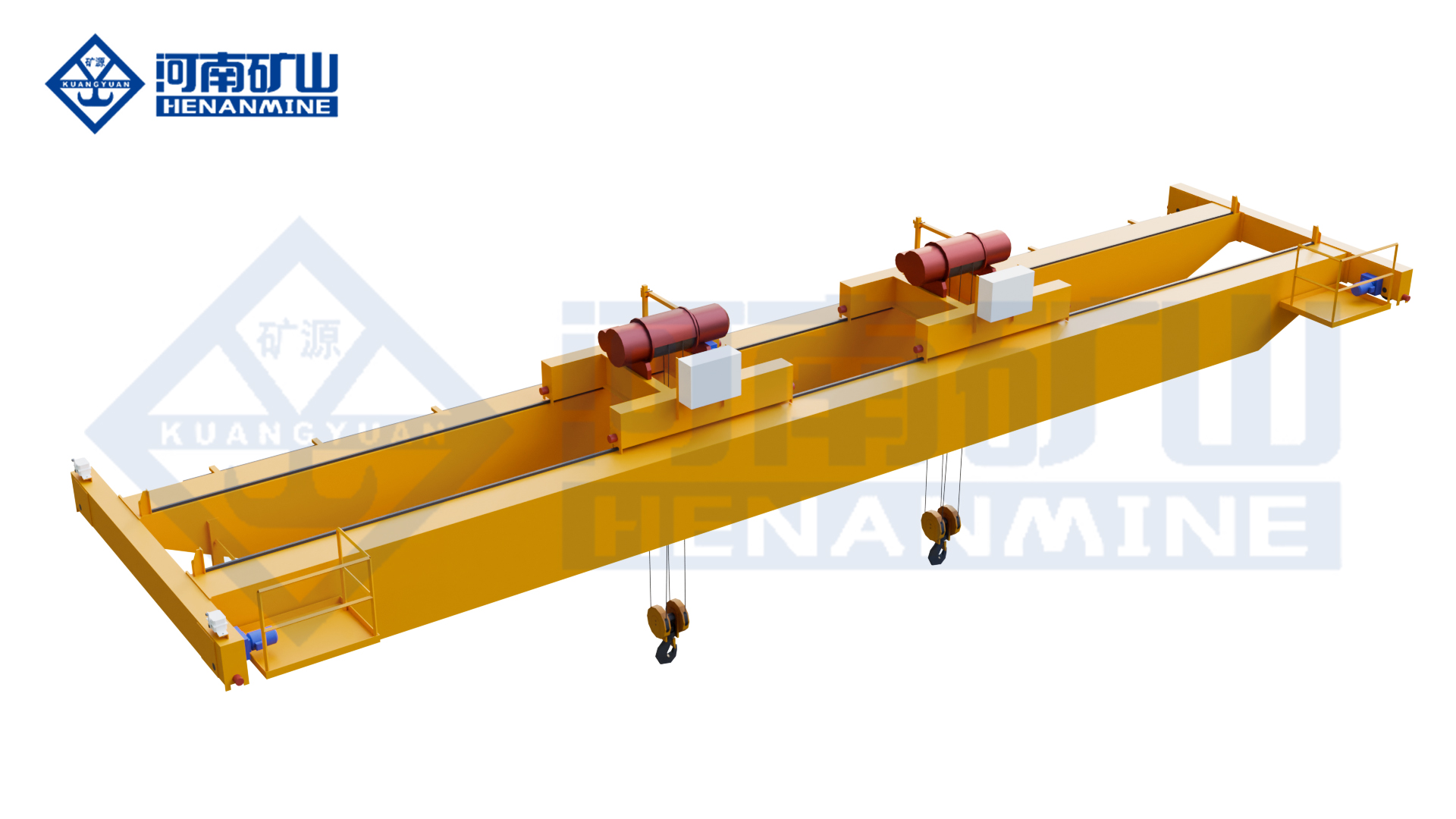
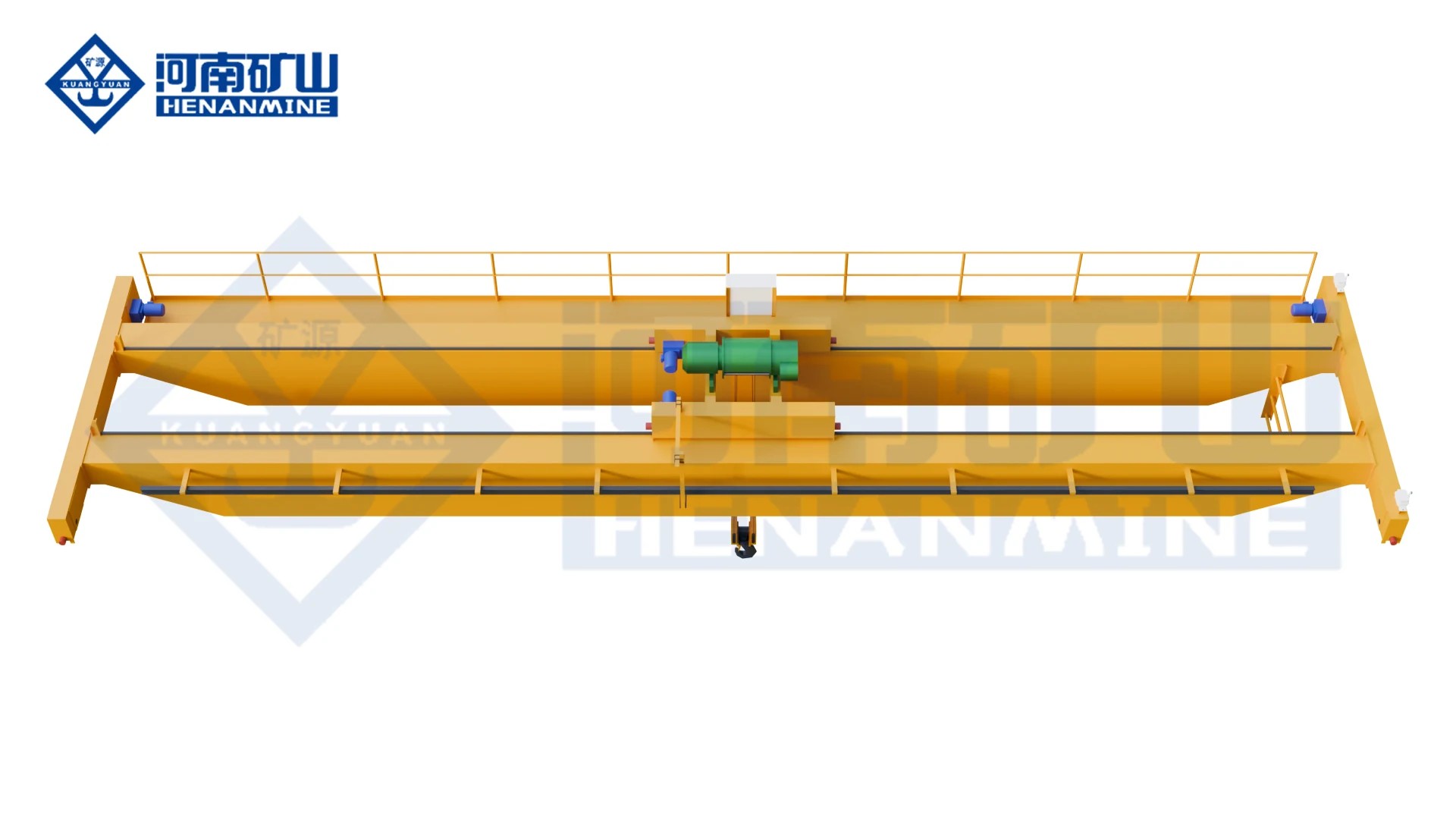
An electric hoist overhead crane combines a packaged lifting unit with a bridge and travel system. Compare double-girder workshop cranes, two- and three-trolley arrangements, protected process cranes and underhung transfer systems for your lifting task.
Compare conventional and compact electric-hoist double-girder arrangements for components, machinery and workshop handling. Select the capacity with the span, lifting height and operating duty.
Remote equipment monitoring and maintenance functions
Power supply
Voltage and frequency confirmed for the destination
Application
Machining, manufacturing, assembly, repair workshops and warehouses
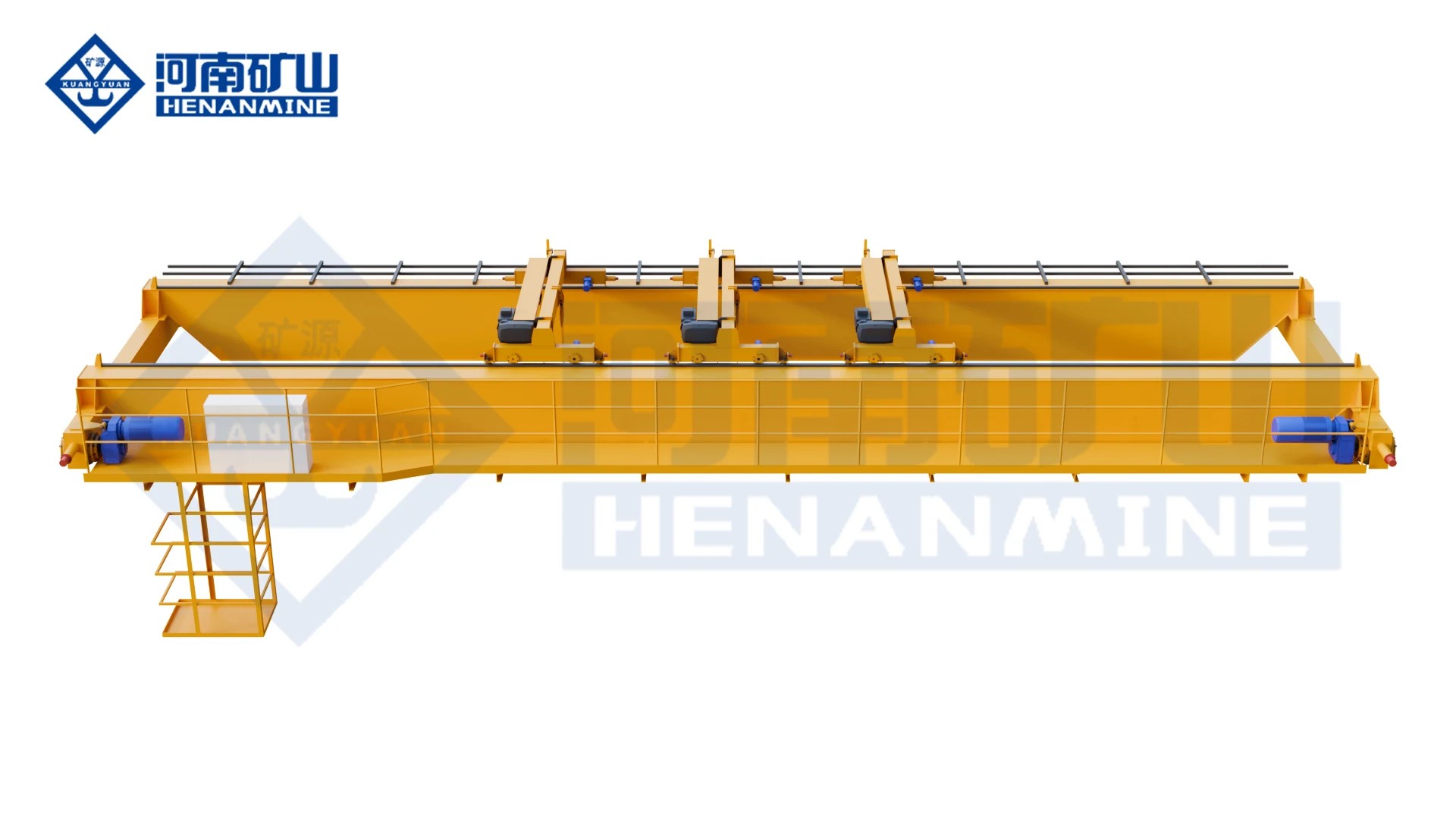
Two- and three-trolley electric-hoist cranes
Choose several lifting positions for long assemblies, large machinery or a defined handling sequence. Specify individual hook ratings and the permitted independent or coordinated lifting cases.
Seated explosion-proof electric hoist on a trolley frame
Headroom arrangement
Low headroom design
Hazardous-area application
Gas or dust hazardous area, matched to the ordered equipment
Required area data
Zone or division, substance, gas/dust group, temperature classification and destination
Explosion-protection marking
Confirmed for the selected crane and electrical equipment
Capacity, span and lifting height
Specified for the project
Duty and speeds
Confirmed for the ordered hoist and crane
Controls and power feed
Included in the hazardous-area scope review
Crane weight and wheel reactions
Provided with the selected drawing
Power supply
Voltage and frequency confirmed in the technical offer
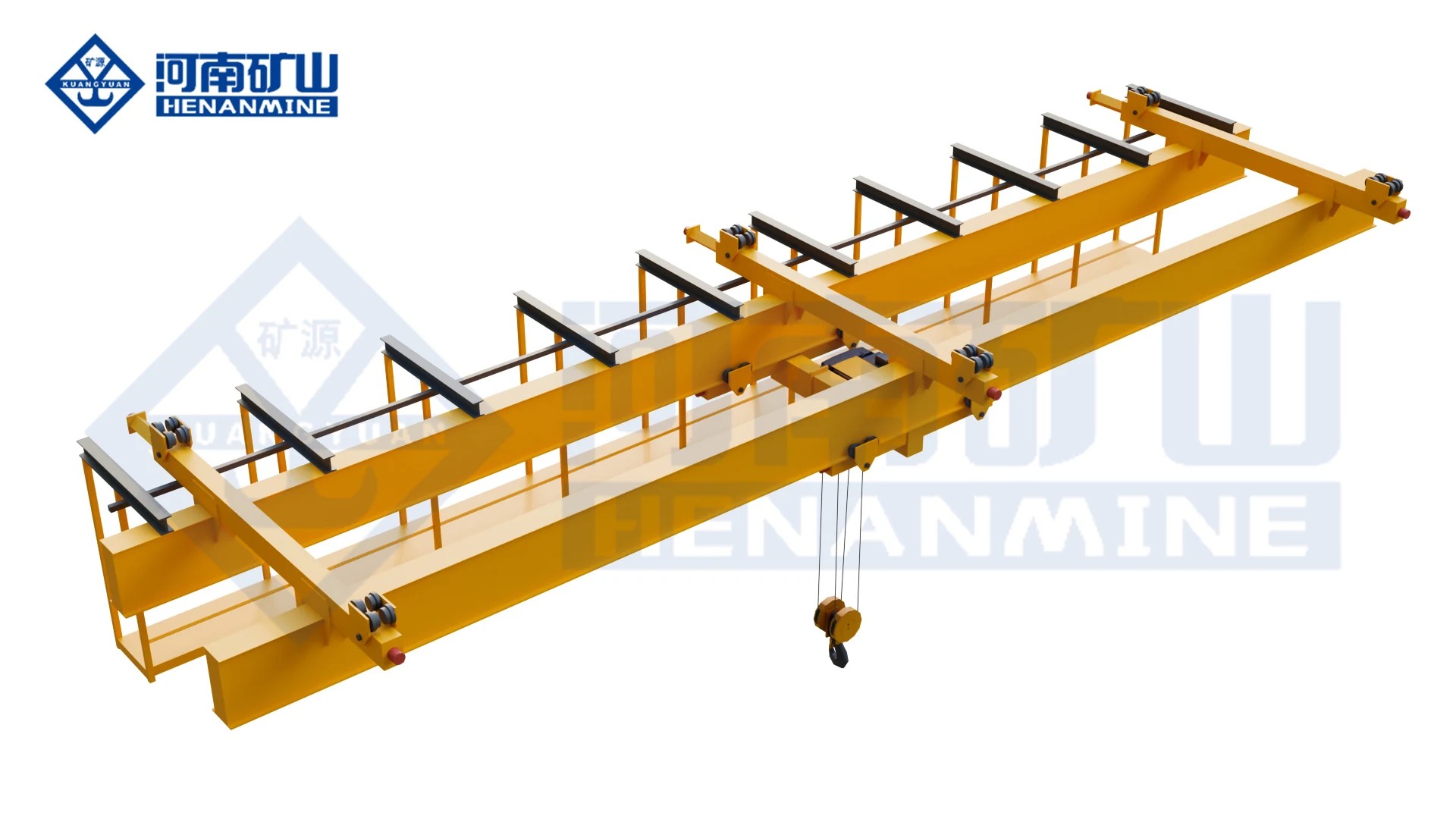
Underhung and track-transfer systems
Compare suspended layouts for wide working areas and connected maintenance zones. Working coverage, support spacing and transfer interfaces are selected together.
Electric hoist trolley, electric and manual-travel underhung double girder cranes, and rail-transfer device
Intended application
Power-station coal-mill maintenance and cross-area transfer
Reference configuration
12.5 t in the component table below
Reference crane duty
A3 for the bridge components; M3 for the hoist trolley and travel mechanisms
Span and lifting height
Component-specific; see the separate component rows below
Hoist trolley lifting speed
4.66 m/min in the reference configuration
Reference travel speeds
Hoist trolley: 10 m/min; powered bridge: 20 m/min; manual bridge by hand
Reference ambient temperature
−25 to +40 °C for the handbook example
Reference humidity and atmosphere
Not for corrosive gases or relative humidity above 85% in the handbook example
Restricted loads in reference design
Not for molten metal, toxic, flammable or explosive loads
Operating system
One electrical system and one button group for the documented set
Project parameters
Capacity, lifting height and travel speeds can be configured
Track interfaces
Rail alignment, transfer positions and locking/control interfaces defined in the system drawing
KSX 12.5 t system: separate component values
Scroll across to see every column.
Component
Capacity (t)
Component span (m)
Listed lift height (m)
Component duty
Travel mechanism class
Hoisting (m/min)
Travel (m/min)
Travel motor / power (kW)
Hoist motor / power (kW)
Wheel diameter (mm)
Hoist trolley
12.5
1.3
8
M3
M3
4.66
10
ZDY12-4 /4 ×0.4
ZD1 15-4 /13
154
Powered underhung bridge
12.5
3.65
3.50
A3
M3
—
20
ZDY21-4 /4 ×0.8
—
154
Manual-travel underhung bridge
12.5
3.70
3.90
A3
M3
—
Manual
Manual
—
154
Each row describes a separate component of the 12.5 t reference system. Component spans and listed lifting heights do not define one complete-crane span or hook-travel range.
Model ranges describe available selections. The quotation confirms capacity, span, lifting height, duty and speeds as one configuration. For several trolleys, each hook rating and the permitted shared-load cases are stated separately.
Price & supply scope
How much does an electric hoist overhead crane cost?
The complete-crane price depends on the bridge, selected hoist, span, lifting height, duty and controls. A single-hoist workshop crane, a multi-trolley system and a protected process crane need different equipment packages.
Preliminary equipment estimates assume 380 V, three-phase, 50 Hz and include the bridge, selected electric hoist and trolley, end carriages, travel drives, listed controls, on-crane wiring, factory inspection and packing. Runway beams and rails, runway power feed, freight, taxes, installation and commissioning are excluded. The compact European-style row describes a budget configuration; it is not a model-specific KSSL quotation.
Price factor
What to compare in the offer
Crane and hoist configuration
Compare the same capacity, span, hook travel, working duty and hoist type.
Number of lifting positions
Identify the trolley quantity, hook spacing and permitted operating modes. Include coordinated control where required.
Process and runway layout
Confirm the selected protection package, suspended support arrangement or track-transfer equipment.
Complete supply scope
List the bridge, hoist, trolley, drives, controls and power feed, then confirm rails, freight, installation and commissioning responsibilities.
A hoist-only price does not include a complete overhead crane. Ask for an itemized equipment and service offer on a stated delivery basis.
Electric-Hoist Cranes for Hongyuan Energy’s Crystalline-Silicon Project
Henan Mine Crane manufactured cleanroom explosion-proof electric-hoist double-girder cranes for Hongyuan Energy’s 100,000-tonne high-purity crystalline-silicon project. They formed part of a mixed 54-unit crane package that also included dust-explosion-proof single-girder cranes.
The electric-hoist double-girder equipment was a custom cleanroom and explosion-protected configuration. Its protection package is project-specific; the 54-unit total covers several crane types.
Electric-hoist double-girder equipment manufactured for the Hongyuan Energy project.
Need a single-girder crane or the hoist itself?
Compare the single-girder range for another bridge arrangement, or choose a wire-rope hoist when the requirement is a lifting unit for an existing crane.
Is an electric hoist overhead crane a complete crane or just a hoist?
The models on this page are crane systems: an electric hoist works with a bridge, trolley, travel drives and controls. If you need only a replacement hoist, specify the existing crane, load, hook travel, mounting and power supply so the offer covers the correct equipment.
Should I choose LH or KSSL for my workshop?
Compare the LH electric-hoist bridge with the KSSL new-type arrangement. KSSL provides dual-speed hoisting and variable-frequency travel for controlled handling. Choose the capacity, span and useful hook height together, then match the working duty and speeds to the lifting cycle.
When do I need two or three hoist trolleys?
Compare two trolleys for long components, two pickup positions or separate lifting tasks. Consider KSSLS when the handling sequence needs three trolley positions. For any shared lift, specify the load at each hook, lifting-point spacing and the allowed operating sequence; do not assume the hook capacities can simply be added.
Which crane should I choose for molten metal or a hazardous area?
Compare LHY for a specified metallurgical lifting task and LHB for a classified hazardous area. Heat exposure and explosion protection require different equipment. Provide the handled material, process conditions and any applicable area classification so the lifting package and acceptance documents can be specified.
What is the difference between wide-bay coverage and track transfer?
A multi-point underhung bridge covers a working area using several suspended tracks. A track-transfer system moves lifting equipment between connected tracks or maintenance zones. The required hook route, support layout and transfer interfaces determine the arrangement; overall coverage is not the same measurement as one span between supports.
What information is enough to start a quotation?
Send the maximum load, approximate crane span or working area, required lifting height and project location. Add the number of lifting points, operating frequency and site power supply if known. A workshop drawing or photograph is helpful; special-process and transfer requirements can then be developed with the configuration.
Compare the range
Electric hoist crane specification comparison
Compare hoist arrangements and the available configuration data. Select the full product name to view its details.
Values belong to the named model and configuration. A working-width figure, a runway support interval and a transfer-system component span are different measurements. Individual hook ratings and permitted combined lifts are confirmed for multi-trolley cranes.
Get an electric hoist overhead crane quote
Send the load, approximate span or working area, required hook travel and project location. Tell us how many lifting points you need and whether the crane works in a special process or transfers between tracks.
A workshop sketch, photograph or existing crane nameplate is helpful if available. Request the equipment, delivery and site-service scope together.