
Long machinery & assemblies
Support a machine base or large assembly at two lifting positions while transferring it through the workshop. Match the trolley ratings to the component's lifting-point reactions.
Bridge cranes for workshops and production lines.
Explore Overhead Cranes
Ground-supported lifting for yards and construction.
Explore Gantry Cranes
Wire rope and chain hoists for lifting points and cranes.
Explore Electric Hoists

Wire rope lifting and pulling with a powered drum.
Explore Electric Winches
Grab buckets, magnets and hooks for your load.
Explore Lifting Attachments & Grabs
Mobile handling for containers, precast and yard loads.
Explore Rubber-Tired Gantry Cranes & Straddle Carriers

Lift and move vessels through boatyards and marinas.
Explore Marine Travel Lifts
Ladle, slab, scrap and coil handling across steel production.

Container stacking and cargo transfers across terminals and rail.

Turbine installation, powerhouse maintenance and wind equipment assembly.

Controlled component transfer and positioning for precision assembly.

Heavy fabrication, production lifting and factory crane automation.

Process lifting for smelters, carbon blocks and anode materials.

Clean lifting and classified protection for sensitive process areas.

Bridge fabrication, metro construction and ship block assembly.

Automated storage and retrieval for plates, cables and bins.

Follow project dispatches, crane engineering and factory acceptance.

Dispatch, installation and equipment in service

Crane configurations and handling technology

Factory inspections, acceptance and test programmes

Company developments, people and community programmes
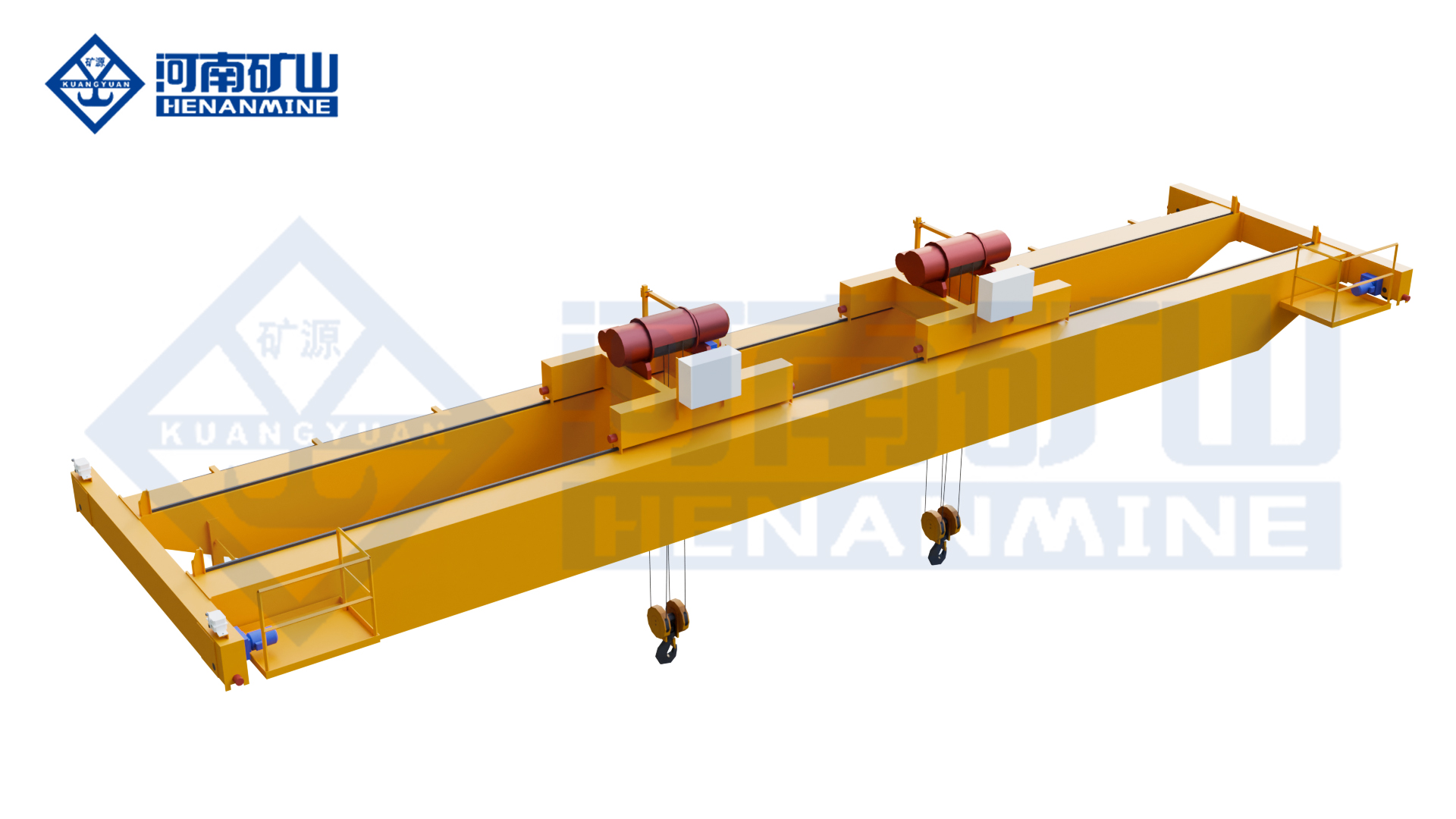
Lift long components and machinery at two positions where workshop height is limited. LHEA places two seated electric hoists on trolley frames above a double-girder bridge. The selected arrangement combines the required hook height, hook spacing and individual trolley ratings for production, assembly and equipment handling.
Tell us the load, lifting-point spacing and highest placement position. Send the workshop height you know, and we can help select the seated-hoist arrangement.
Start with the dimensions you already know. A workshop photo or sketch can help us recommend a configuration.
The seated electric hoists are mounted on trolley frames in a low-headroom arrangement, helping lift components higher within the available workshop space.
Two trolleys provide separated hook positions for long frames, beams and machinery. Select the lifting-point spacing and each hook rating around the component.
The compact hoist platform is designed for low crane self-weight and wheel pressure. The technical offer provides the actual bridge weight and wheel reactions for the selected dimensions.
Support a machine base or large assembly at two lifting positions while transferring it through the workshop. Match the trolley ratings to the component's lifting-point reactions.
Use separated hook positions for components with widely spaced lifting points. Select the trolley working range for the shortest and longest parts in the production mix.
Compare the seated-hoist layout when equipment must pass over an assembly fixture or reach a high placement level within the existing runway and roof clearance.
The ordered crane drawing defines usable hook height, hook approach and the two-trolley working range. Send your highest placement level and lifting-point spacing with the enquiry.
Compare the available options for your lifting task. Capacity, span, lift height and speed are matched in the selected configuration.
| Model | LHEA |
|---|---|
| Bridge arrangement | Lightweight double girder overhead bridge |
| Trolley quantity | 2 |
| Lifting mechanism | Two seated electric hoists mounted on trolley frames |
| Rated capacity | Individual trolley ratings and combined bridge load selected for the component |
| Span | Matched to runway rail-centre distance |
| Lifting height | Matched to pickup and highest placement levels |
| Hook spacing | Selected minimum and maximum spacing within the trolley travel range |
| Headroom arrangement | Low-headroom seated-hoist layout |
| Crane duty | Selected from load spectrum and operating cycle |
| Hoisting & travel speeds | Matched to the ordered hoist capacities and handling cycle |
| Control | Independent or paired operating functions as specified |
| Lifting attachment | Hooks or project-specific attachment |
| Wheels & drives | Forged-wheel and travel-drive package confirmed in the technical offer |
| Crane weight & wheel reactions | Configuration values provided with the crane drawing |
| Power supply | Voltage and frequency matched to the destination supply |
| Selection item | What to specify | What the crane offer defines |
|---|---|---|
| Two-point load | Total suspended load and maximum reaction at each hook | Individual trolley ratings and combined bridge rating |
| Vertical reach | Pickup level, placement level and available overhead space | Seated-hoist envelope and usable hook travel |
| Component length | Minimum and maximum lifting-point spacing | Trolley spacing, approach limits and working range |
| Operating mode | Separate lifting, shared-load lifting or both | Control functions, speeds and required coordination |
The two hoists, bridge geometry and control package are selected as one configuration. A load sketch with weights and lifting points is sufficient to begin a technical review.
Both hoists are carried on trolley frames above the double girder bridge. The product views show the two lifting positions and compact lifting arrangement for comparison with your workshop task.
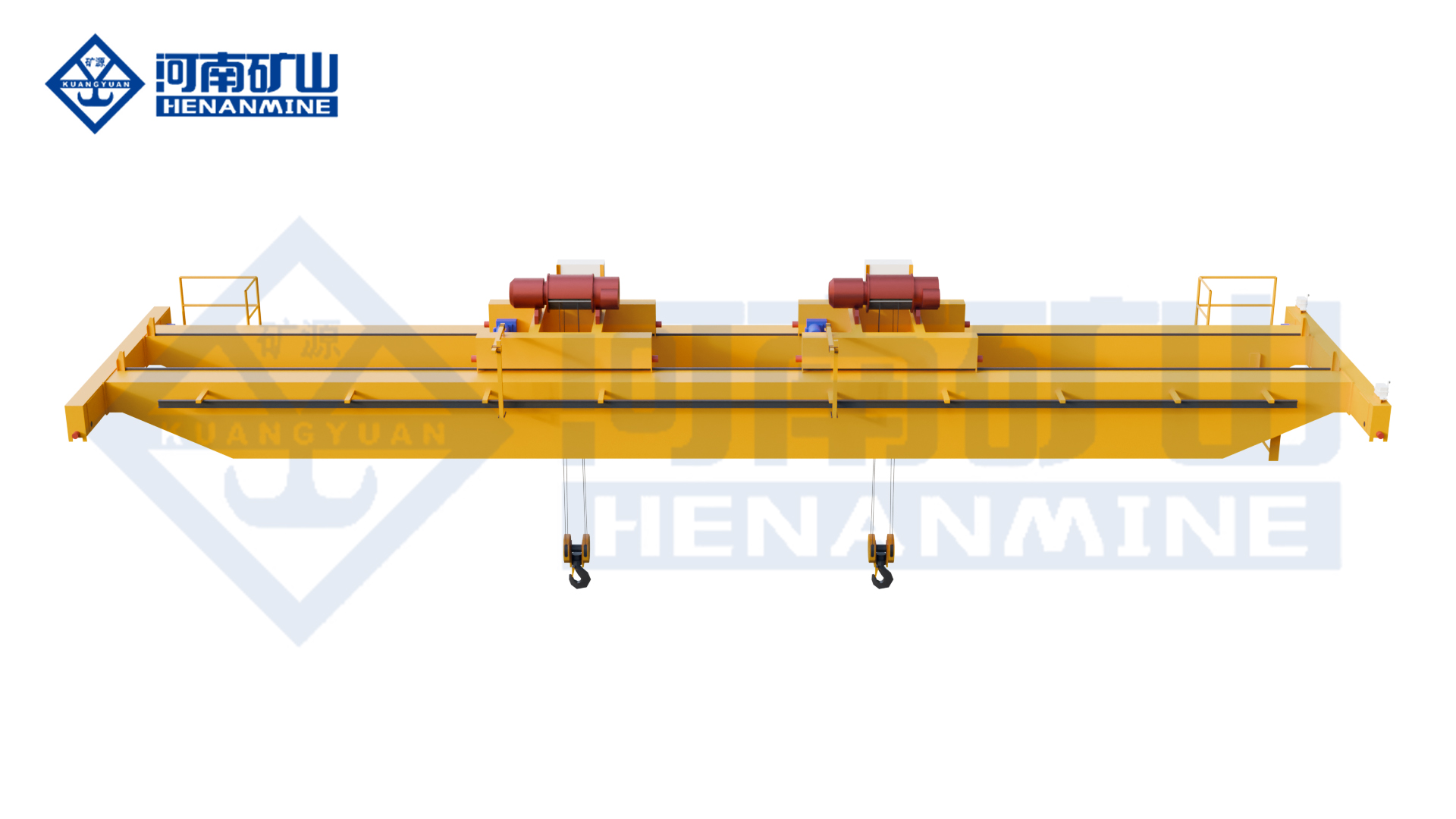

Start with the component and the height it must reach. Then specify the trolley load distribution, spacing and operating modes.
Specify the total suspended load and maximum load carried by each hook. Individual trolley ratings and the permitted combined bridge load are stated in the technical offer.
Include the pickup level, highest placement level and space available above the runway. The seated-hoist package is sized to provide the required hook travel and crane envelope.
Specify the minimum and maximum hook spacing and whether the trolleys work separately or support one component together. Paired operating functions are included only as defined in the ordered control scope.
Lifting and travel speeds, working duty, controls and electrical supply are matched to the handling cycle. The offer confirms the forged-wheel and travel-drive package supplied with your crane.
Compare the equipment, documentation, delivery and service scope for the configuration you need.
Request a quotation for one complete LHEA or a project batch, with the individual and combined load requirements.
Identify both seated hoists and trolleys, bridge, controls, power feed, runway items, attachments, export packing, freight, installation and recommended spares separately.
Specify crane and lifting-point drawings, individual and combined ratings, wheel reactions, electrical documents, inspection/test records, manuals and destination compliance requirements.
The production and dispatch schedule follows the approved seated-hoist arrangement, two-trolley load cases, dimensions and control scope; freight and site work are scheduled separately.
Agree the scope for bridge assembly, trolley alignment, commissioning, load testing and operator handover, with site access, local lifting equipment and responsibilities identified.
Warranty duration, commencement, covered components, exclusions and after-sales arrangements are confirmed in the offer and purchase order for the supplied LHEA configuration.
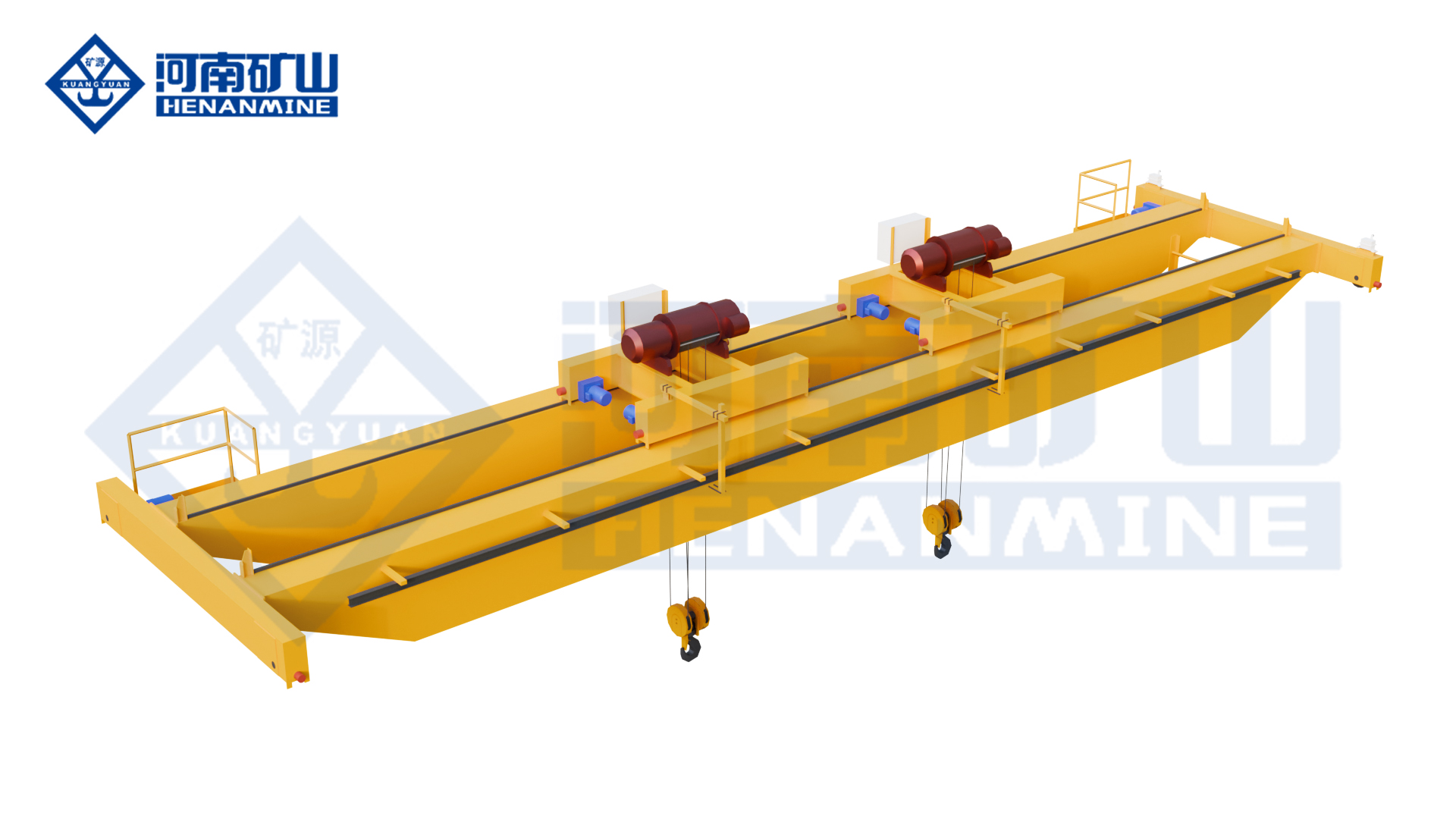
Two electric-hoist trolleys on one bridge for separate lifting tasks or a specified shared lift. Match each trolley rating to the load carried at its lifting point.
Compare this model ↗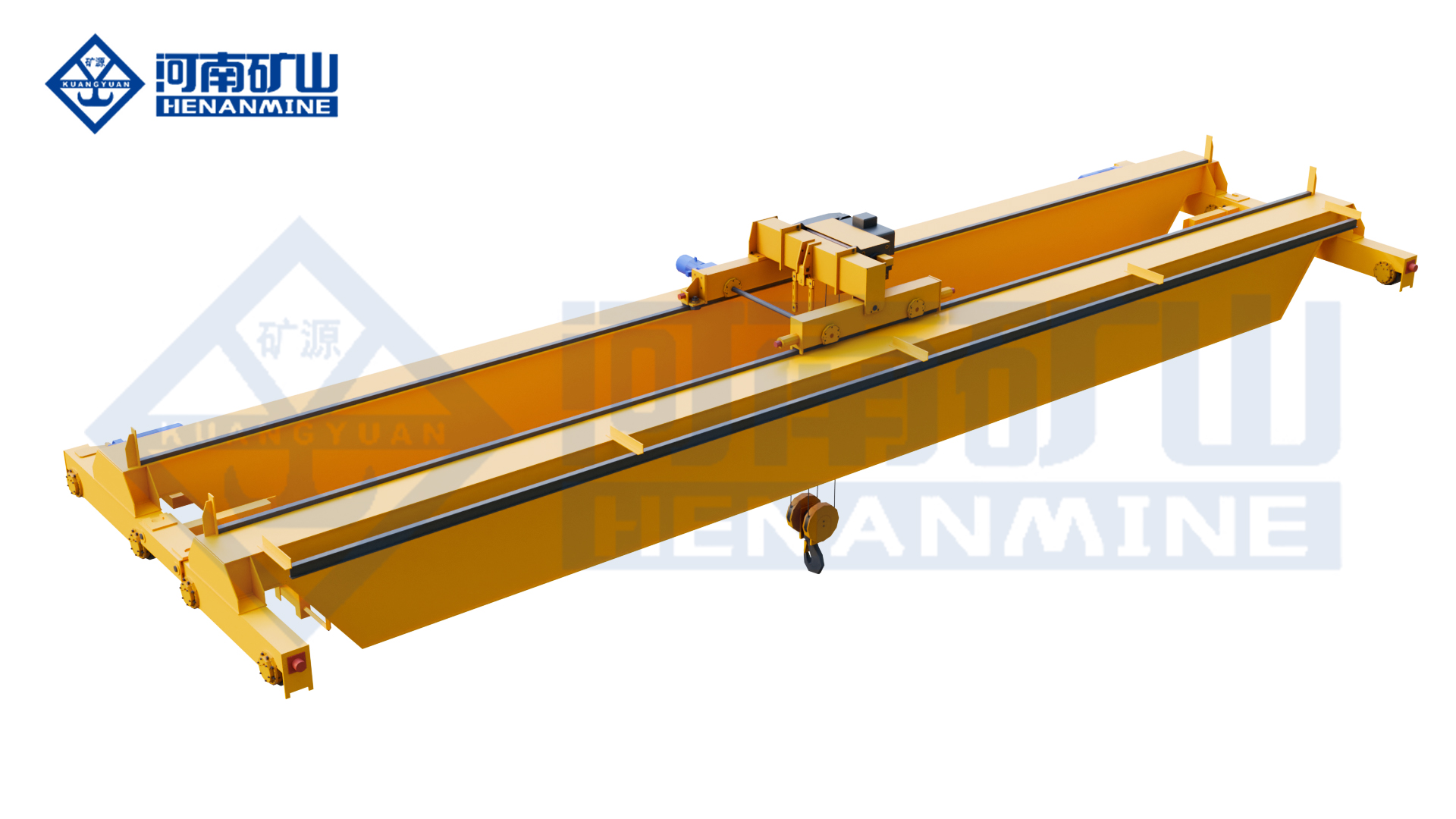
Compact double-girder electric-hoist lifting for routine workshop handling and limited roof clearance.
Compare this model ↗
Compact electric-hoist lifting with dual speeds for transfer and precise placement, plus variable-frequency travel.
Compare this model ↗Find the arrangement, equipment options and order information that suit your application.
LHEA combines two lifting points with a low-headroom seated-hoist arrangement. It is useful for long components or machinery that must reach a specified placement height within a restricted workshop envelope.
LHEA emphasizes two seated electric hoists and a low-headroom arrangement for paired lifting. LHE emphasizes twin wire-rope electric-hoist trolleys with soft-start or variable-frequency travel and coordinated controls selected for the task. Compare the final hook positions, motion package and individual and combined ratings.
Send the total weight, lifting-point positions and centre of gravity. Each hoist must be selected for the load it carries, and the bridge needs an agreed combined rating. The two hooks should not be assumed to share every component equally.
Independent and paired operating functions can be specified in the control scope. Describe whether the crane handles separate loads, one shared component or both. The offer confirms the selected operating modes and permitted movement.
The usable height depends on the selected hoist capacity and bridge arrangement. Send the required pickup and placement levels and the available workshop height; the configuration drawing confirms the actual hook travel and overhead envelope.
Start with the workshop span, highest pickup or placement position, and the shortest and longest lifting-point spacing. Any available roof or runway dimensions help develop the arrangement. The proposal confirms the actual hook travel, trolley working range, crane dimensions and wheel reactions for your selected load.
Send the load weight and length, maximum reaction per hook, lifting-point spacing, span, lift height and power supply. Include operating frequency, destination and whether you need a lifting attachment, installation or commissioning. Price and schedule are confirmed for the agreed equipment and service scope.
The order should identify the destination compliance and test documents, technical drawings and manuals, warranty duration and coverage, installation responsibilities and support arrangements. Include the required documents and site services in your enquiry so they are part of the quoted scope.
Send the component weight and length, approximate span and the height it must reach. A workshop section, photograph or sketch can help us select the two seated hoists and their working range; detailed dimensions can follow with the proposal.
info@cranehenanmine.com