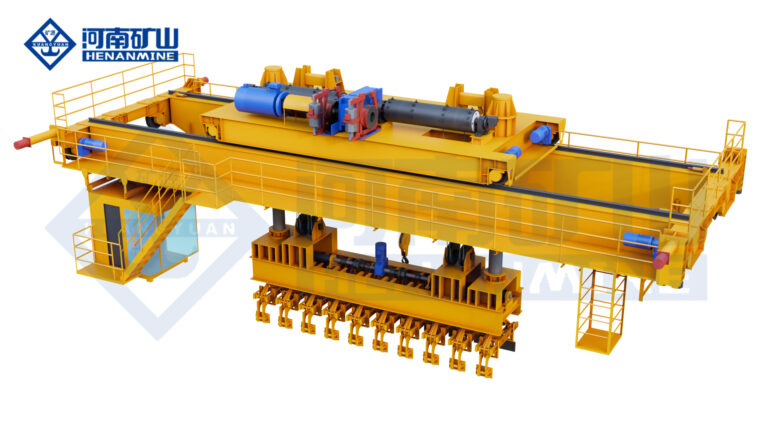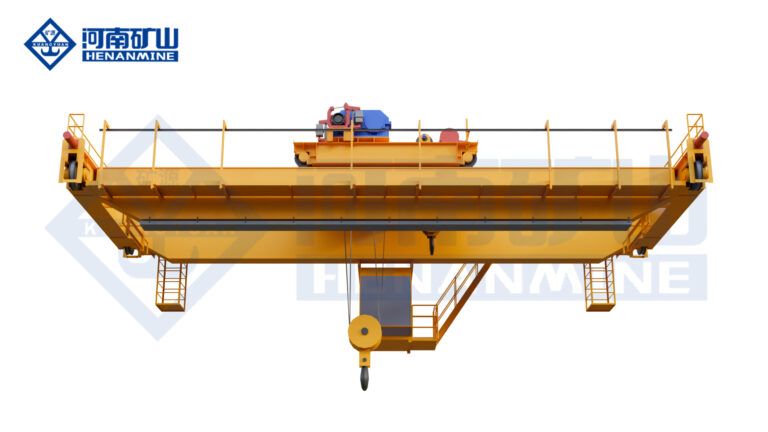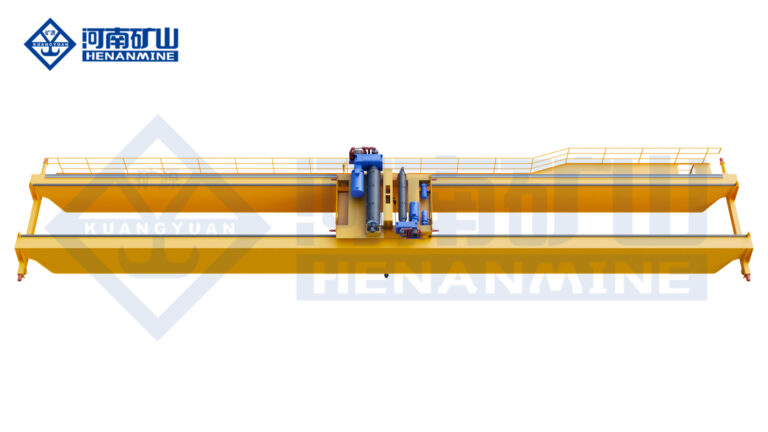
Receive and stack blocks
Identify block dimensions and gripping surfaces, then set clamp geometry, stack height and the number of blocks handled per cycle.
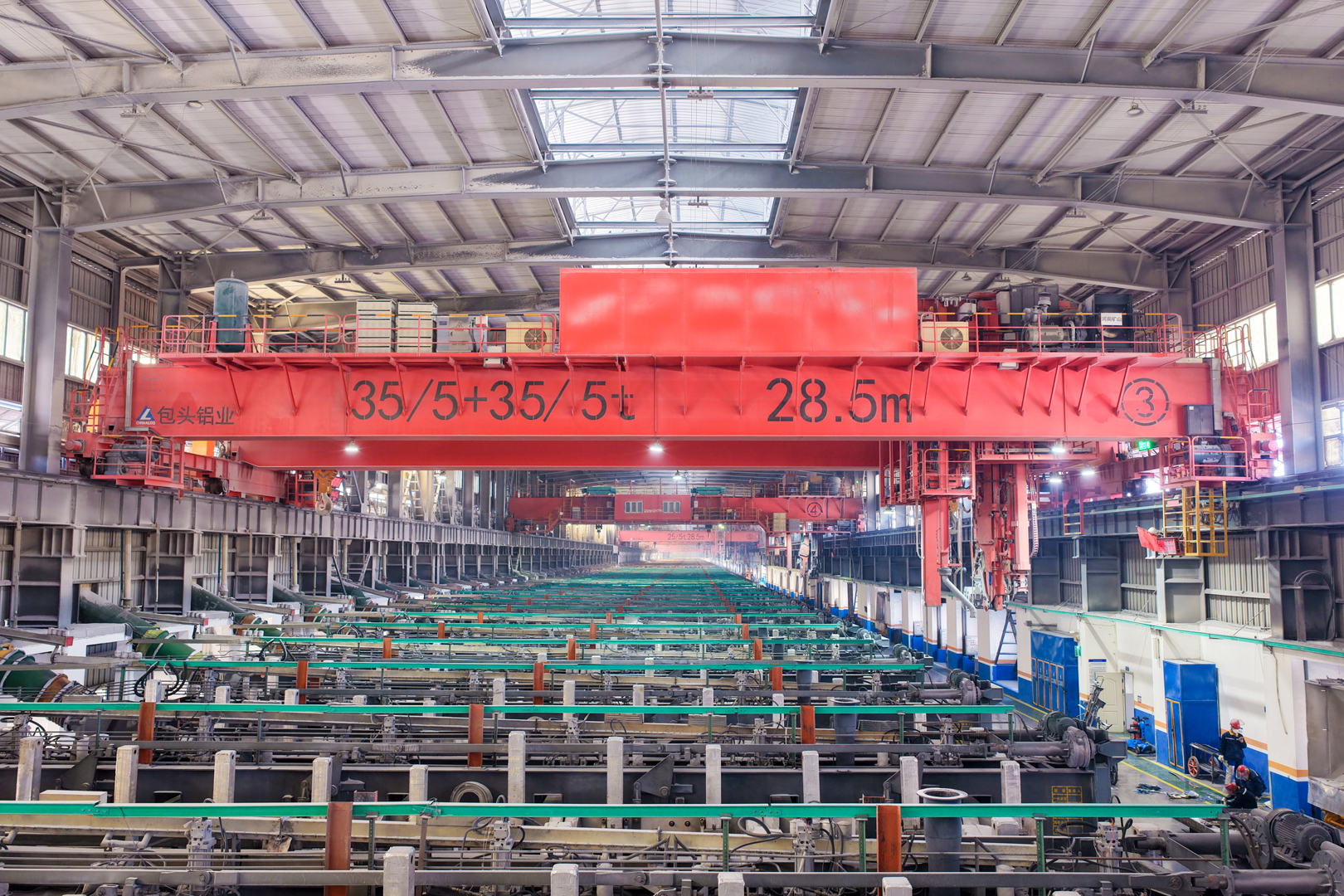
Match lifting tools to the material and the process, from carbon blocks to electrolysis.
Custom process cranes for aluminum and carbon operations
Aluminum and carbon plants need more than a general-purpose hook crane. Carbon block storage, furnace handling, suction and feeding tasks call for dedicated attachments, protective control arrangements and a crane built around the production sequence.
The handling scheme separates carbon-block stacking, hot and dusty furnace areas, and electrolysis operations. A stacking crane uses a clamp matched to block dimensions and the stack pattern. Process cranes for suction, feeding or anode work are configured with the tools and controls required at those stations. Each crane's path, enclosure, inspection access and protection are checked against heat, dust and the production sequence instead of assuming one hook crane can cover every duty.
Follow the load through the operation to see where lifting equipment, tooling and controls must work together.
Identify block dimensions and gripping surfaces, then set clamp geometry, stack height and the number of blocks handled per cycle.
Plan the route and hand-off to furnace or electrolysis stations with the required load stability and clearance.
Match suction, feeding, anode change and residue handling to the process tooling at each operating position.
Allow service access and suitable electrical enclosure for the heat, carbon dust and operating schedule.
Define the material, handling cycle and working zone before fixing the crane arrangement.
Configure the clamp and stack geometry around block sizes, grip pattern, stacking density and simultaneous handling.
Consider heat, airborne carbon dust, enclosure protection, electrical room placement and inspection access.
Map anode change, crust breaking, residue removal and material feeding to the multifunction crane's tooling and controls.
These choices affect safety, process fit and the operating life of the installation.
The attachment must match the real block size, grip pattern and stack layout; block count from another plant is not a universal capacity.
Specify ambient temperature, dust exposure, corrosion and maintenance access by zone before choosing enclosures and components.
A multifunction process crane needs a defined sequence and interface for each task, with safeguards for tool change and load release.
See how cranes and lifting systems were configured for demanding operating environments.
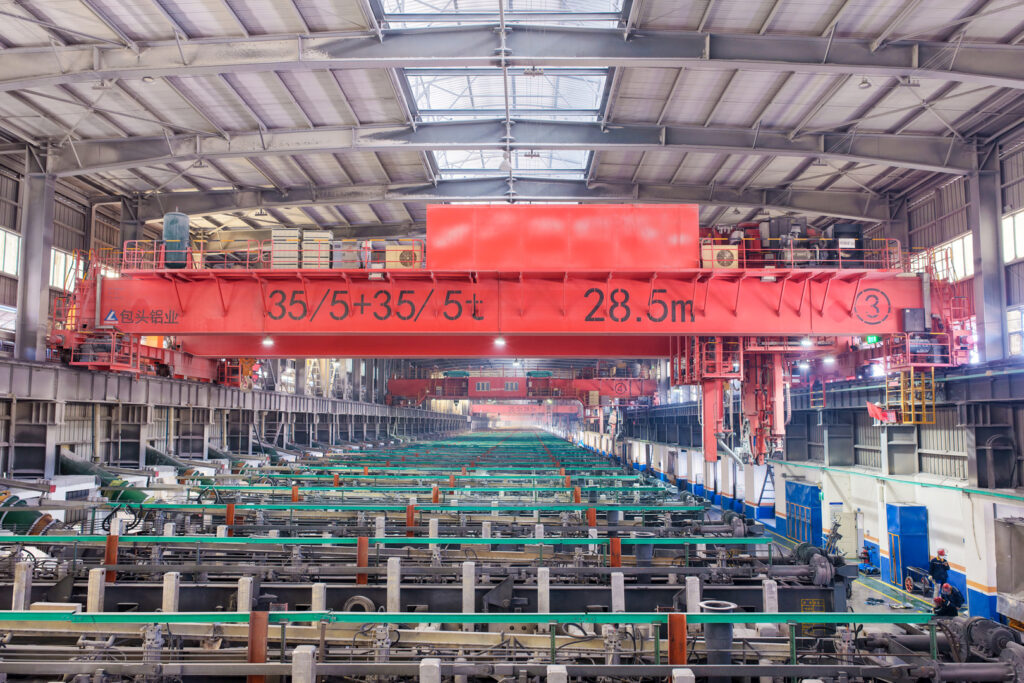
A multifunction suction crane, anode carbon-block stacking crane and electrolysis multifunction unit were configured for the process. The stacking clamp can handle up to ten anode blocks in one operation at this installation.
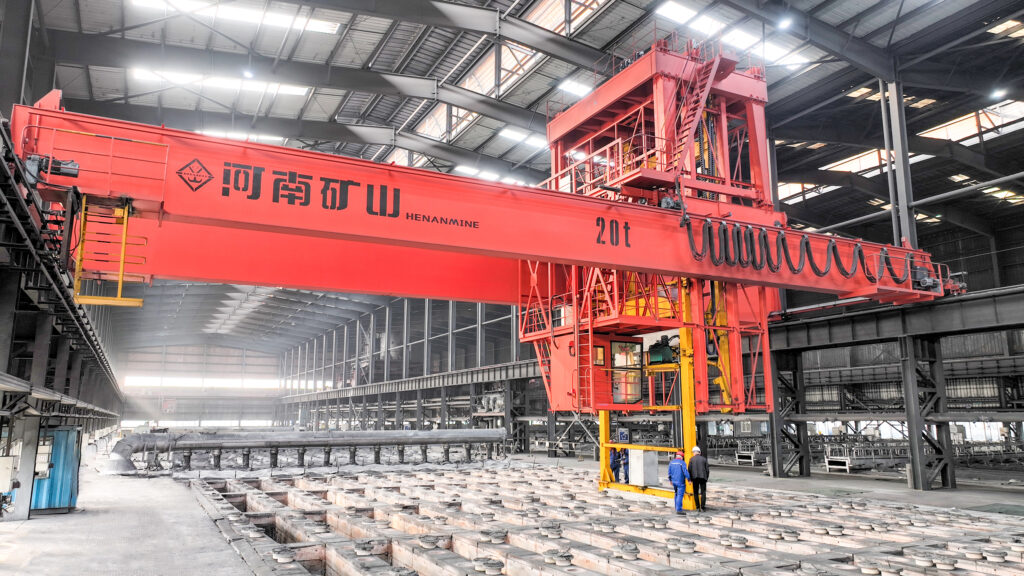
A carbon-block stacking crane was put into use with twin rigid-guide attachments, variable-frequency drives and electrical equipment housed for dusty, hot conditions.

Cranes for a 100,000-ton negative-electrode materials project passed a factory inspection covering records, materials, weld testing, span and running gear.
These product families support the handling tasks above. The final crane and attachment are selected from the site brief.
Send the operating brief and the relevant layout drawings. The resulting proposal can address capacity, geometry, duty, controls, installation interface and safety requirements as one system.
Prepare your enquiry ↗The required grip range and block geometry must be checked. Adjustable tooling can cover a defined range, but capacity and stability should be verified for each combination.
It depends on the actual electrolysis task and electrical separation requirement. The plant's process and safety specification should define where isolation is needed.
Start with a load schedule and site plan. Our team can help develop the matched crane arrangement and technical scope.
Start a project enquiry ↗