






















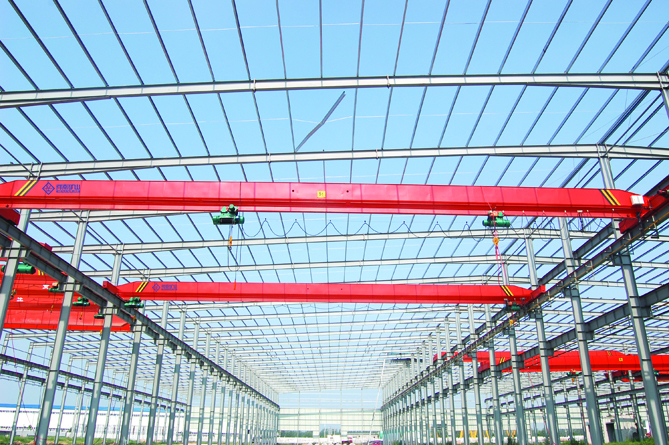
Overhead crane servicing cost depends on crane condition, access and the work included. Using one published US provider rate of USD 160 per hour, an assumed 4–6 billable-hour inspection equals USD 640–960. Parts and downtime require separate allowances; access and travel depend on the offer. This is a worked budget, not a service quotation.
01What does crane servicing include?
Inspection identifies defects. Preventive maintenance addresses approved lubrication, adjustment and wear items. Repair restores a defective component. These are different purchases: a low inspection fee does not establish the cost of correcting the findings.
Compare service offers against the same equipment and tasks. Confirm whether the service provider bills elapsed time, technician-hours or a fixed visit price. The invoice quantity may differ from the production interruption. Access restrictions can increase both the work and shutdown time.
For repeated wheel, brake or hoist faults, review the operating duty and alignment as well as the failed part. The overhead crane arrangement affects which components can be reached and replaced.
02USD service budgets: show the hours behind the price
The following calculations use one provider’s advertised USD 160 hourly inspection rate, updated on 20 October 2026 and checked on 28 October. Billable hours are planning assumptions, not recommended inspection intervals or quoted packages.
| Assumed labor scope | Calculation | Labor allowance, USD |
|---|---|---|
| One visit, 4–6 billable hours | 4–6 × 160 | 640–960 |
| Larger scope, 12–16 billable hours | 12–16 × 160 | 1,920–2,560 |
| Annual inspection model, 13–21 billable hours | 13–21 × 160 | 2,080–3,360 |
These are inspection-fee calculations from one provider-rate benchmark, not global market averages. The source says its base rate factors in technicians, transport and access equipment; the exact visit is quoted at a fixed price. Replacement parts, taxes, overtime, any separately charged access or travel, load-test arrangements and production loss need their own scope check.
03Spend against the defects that affect production
Use inspection findings to build the work order. Record the fault, consequence, planned action and required shutdown for each item. A brake defect requires a different response from a routine lubrication task; the competent person determines whether the crane can remain in use.
Repeated rope damage, wheel-flange wear or gearbox noise deserves a cause investigation before another replacement. Review gearbox, drum and sheave faults alongside the maintenance history. Replacing a symptom can leave the original problem in service.
Inspection and maintenance frequency must follow the equipment instructions, actual service conditions and applicable local requirements. A sample annual budget cannot set that schedule.
04Repair, modernize or replace?
Repair is practical when the structure, remaining service life and operating duty still support the job. Modernization may suit obsolete controls or a recurring motion-control problem. Replacement becomes a stronger option when duty has changed, major structural work is needed or critical parts are unavailable.
Compare the work with the same production objective. Include engineering, installation and commissioning in a replacement decision, then account for the shutdown required by either route. A component price alone is not a repair-versus-replace comparison.
05When does planned maintenance pay for itself?
Illustrative budget: an additional maintenance program costs USD 3,000 and its planned shutdown costs USD 1,000. If a verified production-loss figure is USD 1,500 per hour, the program breaks even at about 2.67 hours of avoided unplanned downtime: 4,000 ÷ 1,500.
Count contribution loss or verified recovery cost rather than treating all delayed sales as permanently lost revenue. Avoid counting the same technician time in both the service bill and downtime estimate.
06Buyer questions
Is an inspection price the same as a maintenance price?
No. Inspection records condition and findings. Repairs, parts and maintenance tasks may be separate line items; compare the written scope.
What usually makes an emergency visit more expensive?
After-hours labor, urgent parts, difficult access and an unplanned production interruption can add cost. Obtain the applicable rates before authorizing the work.