Machinery and fabricated assemblies
Lift castings, machine frames and welded assemblies between production stations. Select hook capacity for the workpiece together with its slings or lifting beam.

Choose a topic to find crane guides, cost information and project checklists.
Compare capacity, configuration and equipment scope before setting your budget.
Compare crane types, lifting capacities, hoists and load attachments.
Define span, headroom, duty, structure, power and control requirements.
Find lifting guidance for your material, production process and working site.
Plan supports, foundations, assembly, commissioning and international delivery.
Review inspections, acceptance tests, operating practices and applicable standards.
Diagnose faults, plan servicing and evaluate repairs, upgrades and replacement parts.
Find the right crane. Plan the project. Buy with clear requirements.
Crane planning calculatorsBridge cranes for workshops and production lines.
Explore Overhead Cranes
Ground-supported lifting for yards and construction.
Explore Gantry Cranes
Wire rope and chain hoists for lifting points and cranes.
Explore Electric Hoists

Wire rope lifting and pulling with a powered drum.
Explore Electric Winches
Grab buckets, magnets and hooks for your load.
Explore Lifting Attachments & Grabs
Mobile handling for containers, precast and yard loads.
Explore Rubber-Tired Gantry Cranes & Straddle Carriers

Lift and move vessels through boatyards and marinas.
Explore Marine Travel Lifts
Ladle, slab, scrap and coil handling across steel production.

Container stacking and cargo transfers across terminals and rail.

Turbine installation, powerhouse maintenance and wind equipment assembly.

Controlled component transfer and positioning for precision assembly.

Heavy fabrication, production lifting and factory crane automation.

Process lifting for smelters, carbon blocks and anode materials.

Clean lifting and classified protection for sensitive process areas.

Bridge fabrication, metro construction and ship block assembly.

Automated storage and retrieval for plates, cables and bins.

Follow project dispatches, crane engineering and factory acceptance.

Dispatch, installation and equipment in service

Crane configurations and handling technology

Factory inspections, acceptance and test programmes

Company developments, people and community programmes
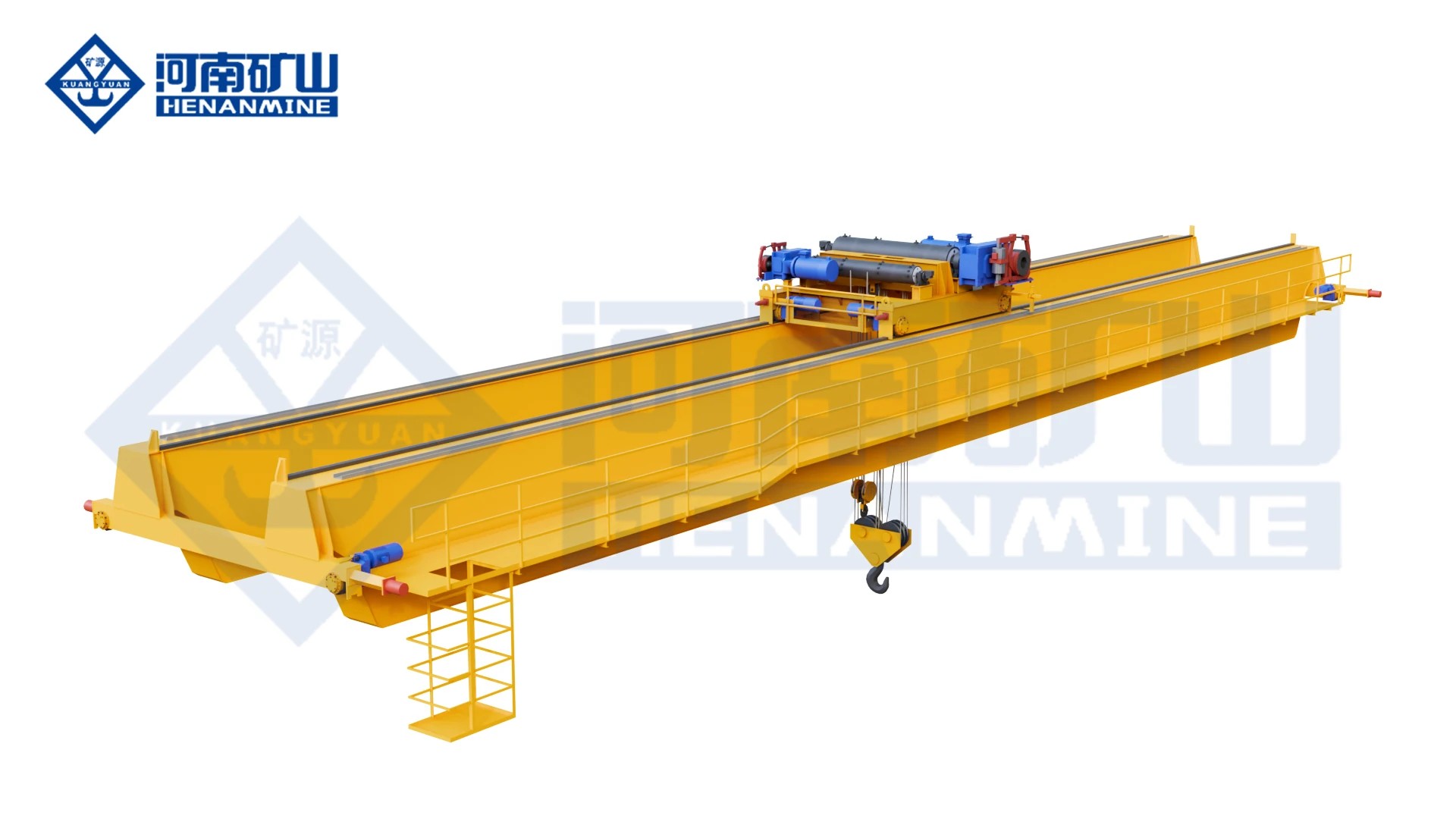
Move machine parts, fabricated assemblies and heavy equipment across your workshop with a double girder bridge and a winch trolley. Choose a single hook for general lifting or a main and auxiliary hook arrangement for a wider range of load sizes.
Tell us what you need to lift and your approximate span. We’ll help you choose the lifting arrangement.
Start with the dimensions you already know. A workshop photo or sketch can help us recommend a configuration.
Use a single hook for routine lifting, or choose a main and auxiliary hook crane when the same bay handles both large equipment and smaller components.
A5 and A6 selections let the bridge, lifting mechanism and travel equipment follow the frequency and severity of the lifting task.
Bridge travel and trolley travel move the hook between receiving, assembly, storage and maintenance positions on one overhead runway.
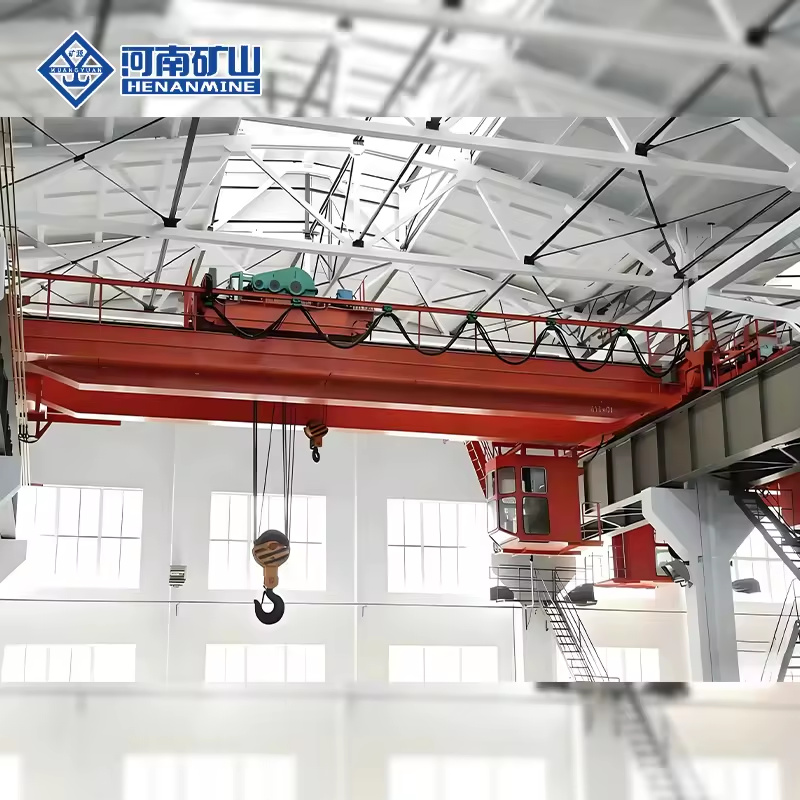
Lift castings, machine frames and welded assemblies between production stations. Select hook capacity for the workpiece together with its slings or lifting beam.
Move motors, gearboxes and complete machines into position. Add an auxiliary hook when smaller components need a separate lifting mechanism.
Transfer heavy finished equipment between storage and loading positions. Outdoor service can be specified for an exposed runway.
For a 20/5 t crane, the main hook is rated 20 t and the auxiliary hook 5 t. The technical offer defines the permitted hook combinations.
Compare the available options for your lifting task. Capacity, span, lift height and speed are matched in the selected configuration.
| Model | QD |
|---|---|
| Rated capacity | 5 / 10 / 16/3.2 / 20/5 / 32/5 / 50/10 t; larger engineered options to 450/80 t |
| Span | 5–50 t: 10.5–31.5 m; larger cranes use capacity-specific spans |
| Lifting height | 5/10 t: 16 m; 16/3.2 t: 16/18 m; 20/5 t: 12/14 m; 32/5 t: 16/18 m; 50/10 t: 12/16 m |
| Working duty | 5–50/10 t standard: A5 / A6; slow-speed versions: A3; 400/80–450/80 t: A1–A3 |
| Hoisting speed | 5 t A5: 11.3 m/min; 16/3.2 t A5: 7.9/14.6 m/min |
| Trolley / bridge travel | 5 t A5, 19.5 m span: trolley 37.2 / bridge 89.8 m/min |
| Lifting arrangement | Winch trolley; hook or main/auxiliary hooks |
| Control | Cabin, pendant or radio control to the ordered arrangement |
| Power supply | 380 V / 50 Hz, three-phase; destination supply by specification |
| Operating environment | General workshops and warehouses; outdoor package available |
| Heavy-load configurations | 75/20 / 100/20 / 125/32 / 160/50 / 200/50 / 250/50 / 300/40 / 350/75 / 400/80 / 450/80 t |
| Heavy-load geometry | 300/40 t: 17 m span; 350/75 t: 22 m; 400/80 t: 21 m; 450/80 t: 20.8 m |
| Hook capacity | Duty | Span | Main / auxiliary lift | Main / auxiliary hoisting speed |
|---|---|---|---|---|
| 5 t | A5 | 19.5 m | 16 m | 11.3 m/min |
| 10 t | A6 | 19.5 m | 16 m | 10.4 m/min |
| 16/3.2 t | A5 | 19.5 m | 16/18 m | 7.9/14.6 m/min |
| 20/5 t | A6 | 19.5 m | 12/14 m | 9.8/15.5 m/min |
| 32/5 t | A5 | 19.5 m | 16/18 m | 7.5/15.5 m/min |
| 50/10 t | A6 | 19.5 m | 12/16 m | 7.8/10.4 m/min |
| 400/80 t | A1–A3 | 21 m | 25/30 m | 1.165/4.78 m/min |
| 450/80 t | A1–A3 | 20.8 m | 25/33 m | 0.895/4.84 m/min |
Each row is a complete selection. A slash identifies main and auxiliary hook values. Capacity, span, duty and speeds stay together; heavy configurations use their own geometry and duty.
Compare the complete crane arrangement with workshop views to see the main girders, trolley and hook system.
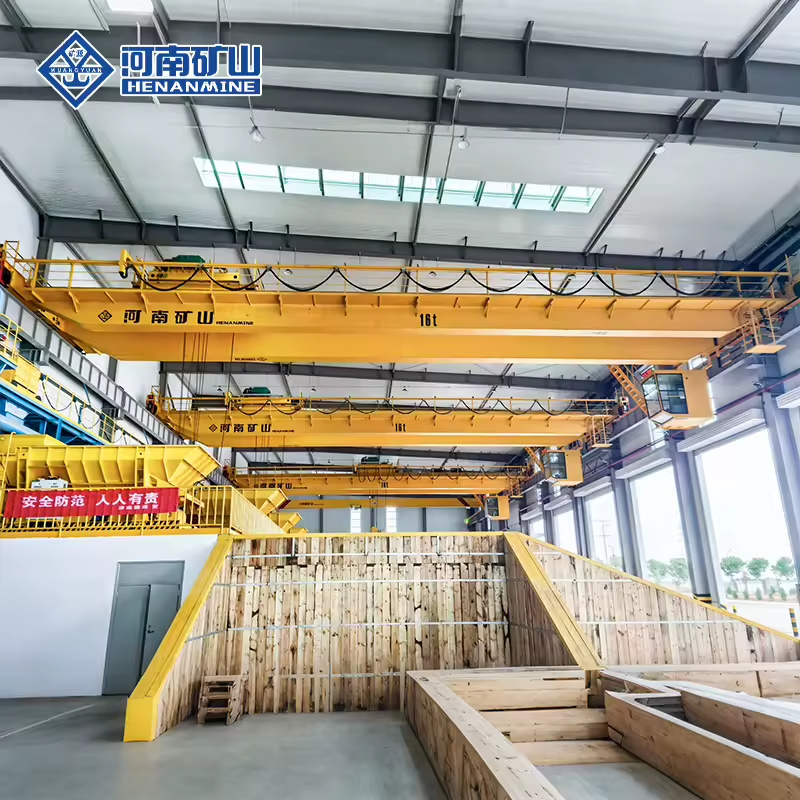
A clear starting point is your largest load, working span and required lifting height. The crane package can then be matched to the handling cycle.
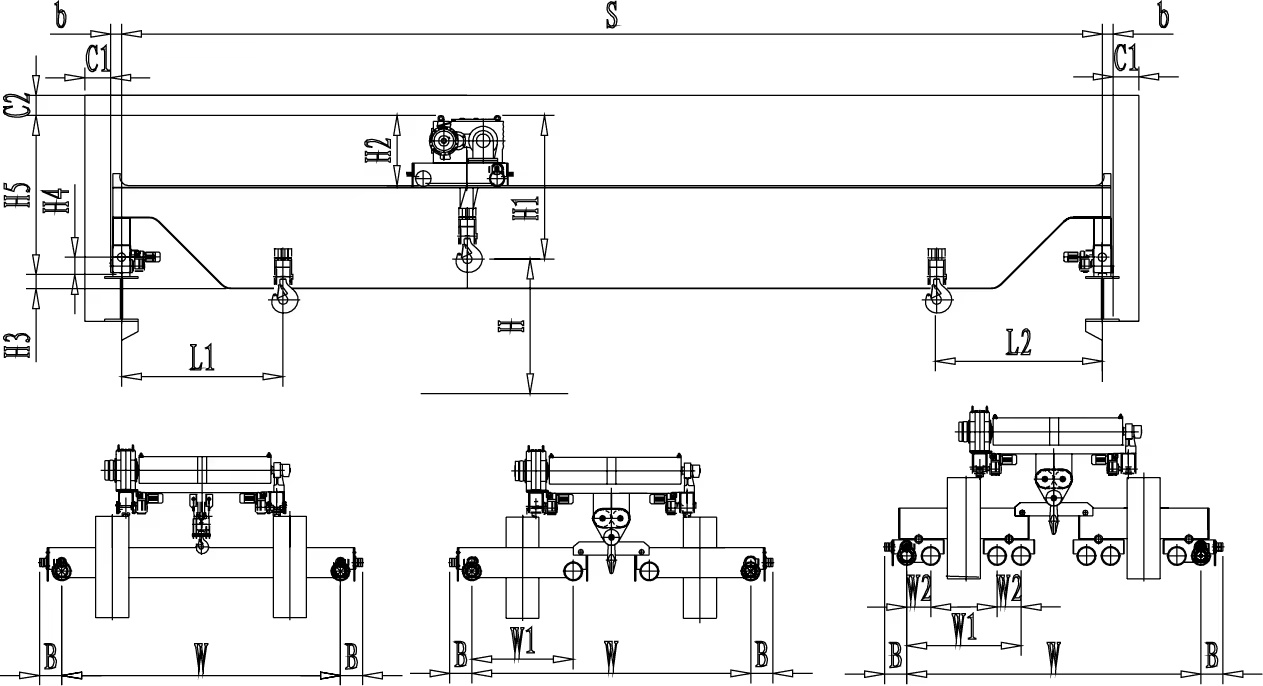
Standard selections include 5 and 10 t single-hook cranes, plus 16/3.2, 20/5, 32/5 and 50/10 t main/auxiliary arrangements. Each hook retains its own rating.
Choose the duty with the lifting cycle. For example, the 16/3.2 t arrangement has 7.9 m/min main hoisting at A5 and 10.7 m/min at A6, with a 14.6 m/min auxiliary hook.
Select cabin, pendant or radio control to suit visibility of the load and the production route. State any requirement for slow positioning or variable-frequency travel.
Larger configurations use their own spans, speeds and duty classes. Match the electrical package to the destination voltage, frequency and indoor or outdoor operation.
Compare the equipment, documentation, delivery and service scope for the configuration you need.
Request a quotation for one QD crane or a multi-crane project. The offer confirms the order quantity and selected hook arrangement.
Compare the bridge, winch trolley, hook equipment, controls and electrical supply equipment on the same scope. List rails, conductor system, lifting attachments, freight and site services separately.
Include the approved crane arrangement, selected mechanism data, electrical drawings, operating and maintenance manuals, and agreed inspection and load-test records. Destination-specific conformity documents are defined in the order.
Factory dispatch is scheduled for the selected capacity, span, duty and electrical package after the technical arrangement is approved. Freight and site installation dates are stated separately.
Choose equipment supply, installation guidance or an agreed installation scope. Confirm unloading access, runway readiness, installation equipment and site load-test responsibilities.
Agree the warranty period and coverage for the bridge, winch, motors, brakes, wheels and controls. The support package identifies service contacts and recommended operating spares.
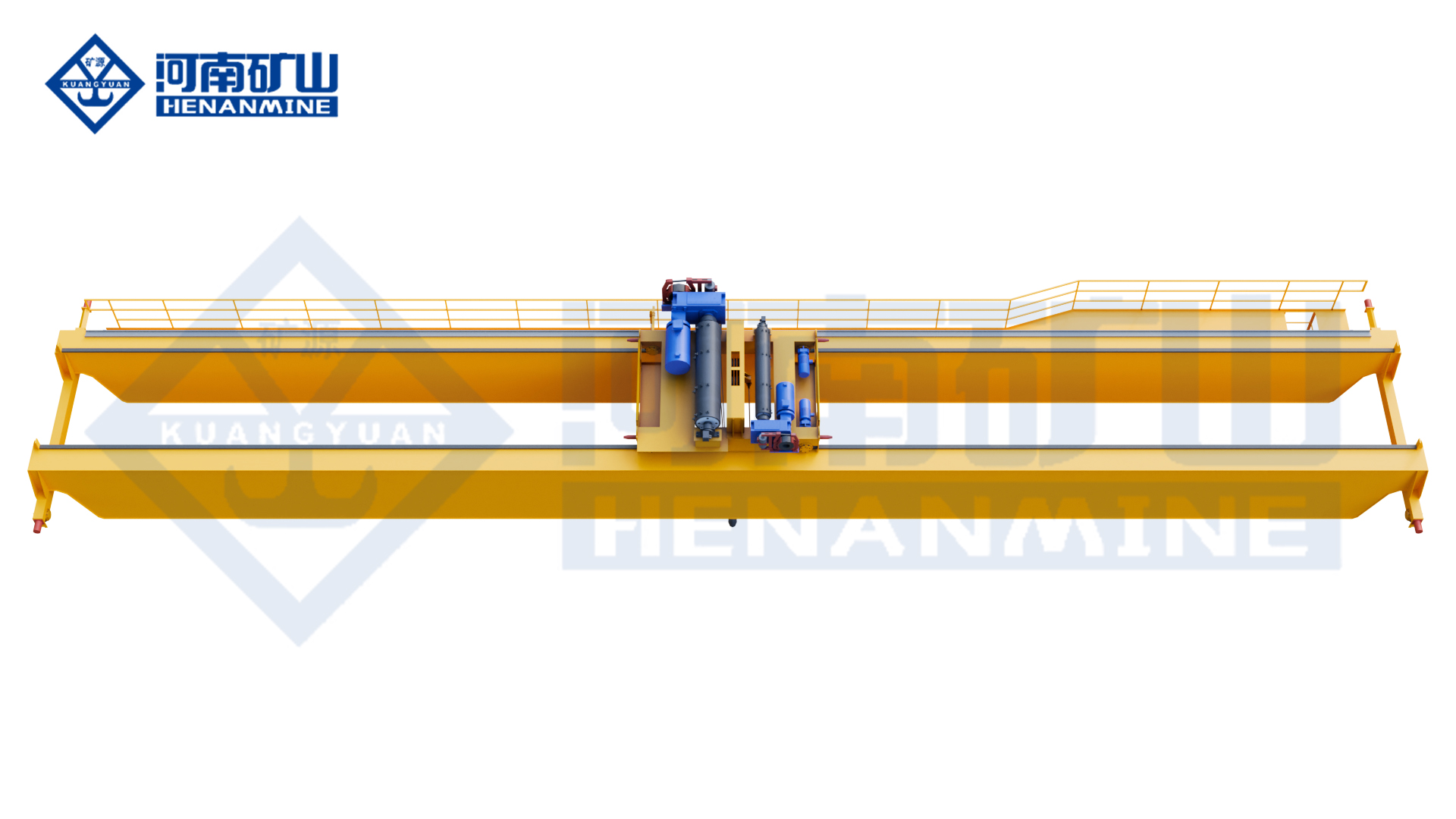
Position production loads with modular hook lifting, stepless speed control and optional electronic anti-sway.
Compare this model ↗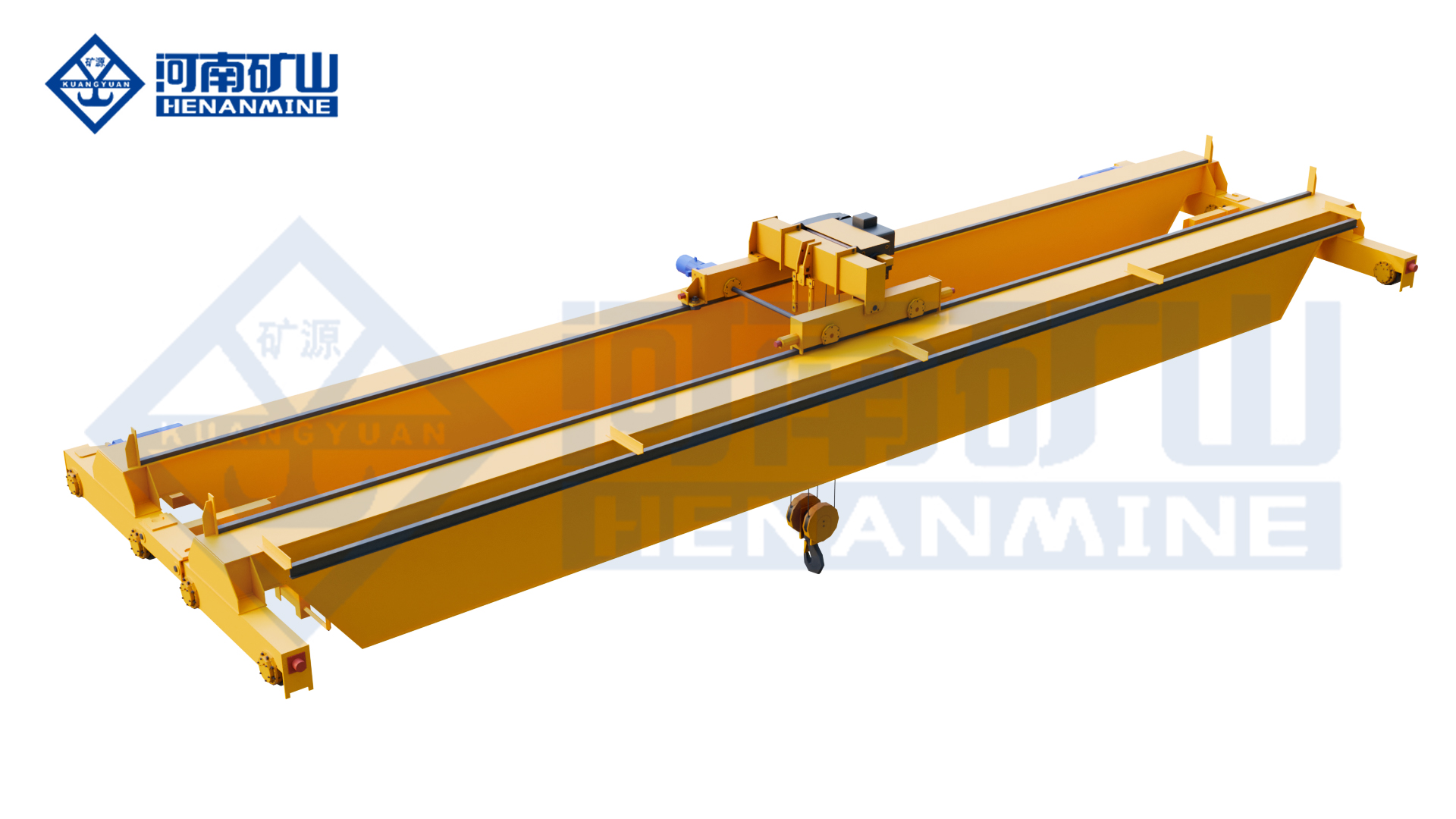
Handle workshop and warehouse loads with an electric hoist on a double-girder bridge.
Compare this model ↗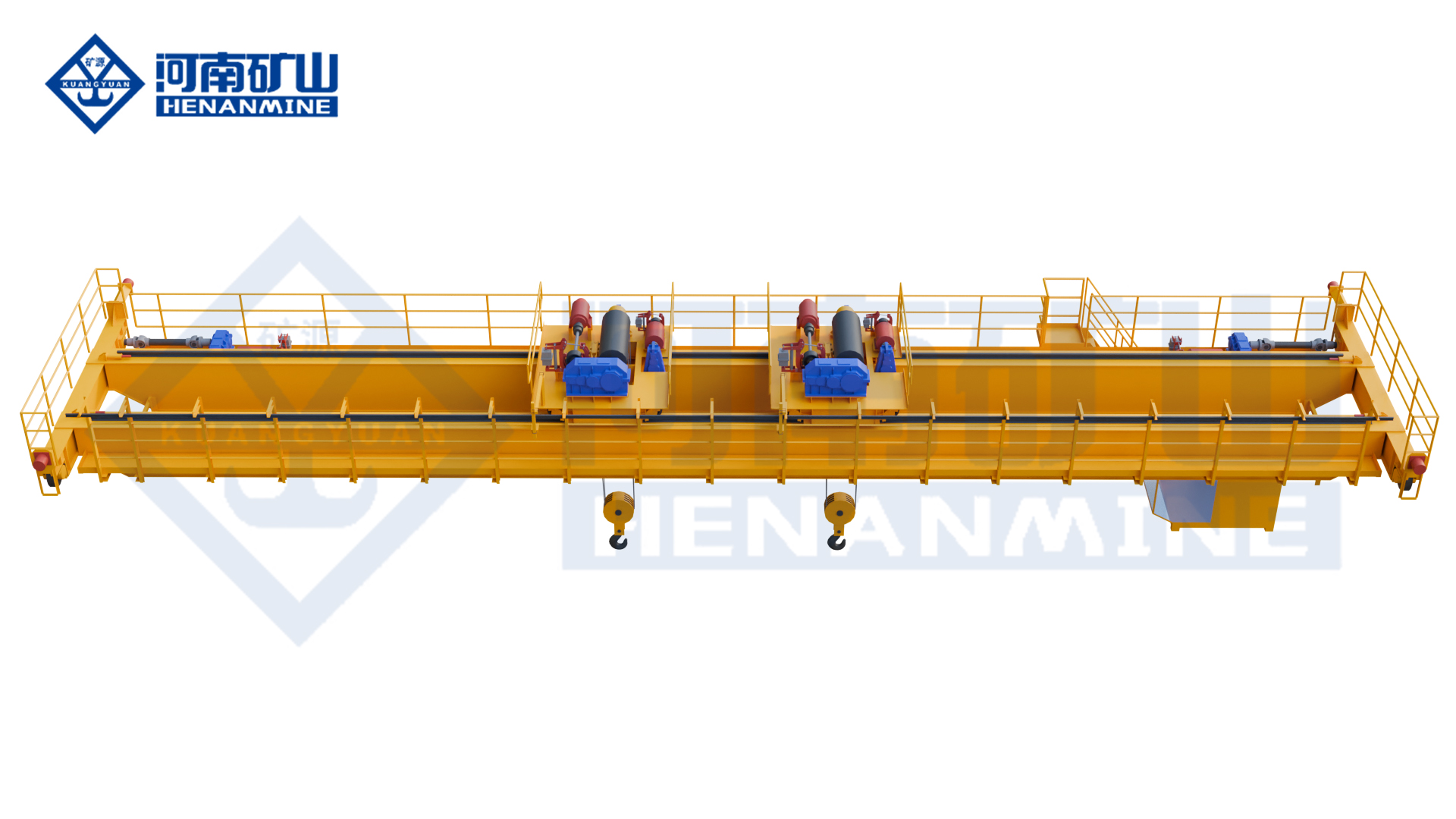
Two hook trolleys can lift independently or together when long loads need two controlled lifting points.
Compare this model ↗Find the arrangement, equipment options and order information that suit your application.
QD suits workshop lifting where the load and operating cycle call for a winch trolley on a double girder bridge. Compare the selected duty and speeds with an LH electric-hoist crane when choosing the lifting package.
It identifies a 32 t main hook and a 5 t auxiliary hook. It is not a 37 t hook rating. The order defines whether the hooks can operate together and the permitted load case.
The standard group includes 5, 10, 16/3.2, 20/5, 32/5 and 50/10 t selections, with 10.5–31.5 m spans. The configuration table pairs capacity, duty, span, lifting height and hoisting speeds.
Duty follows the load spectrum and lifting frequency. A5 and A6 versions can have different hoisting speeds, structural details, crane masses and wheel loads. Select the duty with your typical load and operating hours.
The QD family includes heavy main/auxiliary configurations from 75/20 to 450/80 t. These use capacity-specific geometry and mechanisms; for example, the 450/80 t selection has a 20.8 m span and A1–A3 duty.
The operating environment is specified with the order. For an outdoor runway, include the wind, rain, temperature and corrosion conditions so the electrical protection, coatings and parking arrangement can be selected.
Send the maximum lifted load, span, lifting height and lifting frequency. Include the destination power supply, preferred control and whether rails, power supply equipment, installation or shipping are required in the offer.
The offer identifies the selected crane, dispatch schedule, warranty terms and required inspection or conformity documents. Production, international transport and site installation are scheduled as separate parts of the order.
Tell us what you need to lift, your project location and any dimensions you already know. We’ll help you choose a suitable configuration.
info@cranehenanmine.com