

Wheel replacement addresses damaged material; alignment, rail and drive repairs address the forces that caused it. The repair scope should connect the measured wear pattern with a verified mechanical cause.
01Start with the wear pattern, not a wheel order
| Observed pattern | Investigation priority | Possible repair scope |
|---|---|---|
| Wear concentrated at one runway location | Rail gauge, alignment, joints and local support movement | Correct the identified rail or support defect |
| Persistent one-sided rubbing | Wheel alignment, bridge squareness and runway geometry | Adjust the verified geometric error |
| Rubbing changes with travel direction | Drive response, brakes, diameter differences and alignment | Correct mechanical or control imbalance |
| Pitting, flats or cracking as well as flange wear | Material condition, rolling contact, skidding and bearings | Assess wheel replacement and the underlying cause |
These patterns guide an inspection; they are not proof of a single fault. Record which flange is worn, the travel direction and runway position. Compare the corresponding wheels and rails rather than judging one wheel in isolation.
02Follow a measured repair sequence
- Make the crane safe. Apply the site isolation and access procedure. A qualified inspection determines whether operation must stop and how the crane can be supported for repair.
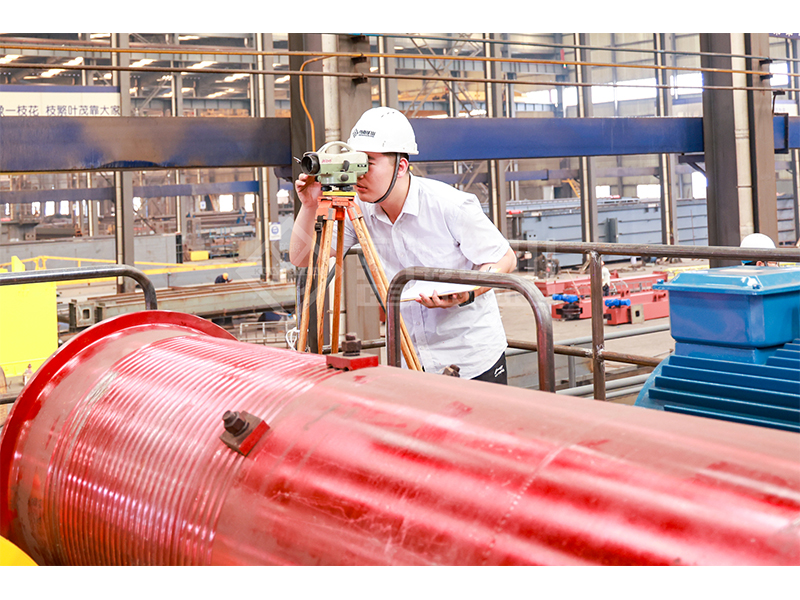
- Survey the runway and crane. Measure rail geometry, wheel alignment, diameters, bridge squareness and bearing condition against the applicable drawings and tolerances.
- Correct the demonstrated cause. Repair defective rail supports or joints, adjust alignment, or correct a verified travel-drive problem. Do not change several unrelated settings simply to make the noise disappear.
- Replace or restore affected components. Use approved dimensions and material requirements. Reprofiling is an engineering decision that must preserve the required wheel geometry, hardened layer and matching rolling diameters.
- Verify the result. Complete the specified travel checks, inspection and acceptance tests. Establish measured wear checkpoints for follow-up.
Do not weld-build a flange or change wheel hardness as a routine cure. Either can introduce a new defect or transfer damage to the rail without fixing the guidance problem.
03Crane wheel prices: bare wheel versus wheelset
| Drawing reference | Wheel only, USD each | Idle wheelset, USD each | Active wheelset, USD each |
|---|---|---|---|
| L758, Ø400 mm | $248 | $985 | $1,030 |
| L764, Ø500 mm, double flange | $410 | $1,640 | $1,720 |
Third-party PDF price schedule retrieved 28 October 2026; publication date not stated. These are drawing-specific references, not Henan Mine quotations; confirm the current price before ordering. Reference ranges are $248–$410 per wheel, $985–$1,640 per idle wheelset and $1,030–$1,720 per active wheelset. These examples do not establish interchangeability or motor/reducer inclusion. Freight, tax, runway survey, rail correction, access, installation and acceptance testing are separate.
A total repair quotation needs two distinct lines: the correct replacement assembly and the work required to restore the crane/runway relationship. Wheel count alone cannot determine alignment labor, rail repairs or downtime. Agree those items after the survey.
04Buy the replacement to the approved drawing
Match tread diameter and width, flange profile, bore or shaft interface, bearings, material, heat treatment and drive connection. A wheel with the same outside diameter is not necessarily compatible. Determine whether mating or driven wheels also require work before ordering a single replacement.
Review replacement crane parts by complete assembly scope. If the fault is still unconfirmed, use the wheel flange wear symptoms guide to organize the inspection before committing to parts.
After return to service, check whether the previous contact pattern recurs at the same locations. Keep the survey, adjustment records and baseline wheel measurements together so the next inspection can compare actual change.
05Buyer questions
Must all crane wheels be replaced together?
Not automatically. Check the allowable diameter differences, alignment, material condition and drive arrangement. The approved repair plan determines which wheels or wheelsets need replacement.
Can lubrication fix flange wear?
Lubrication cannot correct misalignment or drive imbalance. Any flange-lubrication system requires manufacturer approval and control of contamination on the wheel tread, rail top and brakes.