
Lift components for occasional service
Use top-running rails to reach equipment-removal positions. Check the complete component load, hand-chain reach and safe operator path.
Bridge cranes for workshops and production lines.
Explore Overhead Cranes
Ground-supported lifting for yards and construction.
Explore Gantry Cranes
Wire rope and chain hoists for lifting points and cranes.
Explore Electric Hoists

Wire rope lifting and pulling with a powered drum.
Explore Electric Winches
Grab buckets, magnets and hooks for your load.
Explore Lifting Attachments & Grabs
Mobile handling for containers, precast and yard loads.
Explore Rubber-Tired Gantry Cranes & Straddle Carriers

Lift and move vessels through boatyards and marinas.
Explore Marine Travel Lifts
Ladle, slab, scrap and coil handling across steel production.

Container stacking and cargo transfers across terminals and rail.

Turbine installation, powerhouse maintenance and wind equipment assembly.

Controlled component transfer and positioning for precision assembly.

Heavy fabrication, production lifting and factory crane automation.

Process lifting for smelters, carbon blocks and anode materials.

Clean lifting and classified protection for sensitive process areas.

Bridge fabrication, metro construction and ship block assembly.

Automated storage and retrieval for plates, cables and bins.

Follow project dispatches, crane engineering and factory acceptance.

Dispatch, installation and equipment in service

Crane configurations and handling technology

Factory inspections, acceptance and test programmes

Company developments, people and community programmes
Handle occasional workshop lifts with a hand-operated, top-running single-girder crane. Select the manual hoist and travel arrangement by load, span, travel distance and operator effort.
Get a configuration and price matched to your load, dimensions, operating cycle and delivery destination.

Serve repair and low-cycle storage bays where manual lifting and travel suit the workload.
Use top-running rails to reach equipment-removal positions. Check the complete component load, hand-chain reach and safe operator path.
Compare manual effort and movement distance against the number of lifts per shift. Choose powered operation when the cycle makes hand operation impractical.
Check the runway rails, supporting structure and useful hook coverage. Keep the operator’s path clear during bridge and trolley travel.
The figures below describe catalogue configurations. Select capacity, span, duty and mechanisms as one combination on an approved drawing.
Compare the specifications and selection requirements
| Parameter | Reference selection range | Procurement check |
|---|---|---|
| Rated Capacity | 1 / 2 / 3 / 5 / 10 t | Confirm the selected lifting rating and complete suspended load, including attachments. |
| Span | 5–14 m | Confirm the runway rail centre-to-centre span and required hook coverage on the approved general arrangement drawing. |
| Lifting Height | 3–10 m | Confirm the required vertical hook travel, upper hook position and hook approach for the load route. |
| Working Class | A1–A3 (light duty) | Select the duty class for the load spectrum, operating hours and handling frequency. |
| Crane Travel Speed | 5.2 m/min for 1–3 t; 4.3 m/min for 5–10 t | Confirm crane travel speed, runway travel and stopping requirements for the selected configuration. |
| Trolley Travel Speed | 5.3 / 5.9 / 4.7 / 4.7 / 4.2 m/min by capacity | Confirm trolley speed, available travel and stopping position for the handling route. |
| Power Supply | Not required | Confirm manual operation for each crane motion and identify any separately powered equipment in the order scope. |
What the final drawing must show: Rated load · rail-centre span · lift and hook approach · crane dimensions · wheel loads · selected mechanism and controls

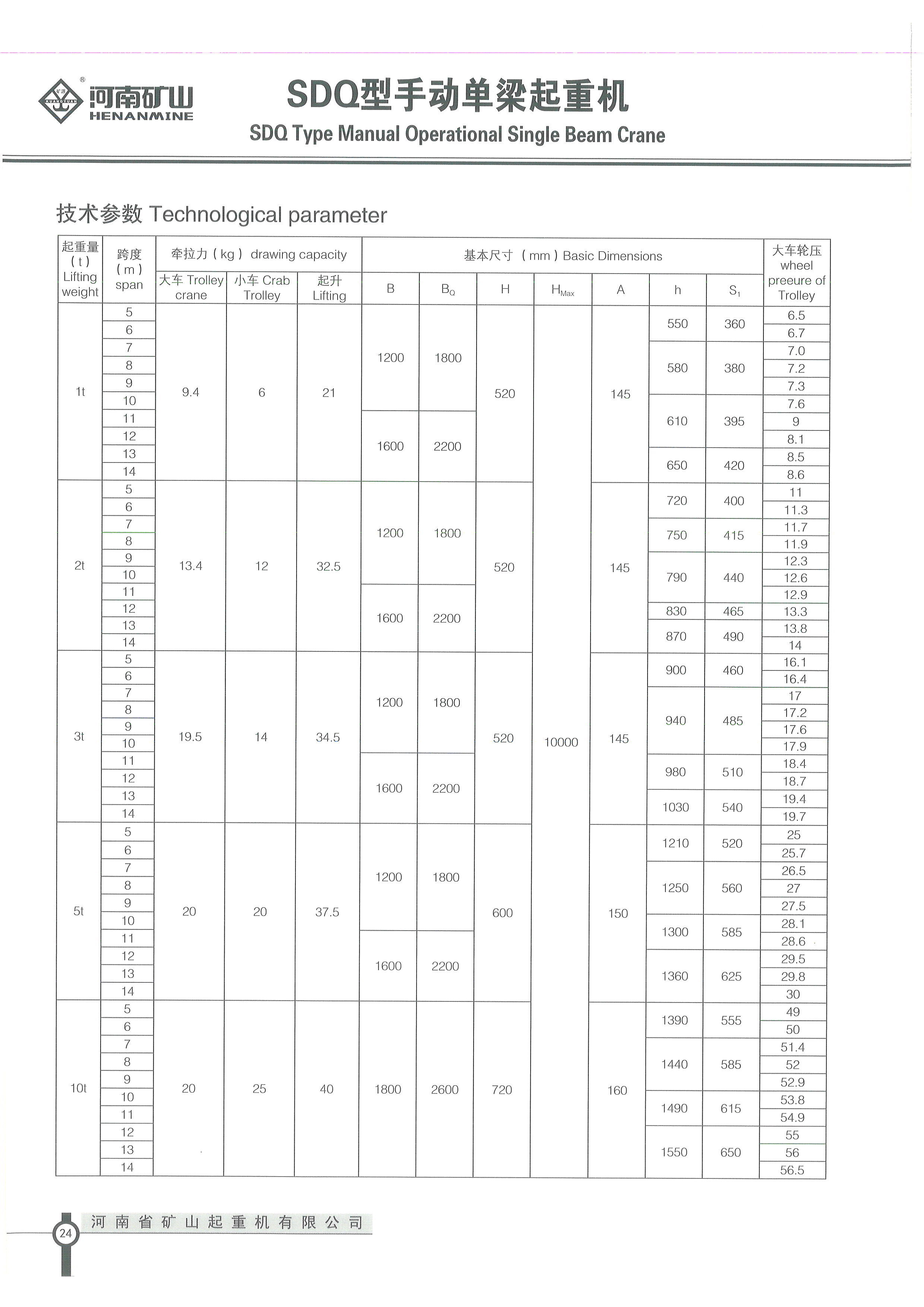
For repair workshops and low-cycle warehouse bays, show pickup, travel and set-down locations on one drawing. Request hook envelope, reactions and the selected mechanism in the technical offer.
Include payload, rigging and any attachment or carrier beam.
Mark rail centres, lift, approach distances, obstacles and travel length.
State loads per cycle, cycles per hour, shifts and required positioning.
Provide runway details, support capacity and destination requirements.
Require the same load case, approved layout, equipment list and delivery milestone from every supplier.
Request a general arrangement, hook coverage, wheel loads and support interface.
List the bridge, manual trolley and hoist, travel mechanism, brakes, rated loads and any specified lifting attachments.
Separate factory inspection, dispatch, freight, installation, site load test and operator documents.
Align the selected equipment, technical documents, factory dispatch and site responsibilities before placing your order.
Request a quotation for one crane or a complete project package; confirm the minimum order for the selected configuration.
Agree the documents for the quoted crane and destination: applicable conformity documents, inspection and test records, operating manuals and the approved technical schedule.
Confirm dispatch after capacity, track or rail dimensions, span, hook travel and hand-chain lengths are approved. Separate factory delivery, freight and site installation dates.
Specify the documents required for your equipment, destination and site approval in the technical offer.
Agree the load cases, dimensions, operating envelope and supply schedule.
Set the inspection scope, acceptance criteria and customer witness points.
Confirm transport dimensions, shipping route, packing list and unloading access.
Agree site readiness, commissioning, load testing and operator training.
Request the warranty period and coverage for the bridge, wheels, trolley and manual hoist. Identify hand chain, load chain, brake friction parts and other wear items separately.
Request service and warranty terms ↗Include safe operating instructions, hand-chain and brake inspection requirements, compatible hoist spares and the approved runway installation details.
Identify the equipment and personnel needed for unloading, installation and commissioning. Put responsibilities and acceptance requirements in the agreed project schedule.
Review related equipment against your load, site geometry and operating cycle.
Compare powered lifting and travel for a higher operating frequency.
View details ↗Compare the double-girder manual arrangement and load range.
View details ↗Review the available lifting arrangements and selection requirements.
View details ↗Check the selection, commercial scope and installation requirements before ordering.
Confirm hand-pull force, friction, travel distance and the planned operating crew for the chosen configuration.
Compare electric operation when lifting frequency, travel distance or manual effort makes hand operation impractical.
Request a quotation for one crane or a project package; the offer should state the minimum quantity and complete supply scope.
Ask for calendar days from deposit and approved drawings to factory dispatch, with freight and site work shown separately.
Share the complete load, arrangement, rail centres, lift, duty, site conditions, destination and required delivery scope. We can return a model-specific drawing, selected specifications and a dated quotation.
Discuss your project