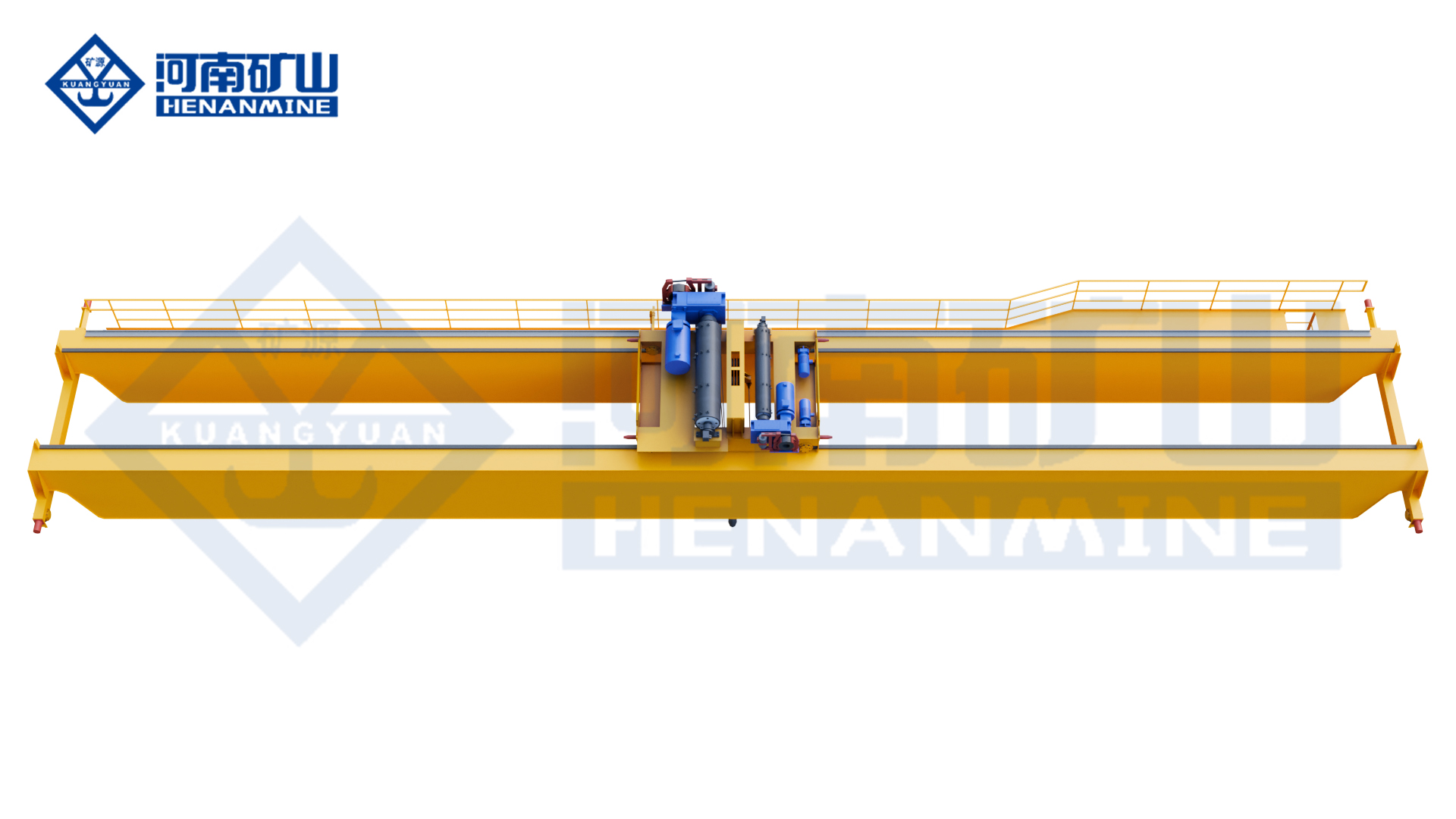
Green anode block transfer
Handle suitable green blocks between preparation and storage positions using contact surfaces and gripping force matched to their condition. The allowed handling temperature and strength are specified with the gripper.
Bridge cranes for workshops and production lines.
Explore Overhead Cranes
Ground-supported lifting for yards and construction.
Explore Gantry Cranes
Wire rope and chain hoists for lifting points and cranes.
Explore Electric Hoists

Wire rope lifting and pulling with a powered drum.
Explore Electric Winches
Grab buckets, magnets and hooks for your load.
Explore Lifting Attachments & Grabs
Mobile handling for containers, precast and yard loads.
Explore Rubber-Tired Gantry Cranes & Straddle Carriers

Lift and move vessels through boatyards and marinas.
Explore Marine Travel Lifts
Ladle, slab, scrap and coil handling across steel production.

Container stacking and cargo transfers across terminals and rail.

Turbine installation, powerhouse maintenance and wind equipment assembly.

Controlled component transfer and positioning for precision assembly.

Heavy fabrication, production lifting and factory crane automation.

Process lifting for smelters, carbon blocks and anode materials.

Clean lifting and classified protection for sensitive process areas.

Bridge fabrication, metro construction and ship block assembly.

Automated storage and retrieval for plates, cables and bins.

Follow project dispatches, crane engineering and factory acceptance.

Dispatch, installation and equipment in service

Crane configurations and handling technology

Factory inspections, acceptance and test programmes

Company developments, people and community programmes
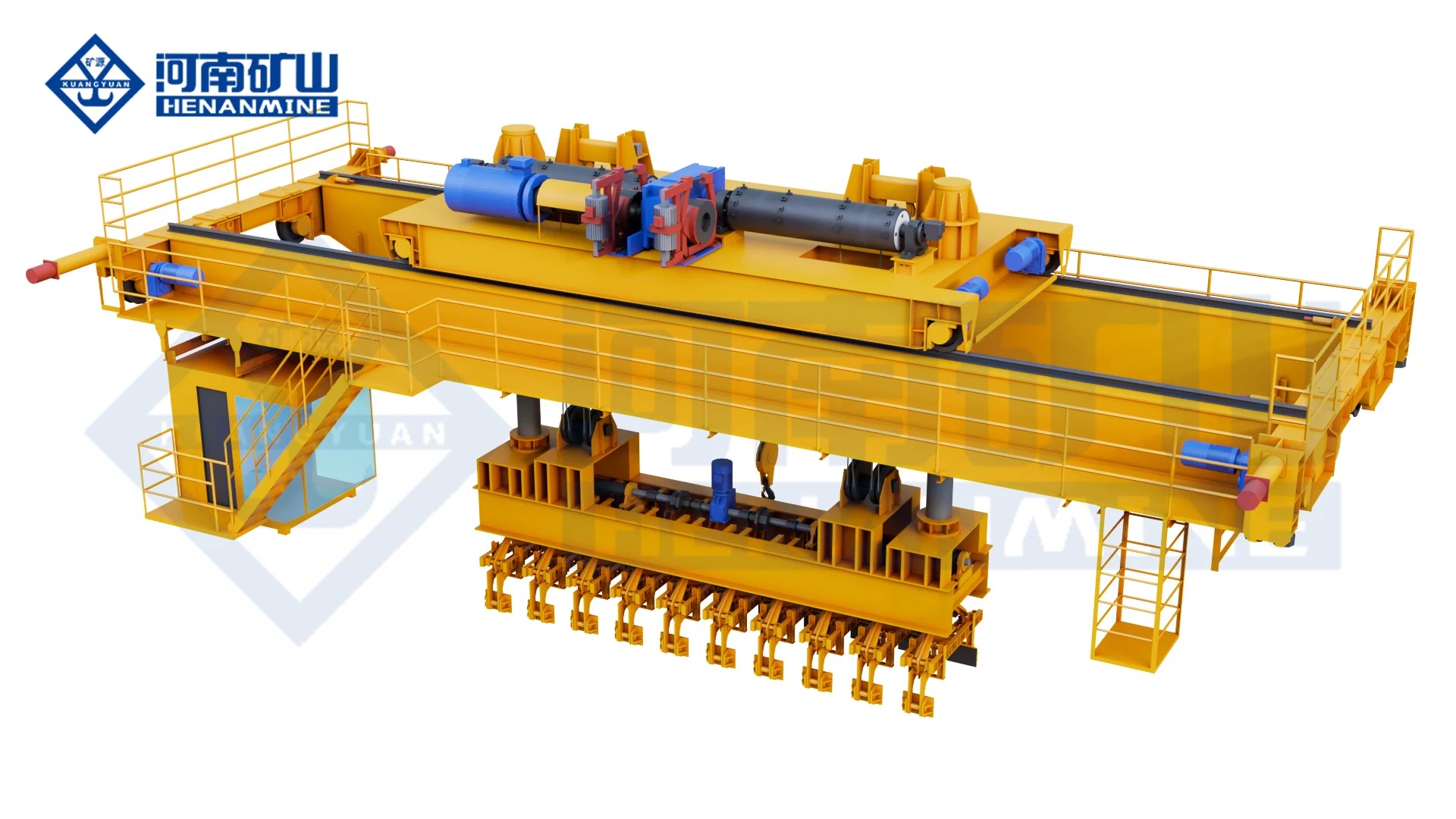
Move and stack green or baked anode carbon blocks with lifting equipment matched to their dimensions and handling strength. YDJ combines an overhead bridge, a profiled mechanical or hydraulic gripper and variable-frequency motion. Choose operator-controlled handling or an agreed automatic stacking package with laser positioning, block identification and plant data exchange.
Tell us what you need to lift and your approximate span. We’ll help you choose the lifting arrangement.
Start with the dimensions you already know. A workshop photo or sketch can help us recommend a configuration.
Profiled mechanical or hydraulic grippers match the carbon-block surface. Select clamping force and contact geometry for block weight, condition and handling strength.
VFD lifting and travel support smooth approach and placement. Laser position recognition can support the specified stack locations and operating sequence.
Barcode or RFID identification and an agreed MES interface can link block identity, storage location and handling status. Manual and automatic operating modes are defined in the order.
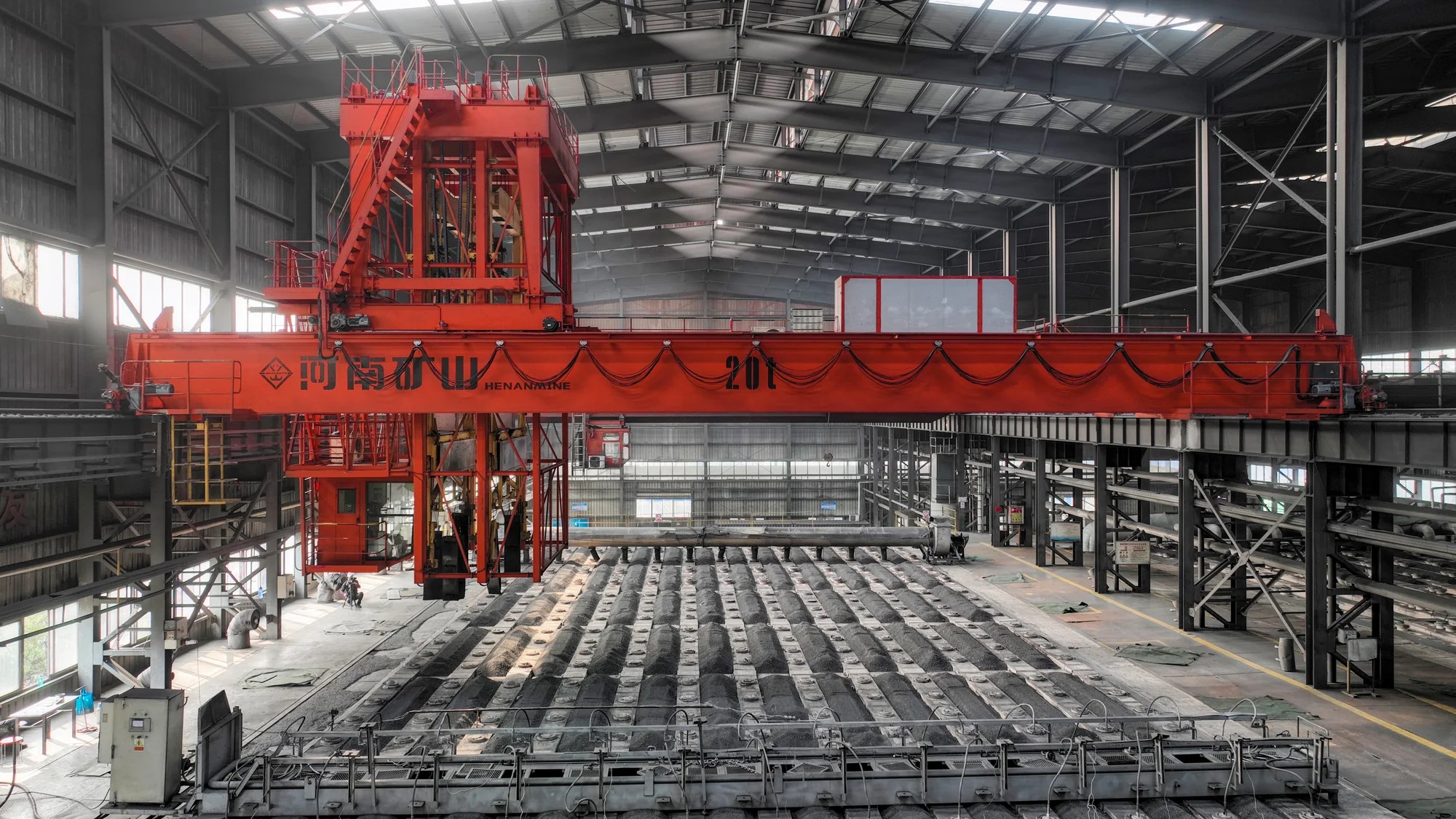
Handle suitable green blocks between preparation and storage positions using contact surfaces and gripping force matched to their condition. The allowed handling temperature and strength are specified with the gripper.
Stack and retrieve baked blocks in planned storage positions. Block size, stack pattern, clearances and the number handled in one lift determine the gripper and lifting arrangement.
Move identified blocks from storage to the agreed assembly or dispatch position. Optional warehouse data exchange supports location tracking and production coordination.
YDJ serves anode carbon-block logistics. Pot tending, changing anodes at an energized reduction cell and handling molten aluminum require separately specified process equipment.
Compare the available options for your lifting task. Capacity, span, lift height and speed are matched in the selected configuration.
| Model | YDJ anode carbon block stacking crane |
|---|---|
| Reference lifting capacity | 10–30 t; net block payload and gripper weight identified in the offer |
| Reference rail-centre span | 13.5–40 m; custom warehouse arrangement available |
| Reference lifting height | 6–20 m; selected for stack height and handling clearances |
| Reference working duty | A6–A8 offering; final class selected for load and operating cycle |
| Handled material | Green and baked anode carbon blocks |
| Gripper type | Profiled mechanical or hydraulic gripper with selected clamping-force control |
| Blocks per lift | Defined by individual block dimensions, weight and pickup pattern |
| Hoist / travel control | Variable-frequency speed regulation; selected loaded and approach speeds |
| Speed-regulation ratio | 10:1 reference ratio; selected mechanism speeds stated in the offer |
| Reference bridge-travel range | 6–60 m/min; operating speeds selected for the warehouse cycle |
| Positioning | Laser stack-position recognition in the selected control package |
| Identification | Barcode / RFID block tracking, as ordered |
| Plant data connection | MES / warehouse interface scope defined for the project |
| Gripper rotation | Fine-adjustment rotation available on selected gripper configurations |
| Power supply | Destination voltage/frequency specified; reference offering 220–690 V, 50/60 Hz |
| Minimum order | 1 complete crane and gripper system or a project batch |
| Handling arrangement | Block / load basis | Selected equipment | Performance to agree |
|---|---|---|---|
| Green-block transfer | Individual block weight, condition and handling strength | Profiled gripper with suitable contact pressure | Pickup quantity, permissible contact and placement requirements |
| Baked-block stacking | Block dimensions, batch weight and stack pattern | Block-matched mechanical or hydraulic gripper | Blocks per lift, stack height and loaded travel cycle |
| Position-assisted handling | Defined pickup and storage positions | VFD motion and selected positioning functions | Loaded / approach speeds and placement tolerance |
| Automatic warehouse operation | Defined blocks, locations and production sequence | PLC / HMI, laser positioning and ordered identification interface | Sequence scope, data exchange and commissioning acceptance |
The 10–30 t, 13.5–40 m and 6–20 m ranges are reference selection ranges, not all interchangeable combinations. Net block payload, gripper weight, pickup count and automatic-cycle performance are stated for the ordered system.
Compare the lifting layout and profiled gripping equipment. The ordered gripper follows block dimensions, pickup pattern and stack arrangement; its number of pickup positions is defined for the project.
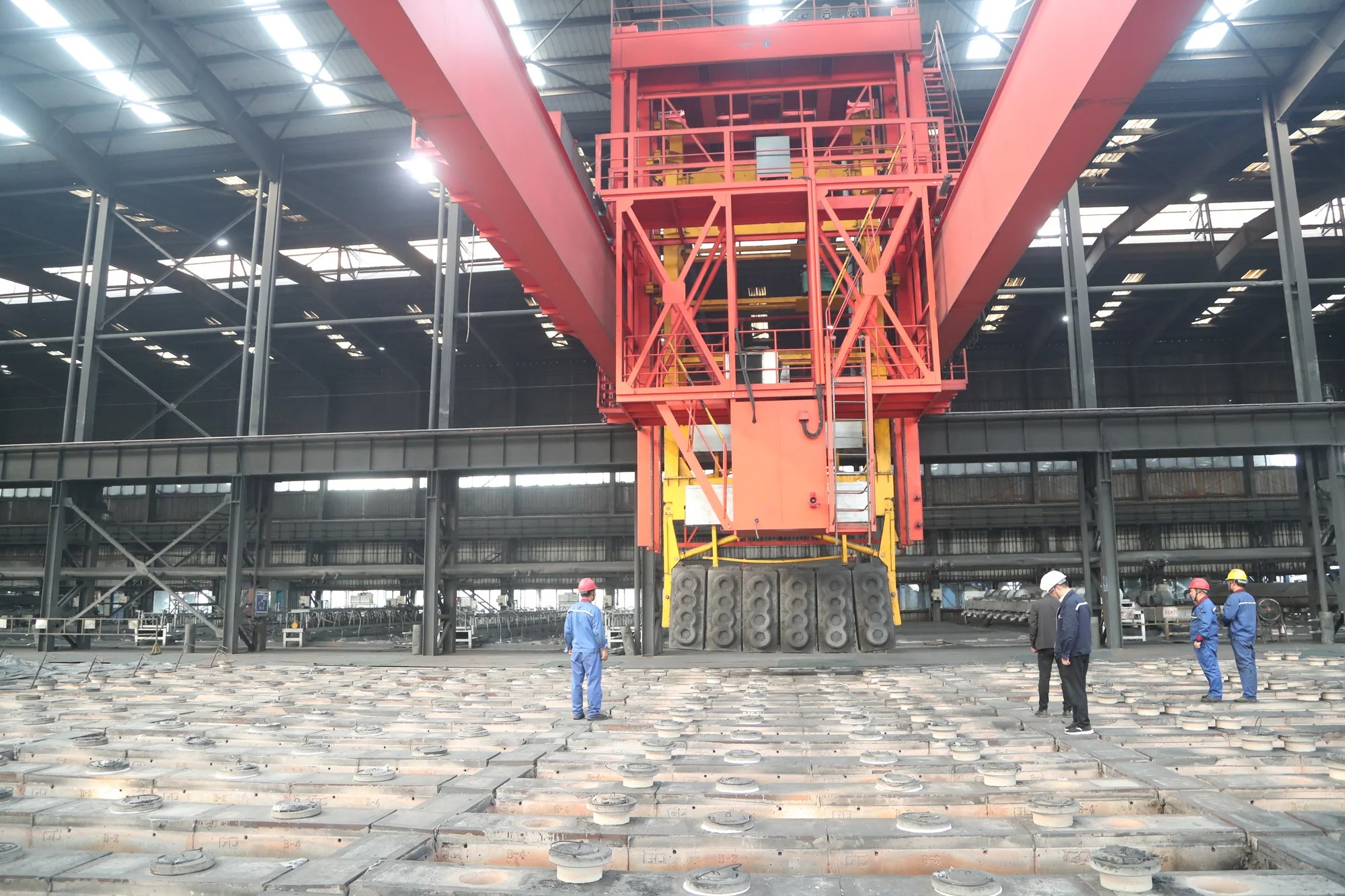

Send block dimensions, individual weight and the preferred pickup/stack pattern with span and lift height. We can propose the crane, gripper and suitable control level together.

Specify block condition, temperature and allowable contact pressure. Choose a mechanical or hydraulic gripper with contact geometry and adjustable clamping force matched to the block.
Define blocks per lift, spacing and stack levels. The offer states payload, gripper weight and crane load basis rather than equating nominal crane tonnage with net carbon-block payload.
Select the operating station, positioning functions and automatic-sequence scope. Rotation fine adjustment can be specified where the gripper and stack geometry require it.
Choose barcode/RFID tracking and the required warehouse or MES data exchange. Communication signals, stack coordinates and commissioning criteria are agreed with the selected automation package.
Compare the equipment, documentation, delivery and service scope for the configuration you need.
One complete YDJ crane and carbon-block gripper system or a project batch, with the ordered pickup count and payload defined.
Identify bridge, hoist/trolley, profiled gripper, hydraulic/mechanical actuation, PLC/HMI, positioning, identification interface, power feed, testing, freight and commissioning. Warehouse software changes, runway/civil works and spares are stated as included or excluded.
Request the payload/gripper load basis, pickup and stack drawings, electrical/control documentation, interface signals, inspection/test records and operating manuals. Destination conformity documents are defined in the contract.
Production timing follows agreement of block geometry, gripper and automation scope. The offer identifies production start conditions, factory tests, dispatch and any plant-integration commissioning schedule.
Agree erection, gripper fit, block handling trials and commissioning of the ordered positioning/identification functions. Remote guidance or on-site supervision, training and plant-interface support are itemized.
Warranty duration, commencement, covered crane/gripper/control components, exclusions and service support are stated in the order. Gripper wear parts, hydraulic items and sensor/control spares can be included.
Find the arrangement, equipment options and order information that suit your application.
YDJ is selected for green or baked anode carbon blocks in carbon plants and anode storage areas. Block dimensions, weight, temperature and handling strength define the gripper and permitted pickup pattern.
The quotation identifies net block payload and the gripper/attachment weight separately. The crane load basis and pickup count are confirmed together; nominal crane tonnage alone does not define carbon-block payload.
The number follows block size, individual weight, gripper geometry and the intended stack pattern. Send the preferred pickup quantity; the offer states the resulting payload and gripping arrangement.
The gripper profile, contact area and clamping force are matched to block condition. Controlled lifting and travel reduce abrupt movement. Handling performance is agreed for the specified blocks rather than promised as zero breakage for every material.
The choice depends on contact geometry, required gripping-force control, pickup pattern and maintenance preferences. Both can be considered; the proposed arrangement identifies the grip actuation and holding/release functions.
No. Operator-controlled, position-assisted and automatic functions can be defined to suit the warehouse. The offer identifies the supplied modes, selected positioning functions and automatic operating sequence.
Barcode/RFID tracking and MES or warehouse data exchange can be included. Required identifiers, storage-location data and communication signals are agreed with your plant system so integration can be tested during commissioning.
It describes the relationship between the high and low regulated speeds in the selected drive range. It is not a lifting speed in metres per minute. Actual loaded, approach and travel speeds are listed in the offer.
This arrangement is for carbon-block storage and transfer. Anode changing, crust breaking and other pot-tending functions require separate process tooling and electrical/environmental provisions.
Send block dimensions, weight, green/baked condition, desired blocks per lift and a simple storage layout with stack height. Add span, lift height, shifts and the preferred control level; we can propose the handling arrangement and itemize delivery and support.
Tell us what you need to lift, your project location and any dimensions you already know. We’ll help you choose a suitable configuration.
info@cranehenanmine.com