
Material preparation and box transfer
Collect filled boxes from preparation or waiting positions and move them through the production bay. Include empty-box mass, maximum contents and attachment weight when defining the load and transfer cycle.
Bridge cranes for workshops and production lines.
Explore Overhead Cranes
Ground-supported lifting for yards and construction.
Explore Gantry Cranes
Wire rope and chain hoists for lifting points and cranes.
Explore Electric Hoists

Wire rope lifting and pulling with a powered drum.
Explore Electric Winches
Grab buckets, magnets and hooks for your load.
Explore Lifting Attachments & Grabs
Mobile handling for containers, precast and yard loads.
Explore Rubber-Tired Gantry Cranes & Straddle Carriers

Lift and move vessels through boatyards and marinas.
Explore Marine Travel Lifts
Ladle, slab, scrap and coil handling across steel production.

Container stacking and cargo transfers across terminals and rail.

Turbine installation, powerhouse maintenance and wind equipment assembly.

Controlled component transfer and positioning for precision assembly.

Heavy fabrication, production lifting and factory crane automation.

Process lifting for smelters, carbon blocks and anode materials.

Clean lifting and classified protection for sensitive process areas.

Bridge fabrication, metro construction and ship block assembly.

Automated storage and retrieval for plates, cables and bins.

Follow project dispatches, crane engineering and factory acceptance.

Dispatch, installation and equipment in service

Crane configurations and handling technology

Factory inspections, acceptance and test programmes

Company developments, people and community programmes
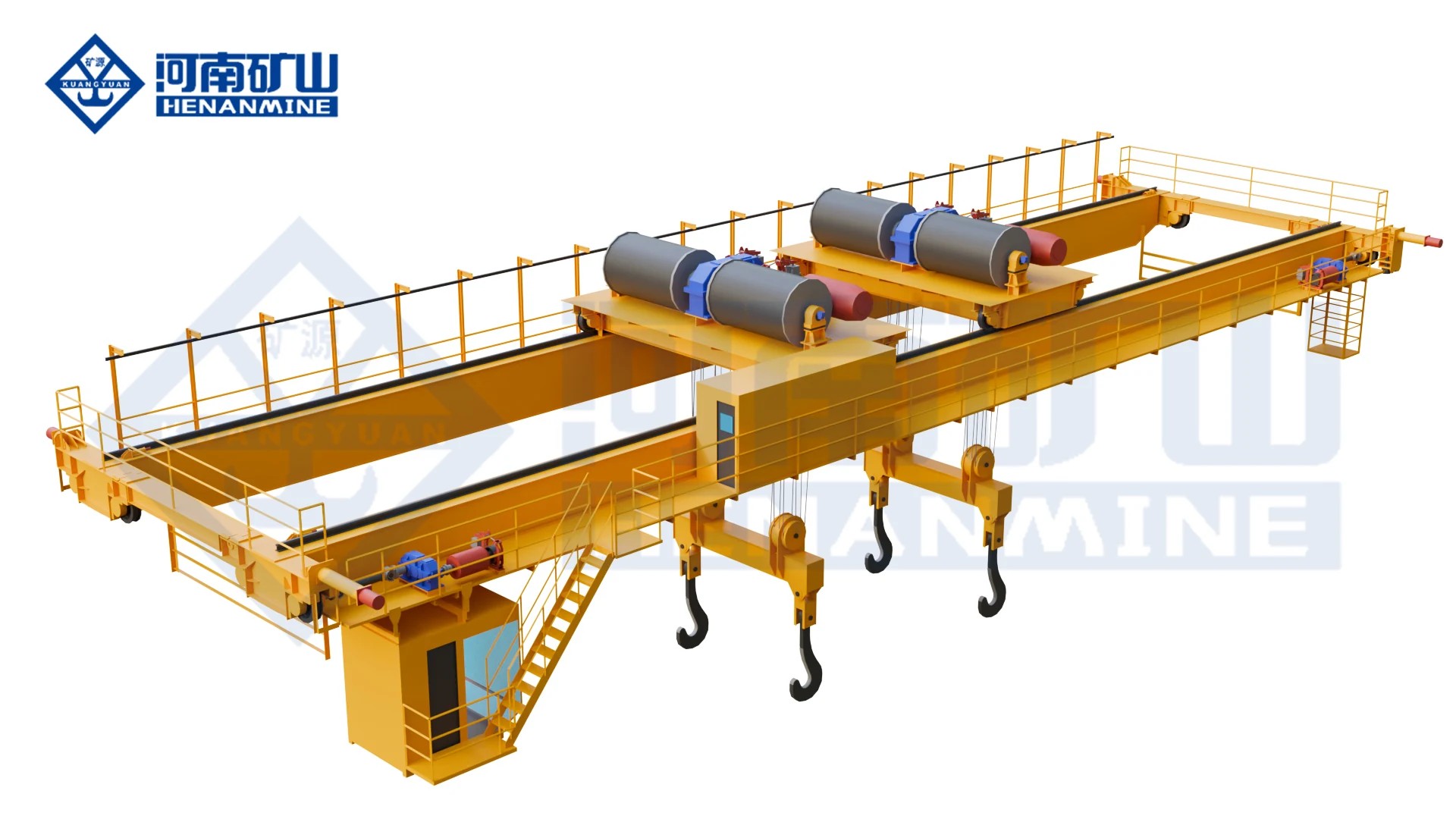
Lift a filled charging box, carry it to the furnace and discharge it through a defined tipping movement. YX matches the overhead crane, box attachment and controls to the connections used by your plant. Select trolley reactions, coordinated movements, weighing and thermal protection around the complete charging cycle, including the changing load distribution as the box turns.
Start with the information you already have. A load drawing and workshop sketch help us recommend a configuration.
Use the pickup points, centre of gravity and tipping axis to define the attachment and lifting geometry. Review furnace clearance throughout the movement, from loaded approach to empty-box return.
Where two trolleys are selected, the offer identifies individual loads, bridge limits and the allowed lifting, travel and tipping modes. Load reactions are checked as the box position and contents change.
Electronic weighing can display lifted weight and support records. Match measuring performance, operator displays and any plant data interface to the way your team prepares and charges material.

Collect filled boxes from preparation or waiting positions and move them through the production bay. Include empty-box mass, maximum contents and attachment weight when defining the load and transfer cycle.
Position a compatible box at the furnace and perform the specified discharge movement. The box connections, turning axis, required angle and available clearance define the attachment and permitted operating sequence.
Return emptied boxes and bring replacement boxes to the charging position. Select loaded and empty motions, weighing functions and the operator's working position around the required charging frequency.
The permitted load and movement are defined for the selected box and tipping position. A loaded box is assessed throughout the tipping cycle, including the changing reactions at its lifting points.
Compare the available options for your lifting task. Capacity, span, lift height and speed are matched in the selected configuration.
| Model | YX charging box overhead crane |
|---|---|
| Reference lifting capacity | 5–50 t; ordered rating includes box, contents and suspended attachments |
| Reference rail-centre span | 7.5–35 m; custom arrangement available |
| Reference lifting height | 6–20 m; selected for pickup and discharge levels |
| Working class | A6–A7, selected for the operating cycle |
| Operating functions | Box pickup, transfer and specified tipping / discharge |
| Trolley arrangement | Selected for the box; coordinated two-trolley configuration available |
| Motion speeds | Selected lifting, trolley and bridge speeds stated in the offer |
| Weighing | Electronic lifted-weight display and weight records; accuracy specified per order |
| Control system | PLC, HMI and master controller; ordered operating station |
| Motor insulation | Class H thermal insulation |
| Thermal protection | Heat-resistant materials / insulating covers matched to exposure |
| Reference power supply | 380 V / 50 Hz; destination voltage and frequency specified in the offer |
| Box attachment | Matched to pickup points, centre of gravity and tipping geometry |
| Minimum order | 1 complete crane or a project batch |
| Operating mode | Load to consider | Crane function | Configuration selected |
|---|---|---|---|
| Filled-box pickup | Box + contents + suspended attachment | Controlled lift from the pickup position | Box connections, hook positions and individual lifting reactions |
| Loaded-box transfer | Full suspended load | Lifting and workshop travel | Working route, travel speeds and thermal exposure |
| Coordinated tipping | Changing reactions through the tipping cycle | Specified relative lifting / trolley movements | Discharge angle, clearances, load limits and control sequence |
| Empty-box return | Empty box + suspended attachment | Return and placement | Empty-load speeds, set-down position and operating cycle |
The 5–50 t, 7.5–35 m and 6–20 m ranges are reference selection ranges, not an interchangeable capacity/span/height matrix. Each ordered combination has its own trolley ratings, box interface and permitted tipping movements.
Compare the trolley layout and box-handling equipment. The ordered lifting connections, trolley spacing and tipping function follow the charging box used in your workshop.

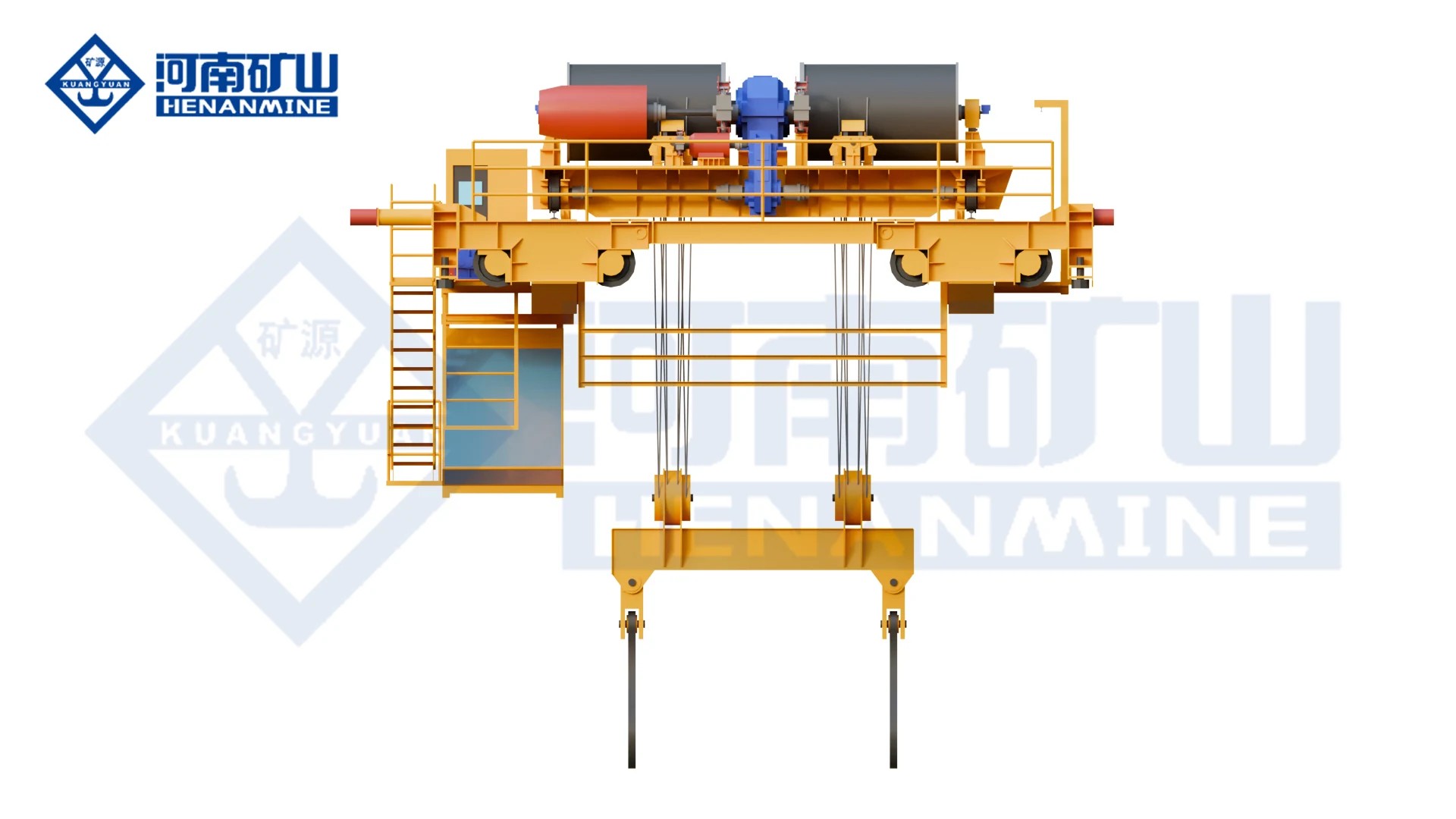
Choose the box interface and discharge sequence before finalising the trolley arrangement. Reference capacity, span and height ranges guide initial selection; the ordered crane has definite ratings and permitted loads for each operating mode.
Provide empty and full box weights, dimensions, pickup points, centre of gravity and attachment details. Include material distribution and any relevant variation between charging batches.
Show the tipping axis, required discharge angle and furnace opening. Check the box and attachment envelope through the full turning path, including approach and return positions.
Select the trolley arrangement for the box geometry. For a two-trolley package, state individual reactions, combined bridge load and permitted simultaneous lifting, travel and turnover in the motion schedule.
Give loaded and empty travel distances, charging frequency, typical loads and shifts. Select the stated working class and lift, trolley and bridge speeds against the full operating cycle.
Define measuring range, required accuracy, display locations and weight-record needs. Specify any data exchange or trade-weighing requirement separately so the supplied equipment and evidence are clear.
Describe furnace radiation, ambient temperature, dust and cable exposure. Select insulating covers, protected components and the control location with the destination power supply and operator visibility.
Itemise the bridge, trolleys, box attachment, thermal package, weighing, controls and power feed. Identify whether box manufacture, runway works, freight and erection are included, then agree attachment-fit checks, coordinated-motion and tipping trials, weighing verification, training and service spares.
Identify the bridge, lifting mechanisms, lifting attachment, heat protection, controls and power feed. State the selected operating modes and equipment boundaries in the offer.
Request the arrangement, lifting-interface drawing, load-and-motion schedule, electrical information, safety-function description and agreed factory/site checks for the ordered crane.
List rails, runway steelwork, attachments, automation, weighing, spares, packing, freight, erection and commissioning as included, optional or excluded.
Agree drawing approval, manufacturing, testing and dispatch milestones for the selected configuration. Include access, shutdown windows and the destination in the delivery plan.
Define erection supervision, power and runway preparation, protection checks, attachment fit, trial operation and operator training, with responsibilities agreed before site work.
Record the warranty terms and commencement, service arrangements and recommended brake, rope, drive, control and attachment spares for the equipment supplied.
Agree load, lifting device, route, duty, thermal conditions and operating modes.
Coordinate hook coverage, attachment fit, runway reactions and site responsibilities.
Complete the agreed checks and records, then coordinate packing and shipment.
Confirm erection, commissioning, operator training and service arrangements.
Technical schedule · General arrangement · Attachment interface · Runway loads · Electrical information · Safety-function description · Agreed inspection records · Operation and maintenance manuals

Move steel slabs from caster output to stacking with a clamp matched to slab dimensions, mass and temperature.
View this arrangement ↗
Transfer filled ladles with a double-girder casting crane and separately rated auxiliary hook, configured for your pouring sequence.
View this arrangement ↗
Transfer heated workpieces from furnace to quench bath within the required process window, with the lifting fixture and emergency response specified together.
View this arrangement ↗Review the lifting task, configuration and quotation scope. We can help develop a crane proposal from the project information available.
YX lifts and transfers compatible charging boxes and performs the specified tipping or discharge movement. The attachment, trolley arrangement and control sequence are selected around the plant's actual box and charging process.
Send dimensions, pickup points, empty and maximum filled weights, centre of gravity and the tipping axis. A drawing showing the furnace opening, required discharge angle and clearance helps define the movement without requiring you to select the mechanism yourself.
Selection includes the empty box, contents and every suspended attachment. Where the box is supported at two lifting points, individual reactions are checked as well as the complete load carried by the bridge.
Load sharing depends on the pickup geometry, centre of gravity, box angle and material distribution. The technical schedule identifies each trolley's permitted load and the changing reactions during the specified sequence, together with the combined bridge limit.
A coordinated trolley package can be supplied for the required task. Agree which simultaneous movements are permitted, their load limits and the control sequence. Commissioning checks should verify the ordered modes with the selected attachment and representative box conditions.
Use them as reference envelopes for an initial enquiry. They do not define every permissible combination. The quotation gives one selected arrangement with its trolley ratings, span, lifting height, motion speeds, box interface and permitted tipping movements.
YX supports lifted-weight display and weight records. Specify measuring range, accuracy, display locations and any plant data connection. If the weighing result will be used for commercial transactions, state the corresponding approval and verification requirement in the enquiry.
Provide ambient temperature, furnace radiation, exposure time and distance from the heat source. The ordered package identifies heat-resistant materials, insulating covers and component protection. Class H motor insulation is a component thermal classification; the crane's operating conditions are specified separately.
YX is selected for charging-box handling and tipping. A molten-metal ladle task requires a separately specified metallurgical lifting arrangement, compatible ladle interface and protection package. Describe both tasks if they form part of the project so each can be reviewed and quoted.
Compare rated loads by mode, box attachment, turning sequence, coordinated controls, weighing and heat protection. Include arrangement and interface drawings, electrical information, test records and manuals. Check box manufacture, freight, site work, commissioning, training, delivery milestones, warranty terms and spare parts as explicit supply items.
Send a charging-box drawing or photographs, empty and filled weights, and the movement required at the furnace. Add span, lift height and charging frequency so we can develop the YX attachment, trolley and control arrangement.
info@cranehenanmine.com