

HENAN MINE CRANE · CONTAINER YARD EQUIPMENT
Container RTG Cranes (Rubber-Tyred Gantry Cranes)
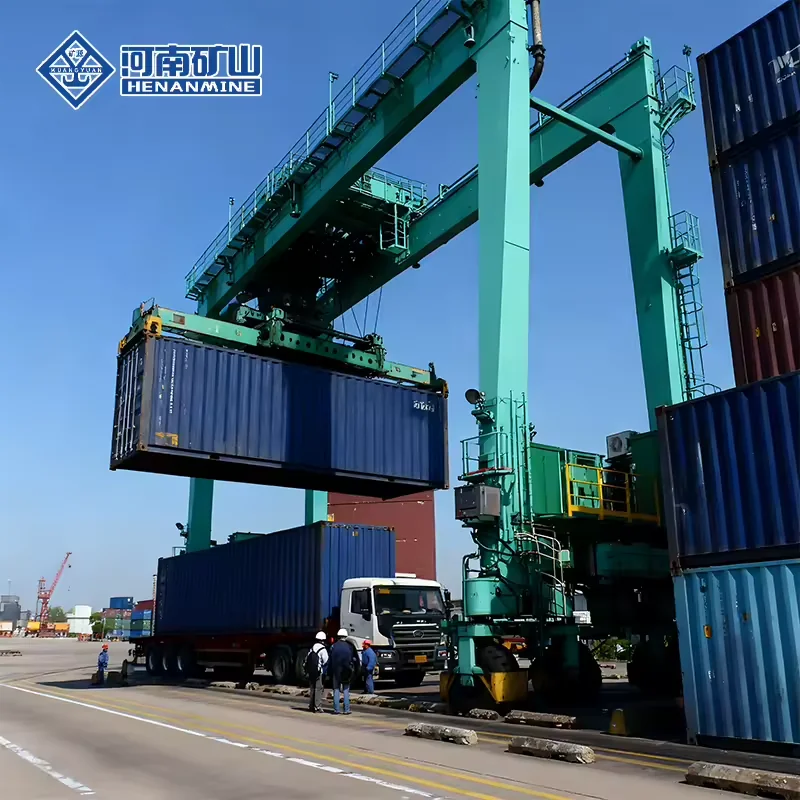
Stack and retrieve ISO containers across storage rows and a truck lane with a rubber-tyred gantry crane. Henan Mine Crane configures the RTG around your container mass, yard geometry, operating shifts and power infrastructure, with the spreader and site interfaces defined in the offer.
START WITH YOUR YARD LAYOUT
Start with your container rows, required stacking tiers and maximum gross container mass. A yard sketch is enough to begin the selection.
Capacity options35 / 40.5 / 50 t
Block layouts5+1 / 6+1 / 7+1
Container formats20 / 40 / 45 ft
Power optionsDiesel / hybrid / electric
Capacity options are family ratings. The quotation confirms the under-spreader or hook basis and the selected operating arrangement.
ORDER QUANTITY
One RTG or a yard fleet
Specify one crane or a coordinated block-handling package.
YARD FIT
Geometry and pavement
Match the crane envelope, wheel reactions and transfer route.
DELIVERY
Agreed project milestones
Confirm drawings, manufacture, testing and dispatch in the offer.
01 / APPLICATIONS
01
02
03
Container stacking with a flexible yard footprint.
An RTG combines container lifting, trolley movement and rubber-tyred travel for yard stacking and vehicle exchange. Select it where dense storage and movement between compatible blocks are both useful.Load and unload terminal chassis
Coordinate the spreader, truck position, twistlock status and anti-lift protection. Vehicle lanes and people need a defined operating interface within the crane block.Serve changing yard layouts
Plan block changes around steering clearance, overhead obstructions, pavement reactions and power connections. The loaded route and transfer procedure belong in the selected crane specification.Compare a fixed-rail RMG when your long-term block plan favors a permanent rail corridor. RTG travel requires pavement and transfer routes that suit the selected machine.
02 / SPECIFICATIONS
Compare family options, then fix one rated crane arrangement for your yard.
Container RTG crane specifications
| Parameter | Options / planning data | Selected configuration |
|---|---|---|
| Equipment | Container-handling RTG on rubber tires | Container-yard duty with a selected spreader |
| Capacity options | 35 / 40.5 / 50 t; custom selection | State maximum gross container mass and the under-spreader or hook rating basis |
| Container formats | 20 / 40 / 45 ft by spreader selection | Confirm telescoping positions, lift mode and exceptional loads |
| Block layout | 5+1 / 6+1 / 7+1 or project-specific | Container rows plus one vehicle lane; set actual widths and clearances |
| Span / clear width | Selected from the yard drawing | Define tire center lines, row pitch, vehicle lane and end approaches |
| Stacking / lifting height | Selected for tiers and top clearance | Identify standard or high-cube containers and the required one-over stacking arrangement |
| Working duty | A6–A8 family options | Confirm load spectrum, moves, shifts and design basis |
| Loaded hoisting speed | 12–25 m/min planning range | Rated speed, acceleration and load conditions confirmed for the chosen crane |
| Trolley travel speed | 30–60 m/min planning range | Confirm travel distance, positioning requirement and cycle assumptions |
| Gantry travel speed | 45–90 m/min planning range | Confirm loaded / empty conditions, route and transfer restrictions |
| Power architecture | Diesel-electric / hybrid / electric | Grid capacity, cable or conductor route, energy storage and block-change method |
| Operator / control | Cabin, remote or automation by scope | Define cameras, communications, positioning, recovery and terminal interfaces |
| Tire reactions | Calculated for the final arrangement | Assess lifting, travel, braking, turning and parked load cases against pavement capacity |
| Environment | Site-specific wind, temperature and corrosion package | Provide location, design wind, rainfall, salt exposure and temperature extremes |
The numerical values above are family options and early planning ranges. They do not describe a single crane with every maximum combined. Span, lift, rated speeds, duty and wheel reactions are fixed together in the technical offer.
03 / EQUIPMENT VIEWS
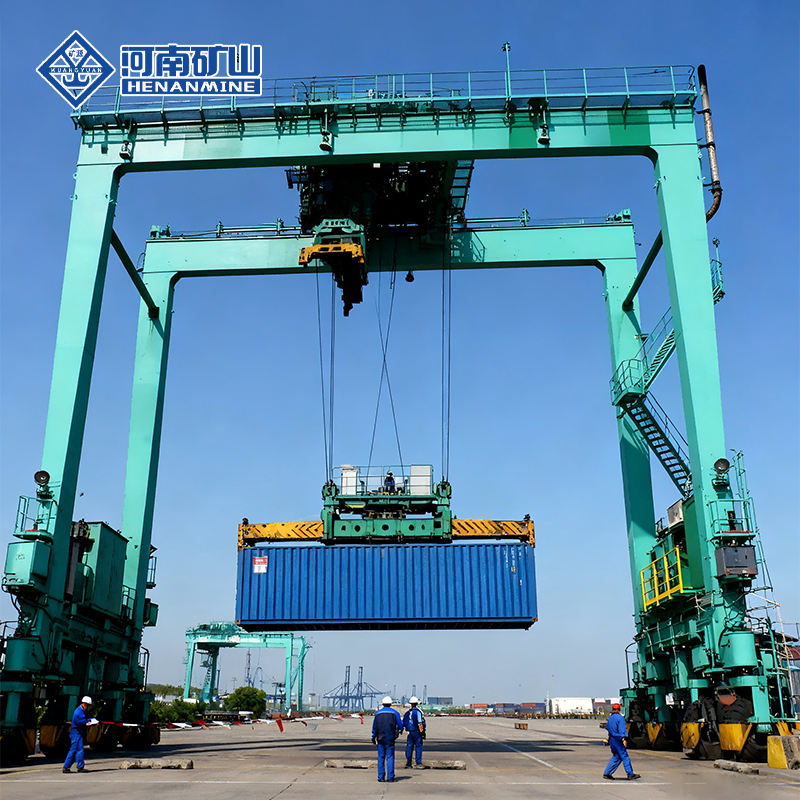
Review the bridge, trolley, spreader and tire travel paths together.
See the container-handling arrangement.
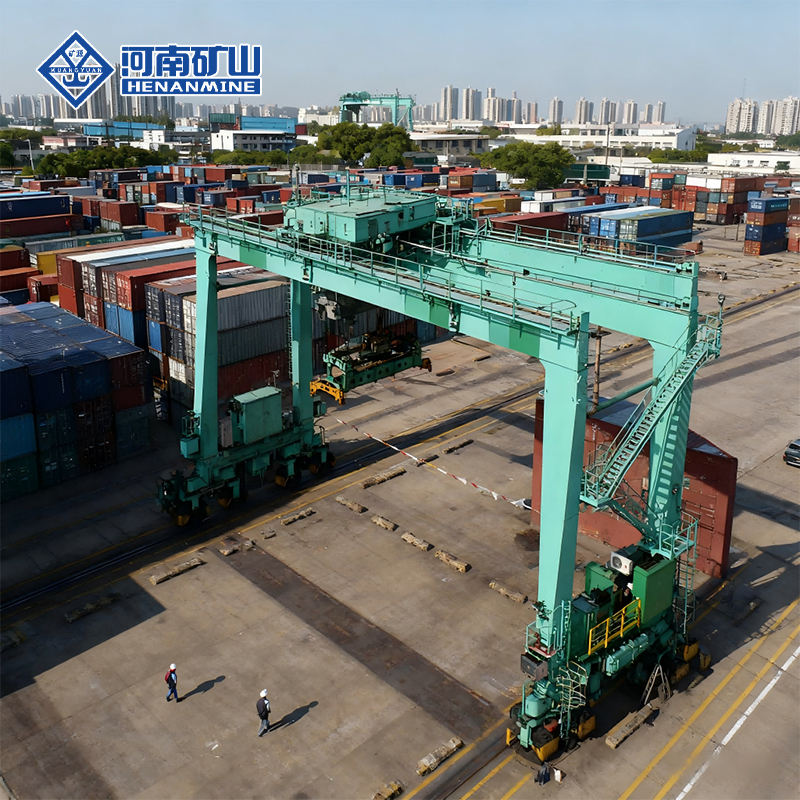
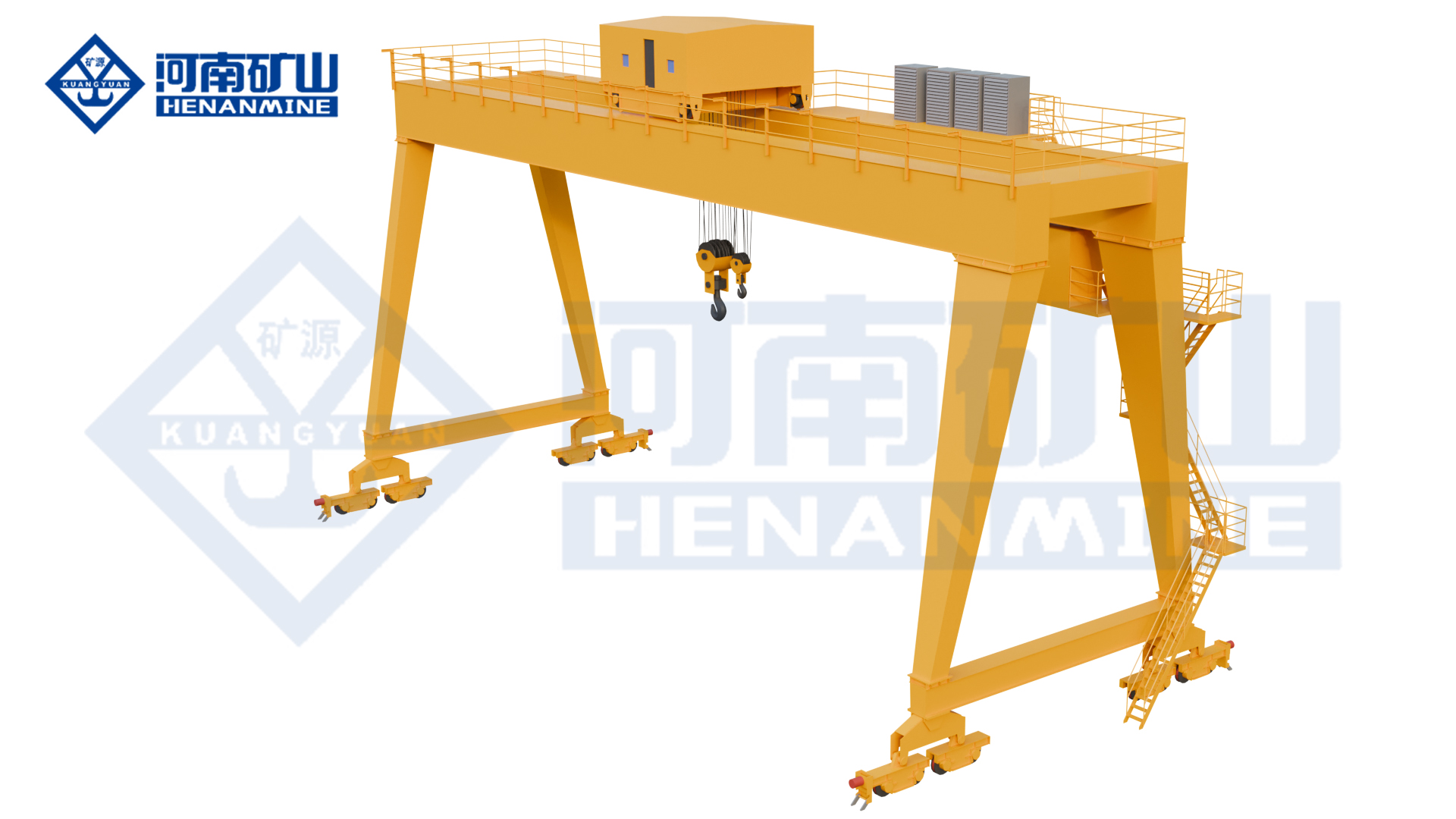
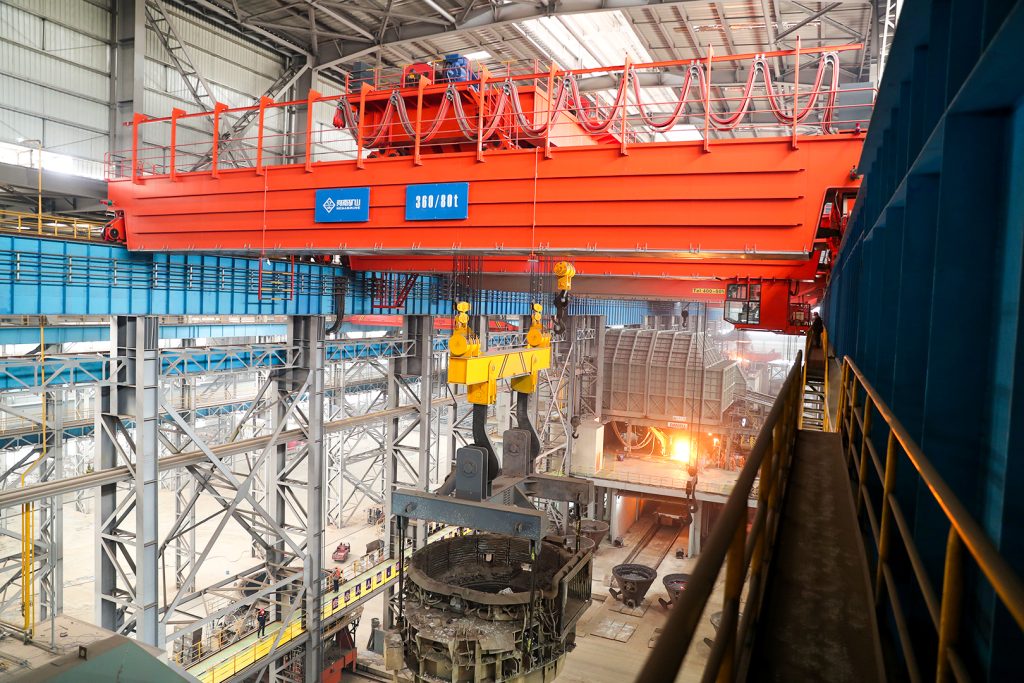
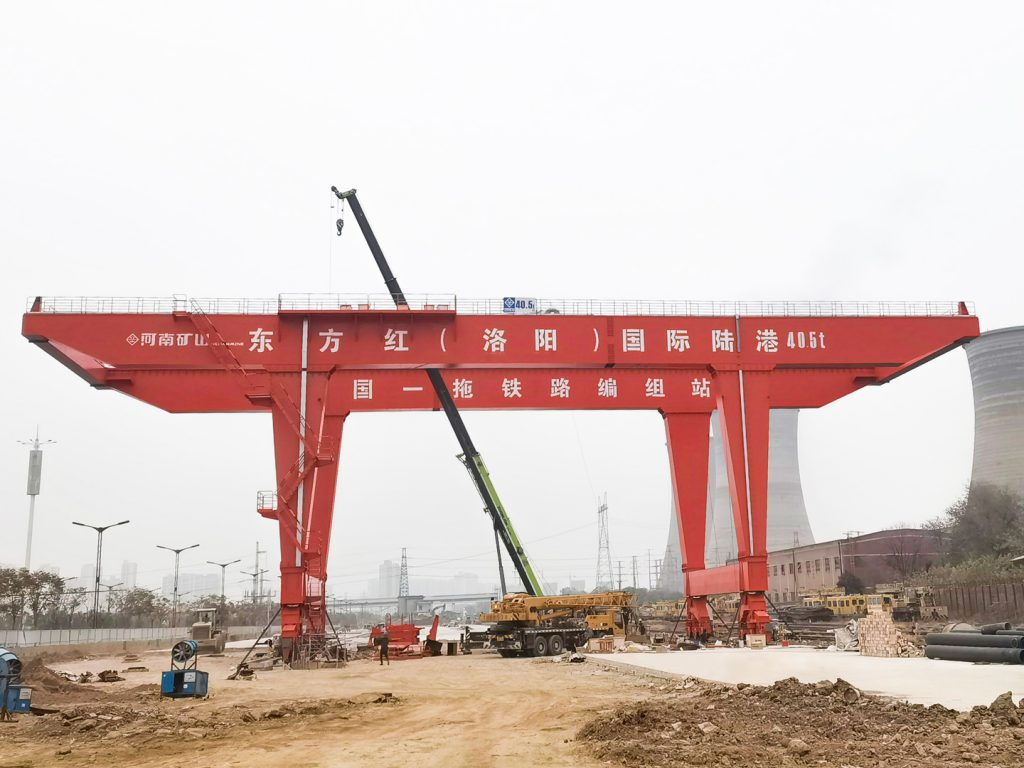
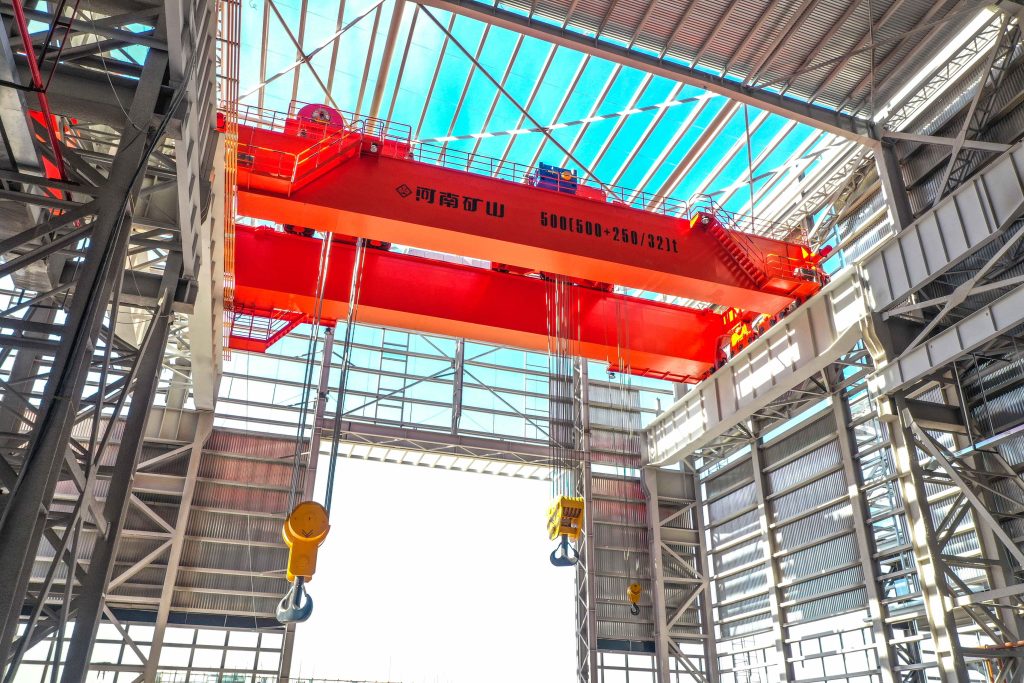
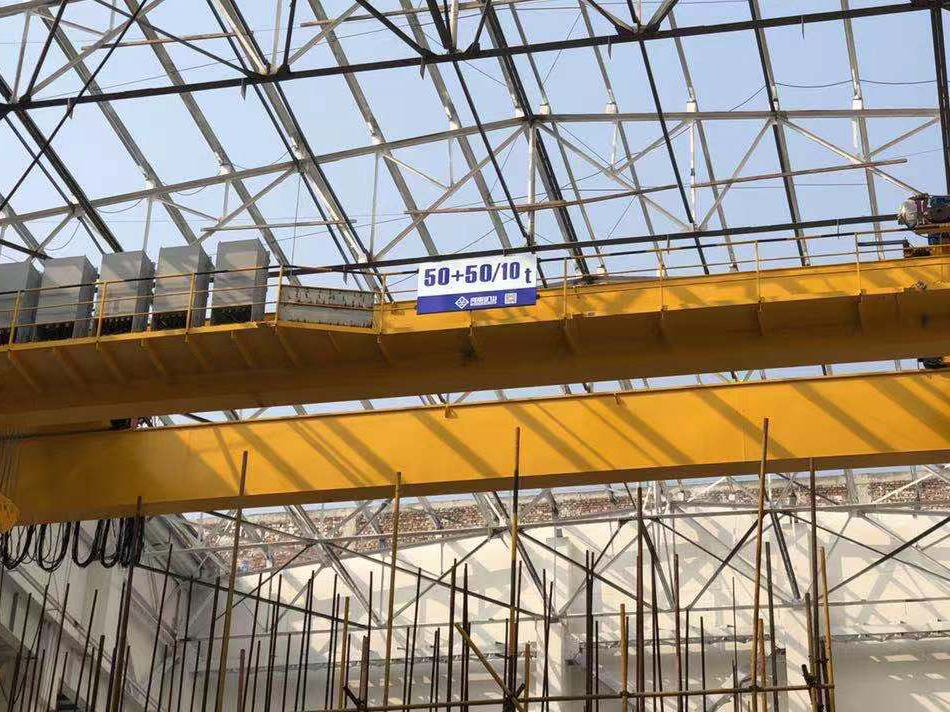
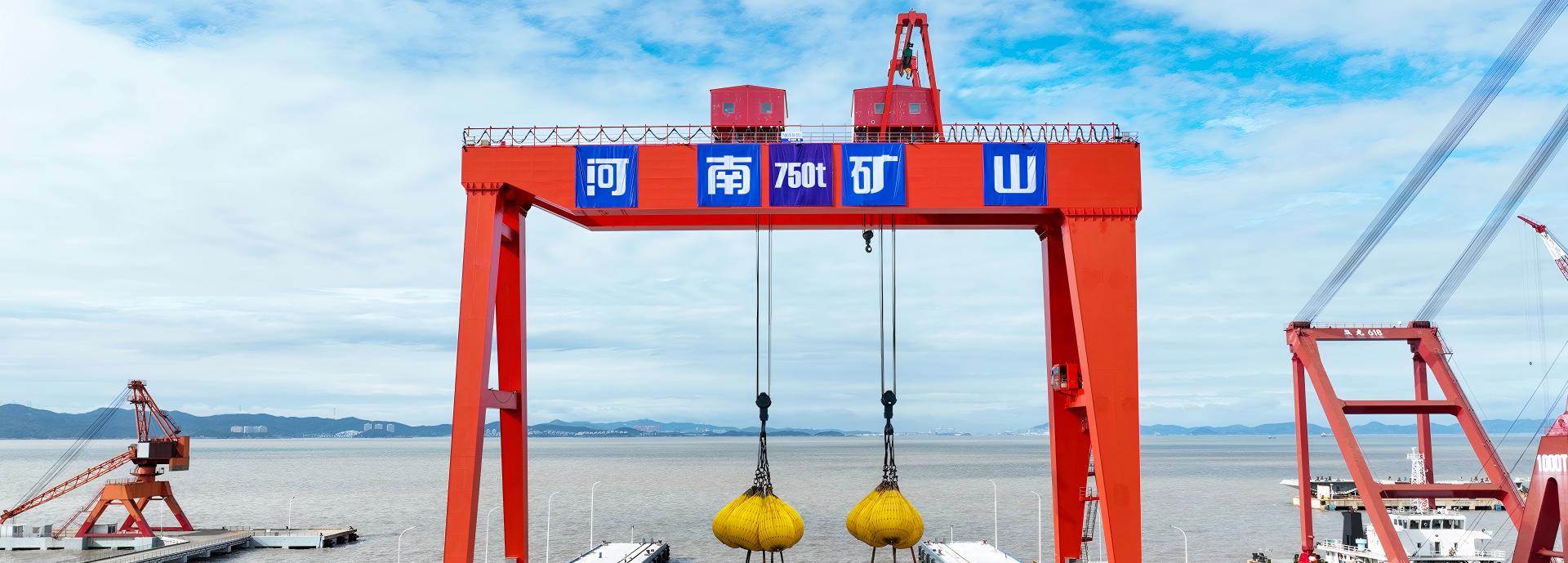
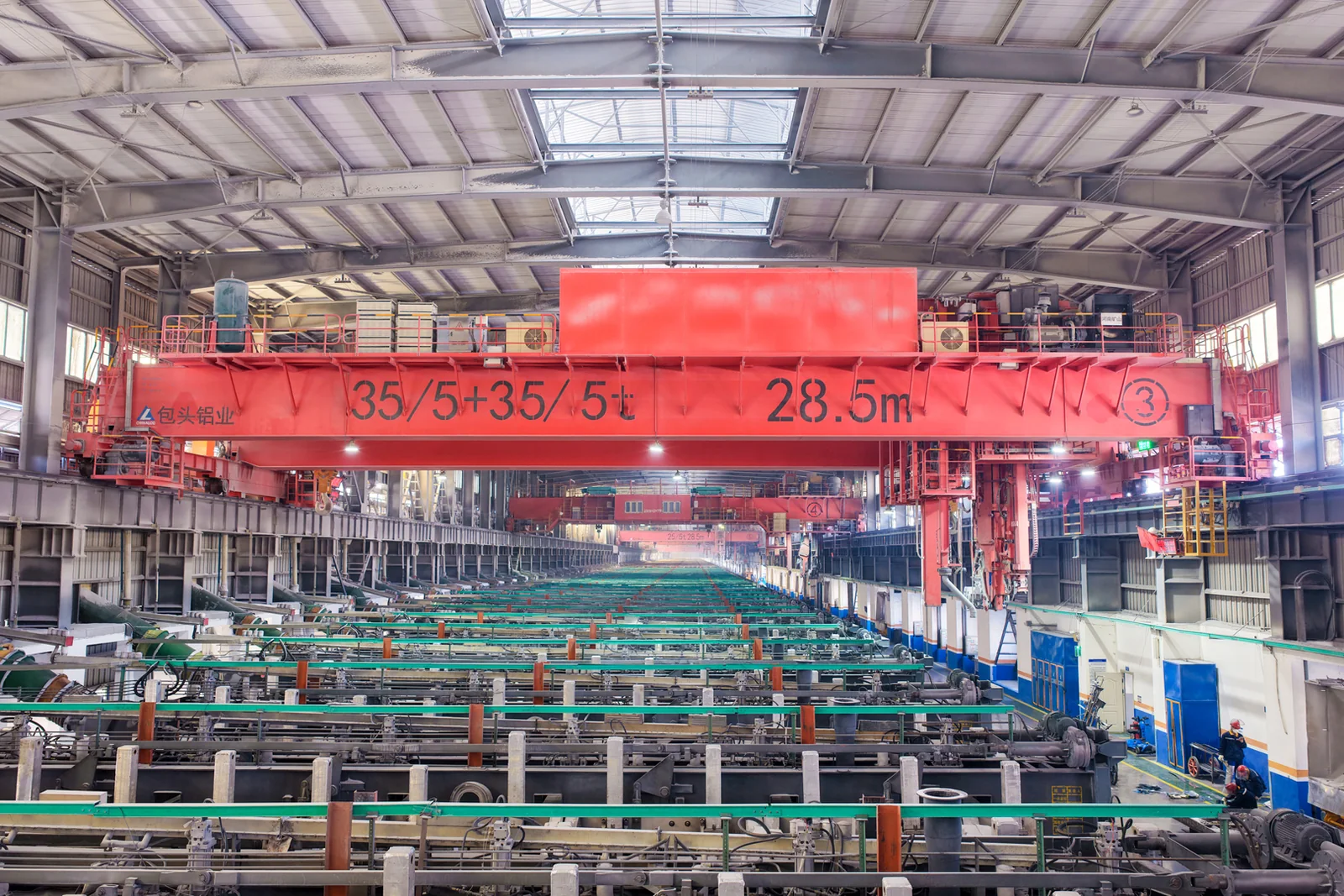
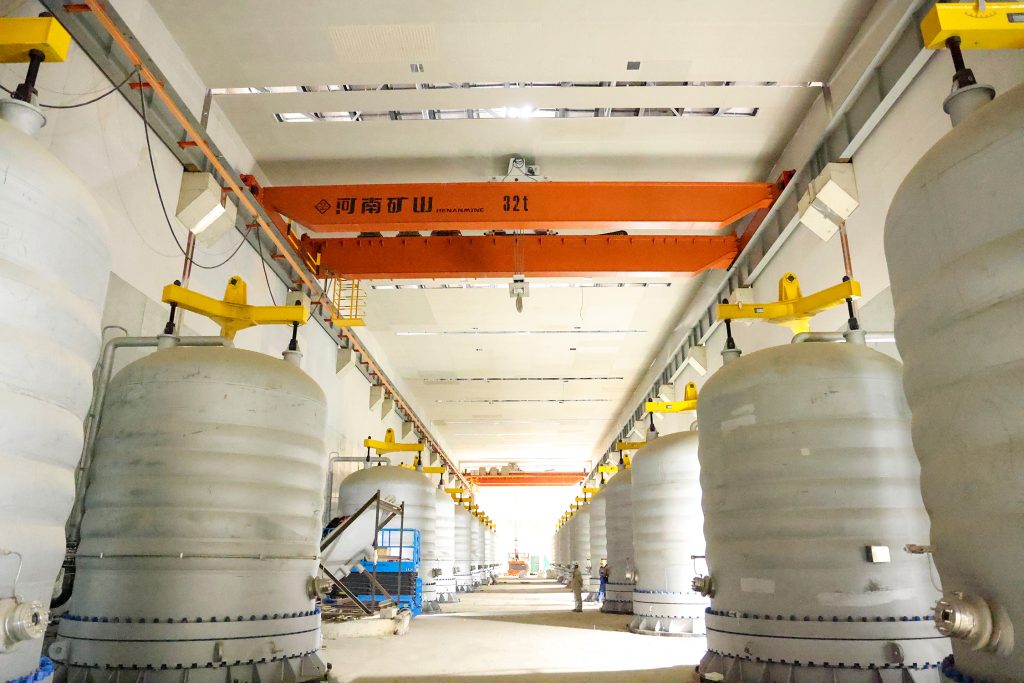
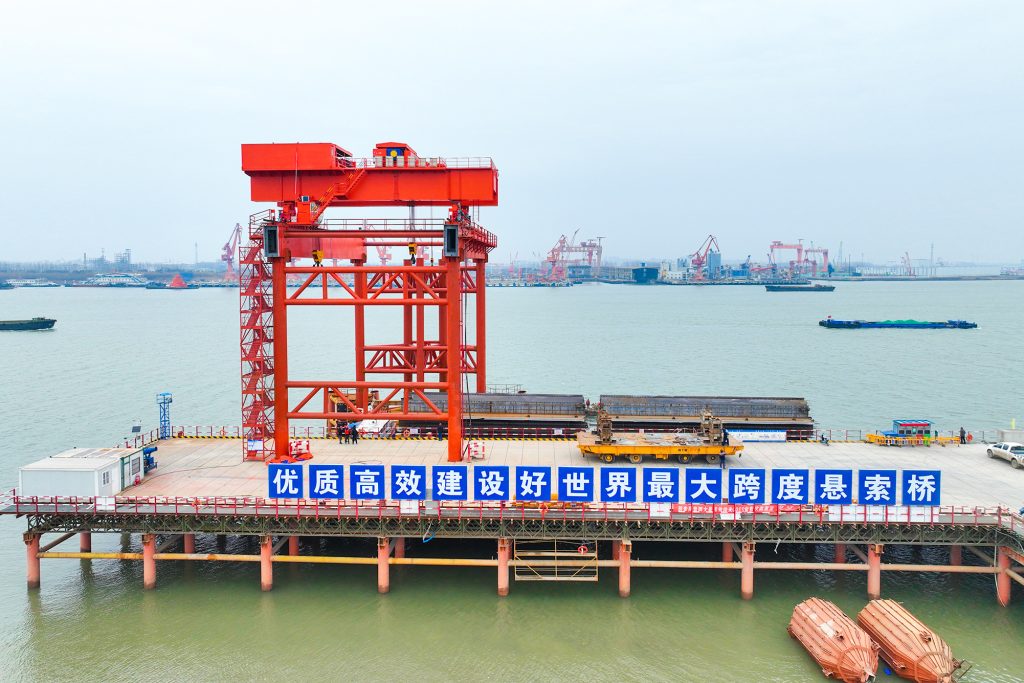
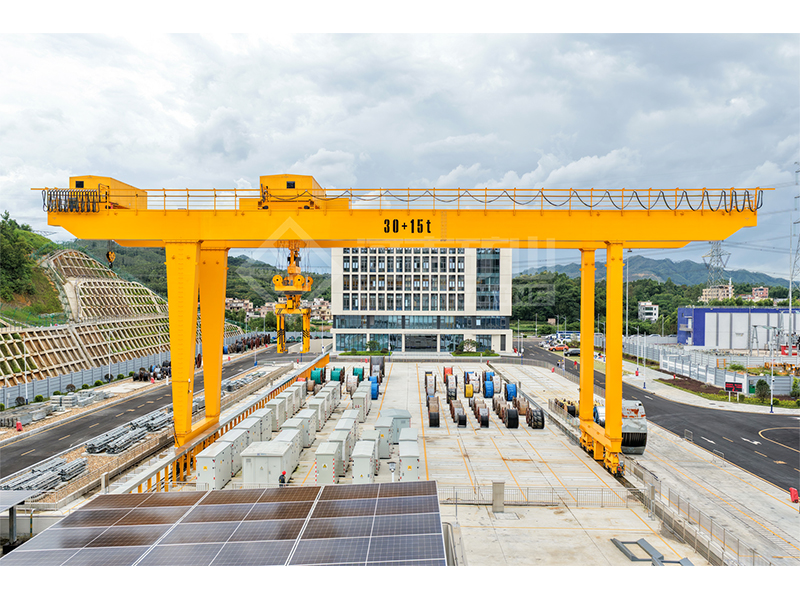
Equipment photographs illustrate RTG arrangements. The selected layout, capacity and components are defined in the project drawing and equipment schedule.
04 / CONFIGURATION
Choose the lifting interface, power architecture and control functions as one system.
Configure the RTG around your operating cycle.
Match the lifting interface
Specify the 20 / 40 / 45 ft mix, maximum container mass and single-lift or other required mode. Include twistlock monitoring, flippers and any special-load frame in the equipment schedule.Choose diesel, hybrid or electric
Diesel-electric supports operation without a continuous yard power feed. Hybrid adds energy storage; grid-electric needs the selected feed arrangement. Compare infrastructure, block-change frequency, duty and maintenance together.Set the level of assistance
Define cabin or remote operation, anti-sway, positioning, camera coverage and terminal-system interfaces. Automation needs specified operating boundaries, communications and a recovery mode.Design for tires, traffic and weather
Coordinate wheel loads, settlement, gradients and drainage with the pavement design. Agree collision protection, travel limits, wind monitoring and the parked-storm arrangement for the site.
05 / PRICE & BUDGET
Budget the RTG, spreader and power package together. These preliminary configurations assume 40.5 t under the spreader, six container rows plus one truck lane, 1-over-5 stacking, A7 duty, 16 tires, cabin control and a 20/40 ft telescopic spreader.
How much does a container RTG crane cost?
Preliminary container RTG equipment budgets
| Budget configuration | Budget reference | Included equipment |
|---|---|---|
| 40.5 t diesel-electric RTG · 6+1 layout · 1-over-5 stacking | USD 800,000–1,200,000 | Crane, telescopic spreader, diesel generator, cabin, basic anti-sway, on-crane safety systems and factory test. |
| 40.5 t electric RTG · 6+1 layout · 1-over-5 stacking | USD 850,000–1,300,000 | Crane, telescopic spreader, crane-mounted shore-power equipment and cable reel, cabin, basic anti-sway and factory test. |
These are preliminary equipment estimates for planning, subject to an agreed technical schedule. A 1-over-5 arrangement travels over a stack five containers high; container height, spreader dimensions and operating clearance determine the final lifting height. The electric example assumes a cable run of up to 150 m; the site power interface is priced to the yard layout.
Pavement, civil works, landside power infrastructure, terminal-system integration, advanced automation, freight, duties, taxes, erection, commissioning, training and operational spares are excluded. Request an itemized offer before setting the full project budget.
Request a configuration-specific price
06 / RTG PROCUREMENT IN PRACTICE
Savannah: specifying an RTG fleet around the yard block
External operator / OEM reference
In 2022, Georgia Ports Authority ordered 12 Konecranes RTGs for the Port of Savannah. The announced arrangement combined six container rows plus a truck lane, one-over-five stacking and 16 wheels. The diesel-electric cranes were specified with readiness for cable-reel electric operation.
The procurement lesson is to define block geometry and the future power route together. For your RTG, state the container-height mix, wheel reactions, transfer route and electrification scope before comparing offers.
Industry reference to an external operator and its selected OEM. Henan Mine Crane equipment is configured and quoted separately for the project.
Order announced2022 · 12 RTGs
Storage block6 rows + truck lane
Stacking arrangementOne over five
Travel / power provision16 wheels · cable-reel readiness
07 / PURCHASING & DELIVERY
Compare a named equipment package and clear delivery, document and site-service responsibilities.
What comes with your container RTG?
See the complete RTG package
Your quotation should name the structure, trolley, hoist, spreader, travel bogies, power system, controls and protective functions. Separate optional automation and terminal interfaces from the base equipment.Match the machine and the site
Agree the general arrangement, rated-load definition, lifting envelope, wheel reactions, electrical diagrams and interface drawings. Identify the manuals and destination-specific conformity documents required for acceptance.Set the conditions for handover
Define the factory and site test plan, loads, spreader functions, motion and braking checks, protective functions and control interfaces. Allocate test containers, site lifting equipment and operator participation.Build a practical delivery schedule
Confirm drawing approval, manufacture, inspection, packing and dispatch milestones. Match transport dimensions, unloading access and assembly space to the destination and the agreed shipping scope.Agree erection and commissioning
Identify the supervision, assembly, power connection, functional checks, operator training and commissioning support required. State which work, labor and equipment the purchaser will provide locally.Plan service for the whole machine
Confirm warranty commencement, covered equipment, exclusions and support arrangements in the offer. Include recommended spares for tires, brakes, ropes, spreader, drives, power equipment and controls.
08 / RELATED CONTAINER EQUIPMENT
Compare the handling task and travel arrangement.

PORT & CONTAINER EQUIPMENT
Rail-Mounted Gantry (RMG) Container Crane
Compare fixed-rail handling when the block geometry and rail infrastructure are established. View product ↗
PORT & CONTAINER EQUIPMENT
Container Straddle Carrier
Compare an individual carrier when container pickup, loaded transport and placement must travel together. View product ↗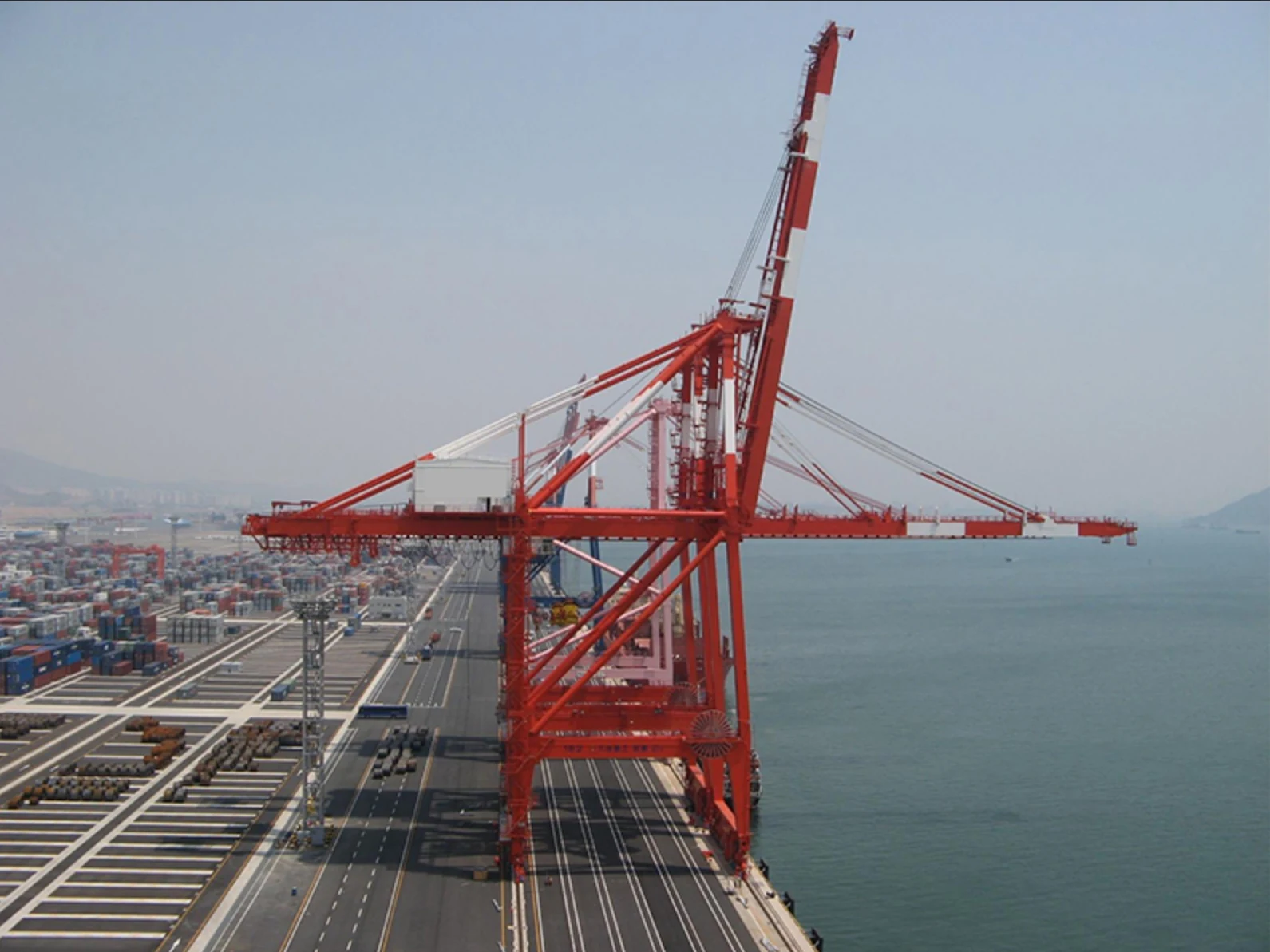
PORT & CONTAINER EQUIPMENT
Ship-to-Shore (STS) Container Crane
Compare a quay crane for container exchange between a vessel and terminal vehicles. View product ↗
09 / BUYER QUESTIONS
Clarify the rated load, yard geometry, power and supply boundary before ordering.
Answers for your container RTG purchase
What is a container RTG crane?
A container RTG is a rubber-tyred gantry crane that spans container rows and a vehicle lane. A trolley and spreader lift and position containers while the crane travels along the yard block on rubber tires. Rubber-tired and rubber-tyred are spelling variants of the same equipment type.Should I choose an RTG or an RMG?
Compare RTG when block mobility and a rail-free travel arrangement suit the yard. Compare RMG for a fixed rail corridor. The decision also depends on pavement or rail foundations, power infrastructure, stacking plan, vehicle interface and operating duty.Does the RTG lifting capacity include the spreader?
A stated under-spreader rating refers to the maximum gross container mass at that interface; a hook rating uses a different lifting point. The crane design must also account for spreader and other suspended equipment. Ask the offer to state the usable container load, attachment weight and rating basis separately.What does a 6+1 RTG layout mean?
It describes six container rows plus one truck or terminal-tractor lane. The label does not fix the span: row pitch, lane width, tire center lines, end approaches and clearances must be dimensioned on the yard drawing.How do I specify the stacking height?
Give the number of containers to remain stacked below a container being moved, and identify standard or high-cube containers. A one-over-five arrangement must pass a suspended container above a five-high stack. The approved drawing fixes the actual lifting envelope and clearances.Can the RTG move between container blocks?
Block transfer is possible when the selected steering arrangement, route, pavement capacity, clearances and power system allow it. Specify turns, crossings, gradients and overhead obstructions. The permitted transfer load and operating procedure must be agreed for the machine.Can I choose an electric or hybrid RTG?
Diesel-electric, hybrid and electric arrangements can be assessed for the project. Compare the operating shift, energy demand, grid capacity, cable or conductor route, charging or storage arrangement and block-transfer method. Define how the crane connects, disconnects and recovers from a power interruption.Can remote control or automation be included?
Specify the required functions in the quotation: remote operator station, cameras, positioning, anti-sway, terminal-system interface and any automated moves. Agree communications, access control, exception handling and recovery procedures with the terminal before accepting the scope.Does the equipment price cover the completed terminal installation?
The supply boundary must be stated in the offer. Compare crane, spreader, power equipment and automation separately from freight, duties, pavement, external electrical works, erection, commissioning and training. A market equipment budget does not establish a complete installed-project cost.What is enough to start an RTG quotation?
Send the destination, maximum gross container mass, container-size mix, rows plus lane, required stack height and operating shifts. Add a yard sketch and your preferred power arrangement. Pavement data, detailed interfaces and acceptance requirements can then be developed for the selected configuration.
10 / YOUR RTG CRANE PROJECT
Get a quotation for your container yard.
Send your container load, yard geometry and destination. Add a block layout or a simple sketch when available so the offer can identify the crane, spreader, power system and site responsibilities.- Rated load and spreader scope stated together
- Block geometry and pavement interfaces defined
- Equipment, delivery and site services itemized
Container RTG CraneRequest your yard quotation
Get a quotation