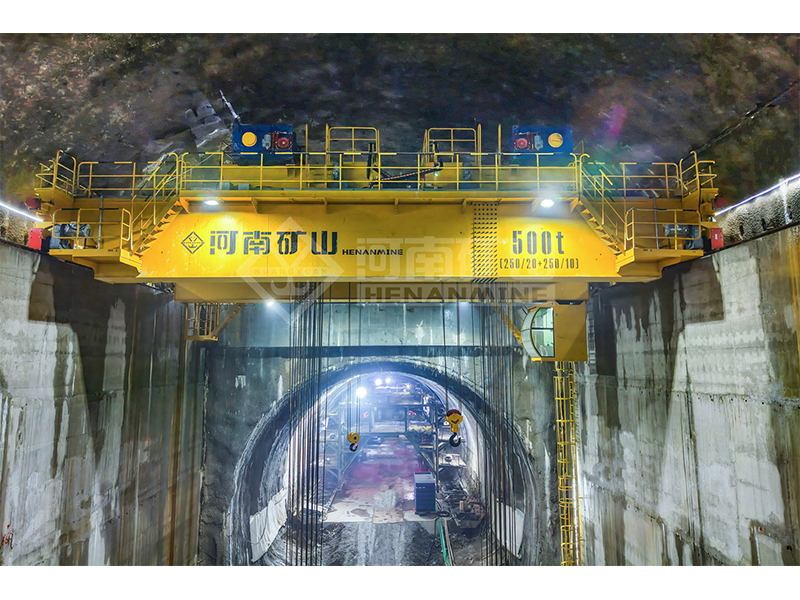
Synchronised hooks for heavy-component positioning
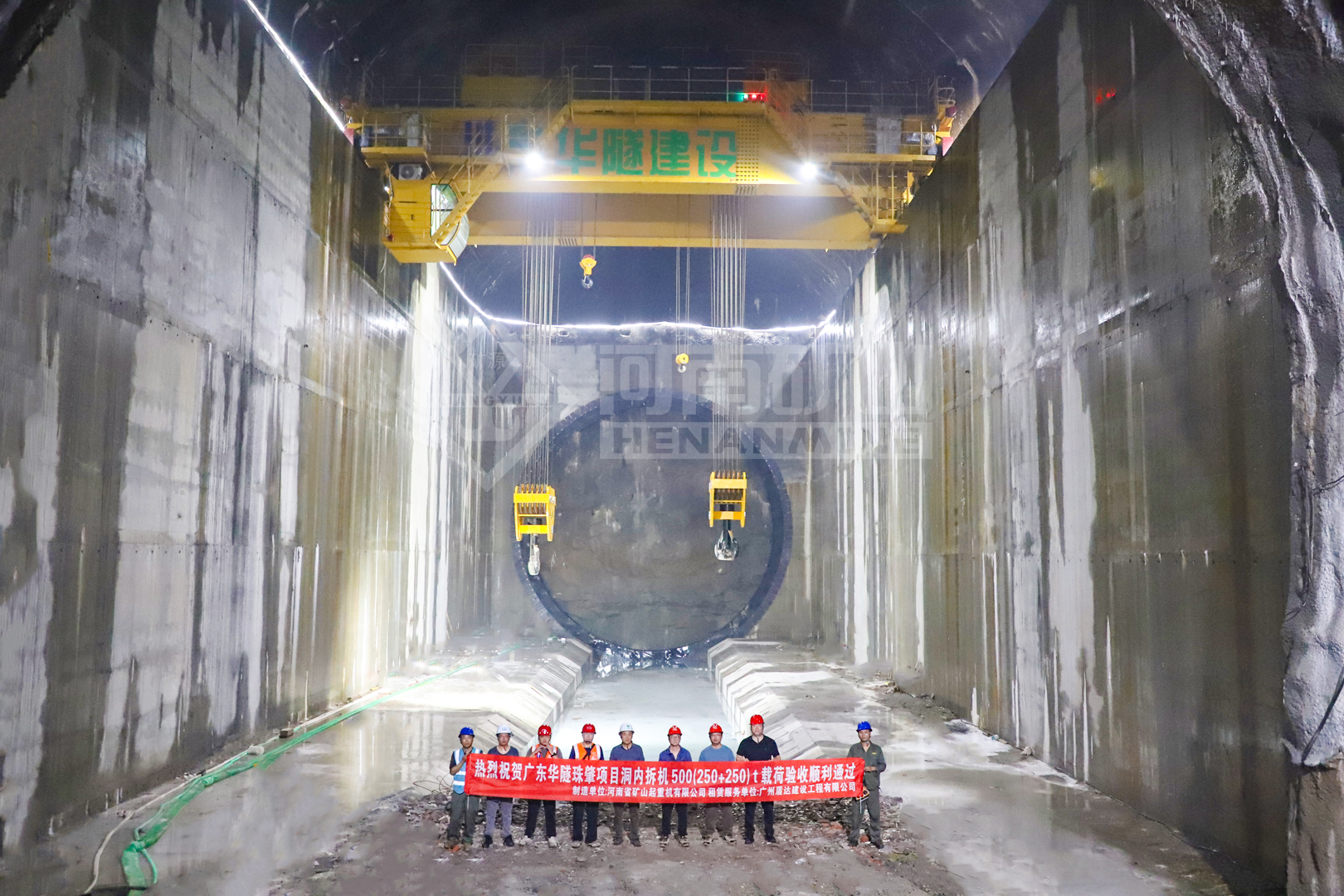
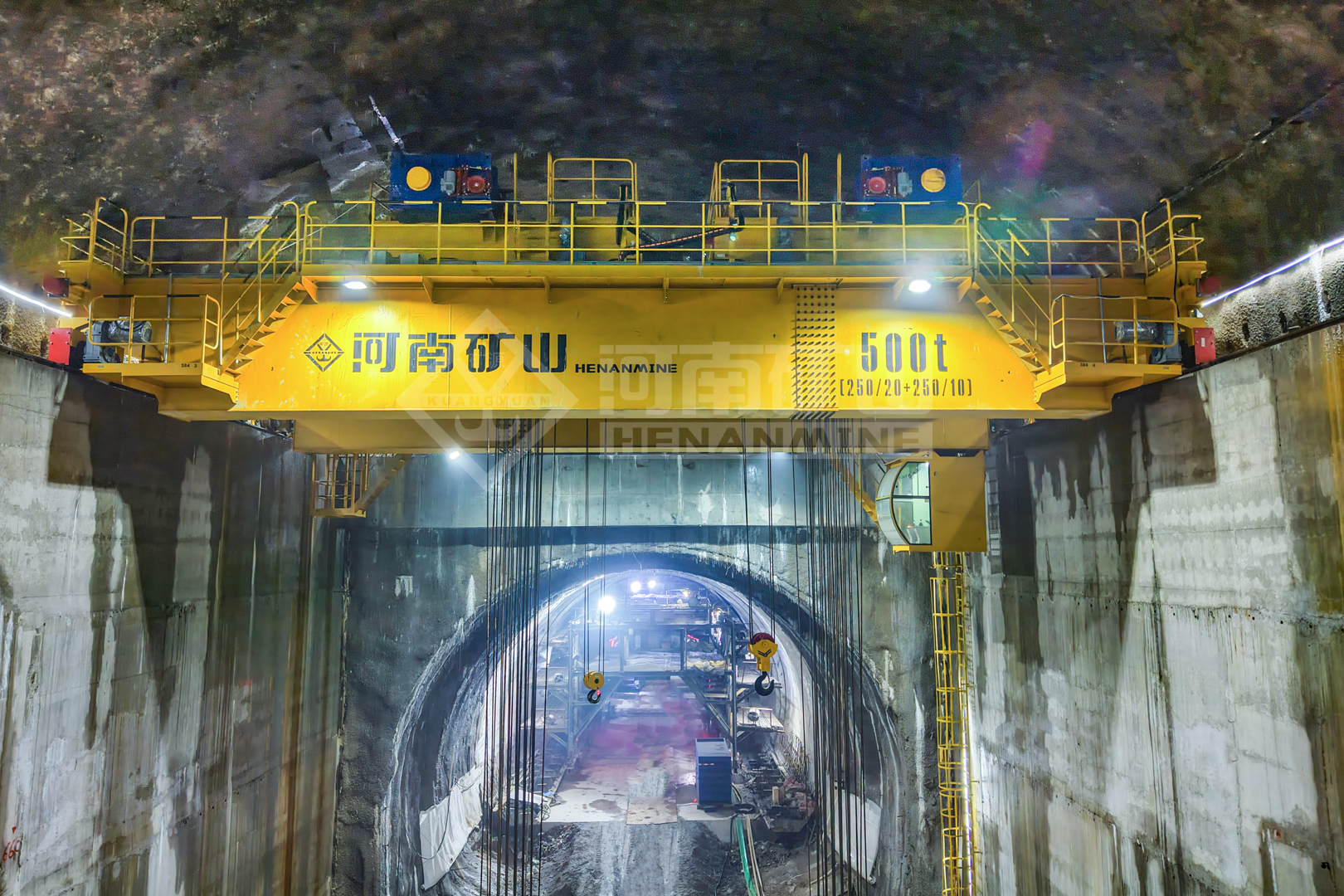
The crane uses a lightweight structural design and a high-lift arrangement suited to the project’s heavy-load work. Multiple hooks operate in synchronisation, with electronic anti-sway control supporting stable movement and accurate placement.
When a heavy component is supported at several lifting points, coordinated hook movement matters to its attitude throughout the lift. The lifting-point arrangement, component geometry and placement sequence therefore influence the hoisting configuration. The project demonstrates the relevance of coordinated lifting to the complex handling conditions associated with tunnel construction.
Variable-frequency movement and load control
The crane’s intelligent variable-frequency control supports controlled movement during lifting and travel. Graduated speed changes and anti-sway functions are relevant when a suspended load must approach an installation position with limited clearance.
For a railway construction purchaser, the operating task extends from picking up the component to aligning it at its final position. The available lift path, working height, surrounding structures and required positioning sequence determine how movement control will be used. The lightweight structural approach also forms part of the design for this particular construction application.
Monitoring for humid and dusty site conditions
Digital monitoring, visual protective functions and lifecycle management provide equipment-state information and warnings of operating risks. The crane is configured for the humid and dusty conditions encountered in the rail project’s construction environment.
These conditions make protection of electrical equipment, inspection access and visibility around the lifting task relevant to equipment selection. Monitoring supports operating and maintenance decisions; the site’s lifting procedure still needs to address people, load clearances and the working area.
Matching a coordinated lifting system to the construction task
A comparable crane proposal needs to connect the component’s mass and lifting points with hook coordination, required height and the path to the placement position. Site environmental conditions and the acceptance checks for controlled movement and protective functions are part of that same technical scope.
With those interfaces established, the project team can assess the crane as a construction handling system, including lifting attachments, control functions and site integration responsibilities.
Photographs from this update