Electric chain hoists lift components, tools and equipment at assembly, maintenance and loading stations. Choose a hook-suspended hoist for a fixed lifting point or an electric chain hoist with trolley for movement along a beam. Compare mounting, controls and quotation scope, then request a configuration for your load and lifting height.
Compare fixed and trolley-mounted electric chain hoists
Start with the movement you need: vertical lifting at one point, or lifting plus powered beam travel. A trolley-mounted hoist can serve a suitable monorail, jib crane or overhead crane; the supporting structure must be rated for the complete installation.
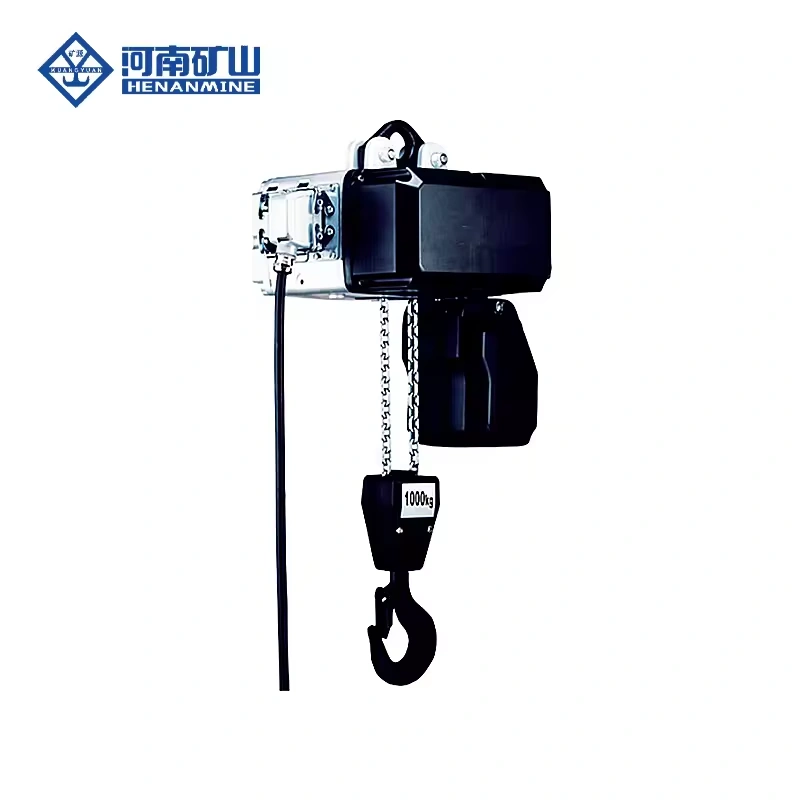
Lift motors, tooling or assemblies at one workstation. Top-hook suspension suits a rated lifting point where powered horizontal travel is unnecessary; the hoist body and chain bag must clear the equipment below.
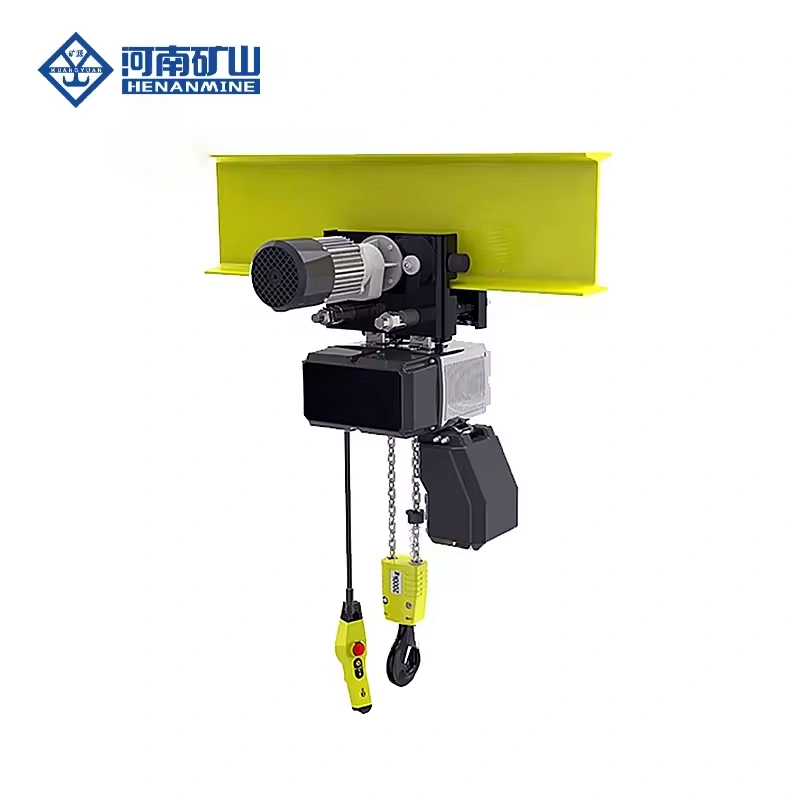
Lift and transfer components between positions along a suitable beam. A matched motorized trolley adds powered horizontal movement for assembly lines, maintenance bays and workshop loading routes.
Electric chain hoist with matched motorized trolley
Movement
Vertical lifting and powered travel along one beam route
Equipment identification
Hoist model, trolley model and rated load identified together in the offer
Rated capacity
Sized for the complete suspended load; hoist and trolley ratings to match the application
Lifting height
Order-specific chain length and upper / lower hook positions
Lifting speed / chain falls
Capacity-dependent values stated together on the technical datasheet
Trolley speed
Specified for the required travel distance and positioning task
Beam interface
Flange width, flange thickness, profile and any curved track checked against the trolley drawing
Travel coverage
Beam route length less the selected trolley's end approach and stop clearances
Controls
Pendant or agreed remote package with lifting and travel commands
Electrical supply
Site voltage, phase, frequency and travel power-feed interface specified with the order
Duty / operating cycle
Based on load pattern, lifting cycles, travel distance and daily shifts
Space to check
Headroom, chain-container clearance, end approach and maintenance access
Supply schedule
Hoist and trolley listed together; beam, power feed, stops and installation identified as included or excluded
For either arrangement, request one datasheet pairing rated capacity, lifting height, speed, chain falls and duty. This makes offers comparable and identifies the exact hoist being supplied.
Budget planning
How much does an electric chain hoist cost?
Electric chain hoist prices depend on capacity, lift height, suspension, motor supply, speed control and the brand of equipment. Compare a hook-suspended unit with a complete trolley package only after checking what each price includes.
Third-party market examples · equipment budgets
Rated load
Budget configuration
Indicative budget · USD
1 t / 1,000 kg
Three-phase · 3 m lift chain
$350–650
2 t / 2,000 kg
Three-phase · 3 m lift chain
$480–820
3 t / 3,000 kg
Three-phase · 3 m lift chain
$650–1,100
5 t / 5,000 kg
Three-phase · 3 m lift chain
$1,100–1,900
Budget basis: third-party supplier estimates for standard three-phase hoists with 3 m lift chains, published on an FOB China basis and checked on 23 October 2026. Trolley inclusion, exact voltage / frequency and packing scope are not specified. These are market references, not Henan Mine Crane quotations or installed prices. Longer chains, dual-speed controls, low-headroom designs and single-phase specifications require a separate quotation.
For a Henan Mine Crane quotation, specify the hoist quantity and ask for the trolley, chain length, chain container, pendant or radio control, power feed, packing and delivery terms to be itemized. Supporting steelwork, installation, import charges and local electrical work also affect the installed cost.
A 2 t hoist is undersized for a 2,050 kg suspended load
A maintenance team needs to remove a 1,850 kg gearbox using a lifting beam and slings weighing 200 kg in total. The complete suspended load is 2,050 kg, so a 2 t rated hoist is undersized. A 3 t hoist is a possible starting point for selection, subject to the lifting cycle and the ratings of the support and lifting accessories.
For removal and replacement at the same lifting point, start with hook suspension. If the gearbox must move to an adjacent service bench, add a compatible trolley and define the beam route. Neither arrangement increases the capacity of the existing beam.
An example enquiry is: 3 t rated capacity, 6 m required hook travel, powered beam travel, 380 V / 3-phase / 50 Hz supply. Add a beam section or photo and the expected lifts per shift so the hoist, trolley and supporting structure can be checked together.
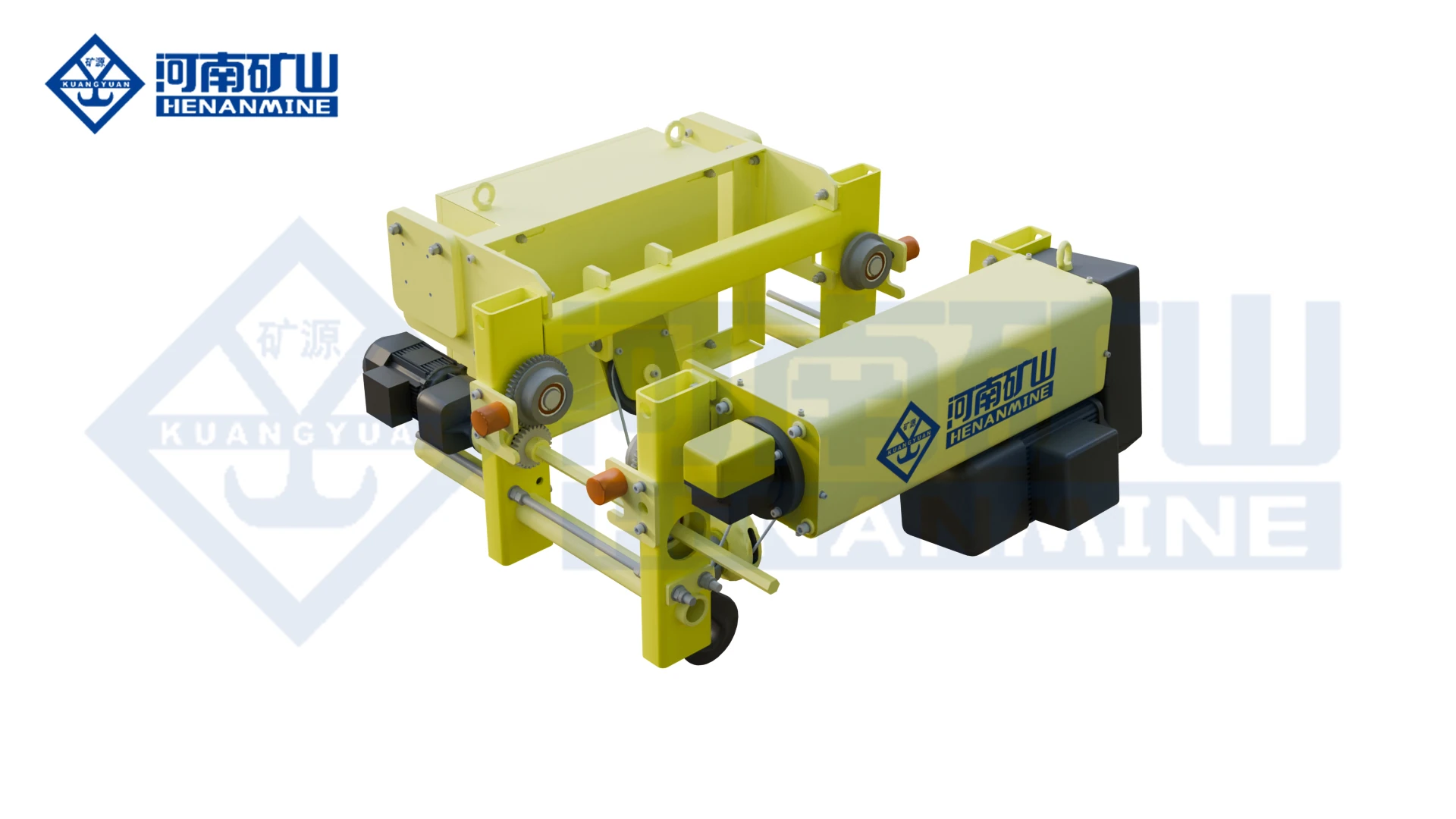
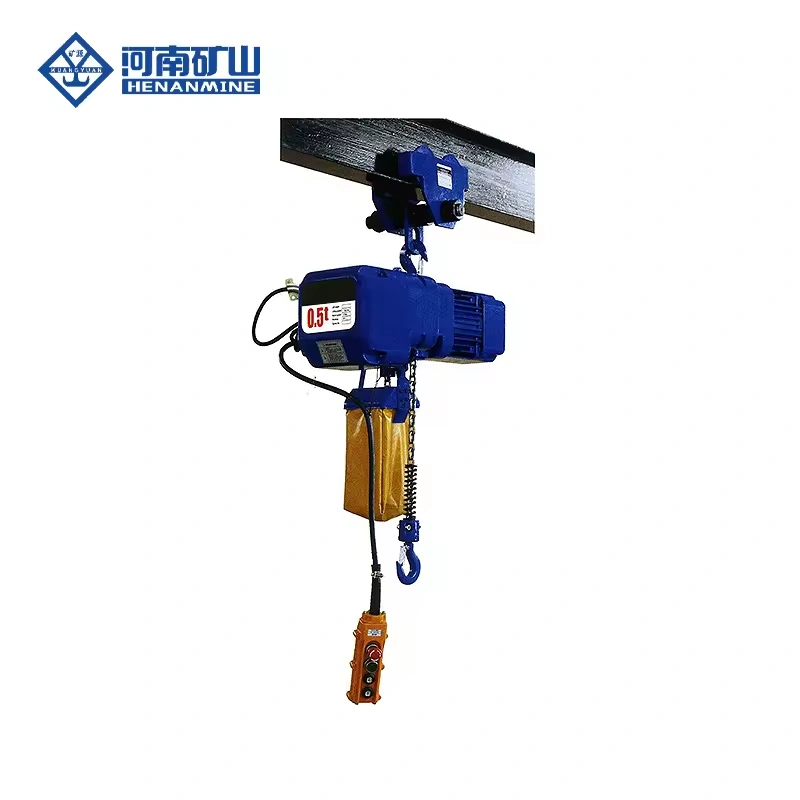
Beam-trolley product arrangement. The selection example does not describe the pictured unit's rated capacity.
Electric chain hoist buying questions
Should I choose a hook-suspended or trolley-mounted electric chain hoist?
Choose hook suspension for lifting at one rated point. Choose a trolley-mounted hoist when the load must move along a beam between pickup and set-down positions. A powered trolley suits a controlled travel route; ask about a compatible manual trolley if powered travel is unnecessary.
How do I specify a 1 ton, 2 ton or 5 ton electric chain hoist?
State the maximum workpiece weight plus slings, a spreader or other below-the-hook equipment. Then provide lifting height, mounting, supply voltage and quantity. State metric tonnes or the load in kilograms: some US listings use short tons, where 1 ton is 2,000 lb rather than 1,000 kg.
What is the difference between lifting height and headroom?
Lifting height describes the required vertical hook travel. Headroom is the space the installed hoist occupies above its highest usable lower-hook position. A longer chain does not solve insufficient headroom; the hoist body, suspension, trolley and chain container still need to fit.
Can I order a single-phase hoist or a dual-speed hoist?
Include your voltage, phase and frequency in the enquiry, and say whether you need slow final positioning. Single-phase, three-phase and dual-speed designs are different specifications; availability depends on the selected capacity and control package. Do not assume a three-phase unit can run from a single-phase outlet.
Will the electric trolley fit my existing I-beam?
The trolley must match flange width, thickness and profile, and any track curve. Send the beam section or a dimensioned photo, route length and end-stop positions. The supporting structure must carry the load, the hoist and trolley self-weight, and the applicable operating loads.
What duty rating and safety equipment should I specify?
Provide lifts per hour, daily shifts and how often the maximum load is handled. Ask the technical offer to identify the applicable duty classification, rated speeds, brake, upper and lower travel protection, overload protection, emergency stop and trolley safety provisions. A capacity label alone does not establish suitability for frequent production lifting.
Which documents should accompany the hoist?
Identify the destination and required standards before ordering. Agree the nameplate data, dimensioned drawing, wiring information, operation and maintenance instructions, and applicable inspection, test and conformity documents for the exact supplied unit. A generic certificate does not establish compliance for every configuration.
Can I request one hoist, and what about delivery and warranty?
Include a one-unit requirement if that is your project. The written offer should confirm the accepted order quantity, production and dispatch dates, shipping terms, warranty period and exclusions, installation responsibilities, and spare-parts support. Send a nameplate photo when requesting parts for an existing unit.
When should I compare an electric wire rope hoist?
Compare the load, lifting height, operating cycle, available headroom and crane interface together. Chain hoists suit many workstation tasks; heavier or longer-travel duties may justify a different arrangement. Review electric wire rope hoists against the same lifting brief, or match the hoist to a jib crane.
Compare the range
Electric chain hoist specification comparison
Compare the suspension and travel arrangement before choosing a rated capacity.
Beam flange, end approach, power feed and support loads
Ask for one technical schedule pairing the selected capacity, hook travel, speeds, chain falls, duty, electrical supply and overall dimensions. The supporting beam or crane is a separate part of the installation unless included in the written offer.
Get an electric chain hoist quote
Send capacity or load weight, lifting height, quantity and destination. Add your site voltage and a beam photo if you need a trolley. A simple lifting brief is enough to start the enquiry.
Request an itemized offer covering the hoist, trolley where required, controls, documents, delivery terms and after-sales scope.