
Production bays
Move manufactured parts between known stations. Define the load spectrum, cycle and the side from which maintenance can reach the drive.
Bridge cranes for workshops and production lines.
Explore Overhead Cranes
Ground-supported lifting for yards and construction.
Explore Gantry Cranes
Wire rope and chain hoists for lifting points and cranes.
Explore Electric Hoists

Wire rope lifting and pulling with a powered drum.
Explore Electric Winches
Grab buckets, magnets and hooks for your load.
Explore Lifting Attachments & Grabs
Mobile handling for containers, precast and yard loads.
Explore Rubber-Tired Gantry Cranes & Straddle Carriers

Lift and move vessels through boatyards and marinas.
Explore Marine Travel Lifts
Ladle, slab, scrap and coil handling across steel production.

Container stacking and cargo transfers across terminals and rail.

Turbine installation, powerhouse maintenance and wind equipment assembly.

Controlled component transfer and positioning for precision assembly.

Heavy fabrication, production lifting and factory crane automation.

Process lifting for smelters, carbon blocks and anode materials.

Clean lifting and classified protection for sensitive process areas.

Bridge fabrication, metro construction and ship block assembly.

Automated storage and retrieval for plates, cables and bins.

Follow project dispatches, crane engineering and factory acceptance.

Dispatch, installation and equipment in service

Crane configurations and handling technology

Factory inspections, acceptance and test programmes

Company developments, people and community programmes
The KS wire rope hoist brings the motor, reducer and brake into a modular lifting arrangement. Specify the lift and the space needed to maintain those components together; an accessible hoist is only useful when its hook, trolley and support also fit the site.
Choose KS when maintenance access and a defined electrical interface are part of the buying decision. Send the complete load, hook route, beam or host-crane drawing, work cycle and service-side clearance. The selected offer should identify its rating, speeds, modules, connectors and any monitoring package.
Specify the selected unit, installation interface and supply boundary in one comparable quotation.
Include workpiece, rigging and lifting attachments; describe typical as well as maximum lifts.
Mark where the motor, reducer and brake can be isolated and lifted out for service.
Give starts per hour, load mix, operator location and any low-speed placement need.
State the status signals, plant network and who will use the information.

KS suits lifting points where accessible drive components and predictable service work are part of the operating plan. The hoist shown here is prepared for installation; each site still needs a matched support and lifting route.
Move manufactured parts between known stations. Define the load spectrum, cycle and the side from which maintenance can reach the drive.
Lift large motors and equipment during service. Check upper hook position, clearances and the method for removing the hoist modules.
Agree model-matched spares, fault information and local service responsibilities when a stopped hoist delays the operation.
If the highest reachable hook is the dominant problem, compare the dimensioned KS1 low-headroom assembly before choosing a standard KS installation.
These are purchasing arrangements for the KS platform. Each needs its own matched capacity, lift height, speed, duty and dimensional drawing.
Confirm that the trolley and hoist fit as one assembly at every point along the travel route.
Use one coordinated technical schedule for hoist and supporting crane.
A modular design needs the actual service parts and access route named in the order.
Remote viewing is an ordered system feature; define its data and integration before purchase.
Swipe to compare the complete selected configuration
| Configuration | Arrangement | When to select it | Key decision | Buyer check |
|---|---|---|---|---|
| KS with beam trolley | Wire rope lift with travel along a suitable beam | Several stations share a lifting route | Beam profile, wheel reactions, hook approach and module-removal access | Confirm that the trolley and hoist fit as one assembly at every point along the travel route. |
| KS in a crane package | Hoist matched to a bridge, gantry or jib system | The lifting area needs more coverage than one beam | Host-crane rating, electrical feed, control interface and duty | Use one coordinated technical schedule for hoist and supporting crane. |
| KS with defined service spares | Selected drive modules plus documented replacement items | Production downtime or remote site access matters | Exact part numbers, isolation procedure, removal envelope and spares included | A modular design needs the actual service parts and access route named in the order. |
| KS with status monitoring | Remote operating-status visibility where specified | Maintenance teams need equipment information away from the hoist | Signals, gateway, network, permissions and support scope | Remote viewing is an ordered system feature; define its data and integration before purchase. |
KS is a model family, not a single universal load or speed. The quotation must identify the capacity, lifting height, hoisting and travel speeds, duty, connector and monitoring scope of the selected unit.
Show where the load travels and where each drive component can be reached. A beam that carries the lift may still leave insufficient space to replace a motor or brake.
Give maximum and usual suspended loads, lifts per hour, shifts and final-placement accuracy.
Provide beam or crane drawings, flange and rail dimensions, travel route and allowable reactions.
Mark highest hook, lowest pickup, side approach and removal clearance for drive components.
List site power, pendant or remote control, available network and any status data the plant needs.
Plan access to the modular motor, reducer and brake. Where the IP55 heavy-duty plug is specified, confirm its connection point and the separate protection ratings of the remaining electrical equipment.
Ask for motor, reducer and brake identification, access clearance, lifting method and a list of replacement parts.
Confirm the chosen heavy-duty connector, its location and the ratings of motor, control box and other electrical parts separately.
If ordered, identify sensors, gateway, data connection, users and responsibility for plant-network integration.

Compare offers on installed performance, replaceable modules and the handover needed by your maintenance team.
Selected KS unit, rope and hook equipment, trolley or suspension, limits, brakes, controls and power interface.
Named modules, recommended spares, connector details, access instructions and monitoring hardware if ordered.
Dimensioned drawings, inspection and load-test records, electrical documents, manuals, commissioning and operator information.
Name destination requirements and ask for the model's type-test, inspection and conformity records that apply to the supplied configuration.
Ask for written minimum quantity and confirm whether trolley, monitoring and spare modules are included.
Request production and test milestones; separate factory dispatch, freight and site work in the schedule.
Write the warranty term, excluded consumables, remote support, local service and spare-part availability into the order.
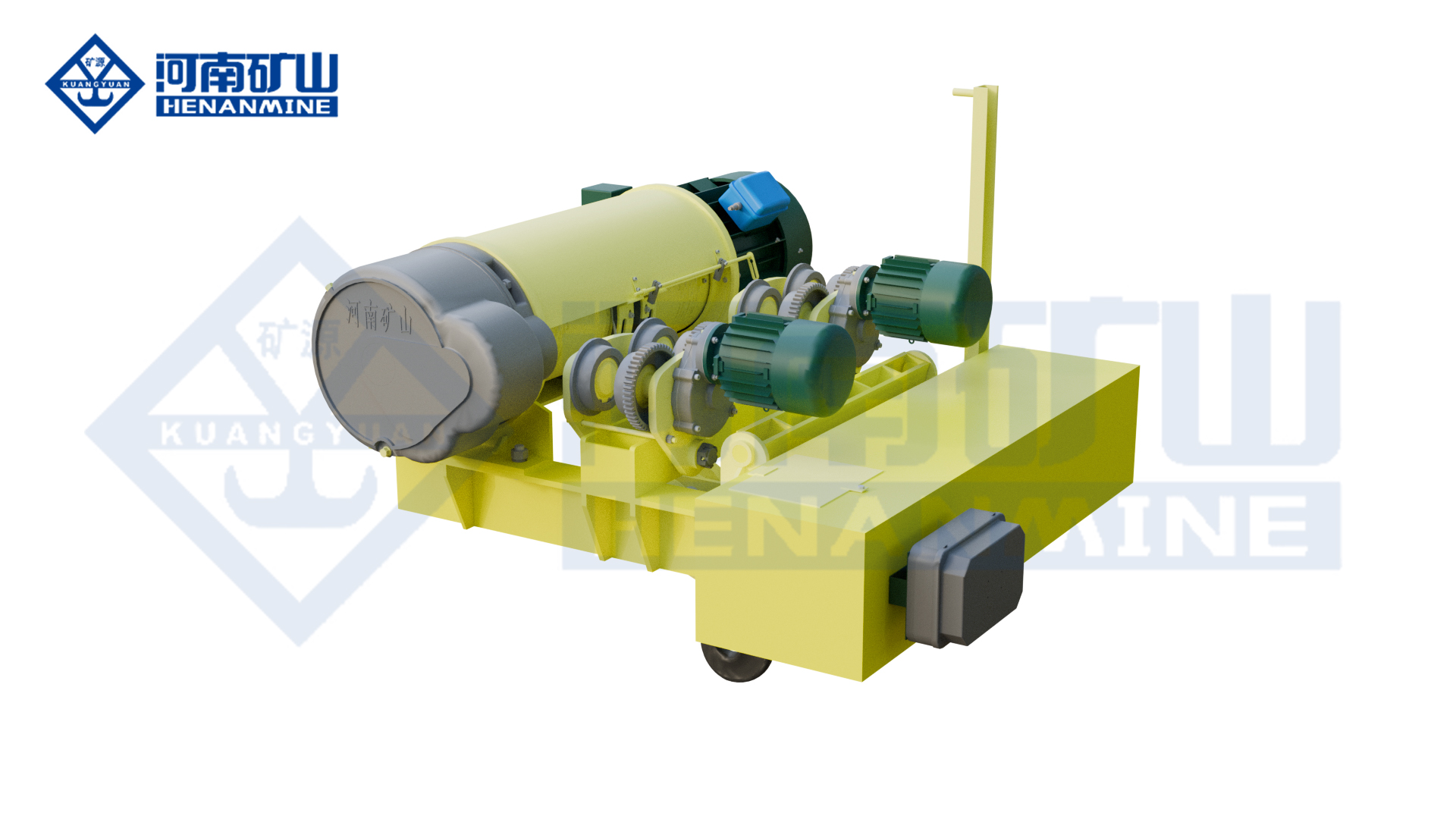
Compare the beam-to-hook envelope where vertical space controls the purchase.
View configuration ↗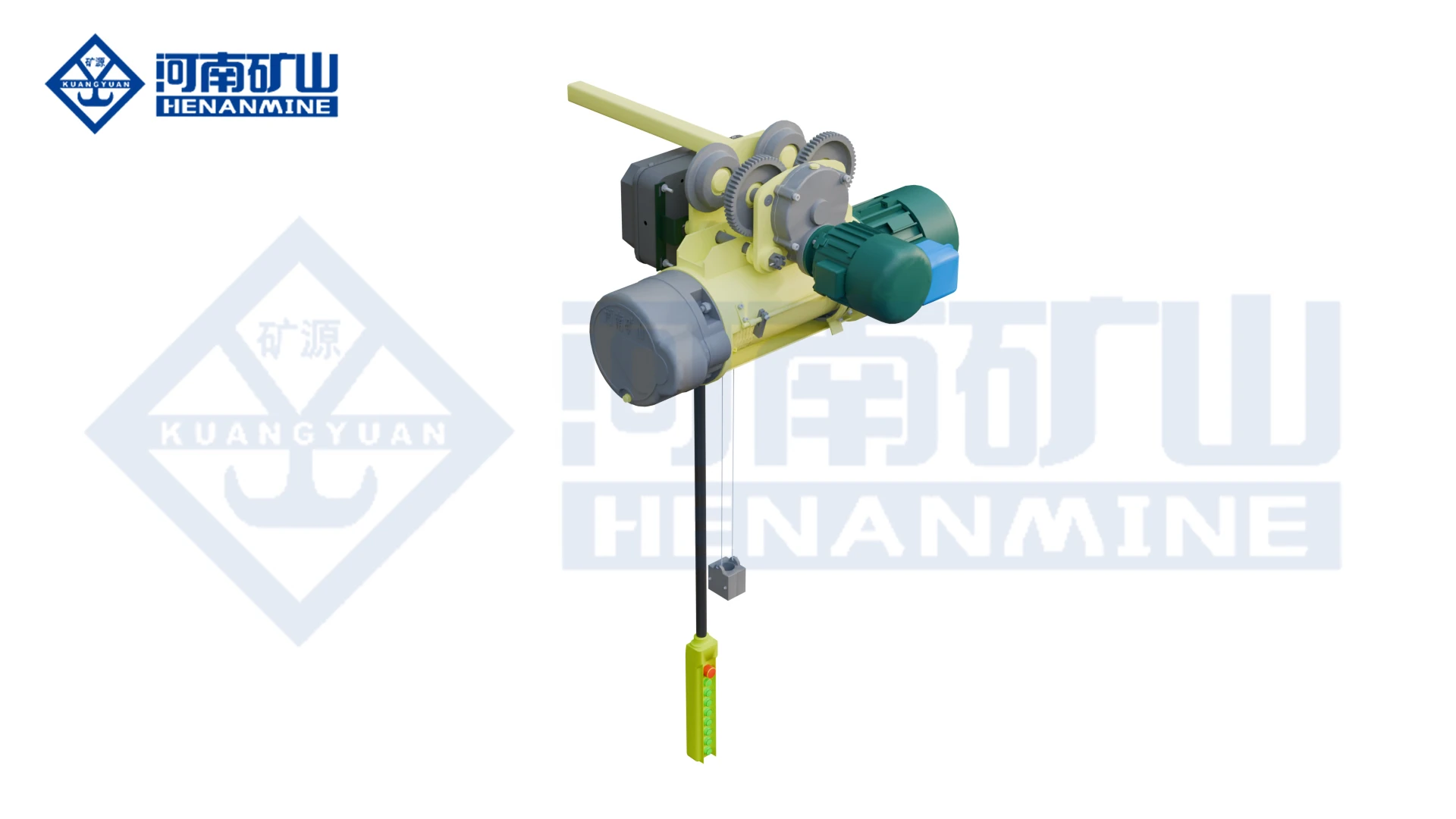
Compare a straightforward wire rope hoist arrangement for general workshop lifting.
View configuration ↗Review the complete wire rope hoist range and related duty choices.
View configuration ↗Resolve fit, delivery and scope before placing the order.
The specified heavy-duty electrical connector is described as IP55. Ask for separate protection ratings for the motor, control box and other electrical parts of the selected unit.
Define it in the quotation. Identify the sensors, gateway, plant-network interface, data users and support responsibility needed for your site.
No. The drawing must show safe access and the clearance required to remove the selected motor, reducer and brake modules.
Request one selected-unit schedule showing capacity, lift height, hoisting and travel speeds, duty, voltage, dimensions, modules and controls.
Send the lifting brief and access drawing so the KS offer includes both operating performance and service equipment.
Request a KS hoist proposal