
Low-roof manufacturing bays
Lift workpieces over fixtures while preserving a usable hook path beneath roof beams, lights and services.
Bridge cranes for workshops and production lines.
Explore Overhead Cranes
Ground-supported lifting for yards and construction.
Explore Gantry Cranes
Wire rope and chain hoists for lifting points and cranes.
Explore Electric Hoists

Wire rope lifting and pulling with a powered drum.
Explore Electric Winches
Grab buckets, magnets and hooks for your load.
Explore Lifting Attachments & Grabs
Mobile handling for containers, precast and yard loads.
Explore Rubber-Tired Gantry Cranes & Straddle Carriers

Lift and move vessels through boatyards and marinas.
Explore Marine Travel Lifts
Ladle, slab, scrap and coil handling across steel production.

Container stacking and cargo transfers across terminals and rail.

Turbine installation, powerhouse maintenance and wind equipment assembly.

Controlled component transfer and positioning for precision assembly.

Heavy fabrication, production lifting and factory crane automation.

Process lifting for smelters, carbon blocks and anode materials.

Clean lifting and classified protection for sensitive process areas.

Bridge fabrication, metro construction and ship block assembly.

Automated storage and retrieval for plates, cables and bins.

Follow project dispatches, crane engineering and factory acceptance.

Dispatch, installation and equipment in service

Crane configurations and handling technology

Factory inspections, acceptance and test programmes

Company developments, people and community programmes
KS1 rearranges the motor and rope drum to reduce the space occupied above the hook. The buying result is not the word “compact”; it is the upper-hook position achieved inside your building, with the required load, lift and service access.
Compare KS1 with a conventional hoist on the same building section. Give the beam datum, roof and service obstructions, the highest required hook centerline and the lowest pickup point. A dimensioned selected-unit drawing should show the actual hook-height gain before the order is approved.
Specify the selected unit, installation interface and supply boundary in one comparable quotation.
Mark the highest required hook centerline against a fixed beam or rail datum.
Check that rope length and lower-hook travel still reach the deepest pickup point.
Provide the flange, rail and allowable reactions for the loaded hoist and trolley.
Map bracing, lighting, ducts and access needed around motor, drum and brake.
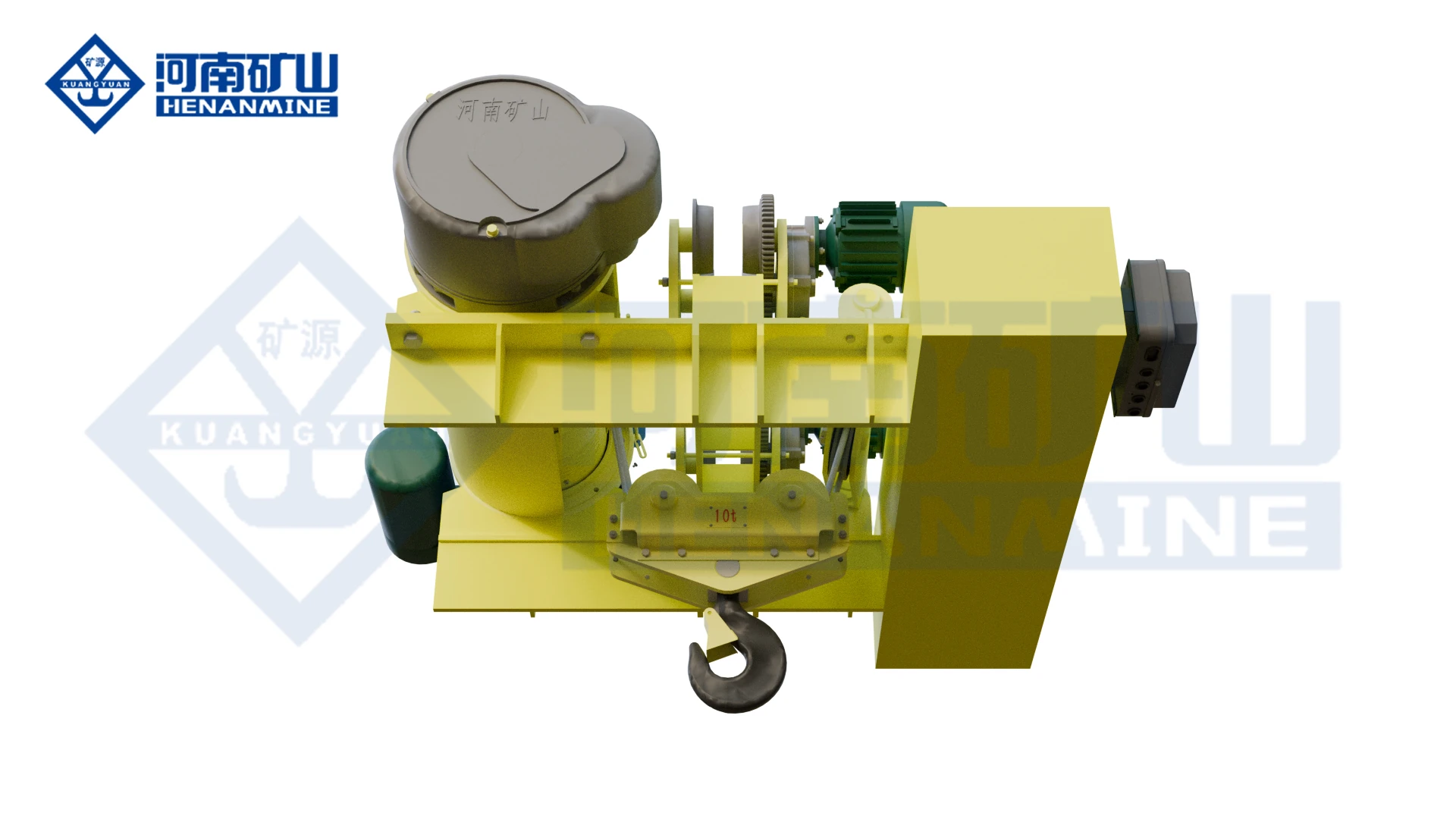
KS1 is most valuable when structural steel or roof services limit the highest hook position and the item must still clear a machine, vehicle or fixture.
Lift workpieces over fixtures while preserving a usable hook path beneath roof beams, lights and services.
Remove a large component without an unnecessary loss of vertical clearance; include the rigging and the part height in the section drawing.
Compare the replacement envelope against the current crane while confirming support rating, trolley fit, controls and allowable wheel reactions.
Do not substitute an unmeasured compact-hoist claim for the actual highest hook position. Confirm side access to the drum, rope guide, motor and brake.
KS1 can be considered in different support arrangements. Decide by measured hook coverage and support geometry, not only by the overall height printed on a product card.
A fixed support must carry the full hoist, rigging and lifted load.
Measure the beam and compare the upper hook at every required pickup and set-down location.
A replacement hoist is not a capacity upgrade for the existing bridge or runway.
Compare like-for-like drawings before paying for a compact arrangement.
Swipe to compare the complete selected configuration
| Configuration | Movement | Useful when | Drawing to approve | Buyer check |
|---|---|---|---|---|
| Compact suspended KS1 | Vertical lifting at a rated support | One lifting point is constrained by building height | Suspension datum, highest hook, lower limit and clearances | A fixed support must carry the full hoist, rigging and lifted load. |
| KS1 with travelling trolley | Lift plus movement along a compatible beam | Several lifting points need the same low-headroom beam | Trolley wheel fit, rail curve, end approach and loaded reactions | Measure the beam and compare the upper hook at every required pickup and set-down location. |
| KS1 in a crane upgrade | Within an existing or new overhead crane | A crane bay needs more vertical hook reach | Crane frame, trolley interface, wheel loads and existing power | A replacement hoist is not a capacity upgrade for the existing bridge or runway. |
| Conventional hoist comparison | Standard hoist envelope | Existing headroom already reaches the highest load position | Same beam datum, selected load and upper-hook centerline | Compare like-for-like drawings before paying for a compact arrangement. |
The upper hook position and service clearance depend on the chosen capacity, lift, trolley and beam. No fixed percentage gain or universal capacity range replaces the approved selected-unit drawing.
Place conventional and KS1 selected-unit drawings on the same beam datum. The important difference is the clear height available to the suspended load after sling depth and safety clearance are included.
Show beam top or underside, rail level and roof lower edge in one scaled section.
Mark highest required hook centerline and lowest pickup, including the workpiece and rigging depth.
Dimension lights, ducts, roof bracing, walkways and other items inside the trolley route.
Provide beam section, flange dimensions, allowable reactions, maximum complete load and operating cycle.
The motor and rope drum layout reduces the hoist envelope, but every component still needs a defined installation and service space.
Show upper and lower hooks, trolley outline, wheel loads and the closest approach to walls and end stops.
Confirm beam or crane rating, rail geometry, travel length, power feed and site electrical supply.
Mark inspection and removal access for rope, drum, brake and motor without relying on a photograph alone.
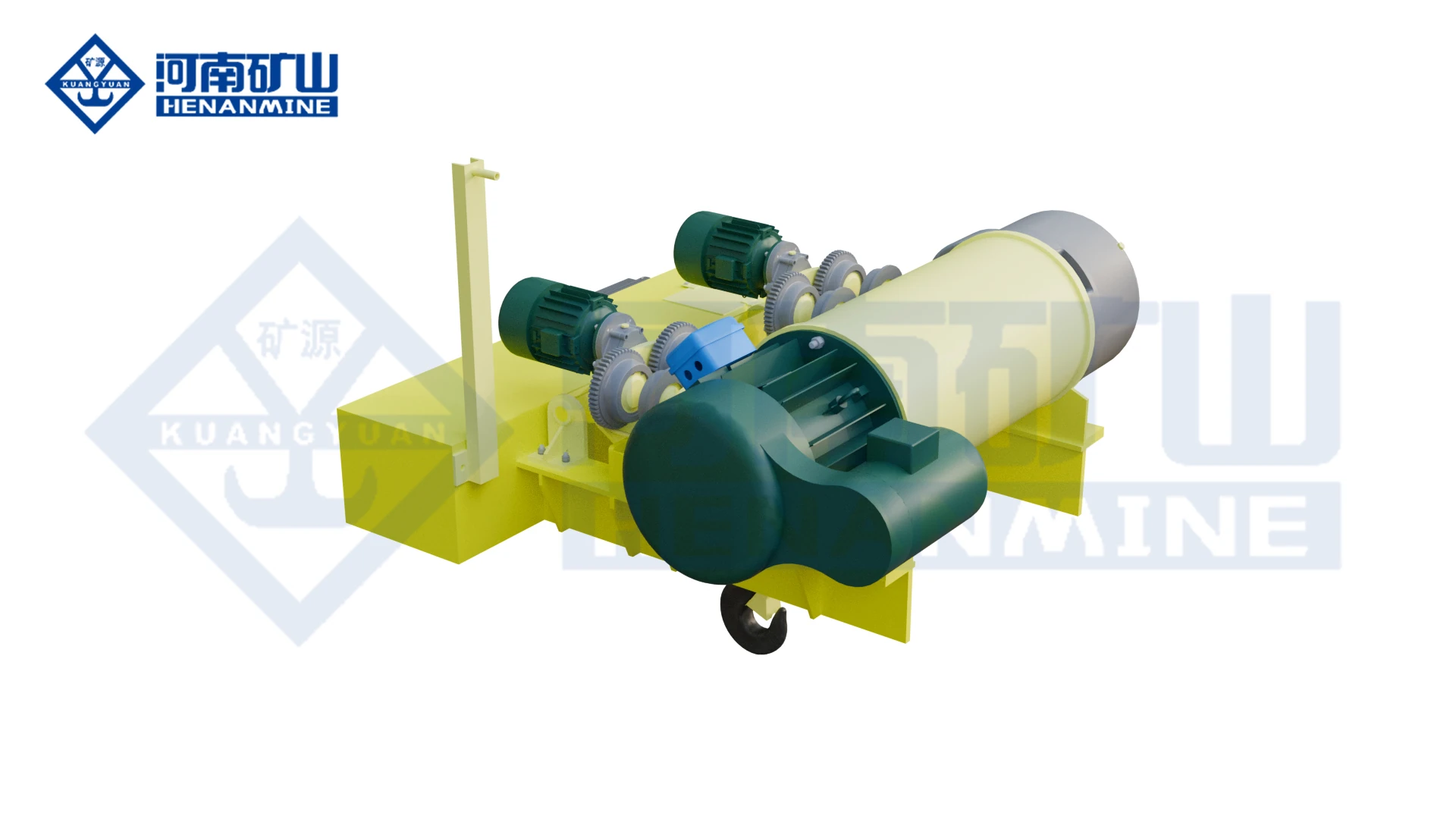
A useful quotation shows exactly how the KS1 unit fits and what will be delivered, tested and installed.
Rated KS1 unit, rope and hook assembly, selected suspension or trolley, brakes, limits and controls.
Upper-hook position, usable lift, side approaches, service clearances and beam or crane interface in millimetres.
Inspection and load-test records, manuals, spare-parts list, packing, freight and site services as agreed.
Name the destination requirements and identify applicable type-test, inspection and conformity records in the offer.
The written offer should state minimum quantity and whether trolley, controls and support items are included.
Separate manufacturing, factory test, dispatch, freight and any installation or commissioning milestones.
Agree coverage for the hoist, trolley and controls, along with service access and spare-parts supply.
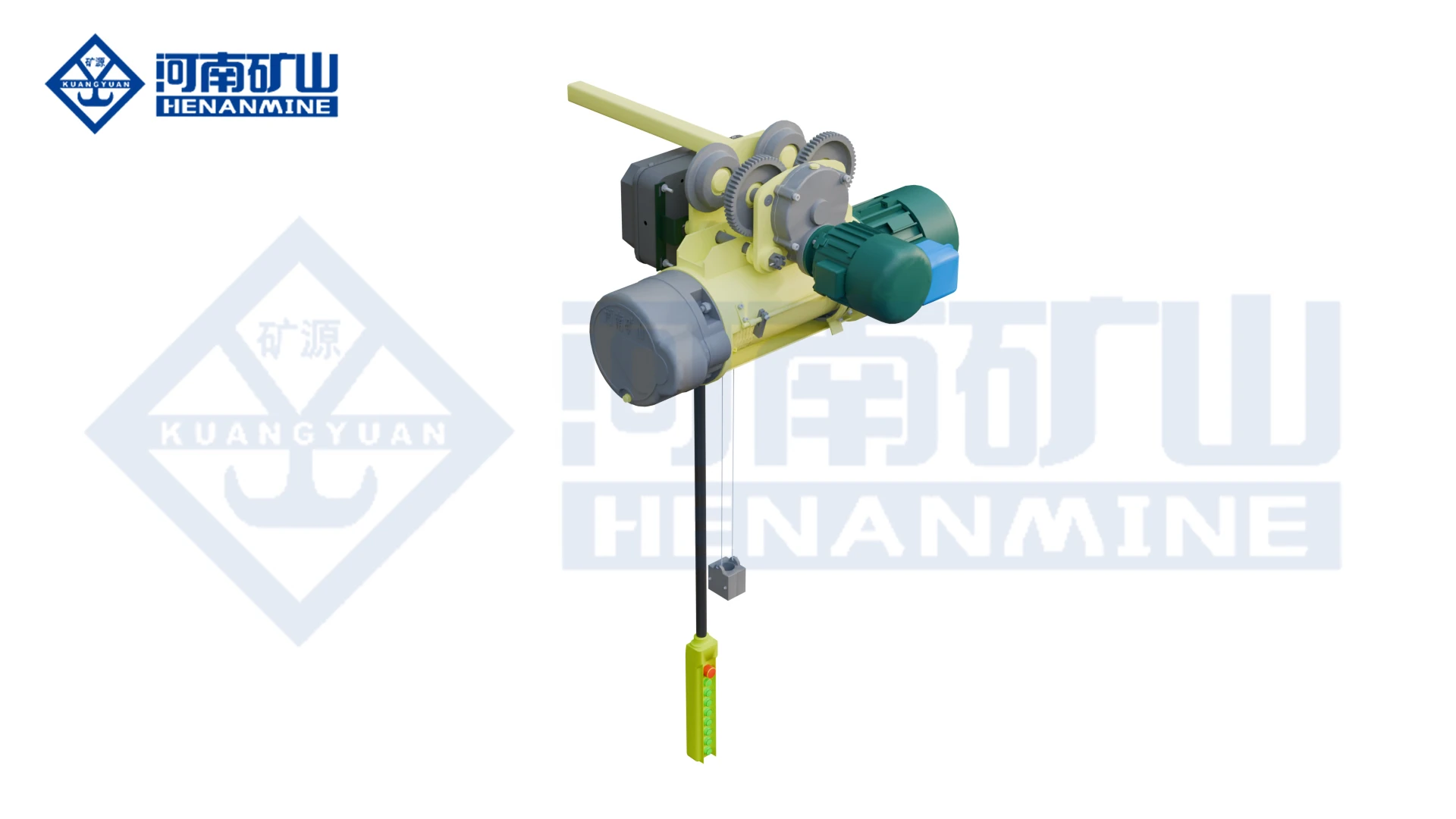
Compare a conventional hoist on the same building section.
View configuration ↗Compare a service-oriented arrangement when hook height is sufficient.
View configuration ↗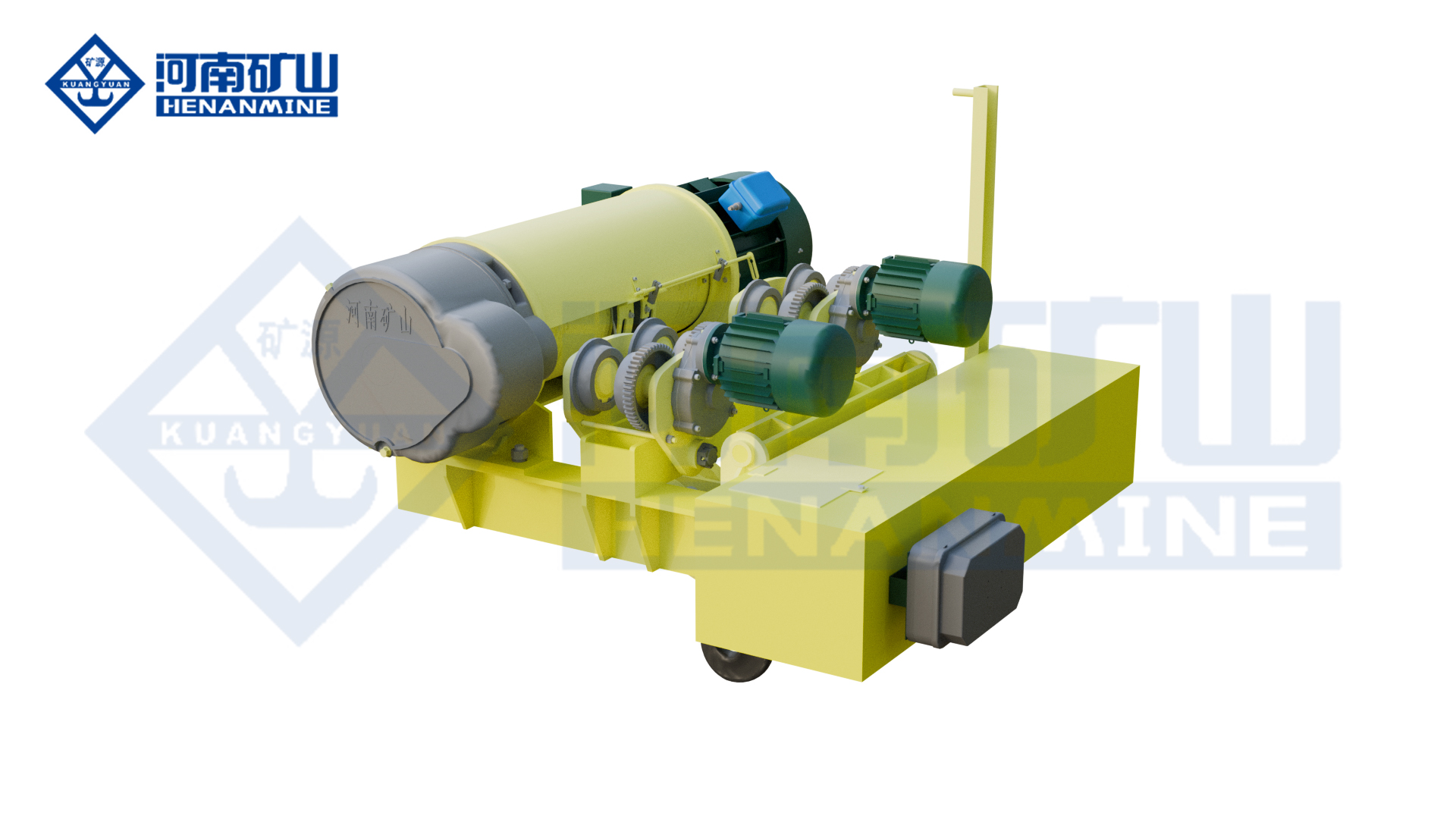
Review the complete crane arrangement if the whole bridge needs redesign.
View configuration ↗Resolve fit, delivery and scope before placing the order.
The gain depends on the chosen hoist, trolley, beam and building. Compare selected-unit drawings on the same beam datum and use the resulting upper-hook dimension in the purchase specification.
No. Lifting height is the hook's vertical travel. Headroom is the installed space above the highest reachable hook. Both must meet the job.
It can be evaluated as an upgrade after checking trolley geometry, runway reactions, existing crane capacity, electrical interface and service clearances.
It should show the beam reference, upper and lower hook positions, trolley outline, closest approaches, component access and loads on the support.
Share the load and available space. The technical offer should return a selected KS1 unit with its actual upper-hook position and support loads.
Request a KS1 layout