
Workshop material transfer
Lift one fabricated part or machine component and move it between defined pickup and set-down positions.
Bridge cranes for workshops and production lines.
Explore Overhead Cranes
Ground-supported lifting for yards and construction.
Explore Gantry Cranes
Wire rope and chain hoists for lifting points and cranes.
Explore Electric Hoists

Wire rope lifting and pulling with a powered drum.
Explore Electric Winches
Grab buckets, magnets and hooks for your load.
Explore Lifting Attachments & Grabs
Mobile handling for containers, precast and yard loads.
Explore Rubber-Tired Gantry Cranes & Straddle Carriers

Lift and move vessels through boatyards and marinas.
Explore Marine Travel Lifts
Ladle, slab, scrap and coil handling across steel production.

Container stacking and cargo transfers across terminals and rail.

Turbine installation, powerhouse maintenance and wind equipment assembly.

Controlled component transfer and positioning for precision assembly.

Heavy fabrication, production lifting and factory crane automation.

Process lifting for smelters, carbon blocks and anode materials.

Clean lifting and classified protection for sensitive process areas.

Bridge fabrication, metro construction and ship block assembly.

Automated storage and retrieval for plates, cables and bins.

Follow project dispatches, crane engineering and factory acceptance.

Dispatch, installation and equipment in service

Crane configurations and handling technology

Factory inspections, acceptance and test programmes

Company developments, people and community programmes
The pictured KSS arrangement uses one wire rope hoist and one lifting hook carried by paired trolley running gear. Plan it as a complete single-hook lifting and travel package for a compatible beam or crane. The load, hook path, wheel reactions and installation dimensions determine the selected unit.
The KSS images show one lifting hook with running gear on both sides of the hoist assembly. Specify one rated hook load and check the paired travel units against the host structure. If your load requires two independent lifting points, request a separately engineered twin-hoist solution.
Specify the selected unit, installation interface and supply boundary in one comparable quotation.
Include the workpiece, rigging and lifting attachments when selecting the rated hook load.
Confirm track or flange geometry, wheel reactions, end approach and the usable hook path.
The quotation should identify the lifting unit, running gear, drives, controls, documents and service terms.
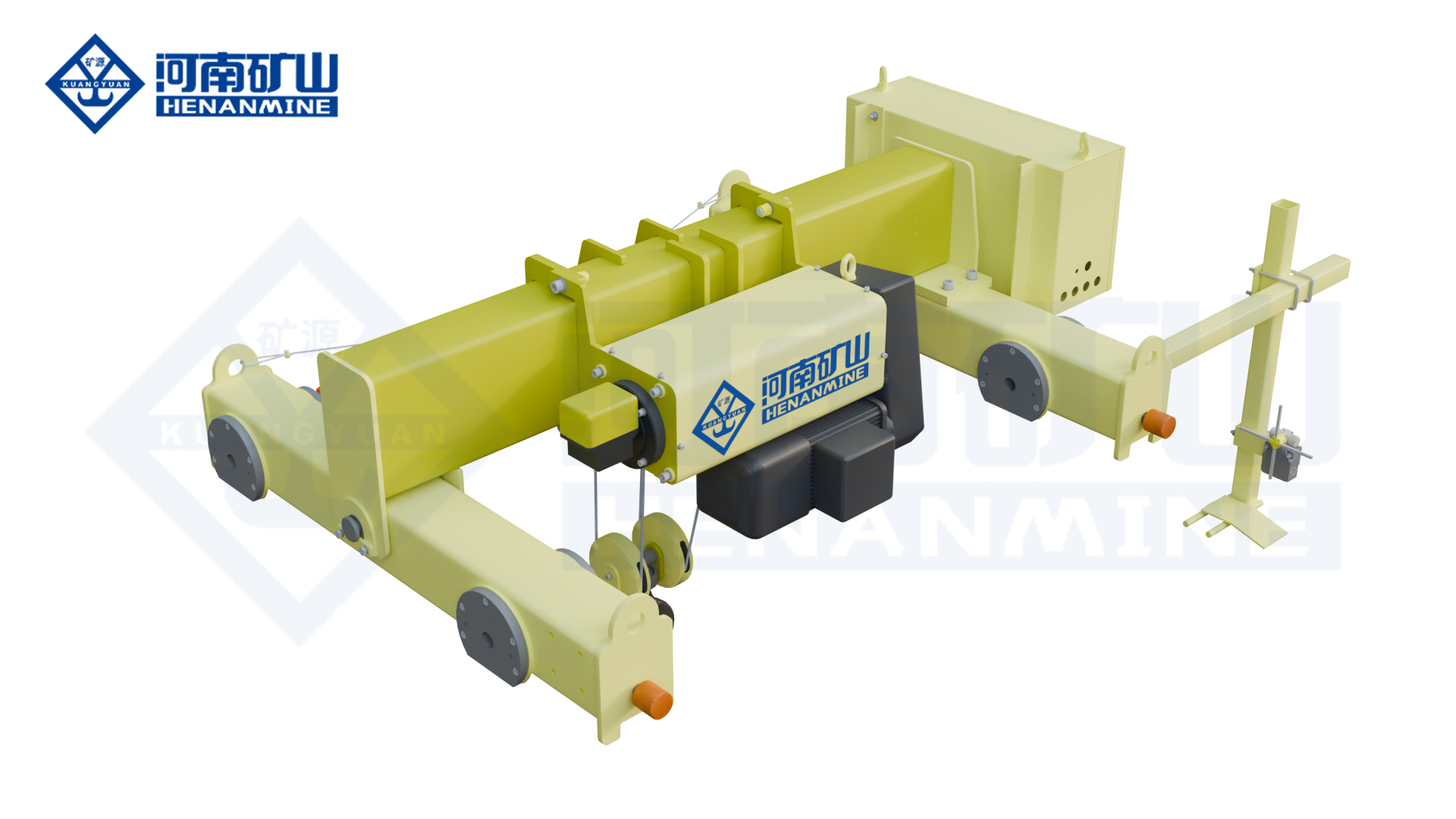
KSS is considered when one lifted load must travel on a compatible overhead route. The paired running gear supports the single hoist assembly; the buyer should check how the complete unit fits and loads the host structure.
Lift one fabricated part or machine component and move it between defined pickup and set-down positions.
Position a suspended component over a workstation with the lifting speed and travel control selected for the task.
Integrate the hoist and paired running gear with a host crane whose structure and wheel-load limits have been checked.
A long load that requires two independent hooks needs a separately designed two-hoist or lifting-beam solution. The pictured KSS arrangement has one lifting hook.
The design questions below shape a complete KSS proposal. They are not separate published load-and-speed combinations; exact values belong to the selected-unit data sheet.
State the maximum complete suspended mass and the load dimensions.
Send the installation drawing and positioning tolerance with the RFQ.
Provide the host-crane general arrangement before asking for a final price.
Swipe to compare the complete selected configuration
| Configuration | Lifting task | Travel requirement | Approval check | Buyer check |
|---|---|---|---|---|
| Single-hook material transfer | One rated hook moves a load between defined positions. | Set the travel distance, stopping points and operating speed. | Verify hook coverage and wheel reactions throughout the route. | State the maximum complete suspended mass and the load dimensions. |
| Precise equipment positioning | Place a component into a machine or fixture using one hook. | Define slow approach, operator visibility and control location. | Confirm selected hoist and travel speeds, braking and end approach on the offer. | Send the installation drawing and positioning tolerance with the RFQ. |
| Existing crane or beam integration | Fit a selected KSS hoist assembly to an approved host structure. | Match the paired running gear to the actual rail or beam arrangement. | Check track spacing, wheelbase, maximum wheel reactions, headroom and maintenance clearance. | Provide the host-crane general arrangement before asking for a final price. |
Rated load, lift height, speed and trolley geometry must appear together in the selected technical offer; a family label alone is not a specification for the ordered unit.
The correct KSS unit must both lift the load and travel safely on the supporting structure. These measurements allow a quotation to define one buildable arrangement.
Maximum workpiece, rigging and attachment mass; load size and centre of gravity where relevant.
Lowest pickup, highest placement, required lift height, upper-hook target and end approach.
Beam or rail drawing, track spacing, flange or rail dimensions, span and permitted wheel reactions.
Lifts and transfers per hour, shifts, site power, control position and desired positioning speed.
The hoist body, both running-gear sides and host beam form one mechanical system. The drawing must show how the wheel loads change along the route.
Confirm rail or beam geometry, wheelbase, track spacing, end stops and the maximum reactions from the complete loaded unit.
Review upper-hook position, body width, drum access and clearance to roof steelwork, power feeds and nearby equipment.
Specify site voltage, frequency, lift and travel commands, limits, emergency stop and the agreed variable-speed settings.


A useful KSS offer connects the selected lifting unit, running gear and host interface rather than pricing the hoist in isolation.
Obtain one sheet stating rated hook load, lifting height, lift and travel speeds, duty, power and the actual arrangement.
Require running-gear dimensions, track fit, wheel reactions, headroom, hook coverage and maintenance clearances.
Agree function checks for lifting, travel, brakes, limits and controls before dispatch.
Define structural approval, electrical connection, commissioning, parts identification and warranty support.
The quotation should state minimum order and itemise each complete hoist-and-running-gear package.
Request applicable type-test information, routine test records, electrical documents and operating instructions for the exact supplied model and destination.
Separate engineering, manufacture, inspection, dispatch and transport milestones in the offer.
Include installation scope, spare parts, service access and the response route for faults.
Compare another single-hook hoist architecture for the same lifting duty.
View configuration ↗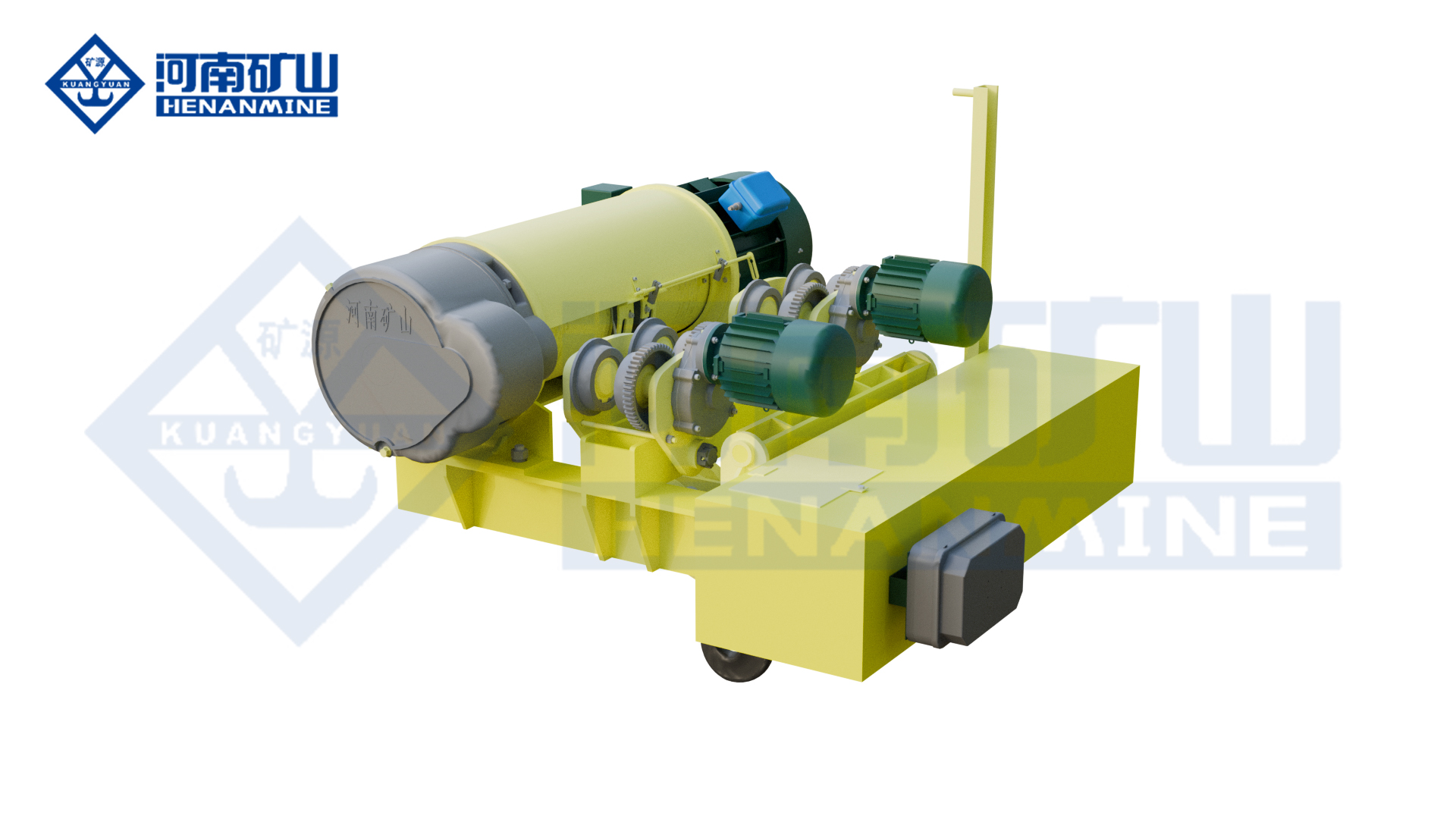
Compare when usable hook height is constrained.
View configuration ↗Review the family before fixing running-gear and mounting choices.
View configuration ↗Resolve fit, delivery and scope before placing the order.
No. The pictured KSS unit has one wire rope lifting hook carried by paired trolley running gear. A two-hook operation requires a different engineered arrangement.
It refers to the paired running-gear arrangement around one hoist assembly. The host structure, track spacing, wheel loads and clearances need to be checked for the selected unit.
Send the complete suspended load, hook path, host beam or crane drawing, track geometry, duty, power and destination. The offer should return paired rated load, lift, speeds and dimensions for one selected configuration.
Send the one-hook lifting task and host drawing. We will define a matched lifting unit, running gear and project supply scope.
Send the KSS lifting brief