
Lift the complete load
Specify the hoist for the maximum suspended mass, lift height, lifting frequency and required positioning control.
Bridge cranes for workshops and production lines.
Explore Overhead Cranes
Ground-supported lifting for yards and construction.
Explore Gantry Cranes
Wire rope and chain hoists for lifting points and cranes.
Explore Electric Hoists

Wire rope lifting and pulling with a powered drum.
Explore Electric Winches
Grab buckets, magnets and hooks for your load.
Explore Lifting Attachments & Grabs
Mobile handling for containers, precast and yard loads.
Explore Rubber-Tired Gantry Cranes & Straddle Carriers

Lift and move vessels through boatyards and marinas.
Explore Marine Travel Lifts
Ladle, slab, scrap and coil handling across steel production.

Container stacking and cargo transfers across terminals and rail.

Turbine installation, powerhouse maintenance and wind equipment assembly.

Controlled component transfer and positioning for precision assembly.

Heavy fabrication, production lifting and factory crane automation.

Process lifting for smelters, carbon blocks and anode materials.

Clean lifting and classified protection for sensitive process areas.

Bridge fabrication, metro construction and ship block assembly.

Automated storage and retrieval for plates, cables and bins.

Follow project dispatches, crane engineering and factory acceptance.

Dispatch, installation and equipment in service

Crane configurations and handling technology

Factory inspections, acceptance and test programmes

Company developments, people and community programmes
Move parts, tooling and equipment across a workshop bay with an electric wire-rope hoist and top-running single-girder bridge.
Tell us what you need to lift and your approximate span. We’ll help you choose the crane and hoist configuration.
Send a workshop plan or runway drawing with your RFQ. We can define the crane envelope, wheel loads and supply boundary before the final offer.
Move parts and equipment between production, assembly and storage positions.
Select the hoist, controls and site power to suit the work.
See the equipment, delivery and installation support included in your offer.
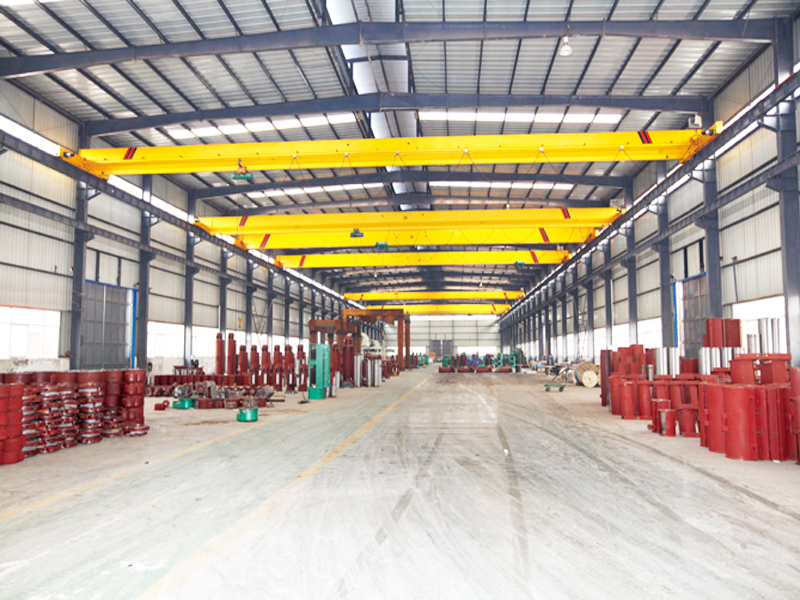
Move workpieces, fixtures and assemblies between machines. Size the crane for the heaviest payload together with slings and any lifting beam.
Lift motors, gearboxes and equipment modules into position. Check the removal height and working area around each assembly station.
Transfer material between defined storage and dispatch positions within the runway bay. Confirm hook approaches at both ends of travel.
For molten metal, explosive atmospheres or demanding continuous processes, compare the dedicated single girder arrangements.
Capacity, span, lifting height and duty must be checked together against your building and operating cycle.
| Rated capacity | 1 / 2 / 3 / 5 / 10 / 16 / 20 t |
|---|---|
| Span | 6–31.5 m; custom spans available |
| Lifting height | 6 / 9 / 12 / 18 / 24 / 30 m |
| Working class | A3–A5, selected for the lifting duty |
| Hoist type | Electric wire-rope hoist |
| Single-speed lifting options | 8 / 7 / 3.5 m/min; selected with hoist capacity |
| Dual-speed lifting (main / creep) | 8/0.8 · 7/0.7 · 3.5/0.35 m/min |
| Trolley travel speed | 20 m/min |
| Crane travel speed | 20 m/min |
| Power supply | 380 V · 50 Hz · 3-phase; custom voltage/frequency |
| Control options | Pendant / wireless remote control |
| Working temperature | −20 to +40 °C for selected configurations |
| Crane arrangement | Top-running single girder |
| Typical applications | Manufacturing, assembly, maintenance and storage |
Use these views to discuss the runway and floor route for your own installation.
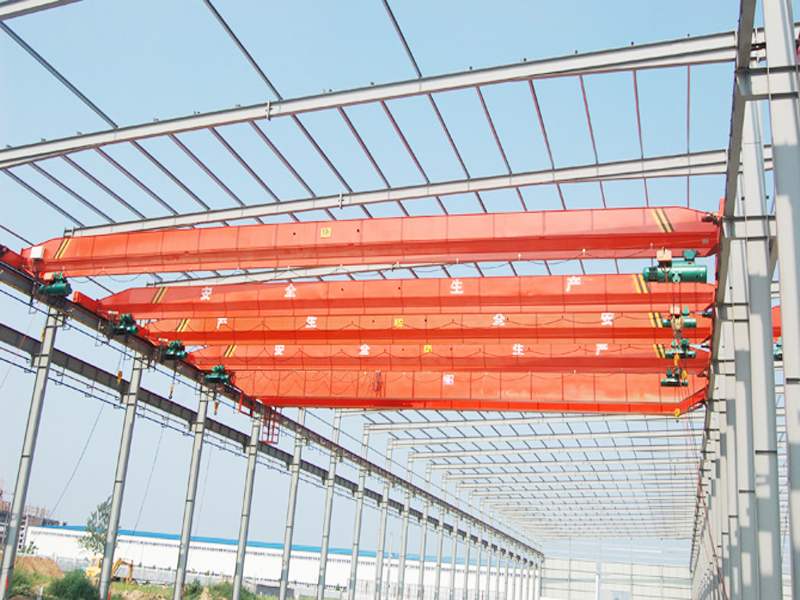
The same crane family can require different equipment when the operating route or working cycle changes.
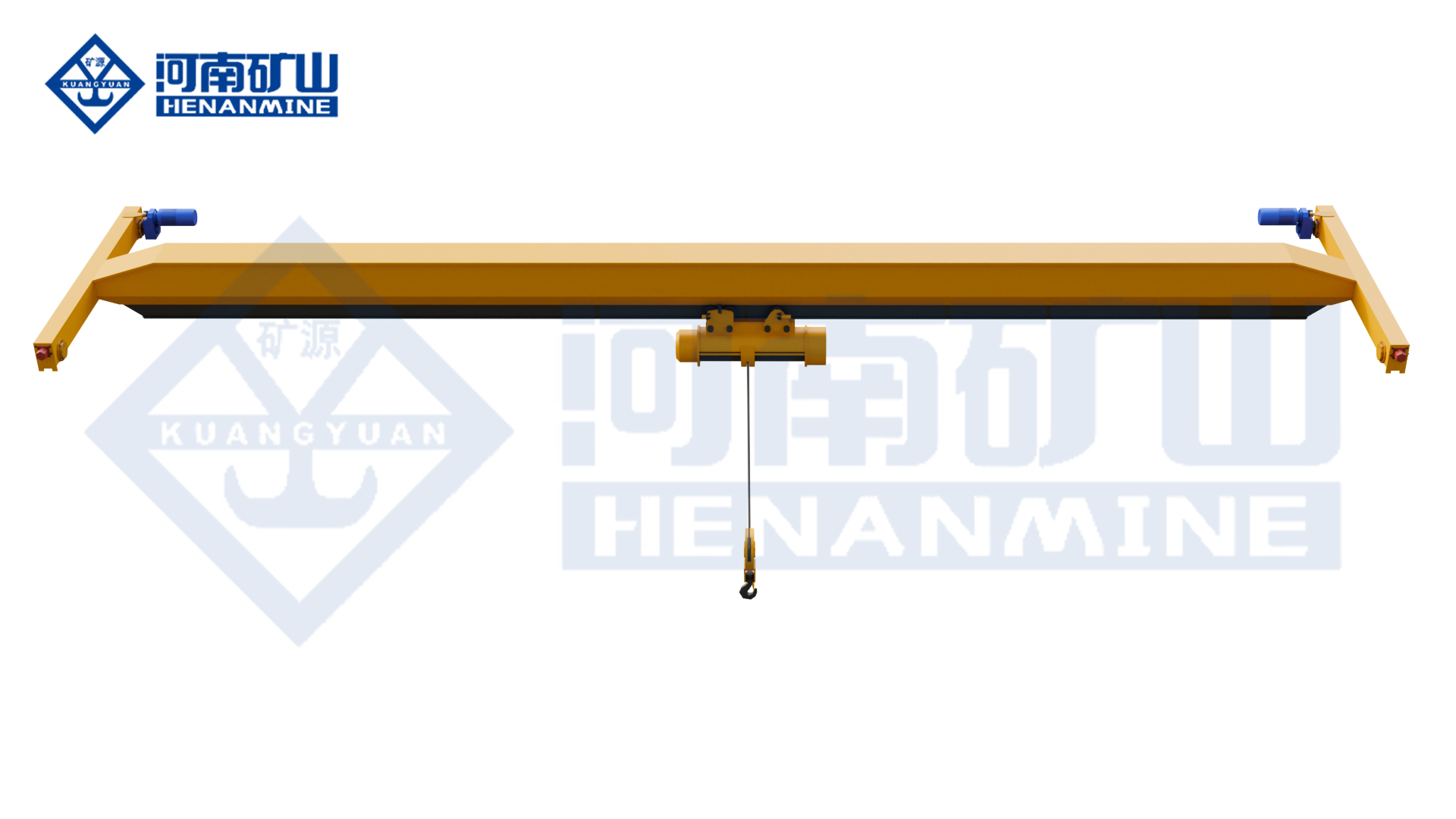
Specify the hoist for the maximum suspended mass, lift height, lifting frequency and required positioning control.
Set trolley and bridge travel for actual pickup and set-down points. Check end stops and available approaches.
Choose pendant or radio control around the work route, visibility and site safety requirements.
State voltage, frequency, phase and workshop environment so motors, controls and power feed can be selected.
A useful quotation separates the crane package from site work, freight and optional services.
Send requirements for a single crane or multiple bays. The written offer confirms order quantity and the configuration for each unit.
Ask for an itemised crane, hoist, control and power-feed scope. Identify runway steel, rails, freight and installation separately.
Your quotation identifies the drawings, manuals and inspection documents available for the selected crane. Tell us if your destination requires specific conformity documents.
Manufacturing lead time and dispatch dates are confirmed for your selected crane. Shipping time depends on the destination and transport plan.
Share the installation location. We’ll discuss the guidance, commissioning and site assistance available for your project.
Your offer sets out the warranty period and coverage, together with spare-parts support for the selected hoist and travel drives.
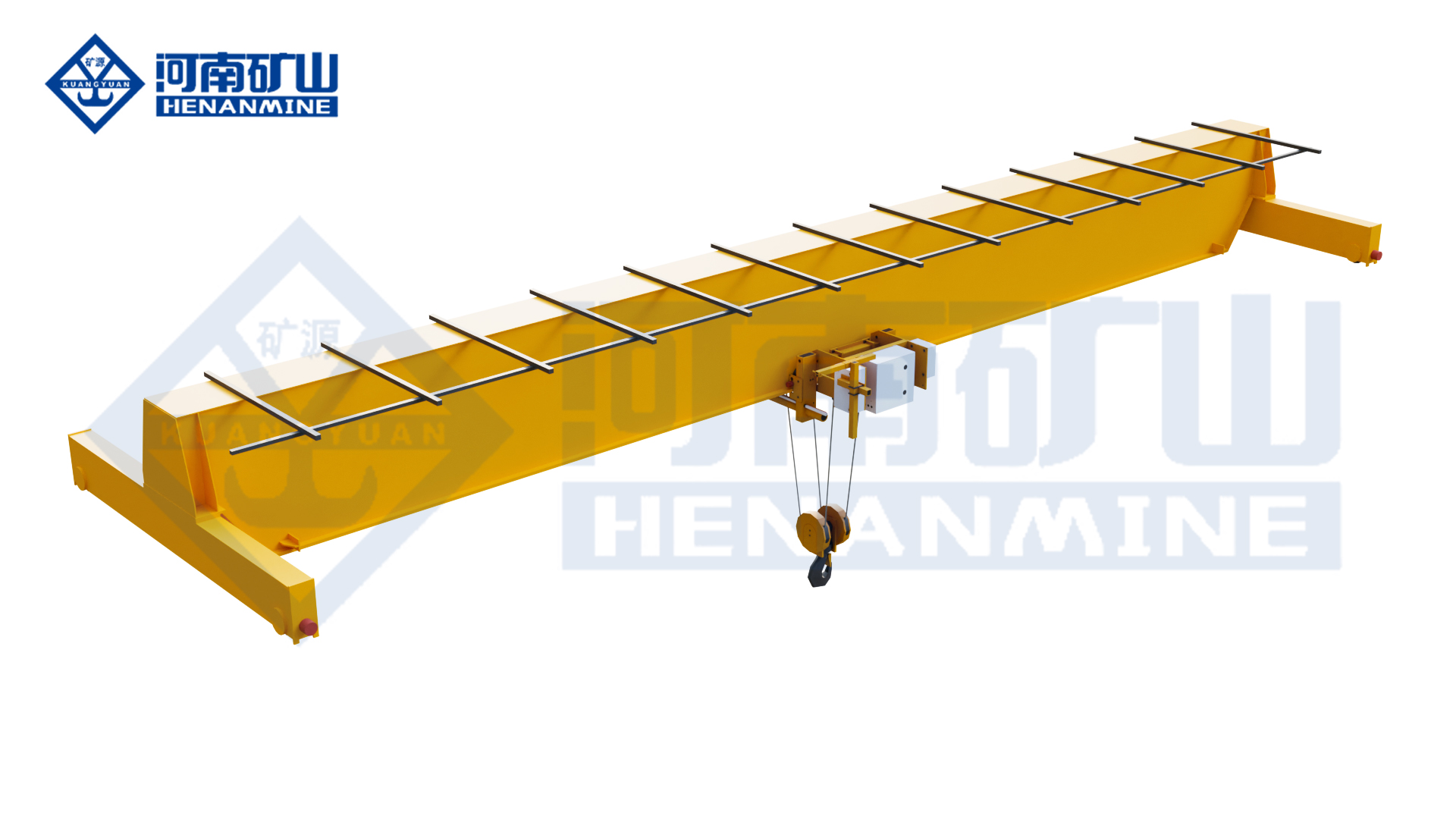
Compare a compact hoist arrangement when the conventional layout cannot reach your required upper hook level.
View product ↗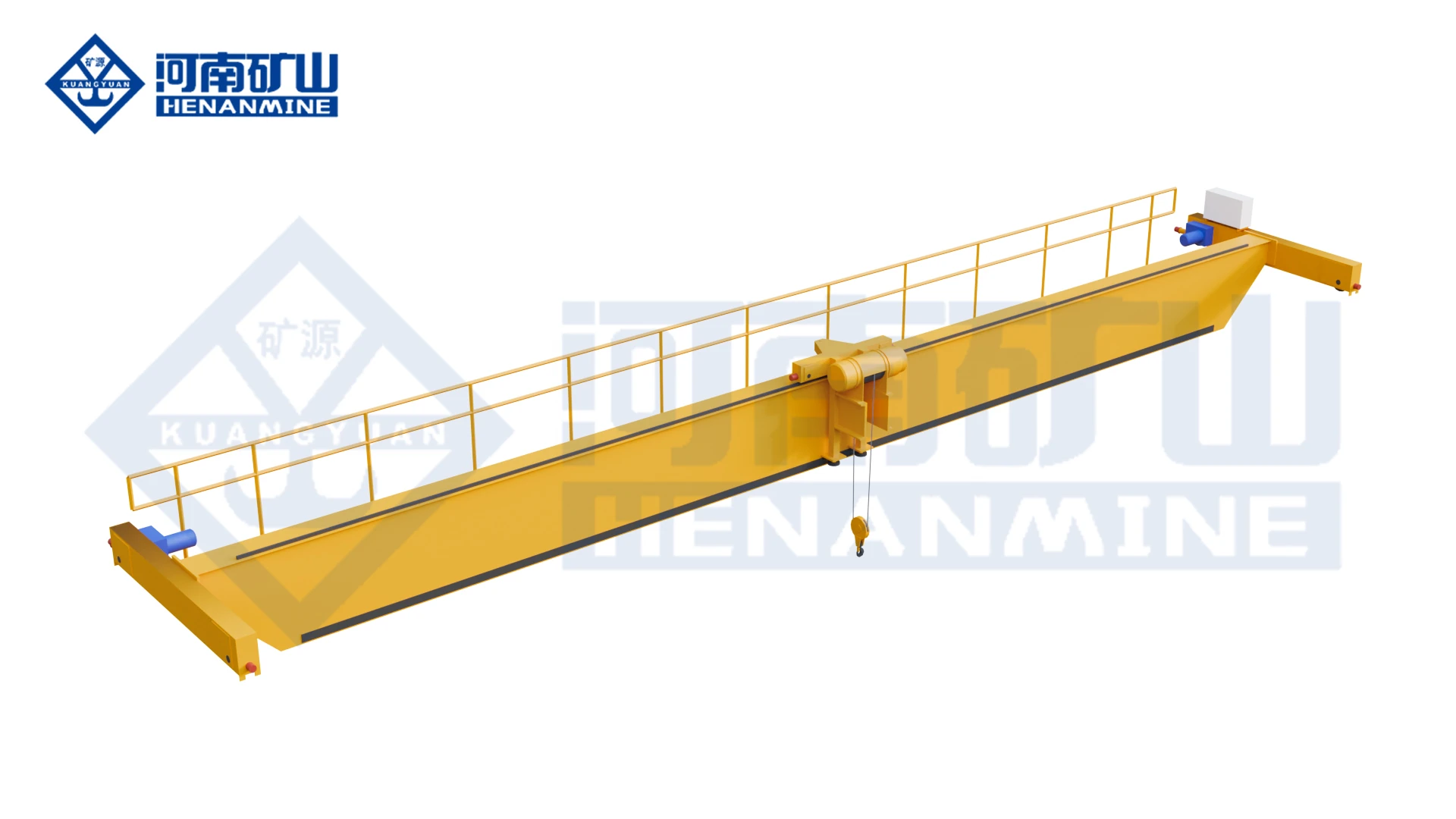
Compare an offset hoist layout against the same span, runway level and hook approach requirements.
View product ↗
Review a suspended arrangement when the building structure can support an underhung runway.
View product ↗Resolve the load, building fit and supply scope before approving a crane configuration.
It is intended for intermittent, repeated material handling in a general workshop. Describe any hot load, hazardous area, outdoor exposure or continuous process duty separately so the right crane design can be selected.
Start with the heaviest payload plus lifting gear, measured rail-centre span, travel length, hook coverage and lifting cycle. The technical offer combines these values into one ordered configuration; a capacity choice alone does not establish building fit.
Send the existing rail section, span, support drawings and rail elevation. Wheel loads, approach dimensions and clearances must be checked against the selected crane before reuse is approved.
Compare LD and LDC at the same load and runway elevation. If LD does not reach the required upper hook level below the roof, a compact or side-mounted hoist arrangement may improve the usable lifting envelope.
Yes. Send the requirements for one crane set; the quotation will confirm the configuration, supply scope and order terms.
Specify the destination and required standards with your RFQ. The written offer identifies the conformity documents, inspection records and manuals that apply to the crane being supplied.
Manufacturing time depends on the agreed crane configuration and drawing approval. The commercial offer confirms the programme, warranty period, coverage and service responsibilities for your order.
Provide maximum suspended load, load dimensions, span, runway length, lifting height, cycle and shifts, power supply, destination, available building drawings and the installation services you need.
Tell us what you need to lift, your project location and any dimensions you already know. We’ll help you choose a suitable configuration.
info@cranehenanmine.com