
Foundry ladle transfer
Move a compatible filled or empty ladle between handling stations. Select capacity for the complete suspended assembly and verify that the hook can reach every pickup and set-down position.
Bridge cranes for workshops and production lines.
Explore Overhead Cranes
Ground-supported lifting for yards and construction.
Explore Gantry Cranes
Wire rope and chain hoists for lifting points and cranes.
Explore Electric Hoists

Wire rope lifting and pulling with a powered drum.
Explore Electric Winches
Grab buckets, magnets and hooks for your load.
Explore Lifting Attachments & Grabs
Mobile handling for containers, precast and yard loads.
Explore Rubber-Tired Gantry Cranes & Straddle Carriers

Lift and move vessels through boatyards and marinas.
Explore Marine Travel Lifts
Ladle, slab, scrap and coil handling across steel production.

Container stacking and cargo transfers across terminals and rail.

Turbine installation, powerhouse maintenance and wind equipment assembly.

Controlled component transfer and positioning for precision assembly.

Heavy fabrication, production lifting and factory crane automation.

Process lifting for smelters, carbon blocks and anode materials.

Clean lifting and classified protection for sensitive process areas.

Bridge fabrication, metro construction and ship block assembly.

Automated storage and retrieval for plates, cables and bins.

Follow project dispatches, crane engineering and factory acceptance.

Dispatch, installation and equipment in service

Crane configurations and handling technology

Factory inspections, acceptance and test programmes

Company developments, people and community programmes
Move ladles through foundry and smelting bays with a metallurgical winch trolley and selected single-hook or main/auxiliary arrangement.
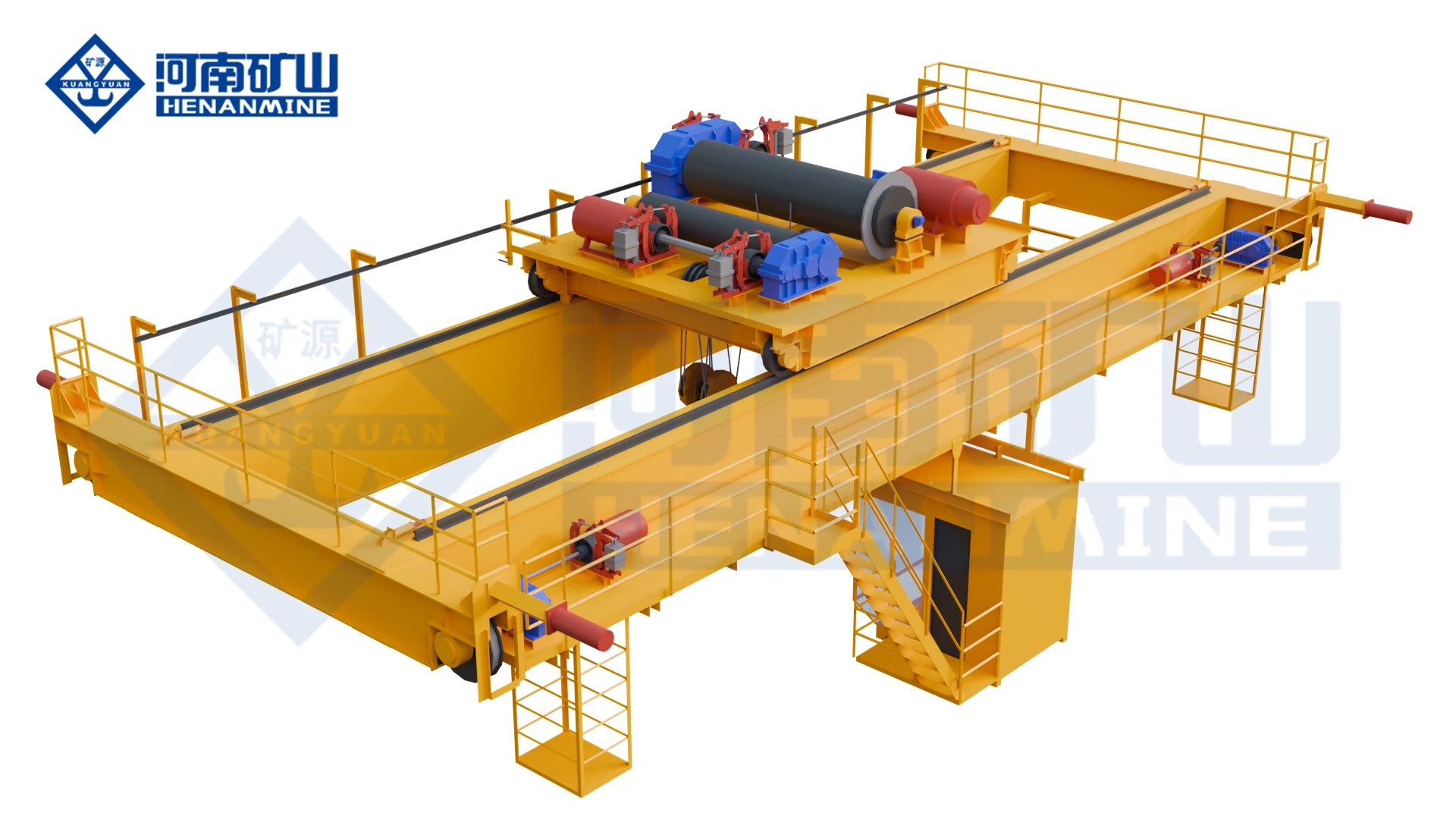
Start with the information you already have. A load drawing and workshop sketch help us recommend a configuration.
Select the forged hook and carrier together, including connection fit, carrier weight, ladle pickup spacing and operating clearances. The proposal makes the lifting interface part of the supplied equipment schedule.
The reference arrangement includes underside girder insulation, steel-core wire rope and a metallurgical lifting package. Specify ambient conditions, radiant heat and time above the hot zone so the offer can define the protection required.
Compare a complete rated-load and span combination with its lifting heights, motion speeds, wheel load and rail. This gives your crane supplier and building team a common basis for checking the selected arrangement.

Move a compatible filled or empty ladle between handling stations. Select capacity for the complete suspended assembly and verify that the hook can reach every pickup and set-down position.
Where an auxiliary hook is required, define its connection to the ladle and its role in the pouring sequence. The main and auxiliary lifting functions need separate ratings and an agreed operating relationship.
Match the crane to the number of handling cycles, loaded travel distances and time spent near the hot process. These inputs guide duty selection, thermal protection and the motion-control package.
Molten-metal duty is specified for the complete crane and ladle attachment. The auxiliary hook rating is separate; it cannot be added to the main rating as extra capacity.
Compare the available options for your lifting task. Capacity, span, lift height and speed are matched in the selected configuration.
| Model | YZD metallurgical hook overhead crane |
|---|---|
| Rated-load arrangements | 5; 10; 16/3.2; 20/5; 32/5; 50/10; 74/20 t |
| Lifting mechanism | Metallurgical winch trolley with forged hook; compatible ladle carrier |
| Rail-centre span | 10.5–31.5 m for 5–50/10 t; 13.5–31.5 m for 74/20 t reference arrangements |
| Maximum main-hook lift | 12, 16 or 22 m, according to rated arrangement |
| Maximum auxiliary-hook lift | 14, 16, 18 or 24 m, where fitted; see combinations |
| Reference working class | A7; other project-selected A6–A8 packages available |
| Reference main-hoist speeds | 6.1–15.5 m/min; exact value depends on rated arrangement |
| Reference trolley speeds | 33.8–44.6 m/min; see combinations |
| Reference bridge speeds | 67.3–93.7 m/min; capacity and span dependent |
| Main thermal protection | Heat-insulating layer beneath the main girders |
| Hoisting components | Steel-core wire rope, forged hook and specified safety brake |
| Motor insulation | Class H thermal insulation for the selected metallurgical motor package |
| Reference ambient temperature | −10 to +60 °C for the listed A7 configuration basis; heat exposure specified separately |
| Reference humidity | Relative humidity ≤50% at +40 °C for the listed configuration basis |
| Reference power supply | 380 V / 50 Hz / 3-phase AC; destination supply matched in the offer |
| Crane rail | P43, QU70, QU80 or QU100 by reference arrangement; see combinations |
| Minimum order | 1 complete crane or a project batch |
| Main / aux load (t) | Span (m) | Max main / aux lift (m) | Main / aux hoist (m/min) | Trolley (m/min) | Bridge (m/min) | Max wheel load (kN) | Crane rail |
|---|---|---|---|---|---|---|---|
| 5 | 10.5 | 16 / — | 15.5 / — | 37.2 | 92.7 | 76 | P43 |
| 5 | 13.5 | 16 / — | 15.5 / — | 37.2 | 92.7 | 85 | P43 |
| 5 | 16.5 | 16 / — | 15.5 / — | 37.2 | 92.7 | 93 | P43 |
| 5 | 19.5 | 16 / — | 15.5 / — | 37.2 | 92.7 | 98 | P43 |
| 5 | 22.5 | 16 / — | 15.5 / — | 37.2 | 92.7 | 108 | P43 |
| 5 | 25.5 | 16 / — | 15.5 / — | 37.2 | 93.7 | 128 | P43 |
| 5 | 28.5 | 16 / — | 15.5 / — | 37.2 | 93.7 | 139 | P43 |
| 5 | 31.5 | 16 / — | 15.5 / — | 37.2 | 93.7 | 144 | P43 |
| 10 | 10.5 | 16 / — | 10.4 / — | 43.8 | 92.7 | 112 | P43 |
| 10 | 13.5 | 16 / — | 10.4 / — | 43.8 | 92.7 | 121 | P43 |
| 10 | 16.5 | 16 / — | 10.4 / — | 43.8 | 92.7 | 131 | P43 |
| 10 | 19.5 | 16 / — | 10.4 / — | 43.8 | 93.7 | 139 | P43 |
| 10 | 22.5 | 16 / — | 10.4 / — | 43.8 | 93.7 | 147 | P43 |
| 10 | 25.5 | 16 / — | 10.4 / — | 43.8 | 86.5 | 161 | P43 |
| 10 | 28.5 | 16 / — | 10.4 / — | 43.8 | 86.5 | 168 | P43 |
| 10 | 31.5 | 16 / — | 10.4 / — | 43.8 | 86.5 | 185 | P43 |
| 16/3.2 | 10.5 | 16 / 18 | 10.7 / 14.6 | 44.6 | 76 | 163 | P43 / QU70 |
| 16/3.2 | 13.5 | 16 / 18 | 10.7 / 14.6 | 44.6 | 76 | 174 | P43 / QU70 |
| 16/3.2 | 16.5 | 16 / 18 | 10.7 / 14.6 | 44.6 | 76 | 187 | P43 / QU70 |
| 16/3.2 | 19.5 | 16 / 18 | 10.7 / 14.6 | 44.6 | 89 | 203 | P43 / QU70 |
| 16/3.2 | 22.5 | 16 / 18 | 10.7 / 14.6 | 44.6 | 89 | 214 | P43 / QU70 |
| 16/3.2 | 25.5 | 16 / 18 | 10.7 / 14.6 | 44.6 | 89 | 227 | P43 / QU70 |
| 16/3.2 | 28.5 | 16 / 18 | 10.7 / 14.6 | 44.6 | 89 | 241 | P43 / QU70 |
| 16/3.2 | 31.5 | 16 / 18 | 10.7 / 14.6 | 44.6 | 89 | 254 | P43 / QU70 |
| 20/5 | 10.5 | 12 / 14 | 9.8 / 15.5 | 44.6 | 76 | 195 | P43 / QU70 |
| 20/5 | 13.5 | 12 / 14 | 9.8 / 15.5 | 44.6 | 76 | 209 | P43 / QU70 |
| 20/5 | 16.5 | 12 / 14 | 9.8 / 15.5 | 44.6 | 76 | 220 | P43 / QU70 |
| 20/5 | 19.5 | 12 / 14 | 9.8 / 15.5 | 44.6 | 89 | 244 | P43 / QU70 |
| 20/5 | 22.5 | 12 / 14 | 9.8 / 15.5 | 44.6 | 89 | 255 | P43 / QU70 |
| 20/5 | 25.5 | 12 / 14 | 9.8 / 15.5 | 44.6 | 89 | 267 | P43 / QU70 |
| 20/5 | 28.5 | 12 / 14 | 9.8 / 15.5 | 44.6 | 89 | 282 | P43 / QU70 |
| 20/5 | 31.5 | 12 / 14 | 9.8 / 15.5 | 44.6 | 89 | 296 | P43 / QU70 |
| 32/5 | 10.5 | 16 / 18 | 7.8 / 15.5 | 42.4 | 89 | 279 | QU70 |
| 32/5 | 13.5 | 16 / 18 | 7.8 / 15.5 | 42.4 | 89 | 300 | QU70 |
| 32/5 | 16.5 | 16 / 18 | 7.8 / 15.5 | 42.4 | 89 | 312 | QU70 |
| 32/5 | 19.5 | 16 / 18 | 7.8 / 15.5 | 42.4 | 75.3 | 347 | QU70 |
| 32/5 | 22.5 | 16 / 18 | 7.8 / 15.5 | 42.4 | 75.3 | 355 | QU70 |
| 32/5 | 25.5 | 16 / 18 | 7.8 / 15.5 | 42.4 | 75.3 | 372 | QU70 |
| 32/5 | 28.5 | 16 / 18 | 7.8 / 15.5 | 42.4 | 75.3 | 384 | QU70 |
| 32/5 | 31.5 | 16 / 18 | 7.8 / 15.5 | 42.4 | 75.3 | 404 | QU70 |
| 50/10 | 10.5 | 12 / 16 | 7.8 / 10.4 | 39.3 | 75 | 377 | QU80 |
| 50/10 | 13.5 | 12 / 16 | 7.8 / 10.4 | 39.3 | 75 | 412 | QU80 |
| 50/10 | 16.5 | 12 / 16 | 7.8 / 10.4 | 39.3 | 75 | 438 | QU80 |
| 50/10 | 19.5 | 12 / 16 | 7.8 / 10.4 | 39.3 | 75 | 458 | QU80 |
| 50/10 | 22.5 | 12 / 16 | 7.8 / 10.4 | 39.3 | 76.6 | 482 | QU80 |
| 50/10 | 25.5 | 12 / 16 | 7.8 / 10.4 | 39.3 | 76.6 | 504 | QU80 |
| 50/10 | 28.5 | 12 / 16 | 7.8 / 10.4 | 39.3 | 76.6 | 521 | QU80 |
| 50/10 | 31.5 | 12 / 16 | 7.8 / 10.4 | 39.3 | 76.6 | 537 | QU80 |
| 74/20 | 13.5 | 22 / 24 | 6.1 / 9.7 | 33.8 | 67.3 | 300 | QU100 |
| 74/20 | 16.5 | 22 / 24 | 6.1 / 9.7 | 33.8 | 67.3 | 314 | QU100 |
| 74/20 | 19.5 | 22 / 24 | 6.1 / 9.7 | 33.8 | 67.3 | 326 | QU100 |
| 74/20 | 22.5 | 22 / 24 | 6.1 / 9.7 | 33.8 | 67.3 | 334 | QU100 |
| 74/20 | 25.5 | 22 / 24 | 6.1 / 9.7 | 33.8 | 67.3 | 345 | QU100 |
| 74/20 | 28.5 | 22 / 24 | 6.1 / 9.7 | 33.8 | 67.3 | 355 | QU100 |
| 74/20 | 31.5 | 22 / 24 | 6.1 / 9.7 | 33.8 | 67.3 | 364 | QU100 |
These A7 reference combinations use 380 V / 50 Hz / 3-phase AC. A slash separates main and auxiliary values; a dash means no auxiliary value is listed. Main and auxiliary ratings are not additive. The complete suspended ladle and attachment load, duty, heat exposure and any modified power or speed package are defined in the final offer. Maximum wheel loads apply to the stated arrangement and are confirmed on the ordered layout.
| Rated arrangement (t) | Trolley rail | Crane runway rail |
|---|---|---|
| 5 and 10 | 18 kg/m | P43 |
| 16/3.2 and 20/5 | 24 kg/m | P43 / QU70 |
| 32/5 | P43 | QU70 |
| 50/10 | P43 | QU80 |
| 74/20 | P43 | QU100 |
Trolley rails support the trolley on the bridge; crane rails support the complete crane on the runway. The selected rail and wheel arrangement are confirmed together.
Use the equipment views to discuss the bridge and hook arrangement. Confirm the ordered hook and carrier dimensions on the general arrangement and lifting-device drawings, including main/auxiliary separation where an auxiliary hook is fitted.
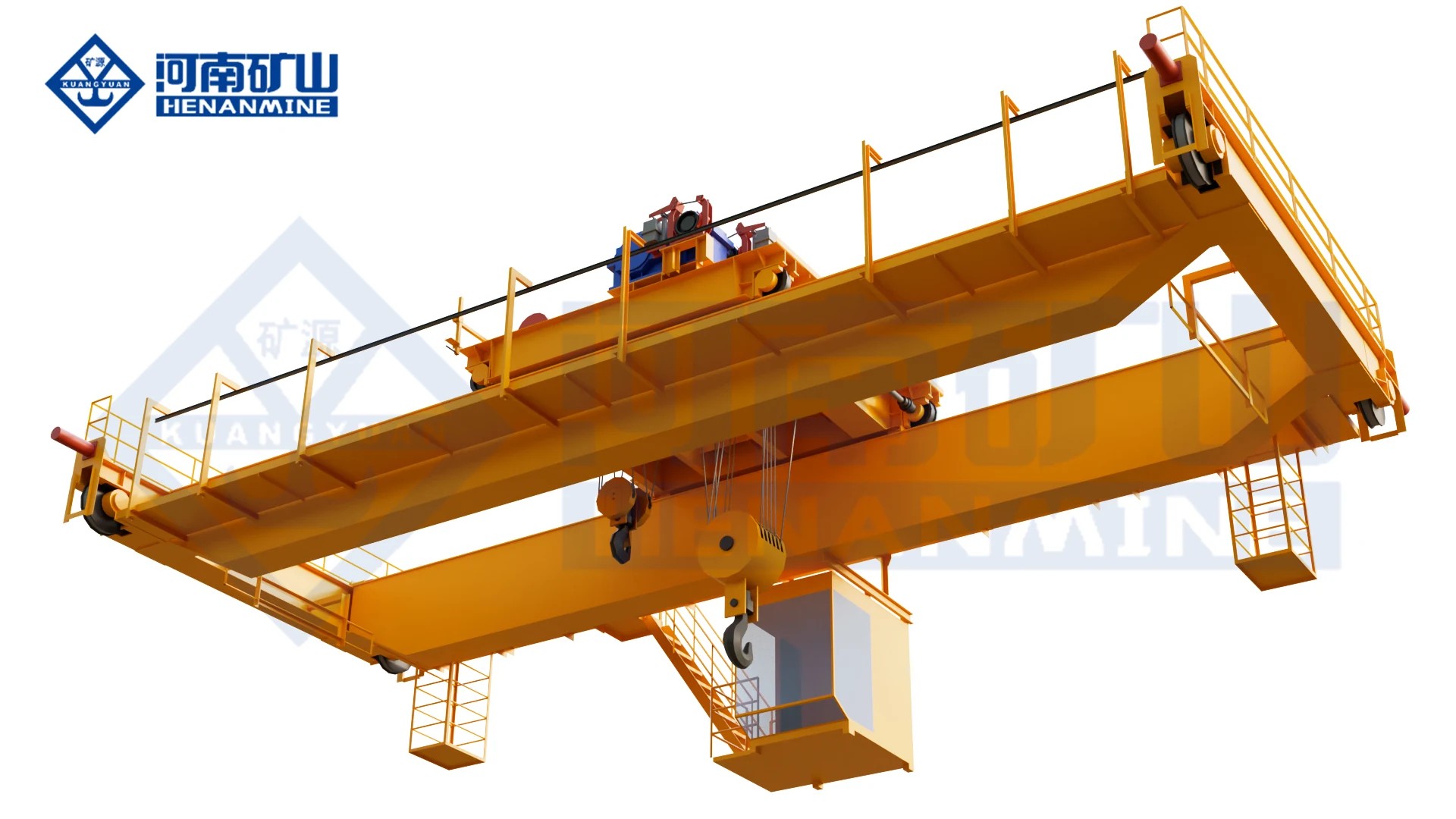
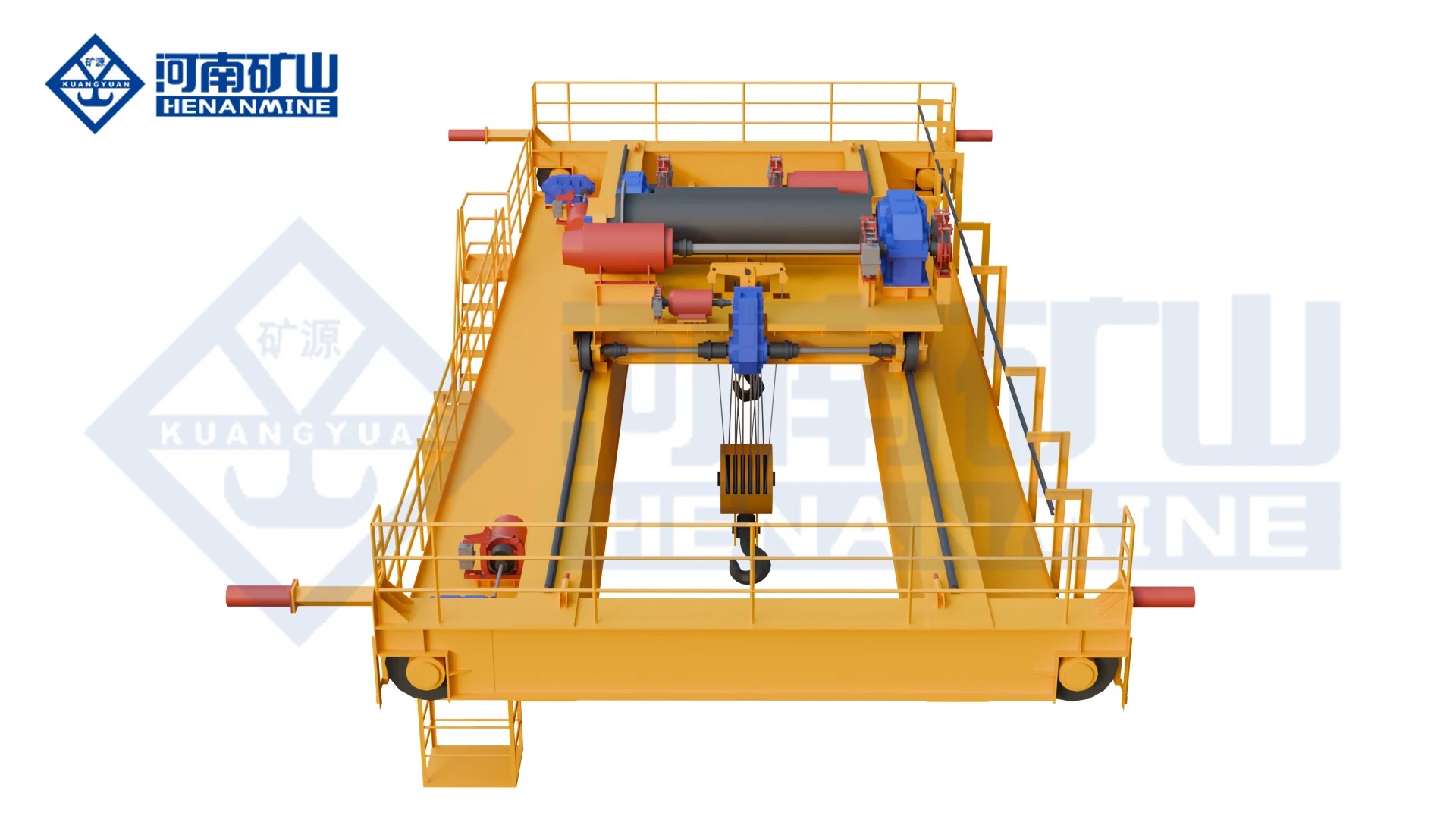
Select the load arrangement first, then keep span, hook heights, speeds, wheel loads and rails attached to that row. Confirm the carrier and any auxiliary task before choosing the final lifting package.
The 5 and 10 t reference arrangements list a main hook only; higher listed arrangements use separate main and auxiliary ratings. Specify what each lifting function does and whether any coordinated movement is required.
Provide hook connection dimensions, carrier mass, ladle trunnion or pickup geometry and centre-of-gravity information. Confirm whether the carrier and other lifting attachments are supplied with the crane.
Check the required pickup level, transfer clearance and final set-down or pouring height. Main and auxiliary lift values differ by reference arrangement; use the usable hook envelope on the ordered drawing.
Identify the safety-brake, limit, monitoring and control functions for the intended metallurgical service. State loaded-motion and final-approach requirements; any VFD package and permitted simultaneous movements belong in the technical offer.
The listed combinations use A7 duty and a 380 V / 50 Hz / three-phase supply. Describe the load spectrum, shifts, ambient and radiant heat, plus your site supply, so any revised duty or electrical package is explicitly selected.
Distinguish trolley rails on the bridge from crane rails on the runway. Give the existing rail and building information if available, and request the selected wheel-load schedule, access provisions and service clearances.
Compare the bridge, metallurgical winch trolley, hooks, ladle carrier, protection package and controls as a defined YZD supply. The offer should also identify factory tests, documents, freight and site support so each quotation covers the same working system.
Identify the bridge, lifting mechanisms, lifting attachment, heat protection, controls and power feed. State the selected operating modes and equipment boundaries in the offer.
Request the arrangement, lifting-interface drawing, load-and-motion schedule, electrical information, safety-function description and agreed factory/site checks for the ordered crane.
List rails, runway steelwork, attachments, automation, weighing, spares, packing, freight, erection and commissioning as included, optional or excluded.
Agree drawing approval, manufacturing, testing and dispatch milestones for the selected configuration. Include access, shutdown windows and the destination in the delivery plan.
Define erection supervision, power and runway preparation, protection checks, attachment fit, trial operation and operator training, with responsibilities agreed before site work.
Record the warranty terms and commencement, service arrangements and recommended brake, rope, drive, control and attachment spares for the equipment supplied.
Agree load, lifting device, route, duty, thermal conditions and operating modes.
Coordinate hook coverage, attachment fit, runway reactions and site responsibilities.
Complete the agreed checks and records, then coordinate packing and shipment.
Confirm erection, commissioning, operator training and service arrangements.
Technical schedule · General arrangement · Attachment interface · Runway loads · Electrical information · Safety-function description · Agreed inspection records · Operation and maintenance manuals

Transfer filled ladles between foundry stations with a double-girder bridge and dedicated metallurgical electric hoist.
View this arrangement ↗
Transfer filled ladles with a double-girder casting crane and separately rated auxiliary hook, configured for your pouring sequence.
View this arrangement ↗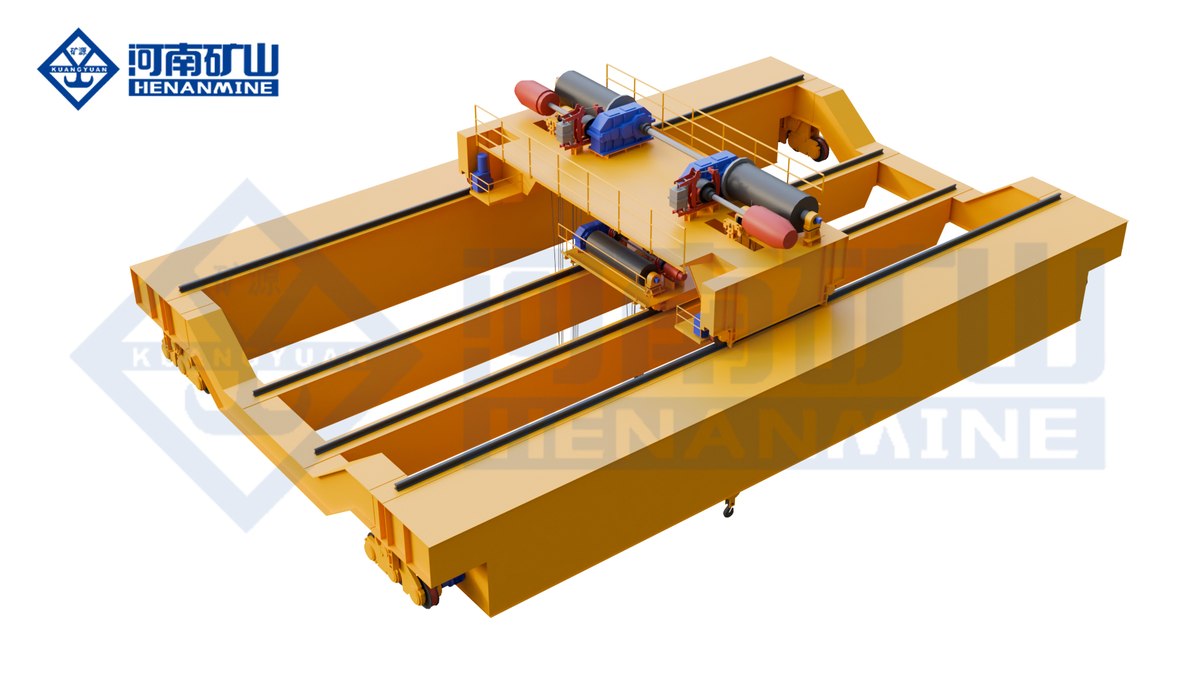
Give heavy ladle handling separate main and auxiliary lifting positions on a four-girder casting bridge. YZS uses independently travelling main and auxiliary trolleys, with their loads, spacing and permitted movements selected for the process. Compare nine A7 reference configurations, then coordinate the lifting attachments, hook envelope, runway reactions and safety controls as one engineered system.
View this arrangement ↗Review the lifting task, configuration and quotation scope. We can help develop a crane proposal from the project information available.
Consider YZD for a metallurgical lifting task that needs a winch trolley, forged hook and compatible ladle carrier. Share the complete suspended load and the handling sequence. These establish whether a single-hook or main/auxiliary arrangement meets the task and what molten-metal safety package is required.
LHY uses a dedicated metallurgical electric hoist on a double-girder arrangement. YZD uses a metallurgical winch trolley and forged hook with a compatible carrier. YZ is a double-girder casting crane with a gantry-type main ladle carrier and auxiliary hook. Compare lifting interfaces, hook duties and the complete offered system alongside tonnage.
Yes. Include the metal, ladle, carrier and all suspended accessories when stating the lifting load. Supply the carrier and ladle geometry as well, because the connection and permitted handling movement affect the selected arrangement.
No. For example, 32/5 t identifies a 32 t main rating and a separate 5 t auxiliary rating. It does not establish a 37 t combined lift. Any simultaneous or coordinated use must be defined for the actual ladle, loads and movement in the technical agreement.
The published 74/20 t reference rows cover 13.5–31.5 m spans; the other listed load arrangements cover 10.5–31.5 m. Keep the lifting heights, speeds, wheel load and rail associated with the chosen row. A modified span requires its own confirmed arrangement.
A suitable pouring-assistance arrangement can be specified. Provide the ladle's tipping connection, weight and balance through the movement, along with the station layout. The auxiliary load and its relationship to the main hook are checked for that sequence rather than assumed from the nameplate ratings.
Describe ambient temperature, the nearby hot process, radiant heat exposure and how long the crane remains over the hot zone. The offer defines the girder shielding, motor, cables and other component protection for these conditions. The catalogue ambient basis alone does not describe the entire thermal duty.
A7 is the basis of the listed reference configurations. Give the lifting frequency, load spectrum, travel distances and shifts so the required duty can be selected for the project. Other A6–A8 packages mentioned in the product range require a matched technical offer; they are not interchangeable labels for the same crane.
Provide rail profile, span, runway condition and any available structural drawings. Use the selected crane's final wheel loads and arrangement drawing for the building review. Trolley rails and runway rails serve different parts of the system, so both should be identified correctly.
Request the selected load/span schedule, carrier interface, thermal and safety package, controls, wheel-load drawing, tests and documents. Have the offer state production milestones, freight, installation support, warranty terms and recommended spares for that scope. One complete crane or a project batch can be quoted.
Tell us your heaviest filled-ladle load, approximate span and project location. Add a ladle drawing or bay sketch if available; we can use it to develop the hook arrangement and identify the dimensions still needed.
info@cranehenanmine.com