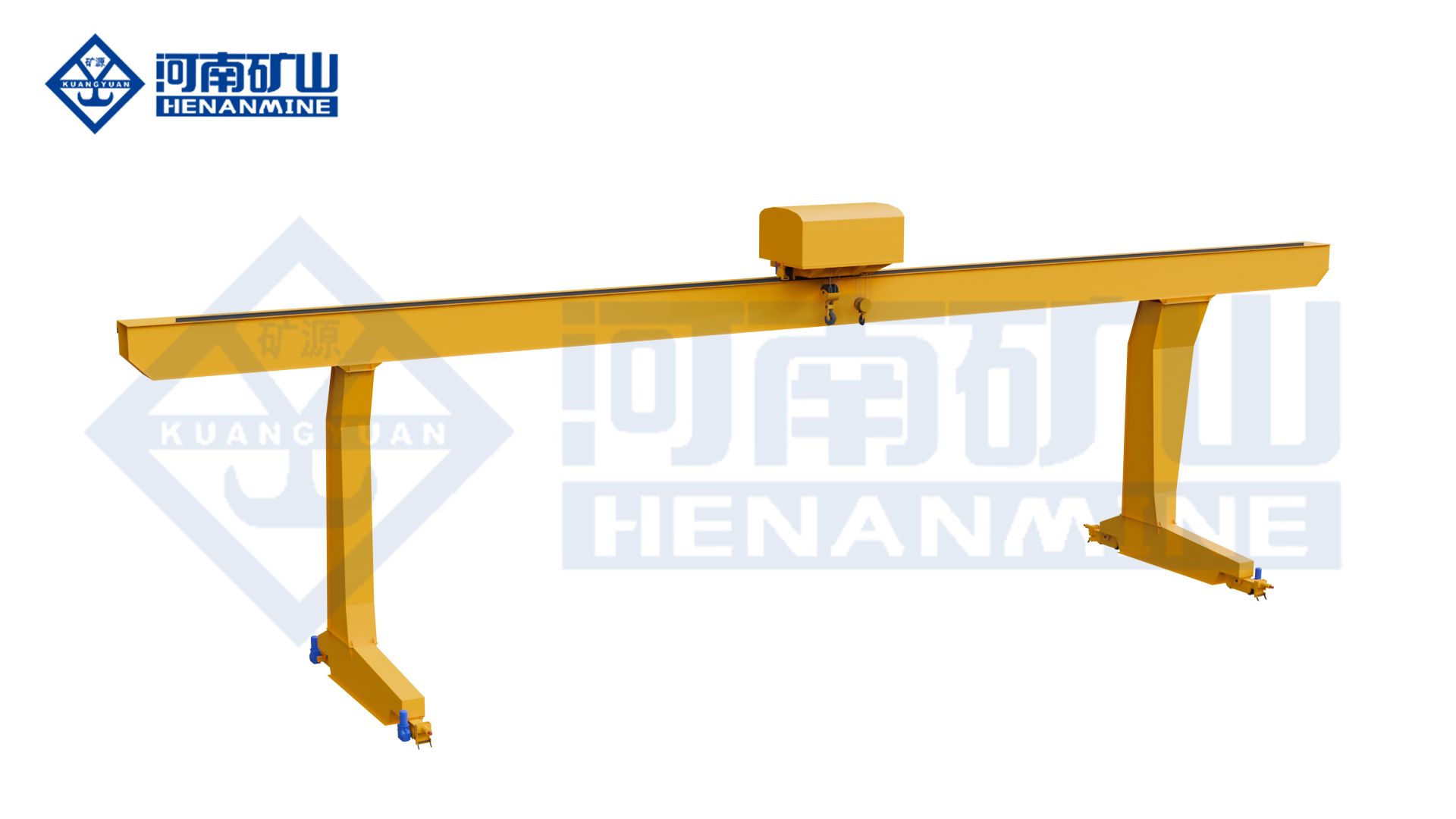
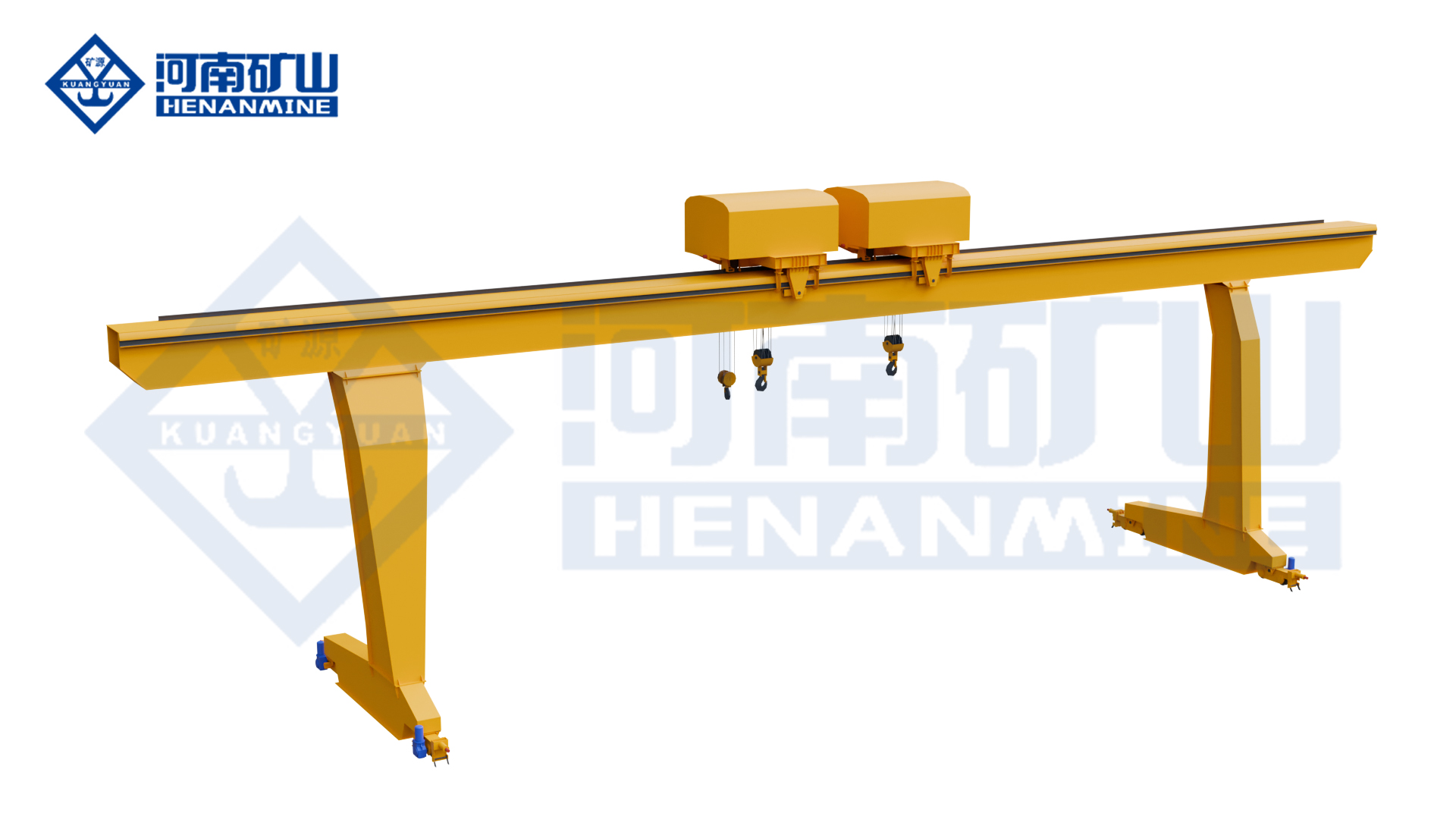
L-type gantry cranes use L-shaped legs to provide passage for long or bulky loads. Compare MHL electric-hoist, MDG single-trolley and MDE double-trolley models by lifting mechanism, load, span and usable hook coverage.
Double-trolley development of the MDG L-type single-main-girder crane
Lifting trolleys
Two lifting trolleys
Lifting mechanism
Winch hoisting mechanisms
Leg geometry
L-shaped legs
Rated capacity range
5–50 t model range; individual and joint ratings selected in the offer
Span range
18–35 m; select with load and site geometry
Operating controls
Ground / remote / cabin options
Power-feed choices
Cable or conductor-line supply
Crane-travel drive
Three-in-one variable-frequency drive
Load passage
L-leg opening for long items and loads requiring large-angle turning
Application focus
Outdoor loading and transfer in freight yards, terminals and similar areas
Permitted shared lifting
Agree each trolley rating and any approved shared-load operating condition
Lifting-point spacing
Select trolley separation and approaches around the load lifting points
Useful lifting height
Specify each hook working level with rigging and load dimensions
Working class
Select from each mechanism load spectrum and operating cycle
Motion performance
State lifting / travel speeds and required independent or joint functions
Site power supply
Specify voltage, phases, frequency and the power-feed route
Runway and foundations
Match final rail geometry, wheel reactions and support interfaces
Operator control scope
Agree visibility, control authority and permitted trolley operating modes
Capacity, span, lift and speeds form one selected configuration. Check clear passage with the complete workpiece and rigging; MDE trolley ratings and any shared lift must be agreed separately.
Budget planning
L-type gantry crane price guide
Budget around the lifting mechanism, load, span and clear passage. Single-trolley and double-trolley layouts need separate quotations.
Indicative equipment budget · 50 t reference configuration
L-type reference configuration
Budget range (USD)
50 t L-type single-girder configuration · 18–35 m span · 10–12 m lift · EXW equipment scope
USD 35,000–110,000
Indicative equipment budget for the configuration shown. This range does not cover every MHL, MDG or MDE arrangement. Shipping, installation and commissioning are excluded. Request an itemized quotation for your selected lifting mechanism, span and lifting height.
Confirm the hoist or winch arrangement, permitted loads, trolley spacing, cantilevers, lifting attachments, rails, power feed, taxes, freight and site work in an itemized quotation. Double-trolley and special-duty cranes require configuration-specific pricing.
Long fabricated frames need enough passage for the complete load and rigging. Compare the L-leg opening with the hook path from the truck pickup position to the storage supports.
MHL suits a selected electric-hoist arrangement; MDG uses winch lifting. Where two lifting points are needed, evaluate MDE around trolley spacing, the load at each hook and the permitted shared lift. This is a selection example, not a completed customer project.
MDG manufacturer rendering for layout reference; not a customer-project photograph.
L-type gantry crane buying questions
When should I choose an L-type gantry crane?
Compare an L-type arrangement when long or bulky components need to pass through the supporting legs. Check the opening at the suspended load height, including rigging, hook approaches and the complete pickup-to-landing route.
What is the difference between MHL and MDG?
MHL uses an electric wire-rope hoist; MDG uses one winch-lifting trolley. Select the lifting package against total suspended load, useful hook travel, duty and positioning requirements, then compare its physical envelope on the arrangement drawing.
Does an L-shaped leg automatically allow a load to turn?
No. The usable opening depends on the leg geometry, suspended height, workpiece orientation, rigging and mechanism position. Define the turning method and full movement envelope before choosing the arrangement.
Can the two MDE trolleys lift one load together?
Only within the individual ratings, load distribution, trolley separation and shared-load conditions agreed for the selected crane. The published 5–50 t model range is not a rating for each trolley or permission to add two hook ratings. Specify the required control modes.
Which dimensions are needed to compare L-type gantry cranes?
Start with total suspended load, rail-centre span and useful lifting height. Add workpiece dimensions, lifting-point positions, required leg opening, hook approaches and any cantilever reach. For MDE, include the required separation between lifting points.
What should the quotation include?
Ask for a matched crane configuration and drawing showing hook coverage, clear passage, wheel reactions and operating modes. Identify the scope for rails, power feed, foundations, freight, taxes, installation, commissioning and documents so the offers can be compared on the same basis.
Compare the range
L-type gantry crane specification comparison
Compare the lifting arrangement first, then match capacity and span to the load route. Select a full product name for the model details.
Ranges describe model selections rather than every possible combination. Lifting height and working class for MDG/MDE, and individual or shared ratings for MDE, are confirmed in the technical offer.
Get an L-type gantry crane quote
Send the total suspended load, span, useful lifting height and destination. Add the component dimensions and any passage or turning requirement.
For MDE, include lifting-point spacing and the load at each point. A workpiece sketch or site photograph helps define the arrangement.