


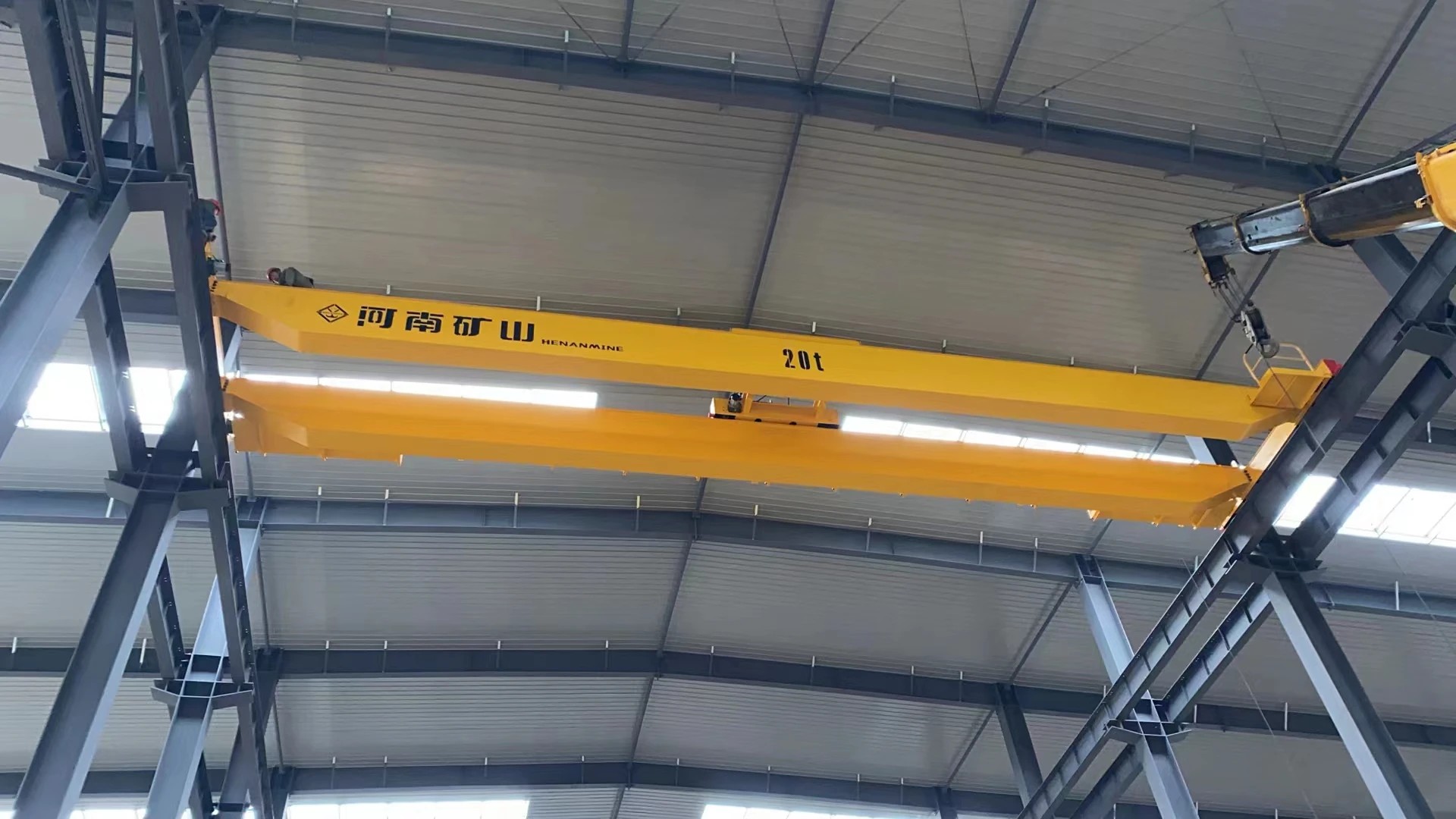
Include lifting attachments in the suspended load, match the required crane and mechanism duty, then check the proposed hook positions and runway reactions. Compare prices only after those technical requirements are met. The worked example explains why an apparently suitable 10 t catalogue crane can be rejected before its price matters.
01When should you choose a double girder overhead crane?
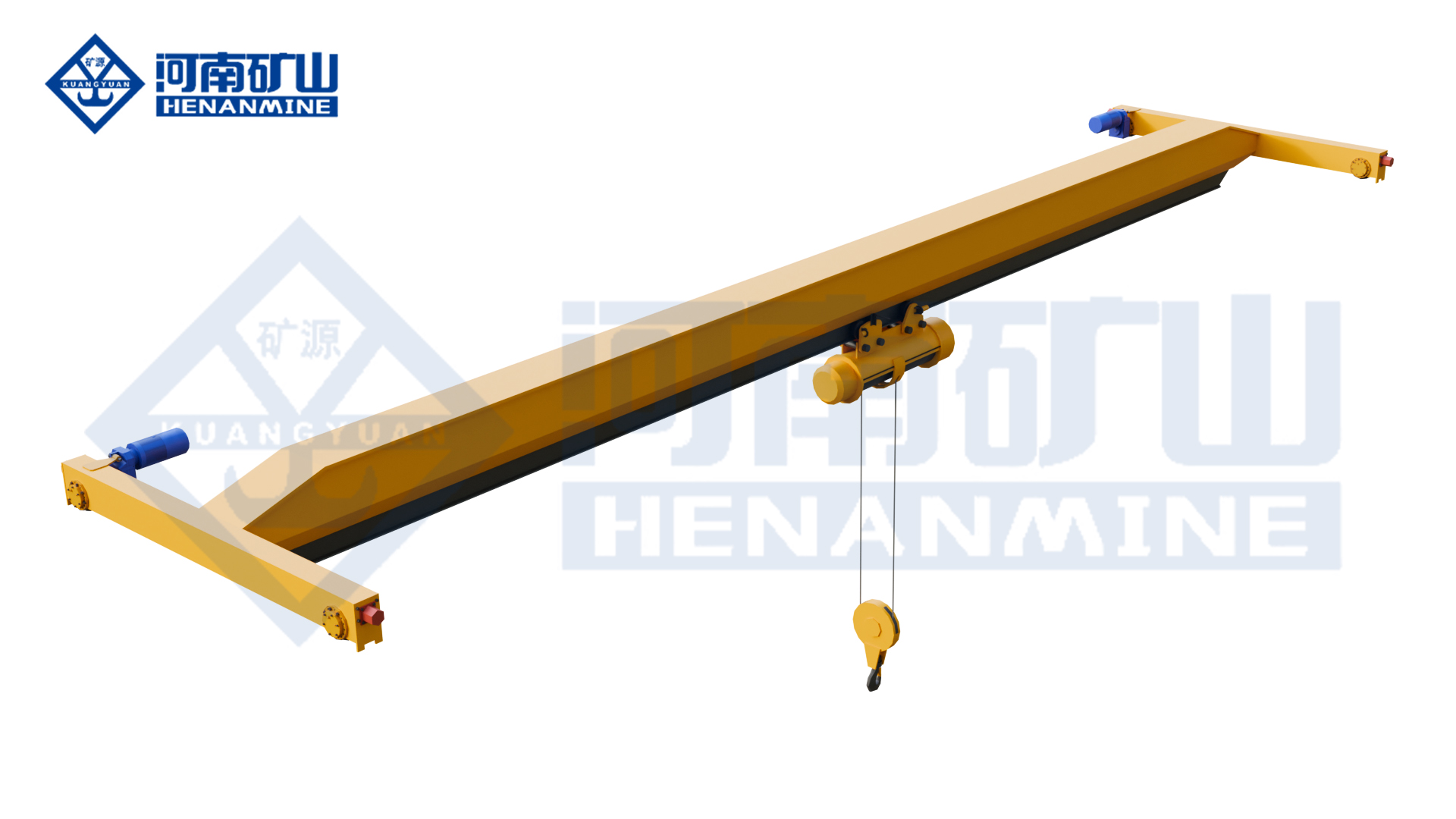
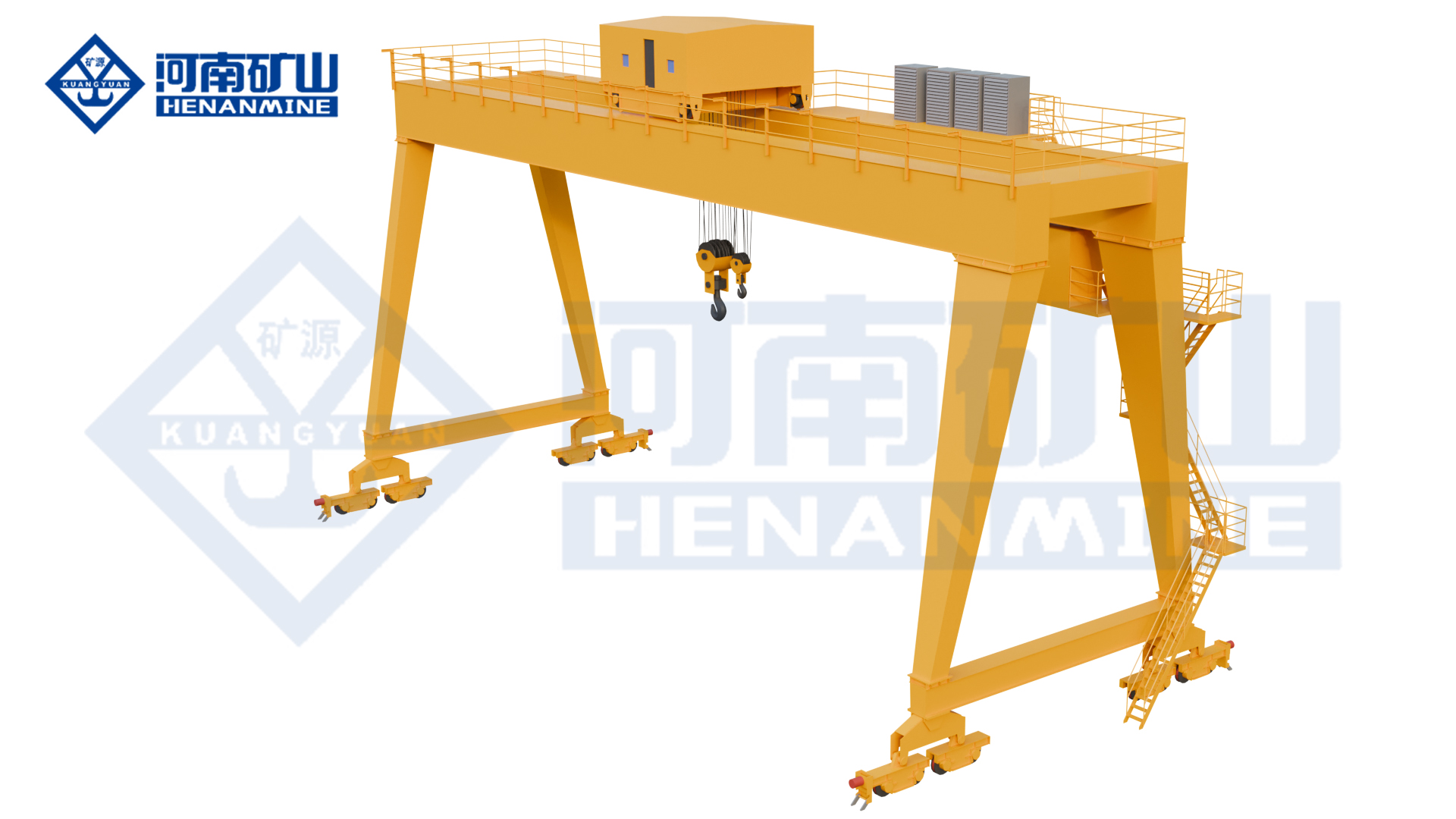
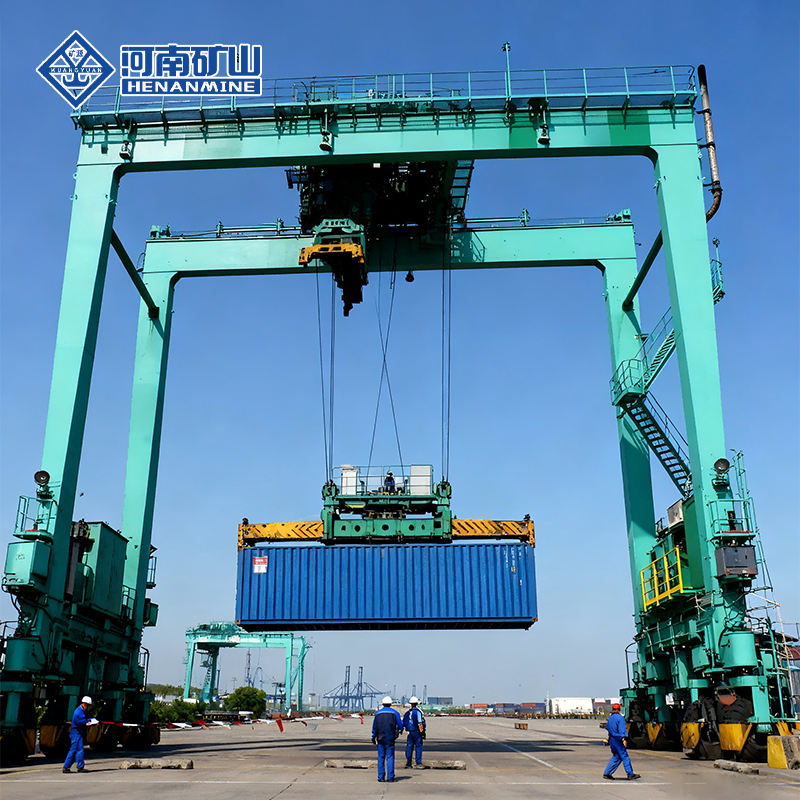
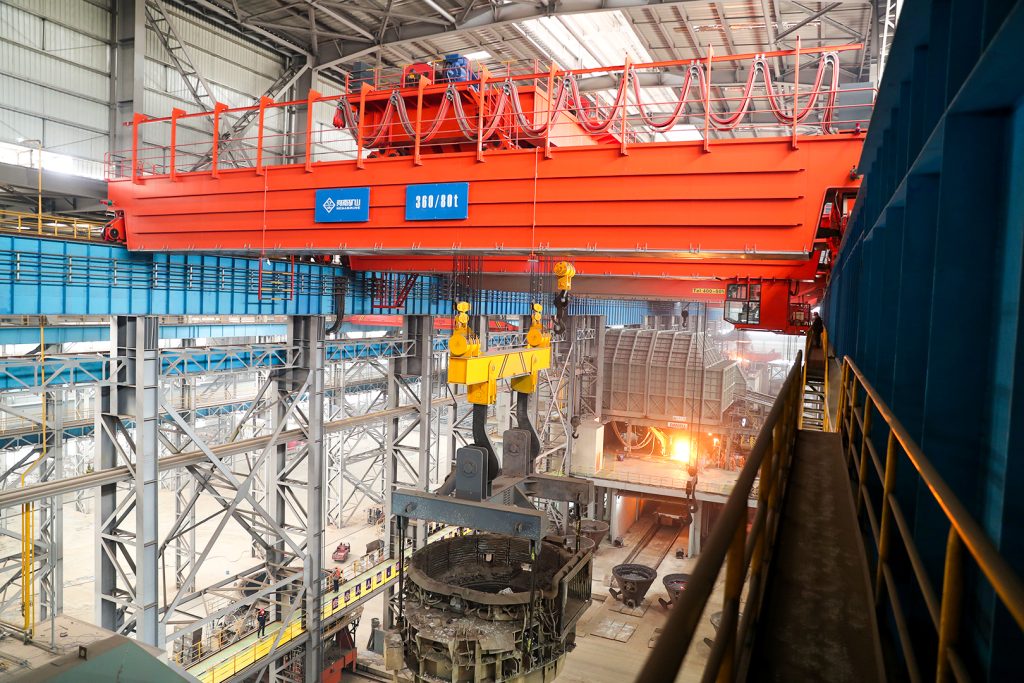
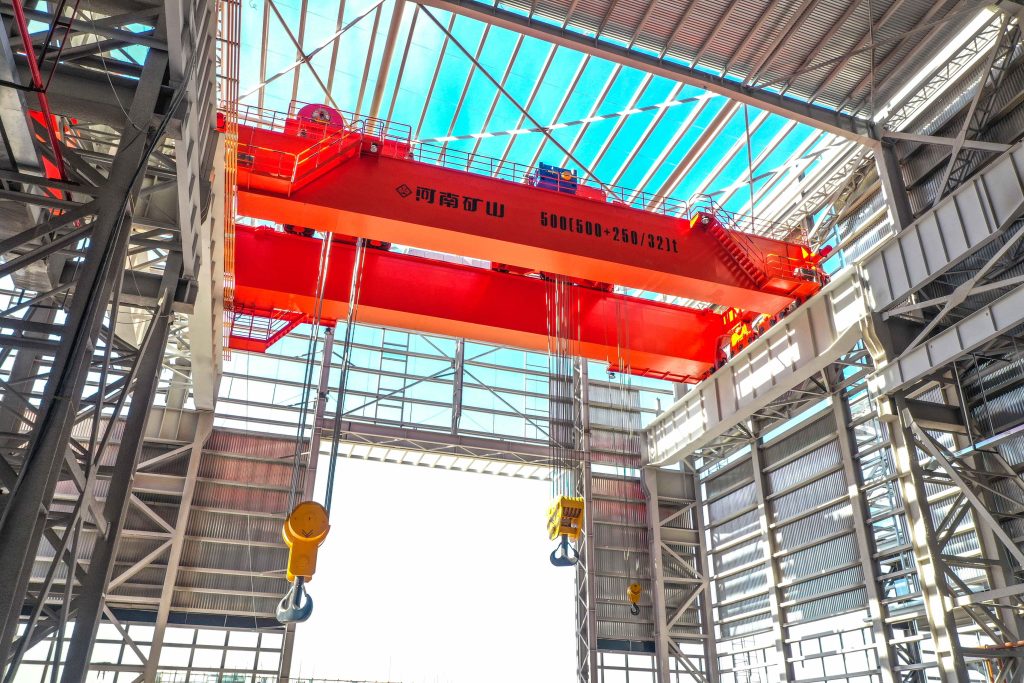
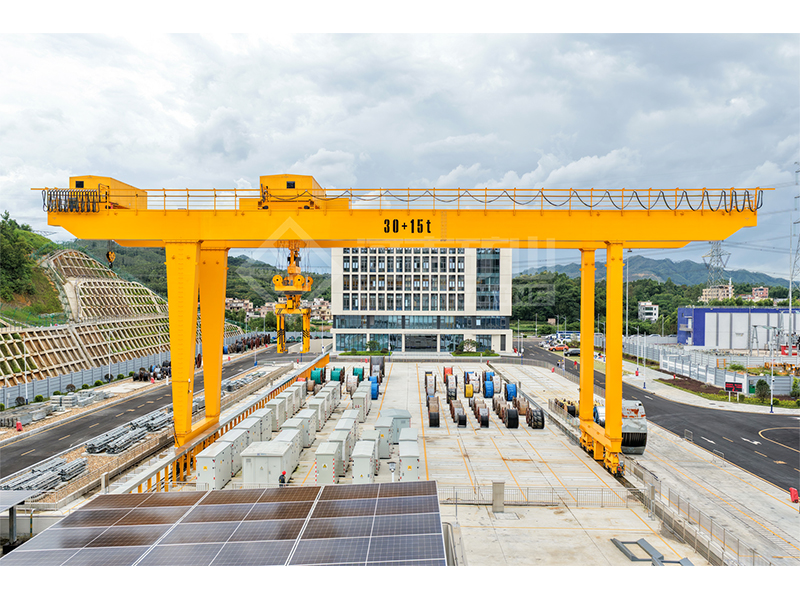
A double girder overhead crane has two main bridge girders carrying the trolley and lifting mechanism. The bridge travels along the workshop runway; the trolley moves across the bay. “Double girder EOT crane” and “double girder bridge crane” describe the same basic arrangement, but neither name specifies the hoist, duty or supplied accessories.
Compare this arrangement when a trolley above the bridge can help achieve the required hook position, when the load and span call for a different bridge design, or when the handling task needs a main/auxiliary hook or multiple lifting points. These are reasons to compare configurations, rather than automatic approval for a particular model.
There is no universal tonnage threshold that makes two girders the correct choice. A single-girder crane may meet the same task with a simpler package. Conversely, a double-girder arrangement can be useful at a modest capacity because of its geometry. Ask for layouts at the same rated load, duty and hook coverage, then compare the building loads and complete cost.
Start with the double girder overhead crane range to identify the relevant lifting arrangement. Do not combine the maximum capacity, span and speed from separate catalogue configurations into one specification.
02Electric-hoist or winch-trolley crane: which configuration fits?
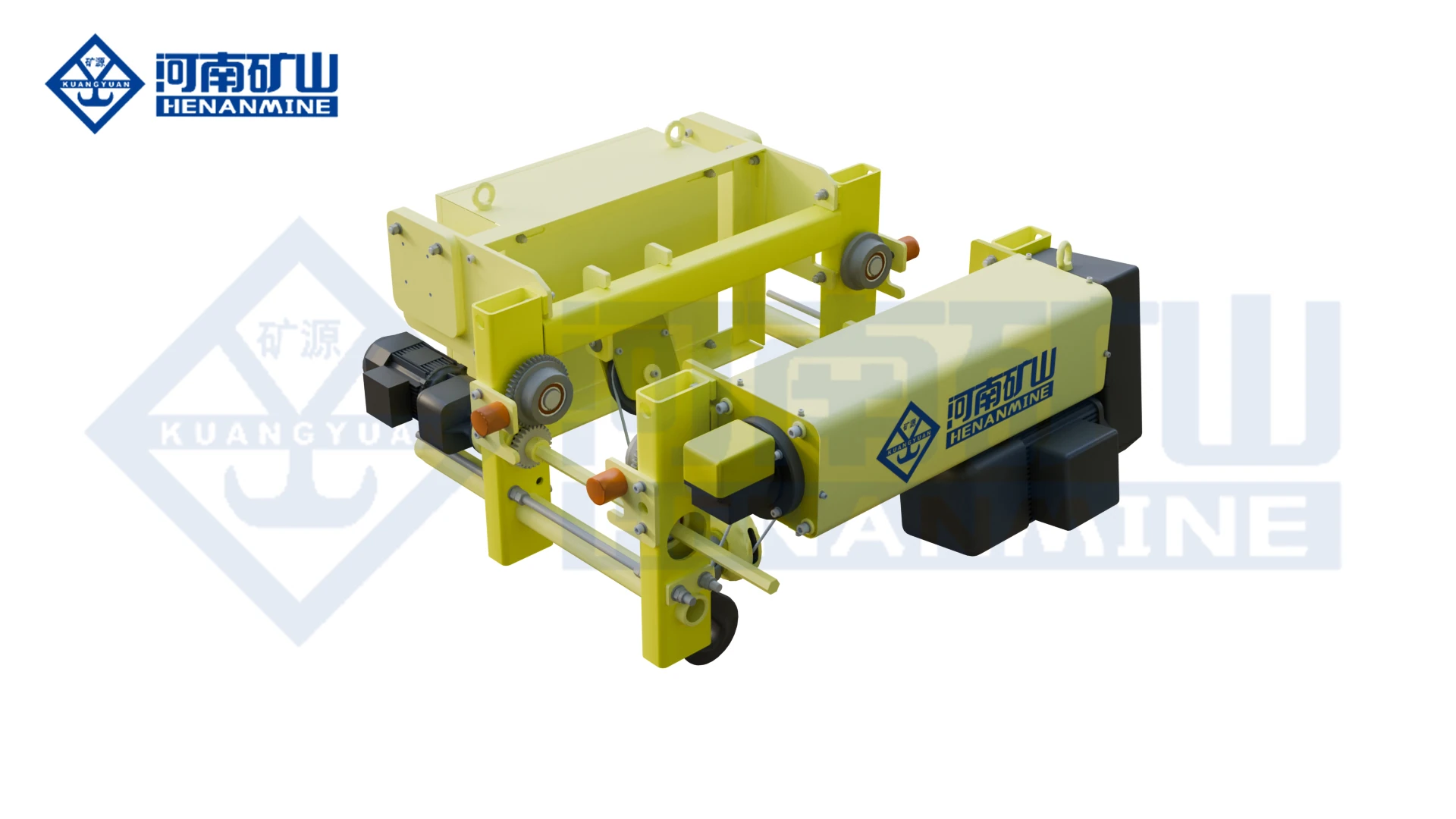
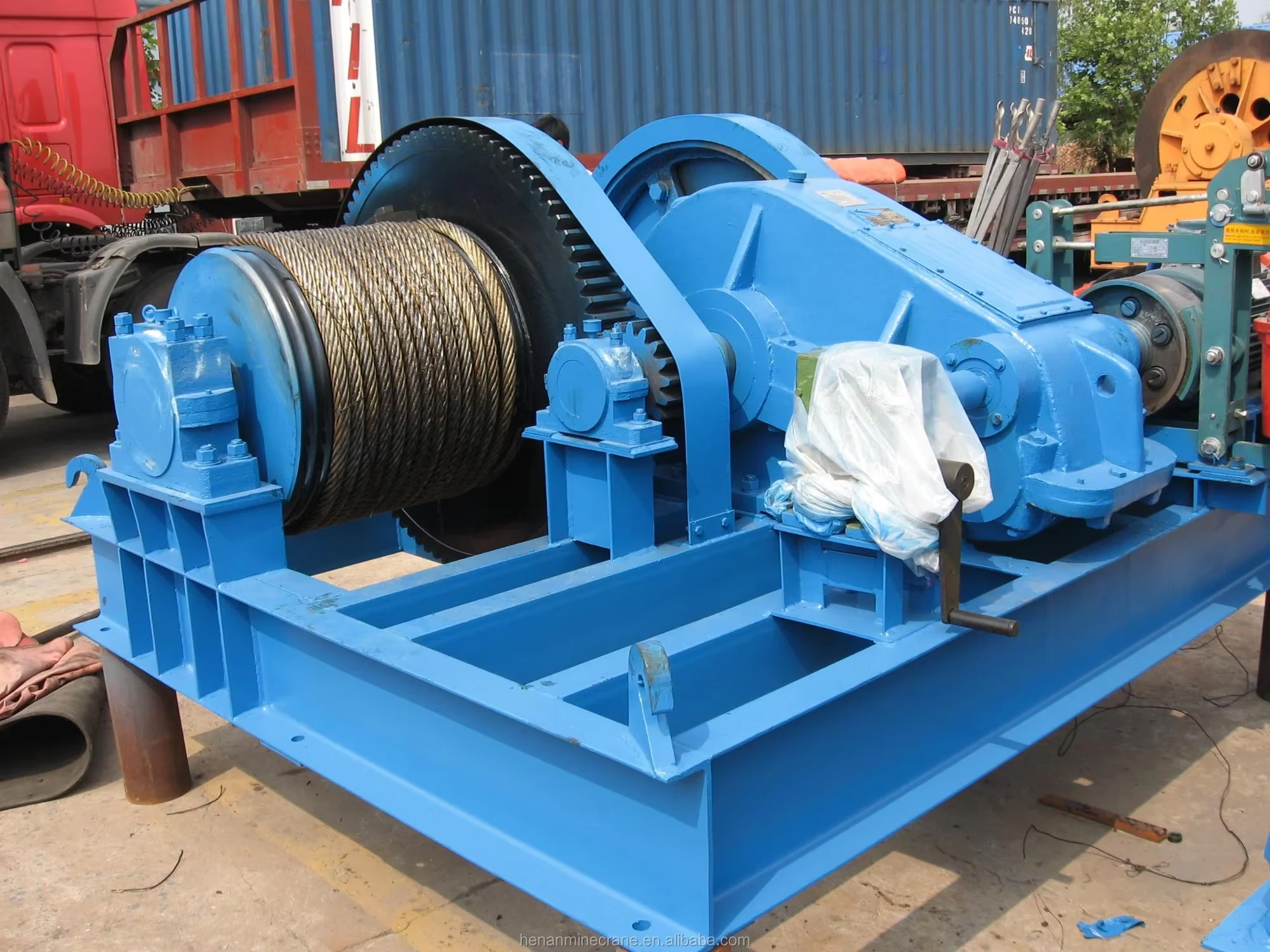
The lifting mechanism is one of the most useful distinctions within the double-girder category. A seated electric hoist is a packaged lifting unit carried on its trolley. A winch trolley carries the lifting machinery on a trolley frame. Both must be selected for the actual load and operating cycle.
| Configuration | What it offers | What to verify before ordering |
|---|---|---|
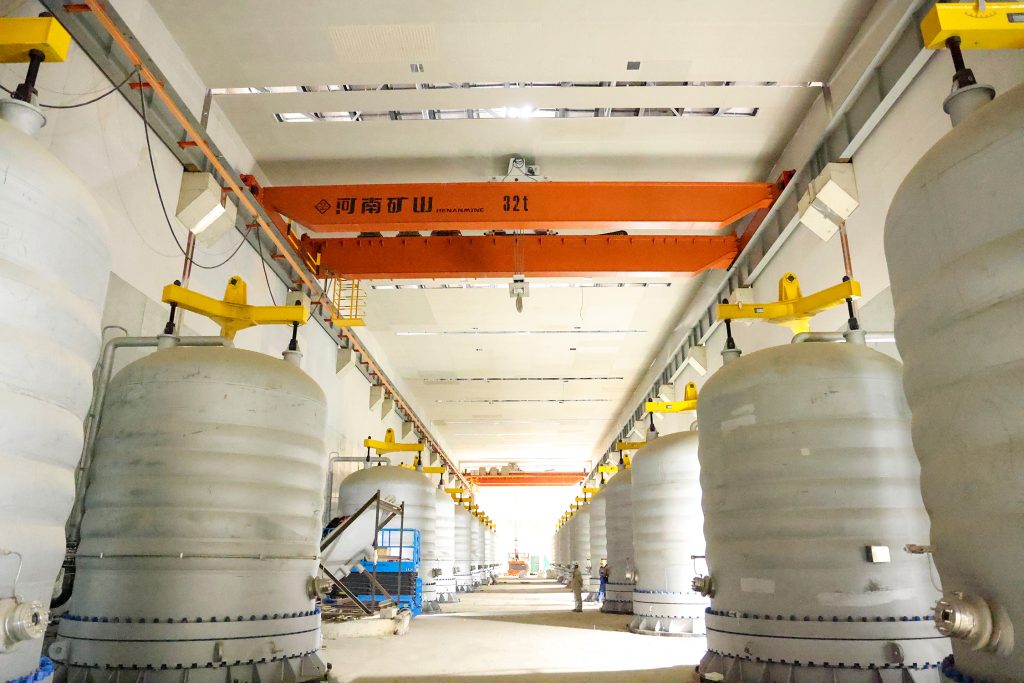
| LH electric-hoist double girder | A seated wire-rope hoist for intermittent workshop, storage and maintenance lifting. Listed LH selections cover 3–20 metric tonnes, with A3–A4 crane duty. | The selected hoist’s load spectrum, operating time and starts; required hook height; access for servicing the hoist. |
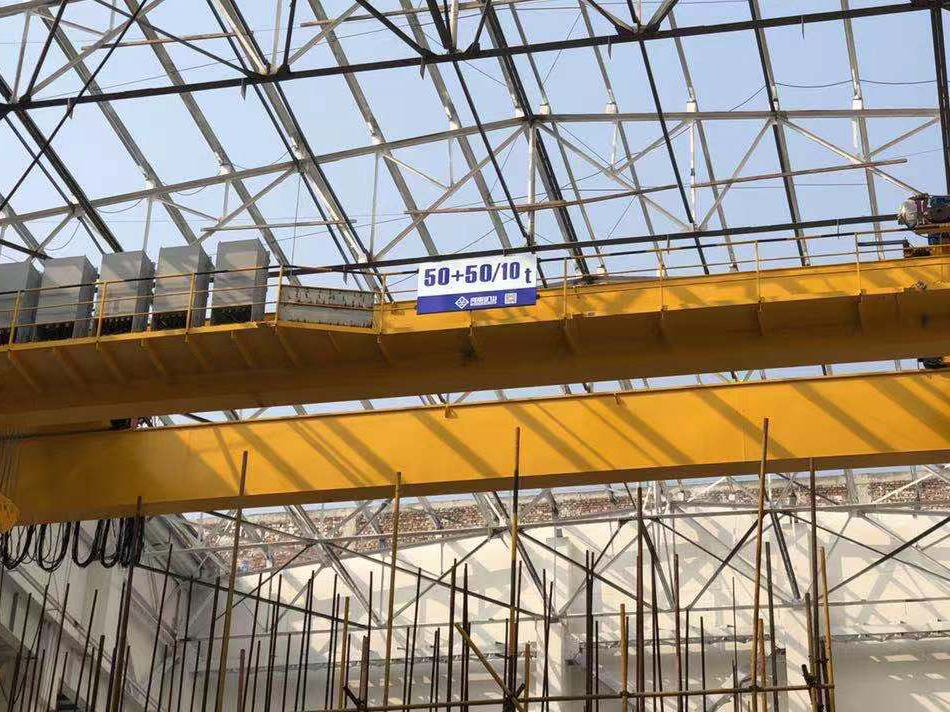
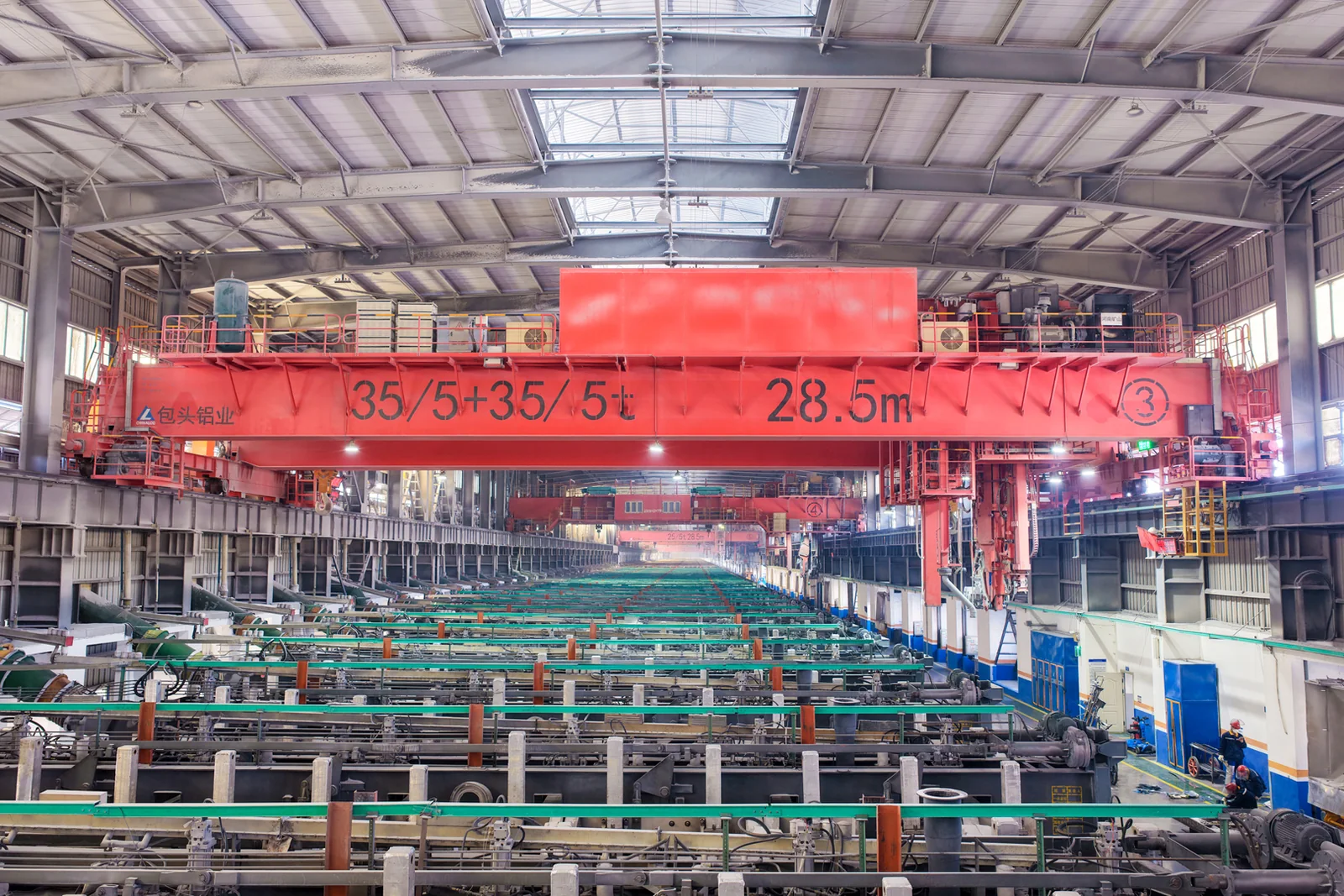
| QD winch-trolley double girder | A winch trolley with single-hook or main/auxiliary-hook arrangements. Standard 5–50/10 t selections include A5/A6 duty options. | The complete matched capacity, span, lift and speed selection. Larger engineered QD versions have their own geometry and duty. |
| KSQ modular double girder | A compact modular arrangement with stepless motion and low-speed positioning; selected assistance functions can support the handling task. | Required loaded and approach speeds, positioning needs and the ordered control package. Anti-sway and automation must be explicitly specified. |
Double girder does not mean heavy duty by itself. For example, the LH electric-hoist crane and the QD hook crane use two girders but offer different lifting packages and duty selections. Compare the offered configurations, not just their bridge appearance.
For controlled assembly work, review the KSQ modular crane against the required positioning task. A variable-frequency drive allows speed control, but its presence alone does not guarantee a particular positioning accuracy or remove load swing.
03Which specifications belong in your crane enquiry?
A short, consistent specification prevents suppliers from pricing different machines under the same capacity label. Send the following information to every bidder, with unresolved items clearly marked.
| Input | What to supply | What the technical offer should confirm |
|---|---|---|
| Suspended load | Maximum workpiece mass, lifting beam or other attachment mass, rigging and centre of gravity. | Permitted gross hook load and any attachment-specific or combined-hook operating ratings. |
| Work cycle | Loads and their frequency, lifts per shift, shifts per day, travel distances, lift distance and planned service life. | Crane and mechanism classifications under the named design standard, with operating limitations. |
| Working envelope | Rail-centre span; pickup and set-down positions; highest and lowest required hook elevations; roof obstructions. | General arrangement drawing, side/end hook approaches and clearances for the complete load. |
| Runway and building | Existing rail/beam survey or new support layout, runway length, access and other cranes using it. | Crane mass, wheel spacing, maximum/minimum wheel reactions and relevant horizontal forces with their load cases. |
| Motion and supply | Normal and final-approach speeds, operator location, destination voltage, frequency and power connection. | Selected drives, controls, protective functions and the boundary between crane and site electrical work. |
| Environment | Indoor/outdoor conditions, temperature, dust, corrosion and any classified atmosphere or special load. | Required service package and destination compliance documents; special lifting equipment where applicable. |
Include below-the-hook gear in the lifting task. Add the lifting beam, slings and other suspended attachments to the workpiece mass before checking the hook rating. Specify metric tonnes explicitly: 1 t = 1,000 kg. The worked example below shows how that load check changes the quotation brief.
For a 20/5 t main/auxiliary arrangement, the figures identify separate hook ratings. They do not grant a 25 t combined lift. If both hooks or two trolleys will handle one component, state the lifting points and load distribution and obtain the permitted operating combinations.
Describe the work instead of choosing a duty class from daily hours alone. Many near-rated lifts and occasional light lifts can impose different demands over the same shift. Do not substitute an A-class label for a CMAA, ISO or FEM requirement without the supplier’s documented classification basis; whole-crane and mechanism designations are not interchangeable.
04Will the crane fit your building and runway?
Check the installed arrangement in both plan and section. A trolley travelling above two girders may allow a useful upper hook position, but the trolley also occupies space above the bridge. The actual drawing decides whether the arrangement works beneath your roof.
Mark the hook centre at every required pickup and set-down position, then add the load width, rigging and movement envelope. A bridge that fits between the rails can still miss a workstation near a wall. Use the span and lifting-height guide and calculator for the detailed geometry check.
Next, give the offered wheel-load data and operating load cases to the engineer responsible for the runway and building. Dividing the crane capacity equally among its wheels does not represent the loaded trolley’s changing position. The crane’s own mass, wheel spacing, dynamic effects, horizontal actions and any simultaneous crane positions also matter.
An existing runway that carried a crane of the same tonnage is not automatically suitable for its replacement. Confirm the rails, supports, stops, alignment and structural capacity for the proposed machine. Include safe maintenance access and a practical method of reaching the trolley and replacing wear parts.
05Worked example: select a 10 t double girder crane before comparing prices
This hypothetical indoor fabrication bay needs to move an 8.8 t workpiece using a 0.7 t lifting beam and 0.2 t of slings. The rail-centre span is 19.5 m. The load path requires an upper hook saddle at least 7.1 m above the floor and a lower hook position no higher than 0.6 m. Assume the project brief already specifies A6 crane duty under its agreed design standard, plus 380 V, 50 Hz, three-phase power. A6 is an input to this example, not a class derived from tonnage or shift hours.
First, check the hook load: 8.8 + 0.7 + 0.2 = 9.7 t. A 10 t gross hook rating covers that arithmetic total, subject to the selected load cases and equipment assessment. The difference is 0.3 t; it is not a specified operating allowance or an engineered safety factor.
| Candidate | Check against the same brief | Procurement decision |
|---|---|---|
| 10 t LH catalogue arrangement | Capacity and span are available, but its listed A3–A4 crane duty does not meet this A6 brief. | Exclude that catalogue selection. Consider an alternative hoist platform only with a documented rating for the actual service. |
| 10 t QD reference selection | A documented 10 t, 19.5 m-span, A6 selection with 16 m listed lifting height provides a relevant candidate. | Request its installed general arrangement and wheel-load schedule. Catalogue lifting height does not prove the required hook elevations. |
| Project-configured KSQ | The selected load, duty, geometry and speeds must be returned explicitly; “modular” alone establishes none of them. | Retain as an alternative only when the written technical offer satisfies the same brief. |
Then test the drawing response. The required vertical hook range is 7.1 − 0.6 = 6.5 m. Suppose one proposed drawing shows a maximum hook elevation of 7.0 m: it misses the required height by 0.1 m, even if its catalogue lists 16 m of lifting height. A second hypothetical drawing gives 7.3 m at the upper position and 0.5 m at the lower position. Those positions cover the required vertical interval, with a 0.2 m upper-height balance and 0.1 m lower-reach balance. Check roof clearance and side/end approaches separately.
Finally, check the runway and commercial scope. Obtain the crane mass, wheel spacing, vertical reactions and horizontal load cases for the selected trolley positions. Have the building/runway assessment completed for that proposal. Only candidates that satisfy the technical brief should proceed to the project-cost comparison below. This example illustrates the purchase checks; it is not a real customer project or an approved crane design.
06How much does a double girder overhead crane cost?
For a 2026 budget, use published reference points only after separating equipment scope from a complete installed project. The figures below come from 2026 public price guides and a published supplier case. They are not a blended market range and do not replace a current configured quotation.
| 2026 reference point | Configuration and stated scope | Published USD reference |
|---|---|---|
| 10 t double-girder equipment reference | Standard double-beam model; stated 12–24 m span; equipment only | $65,000–$100,000 |
| 10 t top-running double-girder case | Wire-rope hoist; 22.5 m span; supplier case with full commercial scope not disclosed | About $20,700 |
| 10 t turnkey bridge-system reference | Complete system budget; span, controls and installation configuration vary | $50,000–$100,000+ |
These are 2026 published reference points, not one comparable quotation. The first row is an equipment-only reference, the second is a single reported case with incomplete commercial scope, and the third is a broader turnkey budget. Do not average them or use the lowest figure as the price of every 10 t double-girder crane. Freight, taxes, runway work, site electrification, erection, commissioning and tests may be separate unless the written quotation includes them.
For the 10 t, 19.5 m-span example above, these figures show why the supplier must return a configuration schedule. A 22.5 m case is useful as an order-of-magnitude check, but it does not prove the price of the proposed A6 crane. The 12–24 m equipment reference has a different stated scope and cannot be compared directly with a turnkey budget.
Check whether you are buying a complete bridge or a component kit. A kit can include a hoist, trolley, end trucks and controls while excluding the bridge girders themselves, as well as runway rails, fabrication and installation. A kit price cannot be compared with a complete crane until those missing items have been added. Read the inclusion list even when the product title says “double girder overhead crane.”
Keep equipment cost, landed cost and installed project cost separate. Ask for the delivery rule, named place and version, then identify who pays for unloading, site lifting equipment, commissioning, testing and local approvals. An FOB or DAP label alone does not establish a turnkey installation scope.
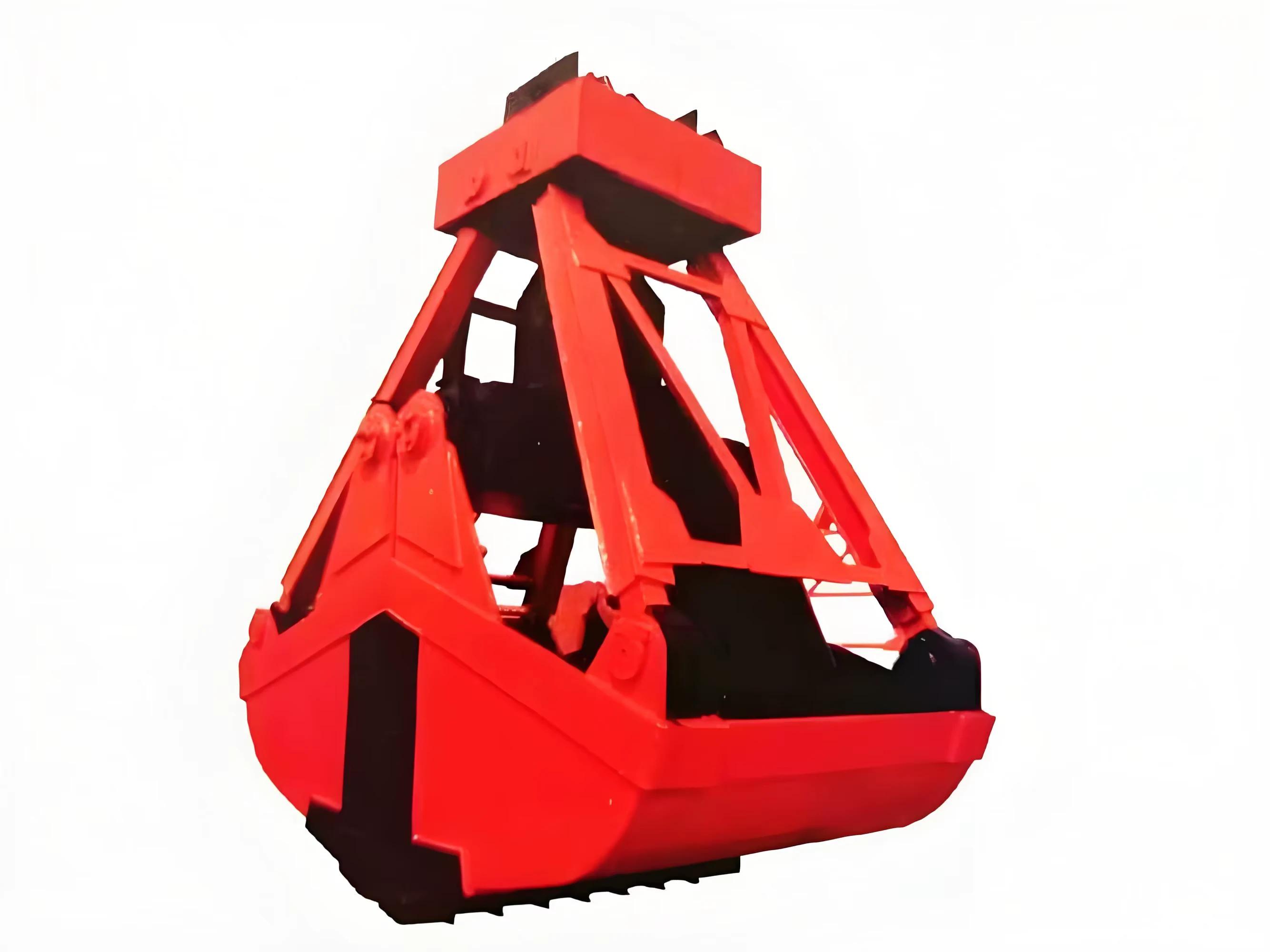
Price changes follow the selected span, hook travel, duty, hoist or winch package, components and controls. Special atmospheres, hot-metal handling, grabs and magnets need their own technical and commercial scope. Obtain a current configured offer before committing a project budget.
07Calculate the project total for two crane quotations
Enter the quoted equipment price and your allowances for everything needed to put each crane into service. Use the same USD conversion basis and tax treatment for both offers. If an amount is unknown, leave it blank until it is resolved; the calculator will stop rather than silently treat it as zero.
PROJECT BUDGET COMPARISON
Compare two crane quotations
Enter every cost in USD, using numbers without commas or currency symbols and up to two decimal places. The filled values are hypothetical examples, not crane prices. Replace every field with your own allowance. A blank is unresolved; enter 0 only for an item already included elsewhere or genuinely not required.
- Quote A · entered total
- Quote B · entered total
- Difference · B minus A
View inputs and copyable summary
Calculate to see the entered totals. Editing any input clears the previous result.
Each total is the sum of its six cost fields. Difference = B − A; percentage difference = (B − A) ÷ A × 100, when A is above zero. Individual entries must be between 0 and 1,000,000,000 USD. No data is sent. These are entered-cost totals, not supplier quotations, whole-life costs or technical approval. A lower total does not establish that a crane is suitable.
JavaScript is needed for this tool. Use the worked example below to add the same cost categories manually.
A zero can mean an item is included in another field. Record that inclusion in the quotation comparison so it is neither omitted nor counted twice. A separate schedule may be needed for foundation work, permits, testing or other site-specific items grouped under “Other.”
08Worked example: the cheaper crane can cost more to install
These hypothetical figures explain the calculator. They are not market prices or an actual customer project. For this cost illustration, assume both technical proposals meet the worked 10 t brief above and the allowances cover the same scope. A rejected LH duty selection is not one of these two offers.
| Cost item, USD | Quote A | Quote B |
|---|---|---|
| Crane equipment | $28,000 | $34,000 |
| Runway, rails and structural work | $9,000 | $6,000 |
| Site electrification | $2,500 | $0 — included in equipment price |
| Freight and transport | $3,500 | $3,500 |
| Installation and commissioning | $6,000 | $4,000 |
| Other project allowances | $1,500 | $1,000 |
| Entered project total | $50,500 | $48,500 |
Quote B costs $6,000 more for the equipment but has a $2,000 lower entered project total, approximately 3.96% below A. This is why a low headline crane price can be misleading.
Before accepting that comparison, ask what supports the different runway and installation allowances. A crane with different wheel reactions or a different electrical package might need different site work. Replace assumptions with a checked scope and contractor allowances. If an excluded tax or required test is missing, neither total is complete.
Purchase price is still only part of the decision. Compare service access, recommended spares, maintenance intervals and local support arrangements separately. This calculator does not value downtime or predict whole-life cost.
09Which documents should you approve before ordering?
Before releasing a manufacturing order, connect the quoted price to a defined technical package. Review the selected configuration schedule and the coordinated drawing together: capacity, span, hook positions, duty basis, speeds, power supply, wheel-load cases and service access should describe the same crane.
Attach the inclusion/exclusion schedule to that version. Identify who supplies the bridge, runway, electrification and lifting attachments, and who handles packing, transport, unloading, erection, tests and training. Confirm currency, price validity, payment milestones, delivery obligations, warranty terms and the agreed service support in writing.
Agree the destination inspection and acceptance requirements, manuals and spare-parts information before shipment. For an existing building, complete the proposed wheel-load and runway review before treating the replacement as compatible. An old crane nameplate or a generic certificate does not settle those checks.
A preliminary sketch is useful while developing the proposal. Once the layout is agreed, use the approved dimensions and drawing revision as the order basis so an estimate is not mistaken for a manufacturing instruction.
10Buyer questions
How much does a 20-ton double girder overhead crane cost?
There is no single reliable 2026 price for every 20-ton double-girder crane. One 2026 guide publishes about USD 7,100–18,300 for a standard 20-ton single-girder crane, but that figure does not apply to a double-girder crane. Request a configuration-specific quote with span, lifting height, duty, trolley, controls and project scope instead of doubling a 10-ton figure.
Does double girder construction guarantee better lifting height?
It can improve the useful hook position in some layouts, particularly with a trolley carried above the bridge. The benefit depends on the complete trolley and girder geometry and the roof space above them. Compare the upper hook elevation and highest crane point on the proposed installed drawing.
Can I buy a 10 t crane for a 10 t workpiece?
First add the lifting beam, slings and other below-the-hook gear to the workpiece load. If that suspended total exceeds 10 t, a 10 t hook rating does not cover it. The manufacturer must also confirm the required operating load cases, duty and attachments; matching the nameplate to the workpiece alone is insufficient.
Can an A3–A4 electric-hoist crane replace an A5/A6 winch-trolley crane?
Treat it as a new selection, even when capacity and span match. Supply the actual load spectrum, operating cycle and required life so the crane and mechanisms can be checked under the specified standard. Girder count and a lower equipment price do not establish equivalent service capability.
Does a crane quotation normally include the runway and installation?
Inclusion depends on the written scope. Crane equipment, rails, runway beams, supports, site power, freight, erection, commissioning and destination tests may be priced by different parties. Obtain a line-by-line inclusion list and add all required project allowances before comparing totals.