Skip to content
Henan mine crane co., ltd. Get a project quote
QP / BULK MATERIAL HANDLING

QP Grab and Magnet Double Girder Overhead Crane

Move loose bulk solids and compatible ferromagnetic material with separate lifting systems on one trolley. QP uses holding and closing winches for a four-rope grab and a dedicated mechanism for a hook-suspended electromagnet. Select the filled-grab load first, then define the separate magnetic pickup task. Each mode has its own attachment weight, useful material load, lifting height and speed.

Bulk-material mode
Four-rope grab
Ferrous-material mode
Hook-suspended electromagnet
Trolley arrangement
Separate lifting mechanisms
Load selection
Each mode rated separately
Material-matched liftingDefined load & duty

Start with the material data and layout you have. A pile or pit photo, hopper drawing and operating cycle help us configure the crane and grab.

01
Serve bulk material and a separate ferrous stream

Use the grab for the specified loose material and the magnet for compatible ferromagnetic loads. Define useful payload and attachment tare for each task so one crane proposal covers both streams with clear load limits.

02
Match each lifting system to its route

Holding and closing winches operate the four-rope grab, while a dedicated mechanism raises the magnet. Compare separate lifting heights and speeds with the pit, hopper and steel landing positions rather than applying one mode's data to both.

03
Specify how the operator changes modes

Select cabin or radio operation with the required control and interlock functions. A defined operating sequence helps the crane, attachments and power package work together for the bay's planned changeover frequency.

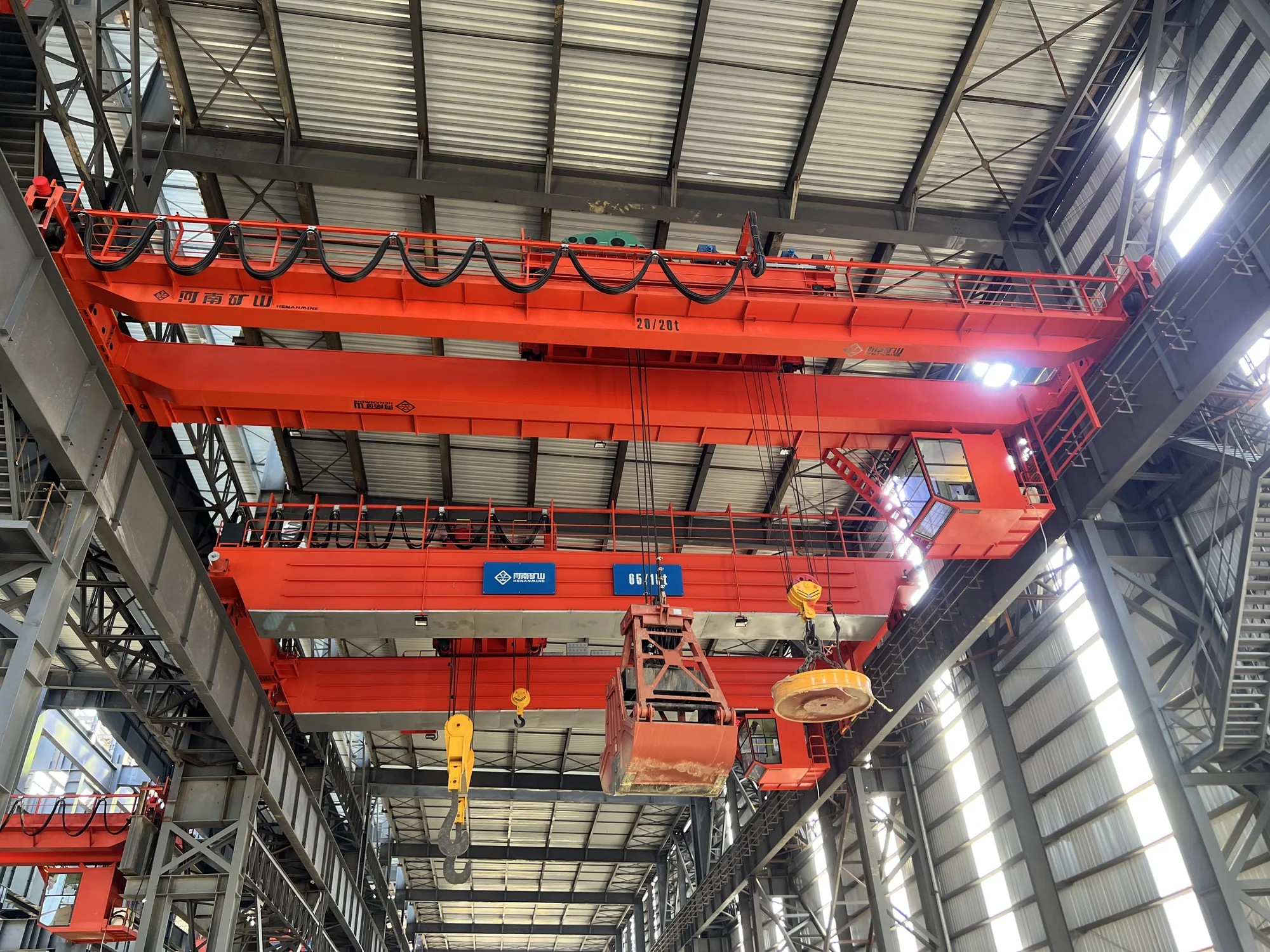
Henan mine crane co., ltd. multipurpose overhead crane with a grab bucket and round lifting magnet in a factory hall
Grab and magnet on one overhead crane; pictured ratings apply to this installation.
01 / APPLICATIONS

Transfer bulk solids and compatible ferrous loads in one bay.

01

Bulk storage with ferrous-material handling

Transfer the specified loose solids by grab and use the magnet for a separate compatible ferrous stream. Give bulk density, scoop target and discharge route alongside steel or scrap contact conditions and the frequency of mode changes.

02

Ferrous receiving and transfer

Select the magnet from scrap or steel form, contact area, surface and temperature. Establish useful pickup separately from magnet tare and the magnetic mechanism's rated suspended load.

03

Process positions with different lifting levels

Serve defined pickup and discharge points with each attachment. Provide the grab's working depth and opening envelope, the magnet's lifting route and the clearances needed to park the unused attachment.

A QP 10/10 t marking identifies separate grab-mode and magnet-mode ratings, each including its respective attachment. It does not establish a 20 t lift or default simultaneous loaded operation. The order defines permitted load cases, total limits, the operating sequence and controls.

02 / TECHNICAL SPECIFICATIONS

QP specifications and configuration options

Compare the available options for your lifting task. Capacity, span, lift height and speed are matched in the selected configuration.

ModelQP
Mode ratings5/5 / 10/10 / 16/16 t for grab / magnet modes
Crane dutyA6 for the listed standard selections
Trolley arrangementOne trolley with separate grab and magnet lifting mechanisms
Span options5/5 t: 10.5–31.5 m; 10/10 t: 13.5–31.5 m; 16/16 t: 19.5–31.5 m, in 3 m steps
Grab maximum lifting height5/5 / 10/10 / 16/16 t: 20 / 18 / 22 m
Magnet maximum lifting height5/5 / 10/10 / 16/16 t: 16 / 22 / 22 m
Grab hoisting speed5/5 / 10/10 / 16/16 t: 40.1 / 40 / 41.8 m/min
Magnet hoisting speed5/5 / 10/10 / 16/16 t: 15.6 / 10.4 / 13 m/min
Trolley travel speed5/5 / 10/10 / 16/16 t: 44.6 / 45.6 / 43.2 m/min
Bridge travelMatched to capacity and span; 5/5 t at 10.5 m: 93.7 m/min
Grab lifting arrangementSeparate holding and closing winches for a four-rope grab
Magnet lifting arrangementAuxiliary lifting mechanism; hook-suspended electromagnetic plate
5/5 t magnet exampleMW1-6: 4,540 kg nominal pickup + 460 kg magnet tare; 776 mm diameter
Operator controlsCabin or radio; selected PLC/HMI and mode-control functions
Standard power supply380 V / 50 Hz / three-phase; destination and magnet supplies by order

Compare model configurations

Grab / magnet ratingSpan optionsGrab / magnet liftGrab / magnet lifting speedTrolley speedDuty
5/5 t10.5–31.5 m20 / 16 m40.1 / 15.6 m/min44.6 m/minA6
10/10 t13.5–31.5 m18 / 22 m40 / 10.4 m/min45.6 m/minA6
16/16 t19.5–31.5 m22 / 22 m41.8 / 13 m/min43.2 m/minA6

Grab and magnet values describe different operating modes. Span steps are 3 m within each range. Rated suspended loads include the respective attachment; simultaneous use is governed by the ordered load cases.

Magnet selection: nominal pickup and attachment weight

Crane mode ratingMagnet optionNominal pickupMagnet tareDiameter
5/5 tMW1-64,540 kg460 kg776 mm
5/5 tMW1-163,330 kg1,670 kg1,180 mm
10/10 tMW1-168,330 kg1,670 kg1,180 mm
16/16 tMW1-1614,330 kg1,670 kg1,180 mm
16/16 tMW1-4510,450 kg5,550 kg1,650 mm

These are nominal matched examples, selected with the crane geometry. Actual pickup depends on the material, shape, temperature and magnetic contact; confirm performance for the intended steel or scrap load.

03 / EQUIPMENT VIEWS

Review the separate grab and magnet lifting systems.

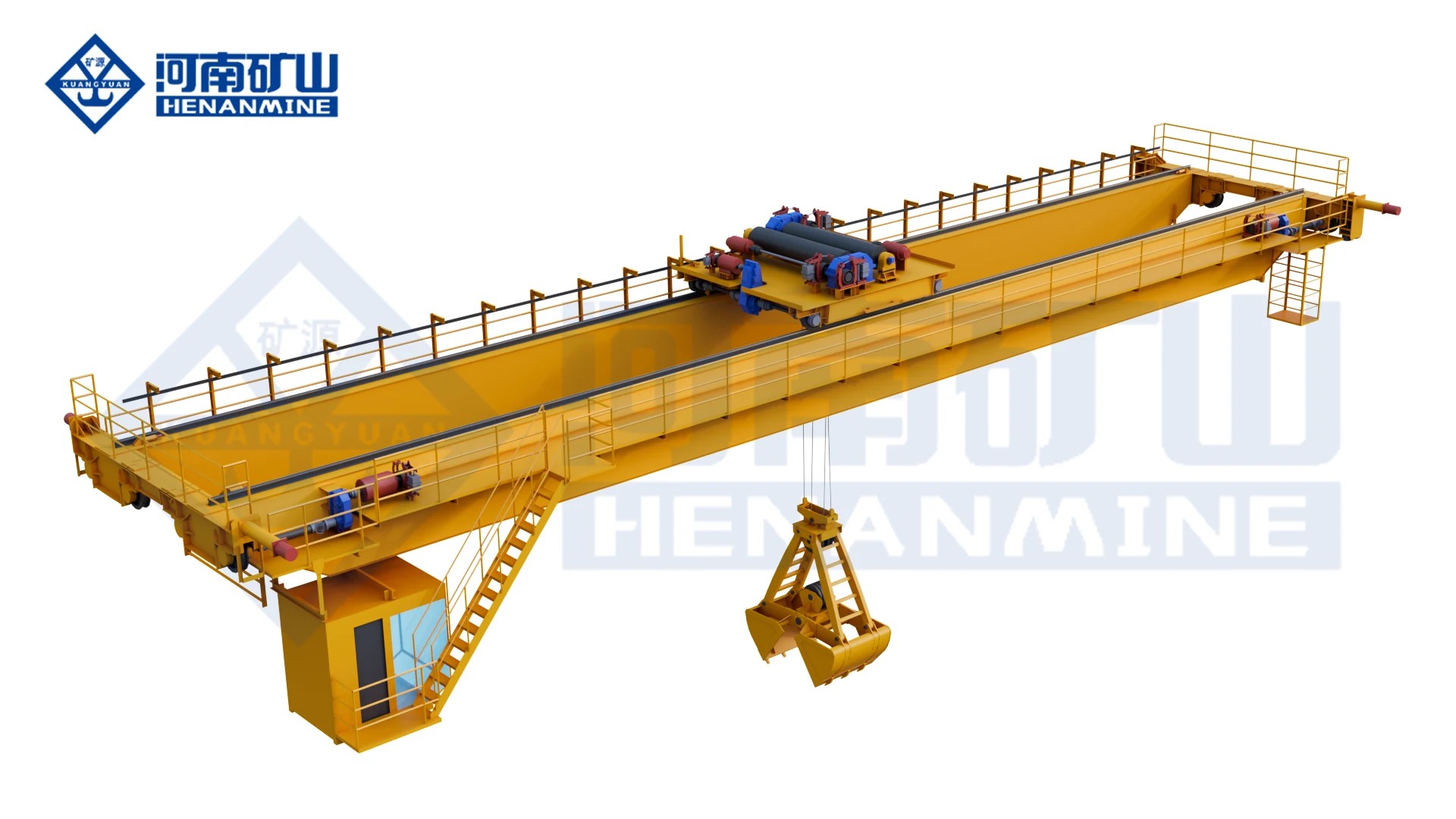
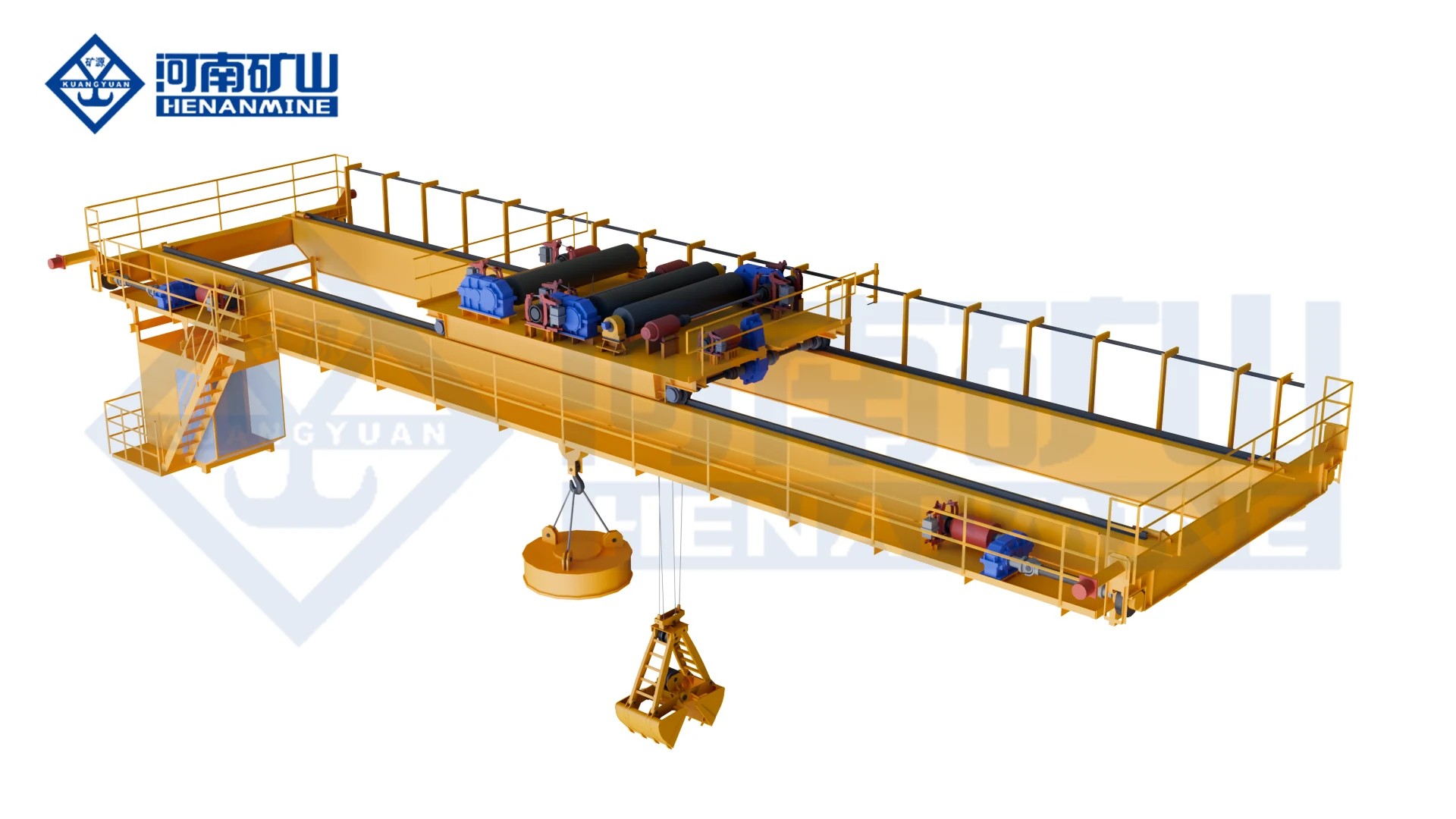
The equipment views show the shared trolley with separate grab and magnet lifting positions. The installed photograph is one equipment example and does not establish a new order's rating or attachment scope. Review rope reeving and holding/closing equipment, grab opening, magnet cable routing, unused-attachment parking and access to each mechanism on the final drawing.

QP multipurpose overhead crane equipped with grab and circular lifting magnet
Manufacturer rendering: QP grab-and-magnet crane arrangement
QP grab-and-magnet overhead crane front arrangement with two lifting attachments
Manufacturer rendering: QP two-attachment arrangement
04 / CONFIGURATION

Configure QP around your production task.

Provide two handling briefs within one bay layout: bulk material and grab cycle, then steel pickup and magnet cycle. Keep each mode's rating, attachment tare, lifting height and speed separate, and define changeover and parked-attachment clearances with the common trolley.

QP grab-and-magnet overhead crane front arrangement with two lifting attachments
Manufacturer rendering: QP two-attachment arrangement
01 / SELECTION

Bulk material and filled-grab load

State bulk density range, particle and maximum lump size, moisture, abrasiveness, temperature and useful scoop target. Select bucket volume, shell and tare with actual filling behaviour so the complete filled grab remains within the grab-mode rating.

02 / SELECTION

Steel pickup and magnet tare

Provide grade, scrap or product geometry, surface condition, temperature and target net pickup. The magnet-mode rating includes the magnet and suspension; actual steel pickup must also meet magnet performance for those contact conditions.

03 / SELECTION

Separate lifting heights and speeds

Plot pickup, opening, discharge and parking levels for both attachments. Grab and magnet lifting speeds and maximum heights differ, so compare their matched values rather than applying one mode's data to the whole crane.

04 / SELECTION

Mode selection and permitted operations

Describe changeover frequency and the intended sequence. Specify operator controls, mode indication, interlocks and parked-attachment arrangements. Any requested combined operation needs an expressly permitted load case and its associated controls.

05 / SELECTION

Magnet excitation and power-loss response

Identify the magnet supply, release control, cable equipment and any required backup holding. Agree duration, actual load and contact conditions, monitoring, alarms and recovery actions; power for magnet holding alone does not establish continued crane motion.

06 / SELECTION

Bay geometry, duty and site conditions

Provide span, runway length, building clearances and allowable reactions. Give cycles and shifts for each mode, plus dust, moisture, ambient conditions, destination power and any steel pickup heat that affects the selected package.

05 / PURCHASING & HANDOVER

Define the equipment,
documents and delivery scope.

Compare QP as a complete two-mode package: bridge and trolley, grab holding and closing winches, magnet lifting mechanism, both selected attachments, magnet excitation, cable systems, controls and protection. The technical offer should identify separate mode payloads and tests, with power feed, freight, erection and commissioning boundaries clearly priced.

Confirm both attachment packages

List the four-rope grab and its volume and tare, holding and closing equipment, magnet mechanism, magnet and suspension. Identify rope, cable, excitation, mode-control and interlock scope with any power-loss holding equipment.

Compare each mode's usable output

Grab volume, bulk density and tare affect useful bulk load; magnet size, tare and contact conditions affect steel pickup. Compare quotations using both tasks, their cycle requirements and the same installation and service boundaries.

Request a two-mode technical file

Include arrangement drawings, wheel reactions, separate load and motion schedules, grab data, magnet pickup conditions, electrical and excitation documents and manuals. Agree crane, grab, magnet, changeover and power-loss tests with their records.

Schedule around the selected attachments

Agree drawing approval, grab and magnet selection, manufacture, factory checks and dispatch milestones. Confirm packing, freight, unloading and destination documents. The order fixes the programme for the actual package and site readiness.

Define commissioning and training duties

Allocate rope reeving, grab adjustment, magnet-power connection and mode-control setup. State who provides site test loads, representative material and local lifting equipment; train operators on both modes, changeover and the agreed power-loss response.

Support both mechanisms after handover

Confirm warranty commencement, covered components, exclusions and service arrangements. Request recommended grab wear parts, ropes, brakes, magnet cables, sensors and controls, with backup-battery inspection and maintenance instructions where supplied.

01Describe both material streams

Send bulk density and grab requirements alongside the steel form, contact conditions and magnetic pickup target.

02Select the separate load cases

Review attachment tare, useful material loads, mode heights and speeds, changeover and parking positions.

03Agree controls and handover scope

Confirm mode interlocks, magnetic power-loss response, drawings, tests, delivery and installation responsibilities.

04Commission each operating mode

Check grab operation, magnetic pickup and release, changeover and specified protection functions before operator handover.

DOCUMENTS TO AGREE

Technical schedule · General arrangement · Attachment interface · Runway loads · Electrical information · Safety-function description · Agreed inspection records · Operation and maintenance manuals

06 / RELATED ARRANGEMENTS

Compare other grab-handling arrangements.

Compare the full range ↗
07 / PROCUREMENT QUESTIONS

Before you order
your QP crane.

Review the lifting task, configuration and quotation scope. We can help develop a crane proposal from the project information available.

When should I compare QP rather than QEN or QZ?

Compare QP when the bay needs dedicated four-rope grab handling and a separate magnetic lifting task for compatible ferromagnetic material. QEN provides hook and project-selected grab functions, while QZ is the dedicated grab alternative. Describe both material streams, useful loads and task frequency to decide whether the two QP modes suit the work.

What does 10/10 t mean, and can the ratings be added?

It identifies separate grab-mode and magnet-mode rated suspended loads, each including the respective attachment and other suspended equipment. It does not establish a 20 t combined lift or unrestricted simultaneous loaded operation. The approved load cases, total limits, operating sequence and mode controls govern permitted use.

What type of grab and lifting arrangement does QP use?

The listed QP arrangement uses a four-rope grab with separate holding and closing winches. A dedicated mechanism lifts the hook-suspended electromagnet on the same trolley. A detachable hydraulic grab is a different arrangement that requires its own lifting, connection and control selection.

How much bulk material can the grab carry?

Use the selected grab-mode rating together with grab tare, other suspended equipment, usable bucket volume, bulk density and actual filling behaviour. The filled grab must remain within the permitted suspended load. Give the material range and useful scoop target so volume, tare and payload can be stated separately in the proposal.

Do the nominal magnet examples establish the steel pickup we will get?

The magnet examples pair a crane-mode rating with nominal pickup and magnet tare. Actual usable pickup also depends on material, shape, temperature, contact area and surface condition. Provide representative steel or scrap details and agree the pickup conditions and acceptance test. The magnet-mode rating is not all available as net steel payload.

Are the grab and magnet lifting heights and speeds the same?

They have separate lifting mechanisms and matched values in the configuration table. Check the grab's pickup depth, opening and discharge level separately from the magnet route and steel landing position. Include clearance to park the unused attachment and access for maintenance when reviewing the shared trolley arrangement.

How should changeover and simultaneous operation be specified?

State how often modes change, the intended sequence and where the unused attachment will be parked. Agree operator mode selection, indication, interlocks and cable or attachment arrangements. Any requested simultaneous loaded operation needs an expressly approved load case and corresponding controls; two mechanisms on a trolley do not by themselves permit it.

What should magnetic power-loss provision and acceptance include?

Specify any backup holding supply, required duration, load and contact conditions, monitoring, alarms and recovery procedure. Magnet holding power alone does not provide crane travel or grab operation. Agree crane, grab closing and discharge, magnetic pickup and release, mode-limit, changeover and ordered power-loss tests, with representative material, records and site responsibilities.

GET A CONFIGURED QUOTATION

Request your QP
technical proposal.

Send the bulk material, density range and useful grab load, then describe the separate steel or scrap pickup. Add span, pit and discharge levels, both operating cycles and changeover frequency so we can select the grab and magnet systems around one bay layout.

  • Crane and grab matched to the material and load
  • Clear configuration and supply boundaries
  • Drawing, testing and site-support scope

info@cranehenanmine.com

PRODUCT SELECTEDQP Grab and Magnet Double Girder Overhead Crane

A bay sketch, material photographs and hopper drawing help. Include grab volume if known, magnet information, separate pickup targets, destination power and the required power-loss, inspection and site-service scope.

↑
QP Overhead CraneRequest your project quotation
Get a quotation ↗
QP equipment gallery
Enlarged product image