Skip to content
Henan mine crane co., ltd. Get a project quote
QZ Intelligent / BULK MATERIAL HANDLING

Intelligent QZ Grab Overhead Crane

Develop a defined bulk-transfer route around a QZ four-rope grab crane, selected controls and the plant's operating signals. The intelligent configuration can include positioning, anti-sway and production or storage-system interfaces, with automated steps and operator involvement agreed for the site. Specify the material, working zones and exception recovery together with the selected crane, rather than treating a control label as a complete handling solution.

Basic crane arrangement
QZ / four-rope mechanical grab
Published load family
5–50 t; unit selected by project
Control and interfaces
PLC; specified plant integration
Automation scope
Route, supervision and recovery agreed
Material-matched liftingDefined load & duty

Start with the material data and layout you have. A pile or pit photo, hopper drawing and operating cycle help us configure the crane and grab.

01
Define the sequence around your process

Set pickup positions, receiving points, process permissions and completion signals for each transfer. The proposal can then identify which steps are automatic, where an operator is involved and what the crane does when material or the receiving point is unavailable.

02
Coordinate motion with the real working zones

Choose positioning and anti-sway functions around the grab, payload and route. Columns, stockpiles, hoppers, vehicles and personnel access shape the operating zones, approach movements and stopping and recovery requirements.

03
Make integration and acceptance measurable

Name the plant interfaces, signal ownership and required operating scenarios before controls are ordered. Agreed material, loads, routes and acceptance conditions give purchasing a way to compare automation scope and verify the installed functions.

Manufacturer rendering for the Intelligent QZ grab-crane configuration with double girders and suspended clamshell grab
Manufacturer rendering: intelligent QZ configuration rendering
01 / APPLICATIONS

Automate an agreed route with defined plant conditions.

01

Repeatable stockpile-to-hopper routes

Develop transfers between identified pickup areas and receiving points with known boundaries. Include changing pile level, grab access, hopper permission and discharge conditions when defining the sequence and operator involvement.

02

Process-linked bulk supply

Coordinate crane actions with a receiving process using agreed demand, ready, full and fault signals. State how the plant schedules transfers, handles queues or interruptions and confirms completion, with responsibilities assigned to both control systems.

03

Supervised storage and transfer zones

Plan specified work within a defined bay, including local or remote supervision where selected. Identify access restrictions, nearby equipment, maintenance modes and the safe means of recovering an interrupted cycle before operating trials.

Intelligent QZ is an automation configuration of the QZ family. Published ranges describe a family, not one simultaneously achievable crane. The order fixes the selected load and motion schedule, sensors, interfaces, working zones, supervision and manual recovery.

02 / TECHNICAL DATA

Published intelligent QZ family ranges.

These references support early selection. They do not describe one capacity-paired machine; confirm the load, span, lift, speeds, duty and control scope together.

Published family lifting capacity5–50 t
Published span family10.5–31.5 m
Published lift family6–30 m
Published working classA6–A8
Published hoist-speed family30–49 m/min
Published trolley-speed family31–45 m/min
Published bridge-speed family76–94 m/min
Grab attachmentFour-rope mechanical grab
Control familyPLC; MES/WMS integration options
Published supply family220–690 V, 50/60 Hz

Published family ranges and procurement checks

ParameterReference selection rangeProcurement check
Published family lifting capacity5–50 tCount grab self-weight plus maximum bulk payload.
Published span family10.5–31.5 mConfirm runway and selected load together.
Published lift family6–30 mCheck lowest pile and discharge clearance.
Published working classA6–A8Select from cycles per hour, shifts and load spectrum.
Published hoist-speed family30–49 m/minConfirm the speed paired with the selected unit.
Published trolley-speed family31–45 m/minSet positioning accuracy and deceleration zone.
Published bridge-speed family76–94 m/minCheck stopping distance and exclusion zones.
Grab attachmentFour-rope mechanical grabChoose geometry, volume and closing force for the material.
Control familyPLC; MES/WMS integration optionsName interfaces, signals, local override and recovery method.
Published supply family220–690 V, 50/60 HzSpecify the actual site supply and protection.

Each line is a published family reference, not a matched single-crane specification. Select one capacity, span, lift, speed and control package together and define the acceptance criteria.

03 / EQUIPMENT VIEWS

Review the grab crane with its site-specific control scope.

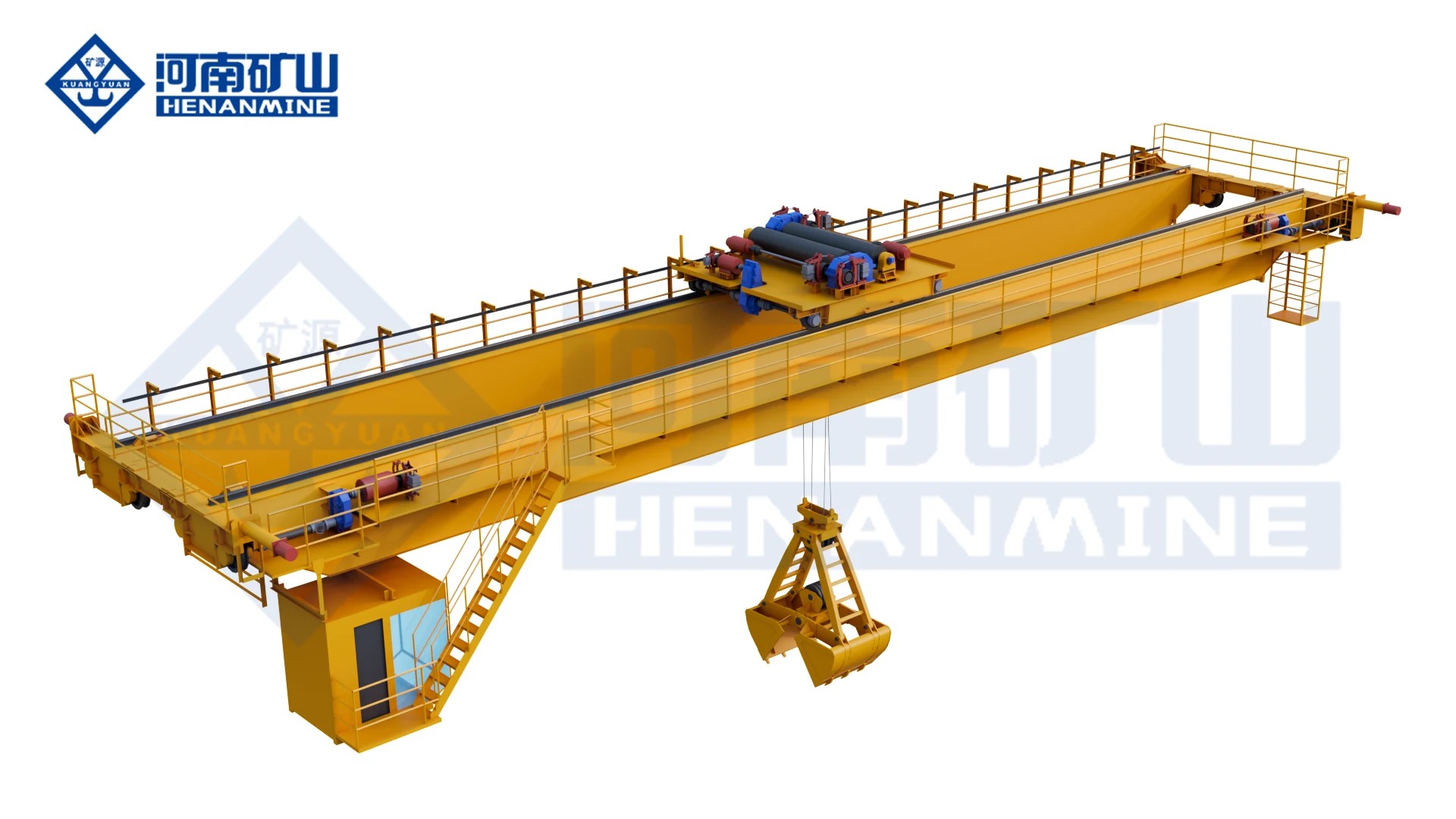
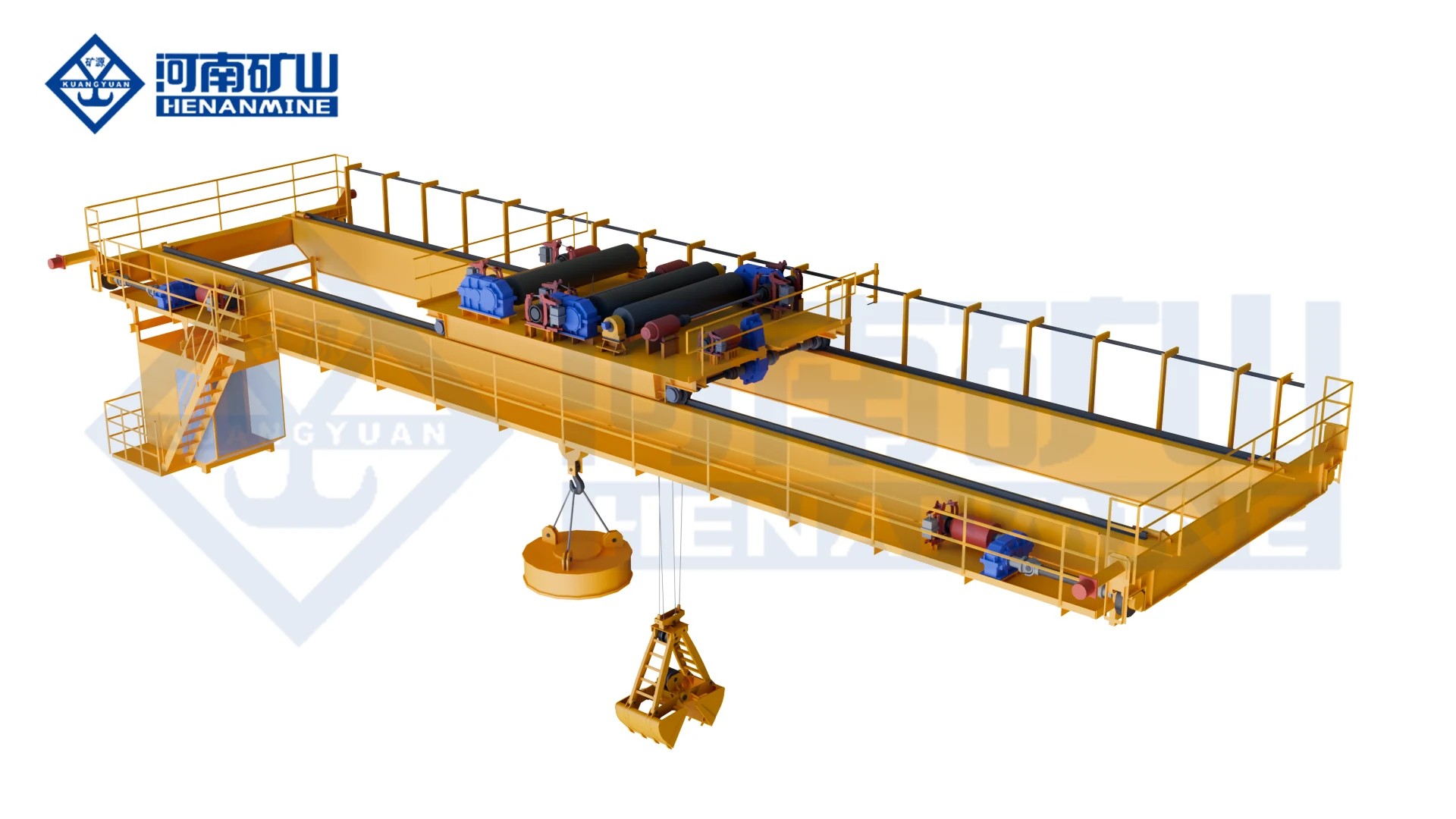
Equipment views show the QZ bridge and mechanical grab arrangement; a photograph cannot establish the sensors, software, interfaces or automated functions included in a new order. Check the final arrangement and control documents for device positions, visibility, operating zones, cable routes, maintenance access and local recovery provisions.

End perspective of the Intelligent QZ grab-crane configuration showing bridge, trolley and clamshell grab
Manufacturer rendering: intelligent QZ trolley and grab view
Opposite perspective rendering of the Intelligent QZ grab-crane configuration with service walkway and clamshell grab
Manufacturer rendering: intelligent QZ bridge and grab arrangement
04 / CONFIGURATION

Configure QZ Intelligent around your production task.

Define the material route and operating scenarios first, then select the crane's matched load, geometry, duty and motion data. The published family ranges help frame an enquiry; the technical offer must identify one compatible unit and a specific control, interface and acceptance schedule.

Opposite perspective rendering of the Intelligent QZ grab-crane configuration with service walkway and clamshell grab
Manufacturer rendering: intelligent QZ bridge and grab arrangement
01 / SELECTION

Material, grab and complete load

Provide density range, particle size, moisture, stickiness, temperature and abrasiveness, with the required useful load. Select bucket geometry, volume and closing action, counting grab tare and all suspended equipment within the chosen crane's rating.

02 / SELECTION

One compatible crane schedule

Select load, span, lifting height, speeds, duty and supply together for the route. The 5–50 t and other published family ranges do not establish a single unit at every maximum; the offer identifies the matched crane and mechanism data.

03 / SELECTION

Route, pile and receiving conditions

Map pickup areas, changing pile levels, hopper openings, travel paths and obstructions. State how material availability and discharge readiness are established, including waiting locations and the response to blocked or unavailable destinations.

04 / SELECTION

Positioning and motion functions

Specify required positioning, anti-sway and approach behaviour with loads, distances and material conditions. Agree sensing method, performance criteria, deceleration and stopping zones, calibration and test procedure for the supplied package.

05 / SELECTION

PLC and plant-system interfaces

Name each MES, WMS or process-control connection, protocol, signal, data item and owner. Define command permissions, ready and fault states, transfer completion, communications loss and the plant-side software and hardware needed for integration.

06 / SELECTION

Supervision, access and recovery

Identify automatic, supervised, manual and maintenance modes and their permissions. Agree working-zone access, emergency response, mode change, sensor-fault behaviour and recovery after power or communications interruption, with operator training and functional checks.

05 / PURCHASING & HANDOVER

Define the equipment,
documents and delivery scope.

Purchase the selected QZ crane and grab alongside a defined automation and integration scope. List sensors, controls, software functions, plant connections and documentation explicitly, with responsibilities for site data, access arrangements, commissioning material and acceptance trials agreed before manufacture and integration.

Separate equipment and integration deliverables

List the bridge, winches, grab and ropes with the selected sensors, PLC, operating stations, communications and software functions. Allocate plant-side connections, network equipment, interfaces, power feed, access equipment and any external interlocks.

Compare the same operating scenarios

Use one material range, useful payload, route, duty and automated sequence for all offers. Identify supervision, positioning requirements, process interfaces and recovery functions explicitly; an automation label alone does not define comparable equipment or price.

Agree functional documents and tests

Request the matched crane schedule, arrangement, wheel reactions, control narrative, interface signal list, operating-mode description and manuals. Define factory simulation and site functional checks with representative loads, plant states, interruptions and required records.

Stage approvals and site integration

Set milestones for crane and grab selection, route and control approval, interface confirmation, manufacture, checks and dispatch. Reserve commissioning and plant trial windows, identifying when the site's runway, power, communications and receiving process will be available.

Allocate trials, recovery and training

Name who supplies material, test resources and plant-system support during commissioning. Verify agreed normal and exception scenarios, mode changes and recovery procedures, then train operating and maintenance staff on the installed equipment and control arrangements.

Plan support for controls and mechanics

Record warranty commencement, coverage, exclusions and support responsibilities. Request controlled software and parameter backups, access and change procedures, device and sensor spares, mechanical wear parts and calibration and maintenance instructions for the supplied package.

01Document the handling scenario

Send material data, useful payload, route, required output, plant permissions and the intended operator role.

02Select crane and control functions

Review one matched QZ configuration with the grab, sensing, motions, working zones and plant interfaces.

03Agree responsibilities and test cases

Approve the control narrative, signal list, normal and exception scenarios, performance conditions and site resources.

04Commission the agreed operating modes

Verify the installed sequence and interruption recovery under defined conditions, then hand over records, training and controlled backups.

DOCUMENTS TO AGREE

Technical schedule · General arrangement · Attachment interface · Runway loads · Electrical information · Safety-function description · Agreed inspection records · Operation and maintenance manuals

06 / RELATED ARRANGEMENTS

Compare other grab-handling arrangements.

Compare the full range ↗
07 / PROCUREMENT QUESTIONS

Before you order
your QZ Intelligent crane.

Review the lifting task, configuration and quotation scope. We can help develop a crane proposal from the project information available.

Is Intelligent QZ a separate basic crane model?

It is a QZ grab-crane configuration with specified automation and plant interfaces. The four-rope mechanical grab and selected crane mechanisms remain part of the handling system. The order identifies the actual crane schedule, sensors, controls, software functions, operating modes and integration scope.

Do the published family ranges describe one crane?

No. They frame available family selections. Capacity, span, lifting height, duty and speeds must form one compatible specification for the intended load and route. Do not combine every maximum into a unit specification; request the selected crane's matched load-and-motion schedule.

Does intelligent operation mean the bay is automatically unmanned?

The operating specification defines the automated steps, supervision and operator involvement. It also addresses access to working zones, unavailable material, blocked discharge, faults and recovery. Any unattended requirement needs an expressly defined operating arrangement, site measures and agreed verification.

What material and payload information is still needed?

Provide bulk-density range, particle and lump size, moisture, temperature, flow and sticking behaviour, with the useful load required per scoop. Grab geometry, filling and closing action remain material dependent, and the selected crane must carry the material, grab self-weight and all other suspended gear.

Can the crane connect to our MES, WMS or process controls?

A connection must be specified for the actual systems. Agree protocols, signals and data, command ownership, ready and fault states, transfer completion and communications-loss behaviour. Identify who supplies and tests the plant-side hardware, software and network; a named interface option does not establish compatibility by itself.

What positioning accuracy or handling rate can we order?

State the required performance with the load, route, travel distances, pile and discharge conditions and available working time. The technical proposal defines the selected motion and sensing package, achievable criteria and acceptance method. Published speed ranges alone do not prove positioning accuracy or a tonnes-per-hour result.

How should interrupted cycles and faults be handled?

Agree responses to power loss, communications loss, sensor faults, blocked routes and unavailable receiving points. The control specification identifies stopping and holding behaviour, mode permissions, operator intervention and the procedure for returning to an agreed state before the cycle is resumed or restarted.

What should automation acceptance and handover include?

Define normal sequences and exception scenarios using representative material, selected loads and plant signals. Verify modes, permissions, positioning criteria, motion limits, interfaces and recovery under agreed conditions. Include records, operating and maintenance instructions, training, controlled software and parameter backups and support responsibilities.


GET A CONFIGURED QUOTATION

Request your QZ Intelligent
technical proposal.

Describe the material flow you want to automate, from pickup area to receiving process. Include density, useful payload, route, target output and the operator's intended role, then add the plant signals and layout already available so we can define an Intelligent QZ proposal.

  • Crane and grab matched to the material and load
  • Clear configuration and supply boundaries
  • Drawing, testing and site-support scope

info@cranehenanmine.com

PRODUCT SELECTEDIntelligent QZ Grab Overhead Crane

Send a bay plan, pile and hopper details, process sequence and interface contacts or signal information. Include shifts, destination power, required functional checks and any restrictions on commissioning or plant access.

↑
QZ Intelligent Overhead CraneRequest your project quotation
Get a quotation ↗
QZ Intelligent equipment gallery
Enlarged product image