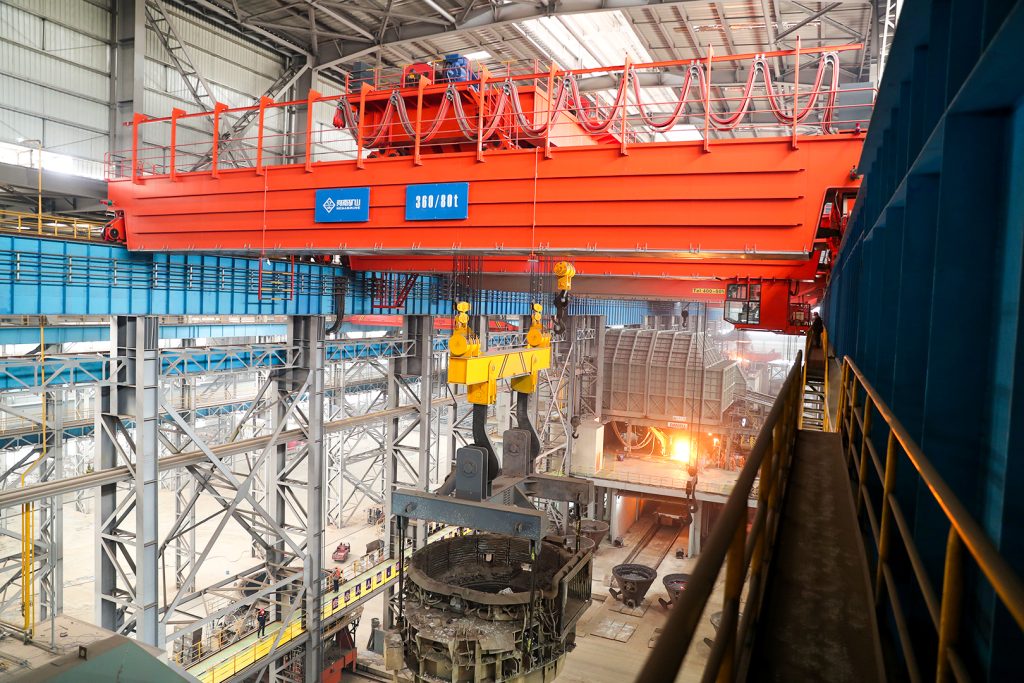
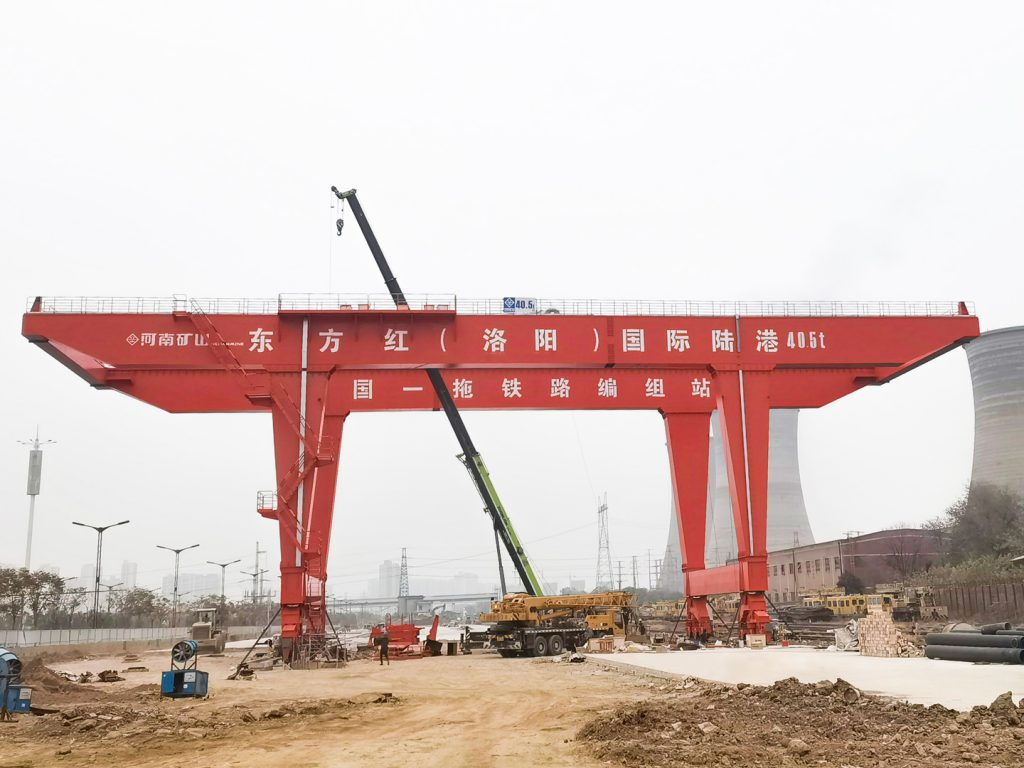
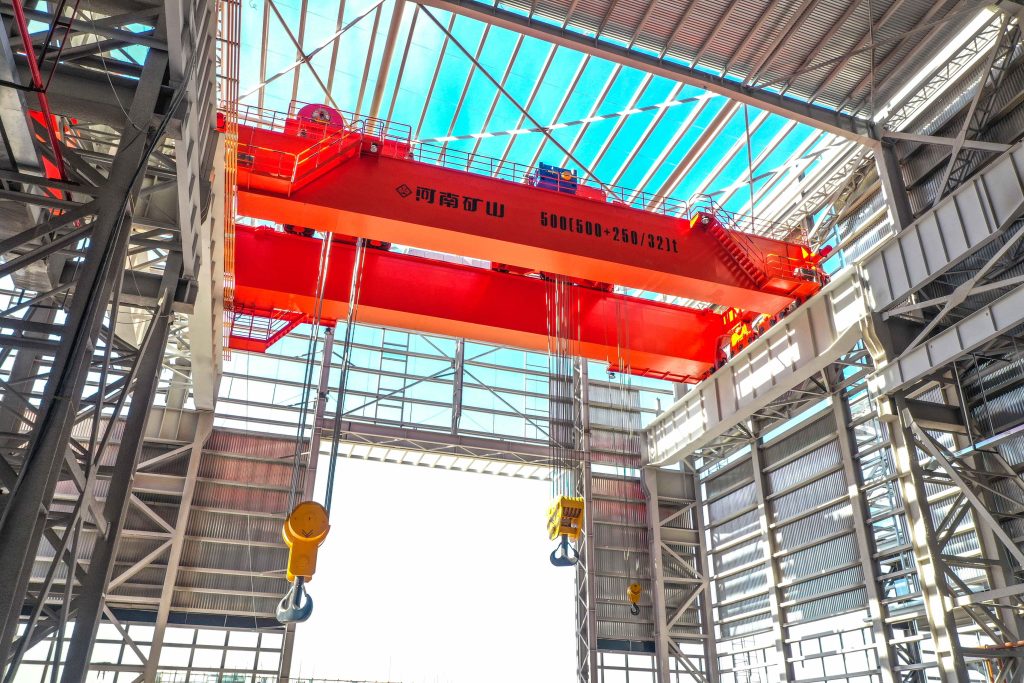
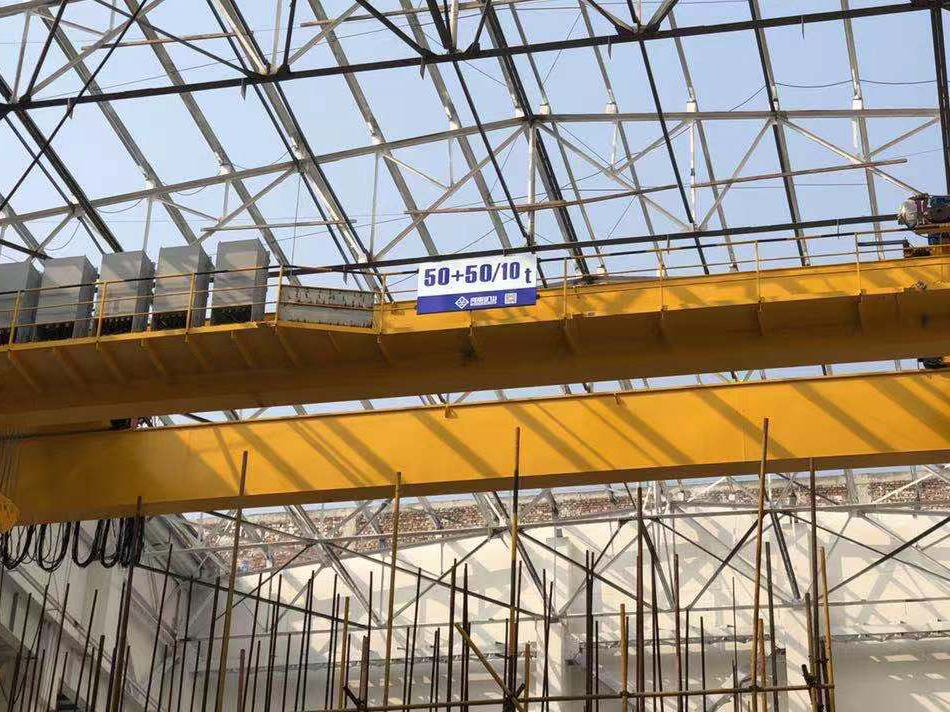
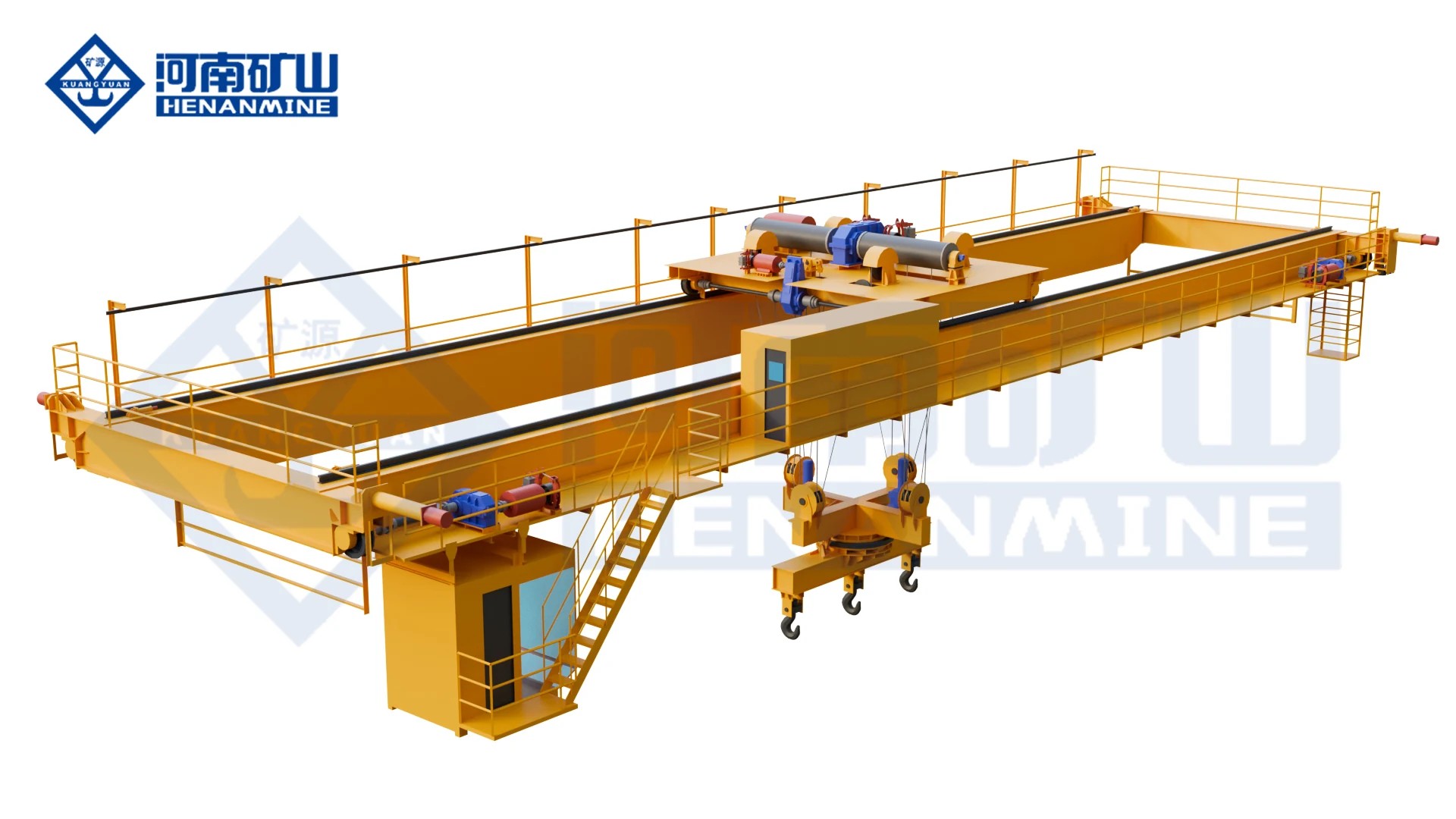
What makes QLC a lower-rotating magnetic crane?
Its rotating arrangement is below the trolley with the suspended electromagnetic carrier beam. The beam turns the steel in the horizontal plane to suit pickup and landing directions. The selected rotation range and full beam-and-load clearance are shown in the project arrangement.
How should I compare QLC, YC and QJ?
QLC uses a dedicated lower rotating magnetic beam. YC creates rotation through an upper trolley, while QJ is a lower rotating carrier-beam platform with a selected magnet or mechanical clamp. Compare the same product range, headroom, attachment depth, turning envelope and required pickup method.
Which capacity and speeds can I order?
Capacity, span, lifting height, duty and hoisting and travel speeds are selected for the project. Provide complete load, net steel target, handling distances, lifts per hour and the required placement task. The offer then states a matched configuration and its permitted operating conditions.
How much steel can the magnetic beam actually lift?
The crane's complete suspended load includes the steel, rotating beam, magnets and other suspended equipment. Usable steel payload also has to meet the selected magnets' pickup capacity under the stated material, geometry, temperature and contact conditions. Ask the quotation to give both the complete load and net steel pickup.
Can QLC turn the load through any angle or tilt it?
Specify the horizontal angle between pickup and landing and the clear working space. Photoelectric sensing and rotation-limit braking are configured for the ordered range. Tilting, inversion and repeated continuous rotation require a separately defined handling sequence, mechanism and service arrangement.
What anti-sway or positioning performance can I request?
QLC uses a bidirectional V-rope arrangement with selected electrical anti-sway controls. If a stopping accuracy or residual-sway value matters, state the load, travel and rotation sequence, speeds, measurement method and acceptance conditions. The technical offer can then identify the selected functions and the agreed performance check.
What happens to the magnet if mains power fails?
A selected battery-backed holding package has a 15–30 minute reference. Confirm the actual required duration, magnet load, contact conditions, battery condition, monitoring, alarms and test method in the order. Magnet holding does not establish powered crane travel or another recovery movement; those functions need their own defined supply and procedure.
Can QLC pick one plate or handle hot, coated or scaled steel?
Give the full plate or product range, grade, thickness, flatness, temperature and surface condition. Identify whether the task is single-piece separation or a defined batch. These inputs determine magnet selection, spacing and controls, and the representative material used to verify pickup and release.
Is this an electro-permanent-magnet system?
The QLC arrangement described here uses electrically excited lifting electromagnets. An electro-permanent proposal has a different attachment and switching principle, with its own controls, holding behaviour and acceptance scope. Identify that requirement explicitly if it is part of your procurement brief.
What should a complete QLC quotation include?
Request the crane, beam and magnets, excitation and cable equipment, rotation controls and selected backup holding, with complete and net load data and arrangement drawings. Compare agreed tests, documents, manufacture and dispatch milestones, freight, erection, commissioning, training, warranty terms and recommended spares as named scope items.