Skip to content
Henan mine crane co., ltd. Get a project quote
LDZ / BULK MATERIAL HANDLING

LDZ Single Girder Grab Crane

Supply bins, hoppers and workshop storage points with a four-rope grab carried by a single-girder bridge. LDZ uses two electric hoists for the grab's lifting and closing functions and suits intermittent bulk-material work within the listed A3 selection. Start with the material and useful load per scoop, then check the filled grab, transfer route and required operating frequency as one handling task.

Listed crane ratings
3 t / 5 t
Grab mechanism
Two electric hoists; four-rope grab
Listed working duty
A3 / intermittent bulk handling
Load to allow for
Material + grab + suspended gear
Material-matched liftingDefined load & duty

Start with the material data and layout you have. A pile or pit photo, hopper drawing and operating cycle help us configure the crane and grab.

01
Serve periodic material demand

Use LDZ where loose material is moved at intervals between storage and a receiving point. Give the typical and busiest handling periods so the electric-hoist arrangement is checked against the actual cycle and starts, as well as the heaviest lift.

02
Match the bucket to the bulk material

Select the grab from density, particle size, moisture and filling behaviour. A bucket's volume describes its material space; the weight of the bucket and its contents determines the suspended load that the crane must carry.

03
Fit the grab around the receiving point

Coordinate pickup depth, lifting clearance and the open bucket's envelope with the bin or hopper. The final drawing establishes the usable travel and discharge positions, operator view and access needed for maintenance.

LDZ single girder grab crane rendering with two electric hoists and four-rope grab
Manufacturer rendering: single-girder bridge with dual-hoist four-rope grab
01 / APPLICATIONS

Feed workshop processes with intermittent bulk transfers.

01

Bin and hopper replenishment

Move suitable loose solids from a defined storage position into a receiving bin or hopper. Describe inlet size, level at discharge and any obstruction above the receiving point so the selected grab can open within the available space.

02

Periodic storage-bay loading

Handle batches of bulk material within a workshop bay when the planned cycle fits the listed duty. Include the pile's changing height, travel distance, material settling and time available between production demands.

03

Material transfer above pits or containers

Lift from a pit, container or similar pickup point and discharge at an agreed location. Check the lowest pickup level, bucket penetration and opening space, with the workshop structure and operator's sight line shown on the layout.

LDZ uses two electric hoists as parts of one four-rope grab system. Their functions do not establish two independent rated hook lifts. For sustained bulk transfer, compare a QZ winch arrangement using the required load spectrum and complete cycle.

02 / TECHNICAL SPECIFICATIONS

LDZ specifications and configuration options

Compare the available options for your lifting task. Capacity, span, lift height and speed are matched in the selected configuration.

Rated crane capacity3 t / 5 t
Span options7.5, 9, 10.5, 12, 13.5, 15, 16.5, 19.5 or 22.5 m
Lifting height18 m
Lifting speed16 m/min
Crane dutyA3
Hoist arrangementTwo electric hoists
Grab arrangementFour-rope grab
Grab volume0.75 m³ (3 t crane) / 1.5 m³ (5 t crane)
Grab model201 (3 t crane) / 301 (5 t crane)
Hoist cross travel20 or 30 m/min
Bridge long travel30 m/min with ground control; 75 m/min with cabin control
Control optionsGround control / operator cabin
Hoisting motor power4.5 kW (3 t) / 7.5 kW (5 t)
Grab closing motor power4.5 kW (3 t) / 7.5 kW (5 t)
Hoist travel motor power2 × 0.8 kW
Bridge drive motor power2 × 0.8 kW with ground control; 2 × 1.5 kW with cabin control
Main useIntermittent handling of loose bulk materials
Grab selectionMatched to material bulk density and required volume
Power supplyConfigured to destination voltage and frequency
03 / EQUIPMENT VIEWS

Review the single girder and paired-hoist grab system.

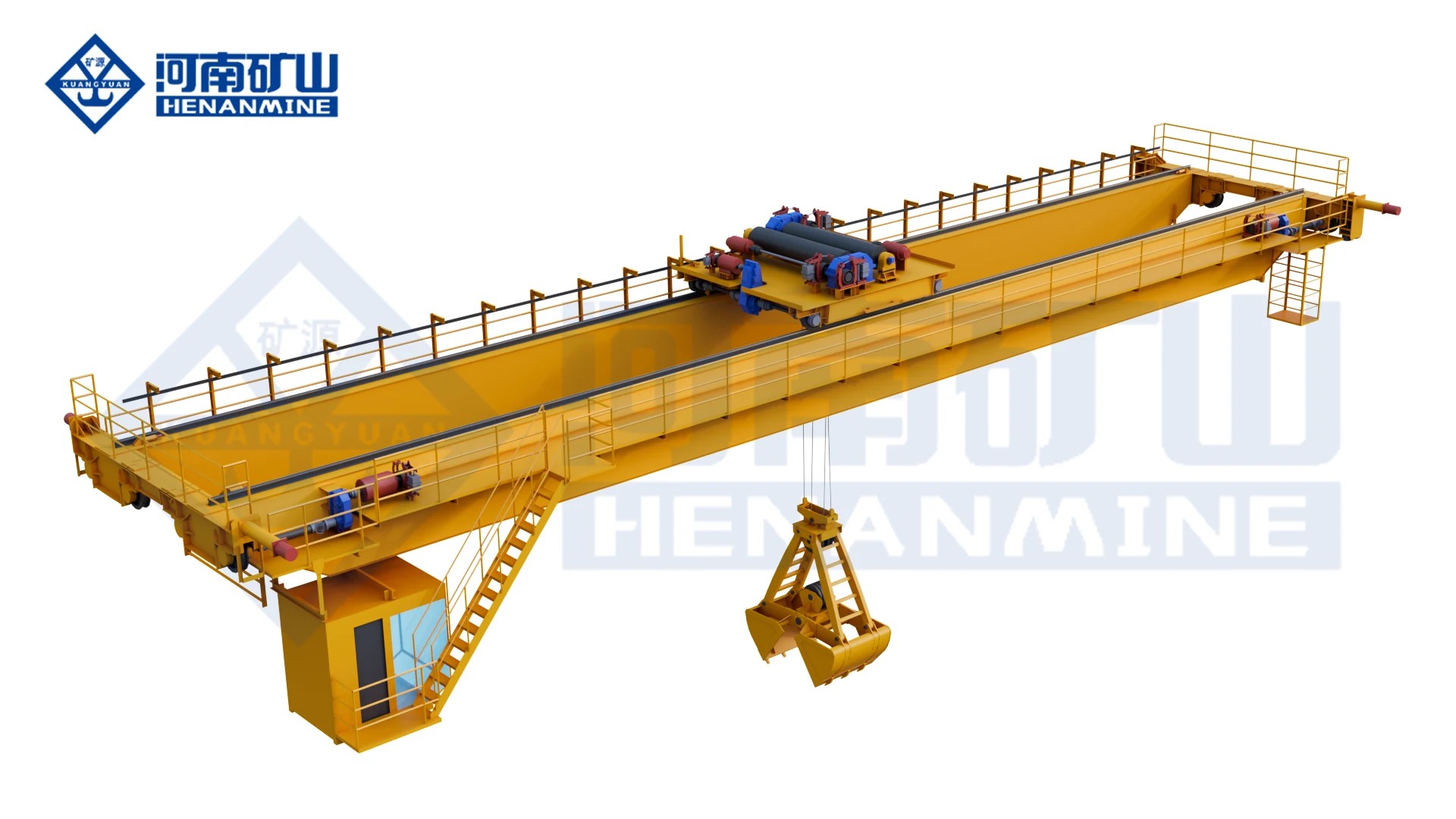
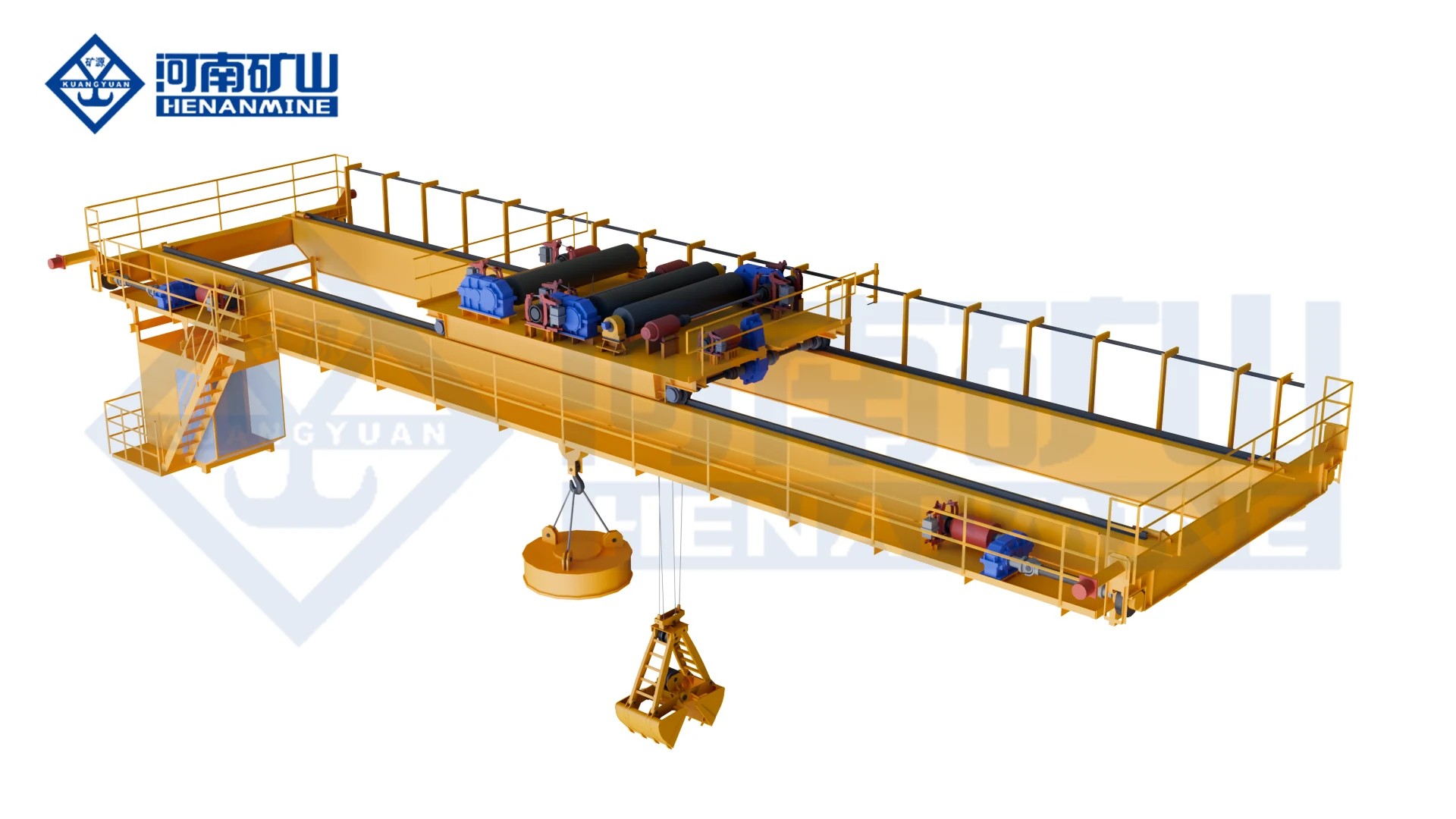
The equipment views identify the bridge, paired electric hoists and four-rope grab arrangement. Appearance alone does not establish a new order's capacity or bucket scope. Review the final drawing for rope paths, grab opening, hoist access, lower clearances and the pickup and discharge positions.

Side view of LDZ electric single girder grab crane and suspended clamshell grab
Manufacturer rendering: side view of the electric hoist and grab arrangement
Front view of LDZ single girder crane showing the dual-hoist grab system
Manufacturer rendering: front view of the four-rope grab system
04 / CONFIGURATION

Configure LDZ around your production task.

Give the useful bulk load, density range and busiest operating period before choosing the 3 t or 5 t selection. Keep each rating with its listed grab volume and motor package, then check the total suspended load and route against the ordered arrangement.

Front view of LDZ single girder crane showing the dual-hoist grab system
Manufacturer rendering: front view of the four-rope grab system
01 / SELECTION

Material density and bucket fill

Send the minimum and maximum bulk density, particle size, moisture, tendency to stick and material temperature. Estimate useful material per scoop using the selected bucket volume and actual filling conditions, then allow for the grab and all suspended gear.

02 / SELECTION

Capacity-paired grab selection

The listed 3 t and 5 t selections have respective 0.75 m³ and 1.5 m³ grab references. Confirm bucket model, tare, shell geometry and closing requirement for your material rather than treating either volume as a guaranteed tonnage per lift.

03 / SELECTION

Pickup, discharge and runway geometry

Provide rail-centre span, runway length, rail elevation and the lowest pickup and required discharge levels. Check the open grab, hopper inlet, approaches and headroom against the drawing, with wheel reactions supplied for the selected crane.

04 / SELECTION

Cycle and electric-hoist duty

Describe lifts per hour, travel distances, shifts, maximum-load frequency and waiting time. Include lowering, digging and closing, lifting, transfer, discharge and return so the A3 selection can be assessed against the busiest expected work.

05 / SELECTION

Operator position and travel package

Select ground or cabin operation from visibility and access along the route. The listed long-travel speeds and drive powers differ with these control arrangements; confirm their matched values, operating positions and required motion limits.

06 / SELECTION

Power, dust and site services

State destination voltage and frequency, workshop conditions, dust and moisture exposure, and any unusual heat. Identify the crane power feed, receiving equipment and plant connections that must be coordinated with the lifting package.

05 / PURCHASING & HANDOVER

Define the equipment,
documents and delivery scope.

Compare the single-girder bridge, both electric hoists, four-rope grab, ropes, controls and agreed crane power equipment as a complete LDZ package. Identify bucket volume and tare, useful material conditions and the approved duty in the offer, with building work, rails, freight and site services clearly allocated.

List the complete paired-hoist package

Identify the bridge, lifting and closing hoists, grab, ropes and reeving, travel drives and selected controls. State whether the crane power feed, runway rails, support structure and receiving-point equipment are included or supplied by the site.

Compare quotations for the same material

Use one density range, required useful load and cycle when comparing offers. Bucket construction and tare, span, hoist package, operating station and site-service boundaries affect price and whether the proposed crane fits the task.

Agree drawings and acceptance checks

Request the arrangement, approaches, wheel reactions, bucket data and tare, rope layout, electrical information and manuals. Define the crane checks and representative grab filling, holding, opening and discharge checks, with the material and records agreed.

Set a practical delivery programme

Confirm drawing approval, grab selection, manufacture, checks and dispatch milestones for the selected package. Agree packing, freight, unloading access and destination documents alongside the site's runway and power readiness.

Allocate assembly and commissioning

Identify who erects the crane, reeves and adjusts the grab, connects power and supplies local lifting equipment and test material. Include controls, limits and the paired-hoist operating sequence in commissioning and operator instruction.

Plan wear parts and support

Record warranty commencement, coverage, exclusions and service arrangements in the order. Ask for rope, brake, hoist, wheel and grab wear-part recommendations, with inspection and maintenance instructions for the supplied lifting and closing system.

01Describe one complete transfer

Send material data, useful load, pickup and discharge levels, travel distance and expected handling frequency.

02Match the crane and bucket

Review the 3 t or 5 t selection, grab tare and fill, paired-hoist duty and workshop arrangement.

03Fix scope, drawings and checks

Agree controls, power feed, acceptance conditions, delivery milestones and responsibility for site work.

04Commission the intended cycle

Check grab lifting, closing and discharge on agreed material, then hand over operating records and maintenance instructions.

DOCUMENTS TO AGREE

Technical schedule · General arrangement · Attachment interface · Runway loads · Electrical information · Safety-function description · Agreed inspection records · Operation and maintenance manuals

06 / RELATED ARRANGEMENTS

Compare other grab-handling arrangements.

Compare the full range ↗
07 / PROCUREMENT QUESTIONS

Before you order
your LDZ crane.

Review the lifting task, configuration and quotation scope. We can help develop a crane proposal from the project information available.

When should we choose LDZ rather than QZ?

Consider LDZ for intermittent bulk handling where the paired electric hoists and listed A3 duty fit the load spectrum and operating cycle. QZ uses dedicated holding and closing winches and is a useful comparison for repeated transfer. Assess both using useful payload, route, lifts per hour, starts and shifts.

Do the two hoists provide two separate crane capacities?

The two electric hoists perform lifting and closing functions within one four-rope grab system. The listed crane rating applies to the permitted complete suspended load. Their presence does not establish two independent rated lifts or allow their capacities to be added.

Can a 5 t LDZ lift 5 t of bulk material?

Allow for grab self-weight, suspension and other carried gear within the approved suspended-load rating. The remaining material allowance must also suit the bucket volume, actual bulk density, filling behaviour and grab operation. State the required net material load in the technical brief.

What do the 0.75 m³ and 1.5 m³ references mean?

They are the listed grab-volume references for the 3 t and 5 t crane selections respectively. Cubic metres measure volume. Useful material mass depends on density and fill, and the selected grab's tare also consumes crane capacity. Confirm the actual bucket and payload conditions in the offer.

Which material details affect the grab?

Provide bulk-density range, particle and maximum lump size, moisture, temperature, abrasiveness and whether the material sticks or bridges. Photographs and a description of the pile and hopper help define shell geometry, closing action, volume, useful fill and wear requirements.

Can we use the listed cabin travel speed with ground control?

The source schedule pairs different long-travel speeds and drive powers with ground and cabin operation. Select the operating arrangement for visibility, route and access, then confirm the corresponding travel package and limits in the order. Do not mix values from the two arrangements.

What should be checked around the hopper or pit?

Show the lowest pickup level, highest pile, hopper inlet and discharge level, with columns, platforms and other obstructions. Check lifting height, open and closed grab envelopes, approaches and headroom on the final arrangement, together with the required operator view and maintenance access.

What should purchasing settle before ordering LDZ?

Agree the selected crane and grab, bucket tare and usable material conditions, paired-hoist duty, geometry, controls and power. Define drawings, factory and site checks, freight, erection, grab adjustment, training, warranty terms and recommended spares so quotations cover the same working package.


GET A CONFIGURED QUOTATION

Request your LDZ
technical proposal.

Tell us what material you move, its density range and the useful quantity needed per scoop. Add pickup and discharge levels, approximate span and handling frequency so we can assess an LDZ crane-and-grab combination for your workshop.

  • Crane and grab matched to the material and load
  • Clear configuration and supply boundaries
  • Drawing, testing and site-support scope

info@cranehenanmine.com

PRODUCT SELECTEDLDZ Single Girder Grab Crane

A bay sketch, hopper dimensions and material photographs help. Include destination power, shifts and any known grab volume or tare; the initial brief can use the measurements already available.

↑
LDZ Overhead CraneRequest your project quotation
Get a quotation ↗
LDZ equipment gallery
Enlarged product image