Skip to content
Henan mine crane co., ltd. Get a project quote
QC / MAGNETIC & STEEL HANDLING

QC Electromagnetic Overhead Crane

Move ferromagnetic scrap and compatible steel stock with a lifting electromagnet suspended from a double-girder bridge. QC brings magnetic pickup and operator-controlled release into the bay's transfer cycle, with auxiliary-hook versions for separate conventional lifting tasks. Select the magnet for the material first, then size the crane for the steel, magnet and all other suspended equipment.

Pickup arrangement
Hook-suspended electromagnet
Listed working duty
A6 configurations
Auxiliary lifting
Separate hook on selected versions
Payload selection
Steel + magnet + suspended equipment
Material-matched liftingDefined load & duty

Start with the information you already have. A load drawing and workshop sketch help us recommend a configuration.

01
Choose pickup for the steel you handle

Scrap form, billet shape and available contact area determine which magnet can perform the task. Define the required steel pickup under those conditions so the quotation gives a useful payload as well as a crane rating.

02
Connect pickup, travel and discharge

Magnetic excitation and release are controlled from the operating station. Select motion speeds and cable handling around the receiving point, transfer distance and landing position, with visibility across the route.

03
Add a defined auxiliary-hook duty

Selected QC versions include a smaller auxiliary hook for suitable component or maintenance loads. Give that hook its own load, lifting height and route so both lifting arrangements are specified for the work they will perform.

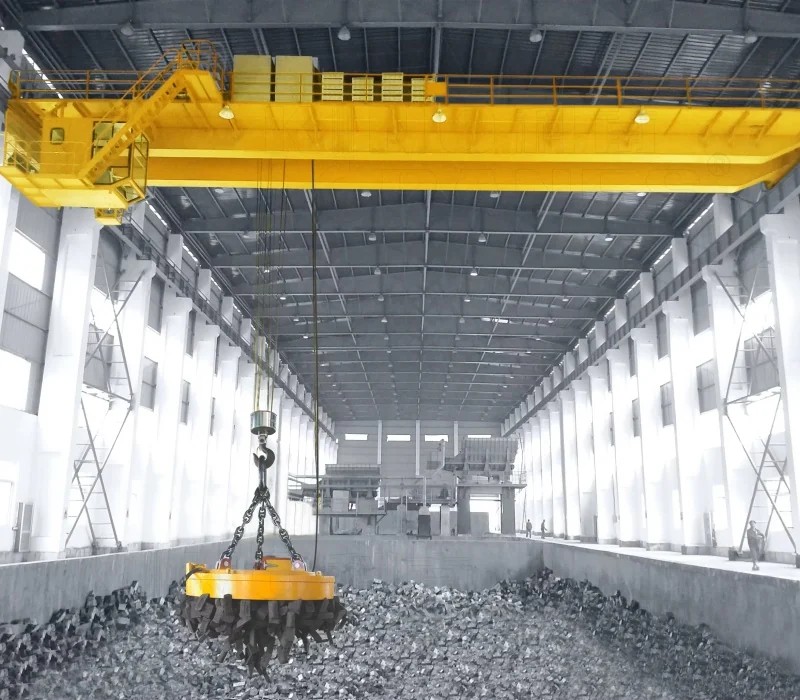
QC overhead crane with a hook-suspended circular electromagnet handling scrap steel
Circular electromagnet handling scrap steel beneath a double-girder bridge.
01 / APPLICATIONS

Move suitable ferrous material from pickup to discharge.

01

Ferromagnetic scrap transfer

Collect compatible scrap from designated receiving or storage positions and transfer it to the next handling point. Describe scrap size, form and packing conditions, the desired pickup and the discharge arrangement when selecting the magnet.

02

Billets and compatible steel stock

Lift products that provide suitable magnetic contact for the selected attachment. Include product dimensions, grade, surface scale and pickup temperature; long or flexible stock may benefit from a carrier beam with distributed magnets.

03

Magnetic handling with separate hook work

Use a main-magnet/auxiliary-hook selection where the same bay also handles suitable conventional loads. Identify fixtures, lifting points and the auxiliary load independently from the magnetic transfer task.

The listed QC magnet arrangement uses a hook locked against swivel rotation during magnetic handling. If the steel must turn to a controlled horizontal angle, compare a dedicated rotating magnetic-beam arrangement.

02 / TECHNICAL SPECIFICATIONS

QC specifications and configuration options

Compare the available options for your lifting task. Capacity, span, lift height and speed are matched in the selected configuration.

ModelQC
Magnetic lifting selections5 / 10 / 16 t; capacity includes the lifting magnet
Main-magnet / auxiliary-hook selections16/3.2 / 20/5 / 32/5 t
Span10.5–31.5 m in 3 m steps
Working dutyA6 for the listed configurations
Magnet-only lifting height5 / 10 / 16 t: 16 m
Main / auxiliary lifting height16/3.2 and 32/5 t: 16/18 m; 20/5 t: 12/14 m
Magnet-only hoisting speed5 / 10 / 16 t: 15.6 / 13 / 13 m/min
Main / auxiliary hoisting speed16/3.2 t: 13/14.6; 20/5 t: 12.6/15.5; 32/5 t: 9.5/15.5 m/min
Trolley travelMagnet-only 5 / 10 / 16 t: 39.5 / 43.8 / 44.5 m/min
Lifting arrangementHook-suspended electromagnet; auxiliary hook on selected versions
Hook swivel with magnetLocked against rotation for the listed hook-suspended arrangement
Power supply380 V / 50 Hz, three-phase; destination supply and magnet circuit specified with the order
Magnet holding on power lossBackup holding duration, alarms and acceptance test selected for the actual magnet and load
Material temperatureMagnet and cable package selected for the stated pickup temperature
Capacity definitionComplete suspended load includes magnet and lifting equipment; steel payload must also meet magnet capacity

Compare model configurations

Rated arrangementDutySpanMagnetic / auxiliary liftMagnetic / auxiliary hoistingTrolley travel
QC 5 t magnetA610.5 m16 m15.6 m/min39.5 m/min
QC 10 t magnetA610.5 m16 m13 m/min43.8 m/min
QC 16 t magnetA610.5 m16 m13 m/min44.5 m/min
QC 16/3.2 tA610.5 m16/18 m13/14.6 m/min44.6 m/min
QC 20/5 tA610.5 m12/14 m12.6/15.5 m/min44.6 m/min
QC 32/5 tA610.5 m16/18 m9.5/15.5 m/min43.4 m/min

Each row shows one 10.5 m span selection; other listed spans run to 31.5 m. Magnetic ratings include magnet self-weight. Slashes identify separate magnetic and auxiliary-hook values, not an added payload.

Runway data for the 10.5 m span selections

Rated arrangementSpanDutyMaximum wheel loadRecommended bridge rail
QC 5 t magnet10.5 mA672 kNP43
QC 10 t magnet10.5 mA6115 kNP43
QC 16 t magnet10.5 mA6143 kNP43
QC 16/3.2 t10.5 mA6146 kNP43
QC 20/5 t10.5 mA6170 kNP43
QC 32/5 t10.5 mA6245 kNP43

Wheel loads and rail data apply to these 10.5 m/A6 arrangements. A different span, mechanism or attachment selection requires its own crane and runway data.

03 / EQUIPMENT VIEWS

Review the hook-suspended magnet and bridge arrangement.

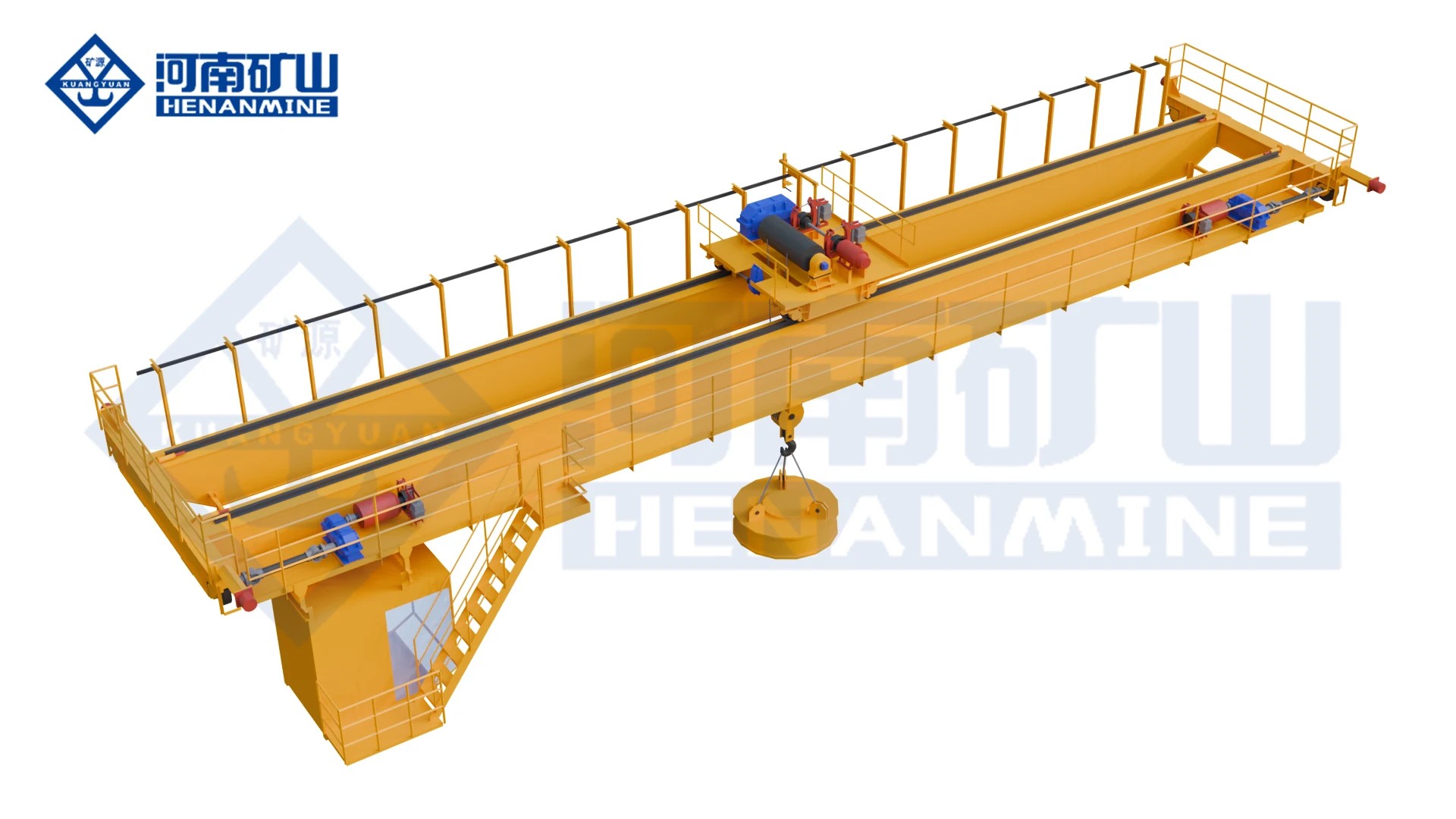
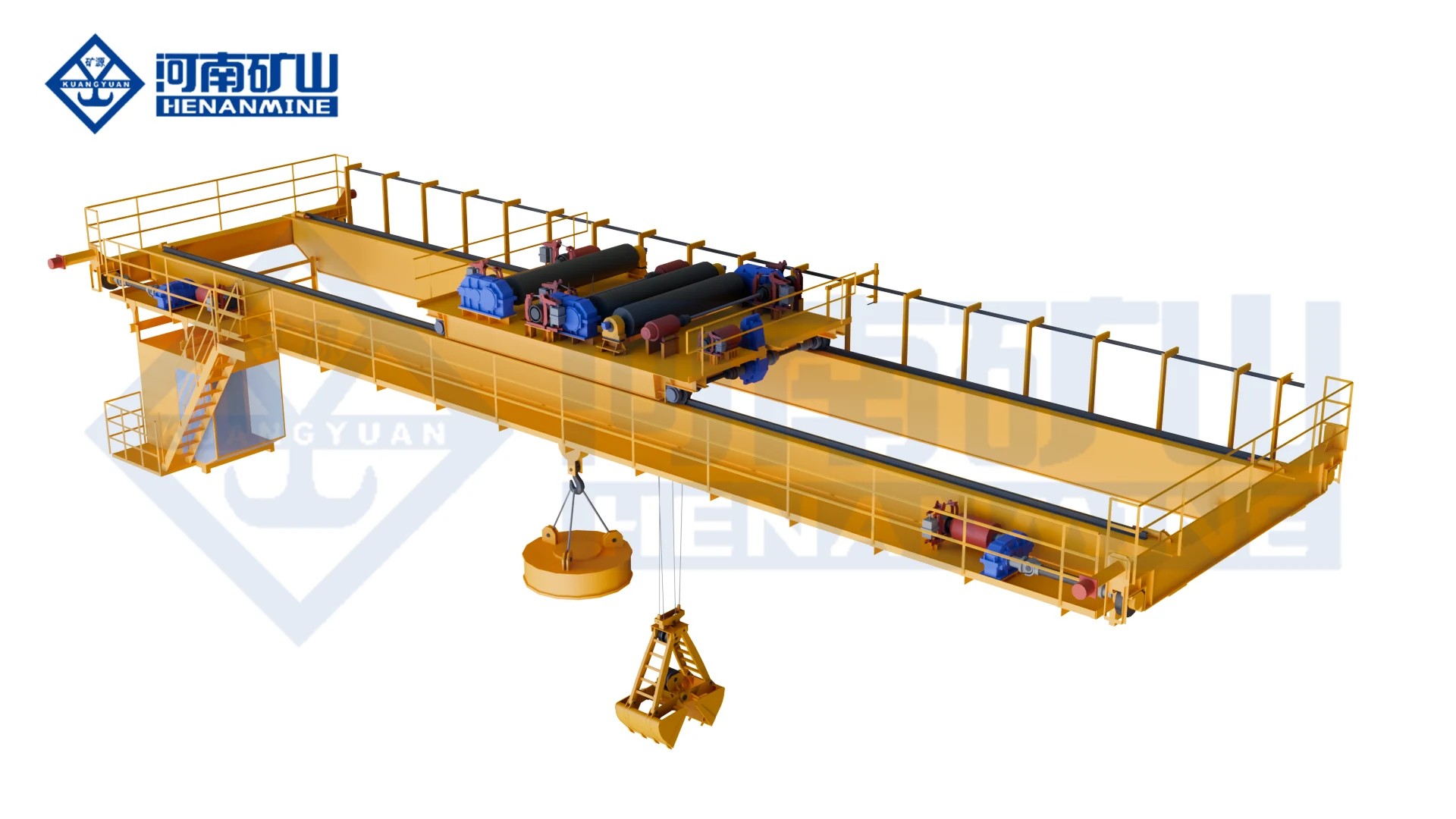
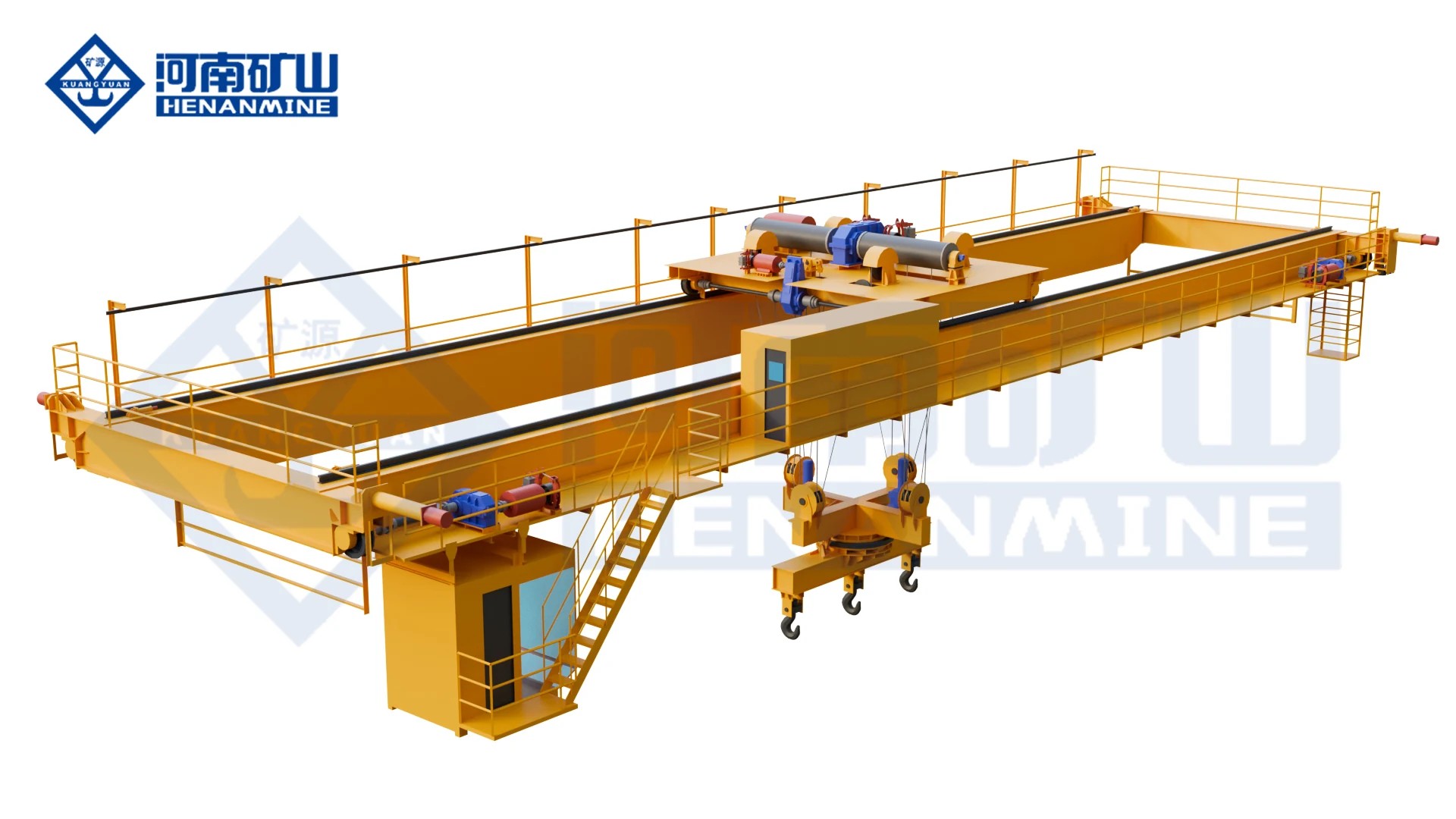
The equipment views show the bridge, trolley and circular lifting magnet, with an auxiliary hook on selected arrangements. Installed photographs illustrate particular equipment examples; their appearance does not set the rating of a new order. Use the final drawing to check magnet suspension, hook-swivel restraint, cable routing and maintenance access.

QC overhead crane showing the lifting magnet, winch trolley and service platform
QC magnetic lifting arrangement
QC electromagnetic double-girder overhead crane with a suspended circular lifting magnet
QC crane with circular lifting magnet
04 / CONFIGURATION

Configure QC around your production task.

Begin with the intended steel pickup and the contact available to the magnet. Match the complete suspended load, hook coverage and handling cycle to one QC configuration, keeping magnetic and auxiliary-hook values distinct.

QC overhead crane showing the lifting magnet, winch trolley and service platform
QC magnetic lifting arrangement
01 / SELECTION

Material and usable steel pickup

Give steel grade, scrap or product form, minimum and maximum dimensions, surface condition and temperature at pickup. State the net material target and any mixed loads so magnet performance can be assessed for the actual contact conditions.

02 / SELECTION

Magnet weight and hook selection

Include the lifting magnet, suspension, rigging and other carried equipment in the crane load. Compare magnet-only and main-magnet/auxiliary-hook versions, then state each mechanism's rating and permitted operating load cases.

03 / SELECTION

Coverage and suspended geometry

Provide rail-centre span, runway length, rail elevation and pickup and landing levels. Check magnet depth, lower clearance, trolley and bridge approaches, roof clearance and wheel reactions against the workshop drawing.

04 / SELECTION

Duty, speeds and operator view

State typical pickup, maximum-load frequency, transfer distance, lifts per hour and shifts. Select hoist and travel speeds with cabin, radio or other agreed controls around material placement and visibility.

05 / SELECTION

Magnet supply and power-loss response

Identify excitation, release control, cable equipment and any backup holding supply. Define holding duration, test load and contact conditions, battery monitoring, alarms and the recovery procedure; powered crane movement needs its own specified provision.

06 / SELECTION

Pickup heat and site environment

Separate steel temperature from workshop air temperature and radiant exposure. State dust, moisture and outdoor exposure where applicable so the magnet, cables, drives and electrical protection are selected for the installation.

05 / PURCHASING & HANDOVER

Define the equipment,
documents and delivery scope.

Compare the QC bridge and trolley, magnet, suspension, any auxiliary hook, magnet supply, cable equipment and controls as one defined package. Ask for net payload conditions and attachment weights in the technical offer, with power feed, rails, backup holding, transport and site services itemised.

Define the crane and magnet scope

List the bridge, trolley, magnet and suspension, hook-swivel restraint and selected auxiliary lifting equipment. Separate runway steelwork, rails, conductor equipment and plant connections from the crane package.

Compare price on the same pickup task

Magnet size and thermal selection, usable steel pickup, span, duty, auxiliary hook and the excitation and backup package affect the offer. Compare the same material conditions and equipment boundaries before comparing total prices.

Agree drawings and functional evidence

Request the general arrangement, hook approaches, maximum wheel reactions, magnet data and tare, electrical drawings and manuals. Define pickup, release, motion-limit and any power-loss holding checks for representative material, with agreed test records.

Set production and freight milestones

Confirm material and magnet selection, drawing approval, manufacture, factory checks and dispatch in the order. Identify packing, freight, unloading access and any destination documents so the programme fits the selected equipment and site readiness.

Allocate installation and handover work

State who assembles the crane, supplies local lifting equipment and connects crane and magnet power. Include cable operation, pickup and release checks, any backup holding test and operator training in the commissioning scope.

Include magnetic equipment in service planning

Agree warranty commencement, coverage, exclusions and support arrangements for the crane, magnet and power package. Request inspection instructions and recommended brake, rope, magnet-cable, control and backup-battery spares where applicable.

01Describe the pickup

Send material photographs, grade, dimensions, surface condition, temperature and the net pickup target.

02Select the lifting package

Review magnet data and tare, complete suspended load, any auxiliary-hook task and the bay arrangement.

03Agree the equipment and tests

Confirm controls, power-loss response, technical drawings, acceptance conditions and delivery and site responsibilities.

04Commission the stated material flow

Check the installed crane and magnetic functions using agreed representative loads, then hand over records and operator instructions.

DOCUMENTS TO AGREE

Technical schedule · General arrangement · Attachment interface · Runway loads · Electrical information · Safety-function description · Agreed inspection records · Operation and maintenance manuals

07 / PROCUREMENT QUESTIONS

Before you order
your QC crane.

Review the lifting task, configuration and quotation scope. We can help develop a crane proposal from the project information available.

When is QC a suitable choice?

Compare QC where one hook-suspended electromagnet suits the ferromagnetic scrap or steel product and its available contact area. Material form, pickup conditions, net payload and the transfer route determine the magnet and crane selection. Long flexible steel may need the distributed pickup of a QL beam.

Can a 10 t QC crane lift 10 t of steel?

The crane's magnetic rating includes magnet self-weight. Allow for the magnet, suspension and all other suspended equipment when calculating net steel payload. The steel pickup must also remain within the magnet's usable capacity for the stated material, geometry, surface and temperature.

Which materials and surface conditions should I describe?

State the exact material grade and product form. QC is selected for suitable ferromagnetic material; aluminium, copper and many stainless-steel grades do not offer the same pickup. Rust, scale, paint, curvature, thin sections and gaps affect magnetic contact and must be included in selection.

How does 16/3.2 t differ from a 16 t magnetic selection?

The 16 t magnetic selection has a single magnetic lifting arrangement. The 16/3.2 t selection identifies a main magnetic mechanism and a separate smaller auxiliary hook with their respective ratings, heights and speeds. It does not establish an added payload or unrestricted combined use.

Can the suspended magnet swivel to turn the steel?

The listed QC hook-suspended arrangement locks the hook against swivel rotation during magnet operation. For controlled horizontal orientation changes, compare YC, QLC or a specifically selected rotating QL arrangement and check the complete turning envelope.

Can the crane handle hot steel?

Provide the steel temperature at pickup, exposure time, workshop ambient temperature and any radiant heat. A suitable magnet, suspension, cables and protective package must be selected for those conditions. A room-temperature magnet selection does not establish a hot-stock rating.

What happens if the main power supply fails?

Specify the required magnet-holding and recovery arrangement. The offer identifies any backup supply, required holding duration, test load and contact conditions, monitoring, alarms and operator procedure. Supplying the magnet holding circuit does not by itself provide bridge travel, trolley travel or powered emergency lowering.

Is QC supplied with an electro-permanent magnet?

The magnetic arrangement described here uses a lifting electromagnet, which relies on electrical excitation. An electro-permanent magnet uses an electrical switching pulse to change the state of a permanent-magnet circuit. Any electro-permanent alternative needs its own attachment, controls, power-loss behaviour and acceptance specification.

What should we test before accepting the crane?

Agree the crane checks and representative magnetic pickup and release tasks, identifying material, geometry, contact condition, temperature and test load. Include the hook-swivel restraint, cable operation, motion limits and any ordered backup holding, monitoring and alarm functions, with records and operating instructions.

What information makes a QC quotation useful for purchasing?

Send the net steel pickup target, material and surface data, magnet or attachment information already available, span, lifting levels and operating cycle. Include the auxiliary-hook task, destination power and documents, required power-loss response and the boundaries for freight, installation, commissioning, warranty and spares.


GET A CONFIGURED QUOTATION

Request your QC
technical proposal.

Tell us what steel or scrap you move, the net pickup you need and where it must land. Add approximate span, lifting levels and any auxiliary-hook task so we can prepare a QC crane and magnet proposal around your bay.

  • Crane and lifting device matched to the load
  • Clear configuration and supply boundaries
  • Drawing, testing and site-support scope

info@cranehenanmine.com

PRODUCT SELECTEDQC Electromagnetic Overhead Crane

Material and contact-surface photographs are useful. Add your destination, site power, operating shifts and known pickup temperatures; a workshop sketch can provide the initial dimensions.

↑
QC Overhead CraneRequest your project quotation
Get a quotation ↗
QC equipment gallery
Enlarged product image